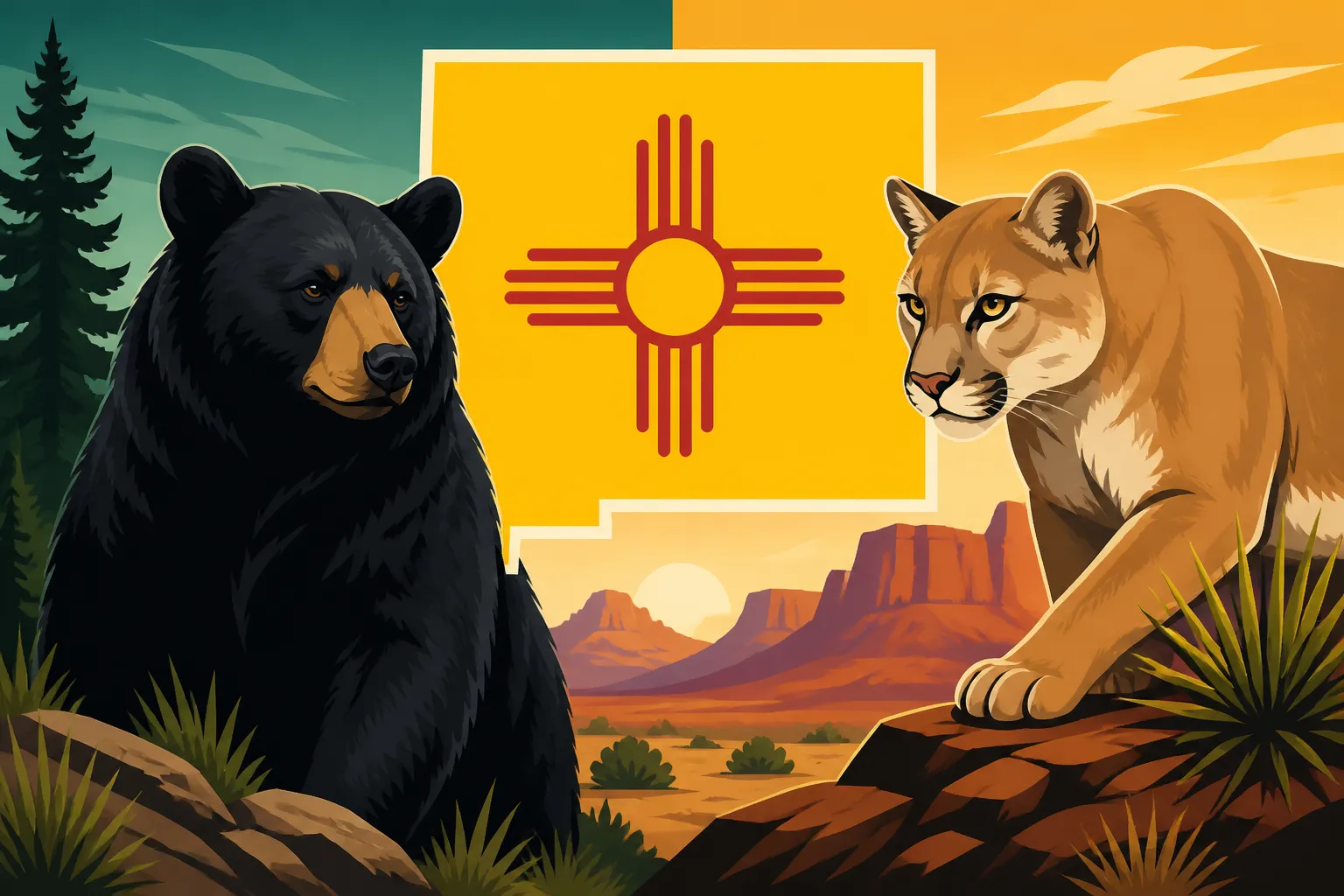
Black Bear and Cougar Across New Mexico
One of the biggest frustrations for hunters looking at New Mexico is the sheer amount of information you need to wade through for species beyond the big-name elk and mule deer. But for those willing to put in the time, New Mexico offers fantastic opportunities for pursuing black bear and cougar, two of North America's most challenging and rewarding big game animals. This comprehensive guide will walk you through everything you need to know about hunting black bear and cougar across the diverse landscapes of New Mexico, from understanding their habits and habitats to navigating the specific regulations and developing effective hunting strategies.
Understanding New Mexico's Black Bear Population and Habits
Black bears are a resilient and adaptable species, found in varying densities across much of New Mexico. These intelligent omnivores play a vital role in the ecosystem, and their pursuit offers a truly unique challenge. Unlike the popular image of bears in dense northern forests, New Mexico's bears thrive in diverse habitats, from the high mountain timber to the pinyon-juniper breaks and even the riparian corridors of the desert. Their movements and feeding patterns are heavily influenced by the availability of natural food sources, which can fluctuate dramatically with rainfall and seasonal changes.
Where Bear Density Runs Highest
New Mexico's black bear population is robust, with significant concentrations in areas offering a good mix of cover, water, and food. The mountainous regions, particularly the Gila National Forest in the southwestern part of the state and the Carson and Santa Fe National Forests in the north, are prime bear country. These areas provide the dense timber, canyon systems, and diverse flora that bears rely on for sustenance and security. You'll find good numbers in the Mogollon, Sacramento, and Sandia Mountains as well. Knowing where to focus your efforts starts with understanding the local ecology. The New Mexico Department of Game and Fish (NMDGF) often provides estimates on black bear population densities, and platforms like GoHunt can offer data-driven insights into specific units. These tools can highlight historical harvest data and give you a better idea of where bears are most frequently encountered, helping you narrow down your scouting efforts to the most promising regions.
However, it's not just about the numbers; it's about the quality of the habitat. Areas with abundant acorn crops, consistent water sources, and thick stands of ponderosa pine or mixed conifer are magnets for bears, especially in late summer and early fall when they are aggressively feeding to put on weight for winter. Rivers and perennial streams, even in drier units, create lush riparian zones that often hold excellent forage, making them key areas to investigate. Look for areas where different habitat types converge, creating "edge" environments that bears often frequent. These transition zones between timber and open country, or between different vegetation types, provide both feeding opportunities and quick escape cover.
Seasonal Movements and Foraging Patterns
Black bears are creatures of opportunity, and their movements are largely dictated by the seasonal availability of food. In the spring, after emerging from their dens, bears are often found at lower elevations or on south-facing slopes, seeking out green-up vegetation and early berry crops. These are crucial times for them to regain strength after hibernation. As summer progresses, they'll follow the ripening of various berries, nuts, and mast crops, often moving higher in elevation or into more shaded canyon bottoms as temperatures rise. This is when you'll find them hitting serviceberry, chokecherry, and eventually, the highly prized acorns.
The late summer and fall, leading up to hibernation, are critical hyperphagia periods where bears will eat almost continuously to build fat reserves. This is when they are most active and often easiest to locate. Acorn production, especially from Gambel oak, is a massive driver of bear movement during this time. If acorn crops are good in a particular area, bears will congregate there. Conversely, a poor acorn year might force bears to travel widely or switch to other food sources, like pinyon nuts, juniper berries, or even agricultural fields if available. Understanding these patterns is key to predicting where bears will be. For detailed insights into these seasonal shifts, it's always wise to consult the New Mexico Black Bear Population Estimate reports and other species management plans from the NMDGF.
Black Bear Subspecies and Characteristics in New Mexico
While all black bears in New Mexico are Ursus americanus, there isn't a recognized subspecies distinction within the state's borders that dramatically changes their hunting characteristics. However, bears across different regions of New Mexico can exhibit variations in size, coloration, and even behavior due to habitat and diet. Bears in the high, moist mountain forests of the Gila or Sangre de Cristo ranges might typically be larger and darker, with richer coats, due to more abundant food and cooler climates. Their diet of berries, acorns, and sometimes carrion allows for significant weight gain.
In contrast, bears found in the drier, more arid pinyon-juniper and desert habitats of southern New Mexico might be smaller on average, and occasionally display lighter, cinnamon, or even blonde coloration dueadesert sun. Their diet might be more varied, including prickly pear fruit, agaves, and insects, which can influence their overall size and condition. Despite these regional nuances, their fundamental behaviors remain consistent: they are wary, intelligent, and possess incredible senses of smell and hearing. Regardless of their exact locale or shade, hunting any New Mexico black bear is a test of woodsmanship and patience.
New Mexico Black Bear Hunting Seasons and Regulations
Hunting black bear in New Mexico involves a unique set of regulations designed to manage the population sustainably and ensure fair chase. Unlike some other big game species, bear hunting seasons often have an earlier application deadline and are closely monitored through harvest limits. It's absolutely crucial to stay on top of the rules and regulations, as they can change annually and even seasonally within a given year.
When Bear Applications Close and Season Dates Run
One of the most important things to remember about hunting black bear in New Mexico is that the application period is often separate from other big game species. While many elk, deer, and other applications close around mid-March, bear applications typically close much earlier, often in February. This early deadline catches a lot of hunters off guard, so mark your calendar! You can find the exact dates in the annual New Mexico Hunting Rules and Info Booklet. Missing this deadline means missing your chance for a draw tag. It's a common oversight, so make sure to double-check Why New Mexico Bear Applications Close in February well in advance of the new year.
Bear seasons themselves are structured across different zones and typically run in spring (a limited season for some units, often for archery only), and then extensively in the fall. Fall seasons are usually split into an early archery/muzzleloader period and then general weapon seasons, often extending into late fall or early winter in some units. These season structures are put in place to manage harvest and prevent over-pressuring the bears, especially around critical denning periods. Always consult the current year's NMDGF regulations booklet for precise dates for your chosen unit, as these can vary significantly by Game Management Unit (GMU) and year.
How Harvest Limits Close a Zone
New Mexico employs a unique system of harvest limits for black bears, which is perhaps the most critical regulation for bear hunters to understand. Instead of fixed season dates that run regardless, bear hunting seasons are often open until a predetermined harvest quota, or "limit," is met within a specific Game Management Zone (GMZ). These zones often encompass several individual GMUs. The moment that limit is reached, the season for that entire zone immediately closes, regardless of the published end date. This means you could be out hunting, only to find the season has closed the day before.
Hunters are required to call a special NMDGF hotline or check the NMDGF website every 24-48 hours while in the field to confirm if their zone is still open. Failing to do so and harvesting a bear after the zone has closed can lead to serious legal consequences. These limits are further refined with specific female harvest quotas. If the female harvest limit is met before the overall zone limit, the season will close to protect the breeding population. This system, while requiring diligence, is an effective tool for sustainable bear management. For a deeper dive into this critical rule, review How New Mexico Bear Harvest Limits Close a Zone.
Legal Methods and Specific Restrictions
New Mexico allows a variety of legal methods for hunting black bear, but with some key restrictions. Archery, muzzleloader, and any legal weapon (rifle, handgun, shotgun) are generally permitted, depending on the season and unit. However, some methods common in other states are either restricted or outright prohibited in New Mexico.
Baiting: It's absolutely crucial to know that baiting black bears is not permitted on public land in New Mexico. There are very specific rules, and generally, baiting is only allowed on private land with specific permits and under strict conditions. Even then, the definition of "baiting" can be broad, so ensure you understand Baiting Rules That Apply to New Mexico Bears thoroughly to avoid any violations. Accidental baiting, such as leaving out food scraps in camp, can also be problematic.
Hounds: Hunting black bears with hounds is a traditional and legal method in New Mexico, but it requires specific licenses and permits for the houndsmen, and there are regulations regarding the number of hounds, GPS collars, and chase procedures. If you plan to hunt with a houndsman, ensure they are properly licensed and understand all current regulations.
Tree Stands & Blinds: These are generally legal for hunting on public land, provided they are not permanently affixed to trees and are removed at the end of the hunt. Many hunters use ground blinds or portable tree stands when hunting over water sources or along natural travel corridors.
Electronic Calls: The use of electronic calls for big game, including bear, is generally prohibited. You'll need to stick to traditional mouth calls or natural sounds if you plan to call. Check the Where Electronic Calls Are Legal for Big Game resource for specific species definitions.
Always carry a current copy of the NMDGF regulations booklet and understand the nuances of the laws. Ignorance of the law is never an excuse, and compliance ensures a fair chase and protects the resource for future generations.
Strategies for Hunting Black Bear in New Mexico
Hunting black bear in New Mexico is a challenging endeavor that often requires patience, persistence, and a deep understanding of bear behavior and habitat. Given the ban on baiting on public lands, most hunters rely on spot and stalk or hunting over natural food and water sources. These methods demand excellent woodsmanship and scouting skills.
Spot and Stalk in Early Seasons
The spot and stalk method can be highly effective, especially during early archery and muzzleloader seasons when bears are often concentrated on specific food sources. In the spring, focus on south-facing slopes and areas of early green-up where bears emerge from dens and seek succulent vegetation. In the early fall, bears will be hitting berry patches, chokecherry thickets, and eventually, the initial acorn crops.
To effectively spot and stalk, you need to be proficient with your optics. A good set of binoculars (10×42 or 12×50 are excellent choices) and a reliable spotting scope are invaluable, especially in New Mexico's expansive country. Using a tripod for your binoculars or spotting scope will significantly reduce eye fatigue and allow you to pick apart distant hillsides and canyon walls. Glassing benches and parks for elk and deer also applies to finding bears. Focus your glassing efforts during the early morning and late evening hours when bears are most active. They often move from bedding areas in thick cover to feeding areas in more open country or along edges. Look for movement, distinct dark shapes against lighter backgrounds, or flashes of black as they move through brush. Once a bear is spotted, a careful, wind-aware stalk is necessary, often covering significant ground through challenging terrain. Knowing how far to stalk a bedded mule deer can be good practice for a bear stalk.
Hunting Over Water Sources
In New Mexico's often-arid environment, water is life, and it can be a significant draw for black bears, particularly during hot, dry periods. Hunting over water sources, such as stock tanks, springs, or small perennial creeks, can be a highly productive strategy. Bears need to drink regularly, and these locations act as natural funnels. This strategy is best employed when other food sources are scarce or the weather is particularly warm.
When selecting a water source, look for fresh bear sign around its perimeter – tracks, scat, and rubbed trees. These indicators will tell you if bears are actively using the spot. Set up a ground blind or use natural cover downwind of the water source, ensuring you have a clear shooting lane. You'll need to be prepared for long sits, often from before dawn until mid-morning, and again in the late afternoon until dark. Patience is paramount. Consider Tree Stand Rules That Apply on Public Land and apply similar principles for temporary ground blinds to ensure you're in compliance and comfortable for extended periods. Remember, bears have an incredible sense of smell, so scent control is crucial.
Using Hounds for Bear Hunting
Hunting black bear with hounds is a traditional and effective method in New Mexico, offering a high-action, physically demanding experience. This method is often employed when other strategies are less fruitful, or when hunters desire the unique challenge of a chase. A skilled pack of hounds can track a bear's scent trail for miles, eventually treeing or baying the bear, allowing the hunter to approach for a shot.
This isn't a DIY venture for most. It requires specialized knowledge, trained dogs, and often, an experienced houndsman or outfitter. Hunters who pursue bear with hounds often work with a licensed outfitter or guide who has the necessary permits and expertise. The chase can cover extremely rugged terrain, so physical fitness is a must. You'll often be running, climbing, and navigating through dense brush to keep up with the dogs. Understanding Hound Rules for Mountain Lion Hunting can provide a good baseline, as many of the principles of ethical and legal hound use apply to both species. Ensure your outfitter is familiar with New Mexico's specific regulations regarding hound hunting for bear, as these can vary by state and even by unit.
New Mexico's Cougar Population and Their Elusive Nature
The cougar, also known as mountain lion or puma, is arguably one of the most elusive and captivating big game animals in North America. New Mexico's diverse landscapes provide ideal habitat for these powerful predators, from the high mountains to the rugged desert ranges. Encountering a cougar in the wild is a rare and thrilling event, and successfully hunting one is a testament to skill, perseverance, and often, the aid of skilled hounds. Their secretive nature makes them incredibly challenging to pursue, offering a hunting experience unlike any other.
Cougar Distribution and Habitat
Cougars are widely distributed across New Mexico, primarily found wherever there is sufficient cover, prey, and rugged terrain. Their primary prey in New Mexico consists of deer (both mule deer and Coues deer), elk calves, and bighorn sheep, but they will also opportunistically take smaller game like rabbits, coyotes, and even livestock. The mountainous regions, including the Gila, Sacramento, Jemez, and Sangre de Cristo ranges, hold strong cougar populations due to the abundance of deer and elk. Similarly, the rugged desert mountain ranges in the southern part of the state, with their rocky canyons and dense pinyon-juniper thickets, provide excellent cover and hunting grounds for these apex predators.
Cougars are solitary animals, with large territories that can span many square miles. These territories are typically defined by prey availability and the presence of other cougars. They prefer areas with dense vegetation for stalking and ambushing prey, as well as rocky outcrops, caves, and thickets for resting and denning. While they are masters of camouflage and stealth, signs of their presence can often be found near traditional game trails, water sources, and recent kill sites. Tracks, scat, and claw marks on trees (known as "scrapes") are indicators that a cougar might be in the area, offering valuable clues to an observant hunter.
Understanding Cougar Behavior and Sign
Cougars are primarily nocturnal and crepuscular (active at dawn and dusk), which contributes to their elusive reputation. During daylight hours, they typically rest in dense cover or rocky hideouts. Their hunting strategy is largely one of ambush; they stalk their prey stealthily, then launch a powerful, short-burst attack. This behavior makes direct encounters rare. Learning to interpret their signs is paramount for anyone hoping to hunt them.
Fresh cougar tracks are distinct – large, round, without claw marks (unless in soft substrate or during a sprint), and typically show four toe pads. Look for them along sandy creek beds, game trails, or dusty roads, especially near areas with high deer or elk densities. Scat can also indicate their presence, often containing hair and bone fragments from their prey. Kill sites are another key indicator; cougars will often cache their kills, covering them with dirt, leaves, and debris to return to later. Finding a fresh kill site, especially one that has been covered, is a strong sign that a cougar is in the immediate vicinity. Understanding these subtle cues is how successful cougar hunters piece together the puzzle of these ghost-like cats.
The Role of Cougars in New Mexico's Ecosystem
As apex predators, cougars play a critical role in maintaining the health and balance of New Mexico's ecosystems. By preying on deer and elk, they help to regulate ungulate populations, preventing overgrazing and the spread of disease. This natural selection process also helps to strengthen prey herds by removing weaker or less healthy individuals. Their presence influences the behavior of other species, creating a dynamic ecological tapestry.
While their impact can sometimes be contentious, particularly in areas with livestock, their overall contribution to biodiversity and ecosystem function is undeniable. Managing cougar populations through regulated hunting is part of a broader conservation strategy in New Mexico, aiming to balance wildlife populations with human interests and ecological health. This management ensures that cougar populations remain healthy and sustainable, while also providing unique hunting opportunities for those who appreciate the challenge of pursuing such a magnificent animal.
Cougar Hunting Seasons and Regulations in New Mexico
Hunting cougars in New Mexico is a tightly regulated activity, reflecting the species' elusive nature and its vital role in the ecosystem. Hunters must be diligent in understanding and adhering to all rules, particularly concerning season dates, harvest limits, and mandatory reporting. These regulations are designed to ensure sustainable management of cougar populations across the state.
Cougar Zone Management and Harvest Limits
New Mexico manages cougar hunting through a system of Game Management Zones (GMZs), similar to black bear. Each GMZ has specific harvest quotas, or limits, which dictate how many cougars can be harvested within that zone during a given season. Just like with bears, once the harvest limit for a particular zone is met, the cougar season for that zone immediately closes, regardless of the published end date. This means continuous monitoring of the NMDGF website or harvest hotline is absolutely essential while you are hunting.
Furthermore, these harvest limits often include specific quotas for female cougars. This measure is critical for protecting the breeding population and ensuring long-term sustainability. If the female quota is met before the overall zone quota, the season will close. This system demands that hunters not only track the overall harvest but also understand the implications of harvesting a female. Accurate identification of sex can be challenging in the field, making it another layer of responsibility for the hunter. The NMDGF publishes detailed information on New Mexico Cougar Harvest Limits by Zone which is an indispensable resource for any cougar hunter.
Legal Hunting Methods and Restrictions
Cougar hunting in New Mexico is primarily conducted using two main legal methods: still-hunting/spot and stalk, and hunting with the aid of dogs (hounds). Each method has its own set of challenges and requirements.
Still-Hunting/Spot and Stalk: This method involves patiently moving through cougar habitat, looking for fresh sign (tracks, scat, kill sites), or visually spotting a cougar. It is incredibly challenging due to the cougar's secretive nature and preference for dense cover. Success often comes from covering many miles, meticulously scrutinizing terrain, and having exceptional tracking skills. This is a true test of woodsmanship and physical endurance. While possible, it's far less common for success than hunting with hounds.
Hunting with Hounds: The vast majority of successful cougar hunts in New Mexico involve the use of trained hounds. Houndsmen use their dogs to pick up a cougar's scent trail, tracking the cat until it is treed or bayed on the ground. This method requires a licensed houndsman, a well-trained pack of dogs, and a hunter who is prepared for a physically demanding chase over rugged terrain. As mentioned with bear hunting, there are specific regulations governing Hound Rules for Mountain Lion Hunting, including licensing requirements for houndsmen and limits on the number of dogs that can be used. If you plan to hunt with an outfitter, ensure they are fully compliant with all state regulations.
Prohibited Methods: Similar to bear hunting, baiting cougars is prohibited on public lands in New Mexico. Electronic calls for big game are also generally not allowed. Always verify the current regulations for any additional restrictions that may apply to your specific hunt area or season.
Mandatory Reporting and Pelt Tagging
One of the most critical regulations for cougar hunters in New Mexico is the mandatory reporting and pelt tagging requirement. If you are fortunate enough to harvest a cougar, you are legally obligated to report your harvest to the NMDGF within 24 hours of taking the animal. This rapid reporting is crucial for the department to accurately track harvest numbers and determine when a zone's quota is approaching or has been met, leading to potential season closures.
Following the initial reporting, you must then present the cougar skull and hide, with the proof of sex naturally attached, to an authorized NMDGF representative or designated tagging station within 10 days of harvest. At this time, a special cougar pelt tag will be affixed to the hide. This tag is unique to the animal and is essential for legal possession, transport, and taxidermy of the trophy. Failing to report or tag your cougar within the specified timeframes can result in significant penalties. Understanding New Mexico Cougar Pelt Tagging Requirements is not just good practice, it's a legal necessity that supports the NMDGF's conservation efforts.
Effective Tactics for Pursuing Cougars
Successfully hunting cougars is often considered the pinnacle of predator hunting due to their secretive nature and the challenging terrain they inhabit. While rare, the opportunities exist, especially for those willing to commit to rigorous scouting and employ specialized tactics.
Hunting With Hounds for Cougar
As previously touched upon, hunting cougars with hounds is by far the most effective and common method in New Mexico. This isn't just a matter of releasing dogs and waiting; it's a highly specialized operation that relies on the instincts of trained dogs and the expertise of a houndsman who can "read" the terrain, the dog's behavior, and the cat's track.
The hunt often begins by searching for fresh cougar tracks in snow or soft ground along canyon rims, washes, or game trails. Once a fresh track is found, the dogs are often released on lead to confirm the trail's freshness before being turned loose to pursue. The chase can be long and arduous, leading hunters through thick brush, over rocky terrain, and up steep mountainsides. Physical conditioning is not just recommended, it's absolutely vital. You need to be able to keep pace, or at least keep within earshot, of the dogs as they work. The climax of the hunt comes when the dogs tree the cougar or bay it on the ground, creating an opportunity for the hunter to make a clean, ethical shot. The excitement of hearing the dogs "treed" is an unforgettable experience for those who pursue cougars this way.
Calling Strategies for Cougars
While less common and significantly more challenging than hound hunting, calling can sometimes be an effective tactic for cougars, particularly in areas where they are less pressured or during certain times of the year. Cougars are apex predators, and their curiosity, combined with their hunting instincts, can sometimes draw them into range.
The most common calling strategy involves using distressed prey sounds, such as rabbit, fawn, or even small bird distress calls. These calls mimic an easy meal and can pique a cougar's interest. Success often depends on perfect wind conditions, remaining absolutely still and silent, and having excellent camouflage. Set up in an area with good visibility but also good cover, ensuring you have a clear shooting lane downwind. Cougars, like all predators, will almost always try to circle downwind to get your scent before committing. Calling is often done from a stationary position for extended periods, similar to calling coyotes or other predators. While success rates are lower than with hounds, the satisfaction of calling in such an elusive animal is immense. Remember, electronic calls are generally not permitted for cougars in New Mexico, so you'll need to rely on hand-held or mouth calls.
Spot and Stalk Opportunities
Spot and stalk hunting for cougars is incredibly difficult but not entirely impossible, especially for highly experienced and patient hunters. This method relies heavily on finding fresh sign and then painstakingly tracking the animal, often for hours or even days. The vast, open country of New Mexico, with its high vantage points, can offer opportunities for glassing.
Focus on areas with high concentrations of deer or other prey, and pay close attention to recent kills. Cougars often return to their kill sites. Use high-quality optics, like a powerful spotting scope for open country, to systematically glass potential cougar habitat, such as rocky ledges, canyon walls, and dense thickets, particularly during the early morning and late evening. Look for any unusual shapes or movements. Once a cougar is spotted, a silent, methodical stalk, paying meticulous attention to wind direction and cover, is crucial. This method requires immense patience, sharp tracking skills, and the physical stamina to navigate rugged, often remote, terrain. For those who embrace the ultimate challenge, it represents the purest form of hunting these magnificent predators.
Essential Gear and Preparation for Bear and Cougar Hunts
Hunting black bear and cougar in New Mexico means dealing with rugged, sometimes extreme, terrain and variable weather. Being prepared with the right gear and physical conditioning isn't just about comfort; it's about safety and increasing your chances of success. Thinking through your equipment choices and personal readiness is a critical part of the planning process.
Rifle, Archery, and Muzzleloader Considerations
The choice of weapon for bear and cougar hunting depends on the season, personal preference, and the specific challenges of the hunt.
Rifles: For rifle hunting, a caliber that delivers sufficient energy for quick, ethical kills is paramount. While bears and cougars aren't notoriously "hard to kill," they are tough animals, and a well-placed shot is essential. Calibers in the .270, .30-06, .300 Win Mag, or 7mm Rem Mag range are excellent choices for black bear. For cougars, given they are often treed or bayed at closer distances, a slightly smaller caliber might be acceptable, but still capable of decisive knockdown power, such as a .243 or 6.5 Creedmoor. Accuracy is always more important than raw power. Consider your rifle's zero distance for canyon country, especially if you anticipate longer shots.
Archery: Archery hunting for both species demands exceptional skill and close-range proficiency. A minimum bow draw weight for big game of 40 pounds is generally recommended by NMDGF for ethical harvest. Broadhead requirements for bowhunting specify a minimum cutting diameter and typically require fixed or mechanical broadheads with at least two cutting edges. Ensure your broadheads are sharp and that your setup is capable of delivering sufficient penetration. Bow hunting means you'll need to get very close, often within 20-40 yards, which increases the challenge and requires mastery of stalking or blind hunting techniques.
Muzzleloader: Muzzleloader seasons offer a unique challenge. For black bear, muzzleloader caliber minimums for elk often serve as a good guideline for bears, meaning .50 caliber or larger is a safe bet. While scopes are often legal on modern muzzleloaders, traditional hunters might opt for open sights. Understanding Can You Use a Scope on a Muzzleloader? is important for compliance and personal choice. Muzzleloader hunting generally means shorter effective ranges than rifles, adding to the challenge of getting close to your animal.
Regardless of your weapon choice, practice, practice, practice! Know your limitations and ensure you can consistently place shots accurately under hunting conditions.
Optics and Scouting Tools
New Mexico's vast and often rugged terrain makes high-quality optics an absolute necessity for both scouting and hunting bear and cougar.
Binoculars: A good pair of 10×42 or 12×50 binoculars are your primary tool for scanning hillsides, glassing clearings, and spotting subtle movement. They need to be durable, waterproof, and offer excellent low-light performance. Look for a pair that provides a wide field of view and comfortable ergonomics for long periods of glassing.
Spotting Scopes: For meticulously picking apart distant canyons and slopes, especially when looking for the distinct color or shape of a bear or cougar, a spotting scope (20-60x or 25-75x) mounted on a sturdy tripod is indispensable. This is especially true for spot and stalk hunting in open country. A quality spotting scope power for open country allows you to identify animals at extreme distances, conserving energy and planning more efficient stalks.
GPS/Mapping Apps: Modern mapping applications like onX Hunt, BaseMap, or Garmin inReach devices are crucial for navigation, marking sign, identifying property boundaries (especially for State Trust Land access), and understanding terrain. They allow you to download offline maps, which is vital in areas with no cell service. E-Scouting a New Mexico unit before the season using these tools can save you countless hours of boots-on-the-ground scouting. Identifying potential bedding areas, travel corridors, water sources, and escape routes from your computer screen will give you a massive advantage.
Safety and Backcountry Preparedness
Hunting in New Mexico's backcountry for bear and cougar means being prepared for anything. Remote areas, sudden weather changes, and potential animal encounters require a high level of self-sufficiency.
Physical Conditioning: Both bear and cougar hunting can be extremely physically demanding, especially if hunting with hounds or undertaking multi-day spot and stalk expeditions. You'll likely be covering significant ground over uneven, steep, and brushy terrain. Start a rigorous physical conditioning program months before your hunt. Hiking with a loaded pack, especially at elevation, will prepare you for the real deal. Preparing physically for a high elevation hunt is critical for success and safety.
Essentials: Always carry a well-stocked first-aid kit, enough water (especially in desert hunts where water you must carry on a desert day hunt is critical), navigation tools (GPS and map/compass), fire-starting supplies, a headlamp, and emergency shelter. Let someone know your itinerary and expected return time.
Weapon Safety: Always handle firearms safely and adhere to all legal shooting hours for big game in New Mexico. Be aware of your surroundings, especially when hunting with hounds, as dogs and other hunters may be in the vicinity of your treed animal.
Predator Awareness: While incidents are rare, remember you are in predator country. Carry bear spray, especially when traveling through thick cover, and know how to use it. Be aware of your surroundings at all times. Knowing about snake awareness on a September archery hunt is also a good idea.
Being prepared for the unexpected is key to a safe and successful hunting experience in New Mexico's wild places.
Conservation and Ethical Hunting Practices
Hunting black bear and cougar in New Mexico is more than just pursuing a trophy; it's about participating in the responsible management of these fascinating predators and upholding the highest ethical standards. As hunters, we are stewards of the wildlife resource, and our actions directly impact the future of these species.
Respecting Fair Chase Principles
Fair chase is the cornerstone of ethical hunting, ensuring that the hunter has no unfair advantage over the animal. For bear and cougar hunting in New Mexico, this translates into several key practices:
- Understanding Regulations: Adhering strictly to all NMDGF regulations, including harvest quotas, season dates, and legal hunting methods, is paramount. This includes the crucial step of monitoring harvest limits for bear and cougar zones daily.
- Ethical Shot Placement: Always strive for a clean, ethical shot that results in a quick harvest. This means knowing your weapon's capabilities and your own limitations. Wounding an animal and losing it is a failure of ethical hunting.
- No Baiting on Public Land: As discussed, baiting is generally prohibited on public lands in New Mexico. Respecting this rule ensures bears are hunted under natural conditions, relying on their foraging patterns.
- Minimizing Harassment: While hounds are used for cougar and bear, the chase should be conducted in a manner that minimizes undue stress on the animal. Once an animal is treed or bayed, make efforts to approach and harvest it efficiently or release it if the intent is not to harvest.
- Respecting Wilderness: Many prime bear and cougar hunting areas are remote or wilderness areas. Practice Leave No Trace principles, pack out all trash, and leave the landscape as pristine as you found it.
Upholding these fair chase principles not only honors the animal but also upholds the integrity of hunting for all.
Managing Meat and Trophy Care
Successfully harvesting a bear or cougar presents unique challenges in meat and trophy care, especially in New Mexico's often warm climates or rugged terrain.
Meat Salvage: New Mexico has strict meat salvage requirements for big game. For bears, this means salvaging all edible meat. Bear meat, when properly handled, is delicious and should not be wasted. Field dressing in desert heat or getting meat cooled on an early season hunt requires immediate attention. It means skinning, quartering, and cooling the meat as quickly as possible, often involving packing it out on your back, with horses, or using game bags to protect it from dirt and insects. For cougars, while not as often consumed, ethical harvest dictates making use of the animal, and the hide and skull are valuable trophies.
Trophy Care: For both species, if you plan to taxidermy the animal, proper field care of the hide and skull is critical. This means careful skinning, removing as much meat and fat as possible from the hide (especially important for bears to prevent hair slip), and protecting the hide from heat and direct sunlight. Salting and freezing the hide are common preservation methods for transport to a taxidermist. Ensuring evidence of sex requirements on a carcass are met is also crucial for legal purposes. Plan for how you will transport your trophy out of the field and to a taxidermist or game processor. This foresight can make the difference between a ruined hide and a cherished memory.
Contributing to Wildlife Management
As hunters, we play an indispensable role in wildlife conservation. Our license fees directly fund the NMDGF's efforts in research, habitat improvement, and enforcement. Beyond that, active participation in the hunting process provides invaluable data.
Mandatory Reporting: Your mandatory reporting after a New Mexico harvest for both bear and cougar directly contributes to population management. This data allows biologists to accurately assess harvest numbers, monitor population health, and make informed decisions about future seasons and limits. Honest and timely reporting is a civic duty for every hunter.
Ethical Behavior: Every ethical hunt contributes to the positive public perception of hunting. When hunters demonstrate respect for wildlife, land, and regulations, it strengthens the argument for hunting as a vital conservation tool. This ensures that future generations will have the opportunity to pursue these magnificent animals in New Mexico's wild landscapes. Platforms like GoHunt often partner with conservation organizations, providing another avenue for hunters to support broader wildlife initiatives.
Hunting black bear and cougar in New Mexico is a privilege that comes with significant responsibility. By embracing ethical practices, adhering to regulations, and contributing to conservation efforts, we help ensure these iconic predators thrive for years to come.
Disclaimer
Please note that hunting regulations, season dates, and specific rules are subject to change. Always consult the most current New Mexico Department of Game and Fish (NMDGF) official rules and information booklet before planning and undertaking any hunting activity. This guide is for informational purposes only and should not be considered a substitute for the official NMDGF regulations.