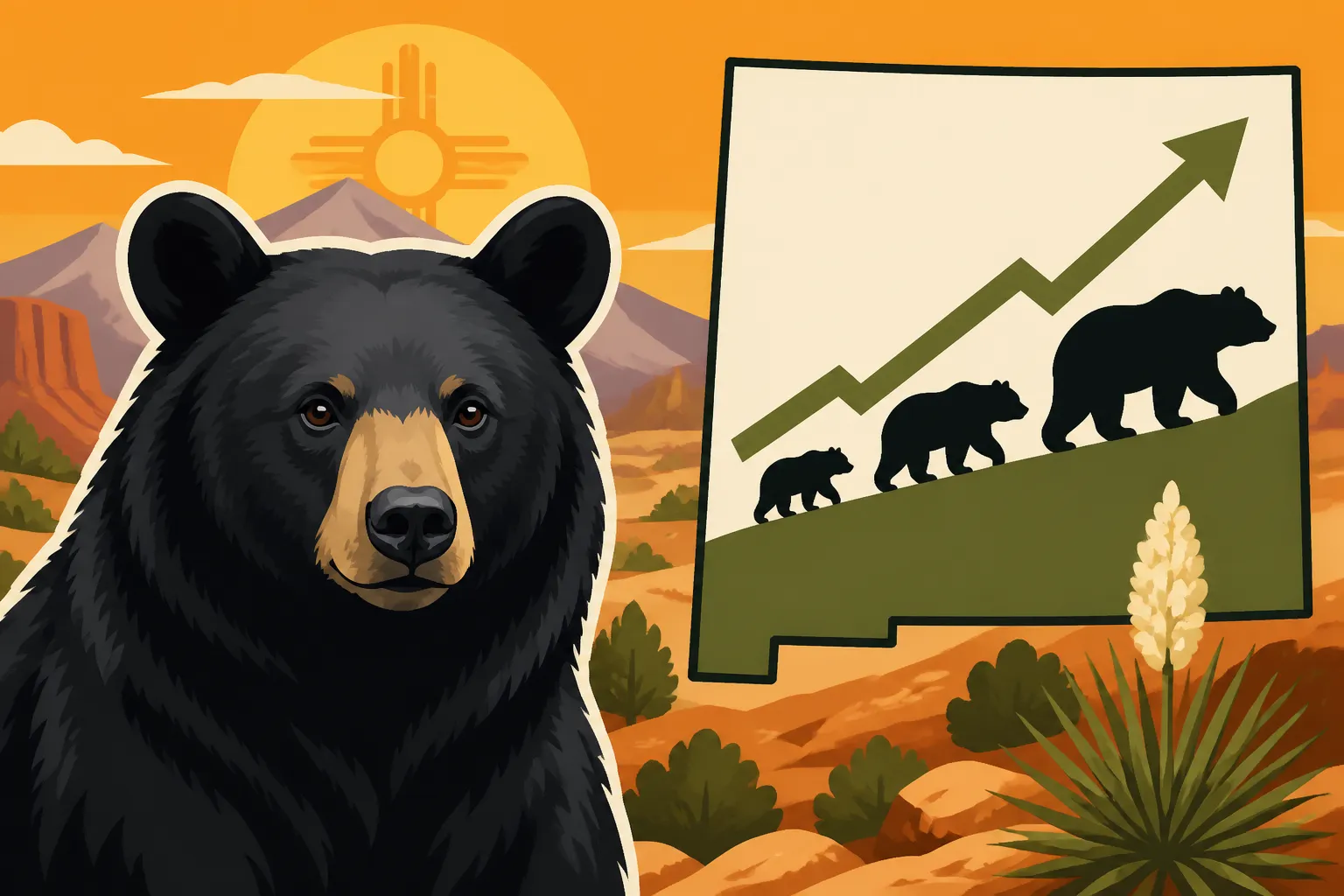
The New Mexico Black Bear Population Estimate
It can be incredibly frustrating to plan a hunt when you're not sure about the health or size of the game population you're after. For many hunters looking at black bear in New Mexico, questions about just how many bears are out there, and where they tend to concentrate, are top of mind. This guide will help demystify how black bear populations are estimated in the Land of Enchantment, what those estimates mean for hunters, and the factors that keep these numbers in a healthy balance.
Understanding Black Bear Population Estimates
When we talk about wildlife population estimates, it's crucial to understand that we're rarely talking about a precise head count. Wildlife management agencies, including the New Mexico Department of Game and Fish, don't literally count every single bear in the state. Instead, they use a variety of scientific methods to estimate the population size. This is a complex but vital process, as these estimates directly inform season setting, tag allocations, and management strategies to ensure healthy bear populations for generations to come.
Imagine trying to count every single deer in a dense forest, let alone a stealthy, wide-ranging animal like a black bear across millions of acres. It's simply not feasible. That's why biologists rely on a blend of data collection and statistical analysis. These methods provide a strong indication of population trends and density, which is what truly matters for sustainable hunting and conservation. It's about looking at the big picture and making informed decisions based on the best available science.
Why Population Estimates Matter to Hunters
For us hunters, these population estimates are more than just numbers on a report; they're the foundation of our hunting opportunities. A robust, healthy black bear population means sustainable hunting seasons, more potential for drawing a tag, and a better chance of success in the field. When populations are thriving, it indicates that habitat is good, food sources are adequate, and overall management is working. Conversely, declining estimates would trigger concerns and likely lead to more conservative hunting regulations.
These estimates also help us understand where the bears are. While state-wide numbers give a general idea, broken down by game management unit or region, they can point hunters toward areas with higher bear densities. This local knowledge is invaluable when you’re planning your scout and trying to decide which units to apply for. Knowing a unit holds a strong, stable population can boost your confidence and help you focus your efforts. It's a key piece of the puzzle, especially when you're trying to figure out where to invest your time and energy.
Methods for Estimating Black Bear Numbers
New Mexico’s wildlife biologists employ several techniques to arrive at their black bear population estimates. These methods are designed to collect data efficiently over large, often rugged, landscapes. No single method provides a complete picture, so usually a combination is used, and the data is then analyzed using sophisticated statistical models. This ensures a more accurate and reliable estimate.
One common approach involves DNA sampling. Bears, being naturally curious and often messy, leave hair samples when they rub against trees or barbed wire, or when they visit bait stations (where legal and used for research, not hunting). Biologists can collect these hair samples, extract DNA, and identify individual bears. By repeatedly sampling an area and identifying unique individuals, they can then estimate the total population within that area. Think of it like a biological fingerprinting program for bears.
Another widely used method is marking and recapture. This involves live-trapping bears, tranquilizing them, marking them with ear tags or radio collars, and then releasing them. Over time, subsequent trapping efforts or sightings of marked bears help biologists calculate the proportion of marked to unmarked bears, which can then be extrapolated to estimate the total population. While labor-intensive, this method provides valuable data on individual bear movements, survival rates, and reproductive success. The New Mexico Black Bear Population Estimate also considers harvest data, which offers direct insight into hunter success and provides important trend indicators.
A third method, especially helpful in monitoring trends, involves tracking harvest data. When hunters successfully harvest a bear, they are required to report it and often bring the skull in for sealing. This provides biologists with information on the age, sex, and physical condition of harvested bears. Over years, this data can indicate whether a population is stable, growing, or declining. If a lot of young bears are being harvested, it might suggest a healthy breeding population, while an abundance of older bears and fewer young ones might signal a different trend. This data, combined with anecdotal observations from field staff and remote camera surveys, forms a comprehensive picture.
Factors Influencing New Mexico's Black Bear Population
Black bear populations are not static; they ebb and flow with a variety of environmental and human-related factors. New Mexico, with its diverse landscapes ranging from high mountain forests to desert scrublands, presents a unique set of challenges and opportunities for bears. Understanding these factors helps us appreciate the complexity of managing these animals and why population numbers might shift from year to year or region to region.
Good habitat is, of course, paramount. Bears need areas with sufficient cover for denning, ample food sources, and access to water. Their diets are incredibly varied, consisting largely of nuts, berries, insects, and other vegetation, supplemented by carrion or small mammals. A healthy forest with a mix of different tree species and undergrowth, especially those producing acorns or piñon nuts, is ideal. These natural food sources dictate much of a bear's annual cycle and overall health.
Human interactions also play a significant role. As human populations expand and outdoor recreation increases, so does the potential for human-bear conflicts. Proper waste management in residential areas and campsites is critical to prevent bears from becoming habituated to human food, which often leads to negative outcomes for the bears. Education and prevention are key strategies in reducing these conflicts and ensuring bears can thrive in their natural environment.
Habitat and Food Availability
The availability of food is arguably the single most important factor influencing black bear populations in New Mexico. Bears are opportunistic omnivores, and their diet shifts throughout the year based on what's available. In the spring, they emerge from dens hungry, seeking fresh greens and carrion. Summer brings berries, insects, and early mast crops. But autumn is the critical time for bears to pack on fat reserves for winter denning. This often means a heavy reliance on mast crops like acorns and piñon nuts.
If there's a good mast crop, bears will be healthier, more cubs will survive, and sows will be more likely to reproduce the following year. Conversely, a poor mast crop due to drought, late frosts, or insect outbreaks can lead to leaner bears, higher cub mortality, and reduced reproductive success. This can cause population numbers to dip in subsequent years. For instance, a severe drought year in the Gila National Forest could mean fewer berries and nuts, forcing bears to range wider in search of food, potentially impacting their overall health and survival rates. Water Sources and Ethics in Desert Hunting also plays a role, as bears need regular access to water, especially in drier regions.
Wildfires, while destructive in the short term, can actually create better bear habitat in the long run. After a fire, new growth often flourishes, providing abundant browse and berries, which can be a boon for bears several years down the line. However, immediate post-fire landscapes can be challenging, as dense cover and established food sources are temporarily lost. Understanding these ecological cycles is crucial for predicting bear distribution and health.
Harvest Management and Hunter Success
Hunting is a tool used by wildlife managers to maintain healthy bear populations, keep them within the carrying capacity of their habitat, and manage human-bear conflicts. New Mexico uses a quota system for black bear, which is a bit different from the draw system used for elk or deer. The state is divided into Bear Management Zones (BMZ), and each zone has a harvest limit for female bears and a total harvest limit. Once a zone reaches its female quota, or its overall quota, that zone is closed to bear hunting, regardless of the published season dates.
This system is specifically designed to protect the breeding population. Limiting the harvest of sows helps ensure that enough females remain to produce cubs, which is vital for the long-term health and stability of the population. Hunters need to stay vigilant and check the NMDGF website or phone hotlines frequently during the season to know if a zone is still open. How New Mexico Bear Harvest Limits Close a Zone explains this process in more detail.
The success of bear hunters also provides valuable data. If harvest numbers are consistently low, despite reasonable effort, it might signal a declining population or shifting distribution. Conversely, high harvest numbers could indicate a thriving population or favorable conditions for hunters. This data, combined with other survey methods, allows the Department to adjust season lengths, quotas, and regulations year to year, always with the goal of balancing hunting opportunities with sustainable bear populations. GoHunt is a fantastic resource for checking harvest statistics and regulations.
Disease and Natural Mortality
Like all wild animals, black bears face natural mortality from a variety of sources, including disease, predation (especially cubs), and accidents. While large-scale disease outbreaks are less common in bears than in some other species, they can and do occur, impacting local populations. Diseases like sarcoptic mange, while usually not fatal on its own, can weaken a bear, making it more susceptible to other health issues, starvation, or predation.
Cubs, especially in their first year, are vulnerable to predation by other bears, mountain lions, or even coyotes. A sow's ability to protect her cubs and find enough food for them directly influences their survival rates. Bears also face injuries from falls, fights with other bears, or vehicle collisions, particularly in areas with increasing road infrastructure.
While these natural factors contribute to mortality, the overall healthy management of black bears in New Mexico aims to keep populations resilient enough to absorb these losses without significant long-term impact. Biologists continuously monitor disease prevalence and natural mortality rates as part of their broader population assessments, ensuring that these factors are considered when setting harvest recommendations.
Regional Variation in New Mexico Black Bear Populations
New Mexico is a vast state with incredible ecological diversity, and this diversity means that black bear populations aren't evenly distributed. What might be true for the high timber country of the northern mountains won't necessarily apply to the broken rimrock and juniper canyons of the south. Understanding these regional differences is key to successful bear hunting and appreciating the varied landscapes of the state.
Generally speaking, the highest densities of black bears are found in the forested mountain ranges. These areas provide the dense cover, abundant mast crops, and reliable water sources that bears prefer. The Gila National Forest, for example, is renowned for its healthy bear population, often boasting excellent habitat for both bears and other big game. Similarly, the mountain ranges in northern New Mexico, like the Sangre de Cristos and the Jemez, also support strong bear numbers.
As you move into the drier, more open country of the southern desert mountains, bear densities tend to decrease. While bears are incredibly adaptable and can be found in surprising places, the patchy nature of water sources and the less consistent mast crops in these arid environments mean fewer bears over larger areas. This doesn't mean there are no bears, but rather that finding them requires a different approach and understanding of their movements relative to sparse resources.
Northern New Mexico Mountain Ranges
The northern mountain ranges of New Mexico, including the Carson, Santa Fe, and Cibola National Forests, are generally prime black bear country. These areas are characterized by higher elevations, extensive timber (ponderosa pine, mixed conifer, aspen), and often receive more precipitation than the southern parts of the state. This translates to more consistent food sources, such as acorns, chokecherries, and various berries, which are critical for bears.
Units in these regions often see strong bear activity, especially in late summer and fall as bears fatten up for winter. Hunters in these areas might focus on glassing timbered slopes for feeding bears, or still-hunting through oak thickets where acorns are abundant. Water sources, while more common than in the desert, still act as magnets in drier periods. When looking for information on specific units, resources like GoHunt can provide maps and harvest data that highlight these prime areas. Where New Mexico Black Bear Density Runs Highest confirms that these areas are indeed hotspots.
Access in these northern units is typically good, with numerous forest roads, but bears often retreat into the roadless backcountry areas during periods of heavy pressure. Hunters prepared to hike or use horses will find more opportunities in these remote sections. The rugged terrain also offers excellent cover, allowing bears to remain elusive even in areas with high densities.
The Gila National Forest
The Gila National Forest in southwestern New Mexico is perhaps the most famous hunting destination in the state, and it holds a significant black bear population. The Gila Wilderness and the Aldo Leopold Wilderness within the forest offer vast, unspoiled habitat for bears. The mix of ponderosa, pine-oak woodlands, and riparian areas along permanent water sources creates an ideal environment. The Gila National Forest as New Mexico Elk Country shares many of the same characteristics that make it excellent bear habitat.
Bears in the Gila rely heavily on acorns, juniper berries, and piñon nuts, as well as the diverse undergrowth found in the canyon bottoms and on shaded slopes. Due to the sheer size and ruggedness of the Gila, bears here can grow large and old, as they face less human disturbance in the vast backcountry. Hunters often pursue bears during the same seasons as other big game, or during specific bear seasons, focusing on areas with good mast production or abundant water.
When planning a hunt in the Gila, knowing that bear populations are strong can provide a welcome bonus to an elk or deer tag. Many hunters carry a bear tag as an add-on, hoping for a chance encounter. The success rate for Gila bears can be good, but it requires patience and often covers a lot of ground, either on foot or horseback.
Southern and Central New Mexico Ranges
Moving south and into the central part of the state, bear populations become more localized and often tied closely to specific mountain ranges that rise like islands out of the desert. Ranges such as the Sacramento Mountains, the Organ Mountains, and the San Andres Mountains (though mostly restricted access) hold populations of black bears, but usually in lower densities than the northern forests or the Gila.
In these southern units, water is an even more critical factor. Bears will often concentrate around reliable springs, stock tanks, and riparian corridors in the otherwise arid landscape. Food sources also shift, with prickly pear fruit, mesquite beans, and agave often becoming more important components of their diet, alongside whatever limited mast crops are available. Hunting in these areas might involve scouting specific water sources or tracking bears through more open country.
While the density may be lower, the challenge and unique desert environment can make for a memorable hunt. Hunters pursuing Coues deer in the bootheel or mule deer in the more arid units might still encounter bears. Staying informed about local conditions, especially rainfall and forage availability, is critical in these more sensitive ecosystems. GoHunt can be a useful tool to study specific unit boundaries and historical harvest data for these varied regions.
How Hunters Can Use Population Information
Understanding black bear population estimates and the factors that influence them isn't just academic; it has practical implications for every hunter planning a New Mexico adventure. This information can help you make more informed decisions about where and when to hunt, improving your chances of success and contributing to the responsible management of this amazing big game species.
One of the most direct ways to use this knowledge is in your tag application strategy. If you know that certain units consistently show high bear densities and healthy populations, these might be excellent choices for applying for a bear tag or a combination tag if available. Conversely, if a unit has seen a recent decline in bear activity or harvest, you might reconsider your options or adjust your expectations.
Furthermore, being aware of regional food availability can guide your scouting efforts. If it's been a banner year for acorns in the Gila, you might focus your attention on oak-filled canyons. If the piñon crop failed in the north, you might instead concentrate on areas with abundant berries or other food sources. Being adaptable and informed is a hunter's best friend.
Planning Your Application Strategy
New Mexico’s bear application process is unique because it's not a draw in the traditional sense like elk or deer, but rather an over-the-counter license with zone-specific quotas. However, understanding population dynamics still plays a huge role in planning. Knowing which zones historically have high bear numbers means you're buying a license for an area with good potential.
You'll want to study the harvest limits for each Bear Management Zone (BMZ) and consider how quickly they typically close. If you're looking for an early season hunt, and a particular zone closes quickly due to high hunter pressure or successful harvests, you'll need to be ready to hunt right at the opener. Conversely, if you prefer a later hunt, you'll want to target zones that typically stay open longer. Always check the NMDGF website frequently for current quota status once seasons begin.
Looking at historical harvest reports can also give you insight into hunter success rates by unit or zone. While past performance is no guarantee of future results, it does provide a baseline. If a zone consistently produces good bear harvests, it’s usually because it holds a healthy, huntable population. Many hunters also purchase their bear license as an "add-on" to another big game hunt, allowing them to pursue two species simultaneously, effectively maximizing their time in the field.
Scouting and In-Season Adaptations
Your pre-season scouting will be much more effective when armed with knowledge about bear populations and their habits. Instead of just generally looking for sign, you can focus on areas known to have higher densities or those that are likely to be food-rich during your hunting period. Using mapping tools like GoHunt, you can overlay public land boundaries, habitat types, and even topographical features to identify likely bear haunts. E-Scouting a New Mexico Unit Before the Season is a great way to start this process from home.
During the season, staying aware of local conditions is paramount. For example, if you arrive for your hunt and find that the local berry crop has failed, you'll need to adapt. This might mean shifting your focus to areas with water sources, or looking for different food items that are still abundant. Bears are incredibly resourceful, and successful hunters learn to be just as adaptable. Listening to local reports, observing current environmental conditions, and being willing to adjust your strategy on the fly are crucial skills.
If the quota for your chosen zone closes suddenly, you need to be prepared to cease hunting immediately. This is why having a backup plan, or being willing to shift to a different hunting objective, is important. The quota system is there for a reason – to protect the bear population – and respecting it is part of being a responsible hunter. Always check for current regulations and closure notices before heading out. Baiting and Trail Camera Rules in New Mexico are also important to understand, as certain methods are restricted for bear hunting.
Disclaimer
This article is for general informational purposes only and does not constitute professional advice. Laws, prices and regulations vary by location and change over time. Consult a qualified professional for guidance on your specific situation.