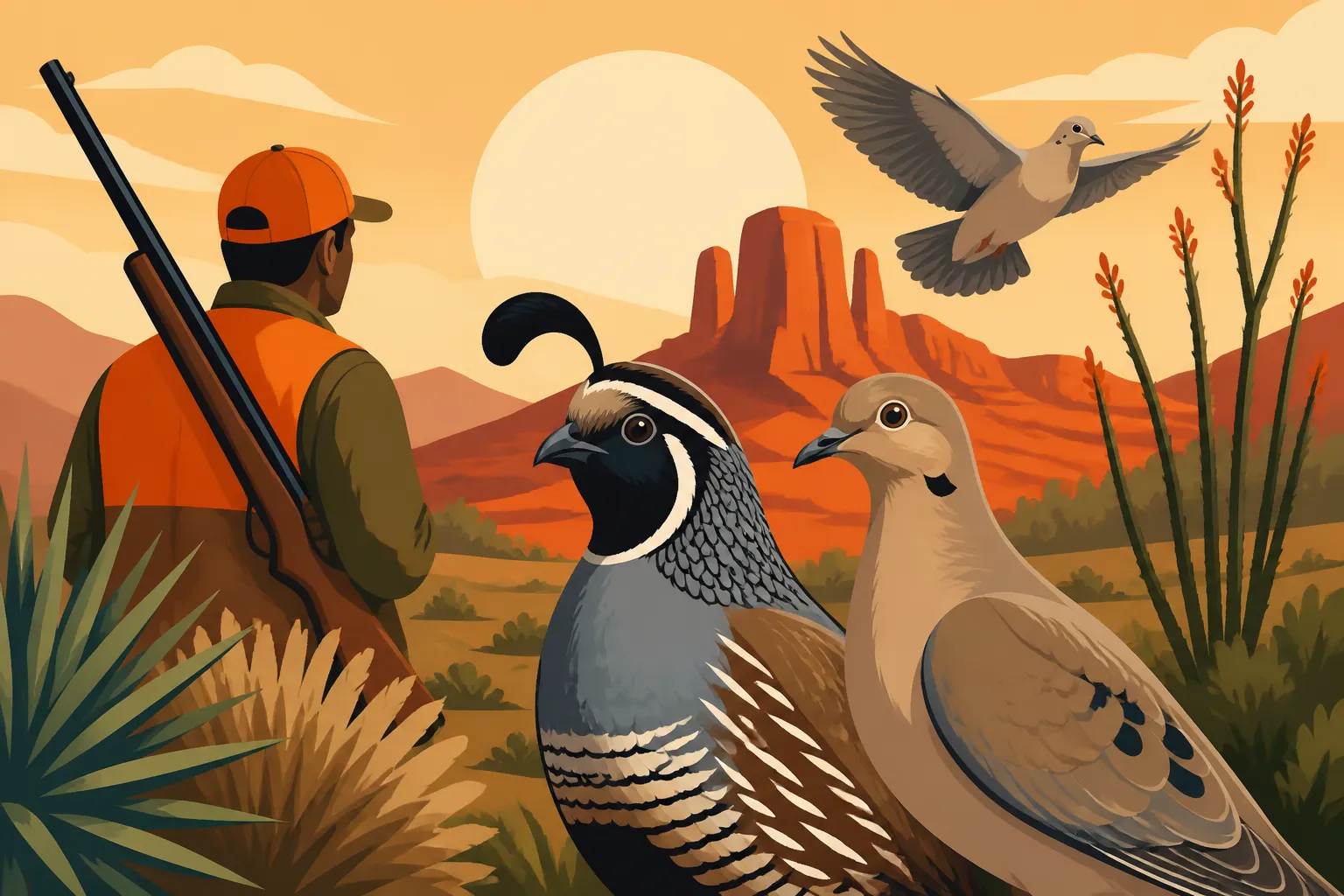
Quail, Dove and New Mexico’s Small Game
It's easy to get caught up in the big game fever here in New Mexico, isn't it? We all dream of bugling bulls in the Gila or a giant mule deer buck appearing on a frosty morning. But for many of us, especially those starting out or looking for more consistent action throughout the year, overlooking the incredible world of small game hunting is a huge missed opportunity. If you've ever felt overwhelmed by the complexities of drawing a big game tag or simply yearned for more days afield, this comprehensive guide is for you. We're going to dive deep into everything from the darting quail of the desert to the lightning-fast doves of the river bottoms, equipping you with the knowledge to make the most of New Mexico's often-underestimated small game seasons.
Why Small Game Hunting is a Gateway in New Mexico
New Mexico's hunting landscape is vast and varied, offering pursuits for every interest and skill level. While elk and deer hunts often grab the headlines and demand years of application strategy, small game hunting offers a more accessible, less competitive, and equally rewarding experience that can sharpen your skills and put delicious wild game on your table. It’s a wonderful way to connect with the land and its rhythms without the pressure of a once-in-a-lifetime draw.
The Underrated Thrill of the Chase
There's a unique excitement that comes with small game hunting, especially when you're pursuing birds. Imagine the explosive flush of a covey of quail from under your feet, or the acrobatic dips and dives of doves challenging your shotgun skills. This isn't a sit-and-wait game; it's active, engaging, and requires constant movement, observation, and quick reflexes. The "thrill of the chase" takes on a whole new meaning when you're covering ground, anticipating flushes, and trying to keep up with fast-moving targets. It’s a different kind of adrenaline than spotting a big bull, but no less satisfying.
For example, a classic quail hunt might involve walking miles of arroyos and brushy draws in southern New Mexico, your ears perked for the distinctive calls, and your eyes scanning for movement. Then, boom! A covey erupts, scattering in every direction, and you have a split second to pick a bird and mount your shotgun. It's exhilarating and demands your full attention, a perfect antidote to the sedentary modern life. This active engagement keeps you physically fit and mentally sharp, vital attributes for any hunter.
Building Skills for Bigger Game
Many experienced big game hunters will tell you that their roots lie in small game. There’s a good reason for this: small game hunting is a fantastic proving ground for a host of essential hunting skills. You'll learn to read terrain, understand animal behavior, practice stealthy approaches, and hone your shooting accuracy. These are all transferable skills that will serve you well when you eventually draw that coveted elk or deer tag.
Consider walking techniques: learning to move quietly through different types of cover, whether it’s the crunch of desert scrub or the soft pine needles of higher elevations, is crucial. Small game forces you to pay attention to details – tracks, droppings, and feeding signs – on a micro-level, which translates to finding bigger animals. Your shotgunning skills, developed on fast-flying birds, will improve your rifle or bow accuracy because you’re constantly practicing target acquisition and follow-through. Moreover, managing gear, understanding legal shooting hours and general hunting etiquette, all these fundamental elements become second nature through consistent small game outings. You can even read up on general principles of Hunting New Mexico From 4,000 Feet to 10,000 to understand how diverse habitats play into hunting strategies, no matter the quarry.
Accessibility and Opportunities
One of the biggest advantages of small game hunting in New Mexico is its accessibility. Most small game seasons are long, and many species don't require drawing a tag, only a valid game hunting license and any necessary stamps. This means more time in the field, more opportunities to introduce new hunters, and less heartbreak from the annual draw lottery. It's truly a "walk-up" opportunity for many.
Whether you're targeting quail on vast tracts of Bureau of Land Management (BLM) land near Las Cruces, doves along the Rio Grande corridor, or cottontails in countless canyons, there's public land access readily available. This low barrier to entry makes it perfect for beginners who might be intimidated by the cost and commitment of a big game hunt. It's also fantastic for families, offering a chance to get kids out in nature, teach them about wildlife, and develop a lifelong love for hunting without the intensity of a high-stakes big game hunt. Many parts of the state offer fantastic small game opportunities within an hour or two drive of major population centers, making day trips a real possibility.
New Mexico's Diverse Quail Species and Their Habitats
New Mexico is a fantastic state for quail hunters, boasting three distinct species, each with its own preferred habitat and unique challenges. Understanding where to find them and how they behave is key to a successful hunt. These birds are tough, fast, and will test your wingshooting abilities to their limits.
Scaled Quail: The "Cotton Tops" of the Desert
Scaled quail, often affectionately called "cotton tops" due to the distinctive white crest on their heads, are perhaps the most iconic quail of New Mexico's vast desert landscapes. You'll find these hardy birds primarily in the southern and eastern parts of the state, preferring arid grasslands, rolling hills, and cholla cactus flats. They thrive in areas with sparse to moderate shrub cover and plenty of open ground for running.
These birds are renowned for their tendency to run rather than fly when disturbed, often leading hunters on a merry chase across the desert floor. When they do flush, it's typically an explosive, scattered burst, often from a surprisingly tight covey. A classic scenario involves spotting a covey running ahead of you, trying to cut them off, only to have them burst from an unexpected patch of scrub. They can be incredibly frustrating but immensely rewarding when you connect. When Scaled and Gambel's Quail in New Mexico are the target, you often find yourself traversing some truly rugged but beautiful country.
Gambel's Quail: Desert Runners of the South
Gambel's quail are another desert dweller, though they typically prefer slightly denser cover than their scaled cousins, often found along riparian corridors, arroyos, and dense brush patches in the southern and southwestern parts of New Mexico. Think of the mesquite and catclaw thickets that line dry washes—that's Gambel's country. Their striking topknot and reddish flanks make them unmistakable.
Like scaled quail, Gambel's are notorious runners, but they often utilize thick cover to evade predators and hunters. They can be incredibly challenging to pin down, as they'll run through seemingly impenetrable thorny brush. Hunting Gambel's often involves pushing through dense cover, sometimes with the aid of a good bird dog, to force them into the air. When a covey flushes, it’s usually in a chaotic explosion of wings and calls, and they fly surprisingly fast, often ducking back into cover almost immediately. The dense vegetation and uneven terrain can make for some incredibly tough but exciting shooting opportunities.
Bobwhite Quail: Eastern Grassland Gems
While not as widespread as scaled or Gambel's, New Mexico does offer opportunities for bobwhite quail, primarily in the eastern plains and panhandle regions. These birds are classic grassland inhabitants, preferring tall native grasses, agricultural edges, and shrubby draws. Their distinctive "bob-white!" call is a cheerful sound familiar to many bird hunters.
Hunting bobwhites is often a more traditional experience, focusing on walking through grassy fields and along fence lines where they find cover and food. They tend to hold tighter than other quail species, making them excellent targets for bird dogs. When they flush, they typically do so as a tight covey, offering a challenging but often more predictable shot opportunity than the scattering desert quail. Finding prime bobwhite habitat can be a bit more localized, but the reward of hearing that familiar call and experiencing a classic covey flush is well worth the effort for those willing to explore Bobwhite on the Eastern Grassland. The limited range makes them a special treat for those who specifically target them.
| Quail Species | Primary Habitat | Running vs. Flying Tendency | Distinctive Feature | Hunting Challenge |
|---|---|---|---|---|
| Scaled Quail | Arid grasslands, cholla flats, sparse scrub | Strong runner, explosive scatter flush | White "cotton top" crest | Running pursuit, quick shots on scattered birds |
| Gambel's Quail | Dense riparian corridors, mesquite thickets, arroyos | Strong runner, utilizes thick cover | Black topknot, reddish flanks | Pinning them in dense brush, fast shots into cover |
| Bobwhite Quail | Tall native grasses, agricultural edges, shrubby draws | Holds tighter, covey flush | "Bob-white!" call, tight covey flights | Locating coveys, consistent dog work, classic wingshooting |
Dove Hunting: Fast-Paced Action in the Fields
Dove hunting in New Mexico is an annual tradition for many, marking the unofficial start of the fall hunting seasons. These agile birds offer some of the most challenging and fast-paced wingshooting opportunities available, and they are incredibly widespread, making them accessible to almost every hunter in the state. The sheer volume of doves during migration can make for an unforgettable experience.
Mourning Dove: The Widespread Favorite
Mourning doves are ubiquitous across New Mexico, found in nearly every corner of the state from urban fringes to remote agricultural fields and desert oases. They are migratory birds, and their presence peaks during the early September season, when millions of them pass through the state. Their distinctive mournful coo is a common sound of the New Mexico countryside.
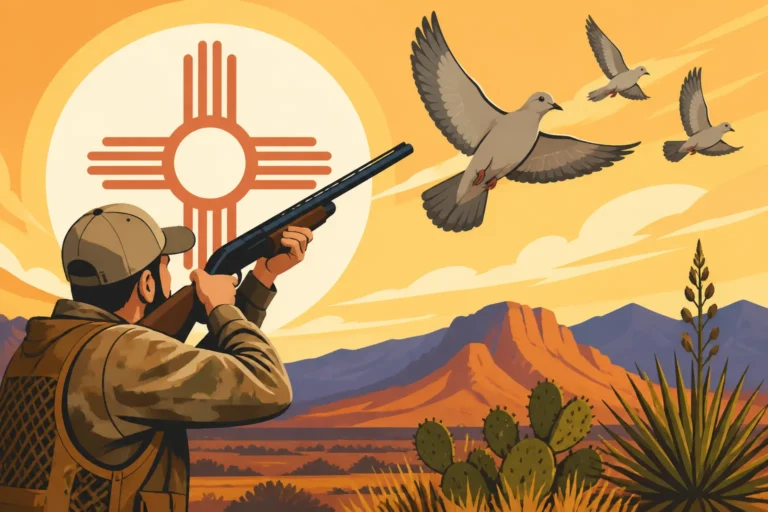
Hunting mourning doves typically involves finding their feeding areas (often harvested grain fields, sunflower patches, or weed seeds), watering holes, or flyways between roosts and food sources. It's often a pass-shooting game, where hunters position themselves strategically along these flyways, waiting for doves to zip by at incredible speeds. The challenge lies in anticipating their flight paths and leading them correctly, often requiring many shells to bring down a limit. The sheer volume of shots taken in a good dove field makes it excellent practice for any wingshooting endeavor.
White-Winged Dove: A Southern New Mexico Treat
While mourning doves are everywhere, white-winged doves are more concentrated in the southern half of New Mexico, particularly along the Rio Grande and Pecos River valleys. These slightly larger doves are easily identified by the prominent white patch on their wings, visible in flight. They often prefer areas with denser trees and brush, like cottonwood galleries, where they can find both food and roosting spots.
Hunting white-wings is similar to mourning doves but often focuses more on specific river bottom areas or agricultural fields adjacent to these dense cover types. They can be found feeding on seeds, often favoring areas near corn or milo fields. Their flight can be just as swift and erratic as mourning doves, providing ample challenge. Many hunters specifically target these areas, particularly near cities like Las Cruces or Roswell, where they are more prevalent. Understanding the difference between Mourning Against White-Winged Dove can help you tailor your hunting locations and expectations.
Band-Tailed Pigeons: High Country Challenges
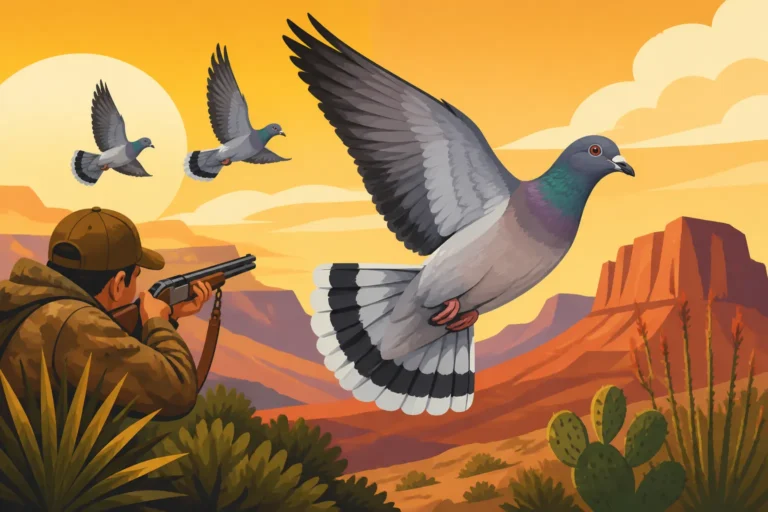
For a truly different dove hunting experience, New Mexico offers opportunities for band-tailed pigeons, primarily in the higher elevation forests of the northern and central parts of the state. These birds are larger than doves, more closely resembling rock pigeons, and are identified by the white band across the nape of their neck and a broad band on their tail. They are typically found in ponderosa pine and mixed conifer forests.
Hunting band-tailed pigeons often involves a more active, walk-and-stalk approach, similar to upland bird hunting, rather than traditional pass-shooting. They feed on acorns, pine nuts, and berries, so finding stands of oak or other mast-producing trees is key. They can be found perched high in trees or flushing from the forest floor. The season for band-tailed pigeons is usually shorter and later than mourning and white-winged doves, often overlapping with early archery big game seasons, offering a unique high-country bird hunting experience. It's a completely different rhythm than chasing doves in the low country, demanding patience and good woodsmanship.
Beyond Birds: Other Small Game Opportunities
While New Mexico's birds are fantastic, the state offers a wide array of other small game species that provide excellent hunting opportunities throughout the year. From the ever-present rabbits to the often-overlooked squirrels and the critical role of predator hunting, there’s always something to pursue.
Cottontail and Jackrabbits: Year-Round Pursuits
Rabbits are arguably the most accessible small game species in New Mexico, offering liberal seasons and found almost everywhere. Cottontail rabbits are smaller, found in brushy areas, arroyos, and suburban fringes. Jackrabbits, much larger and faster, prefer open grasslands and sagebrush flats. Both provide fantastic opportunities for young hunters or those looking for a consistent challenge.
New Mexico Cottontail and Jackrabbit Seasons are typically very long, often running year-round in some areas, making them a perfect quarry for those offseason days when other hunts are closed. Hunting rabbits often involves walking through suitable habitat, flushing them from cover, and taking quick shots. For cottontails, look for dense brush piles, rocky outcrops, and riparian edges. For jackrabbits, scan open country with binoculars, then plan a stalk. They are incredibly fast, and hitting a running jackrabbit with a rifle or even a shotgun is a real accomplishment. Plus, rabbit meat is delicious and nutritious, making them an excellent table fare.
Squirrels: Timber Treasures
For those who enjoy a slower-paced, more deliberate hunt, squirrels offer an engaging experience, particularly in the forested mountain ranges of New Mexico. The two primary species hunted are the Abert's squirrel (a striking dark squirrel with ear tufts, found in ponderosa pine forests) and various species of ground squirrels.
Hunting Abert's squirrels often involves still-hunting through ponderosa stands, looking for movement in the trees or listening for the tell-tale chatter. They feed on pine cones and fungi, making old-growth ponderosa forests ideal habitat. A .22 caliber rifle is often the weapon of choice, demanding precision and patience. It's a fantastic way to spend a quiet morning in the woods, honing your stalking skills and marksmanship. For those seeking Merriam's Turkey Through New Mexico Timber, squirrel hunting provides an excellent opportunity to scout these areas while pursuing another species. Ground squirrels are found in more open areas and can be hunted similarly to prairie dogs, often providing target practice opportunities.
Predators and Varmints: Supporting Wildlife Management
Hunting predators and varmints plays a vital role in New Mexico's wildlife management and offers year-round opportunities for hunters. Species like coyotes, bobcats, foxes, and various prairie dogs fall into this category. While not typically consumed, these hunts provide valuable experience and contribute to healthy ecosystems.
Coyote hunting is particularly popular, offering an exciting challenge with calling and stalking tactics. Hunting Coyotes Year Round in the Desert can be an intense experience, often involving electronic calls, camouflaged setups, and quick shooting. It teaches you to be acutely aware of wind direction, terrain, and how animals approach a call. Beyond coyotes, bobcats and foxes can be targeted, though they are much more elusive. Prairie dog towns offer abundant opportunities for target practice with rimfire or small-caliber centerfire rifles, helping control populations that can impact ranching and agriculture. Always be sure to check current regulations for these species, as some may have specific seasons or tagging requirements, like those for bobcats.
Regulations, Licenses, and Season Specifics
Navigating hunting regulations can sometimes feel like deciphering ancient texts, but understanding the core requirements for small game in New Mexico is relatively straightforward. Most small game pursuits are open to general license holders, making them very accessible.
General Small Game License Requirements
To hunt small game in New Mexico, you'll generally need a valid New Mexico Game Hunting License. For residents, this license is quite affordable and usually covers all small game species. Non-residents will need a non-resident Game Hunting License. Beyond the basic license, there might be specific stamps or validations required depending on the species or location. For instance, if you plan to hunt waterfowl, you'll need federal and state duck stamps, but this guide focuses on upland birds and mammals.
It's also crucial to remember that The New Mexico Hunter Education Requirement applies to most hunters born after January 1, 1972. If you don't have a hunter education card, you'll need to complete a course before you can purchase a license. There are exceptions for mentored youth, but for independent hunting, hunter education is a must. Always carry your license and any required stamps with you while hunting, and be ready to present them to a conservation officer if asked.
Understanding Bag Limits and Possession Limits
Each small game species in New Mexico has specific bag limits (how many you can harvest in one day) and possession limits (how many you can have in your possession at any given time, usually after multiple days of hunting). These limits are designed to ensure sustainable populations and fair chase opportunities for all hunters. Ignoring these limits can lead to hefty fines and loss of hunting privileges.
For example, mourning doves often have a daily bag limit of 15 and a possession limit of 45. Quail species might have a daily bag limit of 15 of each species or a combined limit, with a higher possession limit. It's vital to check the current New Mexico Hunting Rules & Information booklet every year, as these limits can change. Always count your harvested birds carefully, especially when hunting with a group, to ensure you don't accidentally exceed the limits. This is where resources like GoHunt can be incredibly useful, providing quick access to up-to-date regulations and season dates for your chosen unit.
Navigating Season Dates Across Species
Small game seasons in New Mexico are typically quite generous, offering long periods for hunting. However, exact dates vary by species and sometimes even by unit or specific area. Dove season usually kicks off in early September, while quail seasons often open in mid-November and run through February. Rabbit and predator seasons are often much longer, sometimes year-round.
Staying on top of these dates is crucial. The New Mexico Department of Game and Fish (NMDGF) publishes its annual hunting proclamation online, which is the definitive source for all season dates. Many hunters also use digital mapping and information platforms like GoHunt, which integrate season dates directly into their unit maps, making it easier to plan your outings. Always double-check the opening and closing dates for the specific species and area you plan to hunt before heading out. Don't assume because one small game season is open, all of them are. For instance, while New Mexico Legal Shooting Hours for Big Game are quite specific, small game generally follows a similar framework, typically half an hour before sunrise to half an hour after sunset.
Essential Gear and Tactics for Small Game Success
Small game hunting doesn't require a mountain of specialized gear, but having the right tools and knowing how to use them effectively will significantly increase your enjoyment and success. From selecting the proper shotgun to the invaluable aid of a good bird dog, every piece of the puzzle contributes to a rewarding experience.
Shotgun Choices and Ammunition Considerations
For most New Mexico small game birds like quail and doves, a 12 or 20 gauge shotgun is the workhorse. A 20 gauge is lighter and often preferred by smaller-framed hunters or youth, while a 12 gauge offers more versatility in load options and slightly more pellets downrange. Semi-automatics and over/unders are popular choices, offering quick follow-up shots. Whatever you choose, ensure it fits you well and you're comfortable with it.
Ammunition choice is equally important. For fast-flying doves, #7.5 or #8 shot is common, offering a dense pattern. For tougher quail or larger birds, #6 or #7 shot might be preferred. Always use appropriate shot size for the game you are pursuing, and ensure it's lead shot unless you are hunting waterfowl or in an area with specific non-toxic shot requirements. Carrying a variety of shot sizes can be beneficial, especially if you anticipate encountering different species. And don't forget plenty of shells – a dove hunt can easily chew through a couple of boxes!
Working with Dogs: A Game Changer
While it’s certainly possible to hunt small game without a dog, a well-trained bird dog is an absolute game-changer, especially for quail. Breeds like Brittanys, German Shorthaired Pointers, English Pointers, and various flushing retrievers can drastically increase your success rates and the overall enjoyment of the hunt. They help locate birds, hold them on point, and most importantly, retrieve downed game, minimizing loss.
A good dog can cover significantly more ground than a human, sniffing out coveys you'd walk right past. When they go on point, it builds incredible anticipation, adding another layer of excitement to the hunt. Retrieving birds, especially in thick cover, is where a dog truly shines, ensuring ethical recovery and less wasted game. If you're serious about upland bird hunting, investing time in training a bird dog or hunting with someone who has one is one of the best decisions you can make. The bond you form with a hunting dog and the teamwork involved are truly special.
Reading the Landscape and Finding the Birds
Successful small game hunting in New Mexico hinges on your ability to read the landscape and understand where the birds or animals will be. This involves identifying key habitat features, understanding how game uses the terrain, and observing signs of activity.
For quail, look for transitions in vegetation, edge cover, and access to water. In the desert, arroyos with denser growth, brushy draws, and the edges of agricultural fields are prime spots. Doves will concentrate around water sources, harvested grain fields (especially sunflowers or milo), and prominent roost trees. Rabbits will be in thick brush, rocky areas, or tall grasses. Learning to E-Scouting a New Mexico Unit Before the Season can save you hours of unproductive walking. Use satellite imagery and topographic maps to identify these features from home, then confirm them on the ground. Also, understanding how to read and interpret Water Sources and Ethics in Desert Hunting is vital, as these areas concentrate game, especially in dry periods.
Conservation and Ethical Considerations
As hunters, we are the original conservationists. Our passion for hunting drives our commitment to the health of wildlife populations and their habitats. Small game hunting, like all hunting, comes with significant ethical responsibilities that we must uphold to ensure the future of our traditions.
Respecting Landowners and Public Access
New Mexico has a patchwork of public and private land, and respecting property boundaries and landowners is paramount. Always know where you are hunting, and never trespass on private land without explicit written permission. This is not just a legal requirement but a fundamental ethical principle. A simple mistake can close access for everyone. If you're unsure about boundaries, use a reliable mapping app like onX Hunt or GoHunt.
Even on public lands, treating the land with respect is crucial. Pack out all your trash, avoid damaging vegetation, and be mindful of other users. If you're lucky enough to find Open Gate Properties Across New Mexico, understand their specific rules and abide by them. A positive relationship between hunters and landowners/land managers is essential for maintaining and expanding hunting access in the state.
Wildlife Management and Population Health
The bag and possession limits, season dates, and specific rules for each species are not arbitrary. They are carefully determined by the New Mexico Department of Game and Fish based on scientific data, population surveys, and habitat assessments. These regulations are designed to ensure sustainable harvest levels and the long-term health of wildlife populations.
By adhering strictly to these rules, hunters directly contribute to effective wildlife management. Overharvesting, especially of nesting hens, can have detrimental effects on future populations. Conversely, when we follow the guidelines, we help ensure that there will be abundant small game for generations to come. Understanding the "why" behind the regulations makes us more responsible and informed stewards of the resource.
Ethical Shooting and Game Retrieval
Ethical hunting demands that we make clean, humane shots and diligently retrieve every animal we harvest. For small game, this means knowing the effective range of your shotgun and practicing regularly to ensure proficiency. Don't take shots that are too far or in situations where you can't clearly identify your target. A wounded bird that flies off and is never found is a wasted bird.
When a bird is downed, immediately mark its location and go directly to it. Thick cover can make retrieval challenging, which is another reason why a good bird dog is so invaluable. If you're hunting without a dog, consider bringing a hunting partner to help spot fallen birds. Taking the time to search thoroughly for every downed bird is a non-negotiable part of ethical hunting. It shows respect for the animal and the resource.
Planning Your New Mexico Small Game Adventure
A successful and enjoyable small game hunt in New Mexico requires a bit of planning and preparation. From scouting the right areas to understanding the subtle nuances of desert ecosystems, a little forethought goes a long way.
Scouting and E-Scouting for Hotspots
Effective scouting is just as important for small game as it is for big game. While you might not be looking for massive tracks, you're looking for habitat, water sources, and signs of recent activity. E-scouting using online mapping tools from services like GoHunt or onX Hunt is an excellent starting point. Look for areas with diverse habitat, edge cover, agricultural fields, and prominent water sources like tanks or playas.
Once you have potential areas identified on your map, a physical scouting trip can confirm your suspicions. Look for tracks, feathers, droppings, and listen for calls. Identify pinch points, flyways, and dense cover where birds might hold. For doves, observe flight patterns in the evenings or mornings around potential food sources and water. For quail, walk key habitat to see if you flush any birds. Remember, small game can move, so what was hot last week might be quiet this week due to weather or food availability.
The Importance of Water Sources
In arid New Mexico, water is life, and this is especially true for small game. During dry periods, birds and rabbits will concentrate around reliable water sources such as stock tanks, playas, rivers, and even man-made guzzlers. Identifying these on a map and scouting them can be a game-changer for your hunt.
However, hunting over water sources comes with specific ethical considerations and rules. While Hunting Over a Stock Tank Legally is often permissible, ensure you're not interfering with other wildlife trying to access the water, and always be mindful of ethical distances. Some areas might have specific restrictions on hunting near water, so always check the current regulations. Often, hunting the approach or departure routes to water, rather than directly over the tank itself, can be more effective and less disruptive.
Local Knowledge and Community Resources
Don't underestimate the value of local knowledge. Chatting with fellow hunters at local sporting goods stores, attending NMDGF public meetings, or joining online forums can provide invaluable insights into current conditions, hotspots, and general strategies. While no one will give away their secret spot, many are willing to share general information that can help you narrow down your search.
Also, be aware of specific local considerations. For example, some areas might have high rattlesnake populations, requiring extra vigilance on early season hunts. Other areas might be prone to sudden monsoon floods during the late summer/early fall. The New Mexico Department of Game and Fish website is an invaluable resource for regulations, season dates, and often provides news and updates relevant to specific regions. Don't be afraid to ask questions and learn from those who know the land.
Disclaimer
Always consult the current New Mexico Department of Game and Fish hunting proclamation for the most up-to-date regulations, season dates, and licensing requirements before engaging in any hunting activities. This guide is for informational purposes only and does not supersede official state regulations.