Mourning Against White-Winged Dove
Hunting doves in New Mexico can be an incredibly rewarding experience, offering fast-paced action and delicious table fare. However, for both seasoned hunters and newcomers, distinguishing between the common Mourning Dove and the equally popular White-Winged Dove in the heat of the moment can be a real challenge. This guide will walk you through the key differences, where to find each species, and how to navigate the hunting regulations to ensure a successful and ethical hunt in the Land of Enchantment.
The Subtle Differences Between Mourning and White-Winged Doves
Often, when birds are rocketing past at 40 miles per hour, every dove can look the same. But with a bit of practice and knowledge of their distinct characteristics, you can learn to tell Mourning Doves from White-Winged Doves even in the blink of an eye. Understanding these nuances isn't just for bragging rights; it can sometimes be crucial if specific bag limits or seasons differ.
Key Visual Identifiers
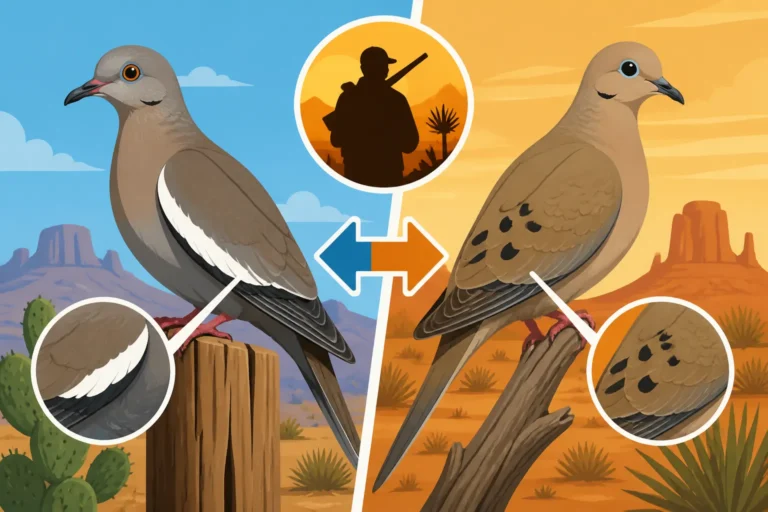
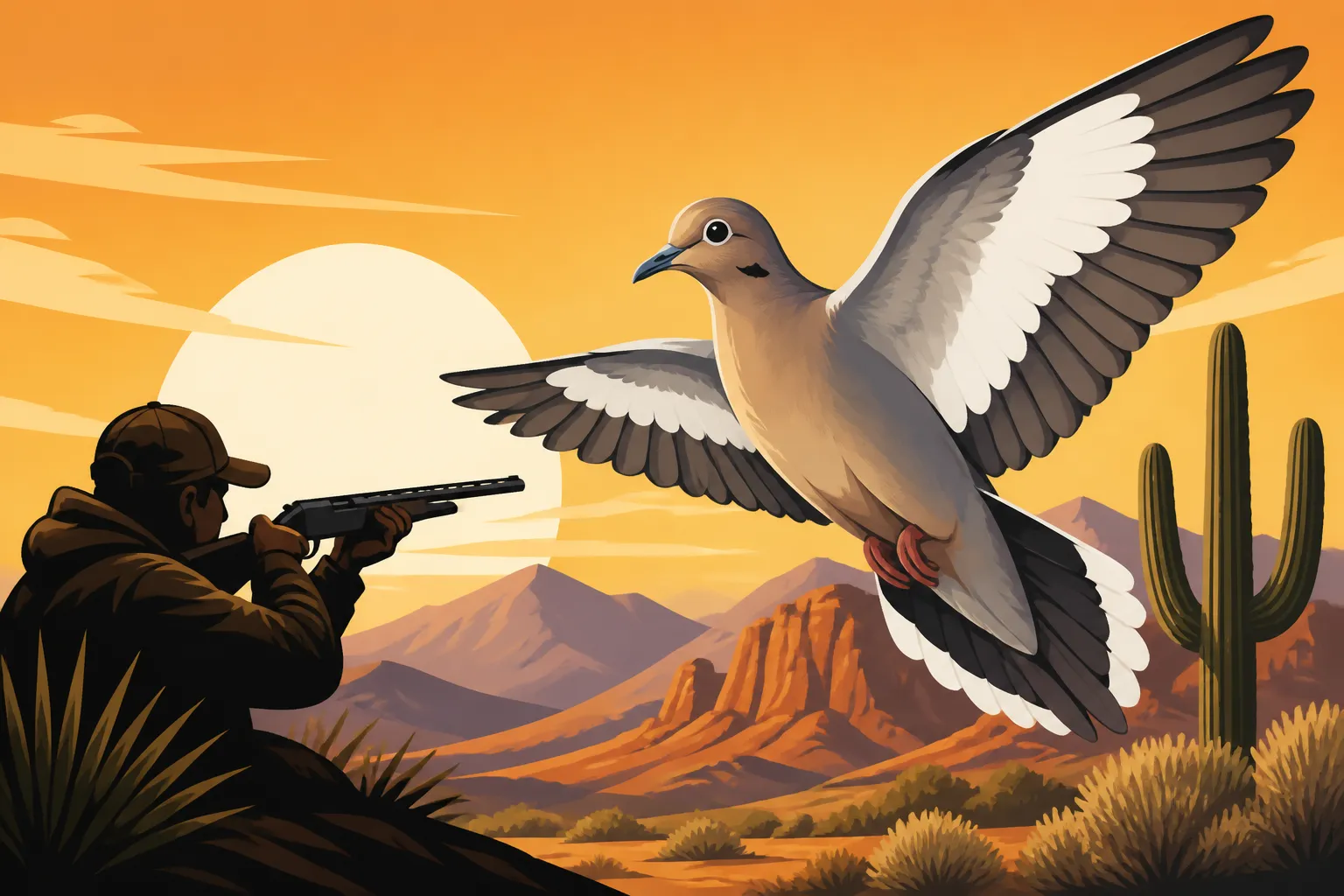
Let's start with what you can see. The Mourning Dove is generally a more slender bird, often described as elegant. They have a relatively small head, a long, pointed tail, and a muted, grayish-brown plumage that can sometimes show a subtle iridescent pinkish-purple sheen around the neck. A key field mark, though sometimes hard to spot on a fast-flying bird, is the presence of small black spots on the wing coverts and a distinct black spot just below the eye. Their flight is often erratic, characterized by quick wingbeats and often a noticeable whistling sound from their wings, especially on takeoff or landing. When they land, their long, tapered tail is a dead giveaway.
In contrast, the White-Winged Dove is a bit chunkier, larger, and has a shorter, fan-shaped tail that appears rounded in flight. Their overall plumage is also a grayish-brown, but often has a slightly richer, more olive hue. The absolute most distinguishing feature, and one that gives them their name, is a prominent white bar or patch along the trailing edge of their wings, especially visible on the primary coverts when they are in flight or perched. They also sport a noticeable bright blue eye-ring that stands out against their head. White-winged doves tend to have a more direct, powerful flight, often appearing less erratic than their mourning dove cousins, and typically lack the whistling wingbeat sound. Imagining a quick glimpse of a bird against a bright New Mexico sky, that flash of white on the wing is usually all you need for a positive ID.
Distinct Vocalizations and Behaviors
Beyond what you see, what you hear can often be the first clue to a dove's identity, especially when you're waiting quietly in a field. The Mourning Dove is famous for its namesake call: a low, drawn-out, melancholy "coo-OO-oo-oo-oo." It’s a mournful sound that seems to echo through the landscape, a signature sound of the North American countryside. These doves tend to be a bit more solitary or gather in smaller groups, especially when not migrating. They're often seen perching on power lines, fence posts, or the dead snags of trees, surveying their surroundings.
The White-Winged Dove, on the other hand, has a deeper, more owl-like call. It’s often transliterated as "hoo-HOO-hoo" or "who-cooks-for-you." It’s a more guttural, sometimes harsher sound than the gentle coo of the mourning dove. White-wings are much more gregarious, frequently found in large, noisy flocks, especially around prime roosting trees or concentrated water sources. If you hear a cacophony of deep cooing coming from a mesquite thicket near a river, chances are good you’ve found a white-winged dove hotspot. Learning these calls can give you an edge, allowing you to position yourself before the birds even appear in sight.
Habitat Preferences and Foraging Habits
Knowing where each species prefers to spend its time can significantly narrow down your scouting efforts and increase your success. The Mourning Dove is incredibly adaptable, truly a generalist that can be found in almost every corner of New Mexico. You'll encounter them in wide-open agricultural fields, suburban backyards, desert scrubland, and even the fringes of higher elevation timber. They're primarily ground feeders, seeking out small seeds from grasses, weeds, and cultivated crops. Their widespread distribution means that no matter where you hunt in New Mexico, you're likely to find Mourning Doves.
White-Winged Doves, however, are more particular about their real estate. They strongly prefer riparian areas, which are the lush strips of vegetation found along rivers, streams, and arroyos. Think mesquite bosques, cottonwood galleries, and dense tamarisk thickets. These areas provide crucial cover, roosting sites, and easy access to water. You'll find their highest concentrations along the Rio Grande, Pecos, and Gila River valleys, especially in the southern half of the state where the climate is warmer. While they will venture into adjacent agricultural fields to feed on grains like wheat, corn, or milo, they usually won't stray too far from those protective riverine habitats. Understanding these preferences is key to successful scouting; if you're looking for white-wings, head for the river bottoms. This also ties into the broader topic of understanding Water Sources and Ethics in Desert Hunting, as these birds, like many desert species, are heavily reliant on consistent water.
Where to Find Doves in New Mexico's Diverse Landscapes
New Mexico's varied terrain, from high desert to irrigated farmland, offers prime habitat for both dove species. Knowing which areas typically hold more of one species over another can dramatically improve your hunting strategy.
Mourning Dove Hotspots Across the State
Because of their incredible adaptability, Mourning Doves can be found almost everywhere you might hunt in New Mexico. However, certain areas consistently produce higher numbers. The vast agricultural lands of the eastern plains, around communities like Clovis, Portales, and Tucumcari, are absolute magnets. Here, fields of wheat, corn, and sunflowers provide abundant food sources. Combine that with scattered trees and numerous stock tanks, and you have ideal mourning dove habitat. Even in the more arid Chihuahuan Desert units of southern New Mexico, Mourning Doves thrive wherever there's enough sparse vegetation for nesting and seeds for foraging, especially if they are close to a reliable water source.
The agricultural valleys along the Rio Grande, stretching from the northern reaches down past Las Cruces, also offer excellent opportunities. While these areas also hold white-wings, the Mourning Doves are prevalent in the drier, more open fields away from the dense riverine thickets. When scouting, pay close attention to harvested grain fields, areas with sunflower patches, or fields of cut alfalfa. Doves love to feed in these areas, and observing their flight patterns to and from roosting or watering locations will lead you to success. You can leverage online tools like GoHunt to scout public land boundaries and identify agricultural plots or water features that might concentrate birds.
White-Winged Dove Concentrations in Riparian Corridors
For White-Winged Doves, your focus should heavily lean towards New Mexico's lifeblood: its rivers. The Rio Grande corridor, particularly from Socorro south to the state line, is quintessential white-wing country. Look for dense stands of mesquite, salt cedar (tamarisk), and cottonwoods along the riverbanks. These thickets provide excellent roosting and nesting cover. The Pecos River valley in the southeastern part of the state, especially near Artesia and Carlsbad, also holds significant populations, again due to the combination of water, dense cover, and adjacent agricultural areas.
Another prime region is the Gila River valley in the southwestern corner of the state, though access here can be more rugged. White-wings will congregate in these areas, often flying in large, visible flocks between their roosts, feeding grounds, and water sources, particularly in the mornings and evenings. When planning your hunt, understanding the New Mexico Dove Season Framework for these specific regions will be critical, as season dates can sometimes vary. These birds are creatures of habit, so finding their preferred flight paths early in the morning or late in the afternoon can make for an exciting hunt.
The Overlap Zones and Mixed Bags
It’s important to remember that New Mexico's doves don't always stick to strict boundaries. There are many fantastic hunting areas where you can expect to encounter both Mourning Doves and White-Winged Doves, often resulting in what hunters call a "mixed bag." These overlap zones are typically found where riparian corridors meet or transition into agricultural fields or more open scrubland. For instance, an irrigated farm field along the Rio Grande with a mesquite line at its edge is a perfect example of a place where both species will feed and water.
Hunting these mixed-bag areas can be particularly challenging but also very rewarding. You'll need to be adept at identifying birds on the wing to ensure you're staying within any species-specific bag limits, should they apply. Often, the presence of water is the great equalizer, drawing both species in. Scouting before the season opens is paramount here. Drive or walk these transition zones, identify water sources, observe flight patterns, and listen for the distinct calls. Learning the behavior of both species in these varied habitats will make you a more versatile and successful dove hunter.
Here's a quick comparison to help you differentiate:
| Feature | Mourning Dove | White-Winged Dove |
|---|---|---|
| Size | Smaller, more slender, longer body profile | Larger, chunkier, more robust body profile |
| Tail | Long, pointed, with white tips on outer feathers | Shorter, broader, fan-shaped with a distinct white band |
| Wing Markings | Small black spots on wing coverts | Prominent white bar along the wing's trailing edge |
| Head/Neck | Subtle iridescent neck patch, small black spot below eye | Bright blue eye-ring, often darker ear patch |
| Call | Classic "coo-OO-oo-oo-oo" (mournful) | Deeper, harsher "hoo-HOO-hoo" (owl-like) |
| Flight | Fast, erratic, often with whistling wings | Faster, more direct, less whistling wing sound |
| Preferred Habitat | Very adaptable: open fields, deserts, suburbs | Riparian areas, mesquite/tamarisk thickets, large trees |
Navigating New Mexico's Dove Hunting Seasons and Regulations
Understanding the rules and regulations is just as critical as knowing where to find the birds. New Mexico's dove seasons are highly anticipated, but they also come with specific guidelines that hunters must follow.
Understanding Season Dates and Bag Limits
New Mexico typically kicks off its dove season around September 1st, making it one of the earliest hunting opportunities of the fall. However, it's crucial to always consult the current year's New Mexico Department of Game and Fish (NMDGF) hunting proclamation, as dates can shift slightly, and zones or species-specific regulations might be updated. Many years will see a split season, with an early segment in September, and often a later, shorter segment in December or January. This split provides opportunities for hunters who enjoy different weather conditions and often different bird behavior. Knowing When the New Mexico Dove Opener Falls is often the most critical piece of information for eager dove hunters.
Bag limits are usually set as a combined daily limit for Mourning and White-Winged Doves, meaning you can harvest a certain number of birds total, regardless of species, though there might be a specific sub-limit for one species in certain years or zones. For example, a common daily bag limit might be 15 doves in total, with a possession limit of 45. It's imperative to understand New Mexico Dove Bag Limits precisely for the current season and region you're hunting in. These limits are designed to ensure sustainable harvest and healthy dove populations. Always remember to check for any special migratory bird regulations, including the requirement for a Harvest Information Program (HIP) number, which is free and easy to obtain through the NMDGF website.
Essential Gear and Hunting Tactics for Both Species
Dove hunting is often fast-paced and requires a keen eye and quick reflexes. Your gear doesn't need to be extensive, but choosing the right equipment and tactics can make a huge difference.
For shotguns, a 12-gauge or 20-gauge is typically ideal. Many hunters prefer a lightweight shotgun for the quick swings required to track fast-moving birds. Light target loads with smaller shot sizes, like 7.5 or 8 shot, are perfect. They provide a dense pattern, which is crucial for doves, and won't overkill the small birds, preserving more meat. Choke selections vary, but an Improved Cylinder or Modified choke is often a good starting point, providing a balance of spread and density.
Tactically, dove hunting often involves pass shooting along known flight lines—the routes birds take between feeding areas, water, and roosts. Sitting near a stock tank or pond can also be incredibly productive, especially during the hot early season. This is a tactic similar to Sitting Water for Deer and Antelope, as water is a magnet for many species in arid New Mexico. Decoys, especially spinning-wing decoys, can be remarkably effective in drawing birds closer, particularly white-winged doves. For cover, natural blinds made of mesquite, tamarisk, or sunflowers are usually sufficient. If hunting in open fields, a pop-up blind can provide crucial concealment, as doves have excellent eyesight. Remember, the key is to be still, hidden, and ready for quick shots.
Special Considerations and Ethical Hunting
Early September dove hunts in New Mexico mean one thing: heat. It's not uncommon for temperatures to soar into the 90s or even 100s. Hydration is absolutely crucial for your safety and comfort. Bring plenty of water and drink it consistently. This directly relates to Heat Management on an Early Season Hunt which is vital not just for you, but for the game you harvest.
Speaking of harvest, rapid retrieval of downed birds is paramount. Doves are small, and their meat can spoil quickly in the intense heat. Having a cooler with ice readily available is a must to preserve your birds for the table. It's also vital to be aware of your surroundings, especially if hunting near private property. Always ensure you have explicit written permission to retrieve game from private land if a bird falls on it, preventing potential issues related to Retrieving Game From Private Land in New Mexico. Ethical hunting also means being aware of baiting and trail camera rules in New Mexico; doves are migratory birds, and federal regulations regarding baiting are very strict. Always ensure any field you hunt hasn't been "baited" in a way that would make it illegal. Hunter safety is also paramount; always know your shooting lanes and what lies beyond your target. While blaze orange isn't usually required for dove hunting, maintaining situational awareness is non-negotiable.
Conservation Efforts and Population Dynamics in New Mexico
Dove hunting is one of the most popular forms of hunting in the United States, and New Mexico is no exception. This popularity means that robust conservation efforts are critical to ensuring healthy populations for future generations.
Monitoring Dove Populations
The New Mexico Department of Game and Fish (NMDGF), in cooperation with federal agencies like the U.S. Fish and Wildlife Service, works tirelessly to monitor dove populations. This involves several key methods. Banding studies are crucial, as biologists attach small, numbered bands to doves' legs. When hunters harvest a banded bird and report it, this data provides invaluable insights into migration patterns, survival rates, and harvest rates.
Another significant tool is the call-count survey. Biologists drive established routes at specific times, recording the number of doves heard cooing. This helps track population trends over time. Additionally, voluntary wing surveys ask hunters to submit a wing from each harvested dove. By examining the wings, biologists can determine the age ratio (adults vs. juveniles) of the harvest, which gives a strong indication of the year's breeding success and the overall health of the population. Hunter participation in these programs is vital; every reported band and every submitted wing contributes directly to better management decisions and sustainable hunting seasons.
Habitat Preservation for Sustainable Hunting
For White-Winged Doves especially, riparian habitat preservation is a cornerstone of conservation efforts. The mesquite and tamarisk bosques, cottonwood galleries, and other native vegetation along New Mexico's rivers are critically important for roosting, nesting, and providing cover from predators. Drought, invasive species, and human development pose significant threats to these fragile ecosystems. NMDGF often partners with private landowners and other conservation organizations to restore and protect these vital areas.
For Mourning Doves, the focus often extends to agricultural land management. Encouraging farmers to leave some waste grain in fields, planting dove-friendly food plots, or protecting strips of natural vegetation around field edges can greatly benefit mourning dove populations. These habitat preservation efforts are not just about ensuring hunting opportunities; they support a wide array of other wildlife that relies on similar ecosystems. It’s a holistic approach to land management that benefits everyone, from the smallest quail to the largest elk.
The Role of Hunter Participation
Hunters are, without a doubt, one of the most important driving forces behind wildlife conservation in North America. Every time a hunter purchases a license, tags, or certain hunting equipment, a portion of that money goes directly towards funding wildlife research, habitat acquisition, and management programs through the Pittman-Robertson Act. This means that the vibrant tradition of dove hunting directly contributes financially to the very programs that ensure doves will continue to thrive in New Mexico.
Beyond financial contributions, hunters are often the most vocal advocates for habitat protection and sound wildlife management policies. They are the eyes and ears on the ground, noticing changes in populations or habitat quality. Encouraging new hunters, especially youth, to participate in this tradition is also crucial. Programs like the New Mexico Mentored Youth Program Explained or youth-only hunting opportunities, sometimes listed under New Mexico Youth-Only Hunt Codes, help foster the next generation of conservationists and ethical outdoorsmen and women. Their passion and engagement are essential for the long-term health of New Mexico's wildlife and hunting heritage.
Maximizing Your New Mexico Dove Hunt
Beyond understanding the birds and the rules, a few practical tips can elevate your dove hunting experience from good to great. From field care to fine-tuning your gear, these details make a difference.
Field Dressing and Care for Quality Meat
Doves, both Mourning and White-Winged, offer incredibly delicious meat, but only if you care for them properly in the field. Given the often scorching temperatures of early September, rapid field dressing and cooling are non-negotiable. The most common method is simply to breast out the birds: remove the breast meat from the bone, leaving the rest of the carcass behind. This is quick, efficient, and provides the most desirable meat. Alternatively, if you prefer to pluck the whole bird, you can, but it's more time-consuming in the field.
Once the meat is removed, immediately place it in a cooler filled with ice. Do not just throw them into a game bag in the sun; they will spoil. Proper cooling is just as important for small game as it is for big game, and the advice in Getting Meat Cooled on an Early Season Hunt applies just as much to your dove breasts as it does to an elk quarter. When you get home, you can either cook them fresh or vacuum-seal and freeze them for later enjoyment. Bacon-wrapped, grilled dove breasts are a classic for a reason – they are simply divine.
Choosing the Right Shotgun and Ammo
We’ve touched on this already, but let's dive a little deeper. Your shotgun choice is often a matter of personal preference, but semi-automatics or over/unders are popular for dove hunting because they allow for quick follow-up shots on fast-moving targets. The 12-gauge is a standard for its versatility, but a 20-gauge can offer lighter weight and less recoil, which is a blessing during a hunt with high volume shooting.
For ammunition, stick with target loads. The smaller lead shot sizes (7.5 or 8) create a dense pattern that is ideal for doves, which are small targets. Avoid larger shot sizes like 4s or 6s, which are meant for larger birds like pheasants or ducks; they will simply pepper a dove with too few pellets, leading to wounded birds or excessive meat damage. In New Mexico, lead shot is generally legal for dove hunting, but always double-check if you're hunting on specific federal lands (like National Wildlife Refuges) where non-toxic shot might be required. Practice with your chosen shotgun and ammo before the season to ensure you're comfortable and accurate.
Scouting for Success
Good dove hunting is rarely an accident; it's almost always the result of thorough preseason scouting. Just like you would for bigger game, you need to put in the legwork. In the weeks leading up to the opener, drive rural roads, paying close attention to power lines, fence rows, and fields where doves might be feeding. Look for concentrations of birds. Observe their flight patterns: Where are they coming from? Where are they going? What time of day are these flights most active?
Utilize digital scouting tools like GoHunt's mapping features. You can overlay public land boundaries with agricultural layers, identify water sources, and mark potential roosting or feeding areas from the comfort of your home. Then, verify these spots in person. Doves are creatures of habit, and if you can pinpoint their flight corridors, food sources, and watering holes, you'll be setting yourself up for a memorable and productive hunt. Keep in mind that understanding the Reading a New Mexico Hunt Code and knowing the specific regulations for your chosen unit are also part of this critical preparation.
Disclaimer
Always consult the current New Mexico Department of Game and Fish hunting proclamation for the most up-to-date regulations, season dates, and bag limits before heading afield. Hunting laws can change, and it is the hunter's responsibility to be informed and compliant.