New Mexico’s Gila National Forest for Elk Hunters
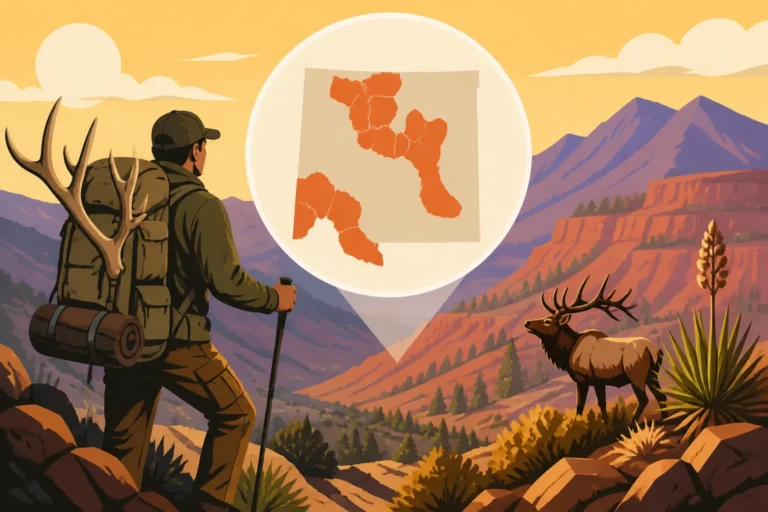
For any elk hunter, the vast, rugged expanse of New Mexico's Gila National Forest often feels like a mythical place, a true backcountry challenge that can quickly overwhelm the unprepared. Its sheer size, diverse terrain, and the cunning nature of its resident elk herds present unique frustrations for those dreaming of a bull in the Southwest. This guide aims to demystify the Gila, offering comprehensive insights into its geography, elk behavior, and the essential strategies needed to transform your Gila elk hunt from a daunting prospect into a rewarding adventure.
Understanding the Gila's Immense Scale and Challenge
When you first look at a map of the Gila National Forest, its size is impressive, but it’s not until you put boots on the ground that the true scale of the undertaking sinks in. This isn't just another national forest; it's a sprawling, formidable wilderness that demands respect and thorough preparation from every hunter. The challenges are real, from vast roadless areas to extreme elevation changes and quickly changing weather patterns.
The Sheer Size of the Gila National Forest
The Gila National Forest is one of the largest national forests in the continental United States, encompassing over 3.3 million acres in southwestern New Mexico. To put that into perspective, it's bigger than some small states. Within its boundaries lie three designated wilderness areas: the Gila Wilderness, the Aldo Leopold Wilderness, and the Blue Range Wilderness. These areas alone total over 700,000 acres where motorized travel is completely prohibited, meaning if you want to hunt deep within them, you're doing it on foot or horseback. This immense size means that scouting and covering ground can be a monumental task. You can spend days, even weeks, exploring just a fraction of a single unit and still feel like you’ve barely scratched the surface. It’s a place where a hunter can truly get lost, not just physically, but also in the sheer amount of options and terrain to cover. This is where tools like onX Hunt become invaluable, allowing you to quickly discern property boundaries, elevation changes, and potential access points across millions of acres.
The vastness also means that elk can be spread out, making traditional spot-and-stalk tactics challenging in some areas. Instead of finding elk concentrated in small pockets, you might find them widely dispersed across different elevation bands, following water sources or recent burns. This requires a flexible hunting strategy and the mental fortitude to cover a lot of ground, often silently and slowly, rather than relying on quick glassing sessions from a single vantage point.
Navigating Wilderness vs. Non-Wilderness Areas
Distinguishing between wilderness and non-wilderness areas is critical for any Gila hunter. The designated wilderness areas impose strict rules on access and equipment. No motorized vehicles, no mountain bikes, and often, only specific types of pack animals are allowed. This means that if your hunt takes you into the Gila Wilderness, for example, your entire strategy, from gear selection to game retrieval, must revolve around a true backcountry approach. This is an important distinction to understand, especially when planning for game retrieval, as you'll be packing out an entire animal on your back or with the aid of horses or mules.
Outside the wilderness boundaries, the national forest still offers expansive hunting opportunities, but with more varied access. You might find forest service roads that allow vehicle access to certain trailheads, or even primitive two-tracks that get you closer to remote areas. However, these roads are often unmaintained, susceptible to washouts, especially during monsoon season, and can be seasonally closed. Understanding the nuances of these access rules is paramount, as getting caught driving where you shouldn't, or getting stranded by a closed road, can quickly derail a hunt. Checking the local Forest Service office for current road conditions and closures before you head out is always a wise move.
The Physical Demands of Gila Elk Hunting
Let's be real: hunting elk in the Gila is not a stroll in the park. It's a physically grueling endeavor that will test your limits. Elevations in the Gila National Forest can range from around 4,000 feet up to over 10,000 feet, often within a single hunting unit. This means you could be dropping into deep canyons and climbing steep, rocky slopes repeatedly throughout the day. The air is thinner at these altitudes, and if you're coming from sea level, you'll feel it immediately. Altitude Preparation for a Gila Elk Hunt is an internal link that covers strategies for getting your body ready.
Beyond the altitude, the terrain itself is unforgiving. Expect loose rock, thick timber, dense oak brush, and steep ascents and descents that make every step a conscious effort. Carrying a heavy pack, whether it's your daypack with water and essentials or the quarters of a bull elk, becomes exponentially harder in this environment. Proper physical conditioning, including cardiovascular endurance and strength training, is non-negotiable. Many veteran Gila hunters will tell you that the hunt begins long before opening day, in the gym and on the trails near home, preparing your body for the rigors ahead. Don't underestimate the mental toughness required either, as setbacks and challenging conditions are part of the Gila experience.
Prime Elk Habitat and Movement Patterns in the Gila
Elk in the Gila National Forest are creatures of habit, but their habits are dictated by the landscape, weather, and hunting pressure. Understanding their seasonal movements and preferred habitats is key to putting yourself in the right place at the right time. The Gila offers a mosaic of environments, from high-country meadows to juniper-studded mesas, each playing a role in the elk's annual cycle.
High-Country Summer Range and Timbered Canyons
During the warmer months, Gila elk, especially the larger bulls, tend to seek out the cooler, higher elevations. This means you'll often find them in ponderosa pine, spruce-fir, and aspen forests, particularly around open parks and meadows that offer rich forage. These areas provide not only abundant food but also crucial thermal cover from the sun and security from predators, including hunters. As the season progresses into early archery hunts, these high-country haunts remain primary targets. Bulls will begin to descend slightly into the timbered canyons as the rut approaches, using the cover to stage and travel between feeding and bedding areas.
The timbered canyons themselves are absolute sanctuaries for elk. They provide escape routes, bedding areas, and often hold reliable water sources. Learning to navigate these labyrinthine canyons and understand how elk use them for travel and security is an advanced skill. It requires patience, a keen eye for subtle sign, and an understanding of how wind currents behave in such broken terrain. Reading Wind in a Deep Gila Canyon is a critical skill for still-hunting or calling in these areas. Look for north-facing slopes, which tend to be cooler and retain moisture longer, often holding denser vegetation and, consequently, more elk.
Locating Water Sources in Dry Periods
New Mexico is often characterized by its arid climate, and the Gila is no exception, especially in the early seasons. Water is life, and for elk, it dictates their movements, particularly during dry spells. Springs, seeps, stock tanks, and even ephemeral puddles in canyon bottoms can become magnets for thirsty elk. Identifying these critical water sources on your map, and then scouting them in person, can be a game-changer. During extended dry periods, elk will often bed closer to water, or move to it during the cooler parts of the day, typically dawn and dusk.
However, hunting over water sources requires a delicate approach. Elk are incredibly wary, and any hint of human presence can send them packing. Consider wind direction, approach routes, and setup locations carefully. Natural water sources, often found deep within the wilderness, are usually less pressured than those closer to roads. Artificial stock tanks, while providing vital water, can also see more human activity due to easier access. Always check local regulations regarding hunting near water, as some states have specific rules or restrictions. Using mapping software like onX Hunt, which often highlights springs and stock tanks, can help you identify potential hot spots before you even set foot in the unit.
The Impact of Monsoons and Snowpack on Elk
The Gila's weather patterns can have a profound impact on elk distribution and behavior. The summer monsoon season, typically July and August, brings heavy, localized thunderstorms that can green up the landscape and fill water sources, scattering elk as they no longer need to concentrate around limited water. These storms can also make forest roads impassable and turn canyon bottoms into raging torrents, creating dangerous hunting conditions. Conversely, a poor monsoon season can mean extended dry conditions well into the fall, making those permanent water sources even more critical.
As fall progresses, the first significant snowfalls in the high country will start to push elk down to lower elevations. This migration is gradual, often following specific drainage systems and traditional travel corridors. Knowing these general migration routes can give you a significant advantage, especially for late-season hunts. Heavy snowpack will push them down further and concentrate them in winter range areas, often on south-facing slopes that melt faster and provide easier access to forage. Paying attention to weather forecasts and understanding how different amounts of precipitation affect elk movement is part of being a successful Gila elk hunter.
Accessing and Navigating the Gila National Forest
Getting into and around the Gila can be one of the biggest logistical hurdles for hunters. The terrain is rugged, the roads are often primitive, and the sheer size requires careful planning. Successful Gila hunters aren't just good at calling elk; they're also masters of navigation and access.
Key Entry Points and Trailheads
Given its massive footprint, the Gila National Forest has numerous entry points, but some are more strategic than others for elk hunting. For the Gila Wilderness and Aldo Leopold Wilderness, your access will be exclusively via trailheads. Popular starting points include areas west of Reserve and Luna, leading into units like 15 and 16, or from the east near Beaverhead and Wall Lake, accessing units 16E and 17. Each trailhead opens up a different section of the backcountry, and understanding which trailheads lead to prime elk country is part of your pre-season scouting. For instance, trailheads along the main arteries like State Highway 15 or FR 150 often provide access to some of the most sought-after units.
Before you even leave home, use detailed maps and satellite imagery to identify not just the major trailheads, but also less obvious access points that might see less pressure. Websites like the Forest Service provide maps, but pairing that with satellite views on platforms like onX Hunt allows you to analyze terrain, timber density, and potential water sources around these entry points. Remember, the further you can get from vehicle access, the better your chances of encountering less pressured animals.
Motorized Travel Rules and Seasonal Closures
While wilderness areas are strictly foot or horseback, other parts of the Gila National Forest do allow motorized travel on designated roads and trails. However, these rules are subject to change and are rigorously enforced. It is imperative to consult the current Motor Vehicle Use Map (MVUM) for the specific ranger district you plan to hunt. These maps clearly show which roads are open, which are closed seasonally, and which are entirely off-limits. Ignorance of these rules is not an excuse and can result in significant fines.
Seasonal road closures are common, especially at higher elevations, due to snow, or during and after monsoon season due to mud and washouts. These closures can severely limit access, sometimes cutting off entire sections of a unit. Always check with the local Forest Service office or their website for the most up-to-date information on road conditions. A road that was open last year might be closed this year, or a recent storm could have rendered a previously accessible route impassable. Don't rely solely on what you remember from previous trips; always verify current conditions.
Utilizing Mapping Tools for the Gila Backcountry
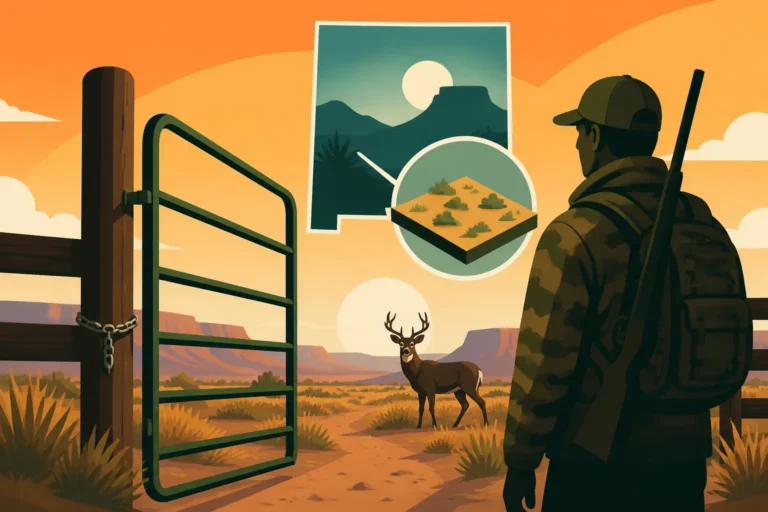
In a landscape as vast and complex as the Gila, modern mapping tools are no longer a luxury—they are a necessity. Gone are the days of relying solely on paper maps (though you should always carry one as a backup). Apps like onX Hunt or Basemaps are indispensable for navigating the Gila backcountry. These tools provide real-time GPS tracking, detailed topographic maps, satellite imagery, and crucial land ownership overlays. Knowing exactly where public land ends and private property begins is vital, especially when you're pursuing a wounded animal. Getting Written Permission in New Mexico is an important topic to understand if you find yourself near private property.
Beyond basic navigation, these apps allow you to mark waypoints for camp, water sources, elk sign, and potential escape routes. You can measure distances, analyze elevation profiles, and even identify subtle terrain features that might hold elk. Many hunters also use GoHunt's Insider service for draw odds and unit breakdowns, which helps with pre-season planning, but for on-the-ground navigation, a robust GPS mapping app is essential. Make sure to download offline maps for your hunting unit, as cell service in the Gila is spotty at best, and non-existent in most backcountry areas. A reliable portable charger for your devices is also a must-have.
Specific Units Within the Gila National Forest
The Gila National Forest is not a monolithic hunting area; it's comprised of numerous Game Management Units (GMUs), each with its own characteristics, elk populations, and hunting opportunities. While the entire forest holds elk, certain units have developed reputations for specific types of hunting or trophy potential.
Units Known for Trophy Potential
When hunters talk about trophy elk in New Mexico, specific Gila units often come up in conversation. Units like 15, 16A, 16D, and 17 are legendary among elk hunters, known for their rugged country and the potential to produce older, larger bulls. What Makes New Mexico Unit 15 the Gila's Finest is a testament to the quality found there. These units typically have high proportions of designated wilderness, extensive public land, and challenging terrain that naturally helps older bulls survive. The draw odds for these units can be notoriously tough, reflecting their popularity and reputation.
- Unit 15: Often considered the pinnacle of Gila elk hunting, Unit 15 is largely wilderness, requiring significant physical effort and backcountry experience. Its rough terrain and limited access contribute to lower hunting pressure in core areas, allowing bulls to reach maturity.
- Units 16A and 16D: These units also boast excellent elk populations and trophy potential, offering a mix of wilderness and accessible timbered country. New Mexico Units 16A and 16D Elk Reputation is something talked about in hunting circles across the country. They can be incredibly challenging but rewarding.
- Unit 17: This unit is characterized by a mix of high-elevation timber and deep canyons, with parts of the Aldo Leopold Wilderness within its boundaries. It's known for strong bull-to-cow ratios and a good population of mature animals. New Mexico Unit 17 Bulls and Two Wilderness Areas explains why these are top-tier elk units.
However, keep in mind that "trophy potential" doesn't guarantee a trophy. These units are tough, and success rates can still be low due to the sheer difficulty of the hunt and the elk's elusive nature. Even in prime units, you'll need skill, persistence, and a bit of luck.
General Season Structures and Draw Odds Considerations
New Mexico employs a draw system for most of its big game tags, and elk tags in the Gila are no exception. The seasons are typically divided into archery, muzzleloader, and any legal weapon (rifle) hunts, with specific dates varying by unit and hunt code. Archery seasons often occur in September during the peak of the rut, offering exciting bugling opportunities. Muzzleloader and rifle seasons follow, often extending into October and November. Each season has its unique challenges and advantages.
The draw odds for prime Gila elk units are generally very low, especially for non-residents and for archery or early rifle bull tags. New Mexico does not use a preference point system, meaning every applicant, regardless of past attempts, has an equal chance each year. This is both a blessing and a curse: it means a first-time applicant has the same odds as someone who has applied for twenty years, but it also means there's no accumulating advantage. Websites like GoHunt's draw odds section can provide valuable data on success rates for different units and hunt codes, helping you strategize your application. Understanding New Mexico's Three Allocation Pools Interact is vital for draw success.
Understanding Hunt Codes and Unit Boundaries
New Mexico's hunt codes can seem like a jumbled mess of letters and numbers at first glance, but they are crucial for understanding the specifics of your tag. Each code designates the species, unit, weapon type, and season dates. For example, "ELK-16A-1-2023" might indicate an elk hunt in Unit 16A, for a specific season in 2023. Learning to decipher these codes is fundamental to ensuring you apply for the correct hunt and understand the rules once you've drawn a tag. Reading a New Mexico Hunt Code Before You Apply goes into more detail.
Equally important is a clear understanding of unit boundaries. The Gila National Forest spans multiple units, and these boundaries are not always obvious on the ground. A single canyon might divide two units, or a forest road might serve as a boundary line. Accidentally stepping into the wrong unit, especially if you have a tag for a specific area, can lead to serious legal issues. Always use your mapping tools to confirm your location relative to unit boundaries. Downloading unit boundary layers on your onX Hunt app is a smart move that prevents accidental trespass or hunting out of bounds.
| Gila Unit | Primary Terrain Type | Known For | Key Challenge | Typical Draw Odds (Bull) |
|---|---|---|---|---|
| Unit 15 | Deep canyons, Ponderosa, Aspen | Large bulls, wilderness | Extreme physical demands | Very Low (1-5%) |
| Unit 16A | Rugged mountains, mixed timber | Quality bulls, steep country | Steep grades, dense timber | Low (3-7%) |
| Unit 16D | Mountainous, high wilderness | Consistent bull quality | Remote access, deep canyons | Low (3-7%) |
| Unit 17 | Pine forests, open parks, volcanic | Good numbers, mature bulls | Varied terrain, high elevation | Moderate (5-10%) |
| Unit 34 | Pinon-Juniper, scrub oak | Mule Deer, some elk | Accessible, more pressure | Higher (8-15%) |
Note: Draw odds are estimates and fluctuate annually. Consult the NMDGF website or services like GoHunt for current statistics.
Essential Gear and Preparations for a Gila Elk Hunt
A Gila elk hunt is an expedition, not just a weekend trip. Your gear choices and physical preparation can make or break your experience, often determining the difference between success and a miserable, or even dangerous, outing. Don't skimp on quality or preparation when heading into this challenging environment.
Optics and Long-Range Glassing Strategies
In the open parks, clearings, and vast canyon systems of the Gila, quality optics are paramount. A good pair of 10x or 12x binoculars are essential for glassing timbered hillsides and distant slopes. They allow you to pick apart potential bedding areas, spot a flick of an ear, or identify a tell-tale patch of dark hide. Even better, a high-quality spotting scope (20-60x or 25-75x) on a sturdy tripod is indispensable for evaluating distant animals and determining if that distant dot is a branch or a bull's antler. Spotting Scope Power for Open Country should be considered when choosing your optics.
Long-range glassing means more than just looking; it means systematically breaking down terrain. Grid glassing, where you meticulously scan a section of terrain like a grid, is a highly effective technique in the Gila. Spend long periods behind your optics, letting your eyes adjust and pick up subtle movements or shapes that don't belong. Many hunters will find a good vantage point, set up their tripod, and spend hours methodically searching. This can save you countless miles of walking and put you on elk that other hunters might miss. Glassing Benches and Parks for Elk highlights specific strategies for different terrain.
Backpacking and Camp Setup Considerations
For many Gila hunts, especially in the wilderness units, a true backpacking approach is the only way to effectively hunt the backcountry. This means carrying everything you need on your back, including shelter, sleeping system, food, water, and hunting gear. Your pack itself needs to be capable of handling heavy loads comfortably, as you'll not only be carrying your supplies in but potentially packing out hundreds of pounds of elk meat. Packing an Elk Out of the Gila Alone is a brutal test of pack and resolve.
Consider the weight of every item. Lightweight tents, sleeping bags, and cooking systems are worth the investment. Water filtration or purification systems are essential, as carrying all your water for an extended trip is often impossible. Plan for various weather conditions; even in September, the Gila can experience significant temperature swings from hot days to freezing nights. Layering for Gila Temperature Swings is a smart article to check out for advice. Your camp setup should be efficient, allowing you to get in and out quickly, and ideally, leave no trace. If you're using a drop camp service with horses, the burden is lessened, but you still need to be self-sufficient for spike camps away from the main camp.
Physical Conditioning and Altitude Acclimation
We touched on this earlier, but it truly cannot be overstated: the Gila will challenge you physically. Start your physical preparation months, not weeks, before your hunt. Focus on cardiovascular fitness through hiking, running, or cycling, aiming for workouts that mimic the sustained effort of climbing steep hillsides with a pack. Incorporate strength training, especially for your legs and core, which will bear the brunt of packing out meat. Don't forget about your mental game; the Gila can be frustrating and exhausting, and a strong mental resolve will help you push through tough days.
If you're coming from a lower elevation, arriving a few days early to allow your body to acclimate to the altitude is highly recommended. Even a couple of days can make a significant difference in your performance and reduce the risk of altitude sickness. Stay hydrated, avoid excessive alcohol, and take it easy the first day or two. Listen to your body, and don't push yourself beyond your limits, especially when you're still adjusting. This early acclimation period can also be used for some light scouting, helping you familiarize yourself with the terrain and game movement without overexerting yourself.
Disclaimer
This article is for general informational purposes only and does not constitute professional advice. Laws, prices and regulations vary by location and change over time. Consult a qualified professional for guidance on your specific situation.