Backcountry Units That Require a Pack Trip
There's a special allure to chasing big game deep in the backcountry, far from the road hunters and the crowds. But in New Mexico, that dream often comes with a significant reality check: some units demand more than just strong legs and a good pack. This guide will help you understand which New Mexico units are truly backcountry experiences, why a pack trip is essential for success, and how to prepare for the adventure of a lifetime.
What Makes a New Mexico Unit "Backcountry" for Hunters?
When we talk about "backcountry" in New Mexico, we're not just referring to a unit that's a few miles from pavement. We're talking about vast, untamed landscapes where motorized access is severely restricted or nonexistent, where the terrain itself is a formidable challenge, and where self-sufficiency isn't just a good idea—it's absolutely critical. These are the places where the truly wild animals roam, and where the effort required to reach them often culls the faint of heart.
Remoteness and Lack of Road Access
The most defining characteristic of a true New Mexico backcountry unit is its remoteness from established roads. You might drive for miles on gravel, then a two-track, until that too simply fades into a designated wilderness boundary or becomes impassable for all but the most specialized vehicles. In many cases, access is limited to a handful of trailheads that serve as jumping-off points into millions of acres of designated wilderness. This isn't just about driving further; it's about the sheer physical distance you'll need to cover on foot, or with the help of horses or mules, just to reach productive hunting grounds.
Imagine pulling into a trailhead parking lot, the last sign of civilization disappearing behind you. From that point, every mile covered is earned with sweat and determination. You won't be able to run back to the truck for a forgotten item, or quickly drive around a ridge to get a better angle. Your entire camp, all your food, water, and hunting essentials, must be carried in on your back or by pack animal. This lack of convenient road access is what truly defines the wilderness experience, ensuring that only those committed to the journey get to taste its rewards. It forces you to simplify, to prioritize, and to fully embrace the challenge of the wild.
Rugged Terrain and Elevation Changes
New Mexico's backcountry isn't flat. It's a land of dramatic, unforgiving terrain. We're talking about units carved by deep canyons, studded with towering mesas, and crisscrossed by steep, rocky ridges. The elevation can swing wildly, from high desert plateaus to alpine peaks over 10,000 feet, all within a few miles. This means that a "straight shot" on a map rarely translates to an easy hike in reality. You'll be climbing, descending, traversing loose scree slopes, and navigating dense stands of timber.
Consider hunting in the Gila, for instance. You might drop thousands of feet into a canyon only to have to climb just as steeply out the other side. This constant up-and-down not only demands incredible physical stamina but also slows your pace significantly. Every step is a calculated effort, especially when carrying a heavy pack. The ground underfoot can be treacherous – loose rock, downed timber, thick brush. These are not units for casual strolls; they demand sturdy boots, strong ankles, and a relentless spirit. The reward, of course, is often less pressured game that thrives in these difficult-to-reach sanctuaries. Hunting New Mexico From 4,000 Feet to 10,000 gives a good overview of what these elevation changes entail.
Size and Scope of Wilderness Areas
A significant portion of New Mexico's most renowned backcountry hunting units fall within designated wilderness areas. These are places like the Gila Wilderness, the Aldo Leopold Wilderness, and parts of the Pecos Wilderness. By federal law, wilderness areas are managed to preserve their wild character, meaning no motorized vehicles, no mechanized equipment, and a focus on primitive recreation. This designation is exactly why these units remain so wild and untamed.
These wilderness areas are not small parcels; they often span hundreds of thousands, if not millions, of acres. The Gila Wilderness Complex, for example, is one of the largest wilderness areas in the lower 48 states. This immense scale means that once you're a few miles in, you are truly isolated. There are no towns, no ranches, no easy escape routes. This vastness contributes to the low hunting pressure and the opportunity to find mature animals that have grown old avoiding human encounters. Understanding these boundaries, often visible on mapping apps like onX Hunt, is crucial for planning your deep dive into the wilderness. New Mexico Holds Over 30 Million Acres of Public Hunting Land highlights the sheer volume of accessible ground.
Identifying Key Backcountry Units in New Mexico
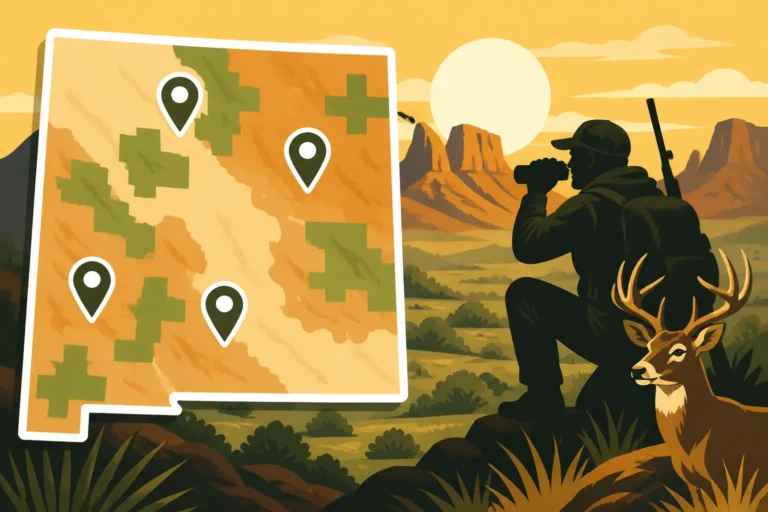
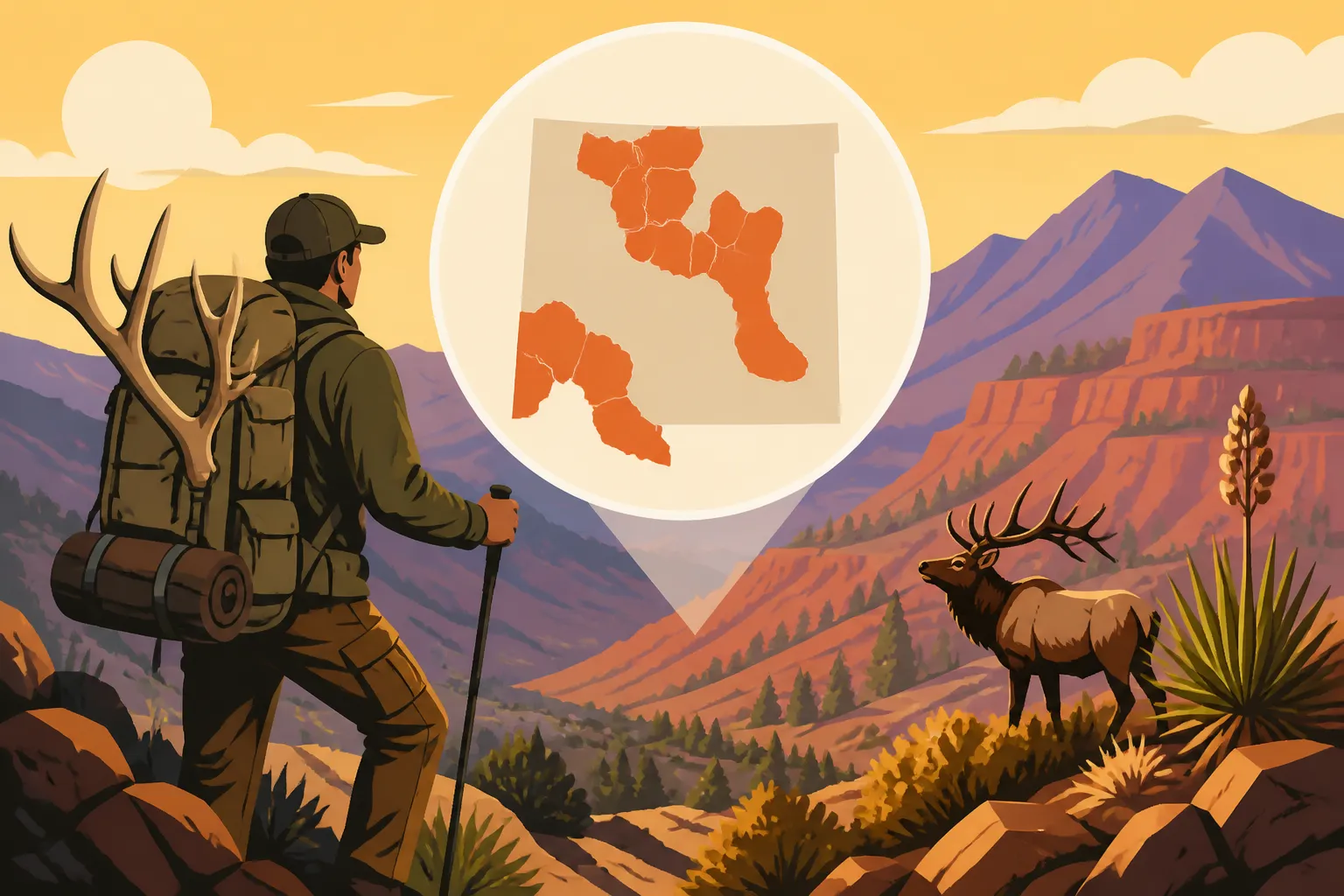
While many units in New Mexico offer challenging terrain, a select few truly stand out as requiring—or at least strongly benefiting from—a pack-in approach. These are the units known for their expansive roadless areas and the quality of hunting found deep within their boundaries.
The Gila Wilderness Complex
When most hunters think of New Mexico backcountry, their minds immediately go to the Gila. This sprawling region in the southwestern part of the state is synonymous with challenging elk and mule deer hunting. Units such as 15, 16A, 16D, and 17 are prime examples. These units contain significant portions of the Gila Wilderness and the Aldo Leopold Wilderness, offering vast stretches of terrain accessible only on foot or by pack animal.
Unit 15, often hailed as the "finest in the Gila," is a prime example of a unit where a pack trip allows you to access truly unpressured elk and deer. While some areas are closer to forest roads, the deepest, most productive canyons and ridges are a multi-day hike from any vehicle. The same goes for units 16A and 16D, known for their trophy potential but requiring significant effort to get away from the limited road system. Why New Mexico's Gila Grows Big Bulls delves deeper into the allure of this region. Hunting these areas isn't just about having a tag; it's about having the means and the will to get into the heart of the wilderness.
Northern New Mexico's High Country
While the Gila often steals the spotlight, northern New Mexico also boasts some serious backcountry challenges, particularly in the higher elevations of the Carson and Santa Fe National Forests. Units here, nestled in the Sangre de Cristo Mountains, often feature steep, timbered slopes, high alpine meadows, and deep canyons. These areas, while perhaps not as expansive as the Gila wilderness, can be just as demanding due to their steepness, elevation, and dense cover.
Units bordering the Pecos Wilderness, for instance, offer incredible opportunities for elk and mule deer, but vehicular access quickly gives way to trails. These can be particularly rugged, especially if you're hunting during an early season when monsoon rains have turned trails into slick mud or during a late-season rifle hunt when snow can make travel perilous. Hunting the Carson High Country and Santa Fe National Forest Hunting Access provide more details on these areas. Packing into these units allows you to establish a remote camp, giving you a distinct advantage over day hunters who must trek in and out daily.
Other Notable Areas for Pack-In Hunts
Beyond the primary elk havens, other units across New Mexico might require or greatly benefit from a pack-in approach, depending on your target species and desired level of solitude. For instance, some of the more rugged, less accessible areas within the Sacramento Mountains (Lincoln National Forest) can offer excellent mule deer hunting away from pressure, particularly in pockets with difficult access. Similarly, deep canyons in the remote southern units, while not true wilderness areas, might still be so rugged and lacking road infrastructure that a pack trip is the only realistic way to sustain a multi-day hunt and retrieve an animal.
Even some of the Barbary sheep and Ibex units, while often having some road access to their bases, might necessitate significant packing to reach the animals' preferred rimrock and steep, broken terrain. The sheer verticality of some of these landscapes means that while you might start from a road, your ability to stay on the mountain for multiple days, and crucially, get an animal out, dictates a well-planned pack system.
Here's a quick comparison of a few challenging New Mexico units:
| Unit Name (Example) | Primary Game | Typical Terrain | Backcountry Difficulty | Key Wilderness Area |
|---|---|---|---|---|
| Unit 15 | Elk, Mule Deer | Deep canyons, dense timber, high mesas | Very High | Gila Wilderness |
| Unit 16A | Elk, Mule Deer | Steep mountains, varied timber, open parks | Very High | Gila Wilderness |
| Unit 17 | Elk, Mule Deer | Rugged mountains, thick timber, remote | High | Aldo Leopold Wilderness |
| Northern units near Pecos | Elk, Mule Deer | High alpine, steep forests, rocky | High | Pecos Wilderness |
Why a Pack Trip Becomes Essential
You might be thinking, "Can't I just hike in with a big backpack?" For a day hunt, sure. For a one-night spike camp, maybe. But for a multi-day, true backcountry hunt in New Mexico, especially for larger game like elk, a dedicated pack trip—whether with horses, mules, or a heavily supported human effort—quickly moves from being an option to a necessity.
Transporting Gear and Supplies
Picture this: you're planning a five-day hunt deep in the Gila. Your gear list isn't just your rifle and some ammo. You need a sturdy tent, a warm sleeping bag, a sleeping pad, a cooking system, enough food for yourself and potentially a hunting partner, water filtration, first-aid supplies, emergency communication devices, extra layers of clothing for drastic temperature swings, optics, knives, game bags, and enough fuel for your stove. Trying to haul all of that, plus any game meat, on your back for multiple miles over rugged terrain is simply not feasible for most hunters.
Horses and mules become your mobile warehouses. They can comfortably carry hundreds of pounds of gear, making the initial trek in and the subsequent packing out far more manageable. This allows you to bring a more comfortable camp, more robust supplies, and ultimately, stay in the field longer and more effectively. Without pack animals, you'd be forced to severely compromise on comfort, safety, or duration, which can significantly impact your hunting success and overall experience. Water You Must Carry on a Desert Day Hunt helps illustrate the weight of just one essential, water.
Game Retrieval Logistics
This is arguably the biggest reason why a pack trip is essential for hunting big game in New Mexico's backcountry. You've hiked for miles, climbed thousands of feet, and finally, after days of hard hunting, you've connected with a magnificent bull elk or a heavy mule deer buck. Now what? You're potentially miles from the nearest road, hundreds or thousands of feet below a ridge, or deep within a canyon. An adult bull elk can weigh upwards of 700-800 pounds live weight. Even after field dressing, you're looking at hundreds of pounds of meat, hide, and antlers.
Without pack animals, retrieving an elk from true backcountry means multiple, grueling trips on foot, often carrying 50-70 pounds per trip. This process is not only physically brutal but also time-consuming, exposing your meat to warmer temperatures for longer periods and risking spoilage. Horses or mules, on the other hand, can haul out an entire animal, quartered and bagged, in far fewer trips, dramatically reducing the physical toll and the risk of meat spoilage. This logistical advantage is why many seasoned backcountry hunters consider pack animals non-negotiable for serious elk hunts in remote areas. Packing an Elk Out of the Gila Alone provides a stark look at the effort involved without help.
Safety and Self-Sufficiency
Deep backcountry hunting carries inherent risks. Injuries, sudden weather changes, getting lost, or equipment failures are all real possibilities when you're miles from help. A pack trip, especially one with an outfitter, often comes with an added layer of safety and self-sufficiency. If you're going DIY, carrying more comprehensive first-aid kits, robust shelter, and reliable communication devices (like satellite messengers) is easier with pack support. You're simply better equipped to handle emergencies when you don't have to carry every single ounce on your back.
Furthermore, being able to establish a comfortable, well-supplied base camp deep in the hunting grounds allows you to focus more on hunting and less on daily survival. You can ride or hike out to hunt each day from a central point, returning to a hot meal and a warm tent, rather than constantly breaking down and setting up spike camps. This improved comfort and readiness contribute directly to a safer and more enjoyable hunt.
Planning Your New Mexico Backcountry Pack Trip
Successfully executing a backcountry pack trip in New Mexico requires meticulous planning, both physically and logistically. It's not a spur-of-the-moment adventure; it's an expedition that demands respect for the wilderness and thorough preparation.
Physical and Mental Preparation
You can't just decide to pack into the Gila next month if your regular workout consists of walking to the fridge. Backcountry hunting, especially in New Mexico's rugged units, is an extreme physical challenge. You need to train for it. This means consistent cardiovascular exercise (hiking with a heavy pack, running, stair climbing), strength training (especially legs and core), and building endurance. Simulating hunting conditions by hiking steep terrain with a weighted pack is invaluable.
Beyond the physical, the mental game is just as important. You'll face discomfort, exhaustion, potentially bad weather, and the inevitable lulls in hunting action. A strong mental fortitude, the ability to push through adversity, and a realistic expectation of the challenges ahead are crucial. Preparing Physically for a High Elevation Hunt is a must-read for anyone considering a tough New Mexico backcountry experience. Be honest with yourself about your limits and build up gradually.
Essential Gear for a Multi-Day Pack-In Hunt
Your gear list for a pack-in hunt will be more extensive and specialized than for a front-country hunt. Durability, weight, and multi-functionality are key.
- Backpack: If you're going DIY, a high-quality internal or external frame pack capable of comfortably carrying 60+ pounds is essential.
- Shelter: A lightweight, durable tent or robust tarp system suitable for the weather conditions you expect.
- Sleeping System: A sleeping bag rated for colder temperatures than you anticipate, plus a comfortable sleeping pad.
- Cooking System: A compact, reliable stove, fuel, and dehydrated meals.
- Water Management: A high-capacity water filter or purification system, plus multiple water bottles or bladders. Reliable water sources can be sparse, so plan accordingly. Finding Water in New Mexico's Dry Country offers vital insights.
- Optics: Binoculars, and potentially a spotting scope (especially if using a tripod with onX Hunt for e-scouting). Optics Power for New Mexico's Open Country can guide your choice.
- Navigation: GPS device (like a handheld Garmin or your phone with onX Hunt Pro app), physical maps, and a compass. Know how to use them without relying solely on electronics.
- First Aid: A comprehensive kit, and knowledge of how to use it for common hunting injuries.
- Emergency Communication: A satellite messenger or phone. Cell service is virtually nonexistent in deep backcountry.
- Game Processing: Sharp knives, a knife sharpener, multiple game bags, and paracord.
- Clothing: Layering system for diverse weather, including waterproof outer shells.
Remember, every item must earn its place in your pack. Using a digital mapping tool like onX Hunt for pre-scouting and navigating in the field is a game-changer for these remote areas. E-Scouting a New Mexico Unit Before the Season can help you plan your approach.
Hiring an Outfitter vs. DIY Pack-In
The decision to go with an outfitter or tackle a DIY pack trip is a significant one, often boiling down to experience, budget, and desired level of challenge.
Hiring an Outfitter:
- Pros: Outfitters provide the horses/mules for packing gear, often have extensive knowledge of the unit, handle camp setup, cooking, and guided hunting. This significantly reduces the physical burden and logistical complexity, allowing you to focus on the hunt. What a Guided New Mexico Elk Hunt Costs provides an idea of the investment.
- Cons: Cost is a major factor, as guided hunts can be quite expensive. You also operate on their schedule and methods.
- Many outfitters offer "drop camps" where they pack you and your gear into a remote location, set up a basic camp, and then pick you up at a predetermined time. This is a great middle-ground, offering pack support without the full cost of a guided hunt. What a New Mexico Drop Camp Actually Includes explains these services.
DIY Pack-In:
- Pros: Maximum freedom and flexibility, significantly lower cost (outside of gear investment), and the profound satisfaction of accomplishing a truly self-sufficient hunt.
- Cons: Extremely physically demanding, requires extensive experience in backcountry navigation and survival, and all the logistics (packing, cooking, game retrieval) fall entirely on you. You'll need to invest heavily in specialized gear and often take time to acquire pack animals or secure rentals.
Ultimately, the choice depends on your personal circumstances and what kind of adventure you're seeking. Regardless of your choice, a New Mexico backcountry hunt in units requiring a pack trip will be an unforgettable experience, challenging you in ways you never imagined and connecting you deeply with the wild heart of the land.
Disclaimer
This article is for general informational purposes only and does not constitute professional advice. Laws, prices and regulations vary by location and change over time. Consult a qualified professional for guidance on your specific situation.