Hunting the Bootheel Country
Hunting New Mexico's Bootheel can feel like stepping into a different world entirely. This isn't your typical high-country elk hunt; it’s a vast, rugged expanse where the sun beats down relentlessly, water is a precious commodity, and the game is notoriously cagey. Many hunters arrive expecting an easy desert hunt, only to be humbled by the challenging terrain and the elusive nature of its inhabitants. This guide is here to walk you through what to expect, how to prepare, and the unique strategies that will give you a real shot at success in this demanding but incredibly rewarding landscape.
The Unique Character of New Mexico's Bootheel Region
When we talk about the Bootheel, we're referring to that distinct southwestern corner of New Mexico, comprising parts of Hidalgo and Grant counties, that juts down like a cowboy boot into Mexico. It’s a land of rolling grasslands, stark mountain ranges rising abruptly from the desert floor, and an incredible amount of public land interwoven with private ranches. This isn't a place for the faint of heart; the terrain is rough, often covered in thorny vegetation like mesquite and catclaw acacia, and the distances can be deceivingly long. It's a place where tough boots and an even tougher resolve are your best companions.
The climate here is classically arid, with hot summers and mild winters, though elevation changes mean you can find surprising temperature swings. Early season hunts can be scorching, demanding rigorous Heat Management on an Early Season Hunt. Even in cooler months, the sun's intensity can dehydrate you quickly. Water sources are few and far between, often consisting of isolated stock tanks or natural seeps, which become critical magnets for wildlife. Understanding this environment is the first step to truly appreciating, and successfully hunting, the Bootheel.
Game Species That Thrive in the Bootheel
The Bootheel is renowned for a few specific species that have adapted perfectly to its harsh conditions. The most famous resident, and often the primary target for hunters, is the Coues deer. These diminutive whitetails are masters of camouflage and evasive maneuvers, making them a true challenge. You'll also find healthy populations of desert mule deer, which, while larger, possess a similar wariness. Beyond deer, the Bootheel also offers opportunities for javelina, and in some of the more rugged, mountainous areas, even the occasional Barbary sheep.
Hunting these animals requires a different mindset than chasing elk in timber. They are built for evasion, often disappearing into seemingly sparse cover, and their keen senses are always on high alert. Knowing their habits – where they water, where they bed, and how they use the terrain to their advantage – is paramount. Don't underestimate any animal here; the Bootheel breeds tough, smart game. For those looking specifically for Coues deer, our article Coues Deer in New Mexico's Bootheel dives even deeper into what makes them such a captivating quarry.
Navigating the Land Ownership Puzzle
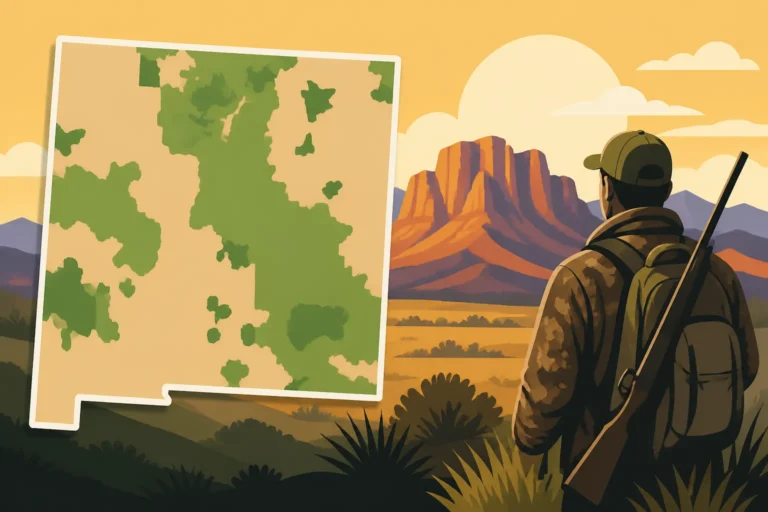
One of the biggest frustrations for hunters new to the Bootheel is the complex mosaic of land ownership. You'll encounter vast stretches of Bureau of Land Management (BLM) land, which forms the backbone of public access, interspersed with state trust land and significant private ranch holdings. It's not uncommon to find public parcels that are "landlocked" by private property, making access tricky if not impossible without permission.
This checkerboard pattern means that digital mapping tools like onX Hunt aren't just helpful, they are absolutely essential. Relying solely on paper maps, while a good backup, simply won't cut it when you're trying to discern a faint property line in the middle of nowhere. It's critical to understand Reading a Land Ownership Layer Correctly before you even step foot in the field. Always know where you are and respect private property boundaries; trespassing can quickly ruin a hunt and damage the reputation of all hunters.
Accessing Public Lands and Key Areas
The Bootheel holds millions of acres of public land, primarily managed by the Bureau of Land Management (BLM). This is where the majority of your hunting will take place. Unlike national forests, which often have a more defined road system, BLM lands can be a maze of two-track roads, washes, and open country. Knowing how to interpret maps and satellite imagery is crucial for planning your approach and understanding where you can legally travel.
While much of the Bootheel appears open, strategic access points are key. Many of the rugged mountain ranges, like the Animas, Peloncillo, and Big Hatchet Mountains, offer incredible hunting opportunities but require significant effort to reach and explore. These ranges often serve as islands of higher elevation and more diverse vegetation, creating prime habitat for deer and other species. Planning your entry and exit points, especially in these remote areas, is a non-negotiable part of your pre-hunt strategy.
Understanding State Trust Land Rules
New Mexico State Trust Land is another significant component of the Bootheel's hunting landscape. While it's publicly owned, it's managed to generate revenue for state beneficiaries, meaning access rules can differ from federal BLM land. The good news for hunters is that a valid New Mexico hunting license acts as your easement to access State Trust Land for hunting purposes. This is a huge benefit, opening up vast tracts of land that might otherwise be inaccessible.
However, there are specific guidelines. You generally can't camp on State Trust Land, and vehicular travel might be more restricted than on some BLM roads. It's always wise to check the most current regulations for any specific unit you plan to hunt. Remember that this access is a privilege, and treating these lands with respect helps ensure that future generations of hunters can continue to enjoy them. Our piece on A New Mexico License Is Your State Trust Land Easement provides more context on this important aspect of hunting in the state.
The Role of Digital Mapping Tools
In a region defined by complex land ownership and vast distances, digital mapping applications like onX Hunt are indispensable. They overlay property boundaries, topographic maps, satellite imagery, and even marked roads and trails directly onto your smartphone or GPS device. This functionality allows you to instantly identify public versus private ground, mark water sources, pinpoint potential bedding areas, and navigate confidently.
Before your hunt, use these tools to conduct thorough e-scouting. Look for areas where public land creates fingers or isolated pockets within private ranches, which can sometimes concentrate game. Identify prominent ridges, hidden draws, and Water Sources That Concentrate Desert Game – these are often game magnets. Download offline maps for your chosen units, as cell service in the Bootheel is often non-existent. A little time spent with a mapping app can save you days of frustration in the field.
Effective Hunting Strategies for the Bootheel
Hunting in the Bootheel demands specific tactics tailored to its environment and the animals that call it home. Forget crashing through brush or calling loudly; this is a game of patience, stealth, and sharp optics. The open, sparse landscape means you'll be glassing a lot, often at long distances, and making carefully planned stalks.
The sheer scale of the country means you need to be efficient with your time and movement. Unlike dense forests where game might be just over the next rise, in the Bootheel, animals can literally be miles away. Success often hinges on your ability to spot game before it spots you, and then executing a flawless approach.
The Power of Glassing
If there's one skill that will elevate your success in the Bootheel, it's glassing. Given the vast, open terrain and the elusive nature of the game, you'll spend more time behind your binoculars and spotting scope than actually walking. Find a high vantage point, settle in comfortably, and meticulously grid-glass the country in front of you. Don't just scan; pick apart every shadow, every rock, every clump of mesquite.
Good optics are paramount. A quality pair of 10x or 12x binoculars are a must, and a powerful spotting scope (20-60x or even 25-75x) on a sturdy tripod will allow you to pick apart distant hillsides and confirm if that 'rock' is actually a bedded Coues buck. Remember that Binocular Size That Survives an All-Day Session is often a balance between power and comfort for long hours of glassing. The article The Grid Glassing Method, Step by Step offers an excellent systematic approach to covering vast areas without missing anything.
Stalking in Open Country
Once you've spotted an animal, the real challenge begins: the stalk. The open nature of the Bootheel means cover can be sparse, and the ground is often noisy with loose rock and crunchy vegetation. This isn't a place for aggressive, fast-paced stalks. You'll need to be slow, deliberate, and constantly aware of the wind. Even a slight shift in a thermal can carry your scent to an animal hundreds of yards away.
Utilize every piece of terrain for cover – draws, ridges, washes, and even large clumps of cactus. Plan your route meticulously, paying attention to shadows and sun angle that might reveal your position. This often means taking a circuitous route that adds significant distance, but increases your chances of getting close. For Coues deer, which are notoriously spooky, getting within bow range can feel like an impossible feat. Our guide on Still Hunting Oak Brush for Coues offers insights into how to move quietly and effectively in similar habitat.
Water Sources: Desert Magnets
In the arid Bootheel, water is life, and consequently, it's a major draw for all wildlife. Identifying and focusing your efforts around known water sources – whether they're natural springs, guzzlers, or stock tanks – can be incredibly effective, especially during hotter periods or early in the season. Animals will travel considerable distances to drink, making these spots natural ambush points.
However, hunting water also requires extreme stealth and patience. Set up downwind and well before dawn, or plan to be there through the heat of the day when animals might be seeking a drink. Be mindful of ethical considerations when hunting near water, ensuring you don't contaminate the source or disturb the area unnecessarily. A good mapping app will often mark these features, or you can find them on USGS topo maps.
Permits, Regulations, and Planning Your Bootheel Hunt
Successfully hunting the Bootheel isn't just about field tactics; it starts long before you pack your truck. Understanding New Mexico's draw system, securing the right permits, and knowing the specific regulations for your chosen unit are crucial. This is a state where draw odds can be challenging, especially for popular hunts, so thorough planning is key.
Understanding the Draw and Tag System
Most big game hunts in New Mexico, including deer and javelina in the Bootheel, are allocated through a public draw system. This means you apply for specific hunt codes in specific units, hoping to be one of the lucky few to draw a tag. New Mexico does not use a preference point system, meaning every applicant, resident or non-resident, generally has the same chance to draw each year. This means Why First-Time New Mexico Applicants Have Even Odds.
Applications typically open in January and close in March. It’s important to research draw odds from previous years to gauge your chances for specific units and hunt dates. Resources like GoHunt provide detailed draw odds and application strategies that can significantly improve your planning. Our article New Mexico Hunt Codes and How to Read Them is a valuable resource for deciphering the cryptic codes that define each hunt.
Important Regulations to Remember
Beyond the general big game regulations, always consult the most current New Mexico Hunting Rules & Information booklet for specifics relevant to your hunt area. Pay close attention to legal shooting hours, blaze orange requirements (which vary by weapon type and season), and rules regarding motorized vehicle use. In the Bootheel, the temptation to use two-track roads to get deeper into country is strong, but always ensure you're on a legal road and respecting private property.
Here’s a quick overview of some critical regulations:
| Regulation Aspect | General New Mexico Rule (Always verify current year) | Relevance to Bootheel Hunt |
|---|---|---|
| Legal Shooting Hours | Generally 30 minutes before sunrise to 30 minutes after sunset. | Crucial for early morning and late evening glassing and stalking, when game is most active. |
| Blaze Orange | Required for any person hunting during any legal weapon season for deer, elk, bear, or mountain lion, and for hunters assisting. | Varies by season. Often not required for archery-only hunts, but mandatory for rifle/muzzleloader. |
| Electronic Calls | Legal for coyotes and other predators, but prohibited for big game. | Know the difference – don't accidentally use a forbidden call for deer. |
| Baiting | Prohibited for big game. | Absolutely no baiting for deer or javelina. |
| ATV/Vehicle Use | Limited to established roads and trails; off-road travel for retrieval is often allowed if explicitly permitted and not causing damage. | Crucial for accessing remote areas, but stick to designated routes to avoid fines and habitat damage. |
| Hunter Education | Required for all hunters born after January 1, 1972, with some exceptions like the Mentored Youth Program. | Make sure you or anyone in your party meets the requirements or has the appropriate certification. |
Remember, this table provides general guidance. The official New Mexico Department of Game and Fish regulations booklet is your ultimate source for current and detailed rules. Ignorance of the law is never an excuse.
Packing for the Bootheel: Essentials
Your gear list for a Bootheel hunt will look different from a mountain hunt. Hydration is paramount, so plan to carry much more water than you think you’ll need, or know your Water You Must Carry on a Desert Day Hunt plan. Lightweight, breathable clothing that offers sun protection is essential, even in cooler months. Sturdy, broken-in hiking boots designed for rocky, unforgiving terrain will save your feet.
Beyond the basics, think about specialized items:
- High-quality optics: As discussed, they're non-negotiable.
- Digital mapping device: A smartphone with onX Hunt or a dedicated GPS unit.
- Snake bite kit: Snake Awareness on a September Archery Hunt is critical; rattlesnakes are common here.
- First-aid kit: Comprehensive for remote, self-supported trips.
- Plenty of sunscreen and lip balm: The sun is relentless.
- Headlamp with spare batteries: You'll likely be walking in and out in the dark.
- Game bags: For field dressing and packing out meat in warm conditions.
- Satellite communication device: In areas with no cell service, these can be life-savers.
A hunt in the Bootheel is an adventure, a true test of your desert hunting skills. It’s tough, beautiful, and can be incredibly rewarding. Go prepared, stay vigilant, and most importantly, respect this wild and unique corner of New Mexico.
Disclaimer
This article is for general informational purposes only and does not constitute professional advice. Laws, prices and regulations vary by location and change over time. Consult a qualified professional for guidance on your specific situation.