Mescalero Apache Hunting Permits
Navigating hunting opportunities in New Mexico can often feel like deciphering a complex puzzle, especially when your sights are set beyond the familiar state-managed lands. Many hunters are drawn to the allure of tribal lands, imagining vast, unpressured landscapes teeming with wildlife, but then get bogged down trying to understand how to actually access them. This guide aims to demystify the process of obtaining Mescalero Apache hunting permits, offering clear, actionable insights into how these unique hunting experiences operate and what you need to know before you even pack your bags.
Navigating the Mescalero Apache Hunting Experience
For many dedicated hunters, the Mescalero Apache Reservation represents a truly unique opportunity in the Southwestern United States. Unlike the typical state draw systems that govern most public land hunting in New Mexico, the Mescalero Apache Nation manages its own wildlife and hunting programs, operating under its own sovereign laws and regulations. This distinction is critical to understand from the outset, as it means the rules, application processes, and even the very philosophy behind the hunts can differ significantly from what you're used to.
The reservation spans a beautiful and diverse landscape in south-central New Mexico, encompassing high mountains, dense timber, and rugged canyons. This varied terrain supports a healthy population of big game, including some truly exceptional elk, mule deer, bear, and mountain lion, among other species. The tribe's commitment to wildlife management, often involving substantial resources and sophisticated biological programs, means that these lands can frequently offer a quality of hunt that is difficult to find elsewhere. Hunters often seek out these permits because they represent a chance at a true trophy animal, in a setting where hunting pressure can sometimes be lower than on heavily accessed public lands. It's not just about the animal, though; it's about the entire experience of hunting on land with such deep cultural and historical significance. When considering these hunts, many find themselves comparing them to the state draw, and it's important to recognize that Why Tribal Tags Bypass the New Mexico Draw is a key reason for their distinct appeal.
What Makes Mescalero Hunts Different
The most immediate difference a hunter will notice is the permit system itself. While New Mexico's state game and fish department allocates tags through a lottery system for most species, the Mescalero Apache Nation issues its permits directly, often through a booking system managed by their own wildlife and recreation department. This means there's no "draw" in the traditional sense; instead, it's typically a direct purchase or booking, often for specific dates and guided packages. This direct approach often means higher costs compared to a state tag, but it also comes with a higher degree of certainty once a booking is confirmed.
Another significant distinction is the emphasis on guided hunts. While some tribal lands may offer self-guided options, many Mescalero Apache big game hunts are structured as fully guided experiences. This isn't just a recommendation; it's often a requirement. The rationale behind this is multifaceted: it helps ensure hunter safety in unfamiliar and sometimes rugged terrain, it facilitates sustainable harvest practices overseen by experienced tribal members, and it often enhances the overall hunting success rates by leveraging local knowledge. For those accustomed to purely DIY public land hunts, this can be a significant shift, but it also means you're gaining access to unparalleled expertise and insight into the land and its wildlife. These aren't just guides; they are often lifelong residents who understand the nuances of the landscape, the habits of the animals, and the cultural heritage tied to the land. This is a fundamental aspect of Hunting New Mexico Tribal Land Through an Operator.
Species and Quality of Opportunity
The Mescalero Apache Reservation is renowned for the quality of its big game. Elk, in particular, are a major draw, with the reservation often producing impressive bulls. The habitat management, lower pressure, and genetic factors contribute to a thriving elk population. Mule deer also roam these lands, offering opportunities for mature bucks in diverse settings, from mountain timber to more arid foothills. Additionally, the reservation is home to black bear and mountain lion, which can be pursued under specific permit guidelines.
Hunters seeking a truly exceptional experience often find that the Mescalero Apache hunts deliver. The tribal wildlife department often implements robust management strategies aimed at fostering healthy herds with good age structures, which translates to a higher potential for harvesting trophy-class animals. This isn't to say every hunter will take a Boone and Crockett animal, but the opportunity is certainly there, and that's a powerful draw for many. Many hunters are captivated by the idea of hunting these pristine areas, similar to how many dream of New Mexico Elk Are Why the Gila Draws Everyone, though the access and management are distinct.
The Mescalero Apache Hunting Permit Process
Unlike the single, annual application period for most state-issued big game tags in New Mexico, the process for securing a Mescalero Apache hunting permit is generally more direct and often handled on a rolling or first-come, first-served basis for specific hunt packages. This difference means you won't be checking draw odds or accumulating preference points; instead, you'll be communicating directly with the Mescalero Apache Game and Fish Department or authorized tribal outfitters. Understanding this direct booking model is key to planning your hunt.
The first step is typically to identify the type of hunt you're interested in – for example, elk, deer, or bear – and then research the available packages. These packages usually specify the duration of the hunt, whether it's guided, and what services are included. Because these are direct bookings, the availability can fluctuate, and popular hunts, especially for prime elk seasons, can fill up quickly.
Initial Research and Contact
Your journey to a Mescalero Apache hunt begins with thorough research. The Mescalero Apache Game and Fish Department website is often the primary source of information, outlining available hunts, general regulations, and contact information. You'll want to carefully review the species offered, season dates, and the types of hunts (e.g., archery, muzzleloader, rifle). This initial dive will give you a good sense of what's possible.
Once you have a general idea, direct contact is usually the next step. Calling or emailing the department, or their designated booking agent, is essential to confirm current availability, pricing, and specific booking procedures. Be prepared to ask detailed questions about what the permit includes, what accommodations are provided (if any), and what the overall expectations are for hunters. Many of these hunts are premium experiences, and understanding the full scope of services is crucial. This is also where you might learn more about Mescalero Apache Guided Elk Hunts or other specialized packages.
Booking and Permit Acquisition
Once you've settled on a hunt package and confirmed availability, the booking process typically involves a deposit to reserve your spot, followed by full payment prior to the hunt. The specific payment structure and cancellation policies will be provided by the Mescalero Apache Game and Fish Department or the tribal outfitter. It’s imperative to read these terms thoroughly before committing.
After your booking is confirmed and payment is processed, you will receive your official Mescalero Apache hunting permit. This permit serves as your authorization to hunt on the reservation. It's crucial to understand that What a New Mexico Tribal Hunting Permit Includes can vary, so ensure you clarify what documents you need to carry with you in the field. Unlike state licenses, which you typically buy annually, these permits are specific to the hunt package you've purchased. Remember, these are not state licenses; they are issued by a sovereign nation.
No State License Required (But Check Local Rules)
A common question many hunters have is whether they still need a New Mexico state hunting license to hunt on tribal lands. Generally, the answer is no. Because tribal lands are sovereign, their permits operate independently of state licensing requirements. Your Mescalero Apache permit is your legal authorization to hunt on their lands. However, always verify this directly with the Mescalero Apache Game and Fish Department, as rules can occasionally change or exceptions might apply for certain activities. This is precisely why hunters ask Do New Mexico Tribal Hunts Require a State License?. While a state license isn't usually required for hunting on the reservation, if your travel takes you across state lands before or after your hunt, it's wise to understand any applicable state regulations for transport or possession.
The table below provides a general overview of how Mescalero Apache permits typically contrast with New Mexico state draw tags.
| Feature | Mescalero Apache Permit (Typical) | New Mexico State Draw Tag (Typical) |
|---|---|---|
| Issuing Authority | Mescalero Apache Nation | New Mexico Department of Game and Fish |
| Acquisition | Direct booking/purchase, often guided | Lottery Draw (preference points not used) |
| Cost | Generally higher (premium experience) | Lower (tag fees + application fees) |
| Availability | Based on bookings, often limited | Based on draw odds, unit quotas |
| Required License | Tribal permit is sufficient | State hunting license + species-specific tag |
| Access | Exclusive to reservation land | Public land (BLM, National Forest, State Trust) |
| Guidance | Often required, part of package | Optional, private service |
Key Regulations and Respecting Tribal Sovereignty
Hunting on Mescalero Apache lands means entering a realm governed by tribal law and a deep respect for the land, wildlife, and culture. While many state hunting regulations focus on broad biological management and public safety, tribal regulations often integrate these aspects with cultural values, conservation ethics, and a strong sense of stewardship. It’s absolutely essential for every hunter to understand and adhere to these regulations, not just for legal compliance but out of respect for the Mescalero Apache Nation's sovereignty. Ignoring these rules can lead to serious consequences and reflects poorly on the hunting community as a whole.
The specifics of these regulations will be provided to you by the Mescalero Apache Game and Fish Department or your guide once you book a hunt. However, some overarching principles and common areas of focus include: weapon restrictions, legal shooting hours, blaze orange requirements, and any rules regarding off-road vehicle use. These might differ from what you’re used to in New Mexico's state units, so a careful review is paramount. For instance, while some state units might have specific muzzleloader deer windows, tribal rules could be tailored differently.
Understanding Reservation Boundaries
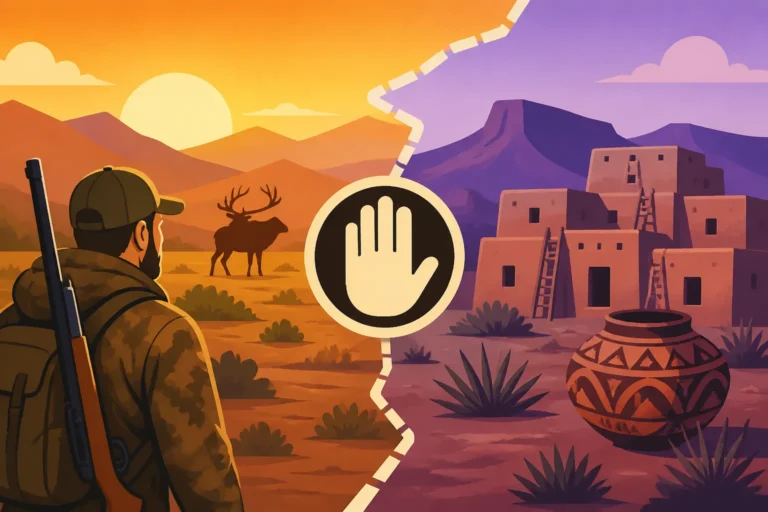
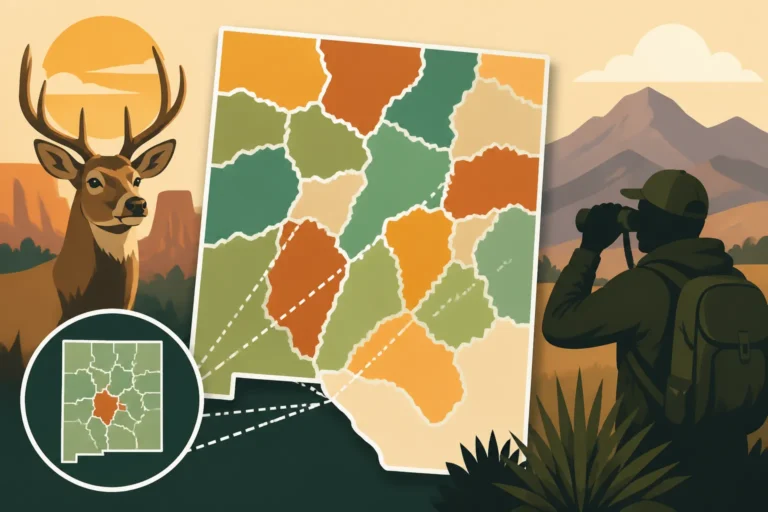
One of the most critical aspects of hunting on the Mescalero Apache Reservation is understanding and respecting its boundaries. The reservation is not public land in the traditional sense, and inadvertently straying off tribal land onto adjacent private or state land could lead to serious trespassing violations. This is where modern mapping tools become invaluable. Before your hunt, study your unit's boundaries rigorously. Tools like onX Hunt can be incredibly helpful for visualizing Tribal and Pueblo Boundaries to Respect, showing precise property lines and land ownership overlays right on your phone or GPS device. Your guide will, of course, be your primary resource for navigating the physical terrain, but having your own understanding beforehand adds an extra layer of preparedness and responsibility. Knowing How to Spot a Pueblo Boundary on a Map is a skill every hunter needs when in New Mexico.
Access points onto the reservation might also be controlled, and you should not assume open entry from all directions. Always use designated routes and adhere to any posted signage.
Ethical Conduct and Cultural Sensitivity
Beyond the letter of the law, hunting on tribal land requires a heightened sense of ethical conduct and cultural sensitivity. Remember, you are a guest on sovereign land. This means showing respect for the environment, the wildlife, the tribal members, and their traditions. Littering, disrespecting sacred sites (even if unmarked to the untrained eye), or engaging in behavior that is disruptive or disrespectful is not only against the rules but deeply offensive.
Your guide will be your primary liaison and interpreter of cultural norms. Listen to them, follow their instructions, and ask questions if you are unsure about appropriate behavior. This might include specific protocols for harvesting an animal, handling meat, or even interacting with tribal members you encounter. The Mescalero Apache have a deep connection to their ancestral lands and the wildlife within them, and participating in a hunt is a privilege that should be treated with the utmost reverence. This is not just a commercial transaction; it's an immersive experience that should broaden your understanding and appreciation.
Safety and Emergency Protocols
Given the rugged and remote nature of some of the hunting areas on the Mescalero Apache Reservation, safety is paramount. The tribal wildlife department and your guide will have specific safety protocols in place, and it is your responsibility to understand and comply with them. This includes knowing emergency contact procedures, understanding communication limitations in remote areas (cell service is often nonexistent), and being prepared for varying weather conditions.
Most guided hunts will have established emergency plans, but it's always wise for you as a hunter to carry your own personal locator beacon (PLB) or satellite messenger. Share your hunt plan with someone outside your group, including your general location and expected return time. Be honest with your guide about your physical capabilities, as hunts in this terrain can be physically demanding. For example, hunts for Black Bear and Cougar Across New Mexico in steep country will demand more of a hunter than a prairie pronghorn hunt.
Planning Your Hunt on Mescalero Apache Lands
Embarking on a Mescalero Apache hunt is more than just applying for a tag; it's a comprehensive planning endeavor that requires careful consideration of logistics, physical preparation, and equipment. Because these hunts are often structured as premium, guided experiences, a good deal of the logistical heavy lifting is managed by the tribal outfitter or game department. However, your personal preparation directly impacts your enjoyment and success.
The unique nature of hunting on tribal land, with its distinct rules and often exclusive access, means you'll need to adjust your typical public land hunting mindset. While you won't be competing with crowds, you will be operating within a structured framework designed to maximize your experience while adhering to tribal management goals.
Logistics and Accommodations
Many Mescalero Apache hunting packages are all-inclusive, or at least highly comprehensive. This often means that lodging, meals, and transportation within the reservation for hunting purposes are provided. Clarify these details upfront with your booking agent or guide. Accommodations can range from comfortable lodges to more rustic camp setups, depending on the specific package and area you'll be hunting. Understanding these specifics helps you pack appropriately and manage your expectations.
Transportation to the reservation itself will be your responsibility. The Mescalero Apache Reservation is accessible by vehicle, and precise directions will be provided upon booking. Ensure your vehicle is in good working order, especially if you plan to do any driving on unpaved roads leading to designated meeting points. For those flying in, the nearest major airport is typically Albuquerque (ABQ) or El Paso (ELP), requiring a rental car or pre-arranged shuttle to reach the reservation.
Physical Conditioning and Gear
Mescalero Apache lands, particularly the mountainous regions, can be physically demanding. Elk hunts, for example, often involve significant hiking over steep, uneven terrain at elevations that might challenge those not accustomed to it. Mule Deer Across New Mexico's High Country and Desert can also mean serious climbs. Start a rigorous physical conditioning program well in advance of your hunt, focusing on cardiovascular endurance, leg strength, and stamina. Simulated pack-outs with weight can be excellent preparation.
Your gear list will be crucial. Your guide or the tribal game department will likely provide a recommended packing list tailored to the specific hunt and season. Pay close attention to clothing layers suitable for New Mexico's fluctuating mountain weather – think warm days, cold nights, and potential for sudden storms. High-quality, broken-in hiking boots are non-negotiable. Optics, such as binoculars and spotting scopes, will be important for glassing the vast landscapes, and a dependable rifle or bow, sighted in perfectly, is a must. Consider investing in a good quality rangefinder.
Pre-Hunt Communication and Scouting
While traditional pre-season scouting on the ground might not be permitted or practical for non-tribal hunters on the reservation, proactive communication with your guide is your equivalent. Ask your guide about recent animal activity, general patterns, and what conditions to expect. They are on the ground constantly and have the most up-to-date information.
Leverage online resources and mapping software like GoHunt and onX Hunt to familiarize yourself with the topography of the reservation. While you won't be able to "e-scout" for specific animals in the same way you might on public land, understanding the drainages, ridges, and general terrain features can help you visualize the hunt and better understand your guide's plan. Look at elevation changes, water sources, and vegetation types. This mental preparation can significantly enhance your experience once you're on the ground. Discuss these details with your guide; they'll appreciate your informed interest.
Harvest Reporting and Meat Processing
Upon a successful harvest, specific protocols will be in place for tagging, field dressing, and extracting your animal. Your guide will lead this process, ensuring all tribal regulations are met. It’s important to clarify arrangements for meat processing and taxidermy. Many guided hunts include initial field processing, and arrangements can often be made with local processors off the reservation. Discuss options for packaging and shipping meat and trophies home, especially if you are traveling a long distance.
Disclaimer
This article is for general informational purposes only and does not constitute professional advice. Laws, prices and regulations vary by location and change over time. Consult a qualified professional for guidance on your specific situation.