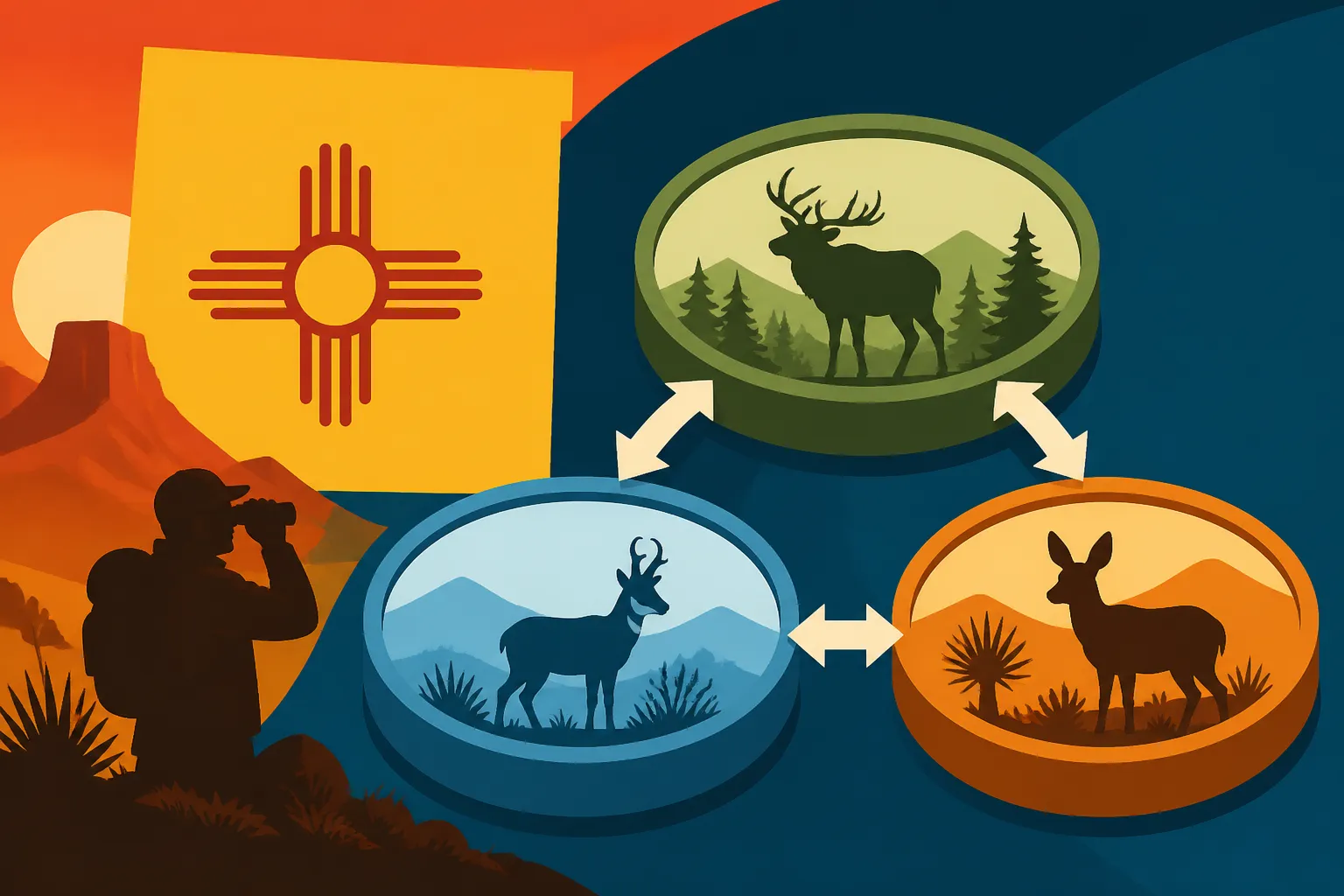
How New Mexico’s Three Allocation Pools Interact
Navigating the complexities of hunting tag applications can feel like trying to solve a puzzle with half the pieces missing, especially when you're dreaming of a New Mexico adventure. Many hunters, particularly those new to the state, find themselves scratching their heads, wondering why their odds for a coveted elk or mule deer tag seem so wildly different from their buddy's. The truth lies in New Mexico's unique three-tiered tag allocation system, which we'll meticulously break down here so you can fully grasp how it impacts every hunter, every application, and ultimately, every chance you have at drawing a tag.
Understanding New Mexico's Unique Tag Allocation System
New Mexico's approach to distributing its highly sought-after big game licenses is distinct, and if you don't understand the underlying mechanics, it can lead to endless frustration. It's not a simple lottery where everyone throws their hat into one big ring. Instead, the state meticulously divides its limited tags into three separate pools, each with its own set of rules, eligibility, and, most importantly, wildly different draw odds. This system, while designed with certain objectives in mind, often leaves new applicants feeling a bit lost, wondering where they truly stand.
The Foundation: Three Distinct Applicant Pools
At its core, New Mexico’s draw system is built upon a specific percentage breakdown for each hunt code available: 84% for residents, 10% for applicants who contract a New Mexico registered outfitter, and 6% for nonresidents applying without an outfitter. This isn't just a guideline; it's a hard and fast rule that dictates how nearly every single big game tag in the state is awarded. This isn't like other states where a small percentage might go to nonresidents; here, it's explicitly carved out into these three distinct buckets. The rationale behind this split is multifaceted, aiming to prioritize resident opportunities while also recognizing the economic contributions of the nonresident hunting community and the role outfitters play in supporting both the state's hunting economy and providing access to challenging terrain. It’s a balance, albeit one that heavily favors those who call New Mexico home.
Resident Hunters: The Largest Share
For New Mexico residents, the 84% allocation pool is where the vast majority of your opportunities lie. This substantial percentage reflects the state's commitment to providing ample hunting access for its own citizens, recognizing their direct investment in the state's wildlife management through taxes and license fees. When a resident applies for an elk, deer, or pronghorn tag, they are competing exclusively against other residents for these 84% of the available tags. This significantly improves their statistical chances compared to what a nonresident might face for the same hunt code.
It means that even for highly popular units, a resident often has a tangible chance to draw, something that can feel like a pipe dream for someone coming from out of state. However, it’s not a guaranteed tag, and competition for prime units and dates, especially archery elk in the Gila, can still be intense. Residents are still encouraged to strategize their choices, perhaps exploring less-pressured units or later season dates if their primary choices prove too competitive. You can dive deeper into what this means for your chances in our guide on The Resident Share of New Mexico Tags.
The Outfitter Pool: A Specific Pathway
The 10% outfitter pool is probably the most unique and often misunderstood aspect of New Mexico's draw system. This allocation is specifically reserved for applicants—whether resident or nonresident—who have contracted with a New Mexico registered outfitter before applying. To qualify for this pool, an applicant must have a valid, signed guide-client contract in place with an outfitter, and the outfitter’s registration number must be entered on the application. It’s a dedicated path for those who are willing to invest in a guided experience.
This pool was established, in part, to support the state's outfitting industry and to incentivize hunters to utilize professional services, particularly for hunts in rugged or less accessible areas like the deep canyons of the Gila National Forest. While it requires a significant financial commitment to hire an outfitter, the advantage for nonresidents is that they are competing for 10% of the tags, rather than the much smaller 6% pool. For a resident seeking a premium tag, it can also offer a boost in odds over the general resident pool. The catch? The outfitter is typically required to accompany the hunter in the field for at least two days of the hunt, ensuring their direct involvement. Understanding the full implications of this pool, including the commitment involved, is crucial, and you can learn more about it in The New Mexico Outfitter Draw and Its Two-Day Rule and The Outfitter Share of New Mexico Tags. Many hunters utilize resources like GoHunt to analyze how applying with an outfitter impacts their draw odds for specific units and species.
Nonresident Hunters: The Smallest Slice
For nonresident hunters who choose not to use a registered outfitter, the competition is fierce, as they are vying for just 6% of the available tags. This is often where the frustration for many out-of-state hunters begins, as they look at draw odds that seem astronomically low compared to their resident counterparts. This small allocation reflects a common Western state policy, prioritizing resident opportunities while still allowing a limited number of nonresidents to participate in their hunting heritage.
Applying in this 6% pool means your application will be competing against every other nonresident who didn't contract an outfitter. For popular species like elk or quality mule deer, drawing a tag in this pool is a long shot, often requiring many years of applying, or a stroke of incredible luck, especially for premier units. It’s a reality check for many who are used to systems with preference points or larger nonresident allocations. Setting realistic expectations and researching less popular hunt codes are vital strategies for those applying in this highly competitive pool. We break down the details of this allocation in The Nonresident Share of New Mexico Tags.
How the Pools Interact and Influence Your Odds
It’s important to clarify that these three pools don’t just exist side-by-side; they are the fundamental architecture of the draw. Understanding how they interact is key to crafting a smart application strategy, regardless of whether you're a seasoned New Mexico resident or a hopeful out-of-state hunter. The system doesn’t blend applicants together at any point during the initial draw process for the 84/10/6 split.
The Draw Mechanics: Separate But Equal Chances Within Their Pool
The critical takeaway here is that the draw is conducted independently within each pool. When you submit your application, it's immediately routed into one of these three distinct groups. A resident applying for an archery elk tag in Unit 16D, for instance, is only competing against other residents who applied for that same hunt code within the 84% pool. Similarly, a nonresident who signed an outfitter contract will only have their application processed against others in the 10% outfitter pool. And the DIY nonresident? They're solely in the 6% pool, battling it out with others who chose to go it alone.
This means that your draw odds are not influenced by the sheer volume of applicants in the other two pools. You're not competing against everyone who applies for a hunt code; you're only competing against those within your specific allocation. This is a fundamental difference from many other state systems, and it's why New Mexico doesn't award preference points. Each year, every applicant within their pool starts fresh with an equal chance, a true lottery system. You can explore this further in our discussion on How New Mexico Draw Odds Work Without Points. This structure ensures that the percentages are maintained rigidly, preventing any one pool from bleeding into another until after the initial draw has run its course.
Strategic Considerations for Each Pool
Given this segregated draw process, your application strategy should be finely tuned to the pool you're participating in.
- For Residents: With the largest share of tags, residents have the most flexibility. They can focus on applying for their dream units and hunts, knowing their statistical chances are significantly higher than nonresidents. However, even with 84% of the tags, popular hunts can still be tough draws. Residents might consider applying for less-pressured units, earlier or later season dates, or different species to improve their odds, especially if they’re aiming for a tag every year.
- For Nonresidents: This is where the decisions get tougher. The 6% pool is a low-probability game for prime tags. Nonresidents have to weigh the cost of hiring an outfitter against the significantly improved odds in the 10% pool. If going the DIY route, meticulous research into less popular hunts, obscure units, or challenging terrain that deters other applicants becomes paramount. Tools like GoHunt are invaluable for nonresidents to accurately assess the draw odds for various hunts and make informed decisions, perhaps even looking into species like Barbary sheep or javelina that might have slightly better nonresident odds.
- For Outfitter Pool Applicants (Resident or Nonresident): The strategy here revolves around selecting the right outfitter and ensuring all contractual obligations are met. While the 10% pool offers better odds, especially for nonresidents, it comes with a substantial financial commitment. It's not just about drawing a tag, but also about securing a quality guided experience. Researching outfitter reputations, success rates, and what's included in their packages is just as important as the draw odds themselves. Our article on Does Applying With an Outfitter Improve Your Odds? provides further insights, and it’s critical to read our advice on Vetting a New Mexico Outfitter Before You Send a Deposit before committing.
The Impact on Draw Odds and Application Strategy
The interaction of New Mexico's three allocation pools directly translates into vastly different draw odds, which in turn should heavily influence how you approach your application. Ignoring these percentages is like playing poker without knowing the value of your cards—you’re setting yourself up for disappointment.
Analyzing Draw Statistics
When you look at New Mexico's draw statistics, you'll immediately notice that the success rates are broken down by these three pools. This isn't just for organizational purposes; it's because the draw odds for an elk tag in the 84% resident pool are fundamentally different from those in the 6% nonresident pool, or even the 10% outfitter pool. A popular unit might show 15-20% draw odds for residents, 5-8% for outfitter clients, and a dismal 1-2% for self-guided nonresidents. These numbers aren't hypothetical; they reflect the stark reality of the allocation system.
This emphasizes the absolute necessity of reviewing the specific draw odds for your applicant type. Don't just look at the overall draw success rate for a unit; that number is almost meaningless without the breakdown. Understanding these nuanced statistics, often made easier by platforms like GoHunt, is crucial for making informed choices and setting realistic expectations. You can find more specific guidance in our articles Checking New Mexico Draw Odds Before You Apply and Reading New Mexico Hunt Draw Statistics.
Maximizing Your Chances
So, how do you play the game to your best advantage?
-
For Residents: Your advantage is clear. Focus on applying for units and hunt dates that align with your hunting goals and experience. Don't be afraid to apply for top-tier units if that's where you want to hunt, but also consider having backup choices that might offer higher draw odds for a consistent hunting opportunity. You also have the option, if desired, to apply in the outfitter pool for potentially even better odds on highly competitive hunts, a strategy sometimes overlooked by those who prefer to hunt solo. For more on this, see Can Residents Use the New Mexico Outfitter Pool?.
-
For Nonresidents: This is where careful planning becomes an art form. You have two main paths: the incredibly competitive 6% self-guided pool or the 10% outfitter pool.
- Self-Guided (6%): If going this route, research is paramount. Look for hunts with historically higher nonresident draw odds. This often means applying for less popular units, archery hunts in areas with lower success rates (due to terrain or limited animal numbers), or late-season cow hunts. It’s about being smart and often sacrificing the "trophy hunt" for a "hunting opportunity."
- Outfitter (10%): If you're serious about increasing your odds for a quality tag, especially for species like elk or Oryx, the outfitter pool often presents a more viable path. While it involves a significant financial investment, the draw odds for nonresidents in this pool are often 2-3 times higher than in the 6% pool. This can turn a near-impossible draw into a plausible one. Just remember the requirement for The New Mexico Guide-Client Contract You Must Sign and the two-day accompaniment rule.
Here’s a quick overview of how draw odds might look for a hypothetical popular elk hunt in a desirable unit:
| Applicant Pool | Allocation Percentage | Typical Draw Odds (Example Hunt) | Key Considerations |
|---|---|---|---|
| Resident General | 84% | 15-20% | Best odds, still competitive for prime hunts. |
| Outfitter Clients (Resident/Nonresident) | 10% | 5-8% | Requires outfitter contract, higher cost, improved odds. |
| Nonresident General | 6% | 1-2% | Most competitive, very low odds for popular hunts. |
Common Misconceptions and Clarifications
It's easy to get confused by New Mexico's unique system, especially when coming from states with different draw mechanics. Let's clear up a couple of the most common misunderstandings.
No Preference Points
One of the biggest differences between New Mexico and many other Western states is the complete absence of a preference point or bonus point system. In states like Colorado or Wyoming, accumulating points over years significantly boosts your chances of drawing a quality tag. In New Mexico, that simply doesn't exist. Each year you apply, your application is treated as if it's your first time, with no advantage gained from previous unsuccessful attempts.
This means that while it might feel frustrating to fail to draw year after year, you're not falling behind. Your chances for a given hunt code in your specific pool remain the same every year you apply. This makes the New Mexico draw a true lottery. You can explore this concept further in our piece on Does New Mexico Award Preference Points?. This also means that a first-time applicant has exactly the same chance as someone who has applied for twenty years within the same pool and for the same hunt code.
Outfitter Pool for Residents Too
Another common misconception is that the 10% outfitter pool is exclusively for nonresidents seeking to improve their odds. While it is certainly a major draw for out-of-state hunters, residents are also fully eligible to apply within this pool. If a New Mexico resident desires to hunt a particularly difficult-to-draw unit or simply wants the enhanced experience and logistical support of a guided hunt, they can contract with a registered outfitter and apply in the 10% pool.
For residents, this can be a strategic move to secure a tag in a highly coveted unit where the 84% resident draw odds are still very slim. It provides an alternative pathway to a tag, albeit with the added cost of an outfitter. This flexibility means that the outfitter pool truly serves as a bridge for anyone, regardless of residency, looking to improve their draw success for challenging hunts. Our article on Can Residents Use the New Mexico Outfitter Pool? delves into the specifics of this opportunity.
Disclaimer
Please note that hunting regulations and tag allocations in New Mexico are subject to change by the New Mexico Department of Game and Fish. While we strive to provide the most current and accurate information, it is always the hunter's responsibility to consult the official NMDGF rules and information booklet for the current hunting season before applying or heading afield.