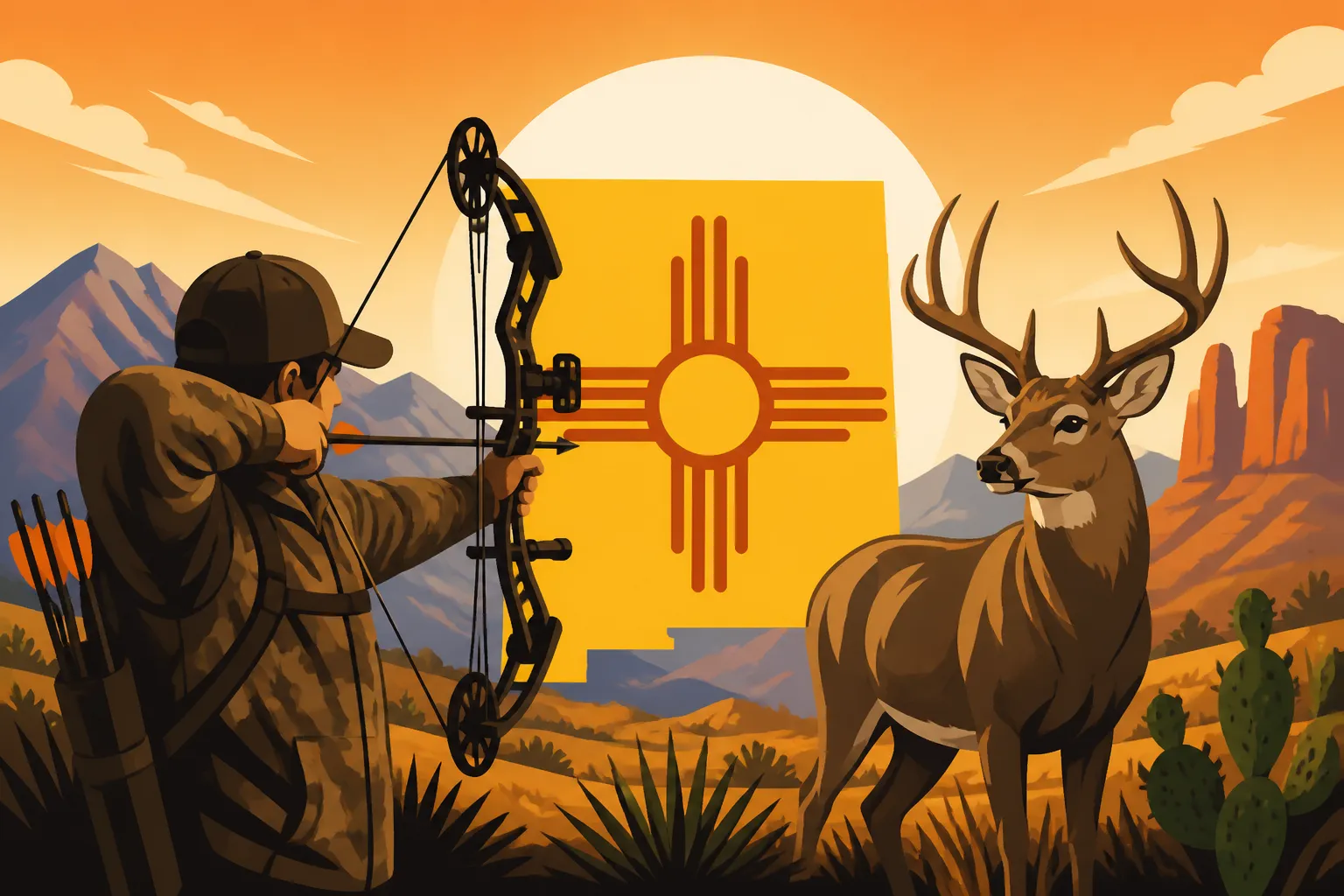
Hunting New Mexico’s Two Back-to-Back Archery Deer Seasons
That gut feeling you get when you look at the New Mexico hunt code booklet and see those split archery deer seasons? It’s a mix of excitement for the extra opportunity and a whole lot of head-scratching about which one to choose, or if you can even hunt both. You're not alone in feeling that confusion. This comprehensive guide is here to unravel the mysteries of New Mexico's unique back-to-back archery deer seasons, helping you understand the nuances, regulations, and best strategies for success.
Understanding New Mexico's Unique Archery Deer Season Structure
New Mexico offers something truly special for archery deer hunters: two distinct seasons, often separated by a short break, presenting unique challenges and opportunities. It’s not just a longer season; it’s two different hunts with their own characteristics. This structure can feel a bit perplexing if you’re used to more traditional, continuous seasons, but once you understand the reasoning, it starts to make a lot of sense.
Why New Mexico Divides Its Archery Hunts
The decision to split the archery deer season into two distinct periods isn't arbitrary; it's a thoughtful approach by the New Mexico Department of Game and Fish to manage deer populations and provide diverse hunting experiences. Primarily, this split serves a biological purpose, allowing for better herd management, especially concerning buck-to-doe ratios and overall population health. By dividing the season, it helps to spread out hunting pressure across different weeks, preventing a single, intense period that might overly stress the deer or lead to localized overharvest.
Furthermore, it acknowledges the dynamic nature of deer behavior throughout the late summer and early fall. The state essentially offers two different "flavors" of archery hunting, catering to different preferences and strategies. It gives hunters the chance to experience deer behavior during the late summer patterns, often focused on water and food, and then shifts to the early stages of the rut, with bucks beginning to shed velvet and become more active. If you've ever wondered Why New Mexico Splits September Into Two Archery Hunts, it boils down to balancing biological needs with maximizing hunter opportunity in varied conditions.
Key Differences Between the First and Second Seasons
When considering New Mexico's First and Second Archery Deer Seasons, the differences are significant, extending beyond just the calendar dates. Typically, the first season runs from late August into early September. Picture scorching desert days, parched canyons, and deer tightly bound to reliable water sources. The weather is usually hot, and the vegetation can be very dry. Deer are still in their summer patterns, often nocturnal, and focused almost entirely on feeding and finding shade during the day. Bucks are likely still in velvet or just beginning to shed it, and their movements are generally predictable, centered around food, water, and thick bedding cover.
The second season, often picking up in mid-September and running through the end of the month, is a whole different ballgame. The temperatures usually drop, especially at night, and sometimes you might even catch a monsoon shower. This shift in weather triggers a noticeable change in deer behavior. Bucks are typically hard-horned, having shed their velvet completely, and are starting to feel the stirrings of the pre-rut. They become more aggressive, lay down rub lines and scrapes, and begin to cruise for does. This means a transition from strictly pattern-based hunting to more active searching, glassing, and even some light calling. The landscape itself might even look different with a bit more green if the summer rains have been good. This means that while both seasons offer archery deer hunting, the strategies you employ, the gear you prioritize, and even your mental approach will differ significantly, as you'll see How the Two Archery Deer Seasons Differ.
Applying for Your New Mexico Archery Deer Tag
Getting a New Mexico archery deer tag requires navigating the state's lottery draw system. It's a common hurdle for many hunters, especially those new to Western draws, but understanding the process and deadlines is key to putting yourself in the best position to succeed. The excitement of planning a hunt is quickly followed by the nervous anticipation of the draw, and a little preparation can go a long way.
Navigating the Application Process and Deadlines
The general draw process in New Mexico operates on a lottery system, meaning every applicant has an equal chance regardless of prior application history, unlike states with preference or bonus points. For all big game species, including archery deer, the application period typically opens in mid-January and closes with a hard deadline in mid-March. This deadline is absolutely critical; miss it, and you're out of luck for the year. There's no grace period, no last-minute entries. You'll need to create an online account with the New Mexico Department of Game and Fish (NMDGF) and submit your application electronically. During the application, you'll select your species, weapon choice (archery, in this case), and up to three unit choices in order of preference.
Many hunters find themselves feeling overwhelmed by the sheer number of units and hunt codes. This is where tools from companies like GoHunt come in incredibly handy. Their platforms provide detailed draw odds, unit breakdowns, and harvest statistics that can help you make informed decisions about where to apply. They analyze past data to give you a realistic idea of your chances, which is invaluable when planning your strategy. Whether you apply as an individual or as part of a group application (which has specific rules about maximum group size and choice ordering), understanding these fundamental steps is essential for a smooth application process.
Understanding Hunt Codes and Unit Choices
New Mexico's hunt codes can look like a secret language at first glance, but they are crucial for specifying exactly which hunt you're applying for. Each code designates the species, weapon, specific unit, and season dates. For archery deer, you'll find different hunt codes for the first season and the second season, and sometimes even unit-specific codes that might overlap or be unique. Taking the time to properly Reading a New Mexico Hunt Code Before You Apply is paramount to ensure you're applying for the correct hunt. A common mistake is misinterpreting a code and accidentally applying for a muzzleloader or rifle hunt, or the wrong archery season.
When it comes to unit choices, careful research is your best friend. New Mexico has a vast array of units, offering everything from high-country mule deer in the Carson National Forest to desert coues deer in the southern reaches of the state. Your strategy for choosing units should consider your target species (mule deer or coues), the type of terrain you prefer, and the draw odds for specific units and seasons. For instance, if you're eyeing a specific unit, you might list a first-season hunt as your first choice and a second-season hunt in the same unit as your second choice, or you might branch out to different units with better odds for your second and third choices. The GoHunt platform is particularly useful here, allowing you to filter units by success rates and public land access, helping you identify units that align with your hunting goals and increase your chances of drawing a tag.
Scouting Strategies for Both Archery Deer Seasons
Scouting, whether in person or from afar, is the bedrock of a successful archery deer hunt in New Mexico. Because the two seasons present such different conditions and deer behaviors, your scouting approach needs to be dynamic and adaptable. What works for early season often won't be as effective for the later hunt, and vice versa.
Early Season Scouting and Trail Camera Tactics
For the first archery season, which often falls in the hottest part of late summer, your scouting should heavily focus on two critical elements: water and shade. Deer, especially in the arid New Mexico landscape, are utterly reliant on consistent water sources. Start by identifying all perennial springs, stock tanks, and river/creek drainages within your chosen unit, paying close attention to Finding Water in New Mexico's Dry Country. Satellite imagery tools are invaluable here for identifying these features. Once you've pinpointed potential water sources, physically check them to confirm they are active and to look for fresh tracks and sign. This will tell you if deer are consistently using them.
Alongside water, focus on locating dense, shaded bedding areas that offer relief from the intense midday sun. This could be thick ponderosa stands in the mountains, deep arroyos in the desert, or north-facing slopes with ample cover. Once you've found these core areas, deploying trail cameras strategically can be a game-changer. Position them on trails leading to and from water, mineral licks, or known bedding areas. Remember to be mindful of Trail Camera Rules on New Mexico Public Land; usually, they must be clearly labeled with your contact information. The goal is to pattern deer movement, especially larger bucks, as they move between bedding, feeding, and water during the low-light hours. Look for consistent evening or early morning patterns.
Pre-Rut to Early Rut Scouting Adjustments
As you transition your focus to the second archery season, your scouting priorities will shift significantly. While water and food remain important, the emphasis moves towards sign of increasing buck activity. With cooler temperatures and the approach of the rut, bucks will begin to shed velvet (if they haven't already) and become more territorial. This is when you'll start seeing rub lines appear – trees or bushes with bark rubbed off by antlers – and scrapes, which are areas of disturbed ground where bucks paw, urinate, and deposit scent from their forehead glands.
Your scouting efforts should now concentrate on finding fresh rub lines and active scrapes, as these indicate recent buck presence and increasing aggression. Focus on transition areas between dense bedding cover and feeding areas, as bucks will often cruise these corridors in search of does. Ridgelines, saddles, and benches can also become high-traffic areas. This is also a fantastic time to use E-Scouting a New Mexico Unit Before the Season to identify potential travel corridors, pinch points, and areas with good visibility for glassing. Look for areas with a mix of cover and open ground where bucks might feel comfortable moving during daylight. The deer are starting to feel frisky, so anticipating their heightened activity and desire to find does will inform your scouting, rather than just relying on their basic needs for survival.
Gear Considerations for New Mexico Archery Deer
Archery hunting in New Mexico demands robust and reliable gear that can withstand the diverse and often extreme conditions. From scorching desert heat to sudden mountain storms, your equipment needs to be up to the task. Don't skimp on quality here; your gear can literally make or break your hunt.
Bow Setup and Broadhead Requirements
First and foremost, your bow setup needs to be dialed in. New Mexico has specific regulations regarding bow hunting. For big game, including deer, the Minimum Bow Draw Weight for Big Game is 40 pounds. Ensure your bow is properly tuned, shooting quietly, and that you've practiced extensively at varying distances, especially out to your ethical maximum range. Considering the open country often found in New Mexico, having confidence in your longer shots, while always prioritizing closer, ethical opportunities, is vital.
When it comes to terminal tackle, the state also has clear Broadhead Requirements for Bowhunting. Your broadheads must have at least two cutting edges and a minimum cutting width of 7/8 inch. This means small game heads or blunt tips are out for big game. As for Are Expandable Broadheads Legal?, yes, they are, as long as they meet the minimum cutting width requirement when expanded. Many hunters opt for fixed blade broadheads for their reliability and penetration, especially on tough desert deer, but well-designed mechanicals are also a popular choice. Whichever you choose, practice with them to ensure they fly true with your field points and are razor-sharp. Your arrow setup – weight, FOC (Front of Center), and fletching – should be optimized for penetration and accuracy in potentially windy conditions.
Clothing and Footwear for Variable Desert and Mountain Conditions
The diverse landscapes of New Mexico mean you could be hunting in high-altitude timber or arid desert lowlands, often within the same unit, and experiencing drastic temperature swings. Layering is not just a suggestion; it's a necessity. Early season hunts might start with frigid pre-dawn temperatures only to soar into the high 90s or even 100s by midday, then drop again rapidly after sunset. A good layering system allows you to adapt to these changes, shedding layers to avoid overheating and adding them back to stay warm. Prioritize moisture-wicking base layers, insulating mid-layers, and a durable, windproof, water-resistant outer shell.
Footwear is another critical component. You'll be covering a lot of ground, often over uneven, rocky, and thorny terrain. Your boots need to provide excellent ankle support, comfort, and durability. Whether you prefer stiff mountaineering boots for steep ascents or lighter, more flexible desert boots, make sure they are well broken in to prevent blisters. Consider a pair designed to handle Choosing Boots for Rocky Desert Ground if you’re hunting in the southern units. Beyond clothing and boots, don't forget essential accessories. Good quality optics, like a reliable pair of binoculars (consider Binocular Size That Survives an All-Day Session for comfortable all-day glassing) and potentially a spotting scope for open country, are crucial for locating deer. Lastly, and perhaps most critically for early season, remember to pack enough water. Seriously, you cannot overstate Water You Must Carry on a Desert Day Hunt; dehydration is a real and dangerous threat.
Hunting Strategies for the First Archery Deer Season
The first archery deer season in New Mexico is defined by heat and predictable deer behavior driven by basic survival needs. Success during this period hinges on understanding how deer cope with the late summer conditions and adapting your tactics accordingly. It's often a game of patience and precision, focusing on key resources.
Focusing on Water and Shade During Hot Weather
When the first archery season kicks off in late August or early September, the temperatures can be brutal, often soaring well into the 90s, sometimes even topping 100 degrees Fahrenheit in lower elevations. This extreme heat makes water an absolute magnet for deer. They must drink, and they'll often do so during the cooler hours of early morning or late evening. Your primary strategy should revolve around identifying and setting up near these vital water sources. This could mean positioning yourself within bow range of a stock tank, a spring, or a consistent waterhole along a dry creek bed. Remember, it's legal to be Hunting Over a Stock Tank Legally in New Mexico, provided it's on public land or you have permission for private land.
Beyond water, deer will spend the hottest parts of the day in dense, shaded bedding cover to escape the sun. They'll often seek out north-facing slopes, thick cedar brakes, dense ponderosa pine stands, or deep arroyos that offer both cover and cooler microclimates. Your best bet is to capitalize on their movement between these shaded bedding areas and water/feed sources during the very first and last hours of daylight. During the intense midday heat, deer will typically be bedded down tight, and trying to move them can be counterproductive, often pushing them into deeper cover or entirely out of the area. Patience is truly a virtue here, often requiring long sits near water or carefully planned ambushes along well-used trails at dawn and dusk.
Stalking and Ambush Tactics in High Country and Desert
While sitting water is a proven tactic, the diverse New Mexico landscape also offers opportunities for spot-and-stalk or still-hunting, especially in the more mountainous units. In the high country, where there might be more consistent tree cover and varied terrain, still-hunting slowly and deliberately through timbered areas can be effective. You'll need to move with extreme caution, paying attention to wind direction, thermals, and every sound. In the desert units, spot-and-stalk often involves extensive glassing from high vantage points, identifying a bedded deer, and then planning a meticulous approach. This is where patience and terrain knowledge truly shine.
Regardless of the terrain, executing a successful stalk or ambush demands an intimate understanding of wind and thermals. In the mornings, thermals typically drop, pulling your scent downhill, while in the evenings, they rise, carrying your scent upwards. Understanding these daily shifts is crucial to avoiding detection. Approaching bedded deer in dry, crunchy conditions can be incredibly challenging, and knowing How Far to Stalk a Bedded Mule Deer before the risk of detection becomes too high is a skill honed over many frustrating attempts. Using draws, washes, and terrain features to mask your approach, and taking advantage of any available cover, are all part of the intricate dance of a successful archery stalk. The key is to be slow, deliberate, and ready to freeze at a moment's notice if the deer show any sign of unease.
Strategies for the Second Archery Deer Season
The second archery deer season ushers in a noticeable shift in deer behavior, moving away from purely survival-driven patterns towards the beginnings of the rut. This period, often marked by cooler temperatures, offers a different set of opportunities and demands a corresponding adjustment in your hunting tactics.
Capitalizing on Post-Velvet and Early Rut Activity
By mid-September, most bucks in New Mexico have shed their velvet, their antlers gleaming hard and ready. This transition coincides with a growing restlessness as the pre-rut hormones begin to surge. Deer, particularly bucks, become much more active and visible. Instead of being solely focused on water and shade, their movements expand to include seeking out does and establishing dominance. You'll start to see more rub lines appearing, where bucks have polished their antlers and deposited scent, and fresh scrapes, which are crucial communication hubs during the rut.
This is the time to shift your focus from passive ambush at water to more active hunting. Concentrate your efforts on areas where these rub lines and scrapes are concentrated. These are clear indicators of recent buck activity and preferred travel corridors. Bucks will be cruising ridgelines, moving between different bedding and feeding areas, and checking traditional doe hangouts. Look for transition zones – the edges where different types of cover meet, or where timber opens up into meadows. These areas provide both security and visibility for bucks on the move. Your strategy should involve more glassing from advantageous positions, covering more ground, and being prepared for more spontaneous encounters. The deer are simply more on the move, and therefore, more susceptible to interception during daylight hours.
Calling and Decoying Potential
As bucks enter this pre-rut phase, they become more responsive to certain types of calling, although it's still a more subtle game than elk calling. Soft grunts, doe bleats, and fawn distress calls can sometimes pique a buck's curiosity or, if he believes there's a receptive doe, draw him in. A short, aggressive grunt sequence might challenge a younger buck or prompt an interested older buck to investigate. This isn't about calling them in from miles away like an elk; it's more about coaxing them the last 50-100 yards, or stopping them for a shot opportunity. Practice your calls to sound realistic and use them sparingly and strategically.
In certain open units, particularly those with good visibility and less dense cover, deploying a deer decoy can be an incredibly exciting and effective tactic. A buck decoy can draw in a curious or dominant buck looking for competition or a receptive doe. A doe decoy, especially in conjunction with subtle bleats, might also attract a cruising buck. Position your decoy to appear realistic from the direction you expect deer to approach, and always ensure you have a clear shot lane from your hiding spot. However, remember the golden rule of decoying: always be aware of other hunters in the area and ensure your setup is safe. This isn't like using Locator Bugles for Finding Bulls at Dawn, where the goal is just to find them; with deer, you're trying to directly influence their movement for a shot. The key is to read the situation; if bucks are sparring and showing aggression, decoying and calling have a higher chance of success.
Important Regulations and Considerations
Hunting in New Mexico, especially during split seasons, comes with a set of regulations that every hunter must understand and adhere to. Ignorance of the rules is never an excuse, and adhering to ethical practices is paramount for the future of our sport.
Tagging and Reporting Requirements
Once you've successfully harvested a deer, the first and most immediate step is to tag your animal. New Mexico law requires that you immediately invalidate your tag and attach it to the animal. There's no time to wait until you get back to camp or out of the field. Understanding How Soon You Must Tag a Downed Animal is crucial, as delayed tagging can lead to serious legal issues. The tag typically needs to be attached to the carcass in a way that it won't be easily lost or separated.
Beyond immediate tagging, New Mexico mandates harvest reporting for all big game species. This process is usually done online or via a phone system within a specific timeframe after your hunt concludes, often within 48 hours. This data is vital for wildlife biologists to monitor herd health, harvest rates, and to inform future management decisions. Additionally, there are Evidence of Sex Requirements on a Carcass. For antlered deer, usually, the antlers must remain naturally attached to the skull plate until the animal is processed for consumption or storage. For antlerless deer, there might be specific requirements, such as retaining certain reproductive organs, to prove the sex of the animal. Always consult the current NMDGF regulations booklet for the most up-to-date and specific rules.
Public Land Access and Ethical Hunting
New Mexico is blessed with millions of acres of public land, offering incredible hunting opportunities. However, knowing the rules of access is critical. A New Mexico hunting license generally acts as your easement to access New Mexico State Trust Land, which means you typically do not need additional permits, but it's important to confirm New Mexico State Trust Land Access Rules in the current regulations. These lands are managed for various purposes, so understanding specific use restrictions is important.
One of the most frequent challenges hunters face is navigating checkerboard land ownership, where public and private lands are interspersed. It is absolutely imperative that you respect private property boundaries. Written Permission Is Required to Cross Private New Mexico Ground, even if you are just passing through to access public land. Without explicit, written permission from the landowner, you are trespassing, which can lead to hefty fines, loss of hunting privileges, and a black mark on hunters as a whole. Always carry detailed land ownership maps (like those found on the GoHunt app or other GPS systems) and be vigilant about knowing where you are at all times.
Finally, ethical hunting practices extend beyond legal requirements. This includes making clean, ethical shots, minimizing suffering, and making every effort to recover any wounded animal. It also means practicing "Leave No Trace" principles: pack out everything you pack in, and leave the land cleaner than you found it. Be considerate of other users of public lands, whether they are hikers, campers, or other hunters. And in the arid environment of New Mexico, Water Sources and Ethics in Desert Hunting are paramount. Never contaminate water sources and always be mindful of other wildlife and livestock that depend on them. Our actions in the field directly reflect on the hunting community, and upholding high ethical standards ensures these opportunities remain for generations to come.
Comparing New Mexico's Archery Deer Seasons
To help clarify the distinctions between New Mexico's two archery deer seasons, here's a quick comparison:
| Feature | First Archery Deer Season (Late August – Early September) | Second Archery Deer Season (Mid-September – Late September) |
|---|---|---|
| Typical Dates | Generally late August to early September (e.g., Aug 21 – Sept 9) | Generally mid-September to late September (e.g., Sept 11 – Sept 24) |
| Weather | Often very hot days, warm nights; dry conditions. Monsoon rains possible but tapering. | Cooler temperatures, especially nights; pleasant days. Higher chance of rain. |
| Deer Behavior | Summer patterns: highly nocturnal, focused on water/shade, feeding. Bucks mostly in velvet or just shedding. | Pre-rut activity: bucks shedding velvet, making rubs/scrapes, cruising for does. More active movement. |
| Key Strategies | Ambush near water sources, focusing on early morning/late evening, long midday breaks in shade. | Spot-and-stalk, still-hunting active areas, light calling, potentially decoying. Increased movement. |
| Challenges | Extreme heat, dehydration risk, deer largely nocturnal, difficult stalking in dry conditions. | Wary deer, potential for increased hunter pressure, changing weather conditions. |
| Opportunities | Predictable deer movement patterns around essential resources (water/food). | Increased buck activity, more opportunities to intercept moving deer, potential for calling/decoying. |
Disclaimer
Please remember that hunting regulations, season dates, and unit boundaries can change. Always consult the most current New Mexico Department of Game and Fish (NMDGF) regulations booklet or website before planning and executing your hunt. The information provided here is for general guidance and informational purposes only and should not be considered legal advice.