New Mexico State Trust Land Access Rules
Navigating the patchwork quilt of land ownership in New Mexico can feel like solving a complex puzzle, especially when you're trying to figure out where you can legally hunt and scout. Many hunters face the frustration of spotting promising habitat, only to realize it's on a type of public land with unique, often misunderstood, access rules. This comprehensive guide will untangle the specifics of hunting and scouting on New Mexico State Trust Land, clarifying what you need to know to stay legal and make the most of your time in the field.
Understanding New Mexico State Trust Land
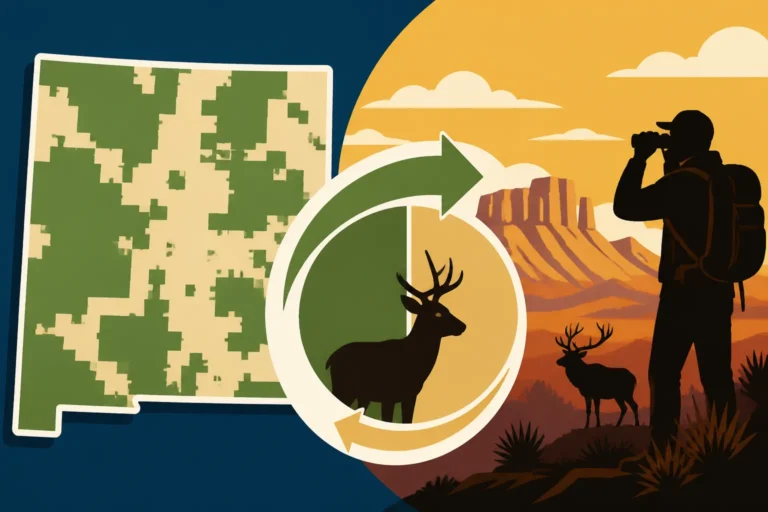
When you look at a land ownership map of New Mexico, you'll see large swaths of what appears to be public land, but not all of it falls under the same management umbrella as National Forests or BLM ground. State Trust Land is a distinct category with a specific purpose and its own set of rules, which can often catch hunters off guard if they're not familiar with them. It's crucial to understand these distinctions before you ever set foot on the ground.
What is State Trust Land?
New Mexico State Trust Land isn't "public" in the same way a National Forest is, where the primary purpose is often recreation and conservation for the general public. Instead, these lands were granted to the state by the federal government at statehood, specifically to generate revenue for designated public beneficiaries. Think of it like a massive endowment. The income generated from activities on these lands – whether it's grazing leases, oil and gas development, or timber sales – goes directly to support institutions like public schools, universities, and hospitals. This underlying purpose dictates how the land is managed and, critically, how and when the public can access it.
These lands are often interspersed with private property and other federal lands, creating a mosaic that can be confusing. They might be vast, unbroken tracts or smaller, isolated parcels. Their management priorities often lean towards generating revenue, which means recreational access, while permitted for hunters and anglers, is secondary to the trust's financial obligations. This model is quite different from how, say, the Gila National Forest operates, where multiple-use principles and public recreation are central to its mission.
Who Manages State Trust Land?
Unlike federal lands managed by agencies like the U.S. Forest Service or the Bureau of Land Management, New Mexico State Trust Land is managed by the New Mexico State Land Office (NMSLO). This office acts as the trustee, responsible for administering these lands to produce income for the beneficiaries. They oversee everything from grazing permits for ranchers to mineral leases for energy companies. Their role is primarily business-oriented, ensuring the trust lands are utilized in a way that maximizes returns for education and other state institutions.
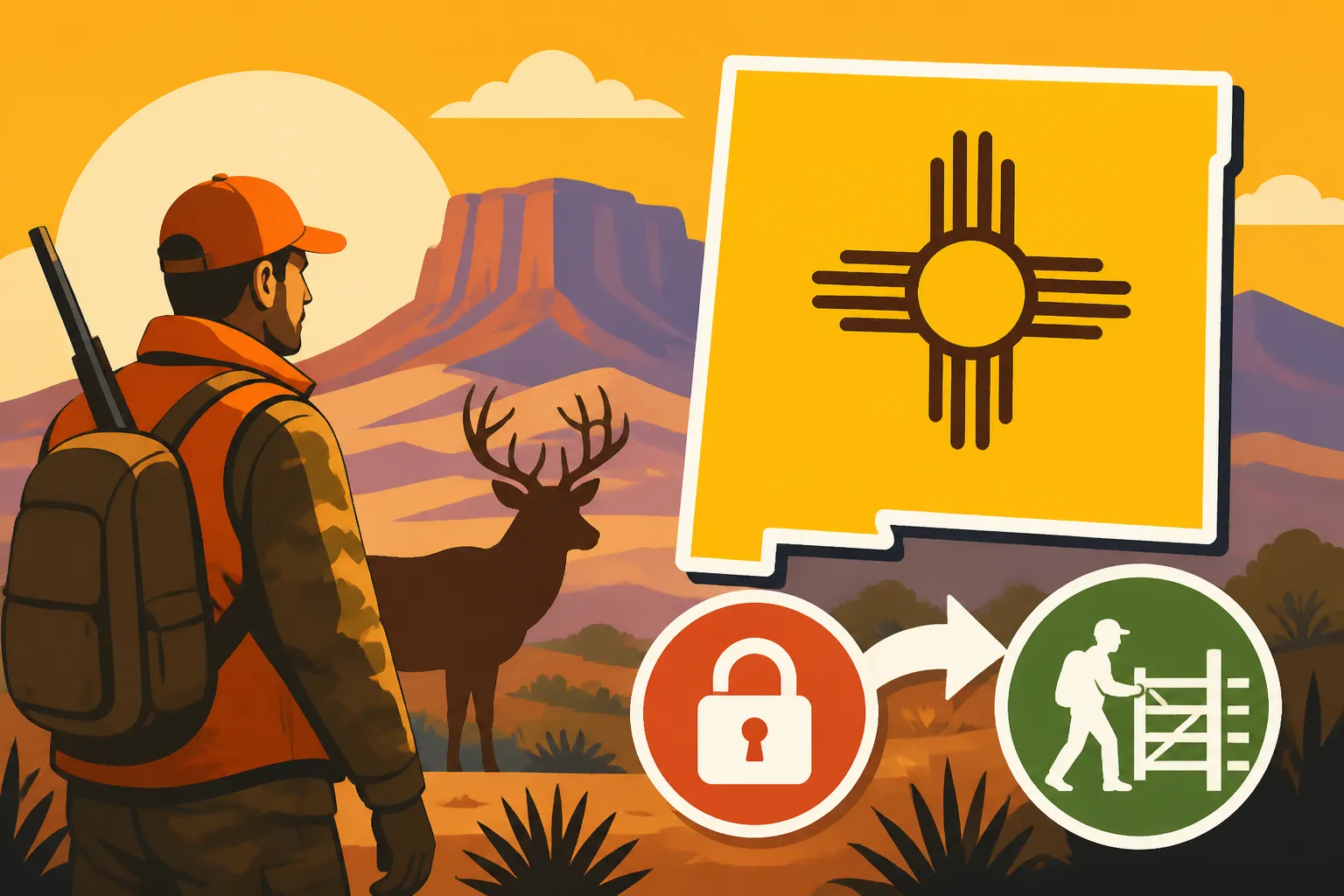
While the State Land Office handles the overall management, the New Mexico Department of Game and Fish (NMDGF) plays a critical role in facilitating hunting and fishing access. There's a formal agreement, or easement, between the NMSLO and NMDGF that specifically allows licensed hunters and anglers to use State Trust Land for those activities. It's this easement that makes hunting on these lands possible for you. Without it, you'd need individual permission from the Land Office, which would be an administrative nightmare. This relationship is why your valid New Mexico hunting or fishing license is so important – it acts as your personal easement for access. A New Mexico License Is Your State Trust Land Easement is a good resource to delve deeper into this specific mechanism.
The Purpose of State Trust Land
As mentioned, the core purpose of New Mexico State Trust Land is to generate revenue for 22 specific public institutions. This is not just a general idea; it's enshrined in state law and the state constitution. The State Land Office is legally bound to manage these lands as a business, prioritizing their financial productivity. This means that if a proposed activity generates more revenue for the beneficiaries, it's generally favored over activities that do not. For hunters, this translates into some specific rules you won't find on other public lands.
For example, a rancher with a grazing lease on Trust Land holds a primary use right for that specific activity. While you, as a hunter, have legal access under the NMDGF easement, you must respect the existing uses and operations of the lessee. This often means avoiding interference with livestock, gates, or infrastructure. The financial health of the trust beneficiaries is always at the forefront, shaping how these lands are managed and accessed. Understanding this fundamental purpose helps clarify why certain regulations exist and why Trust Land access differs from other public land types.
Accessing New Mexico State Trust Land for Hunting
Accessing New Mexico State Trust Land for hunting isn't quite the same as pulling off the highway onto BLM ground. There are specific requirements and nuances that every hunter needs to be aware of to ensure they are legal and respectful of the land's primary purpose. It's not just about having a license; it's about understanding the unique conditions that come with that access.
The Hunting License as Your Easement
This is perhaps the most important detail for any hunter wanting to utilize New Mexico State Trust Land. Your valid, current New Mexico hunting license (or fishing license, if that's your pursuit) serves as your official access permit to hunt or fish on these lands. It's not a suggestion; it's the specific legal mechanism that grants you permission under the agreement between the State Land Office and the Department of Game and Fish. Without a valid license, you are trespassing, plain and simple.
This arrangement means that you don't need to seek additional permission from the State Land Office or any specific lessee for general hunting access, provided you follow all NMDGF regulations. It's a blanket easement for licensed recreational users. However, this easement is specifically for hunting and fishing. It does not automatically grant you permission for other recreational activities like hiking, birdwatching without a hunting/fishing purpose, or off-roading. If you're out scouting, you must still possess a valid license for the species and season you intend to hunt. This detail is often overlooked, leading to misunderstandings. For a deeper dive, check out The Easement Between the Land Office and Game and Fish.
Key Regulations for Trust Land Hunting
Beyond merely possessing a license, there are several critical regulations that govern hunting on State Trust Land. Ignoring these can lead to fines, loss of hunting privileges, or worse.
Timing of Access: While your license grants access, there are specific limitations on when you can access these lands. Generally, you can only enter Trust Land for hunting or scouting during the open legal hunting season for which you hold a valid tag. This isn't like federal land where you can hike and explore year-round. When Trust Land Access Actually Opens further details this, emphasizing that your access is tied to a specific hunting opportunity.
Scouting Window: New Mexico does offer a specific window for scouting on State Trust Land, which is a huge benefit for hunters. You are generally allowed to scout 14 days prior to the opening day of any valid hunting season for which you possess a license. This means if your elk hunt starts on October 1st, you could begin scouting on September 17th. This window is explicitly for scouting related to your upcoming hunt, not just general recreation. It's a valuable opportunity to locate game, find water sources, and understand the terrain. Make sure to consult You May Scout New Mexico Trust Land 14 Days Before a Hunt for all the nuances of this rule.
Vehicle Use: This is where many hunters run into trouble. Motorized vehicle use on State Trust Land is generally much more restricted than on other public lands. You are typically limited to existing roads and trails that are open to public vehicle traffic. Off-road travel, even to retrieve game, is strictly prohibited unless specifically marked and permitted. Always assume "no" unless you see an explicit "yes." Respecting these rules is not only about legality but also about preventing damage to the land and avoiding conflicts with lessees.
Respecting Leases and Infrastructure: Most State Trust Land parcels are leased for grazing, agriculture, or other commercial uses. As a hunter, you are a secondary user. You must always respect gates by leaving them as you found them (closed if closed, open if open), avoiding damage to fences, and staying clear of active ranching operations or oil and gas sites. Disturbing livestock or damaging private property is a serious offense. Remember, the State Land Office's primary goal is revenue generation, and disrupting their lessees can lead to stricter access rules for everyone.
Distinguishing Trust Land from Other Public Lands
It's absolutely vital to know the difference between State Trust Land, Bureau of Land Management (BLM) land, and National Forest (NF) land. They are all publicly owned but managed under different mandates, leading to vastly different access rules. Confusing them can land you in serious trouble.
| Feature | State Trust Land (NMSLO) | BLM Land (Bureau of Land Management) | National Forest Land (US Forest Service) |
|---|---|---|---|
| Primary Purpose | Generate revenue for state beneficiaries (schools, hospitals) | Multiple-use: recreation, grazing, mining, energy development | Multiple-use: timber, recreation, wildlife, water, wilderness |
| Access Authority | Valid hunting/fishing license is your easement | Generally open access for recreation | Generally open access for recreation |
| Scouting | Limited to 14 days before a valid hunt season | Generally open year-round | Generally open year-round |
| Camping | Generally prohibited, specific exceptions for hunters may exist | Dispersed camping widely allowed (with regulations) | Dispersed camping widely allowed (with regulations) |
| Vehicle Use | Restricted to existing, open roads | Restricted to existing, open roads/trails (often more extensive) | Restricted to existing, open roads/trails (often more extensive) |
| Management | New Mexico State Land Office & NMDGF agreement | Federal government | Federal government |
| Presence of Leases | Very common (grazing, oil/gas), must be respected | Common (grazing, mining), must be respected | Less common for grazing, but timber/mineral leases exist |
The key takeaway here is that State Trust Land is the most restrictive regarding general public access and activities outside of active hunting or fishing. You can't just set up a camp or go for a joyride off-road like you might on some BLM parcels. Always confirm the land status before you go, and always err on the side of caution. Mapping tools like onX Hunt or GoHunt are absolutely indispensable for accurately identifying these boundaries and understanding the rules that apply to each parcel. Reading a Land Ownership Layer Correctly is a must-read for making sense of these maps.
Scouting and Camping on Trust Land
Successfully hunting New Mexico State Trust Land often hinges on effective scouting and knowing the nuances of where you can and cannot spend the night. These rules are distinct and critical to understand, as they differ significantly from what you might be used to on other public lands.
The 14-Day Scouting Window
New Mexico offers a specific, limited window for scouting on State Trust Land. This is a huge benefit, as preseason preparation is often the key to a successful hunt. The rule is clear: you are permitted to enter State Trust Land for scouting purposes only during the 14 days immediately preceding the opening day of the specific hunt for which you hold a valid license. For example, if you have a muzzleloader deer tag that opens on November 10th, you can scout on Trust Land from October 27th onwards. This doesn't mean you can just go scout any time you want; it must align with a specific, upcoming hunting season for which you are legally licensed.
This window is designed to allow hunters to locate game, familiarize themselves with the terrain, identify water sources, and plan their approach without disturbing the land or its primary lessees for an extended period. It’s a targeted allowance, not an open invitation for year-round reconnaissance. During this scouting period, you are still bound by all other Trust Land regulations, including those regarding vehicle use and respecting existing leases. You must also carry your valid hunting license with you. Don't assume that because you're "just looking" you don't need your license; it's your permit for that specific activity on that specific land type. For detailed information on this, refer to The 14-Day Scouting Window on Trust Land.
Camping Regulations on Trust Land
This is one of the most frequently misunderstood rules about New Mexico State Trust Land. In general, camping is prohibited on State Trust Land. Unlike National Forests or BLM areas where dispersed camping is often allowed, the State Land Office's mandate to generate revenue for beneficiaries means that long-term occupation or use that doesn't directly contribute to the trust is generally not permitted. This includes setting up a tent, parking an RV overnight, or creating a makeshift camp.
There may be very rare, specific exceptions or designated areas, but these are few and far between and would be explicitly noted by the NMSLO or NMDGF. As a rule of thumb, assume you cannot camp on State Trust Land. This means you need to plan your hunts carefully, perhaps relying on nearby BLM or National Forest lands for camping, or arranging for private lodging. It requires more logistical planning, but it's a non-negotiable rule. Violating camping regulations can lead to fines and eviction, potentially jeopardizing your hunt. If you're wondering about the specifics, the article Can You Camp on New Mexico Trust Land? will clarify this further. Always have a backup plan for where you'll spend the night.
Vehicle Use and Road Access
Motorized vehicle access on New Mexico State Trust Land is significantly more restrictive than on federal lands. The general rule is this: stay on established, open roads. This means roads that are clearly visible, maintained for vehicle traffic, and not explicitly marked as closed. Off-road travel, cross-country driving, or even creating new tracks to access a specific hunting spot is strictly forbidden. This rule is in place to protect the fragile desert ecosystems, prevent erosion, and avoid interference with grazing operations or other lease activities.
Even if you've harvested an animal, driving off-road to retrieve it is generally not permitted unless you are on an established, open road. This can make game retrieval on Trust Land particularly challenging, often necessitating a long pack-out. Always check for seasonal closures or specific restrictions that might apply to certain roads, especially during wet periods or winter. It's your responsibility to know before you go. Motorized Travel Rules on New Mexico Public Land offers valuable insights into these regulations across different land types in New Mexico. Use mapping applications like onX Hunt to identify existing roads and understand the underlying land ownership layers to ensure you're compliant.
Navigating Potential Challenges and Best Practices
Hunting on New Mexico State Trust Land comes with its own unique set of challenges that, if not addressed proactively, can quickly turn a promising hunt into a frustrating experience. Knowing how to prepare and behave ethically is just as important as knowing the legal boundaries.
Identifying Trust Land Boundaries
Accurately identifying State Trust Land boundaries is paramount to hunting legally and avoiding trespass. These lands are often checker-boarded with private property, BLM, and National Forest lands, creating a complex mosaic. A casual glance at a map or relying on outdated information simply won't cut it. The most effective tool for this is a GPS-enabled mapping application on your phone or a dedicated GPS unit.
Apps like onX Hunt are invaluable here. They provide detailed land ownership layers that clearly show federal, state, and private boundaries, often color-coded for easy identification. Before you head into the field, download offline maps of your unit, as cell service is often nonexistent in remote areas. Take the time to study these maps at home, familiarizing yourself with the property lines, access points, and any surrounding private parcels. Pay particular attention to areas where Trust Land abuts private property, as these are common points of accidental trespass. Even with a mapping app, always be aware of physical boundary markers like fences, gates, or signage, as these can provide critical real-world confirmation of where you are.
Dealing with Private Inholdings and Access
One of the most persistent frustrations for hunters on public lands, and especially on State Trust Land, is dealing with private inholdings and landlocked public parcels. Sometimes, a piece of Trust Land might be entirely surrounded by private property, making it inaccessible without crossing that private ground. Under New Mexico law, you absolutely cannot cross private land to access public land without explicit written permission from the landowner. This is a critical point that cannot be overstated. "Corner crossing" disputes, where hunters step from one public parcel to another by traversing the airspace above a private corner, have gained national attention, but the fundamental rule remains: do not physically step on private land without permission.
Before you plan a hunt or scouting trip to a Trust Land parcel, meticulously review your maps to identify any access issues. Look for established public roads that directly lead to the Trust Land boundary without traversing private property. If a parcel appears landlocked, it generally means it's inaccessible for hunting unless you've secured permission from the surrounding landowners, which can be a challenging and often unsuccessful endeavor. Crossing Private Ground to Reach New Mexico Public Land and Getting Written Permission in New Mexico are essential reads for understanding the legalities and practicalities of this issue.
Ethical Considerations and Respectful Use
Beyond the letter of the law, there's a strong ethical component to hunting on State Trust Land. Remember, these lands are actively used for other purposes, primarily generating revenue. This means you're likely to encounter working ranches, oil and gas infrastructure, or other commercial operations.
Respect all existing users: Be courteous to ranchers, their employees, and anyone else you encounter. Your actions reflect on the entire hunting community.
Leave no trace: Pack out everything you pack in, and perhaps even more. This includes spent shell casings, trash, and any signs of your presence.
Respect infrastructure: Do not damage fences, gates, water tanks, or other private property. Always leave gates exactly as you found them. If a gate is closed, close it behind you. If it's open, leave it open. Damaging or interfering with ranching operations can lead to serious legal consequences and erode the public's access to these lands.
Avoid disturbing livestock: Keep a respectful distance from cattle, horses, and other domestic animals. Do not harass them or allow your dogs to do so.
Be aware of fire restrictions: New Mexico is often under severe fire restrictions, especially during dry periods. Know the current regulations for campfires and open flames, and always be prepared to extinguish any potential sparks.
Report violations: If you witness illegal activity, such as poaching, trespassing, or environmental damage, report it to the NMDGF or the State Land Office. Protecting these lands benefits all hunters.
Adhering to these best practices ensures that hunting opportunities on State Trust Land continue for future generations and maintains a positive relationship between hunters and other land users.
Penalties and Enforcement
Ignoring the specific rules and regulations for hunting and accessing New Mexico State Trust Land can lead to serious consequences. It's not just a slap on the wrist; violations can result in significant fines, loss of hunting privileges, and even criminal charges. Understanding the potential repercussions is a crucial part of responsible hunting.
Common Violations and Their Consequences
Hunters often inadvertently violate Trust Land rules due to lack of awareness, but intent often matters little in the eyes of the law. Here are some common violations and the typical range of consequences:
- Trespassing (hunting without a valid license or outside the legal scouting window): This is one of the most severe violations. If caught hunting or even just on Trust Land for recreational purposes without a valid hunting or fishing license, you are trespassing. Consequences can range from significant fines (hundreds to thousands of dollars), confiscation of your weapon and game, and suspension of your hunting privileges for several years. Repeat offenses can lead to even harsher penalties, including jail time.
- Unauthorized Vehicle Use (off-road travel, driving on closed roads): Driving off established, open roads on Trust Land is a common offense. This can result in fines, potential vehicle impoundment, and charges for property damage if you create ruts or damage sensitive terrain. The cost of environmental restoration can be astronomical and may be levied against the offender.
- Damage to Property (fences, gates, water tanks): Intentionally or negligently damaging ranching infrastructure is a serious matter. This can lead to substantial fines, restitution costs to the lessee, and criminal charges. Remember, these items are essential to the operations that generate revenue for the state's beneficiaries.
- Illegal Camping: As discussed, camping is generally prohibited on Trust Land. Setting up a camp can result in fines and immediate eviction. While perhaps not as severe as trespassing with a firearm, it's still a clear violation of land use rules.
- Littering/Illegal Dumping: Leaving trash or illegally dumping waste on Trust Land is an environmental crime and will result in fines, cleanup costs, and potentially more serious charges depending on the nature and quantity of the waste.
These penalties are designed to deter illegal activities and protect the integrity and financial purpose of State Trust Lands. They serve as a stark reminder that ignorance of the law is rarely an excuse. It's always best to be overly cautious and confirm your actions are legal before proceeding. For a general overview of penalties, you can consult Penalties for Breaking New Mexico Travel Rules, which touches on similar issues across various land types.
Enforcement Agencies and Reporting Violations
The primary agency responsible for enforcing hunting and fishing regulations on New Mexico State Trust Land is the New Mexico Department of Game and Fish (NMDGF). Their conservation officers patrol these areas, just as they do on other public and private lands, looking for violations of hunting laws, license requirements, and other NMDGF-specific rules.
Additionally, the New Mexico State Land Office Enforcement Division has officers who specifically enforce the land use regulations of State Trust Lands. These officers address issues like unauthorized vehicle use, camping violations, property damage, and general trespass. They work closely with NMDGF and local law enforcement. Local county sheriffs and state police may also respond to incidents on Trust Land, especially if they involve property damage or criminal activity.
If you witness a violation on State Trust Land, it's important to report it to the appropriate authorities. For poaching or hunting regulation violations, contact the NMDGF Operation Game Thief hotline. For land use violations like illegal dumping, off-road vehicle damage, or damage to infrastructure, you should contact the State Land Office Enforcement Division or local law enforcement. When reporting, provide as much detail as possible: location, date, time, description of the individuals or vehicles involved, and the nature of the violation. Reporting these incidents helps protect the lands and preserves access for responsible hunters.
Disclaimer
This article is for general informational purposes only and does not constitute professional advice. Laws, prices and regulations vary by location and change over time. Consult a qualified professional for guidance on your specific situation.