How Soon You Must Tag a Downed Animal
There's nothing quite like the rush of finally closing the distance and taking an animal, whether it’s a big bull elk or a desert mule deer. But in that moment of triumph, it's easy to get caught up and forget the crucial next step: properly tagging your harvest. Failing to tag a downed animal correctly and immediately in New Mexico can turn a successful hunt into a costly legal headache. This guide is here to walk you through the precise requirements, common challenges, and best practices for tagging your animal to ensure you stay on the right side of the law and honor your harvest.
The Immediate Requirement: Attaching Your Tag Securely
New Mexico takes tagging very seriously, and for good reason. It's the first step in legally claiming your animal and ensuring proper wildlife management. The rules are clear, but sometimes the "how" and "when" can feel a little ambiguous in the heat of the moment. Let's break down exactly what's expected.
Understanding the Physical Tag and Punching System
Every big game license you purchase from the New Mexico Department of Game and Fish (NMDGF) comes with a physical carcass tag. This isn't just a fancy piece of paper; it's a critical legal document. When you look at your tag, you'll notice specific sections that need to be "punched" or marked. Typically, these include the date of harvest, the time of harvest, and sometimes the unit where the animal was taken.
The NMDGF uses a system where you physically remove specific segments or punch out the month, day, and time. For instance, if you harvest an animal on October 15th at 8:30 AM, you'd carefully punch out "OCT," "15," and the "AM" segment or the closest time increment if it's less precise. It's crucial that you use a knife or a sharp object to cleanly remove or punch the correct information. Don't just make a mark with a pen; the rules often specify that the section must be removed. This clear, unambiguous marking prevents any future alteration of the tag. Before you even head out for your hunt, I highly recommend getting familiar with Reading a New Mexico Hunt Code Before You Apply and then practice punching an old tag or a piece of paper so you’re not fumbling when it counts.
When "Immediately" Truly Means Immediately
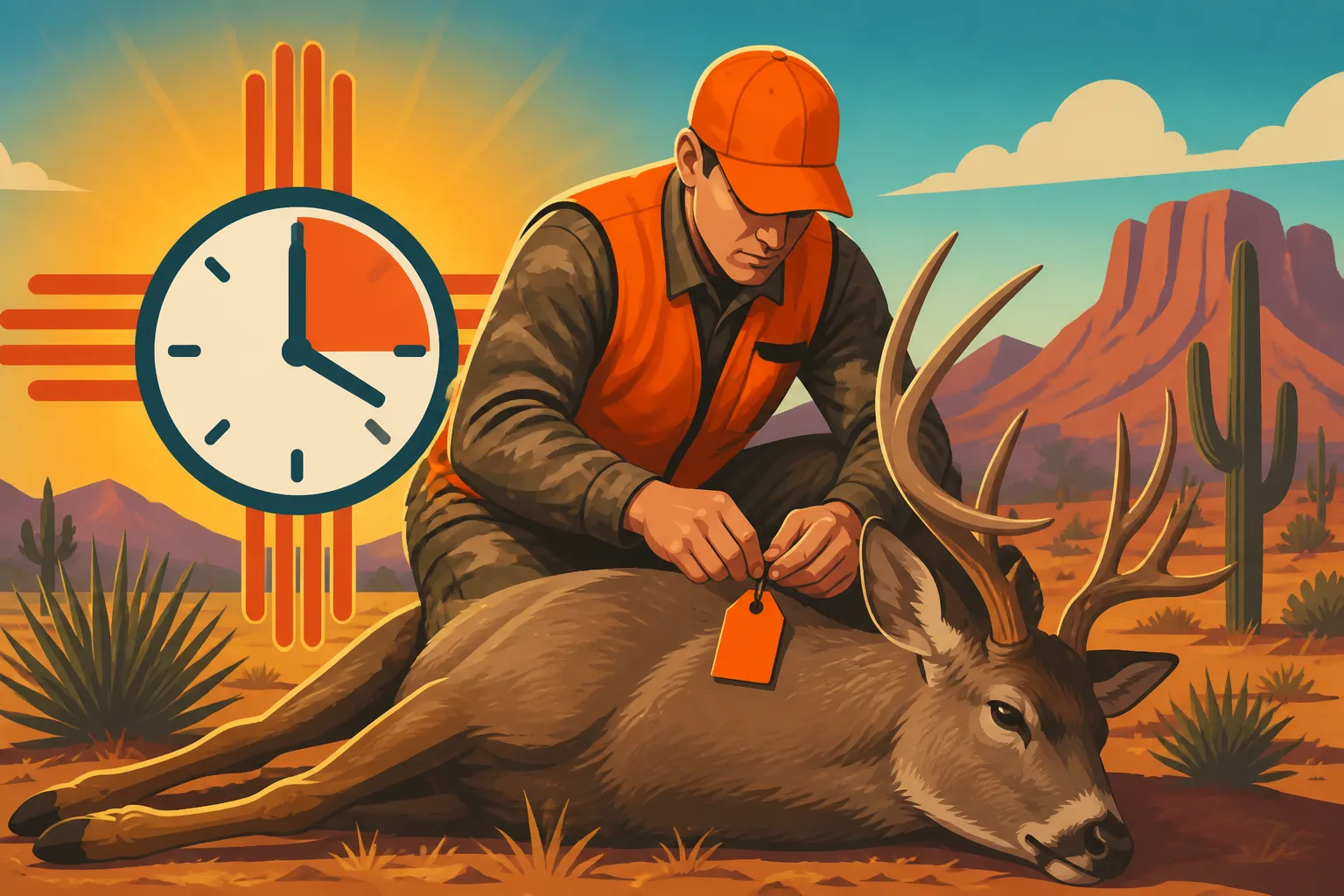
This is where many hunters get into trouble, often unintentionally. The New Mexico game laws state that the tag must be attached immediately to the carcass of the downed animal. What does "immediately" actually mean in a practical sense? It means as soon as you reach the animal, confirm it's expired, and ensure the area is safe, your very next action should be to fill out and attach that tag. It does not mean after you've taken a dozen hero shots, after you've field-dressed it, or certainly not after you've dragged it back to the truck.
Think of it this way: the moment you exert physical control over that animal, your tag needs to be on it. This is a non-negotiable step to prevent illegal tag sharing or opportunistic poaching. Imagine a game warden spotting an untagged carcass that's been field-dressed or partially quartered. Even if you're just moments away from tagging, it can look incredibly suspicious. So, before you even think about reaching for your phone for a photo or your knife for field dressing, your license and a pen or punch tool should be in your hand, ready to go. This applies whether you're hunting an elk in the Gila or a pronghorn on the eastern plains – the "immediately" rule is universal.
Placement of the Tag on the Animal
Once your tag is correctly punched, it needs to be securely attached to the animal. The NMDGF regulations specify that the tag should be attached to the carcass in a visible and secure manner. For large game like elk or deer, the general practice is to attach it to an antler, an ear, or around the hind leg tendon. The key is "securely" – you don't want it flapping in the wind or, worse, falling off during a retrieval, especially if you're dealing with challenging terrain.
Many hunters use zip ties or even a sturdy piece of string they carry specifically for this purpose. Whatever you use, make sure it’s strong enough to withstand being dragged, jostled, or packed out. If you're quartering your animal in the field, which is often the case for larger animals like elk in rugged country, the tag should remain with the largest portion of the meat or the head/antlers until it's processed. Some hunters even carry a second, small tag to attach to other quarters as an extra layer of identification, though the primary NMDGF tag only needs to be on one part. Always make sure that the information on the tag is legible and that the tag itself is protected from the elements as much as possible, as rain or snow can quickly render ink unreadable.
Beyond the Tag: Additional Steps and Information
Attaching the physical tag is just the first hurdle. New Mexico has further requirements that hunters must complete after a successful harvest, all designed to ensure responsible wildlife management and accurate data collection.
Mandatory Harvest Reporting
In New Mexico, attaching your tag is just the beginning. You are also required to report your harvest to the NMDGF. This is a mandatory step for almost all big game species, and it's something you simply cannot skip. The reporting usually needs to be done online through the NMDGF website or by phone within a specific timeframe after the kill, often 24 or 48 hours. This timeframe is critical, especially if you’re in an area with no cell service, which is common in many of New Mexico’s prime hunting units. You'll need to plan for this.
When you report, you'll be asked for information such as your license number, the species harvested, the hunt unit, the date of harvest, and sometimes details about the animal's sex and age. This data is incredibly valuable for wildlife biologists in understanding herd health, population trends, and harvest success rates, which in turn informs future season setting and tag allocations. It's how the NMDGF knows how many elk were taken in Unit 16A versus Unit 17, for instance. I've heard stories of hunters who forgot to report, only to find themselves in hot water later, sometimes facing fines or even losing privileges. Make it a habit: once the animal is tagged and cooling, make a mental note to report as soon as you have signal or access to a computer. You can find more specific details on Mandatory Reporting After a New Mexico Harvest.
Evidence of Sex Requirements
For many species, especially those with specific antler point restrictions or cow tags, New Mexico regulations require that evidence of the animal's sex remains naturally attached to the carcass until it reaches its final destination for processing. This is a game warden's way of verifying that you harvested the correct animal based on your tag type.
For antlered game like bull elk or buck deer, this usually means the head or antlers must remain naturally attached to the largest portion of the meat. If you're harvesting a cow elk or a doe deer, you might need to leave an udder or other external genitalia attached. The specific requirements can vary by species and hunt type, so always double-check the current year's New Mexico Hunting Rules and Information booklet before you head afield. For example, if you have a cow elk tag, you need to ensure evidence of sex is retained. This prevents someone with a bull tag from claiming a cow, or vice-versa, and helps maintain the integrity of the harvest data. Cutting off an animal’s head in the field and leaving the rest untagged before reporting can be a serious violation. Understanding Evidence of Sex Requirements on a Carcass is crucial for all hunters.
Salvaging the Meat: A Critical Responsibility
Beyond the legalities of tagging and reporting, there's a profound ethical and legal responsibility to salvage the edible meat of your harvested animal. New Mexico has strict meat salvage requirements for big game. This means that after you've successfully harvested an animal, you must make a reasonable effort to recover and utilize all edible portions. This isn't just about respect for the animal; it's a legal obligation.
Leaving an animal to rot after taking its antlers or hide is considered wanton waste and carries significant penalties. In the backcountry, this often means quartering the animal and packing it out, sometimes over several trips. This is where physical preparation comes into play. If you're hunting in challenging terrain, be ready for Packing an Elk Out of the Gila Alone or any other species, which can take hours, even days. Early season hunts, especially for archery elk, often mean dealing with warm temperatures. Knowing how to quickly field dress and cool your meat to prevent spoilage is essential. If you don't, you could be cited for wanton waste even if you tagged it properly. This is especially relevant in areas like the Gila National Forest where a downed animal might be miles from the nearest road. Always consider how you will get the meat out before you pull the trigger or release an arrow. The Meat Salvage Requirements for Big Game are a cornerstone of ethical hunting in New Mexico.
Common Scenarios and Pitfalls to Avoid
Even with the best intentions, real-world hunting situations can throw curveballs. It's important to anticipate potential issues and know how to react appropriately to avoid common mistakes.
Long Retrieves and Steep Terrain
Picture this: you've just made a perfect shot on a magnificent bull elk, but it ran 200 yards down a steep, rocky canyon before piling up. The sun is setting, and you're miles from camp. This is a common scenario in New Mexico's rugged terrain, and it presents a challenge to the "immediately" rule. Do you leave your pack and run down to tag it? Or do you take a moment to gather yourself, maybe even get some water?
The expectation is still immediate tagging. This means you need to get to that animal as quickly and safely as possible to attach your tag. If the terrain is truly treacherous, exercise caution, but prioritize reaching the animal. Your safety is paramount, but once you've safely reached the animal, the tag comes out before anything else. Don't start contemplating the quartering process or planning your pack-out route until that tag is securely attached and verified. This is where planning ahead with a good mapping app like GoHunt can save you, identifying potential retrieval routes even before the shot. The app can show you elevation changes and possible obstacles, allowing you to mentally prepare for the retrieve and tag. If it's a particularly long or difficult retrieve, you might need to make multiple trips, but the tag must remain with the largest portion of the carcass or the head/antlers at all times.
Group Hunts and Tagging Responsibilities
Hunting with partners is a fantastic experience, but it also adds a layer of complexity to tagging rules. If multiple hunters are involved in a group effort, who tags the animal? The general rule is clear: the hunter who downs the animal must tag it with their own license. There is no "group tag" system for big game in New Mexico. If you're hunting with a friend and they drop a deer, it's their tag that goes on that deer, not yours, even if you helped track it or called it in.
This rule is especially important in scenarios like mentored youth hunts, where an adult mentor is accompanying a young hunter. While the mentor is supervising, the youth hunter is the one with the tag and is responsible for their own harvest. The New Mexico Mentored Youth Can Hunt Two Years Before Certifying program has specific guidelines, but the tagging responsibility still falls to the youth hunter for their animal. Similarly, avoid any situation that could be perceived as "party hunting" where one person shoots multiple animals, and others tag them. This is illegal and carries severe penalties. Before you head out on a group hunt, have a clear conversation with your partners about tagging responsibilities to avoid any confusion or legal missteps.
Lost or Damaged Tags
It happens. Maybe your tag falls out of your wallet on the hike in, or it gets soaked and rips when you're trying to punch it. What do you do if your physical tag is lost or damaged before you've even harvested an animal, let alone after?
If your tag is lost or damaged before a harvest, you should contact the NMDGF immediately. They can often issue a replacement, though there might be a fee and it could take time, potentially impacting your hunt schedule. Do NOT hunt without a valid, physical tag in your possession. That's a surefire way to get a citation. If you happen to down an animal and then discover your tag is missing or unusable, the situation is more critical. In this very rare and unfortunate scenario, the absolute best course of action is to:
- Do not move or field dress the animal.
- Immediately contact the NMDGF or a local game warden. Explain the situation truthfully and clearly. They will advise you on the next steps, which may involve them coming to your location to verify the harvest and issue a temporary tag or instruct you on how to proceed. Trying to improvise or hide the issue will only make things worse.
- Document everything. Take photos of the animal and your location. Write down the exact time and sequence of events.
This is why it's always a good idea to keep your hunting license and tag in a secure, waterproof pouch, and perhaps carry a spare zip tie and a permanent marker. Some hunters even take a photo of their valid, unpunched tag with their phone as an extra layer of documentation, just in case. GoHunt also allows you to store your license information digitally, which can be a helpful backup for reference, but remember, New Mexico requires the physical tag on the animal.
Why These Rules Matter for Conservation
Sometimes, hunters might feel that tagging and reporting requirements are just bureaucratic hoops to jump through. But these rules are the backbone of sound wildlife management and directly contribute to the health and sustainability of New Mexico's incredible game populations.
Preventing Waste and Poaching
The "immediate tagging" rule, along with the meat salvage requirements and evidence of sex provisions, are all designed to prevent illegal activities like poaching and wanton waste. If an animal can be moved or field-dressed without a tag, it opens the door for someone to shoot an extra animal, use someone else's tag, or simply abandon the carcass after taking only a trophy.
Strict tagging procedures ensure accountability. When a game warden encounters a tagged animal, they can verify the hunter's identity, the validity of the tag for that species and unit, and that the animal was taken during the correct season. This helps to protect the resource from those who would exploit it illegally. It also reinforces the ethical commitment every hunter makes to respect the animals they pursue. When you're out there on public land, like a vast stretch of BLM ground, proper tagging sends a clear message that you're a responsible, ethical hunter.
Data Collection for Wildlife Management
Every tag punched and every harvest reported contributes to a massive database that the NMDGF uses to manage wildlife populations. Think of it like a huge puzzle: each piece of information, no matter how small, helps biologists see the whole picture.
Here's how that data is used:
| Data Point Collected | Why It Matters for Management |
|---|---|
| Species Harvested | Tracks overall harvest pressure on specific populations. |
| Date & Time of Harvest | Helps understand peak activity periods and hunter success rates within seasons. |
| Hunt Unit | Provides localized data for unit-specific management plans. |
| Sex of Animal | Crucial for understanding herd demographics (buck-to-doe ratios, bull-to-cow ratios). |
| Age Class (if provided) | Helps assess population age structure and recruitment rates. |
| Hunter Success Rate | Informs future tag allocations and draw odds. |
| CWD Test Results | Monitors the spread and prevalence of Chronic Wasting Disease. |
Without this information, biologists would be flying blind. They wouldn't know if a particular elk herd is thriving or declining, if a deer population is aging out, or if specific management strategies are working. This data directly influences decisions about how many tags are issued each year, the length of seasons, and even specific unit boundaries. So, when you meticulously fill out and attach your tag, and diligently report your harvest, you're not just complying with the law; you're actively participating in the conservation efforts that ensure future generations of hunters will have opportunities to experience the thrill of hunting in New Mexico. It’s all part of the cycle that keeps our hunting heritage strong.
Disclaimer
Please remember that hunting regulations can change. Always consult the official New Mexico Department of Game and Fish (NMDGF) Hunting Rules and Information booklet for the current year before engaging in any hunting activities. This article provides general information and should not be considered a substitute for the official regulations.