Primitive Weapons Hunting in New Mexico’s Unit 15
The call of primitive weapons hunting in New Mexico's legendary Unit 15 is strong, but the specific rules and rugged Gila terrain can feel like an impenetrable thicket of regulations and challenges. It’s easy to get lost in the details of what counts as "primitive" or how to navigate such wild country with limited tools. This comprehensive guide will strip away the confusion, offering a deep dive into everything you need to know about primitive weapons seasons, the unique character of Unit 15, and the essential strategies to make your hunt a success.
Understanding New Mexico's Primitive Weapons Definition
Stepping into a primitive weapons hunt isn't just about picking up an older firearm; it's about embracing a whole different philosophy, one deeply rooted in tradition and respect for the challenge. New Mexico's game regulations are quite specific about what qualifies, and knowing these details is absolutely crucial before you even think about applying for a tag, especially in a storied unit like 15. The state wants to ensure these hunts maintain their unique character, separating them from the general "any legal weapon" seasons.
What Qualifies as a Primitive Weapon?
When New Mexico talks about primitive weapons, they're generally referring to a narrow set of tools designed to harken back to earlier hunting eras. For firearms, this almost exclusively means traditional muzzleloaders. We're talking about weapons loaded from the muzzle, firing a single projectile ignited by a percussion cap or flintlock mechanism. This isn't your granddad's inline muzzleloader with a modern scope and 200-yard accuracy; it's a much more fundamental approach.
The restrictions are quite stringent. You absolutely cannot use smokeless powder; it's black powder or approved synthetic substitutes only. Scopes, even low-power ones, are generally out. You'll be relying on open sights, peep sights, or fixed-power, non-magnifying scopes—though these "scopes" are often more akin to advanced peep sights than true magnified optics. Exposed percussion caps or flintlock mechanisms are often a must, preventing the use of sealed primer systems. These details truly define the spirit of the hunt, forcing you to get closer and become a better woodsman.
Comparing this to modern firearms or even contemporary archery setups really highlights the distinction. With a primitive weapon, you're embracing limitations. There's no fast follow-up shot, no long-range glass-and-blast, and certainly no electronic sights to help with accuracy. It’s about slowing down, honing your stalking skills, and making that one shot count under conditions that demand more of you. It’s a rewarding challenge, but one that requires meticulous preparation and respect for the equipment's inherent constraints.
Muzzleloader Specifics for Big Game
For those considering a muzzleloader hunt in Unit 15, New Mexico sets clear minimums and restrictions to ensure humane harvesting and maintain the primitive aspect. For deer, including the mule deer you'll find in Unit 15, you’ll need a muzzleloader of at least .45 caliber. If your sights are set on the majestic elk that call the Gila home, that minimum jumps to .50 caliber. These are non-negotiable requirements that need to be checked carefully against your firearm. For a deeper dive into these requirements, you can read more about Muzzleloader Caliber Minimums for Elk.
Beyond caliber, the projectile itself is highly regulated. Sabots, those plastic sleeves that allow a smaller, more aerodynamic bullet to be fired from a larger bore, are typically forbidden. Instead, you'll be using traditional lead balls or conical bullets designed to be loaded directly into the bore. This means a heavier, slower projectile with a more dramatic trajectory drop at longer ranges, further reinforcing the need for close-range proficiency. It's a game of precise measurement and understanding your ballistic limitations, not long-range precision.
Powder is another critical component. As mentioned, only black powder or approved synthetic black powder substitutes are allowed. Brands like Pyrodex or Triple Seven are common and generally accepted, but always double-check the current regulations to ensure compliance. You'll need to know your powder charges, carry your measuring tools, and be prepared for the distinct smell and smoke of traditional muzzleloading. It’s a sensory experience that connects you directly to hunting’s past, but it also means understanding how humidity, altitude, and temperature can affect your load.
Archery Equipment for Primitive Seasons
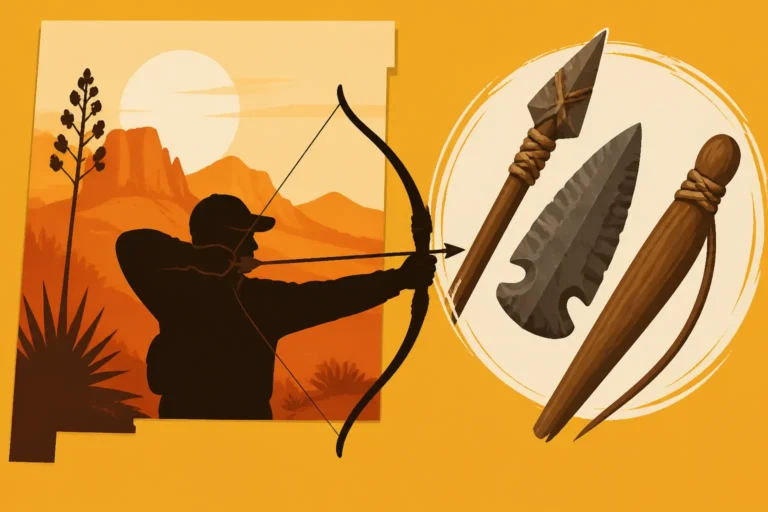
Archery in New Mexico also has its primitive seasons, and while Unit 15 is best known for its muzzleloader opportunities, understanding the archery rules is important for anyone considering a bow hunt. Generally, recurve bows, longbows, and traditional compound bows (often with specific restrictions on let-off or sights) are allowed. These are typically simpler bows, favoring raw skill over mechanical advantage. Crossbows, while legal in general seasons for some hunters, are almost universally prohibited in primitive archery seasons unless specific disability exemptions apply.
Broadhead requirements are equally strict. For big game, fixed-blade broadheads are usually mandatory, with minimum cutting diameters to ensure a quick, ethical kill. Expandable or mechanical broadheads, while popular in general archery seasons, are often explicitly disallowed in primitive hunts. The idea is to rely on simple, reliable, and historically accurate equipment. This means ensuring your broadheads are razor-sharp and matched perfectly to your arrow setup for optimum flight and penetration. For more information, check out the specific Broadhead Requirements for Bowhunting.
Furthermore, bows often have minimum draw weight requirements to ensure sufficient kinetic energy for big game animals. For deer and elk, this might be a 40- or 50-pound minimum, depending on the species. Mechanical releases are usually fine, but complex sights with multiple pins or magnification are often restricted. The emphasis is on the hunter's skill, the connection between archer and arrow, and the incredible challenge of getting close enough to an animal in its natural environment for an ethical shot. This adds another layer of difficulty and satisfaction to an already challenging pursuit.
Why New Mexico's Unit 15 Stands Out for Primitive Hunters
Unit 15, nestled within the vast Gila National Forest, isn't just another hunting unit; it's an icon. For primitive weapons hunters, it holds a special allure, a blend of rugged wilderness, thriving wildlife, and a legacy of challenging hunts. The Gila's untamed character seems to perfectly align with the ethos of primitive hunting, creating an experience unlike almost anywhere else in the Lower 48. This isn't easy country, but its difficulty is precisely what draws so many.
The Allure of Unit 15 and Its Unique Terrain
The moment you step foot into Unit 15, you're immediately struck by its raw, untamed beauty and daunting scale. We're talking about deep, sprawling canyons carved by the Gila River and its tributaries, towering ponderosa pine forests, and elevation changes that can take your breath away – literally. It's a land of endless ridges, hidden benches, and dark timber pockets, making it incredibly challenging to navigate, especially for those accustomed to flatter, more open terrain. This ruggedness means a significant physical demand, but it also creates prime habitat for big game.
The Gila Wilderness, which encompasses much of Unit 15, reinforces this primitive feel. Motorized vehicles are largely restricted, forcing hunters to rely on their own two feet or the steady gait of horses and mules. This isn't a place for quick drives and road hunting; it's a place for long hikes, careful map reading, and a deep immersion into nature. This inherent wildness is why many believe Unit 15 is the premier destination for a true primitive hunting experience. You can read more about why this unit is specifically designated for these types of hunts in Why Unit 15 Is a Primitive Weapons Unit.
The terrain naturally favors the hunter who is willing to put in the work. Animals here are wild, having adapted to minimal human presence in many areas. They use the broken country and dense timber to their advantage, demanding that hunters master stalking and tracking. It's a unit where your woodsmanship is truly tested, where patience and perseverance often trump flashy gear. The reward for this effort? An unparalleled sense of accomplishment and the chance to hunt in some of the most pristine elk and deer country available. Indeed, some even call it Why Unit 15 Is Called the Finest in the Gila.
Game Species and Quality in Unit 15
While Unit 15 offers diverse wildlife, it's the elk and mule deer that draw most primitive weapons hunters. The Gila National Forest is renowned for its trophy potential, and Unit 15 is often considered the crown jewel. The combination of nutrient-rich forage, vast wilderness, and selective hunting pressure (thanks to primitive weapon restrictions) allows bulls and bucks to reach impressive sizes and ages. This isn't a guarantee of a giant, of course, but the potential is undeniably there.
Elk hunting in Unit 15 during primitive seasons can be an incredible experience. The Gila is home to a robust elk population, and the challenge of getting within range with a muzzleloader or traditional bow is immense. These are smart animals, and the terrain helps them evade hunters. But for those who master the art of the stalk and understand elk behavior, the rewards can be extraordinary. Many hunters come to New Mexico specifically for its elk, and the Gila is often cited as the primary reason. Learn more about why this is such a draw at New Mexico Elk Are Why the Gila Draws Everyone.
Mule deer also thrive in Unit 15, from the higher timbered slopes to the more open, rugged canyons. While elk often get the spotlight, the mule deer here are also exceptional, offering hunters a different, but equally challenging, pursuit. Spotting a mature mule deer buck in the broken country, then executing a perfect stalk with a primitive weapon, is an experience that demands respect. These are not easy hunts, but the quality of the animals here is a testament to the management and the wild character of the landscape. For a broader look at mule deer in the region, check out Mule Deer Across New Mexico's High Country and Desert.
Hunt Pressure and Experience in Primitive Units
One of the most significant advantages of drawing a primitive weapons tag in Unit 15 is the reduced hunter pressure. While "any legal weapon" seasons can feel crowded in certain areas, primitive seasons typically have far fewer tags allocated, and the specialized equipment requirements naturally thin the herd of applicants. This translates to a more solitary, wilderness-centric hunting experience, which for many, is the ultimate goal. You'll likely encounter fewer other hunters, allowing for a deeper immersion in the Gila's wildness.
The entire experience of a primitive hunt in Unit 15 is fundamentally different. It's not about speed or convenience; it's about patience, skill, and connection. You're forced to slow down, read the land, understand the animals on a more intimate level, and rely on your own abilities. The sound of a muzzleloader shot echoing through the canyons, or the whisper of a traditional bowstring, adds a layer of authenticity that modern hunting sometimes lacks. This isn't just a hunt; it's a journey into history and a test of your personal limits.
This unique blend of challenge and reduced pressure attracts a dedicated breed of hunter. Those who pursue primitive seasons in Unit 15 are often deeply committed to the traditional aspects of hunting, valuing the process and the experience as much, if not more, than the outcome. It fosters a sense of camaraderie among fellow primitive hunters and a profound respect for the game and the wild places they inhabit. It's an opportunity to truly disconnect and re-engage with the primal instincts that define our hunting heritage.
Navigating the Primitive Weapon Hunt Draw and Application
Drawing a tag for Unit 15, especially for a primitive weapons hunt, is often the biggest hurdle for many hunters. New Mexico operates a lottery system, and while the odds can be tough, understanding the process and strategy is key. It's not just about putting your name in the hat; it's about smart choices and utilizing all available resources.
Understanding Hunt Codes and Application Strategy
Every hunt in New Mexico is assigned a unique hunt code, and primitive weapons hunts are no exception. These codes tell you the species, unit, season dates, and weapon type. It's absolutely crucial to correctly identify the primitive muzzleloader or primitive archery codes specifically for Unit 15 if that's your target. Mixing up codes can lead to applying for the wrong season or unit, wasting your application fee and potentially a valuable year in the draw. Always double-check the current New Mexico Game and Fish hunting regulations booklet for the precise codes.
When filling out your application, strategy comes into play. You typically get multiple choices, and how you order them can impact your chances. While New Mexico doesn't use a preference point system, meaning everyone has an equal chance each year, researching draw odds for primitive Unit 15 tags is still invaluable. Focus on units and seasons that align with your primitive weapon choice and skill level. For a detailed breakdown of what these codes mean, take a look at Reading a New Mexico Hunt Code Before You Apply.
Consider applying as a group if you have trusted hunting partners, as this can sometimes offer slight advantages in specific scenarios, though New Mexico's system is primarily individual. The main thing is to be diligent, accurate, and apply well before the March deadline. Missing that window means missing your chance entirely for the year. The primitive nature of these hunts means fewer tags, so while the competition might feel less fierce than "any legal weapon" elk tags, it's still a highly sought-after draw.
Non-Resident Considerations for Primitive Hunts
For non-residents dreaming of a primitive hunt in Unit 15, there are additional factors to consider, primarily concerning tag allocation and cost. New Mexico has a specific allocation system: 84% of tags go to residents, 10% to hunters using an outfitter, and only 6% to non-residents who apply independently. This 6% pool is highly competitive, especially for premium units and seasons like primitive elk in Unit 15. Your odds will naturally be lower than a resident's, but the dream is still very much alive.
Beyond the draw odds, non-residents face higher license and tag fees. The basic non-resident game hunting license is a prerequisite for applying for any draw tag. If successful, you'll then be charged the full tag fee, which for elk can be substantial. For example, a non-resident bull elk tag in New Mexico can run well over a thousand dollars. When budgeting for your hunt, factor in these costs, along with travel, lodging, gear, and potentially an outfitter if you choose that route. To understand these costs better, refer to The Nonresident New Mexico License Price.
Despite the higher costs and tougher draw odds, the experience of a primitive hunt in the Gila for a non-resident is often considered worth every penny and every application. It’s a bucket-list hunt for many, offering a genuine wilderness experience and a true challenge. The key is to go into the application process with realistic expectations, a solid understanding of the financial commitment, and the patience to keep applying if you don't draw on your first try.
Increasing Your Odds (or at least understanding them)
It's a common misconception that New Mexico offers preference points or a bonus point system that rewards loyalty. The truth is, it doesn't. Every applicant, whether it's your first time or your tenth, starts each draw cycle with the same mathematical chance of drawing a tag. This can be frustrating for those used to point systems in other states, but it also means a first-time applicant has just as much shot as a seasoned veteran. It truly is a lottery, which adds to the excitement and the heartbreak.
So, how do you "increase" your odds if there are no points? The best strategy involves meticulous research and smart choice ordering on your application. Analyze the draw statistics from previous years. Tools like GoHunt's Insider service provide excellent data and analysis, breaking down success rates by species, unit, season, and weapon type. By looking at these statistics, you can identify which primitive hunts in Unit 15 have slightly better odds, or perhaps even discover alternative primitive units that might offer a higher chance of drawing while still providing a quality experience.
Another approach, particularly for non-residents, is to consider applying through an outfitter in the 10% pool. While this means a significant financial commitment for the guided hunt, it places you in a separate draw pool with potentially better odds than the general non-resident pool. You'll need to secure an outfitter contract before applying, which requires careful vetting of the outfitter. Ultimately, "increasing your odds" in New Mexico is less about manipulating a point system and more about making informed choices based on historical data and strategic application.
Essential Gear and Preparation for Primitive Hunting in Unit 15
Heading into Unit 15 with a primitive weapon requires more than just the right firearm or bow; it demands a meticulously planned gear list and serious physical and mental preparation. This isn't a place where you want to cut corners on equipment or underestimate the physical demands. The Gila will test you, and your gear needs to be up to the challenge.
Muzzleloader and Archery Gear Beyond the Weapon
For muzzleloader hunters, your list goes far beyond the rifle itself. You’ll need a reliable supply of black powder or approved substitute, measuring tools, and a secure container. Percussion caps or flints are critical, and bringing an ample supply, along with a spare nipple or flintlock mechanism, is wise. Bullet starters, ramrod extensions, and a cleaning kit suitable for black powder are non-negotiables. Black powder is corrosive, and a quick clean in the field can save your rifle from damage. Everything must be kept dry and accessible, often in waterproof pouches.
Archery hunters using primitive setups have their own specialized needs. Beyond the bow, you'll want extra strings and a stringer, especially if you're using a traditional recurve or longbow that's regularly unstrung. A field sharpening stone for broadheads is essential, as sharp blades are paramount for ethical kills. Spare arrows, fletching glue, and a compact fletching jig can be invaluable for field repairs. Make sure your quiver is secure and won't make noise as you move through brush. Redundancy is key; assume something will break or get lost, and plan accordingly.
Regardless of your primitive weapon choice, reliability is paramount. Test all your gear extensively before the hunt. Practice loading your muzzleloader in adverse conditions. Shoot your traditional bow until it becomes an extension of yourself. Understand the limitations of your equipment and your own skill. Unit 15 is not the place for untested gear or last-minute adjustments. You need absolute confidence in every piece of equipment you carry.
Backcountry Essentials for Unit 15
Unit 15 means backcountry, and backcountry demands careful planning. Your footwear is paramount. Rugged, broken-in boots with excellent ankle support are non-negotiable for traversing the steep, rocky terrain of the Gila. Consider waterproof options, as creek crossings or unexpected storms can turn a good day into a miserable one. Layering is another critical concept, as temperatures can swing wildly from freezing mornings to warm afternoons, and a light rain jacket can become a lifesaver. For more tips on managing temperature, read up on Layering for Gila Temperature Swings.
Navigation tools are essential. While a physical map and compass are fundamental, modern GPS devices or smartphone apps like onX Hunt (with downloaded maps) are invaluable for understanding land ownership, tracking your position, and marking waypoints. Always carry a power bank to keep your electronics charged. Water is always a concern, even in the Gila. While there are water sources, they can be seasonal or difficult to access. A high-quality water filter or purification tablets are crucial, and always carry more water than you think you'll need for a day's hunt. Refer to Water You Must Carry on a Desert Day Hunt for similar insights, even though the Gila isn't pure desert, water management is equally critical.
Optics are another cornerstone of Gila hunting, even without scopes on your primitive weapon. A good pair of binoculars (10×42 or 10×50 are common choices) will be your best friend for glassing distant ridges and dark timber for game. A spotting scope on a tripod can extend your reach even further, allowing you to thoroughly pick apart distant slopes before committing to a stalk. Remember, you'll be getting much closer with a primitive weapon, so spotting game from afar allows for a more strategic, quiet approach.
Physical and Mental Conditioning
Let's be blunt: Unit 15 is not for the faint of heart, especially if you're planning a multi-day backcountry hunt with a primitive weapon. The Gila's terrain is relentless, with steep ascents, lung-busting descents, and elevations that can quickly wear you down if you're not prepared. You'll be covering miles each day, often with a heavy pack, and that's before you even consider packing out an animal. This isn't a flatland hunt, and underestimating the physical demands is a recipe for a miserable, or even dangerous, trip.
Physical preparation should start months before your hunt. Focus on cardiovascular fitness with hiking, running, or stair climbing, incorporating weighted packs into your routine. Strength training, particularly targeting your core, legs, and back, will be invaluable for navigating steep terrain and shouldering a heavy pack. Simulating the demands of your hunt, like hiking up and down hills with a loaded pack, is the best way to get ready. For more details on what to expect, read Preparing Physically for a High Elevation Hunt.
Beyond the physical, mental toughness is equally important. Primitive hunting can be incredibly challenging, with long periods of no sightings, difficult weather, and the ever-present knowledge that you only have one shot. Frustration, fatigue, and self-doubt are real. Cultivate patience, persistence, and a resilient mindset. Visualize success, but also prepare for setbacks. A primitive hunt in Unit 15 is as much a mental game as it is a physical one, and being prepared for both aspects will significantly increase your chances of success and enjoyment.
Primitive Hunting Tactics in Unit 15's Rugged Landscape
Hunting Unit 15 with a primitive weapon is a masterclass in woodsmanship. It’s about more than just finding an animal; it's about closing the distance silently, reading the nuanced language of the wind and terrain, and having the discipline to wait for the perfect moment. The Gila’s ruggedness dictates your approach, forcing you to think like the game you pursue.
Muzzleloader Stalking and Still Hunting
With a single-shot muzzleloader, every stalk is a high-stakes chess match. You simply don't have the luxury of follow-up shots at range. This means your primary tactic will be a combination of meticulous glassing, slow still hunting, and precision stalking. You need to identify game, plan your approach, and execute it flawlessly to get within an ethical range, typically inside 100-150 yards, depending on your rifle and proficiency.
When still hunting, move at a snail's pace, pausing frequently to observe, listen, and glass. Use every bit of cover the Gila provides—thick timber, rocky outcroppings, the contours of the land. Remember, you’re not just looking for the whole animal, but parts of it: an antler tip, the horizontal line of a back, the twitch of an ear. Pay extreme attention to the wind, as it is your most critical ally or your biggest enemy. A swirling wind in a deep canyon can betray your presence in an instant. For essential advice on this, check out Reading Wind in a Deep Gila Canyon.
Once you spot an animal, the stalk begins. Plan your route carefully, identifying potential hiding spots and natural sound-dampeners like soft earth or patches of pine needles. Avoid breaking branches or dislodging rocks. Take your time. It’s better to take an hour to close 100 yards perfectly than to rush and spook the animal. Your goal is a broadside shot on an unaware animal, ensuring a clean kill with your single projectile. This discipline is what makes primitive muzzleloader hunting so uniquely satisfying.
Archery Ambush and Calling Strategies
Archery hunting in Unit 15, particularly during elk season, demands an even greater level of stealth and precision. Your effective range is significantly shorter, often requiring you to get inside 60 yards, and for many traditional archers, even closer—within 30-40 yards. This is where the thrill and challenge truly intensify. You can gain more insight into these distances by reading How Close a Bowhunter Needs to Get on Elk.
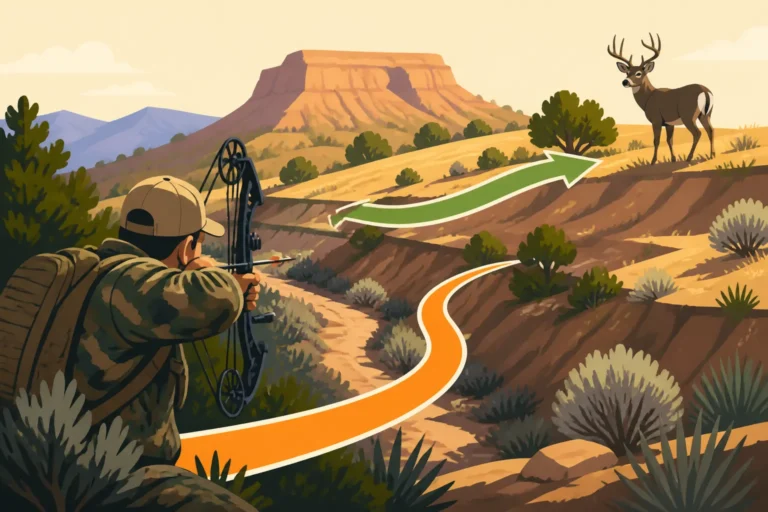
Ambush tactics become vital. This involves identifying key areas like well-used game trails, wallows, water sources, or bedding areas, and then positioning yourself downwind for a close encounter. Early morning and late evening are prime times for this, as animals are typically on the move. Building a natural ground blind or using existing cover can help you remain undetected as game approaches. Patience is not just a virtue here; it’s a requirement.
During the September rut, calling can be a highly effective strategy for elk. Locator bugles at dawn can help pinpoint bulls, and then aggressive cow calls or soft glunking can draw in curious animals. However, Gila bulls, especially in areas with higher pressure, can be call-shy. A realistic approach involves combining calling with strategic positioning, using the terrain to your advantage, and having a second hunter act as a caller to draw the bull past the shooter. Understanding the nuances of elk vocalizations and their timing during the rut is crucial. Explore this topic further by reading Bugle Timing Through New Mexico's Rut.
Utilizing Terrain Features for Success
The Gila's dramatic terrain isn't just a hurdle; it's a tool to be leveraged. Canyons, ridges, and dense timber offer natural advantages if you learn to read them. When planning your approach or still hunting, use ridgelines and draws as natural corridors that allow you to move with minimal visibility to game. Stay on the shaded side of slopes during midday, where animals might be bedded to escape the sun, and where your movements are less conspicuous.
Always try to hunt with the wind in your favor, positioning yourself so your scent isn't carried toward your target. In mountainous terrain, thermals play a huge role. In the mornings, air currents typically flow uphill as the sun warms the slopes; in the evenings, they flow downhill as the air cools. Understanding and anticipating these shifts is critical for a successful stalk. Ignoring thermals is one of the quickest ways to spook an entire drainage.
Don't overlook the "micro-terrain"—the small folds, benches, and thickets that can hide an animal or provide crucial cover for your approach. Many big game animals will bed on small benches just below a ridge, giving them a commanding view of the downhill slope while being protected from above. Learning to identify these spots on a map, and then confirming them on the ground, will significantly improve your success. For more insights on how these features can be used, check out Terrain That Hides an Approach at 10,000 Feet. The hunter who learns to seamlessly integrate their movement with the land will be the one who finds success in Unit 15.
Post-Harvest Considerations for Primitive Hunters
The moment of truth—a successful shot with a primitive weapon—is exhilarating, but the work is far from over. In the rugged, remote environment of Unit 15, ethical and efficient post-harvest care is paramount. This phase of the hunt demands meticulous planning and physical endurance, especially when you're dealing with a large animal like an elk.
Field Dressing and Meat Care in Remote Country
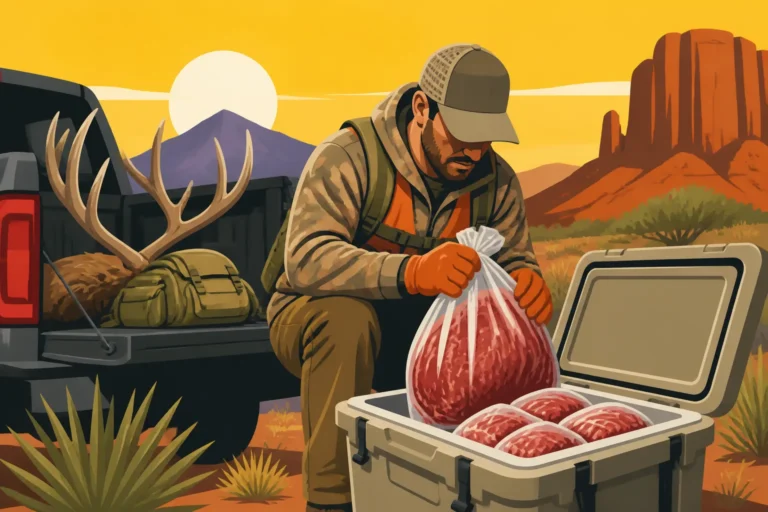
After a successful harvest, the clock immediately starts ticking, particularly if you're hunting in early season or during warmer weather. The primary goal is to cool the animal's carcass as quickly and thoroughly as possible to prevent spoilage. This means getting to the animal swiftly, gutting it cleanly, and removing as much heat as possible from the body cavity. For large animals like elk, this often involves quartering the animal in the field.
Carry sharp knives, a bone saw, and plenty of game bags. Quality game bags are breathable, protecting the meat from insects, dirt, and debris while allowing it to cool. Once field dressed or quartered, elevate the meat off the ground if possible, or hang it from a tree if the conditions allow and you have the strength. In warmer temperatures, spreading the quarters out in the shade and allowing air to circulate around them is crucial. For practical advice on handling heat, refer to Field Dressing in Desert Heat and Getting Meat Cooled on an Early Season Hunt.
Don't forget the required evidence of sex, which for New Mexico usually means leaving the head or specific parts of the hide attached to a portion of the meat until it reaches final storage. Always check the current regulations for these specifics. Taking the time and care to properly field dress and cool your animal is a fundamental part of respectful hunting and ensures that none of that hard-earned meat goes to waste.
Packing Out Your Harvest
Packing out an animal from the Gila is often the most physically demanding part of a primitive hunt. If you've downed an elk several miles deep in Unit 15, you're looking at multiple heavy loads over incredibly challenging terrain. This is where your pre-hunt physical conditioning will truly pay off. A sturdy pack frame is essential, designed to carry heavy, awkward loads comfortably. Don't skimp on your pack; it's an investment in your back and your ability to retrieve your meat.
Strategy is key for packing out. If you're hunting with a partner, divide the loads evenly and take frequent breaks. If you're alone, you'll be making multiple trips, carefully marking your route with flagging tape or your GPS. Consider the terrain carefully; sometimes taking a slightly longer, but less steep, route can save you energy in the long run. Breaking an elk down into five main loads (two hindquarters, two front quarters, and the backstraps/tenderloins/rib meat) is a common approach. For insights into tackling such a monumental task, read Packing an Elk Out of the Gila Alone.
Always prioritize the meat. Even if you're tired, ensuring the meat is safely and cleanly packed out is your responsibility. This might mean making an extra trip for the hide and antlers later, or if you've quartered properly, the skull plate and antlers can be lashed to a meat-packed frame. Be prepared for this immense effort, physically and mentally. The satisfaction of packing out an animal harvested with a primitive weapon from such a wild place is a profound experience, but it comes at a significant cost of sweat and grit.
Mandatory Reporting and Tagging Requirements
New Mexico has clear regulations regarding tagging and reporting your harvest. Immediately after downing an animal, you must validate and attach your tag to the carcass according to the instructions. This typically means signing and dating the tag and securely fastening it to the animal, often on the horn, antler, or leg, where it cannot be accidentally removed. Ensure you carry a pen and a way to secure the tag, like zip ties or strong twine. For specific guidance on timing, see How Soon You Must Tag a Downed Animal.
Beyond tagging, New Mexico often requires mandatory harvest reporting within a specific timeframe after the hunt concludes. This can usually be done online, by phone, or at a designated game check station. This data is critical for wildlife management, helping the Game and Fish Department monitor populations, adjust quotas, and ensure sustainable hunting. Failure to report can result in fines or penalties, so don't overlook this crucial step. You can find detailed information on this process in Mandatory Reporting After a New Mexico Harvest.
Keep your validated tag with the meat until it reaches its final destination or is processed. If you're crossing state lines, be aware of CWD regulations and any additional requirements for transporting game. Being meticulous about these post-harvest requirements not only keeps you compliant with the law but also reflects an ethical commitment to the management and conservation of New Mexico's incredible wildlife resources.
Ethical Considerations and Conservation
Hunting with primitive weapons in a unit as special as Unit 15 isn't just a pursuit of game; it's an embrace of a deep-seated tradition and a commitment to ethical conduct and conservation. When you step into the Gila Wilderness with a muzzleloader or a traditional bow, you're not just a hunter; you're a steward of a precious resource.
Respecting the Resource and Fair Chase
The very essence of primitive hunting demands a heightened sense of respect for the animal and the principles of fair chase. With a single-shot muzzleloader or a short-range bow, you're choosing a more challenging path, one that inherently requires you to get closer, understand the animal better, and make a precise, ethical shot. There's no room for Hail Mary attempts or questionable shots; your commitment to a clean, swift kill must be absolute.
This respect extends beyond the shot. It encompasses diligent game recovery, meaning you put every effort into finding and retrieving any animal you wound. Leaving no trace is another critical component, especially in a wilderness area. Pack out everything you pack in, including spent brass or archery debris. Even field dressing remains should be done in a way that minimizes impact and disperses organic matter naturally. The goal is to leave the land as you found it, if not better.
Fair chase also means understanding and adhering to all regulations, no matter how minor they seem. It's about honesty, integrity, and a profound appreciation for the privilege of hunting. When you're out in Unit 15, you're representing the entire hunting community, and your actions reflect on all of us. This heightened ethical standard is a core part of what makes primitive hunting so meaningful and connects us to the land and the animals in a uniquely profound way.
The Role of Primitive Hunters in Conservation
Primitive hunters, by their very nature, are often deeply invested in conservation. The challenges they embrace, the solitude they seek, and the connection they forge with the wilderness often lead to a strong advocacy for wildlife and habitat protection. Every license and tag purchased contributes directly to conservation funding in New Mexico, supporting wildlife research, habitat restoration, law enforcement, and public land access. This is a foundational principle of the North American Model of Wildlife Conservation, and primitive hunters are active participants.
Furthermore, the very existence of primitive weapon seasons is a testament to the desire to preserve certain hunting traditions. By participating, you help demonstrate the ongoing value of these methods and the unique experiences they offer, ensuring they continue to be available for future generations. It’s a way of honoring the past while actively contributing to the future of wildlife. Resources like GoHunt help hunters stay informed and engaged, often fostering a deeper understanding of conservation efforts.
Ultimately, a primitive hunt in Unit 15 is more than just bagging an animal; it's an immersive experience that deepens your understanding of the natural world. It encourages you to be a more skilled hunter, a more responsible steward, and a more passionate advocate for wild places. The physical and mental demands cultivate resilience, and the minimalist approach fosters an appreciation for simplicity and the raw beauty of New Mexico's Gila Wilderness. It's a challenging, rewarding path that leaves an indelible mark on those who answer its call.
Primitive Weapon Requirements in New Mexico
Navigating the specific legal requirements for primitive weapons can sometimes feel like deciphering an ancient text. To help clarify, here's a table summarizing some of the key distinctions between common primitive archery and muzzleloader rules as generally applied in New Mexico, especially for big game.
| Feature | Primitive Archery (General) | Primitive Muzzleloader (General) |
|---|---|---|
| Bow Type | Recurve, Longbow, Compound Bow (with specific restrictions) | N/A |
| Crossbows | Generally Prohibited (unless disabled exemption) | N/A |
| Draw Weight | Minimum 40-50 lbs (species dependent) | N/A |
| Broadheads | Fixed-blade only, minimum cutting diameter | N/A |
| Mechanical BH | Generally Prohibited | N/A |
| Firearm Type | N/A | Muzzleloading rifle, shotgun, or handgun loaded from muzzle |
| Ignition | N/A | Percussion cap or flintlock (exposed generally) |
| Propellant | N/A | Black powder or approved synthetic substitute only (no smokeless) |
| Projectile | N/A | Single projectile, lead ball or conical (no sabots) |
| Caliber Minimum | N/A | .45 for deer, .50 for elk (rifle/shotgun); .45 for pistol |
| Optics | No magnification (peep sights or open sights) | Open sights, peep sights, or non-magnifying fixed scopes |
| Electronic Aids | Generally Prohibited (e.g., lighted nocks, rangefinding sights) | Generally Prohibited (e.g., electronic ignitions, laser sights) |
| Arrows | At least 20" long with broadhead | N/A |
Please Note: This table provides general guidance. Regulations can change, and specific hunt codes may have additional or slightly different requirements. Always consult the most current New Mexico Game and Fish regulations booklet for the exact rules pertaining to your specific hunt code and season.
Disclaimer
The information provided in this article is for general guidance and informational purposes only. Hunting regulations in New Mexico are subject to change, and it is the sole responsibility of every hunter to consult the most current official New Mexico Department of Game and Fish regulations booklet before applying for any license or engaging in any hunting activity. Failure to comply with all state and federal regulations may result in penalties. Always prioritize safety, ethical hunting practices, and legal compliance.