Choosing Boots for Rocky Desert Ground
Hunting in New Mexico's vast, rugged landscapes means one thing for your feet: abuse. Those beautiful, wide-open spaces, dotted with cholla cactus and breathtaking vistas, are often paved with ankle-twisting talus, sharp volcanic rock, and endless miles of unforgiving, sun-baked earth. Trying to navigate this brutal terrain in anything less than the right footwear isn't just uncomfortable; it's a recipe for blisters, twisted ankles, and a miserable hunt. This guide is all about helping you pick the boots that can stand up to the challenge, keeping you on your feet and focused on the hunt, not your aching soles.
Understanding the Terrain's Demands on Your Feet
Before we even talk about specific boots, we need to understand exactly what New Mexico's rocky desert ground throws at you. It's not just a flat, sandy expanse you might picture from movies. We're talking about varied, gnarly terrain that demands a lot from your footwear, and even more from your feet.
The Brutality of New Mexico's Rocky Deserts
Imagine hiking across a landscape that feels like it was designed by a committee of sadists. That's often what you get in many parts of New Mexico. You'll encounter sharp-edged scree that grinds away at boot sidewalls, loose fist-sized rocks that roll underfoot like marbles, and solid volcanic basalt that acts like sandpaper on your soles. This isn't forgiving dirt; it’s a constant, jarring assault. Every step involves impact, torque, and abrasion. Your boots need to be a fortress around your feet, protecting them from punctures, bruising, and relentless friction. Without adequate protection, a long day of Spot and Stalk Tactics for Barbary Sheep through this kind of country can leave your feet feeling like you've walked on broken glass.
The sheer unevenness of the ground is another factor. You're constantly walking at angles, side-hilling, or scrambling over boulders. This puts immense strain on your ankles and the structural integrity of your boots. A weak ankle support in a boot can quickly lead to a rolled ankle, especially when you're carrying a pack or trying to move quietly through prime game habitat. You need boots that can hold your foot firmly in place, providing stability against lateral movement and unexpected shifts in footing.
Heat and Cactus: More Than Just Rocks
Beyond the physical punishment of the rocks themselves, you're dealing with a desert environment that has its own unique challenges. The heat, especially during early seasons, is relentless. Boots that don't breathe will turn your feet into sweaty, blistered messes. This isn't just about comfort; excessive moisture softens your skin, making it far more susceptible to blisters and fungal infections, which can quickly derail any hunt. Thinking about Water You Must Carry on a Desert Day Hunt often, you should also be thinking about how your feet will fare in the heat.
Then there’s the vegetation. New Mexico's desert is famous for its thorny residents: cholla, prickly pear, and various other spiky plants. These aren't just annoying; they can puncture weak spots in boot materials, leading to uncomfortable and potentially painful intrusions. You need boots with robust, dense materials that can resist these types of punctures, particularly around the lower rand and side panels. And let's not forget the ever-present dust, which can find its way into every crevice, creating more friction and discomfort if your boots aren't designed to keep it out. This is all part of the challenge when you're Hunting the Chihuahuan Desert Units, for instance.
Key Boot Features for Desert Hunting
Given the gauntlet that New Mexico’s rocky deserts present, certain boot features become non-negotiable. It's not just about what looks good; it's about engineering that stands up to extreme conditions and protects your most important tools in the field: your feet.
Durability and Support: Your First Line of Defense
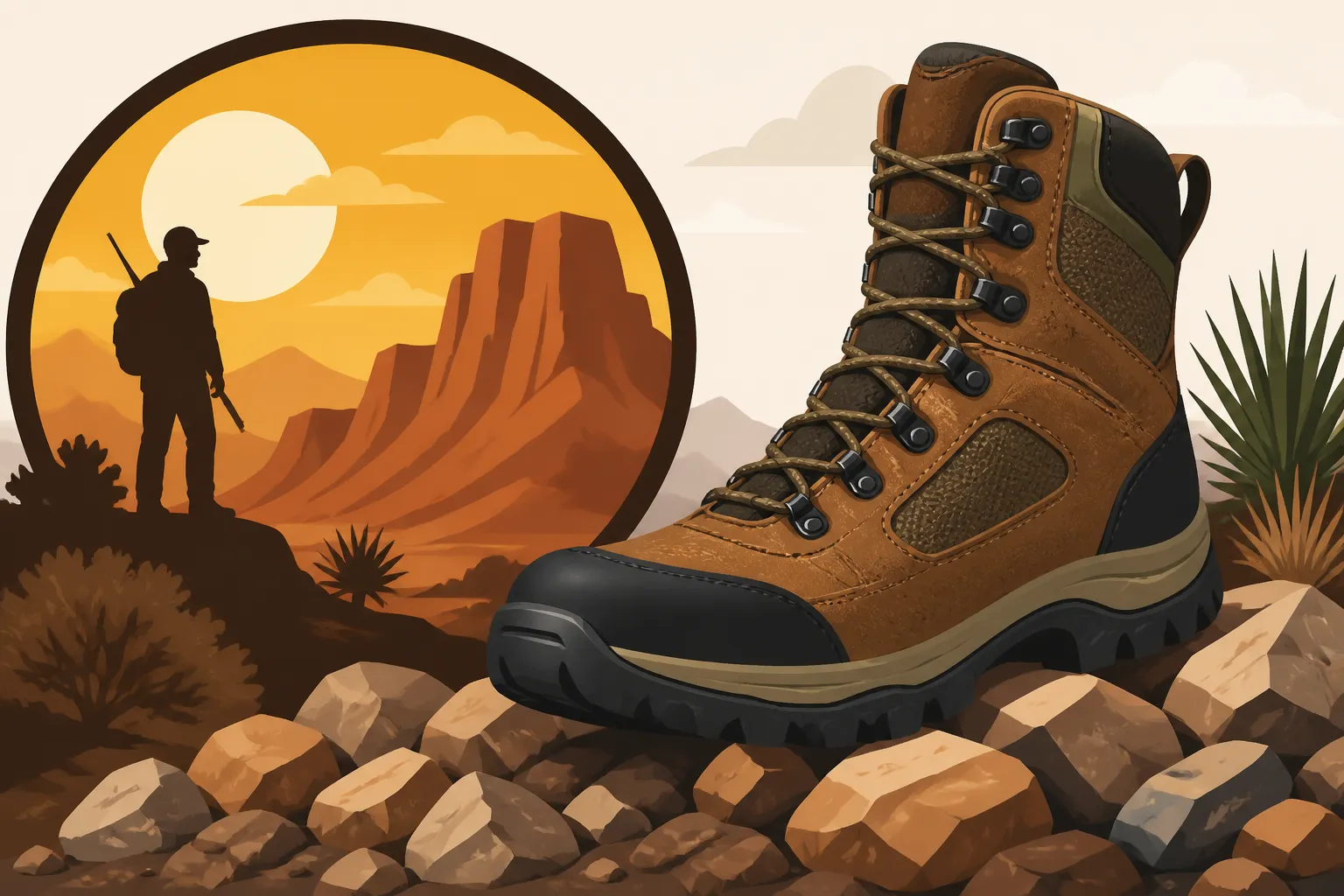
When you're putting miles on your boots across jagged terrain, durability is paramount. Look for boots constructed from tough, abrasion-resistant materials like full-grain leather or heavy-duty synthetic blends. The rand – that rubber strip protecting the base of the boot where the sole meets the upper – is absolutely critical in rocky desert environments. A full-wrap rubber rand offers significant protection against the constant scraping and impacts of sharp rocks, vastly extending the life of your boots and preventing wear that could lead to water intrusion or material failure.
Ankle support is another critical element. A stiff, well-padded collar and a robust lacing system that truly locks your heel in place can mean the difference between confidently traversing a steep, loose slope and a painful, hunt-ending injury. Don't underestimate the importance of a boot's shank – the rigid insert between the insole and outsole. A stiff shank provides stability on uneven ground, reduces foot fatigue over long distances, and protects your arches from sharp objects that might press through the sole. When you’re Playing Thermals on a Canyon Stalk, you'll appreciate that rigid support. Brands like Kenetrek and Schnee's are renowned for boots with exceptional ankle support and sturdy construction, which are ideal for the demands of the New Mexico landscape.
Traction and Outsole Design
The outsole is where your boot meets the ground, and in New Mexico, that ground is rarely cooperative. You need an outsole designed for aggressive grip on varied surfaces, from slick rock to loose gravel and dusty trails. Look for deep, multi-directional lugs (the patterns on the sole) that can bite into loose material and provide stability on solid rock. A good rubber compound will be sticky enough to grip on wet surfaces but durable enough to resist rapid wear from the abrasive rock.
Vibram soles are a common and trusted choice, often found on high-quality hunting boots, offering a balance of grip and durability. However, pay attention to the specific Vibram pattern, as some are designed more for mud, others for rock. For New Mexico's deserts, you want a pattern that prioritizes edge grip and resistance to slippage on hard, uneven surfaces. Avoid overly shallow or widely spaced lugs, which might perform well in mud but won't offer the necessary purchase on the sharp, loose scree that dominates much of the state's backcountry.
Breathability and Water Resistance
Here’s where it gets tricky in the desert. You need breathability to manage heat and sweat, but you also need enough water resistance to handle unexpected rain, dew, or small stream crossings. Many hunters gravitate towards boots with waterproof membranes like Gore-Tex, and for good reason—they keep your feet dry. However, in hot, dry conditions, waterproof membranes can also trap heat and moisture inside the boot, leading to sweaty feet.
For pure desert hunting, especially in early seasons when Heat Management on an Early Season Hunt is a major concern, some hunters prefer non-waterproof boots made of highly breathable, fast-drying materials. The logic is that if your boots get wet from sweat or a brief splash, they'll dry out quickly. If you opt for waterproof boots, look for ones with good ventilation features, or pair them with high-quality merino wool socks that wick moisture away from your skin. Merino wool socks, like those from Darn Tough or Smartwool, are absolute game-changers, helping to regulate temperature and prevent blisters even in less-than-ideal boot conditions. It’s a delicate balance, and often personal preference plays a big role here, but keeping your feet dry from the inside is just as important as keeping water out.
Fitting and Preparing Your Boots for the Field
Even the most expensive, technically advanced boots won't do you any good if they don't fit correctly or if you throw them on for the first time on opening morning. Proper fit and preparation are just as crucial as the boot's features themselves.
The Importance of a Proper Fit
This might sound obvious, but it's where most people go wrong. Your feet are unique, and a boot that fits your buddy perfectly might be torture for you. Go to a reputable outdoor store and try on boots at the end of the day when your feet are slightly swollen, mimicking how they'll be after a long hike. Wear the type of socks you'd actually hunt in. Walk around the store, find the inclines if they have them, and pay close attention to pressure points, heel lift, and toe room. You should have about a thumb's width of space between your longest toe and the end of the boot, and your heel should remain relatively locked in place, even when walking uphill or downhill.
Don't just rely on the manufacturer's size. Different brands have different lasts (the foot-shaped forms boots are built around), so a size 10 in one brand might feel completely different from a size 10 in another. Remember, a good fit is key to preventing blisters, especially when you're covering long distances over abrasive ground. Consider what you learned from resources like GoHunt when they review different boot models – paying attention to their notes on fit, width, and break-in periods can save you a lot of grief.
Maintenance for Longevity
Hunting boots are an investment, and like any good tool, they need proper care to perform and last. After every hunt, especially one in dusty or muddy conditions, clean your boots. Remove any caked-on dirt and debris, paying close attention to the lacing system and seams. If your boots are leather, use a leather conditioner to prevent drying and cracking, which can compromise their integrity and waterproofing. For synthetic boots, a good brushing and wipe-down is usually sufficient.
Regularly check your laces, eyelets, and stitching for wear and tear. A frayed lace or a loose stitch can quickly escalate into a bigger problem in the field. If you notice signs of excessive wear on your soles, consider having them resoled by a professional boot repair shop if the uppers are still in good shape. This can significantly extend the life of high-quality boots. Treating your boots well is part of being prepared for the demanding conditions, just like understanding Preparing Physically for a High Elevation Hunt or getting ready for Field Dressing in Desert Heat after a successful harvest.
Recommended Boot Styles and Popular Choices for New Mexico Terrain
Now that we’ve covered the technical aspects, let’s talk about the practical application. What kinds of boots are going to serve you best in New Mexico’s varied and often brutal hunting grounds?
Lightweight vs. Heavy-Duty Options
The choice between a lightweight hiking boot and a heavier-duty mountain hunting boot often comes down to the specific hunt and your personal preferences.
Lightweight Hiking Boots (or "Fast-and-Light" Boots): These are typically more flexible, breathable, and have a shorter break-in period. They're great for hunters who prioritize speed and agility on less technical terrain or during early, hot seasons where Snake Awareness on a September Archery Hunt is as important as foot comfort. They often feature more synthetic materials and less rigid support. For instance, if you're on a less strenuous pronghorn hunt on relatively flat plains, a lightweight option might be perfectly adequate. The downside? They generally offer less ankle support, are less durable against relentless rock abrasion, and have shorter lifespans when subjected to constant abuse. They might be fine for a day trip or an easier hunt, but for multi-day backcountry treks through the Gila, they'll likely fall short.
Heavy-Duty Mountain Hunting Boots: These are the tanks of the hunting footwear world. Built with stiffer midsoles, robust full-grain leather or durable synthetic/leather blends, full rubber rands, and aggressive outsoles, they excel in rugged, rocky, and steep environments. They provide superior ankle support, protection from impacts, and foot fatigue reduction over long, grueling days. Brands like Crispi, Lowa, and Schnee's make excellent heavy-duty boots that many New Mexico hunters swear by. While they are heavier and require a longer break-in period, their durability and protective qualities are invaluable when you're navigating steep canyons or climbing through timbered mountains. These are the boots you want when you're really getting into the backcountry, whether you're focused on Altitude Preparation for a Gila Elk Hunt or tackling the challenging climbs in Getting Into New Mexico's Sacramento Mountains.
Popular Choices for New Mexico Terrain
For the truly punishing rocky desert and mountain terrain of New Mexico, many seasoned hunters gravitate towards specific types of boots. Generally, anything with substantial ankle support, a stiff shank, and a full rubber rand is a strong contender.
Brands like Kenetrek Mountain Extremes, Crispi Nevada HTG, Lowa Renegade (for lighter duty) or Tibet (for heavier duty), and Schnee's Beartooth II are frequently mentioned in discussions among New Mexico hunters. These boots offer a blend of support, durability, and traction that stands up to the demands. They typically come in waterproof versions, but as discussed, consider how much breathability you need versus absolute waterproofness for your specific hunt and typical weather conditions.
When researching your options, consider looking at detailed reviews and forum discussions on platforms like GoHunt. They often feature user experiences and expert opinions on how various boot models perform in specific Western hunting conditions, which can be incredibly valuable. Remember, a good pair of boots is one of the most critical pieces of gear you'll invest in for hunting New Mexico. Don't skimp, take the time to fit them properly, and break them in long before you hit the trail. Your feet will thank you, and you'll be able to focus on the incredible hunting opportunities that await.
| Boot Feature | Importance for New Mexico Desert Hunting | Key Considerations |
|---|---|---|
| Upper Material | High | Durable full-grain leather or heavy synthetic blends resist abrasion and punctures from sharp rocks and cactus. Look for minimal stitching to reduce weak points. |
| Rubber Rand | Very High | Essential full-wrap rubber rand protects the boot's lower perimeter from brutal rock abrasion, vastly extending boot life and preventing leaks. |
| Ankle Support | Very High | Stiff, tall cuff and secure lacing system prevent ankle rolls on uneven terrain and reduce fatigue. Crucial for stability on loose scree and rocky slopes. |
| Midsole/Shank | High | Stiff shank provides underfoot protection from sharp objects, supports arches, and reduces foot fatigue over long, rocky distances. Avoid overly flexible boots for rugged terrain. |
| Outsole (Traction) | High | Aggressive, multi-directional lugs made from a durable, sticky rubber compound (e.g., Vibram) ensure grip on loose dirt, gravel, and solid rock. Prioritize patterns for hard, uneven surfaces. |
| Waterproofing | Medium to High | While helpful for rain or stream crossings, in hot, dry desert conditions, a waterproof membrane (like Gore-Tex) can trap heat and sweat. Balance with breathability; quality socks are key for internal moisture management. |
| Weight | Medium | Lighter boots offer agility but often sacrifice durability and support. Heavier boots provide superior protection and stability but can increase fatigue. Choose based on hunt intensity and duration. |
| Breathability | High | Crucial for comfort in hot desert conditions. Allows moisture (sweat) to escape, preventing blisters and discomfort. Often inversely related to absolute waterproofing, so consider synthetic panels or non-waterproof options for very hot hunts. |
Disclaimer
The information provided in this article is for general guidance and informational purposes only. Hunting regulations, environmental conditions, and product specifications can change. Always consult the most current New Mexico Department of Game and Fish regulations, check local weather and terrain conditions, and refer to manufacturer guidelines for any gear before heading into the field. Personal safety and adherence to all laws are your responsibility.