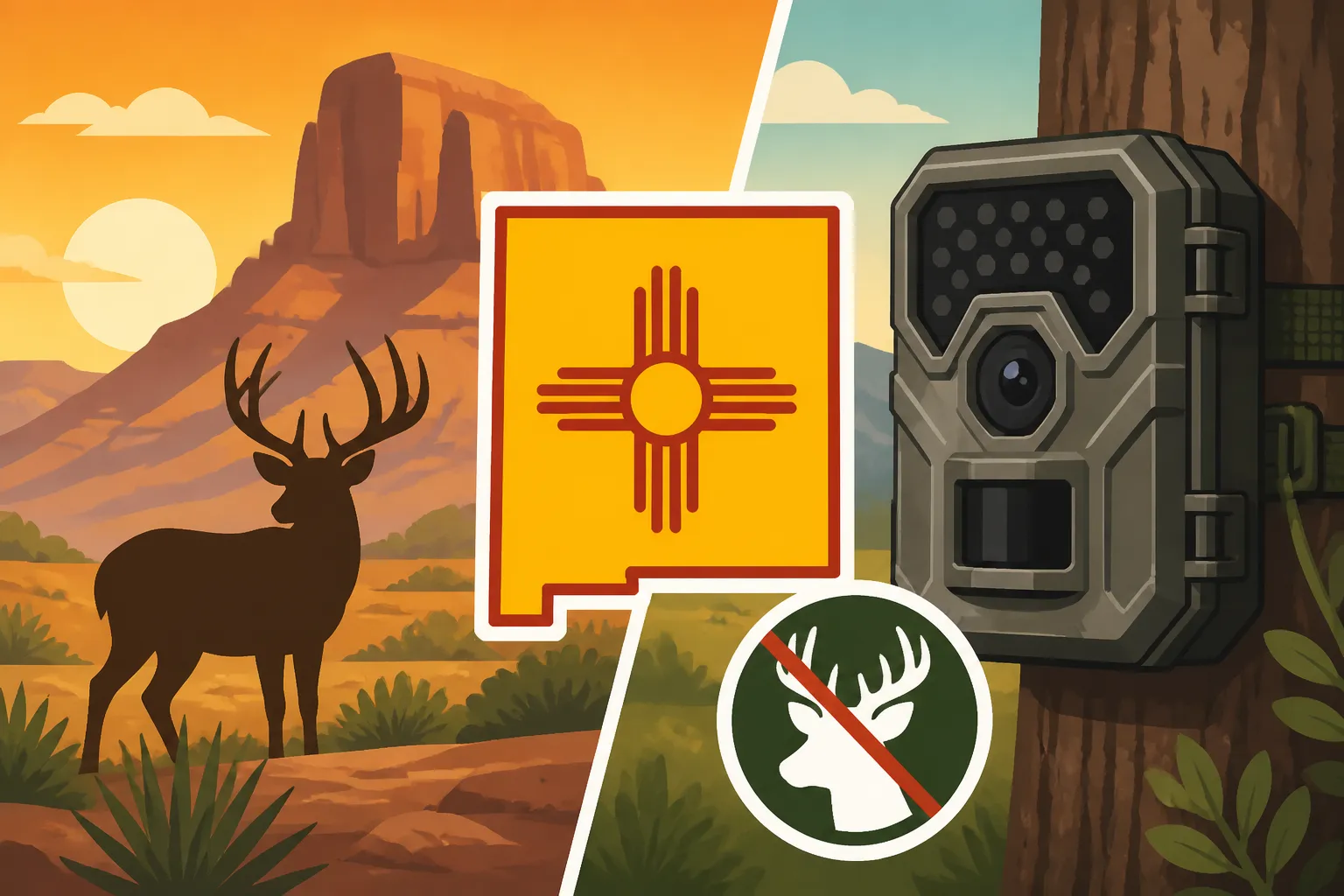
Trail Camera Rules on New Mexico Public Land
It’s a tale as old as time: you’re out in the beautiful New Mexico wilderness, maybe chasing a big bull elk or a cunning mule deer, and you think, “Wouldn’t it be great to know what’s coming through here when I’m not around?” Trail cameras seem like the perfect solution for gaining a scouting edge, but the rules and regulations around using them on public land can feel like a labyrinth of legalese. This guide is here to untangle that knot, walking you through everything you need to know about legally and ethically deploying trail cameras for hunting on New Mexico's public lands.
The Core Rule: Are Trail Cameras Legal on New Mexico Public Land?
This is usually the first question on everyone's mind, and thankfully, the answer is generally a resounding "yes!" However, that "yes" comes with some important asterisks and caveats that we absolutely need to explore. It's never as simple as just slapping a camera on a tree and walking away, especially when you're dealing with vast stretches of public access.
Understanding the General Stance
Good news for modern hunters! New Mexico has not enacted a blanket ban on the use of trail cameras for scouting or monitoring wildlife on its public lands. This stands in contrast to some neighboring states that have implemented outright prohibitions or severe restrictions on trail camera use for hunting. For us hunters in New Mexico, this means we can generally leverage these technological marvels to help us better understand game movement, identify specific animals, and gain crucial insights into their habits and preferred habitats. This permissibility offers a significant advantage in areas where traditional, on-the-ground scouting might be limited by terrain, time, or sheer distance.
It's important to frame this understanding correctly: the camera itself is not the issue. It’s a tool, much like a pair of binoculars or a rangefinder. The legality hinges less on the device and more on how it's used, the intent behind its deployment, and any associated actions. Just because you can use a tool doesn't mean you can use it any way you want. The overarching principles of fair chase and responsible land stewardship still apply with full force. We’re not just talking about avoiding explicit legal violations; we're also considering the ethical implications and the perception of other public land users. It’s about being a good ambassador for hunting as a whole, ensuring that our technological advantages don’t compromise the integrity of the hunt or the experience of others.
The Specifics of "Public Land"
When we talk about "public land" in New Mexico, we're primarily referring to lands managed by federal agencies such as the Bureau of Land Management (BLM) and the U.S. Forest Service (like the Gila, Carson, or Lincoln National Forests), as well as New Mexico State Trust Land. The general rule regarding trail cameras typically applies across these various land designations. Your standard New Mexico hunting license often grants you an easement to access and hunt on State Trust Land, and this access generally extends to responsible scouting, including the use of trail cameras, within the established legal framework. Knowing Scouting New Mexico State Trust Land Fourteen Days Out can provide invaluable context for your planning.
However, it's crucial to understand that while statewide regulations often cover federal and state-managed public lands, there can sometimes be localized rules or specific restrictions, particularly within designated wilderness areas or unique management zones. For instance, while generally permissive, a particular wilderness area might have specific stipulations against leaving unattended property for extended periods. It’s always your responsibility to understand the specific rules for the game management unit you’re in. Leveraging detailed maps and public land overlays, like those found on the GoHunt platform, can help you identify promising areas for camera placement, minimizing guesswork and maximizing your chances of finding that elusive bull or buck. Therefore, before you head out, make it a point to verify any unit-specific or area-specific regulations that might supersede the general statewide guidance. A quick check with the local Forest Service or BLM office, or a thorough review of the NMDGF regulations for your particular unit, can save you a lot of grief. You can also explore Checking Public Land Percentage by Unit to better understand the landscape you're planning to hunt.
Navigating the Nuances of Trail Camera Use
Simply knowing that trail cameras are legal is only part of the equation. The real trick lies in understanding the finer points of how their use intersects with other hunting regulations and ethical considerations. This is where many hunters, even well-intentioned ones, can inadvertently stumble.
Restrictions on Baiting and Attractants
Here's the most critical nuance, and where you absolutely cannot afford to make a mistake: New Mexico has stringent laws against baiting big game animals. This means you are strictly forbidden from placing any type of food, mineral supplement, salt lick, or other artificial attractant with the intent of luring big game animals to a specific location for hunting purposes. And this prohibition extends directly to trail camera use. You cannot put out corn, protein pellets, an apple pile, or any other substance to draw animals in, even if your primary goal is just to capture their image on a camera. The spirit of the law here is clear: it’s about maintaining fair chase principles and preventing the artificial manipulation of game movement.
This particular rule is a major differentiator and a common pitfall for hunters accustomed to different regulations in other states. Even if you argue that your intent was purely for photography and not to hunt directly over the bait, if an open season for big game is underway or impending, the presence of bait in conjunction with a camera could still be interpreted as a violation. The New Mexico Department of Game and Fish (NMDGF) takes baiting violations very seriously, and the penalties can include substantial fines, loss of hunting privileges, and confiscation of equipment. For a detailed breakdown of these critical rules, it’s worth reviewing the specific section on Baiting and Trail Camera Rules in New Mexico in the official regulations. So, when setting your cameras, ensure they are observing natural animal movements and patterns, not behaviors induced by illegal attractants. Your camera should be a passive observer, not an active lure.
Ethical Considerations and Fair Chase
Beyond the explicit legal mandates, there’s an unspoken code of ethics that every responsible hunter adheres to – the principle of fair chase. While trail cameras are legal, their widespread and unchecked use can certainly push the boundaries of what many consider ethical. Constantly monitoring an animal's exact movements, knowing precisely when it visits a water source or crosses a certain trail, can undeniably reduce the challenge inherent in hunting. It can transform the raw, immersive experience of traditional scouting into a more clinical, data-driven exercise. Many hunters find that resources like the GoHunt app enhance their traditional scouting by providing invaluable mapping and data without compromising the spirit of fair chase when they are actually in the field pursuing game.
Another crucial ethical consideration involves respecting other public land users. Public land belongs to everyone, and encountering a proliferation of trail cameras can diminish the natural experience for hikers, photographers, and other hunters alike. While there aren't specific laws against moving or even inadvertently damaging another hunter's camera (though outright theft is certainly illegal), common courtesy and respect for shared resources dictate that you leave other people's property alone. Likewise, positioning your camera in an overly aggressive manner, such as directly over a highly frequented natural water source that many hunters might be watching, could be seen as unethical. When we talk about Water Sources and Ethics in Desert Hunting, the same principles of shared access and respectful use apply to how we deploy our technology around them. It’s always best to strive for a balance where your scouting efforts enhance your hunt without negatively impacting the experience of others or the integrity of the wild spaces we all cherish.
Practical Tips for Responsible Trail Camera Deployment
Alright, now that we've covered the legality and the ethics, let's get down to the brass tacks of actually putting those cameras out in the field responsibly and effectively. It’s about smart placement, security, and minimizing your footprint.
Placement Strategies to Minimize Impact
When you’re out there hanging a camera, your goal is two-fold: capture valuable intelligence on game and do so with the least possible impact on the environment and other users. First off, concealment is key. While you want your camera to see the game, you don't necessarily want every passing hiker or less-than-ethical individual to see your camera. Look for natural cover—a cluster of junipers, a large ponderosa pine with some lower branches, or even a rock outcropping. Camouflage tape or even painting the camera to blend with its surroundings can be highly effective. The more it blends in, the less likely it is to be disturbed or stolen.
Beyond concealment, consider the camera's actual mounting. Use sturdy, non-damaging straps or bungee cords to attach it to trees. Avoid nails, screws, or anything that could permanently harm the tree. Think about the angle and height: too low and you might get a lot of shots of legs and small critters; too high and you could miss crucial details of an animal’s body or rack. Aim for chest height on the anticipated target animal, often angled slightly downward. Instead of trying to lure game, focus on existing travel corridors, pinch points, saddles, or natural funnels where animals already move. For example, if you're targeting elk, look for established game trails, fresh rub lines, or a wallow during Hunting a Wallow During Early Archery season. Understanding Reading Fresh Elk Sign in Ponderosa Timber is vital for identifying these prime camera locations. The idea is to set it, let it gather data, and then retrieve it, leaving absolutely no lasting trace.
Security and Respect for Other Users
Public land, by its very nature, means shared use. Protecting your expensive trail cameras from theft or tampering is a legitimate concern. While New Mexico doesn't mandate specific security measures, using lockboxes, security cables, or even selecting less accessible, more remote locations can significantly deter theft. Additionally, it's a good practice to permanently engrave or write your name and contact information on your cameras. If a camera is found by another hunter or land manager, there's a much better chance it can be returned to you.
Beyond personal property security, it’s about being a courteous and respectful user of public land. Imagine taking a hike through a beautiful, wild area, only to find cameras every few hundred yards. It can detract from the feeling of wilderness. Try to place your cameras off the main trails and in inconspicuous spots. When you check your cameras, try to do so during times when fewer people are likely to be in the area, such as midday lulls or on non-hunting days. Remember that during The 14-Day Scouting Window on Trust Land, any physical equipment placement for scouting is limited to specific dates leading up to the season. Be mindful of these timeframes and ensure you adhere to them. Your actions reflect on the entire hunting community, and showing respect for the land and other users goes a long way in preserving our hunting privileges and fostering a positive public image. Always consider how your presence, and the presence of your gear, impacts the experience of others who also enjoy these shared landscapes, whether they are hunting, hiking, or simply enjoying nature. Thinking about subtle things like Playing Thermals on a Canyon Stalk can even help you approach your cameras more discreetly without disturbing local game.
Staying Current with New Mexico Regulations
Regulations are not set in stone; they can and do change. As a responsible hunter, it's your absolute duty to stay informed about the latest rules and ensure you're always operating within legal boundaries. Ignorance of the law is never a valid excuse for a violation.
Where to Find the Latest Information
The single most authoritative source for all New Mexico hunting regulations is always the New Mexico Department of Game and Fish (NMDGF). Every year, they publish a comprehensive "Rules and Information Booklet," which is essentially the bible for hunting in the state. This document covers everything from license requirements and application deadlines to specific species regulations and, yes, rules pertaining to baiting and the use of technology like trail cameras. You can access this booklet, usually as a PDF download, directly from the official NMDGF website. I cannot stress enough how important it is to read this document thoroughly before you even think about applying for a tag or heading out into the field. This booklet will also contain crucial details on things like New Mexico Legal Shooting Hours for Big Game and Blaze Orange Requirements Through the Season, which are just as vital as understanding camera rules.
While the official NMDGF publication is your primary source, supplementary resources can be incredibly helpful for interpreting and navigating these regulations. Platforms like the GoHunt Insider are excellent for consolidating complex state rules, offering detailed draw odds, and providing advanced e-scouting tools with integrated land ownership maps. These tools can make it easier to visualize where public lands are and understand how certain regulations might apply to specific areas. However, always treat such platforms as excellent aids rather than definitive legal texts. If there’s ever a question or a discrepancy, always defer to the official NMDGF regulations or contact the department directly. It’s far better to make a quick phone call and be certain than to risk a citation due to outdated or misinterpreted information. Remember, your hunting future often depends on your commitment to staying fully informed. For more on this, check out Where the Current New Mexico Regulations Are Posted.
The Role of Technology in Modern Scouting
Trail cameras, along with a host of other digital tools and mapping applications, have undeniably revolutionized the way many of us scout and prepare for hunts. They offer an incredible advantage, allowing us to gather intelligence on animals that might be largely nocturnal or inhabit areas that are simply too remote for frequent in-person visits. This means we can be far more efficient with our limited time, allowing us to focus our boots-on-the-ground efforts on the most promising areas rather than just blindly walking miles of unfamiliar terrain. The data collected from trail cameras can serve as a powerful complement to initial e-scouting efforts, confirming suspected travel corridors identified on satellite imagery or revealing consistent feeding patterns.
However, it’s vital to remember that technology, while powerful, is a tool to enhance your connection to the outdoors, not replace it entirely. A trail camera can tell you what passed by, and when, but it rarely tells you why. It won't reveal the subtle shifts in wind thermals, the nuances of cover, or the true difficulty of navigating a particular canyon. Blending these modern technological aids with traditional, fundamental scouting methods – like reading tracks, observing terrain, understanding game sign, and mastering concepts like Playing Thermals on a Canyon Stalk – creates the most comprehensive and ultimately effective scouting strategy. The best hunters use technology to sharpen their instincts and knowledge, not to dull them. It's about combining the best of both worlds: leveraging data while still immersing yourself in the landscape and learning directly from the wild.
| Action / Item | New Mexico Public Land Rules (Big Game) |
|---|---|
| Placing Trail Cameras | Generally Legal: No explicit statewide ban on trail cameras themselves for scouting. |
| Using Bait/Attractants | Illegal: Strictly forbidden for big game. Do NOT use food, minerals, or scents to draw animals for camera monitoring or hunting. |
| Camera Placement | Ethical & Respectful: Conceal cameras in natural cover, use non-damaging straps, avoid main trails, mark with your identification (recommended). |
| Checking Cameras | Mindful: Check during off-peak times to avoid disturbing other hunters or users. Adhere to The 14-Day Scouting Window on Trust Land for State Trust Land. |
| Tampering/Theft | Illegal: Removing, damaging, or otherwise interfering with another's property is a crime. Respect others' equipment. |
| Information Source | NMDGF Official Guide: Always consult the current New Mexico Department of Game and Fish "Rules and Information Booklet" for definitive, up-to-date regulations. |
Disclaimer
Please remember that hunting regulations can change, and interpretations may vary. While this guide provides comprehensive information based on current understanding, it is not a substitute for the official New Mexico Department of Game and Fish (NMDGF) regulations. Always consult the most recent NMDGF "Rules and Information Booklet" and their official website or contact the department directly for the most accurate and up-to-date information before planning your hunt or deploying any equipment.