How Close a Bowhunter Needs to Get on Elk
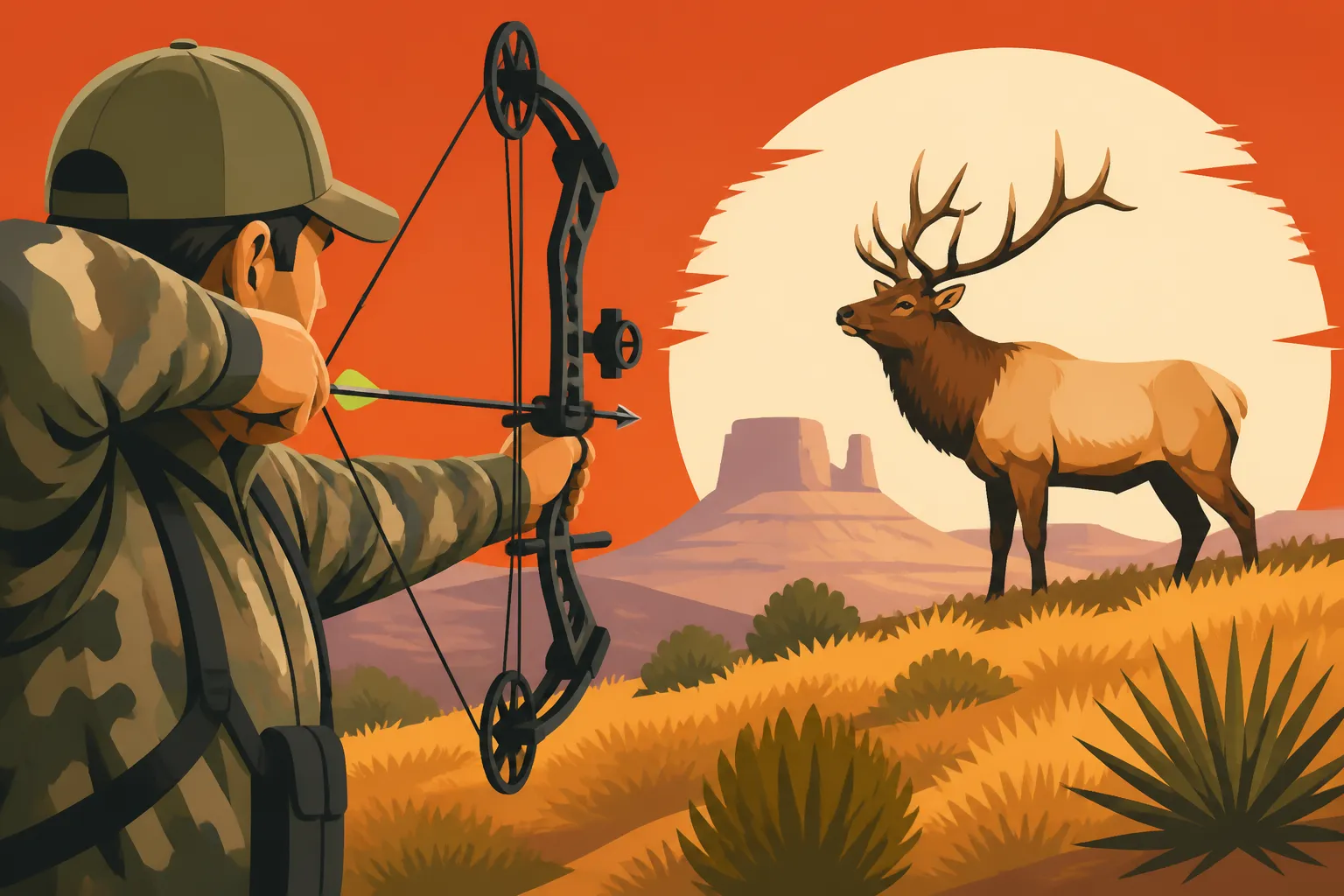
For a bowhunter, there’s nothing quite as gut-wrenching as watching a magnificent bull elk vanish into the timber, seemingly just out of reach, after hours of painstaking stalking. We’ve all been there, covered miles, played the wind perfectly, only to have that final 10 or 20 yards prove insurmountable. It’s a challenge that defines bowhunting, demanding a unique blend of skill, patience, and understanding of your quarry. This guide is dedicated to dissecting that crucial distance—how close a bowhunter really needs to get on elk in New Mexico, and the intricate dance involved in making it happen ethically and effectively.
Understanding the Elk's Vital Zones
Before we even talk about yards, we need to talk about inches. The goal isn't just to hit an elk, it's to deliver a lethal shot that ensures a quick, ethical harvest and a clean recovery. This means knowing precisely where to aim and understanding the anatomy of an elk, which isn't always as simple as it looks when they're standing broadside or quartering.
Pinpointing Heart and Lung Placement
An elk's heart and lungs are nestled snugly within its rib cage, relatively low and forward. The lungs are a large target, encompassing a significant portion of the chest cavity, while the heart is smaller, sitting just above the brisket. When you look at an elk, imagine a line running vertically up the back of its front leg, and another horizontally from the middle of its body towards that line. The intersection of these lines is often where you'll find the sweet spot for a broadside shot, targeting both lungs and potentially the heart.
The challenge comes from the sheer size of an elk and the thick muscle and bone that protect those vital organs. A marginal hit, even if it feels "close enough," can lead to a long, agonizing tracking job, or worse, a lost animal. It’s not just about putting an arrow into the animal, it’s about putting it through the vitals. This requires penetration, and that starts with knowing where those vitals are and practicing relentlessly to hit them.
Ethical Shot Angles and What to Avoid
Not every shot opportunity is an ethical one, and knowing the difference is paramount for any bowhunter. A broadside shot is almost always preferred because it offers the largest target area for the lungs and heart, providing a clear path for the arrow. A slight quartering-away shot can also be excellent, allowing the arrow to enter behind the last rib and angle forward into the vitals, maximizing penetration through softer tissue before hitting the lungs and heart.
However, a quartering-to shot, where the elk is facing slightly towards you, presents a much smaller and often protected vital area. The shoulder blade and humerus bone can block access to the lungs and heart, leading to a superficial wound. Directly frontal shots are also generally discouraged for bowhunters due to the heavy sternum and shoulder bones. And a straight-away shot, where the elk is facing directly away, offers almost no ethical path to the vitals without risking a gut shot, which is almost never lethal and incredibly cruel. Understanding these angles and having the discipline to pass on a marginal shot is a hallmark of a responsible bowhunter. If you're ever in doubt, let the animal walk. There will always be another opportunity.
Effective Bowhunting Range
The idea of "effective range" isn't just about how far your bow can shoot an arrow. It's about how far you can consistently and ethically place an arrow into a vital zone under real-world hunting conditions. This is often a much shorter distance than what you might achieve on a flat archery range.
Personal Practice and Confidence Limits
Every bowhunter has a maximum effective range, and it's almost always shorter than what they can comfortably shoot at a static target on a calm day. This range is determined by your individual skill level, your physical conditioning, your equipment, and most importantly, your honesty with yourself. Many hunters can group arrows well at 60 yards on a range, but can they do it with an adrenaline dump, a pounding heart, cold fingers, and a bull elk staring them down? Probably not.
Your practice routine should include shooting in various positions—kneeling, sitting, standing, uphill, downhill—and under simulated stress. This helps build muscle memory and confidence. A good rule of thumb is to take your maximum consistent practice range (where you can hit a 6-inch target every time) and then cut it by 10-20 yards for hunting. For many experienced bowhunters, this means their ethical range on elk is often between 30-50 yards. Going to an outdoor range that simulates realistic hunting conditions, where you have to judge distances and shoot from awkward angles, is invaluable. Remember, it’s far better to pass on a 60-yard shot you’re not 100% confident in than to take it and wound an animal.
Variables Affecting Shot Distance
The real world of elk hunting is far from the controlled environment of an archery range. Numerous factors can drastically reduce your effective range, sometimes to mere feet.
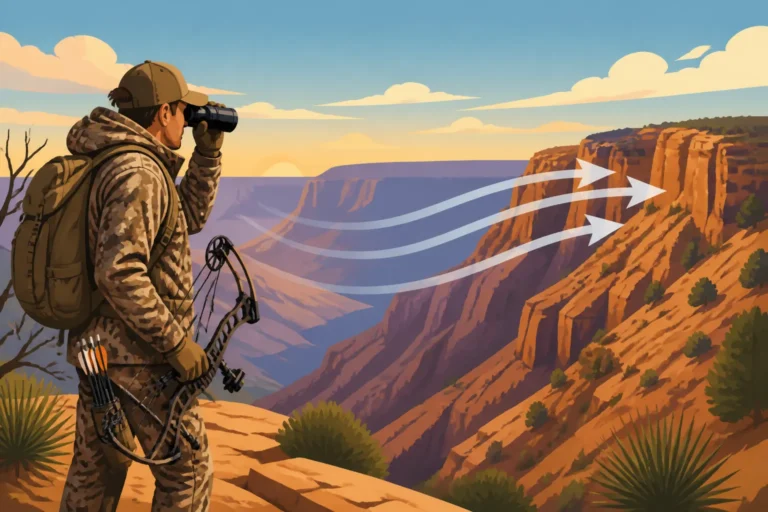
Wind: A stiff breeze, especially in the open country of New Mexico, can make an arrow drift significantly. Even a slight crosswind at 40 yards can push an arrow several inches off target. Learning to read wind currents, especially in deep canyons or across open meadows, is crucial for accurate shot placement. Understanding how to compensate for wind, or choosing to wait for a lull, is part of the challenge. Our article on Reading Wind in a Deep Gila Canyon dives deeper into this specific challenge.
Terrain: Uphill or downhill shots change the trajectory of an arrow. What feels like 40 yards horizontally might be significantly different on a steep slope. Rangefinders with angle compensation are essential tools here. Obstacles like brush, trees, and rocks can also create deflections or limit your shooting lane, forcing you to wait for the elk to move into a clearer spot. Uneven footing can make it difficult to maintain proper form, further impacting accuracy.
Elk Behavior: A calm, oblivious elk standing perfectly broadside is a bowhunter's dream. More often, elk are nervous, twitchy, or moving. A "jumped string" can cause an elk to duck or spin at the sound of the bow, especially at longer distances where the arrow takes more time to reach the target. This phenomenon can turn a perfectly aimed shot into a miss or a superficial wound. The closer you are, the less time the elk has to react to the sound, increasing your chances of a clean hit. Observing an elk's body language—a flick of an ear, a raised head—can tell you if they're about to bolt, signaling that it's time to either shoot now or let them go.
Closing the Distance Strategies
So, if 30-50 yards is often the sweet spot, how do you actually get that close to an animal known for its incredible senses and often found in open, unforgiving terrain? This is where the art and science of elk hunting truly merge.
Spot and Stalk Tactics
Spot and stalk is a quintessential Western hunting method, and it requires a meticulous approach. It begins with effective glassing, often at first light, to locate elk at long range. Once spotted, the real work begins: analyzing the terrain, wind, and the elk's behavior to devise an approach. The goal is to use every dip, rise, and patch of timber as cover. This isn't just about staying out of sight; it's about being invisible, inaudible, and scent-free.
Using Cover: New Mexico's diverse landscape, from the dense ponderosa forests of the Gila to the more open piñon-juniper country, offers varying degrees of cover. Always try to approach from downwind, using the terrain to break up your silhouette. Think like an elk: where would they feel safe? Where would they move? Often, the path of least resistance for you isn't the stealthiest. Be prepared to crawl, duck-walk, and move agonizingly slowly. Every step must be intentional, quiet, and deliberate. You'd be surprised how often a small rise or a cluster of rocks can conceal your final approach.
Reading Thermals: Understanding thermals is non-negotiable for spot and stalk, especially in mountainous regions. As the sun rises, thermals (air currents) typically rise uphill, carrying your scent with them. In the evening, as temperatures drop, thermals fall downhill. Knowing this allows you to plan your approach to keep your scent away from the elk. For instance, in the morning, you might stalk above the elk, letting your scent rise harmlessly over them. In the evening, you’d want to be below them. Our guide on Playing Thermals on a Canyon Stalk is an excellent resource for mastering this critical skill. Don't forget that using mapping tools like those from GoHunt can help you analyze terrain and predict thermal behavior before you even set foot on the ground.
Calling Techniques
Calling is arguably the most exciting and dynamic way to close the distance on elk, especially during the rut. It's a conversation, a game of cat and mouse, and when it works, it's absolutely electrifying.
Bugling Bulls Through New Mexico's Mid-September Rut: The peak of the rut, typically in mid-September in New Mexico, is when bugling can be most effective. Bulls are focused on cows and defending their harems, making them susceptible to challenging calls or the sound of a lone cow. Aggressive bugles can sometimes draw a bull in, but often, a more subtle approach is better. Knowing Bugle Timing Through New Mexico's Rut can make all the difference. It’s not just about making noise; it’s about making the right noise at the right time. Sometimes a soft chuckle or a grunt can be more effective than a screaming challenge, especially on pressured bulls.
Cow Calling Pressured Gila Bulls: Often, especially with bulls that have been heavily hunted, aggressive bugling will send them running. This is where Cow Calling Pressured Gila Bulls really shines. Soft cow and calf calls can pique a bull's curiosity without triggering his alarm. The sound of a contented cow or a lost calf can be incredibly enticing, especially for satellite bulls looking to cut into a herd. This strategy often works best when you’re already relatively close or when a bull is hung up just out of range. A quick series of mews and chirps can often be enough to make that bull take those last few critical steps into your shooting lane.
Two-Hunter Calling Setups: For bowhunting, a Two-Hunter Calling Setups That Actually Work can be incredibly effective. One hunter acts as the "caller," positioned 50-70 yards behind the shooter, drawing the bull's attention away from the arrow man. The shooter then sets up in a prime ambush position, often concealed by natural cover. The bull, focused on the sounds of the "elk" (the caller), often walks right into the shooter's lap, offering a close, broadside shot as it approaches the source of the sound. This requires excellent communication and teamwork, but when executed correctly, it's one of the deadliest tactics in a bowhunter's arsenal.
Ambush Points
Sometimes, instead of chasing the elk, you let the elk come to you. This passive strategy relies on detailed scouting and understanding elk movement patterns.
Hunting a Wallow During Early Archery: Elk, like all animals, need water. During the warm early archery seasons in New Mexico, water sources become magnets. Wallows, muddy depressions where bulls roll to cool down and spread their scent, are especially potent ambush points. Setting up silently downwind of a well-used wallow, particularly in the mid-morning or late afternoon, can be incredibly productive. Our detailed article on Hunting a Wallow During Early Archery provides an in-depth look at this tactic. Remember, thermal currents can shift throughout the day, so monitoring the wind carefully is critical.
Natural Pinch Points: Elk are creatures of habit and efficiency. They'll often use the path of least resistance or natural funnels when moving between bedding, feeding, and watering areas. These "pinch points" can be saddles between ridges, narrow draws, dense timber edges bordering open meadows, or even fence crossings. E-scouting with tools like GoHunt, combined with boots-on-the-ground reconnaissance, can help you identify these spots. Setting up an ambush along a well-used trail in a pinch point can put you in a prime position for a close-range encounter as elk move naturally through their environment. It’s all about predicting where they will be, not just where they are.
Preparation Beyond the Shot
Getting close is only half the battle. Once you're within range, your body and mind need to be ready to execute flawlessly. Bowhunting elk is physically and mentally demanding.
Physical Conditioning for Close Encounters
Bowhunting elk in New Mexico is not a casual stroll. From the high-elevation timber of the Carson National Forest to the rugged canyons of the Gila National Forest, the terrain is unforgiving. Often, the closer you get, the more physical effort is required—crawling through brush, sneaking up steep inclines, or holding a drawing position for extended periods. Good physical conditioning isn't just about being able to hike; it's about being able to perform under duress.
Stamina and Strength: You need the stamina to hunt all day, often covering miles in rugged terrain. You also need the strength to draw your bow smoothly and hold it steady when your heart is pounding after a strenuous stalk. Incorporate cardio, strength training (especially core and back), and specific archery-focused exercises into your routine well before the season. Practice drawing and holding your bow repeatedly, especially when fatigued. Our article on Altitude Preparation for a Gila Elk Hunt offers vital tips for getting your body ready for those high-country hunts. Remember, a steady hand and a clear mind come from a well-conditioned body.
Gear Considerations for Stealth and Accuracy
Your equipment is an extension of yourself, and every piece needs to be optimized for the challenge of bowhunting elk.
Silent Movement: Noise is the enemy of the bowhunter. Your clothing, backpack, and even your boots need to be quiet. Synthetic fabrics that don't rustle, backpacks with silent zippers and buckles, and comfortable, quiet footwear are essential. Practice walking in your hunting clothes to identify any noise sources and eliminate them. This includes your bow itself; ensure all accessories are tight and don't rattle.
Accurate Setup: Your bow must be perfectly tuned, and your broadheads must fly true with your field points. This requires diligent tuning and practice. Don't wait until a week before the season to check your setup. Shoot your broadheads often, understanding that mechanical broadheads might require different tuning than fixed blades. Our guides on Broadhead Requirements for Bowhunting and Are Expandable Broadheads Legal? offer insights into New Mexico's specific regulations and considerations for different broadhead types. A good rangefinder is non-negotiable for quickly and accurately judging distance, especially in varying terrain.
Mental Fortitude and Patience
The mental game of bowhunting elk is perhaps the most challenging aspect. It demands unwavering focus, incredible patience, and the ability to manage intense adrenaline.
Managing Adrenaline: That surge of adrenaline when an elk steps into view can be paralyzing. Your heart pounds, your hands might shake, and your breathing can become shallow. Practice breathing techniques to calm yourself. Deep, slow breaths can help regulate your heart rate and clear your mind. Visualize the shot before it happens. This mental rehearsal can make the actual moment feel more familiar and less overwhelming.
Patience is a Virtue: Elk rarely do exactly what you want them to do. They might stand in a patch of brush, offering no shot. They might be facing the wrong way. They might be with other elk that are making them nervous. Having the patience to wait for the perfect shot opportunity, even if it means waiting for minutes or even hours, is what separates successful bowhunters from frustrated ones. Passing on a marginal shot is a sign of respect for the animal and yourself. Learn to embrace the wait; it’s part of the hunt.
Reading Elk and Their Environment
Becoming proficient at closing the distance isn't just about technique; it's about deeply understanding the animal you're pursuing and the environment it inhabits. Elk communicate constantly, and their surroundings are full of clues.
Interpreting Body Language
Elk are constantly communicating through their posture, ear position, and movements. Learning to read these subtle cues can tell you if an elk is relaxed, nervous, or about to bolt.
Signs of Alertness: An elk with its head high, ears swiveling, and nostrils flaring is on high alert. If it's staring directly in your direction, chances are it's seen or smelled something. At this point, any further movement from you will likely send it fleeing. A quick flick of its tail, especially if accompanied by head raising, often indicates uneasiness. In these situations, freezing in place and waiting for the elk to calm down or move behind cover is your best bet.
Relaxed Behavior: An elk that is feeding calmly, scratching itself, or lying down, is usually relaxed. Its head will be down, ears slightly drooped, and movements will be slow and deliberate. These are the moments when you can often make your move, using the distractions of feeding or resting to cover your approach. However, remember that even a relaxed elk has incredible senses, and a sudden noise or scent can instantly turn a calm situation into a full-blown stampede.
Understanding Wind and Thermals in New Mexico Terrain
We've touched on wind and thermals, but it's worth emphasizing their profound importance, especially in New Mexico's varied landscape. The "wind" at ground level can be entirely different from the wind just 10 feet up, or a quarter-mile away.
Micro-Thermals: In rugged country, micro-thermals can make a mess of your scent control. A small draw, a thick stand of timber, or a rock face can create localized air currents that swirl unpredictably. While general thermal patterns hold true (up in the morning, down in the evening), don't assume consistency. Continuously check the wind with a wind checker or a pinch of dust. As you make your final approach, this becomes even more critical. Getting busted by a fickle swirling wind at 40 yards after a two-hour stalk is soul-crushing, but it's a harsh reality that underscores the need for constant vigilance.
Terrain Features and Scent: Mountains and canyons act like giant funnels and chimneys for air currents. In a deep canyon, the wind might blow directly down the canyon floor, but higher up on the side slopes, it could be doing something entirely different. Open mesas or plains will have more consistent wind, but it will also carry your scent much further. Always position yourself so that your scent is blowing away from where you expect the elk to be. This might mean taking a much longer, more difficult route, but it dramatically increases your chances of getting into bow range undetected. Understanding these nuances, often refined through years of experience in the field, is what makes a truly effective elk bowhunter.
| Shot Angle | Target Area | Ethical Considerations | Bowhunter Preference |
|---|---|---|---|
| Broadside | Full heart/lung exposure | Largest target, highest chance of double lung/heart hit. | Highly Recommended |
| Quartering Away | Entry behind last rib, angling forward to vitals | Excellent for double lung, minimizes bone contact, maximizes penetration through soft tissue. | Highly Recommended |
| Quartering To | Shoulder/leg bone protection of vitals | Small, heavily protected target. High risk of superficial wound or deflections. Generally avoided. | Generally Avoided |
| Frontal | Sternum and heavy bone protection | Very high risk of hitting heavy bone, low chance of deep penetration to vitals. Very difficult to achieve ethical hit. | Strongly Discouraged |
| Rear/Straight Away | No vital access, high risk of gut shot | Extremely unethical, leads to prolonged suffering and difficult recovery. | Never Take This Shot |
Ethical Considerations and Recovery
Ultimately, bowhunting is about respect for the animal. Taking a shot, even at close range, carries a heavy responsibility. The decision to release an arrow should always be made with the highest ethical standards in mind, ensuring a quick and humane harvest.
When to Take the Shot, When to Pass
The ideal shot for a bowhunter is a broadside or slightly quartering-away shot on a calm, unaware elk at a distance well within your proven effective range. The elk should be standing still, offering a clear path to the vitals with no obstacles. If all these conditions aren't met, it’s often best to pass.
The "Moment of Truth": This decision happens in a split second. Ask yourself: Is the elk calm? Is the angle good? Is the range within my comfort zone? Is the shooting lane clear? Do I have enough time to draw undetected and execute the shot? If you have any doubt about any of these, let your string down and wait. A responsible hunter understands that not every opportunity is the opportunity. This is where your Mental Fortitude and Patience are truly tested. It’s hard to watch an elk walk away, but it's far harder to live with the regret of a bad shot.
Tracking and Recovery Strategies
Even with a perfect shot, recovery isn't always immediate. Elk are incredibly tough animals. Knowing how to track and recover your animal effectively is a crucial part of the bowhunting process.
After the Shot: Once you've taken the shot, observe the elk's reaction. Did it mule kick? Did it flinch? Which way did it run? Listen for any crashing sounds. Mark the exact spot where the elk was standing when you shot it, and the direction it fled. Many bowhunters carry flagging tape or toilet paper for this purpose.
Waiting Period: The consensus among experienced bowhunters is to wait at least 30 minutes to an hour, and often longer (3-6 hours for a gut shot, or overnight if weather permits and you suspect a marginal hit), before beginning to track. This gives the elk time to bed down and expire. Pushing a wounded elk too soon can cause it to run further, making recovery much harder. During this time, resist the urge to immediately go after it. Use the time to calm your nerves, retrace your steps to the shot location, and review the shot in your mind.
Systematic Tracking: Start at the point of impact. Look for blood, broken branches, disturbed earth, and hair. Follow a systematic approach, marking the last blood or sign you found. Move slowly and deliberately. If blood sign is sparse, spread out and grid search. If you lose the trail, back up to the last known sign and restart. Pay attention to tracks, especially in dusty or muddy areas. In New Mexico's often dry terrain, blood trails can be sparse, so every bit of evidence is critical. Even a small drop of blood or a bent blade of grass can lead you to your animal. Be prepared for a Packing an Elk Out of the Gila Alone or with a partner, as it can be a monumental task.
Disclaimer
Hunting is an inherently dangerous activity. The information provided in this guide is for informational purposes only and should not replace proper training, adherence to all local, state, and federal regulations, and the guidance of experienced professionals. Always prioritize safety and ethical hunting practices. Conditions in the field can change rapidly, and hunters must use their own judgment and experience to make safe and responsible decisions.