Broadhead Requirements for Bowhunting
Navigating the specific gear requirements for bowhunting, especially something as critical as broadheads, can feel like trying to read a legal document written in a foreign language. It's frustrating to invest time and money into preparing for a hunt, only to second-guess if your equipment meets the letter of the law. This guide is here to cut through that confusion, breaking down New Mexico's broadhead regulations for bowhunters so you can head into the field with confidence.
Understanding New Mexico's Broadhead Regulations
New Mexico has clear guidelines for what constitutes a legal broadhead for big game hunting. These rules are in place for a good reason: to ensure humane and ethical harvesting. It’s not just about what you can use, but what you must use to ensure an effective and quick kill. Getting this right is foundational to a responsible hunt.
The Core Rule: Fixed Blades and Mechanicals
When you delve into the New Mexico Department of Game and Fish (NMDGF) regulations, you'll find that both fixed-blade and mechanical (or expandable) broadheads are generally permitted for big game, provided they meet certain criteria. This isn't the case in every state, so it's a relief for many bowhunters who have a strong preference one way or the other. The key is to ensure your chosen broadhead adheres to the minimum standards for cutting edges and width. These aren't arbitrary numbers; they're designed to ensure adequate wound channels for efficient blood loss and a quick, clean harvest.
For fixed-blade broadheads, this means having at least two cutting edges. Most traditional fixed blades easily meet this, often featuring three or four blades. The crucial part for both fixed and mechanical broadheads is the minimum cutting width, which we'll discuss next. What's often overlooked is the intent behind the design. Any broadhead that's designed to fragment, explode, or deliver a non-mechanical disabling agent (like poison) is strictly off-limits. The focus is on a sharp, penetrating instrument creating tissue damage, not a gimmick.
Minimum Cutting Width and Blade Requirements
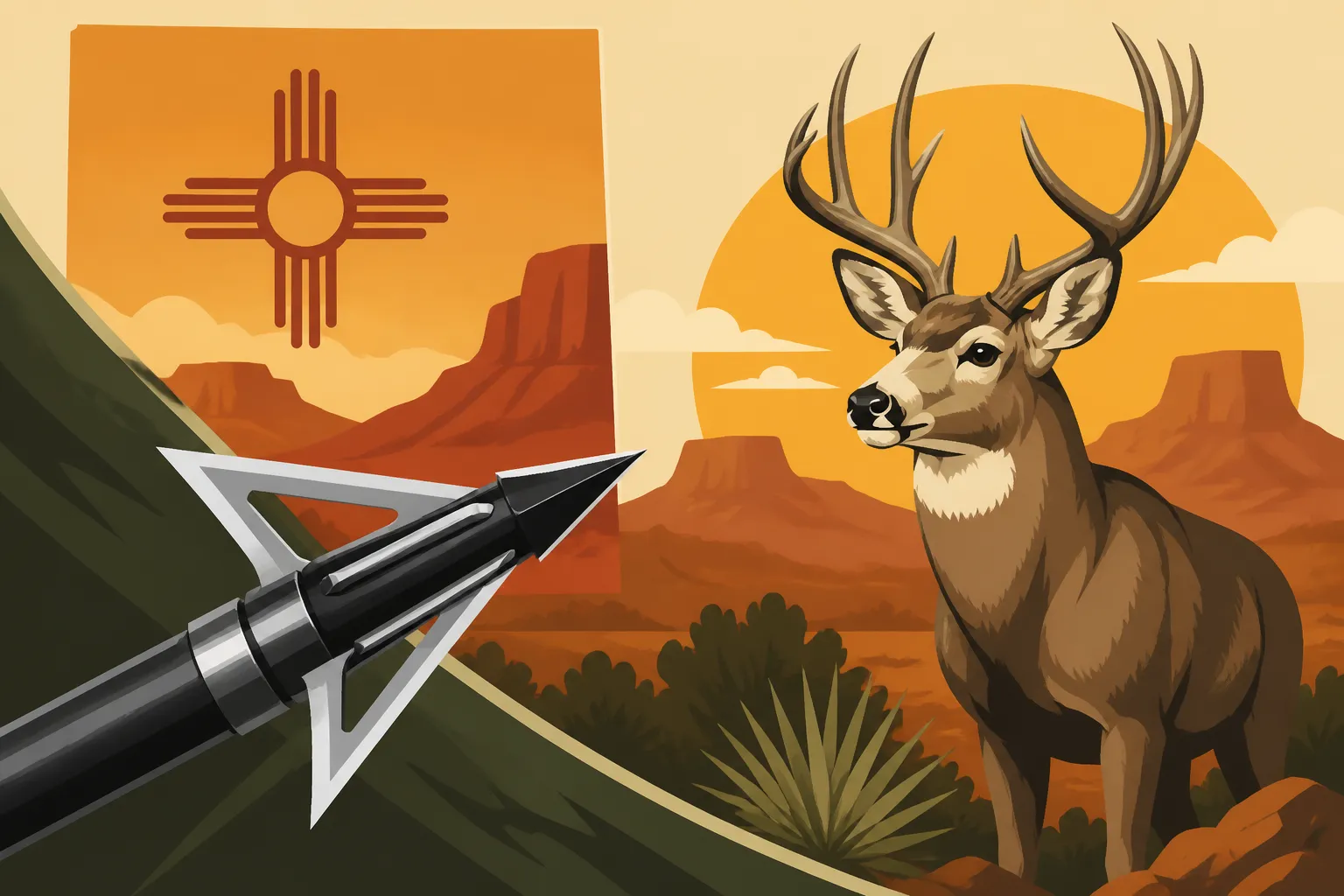
Here's where many bowhunters need to pay close attention. In New Mexico, broadheads must have at least two cutting edges, and when fully deployed (in the case of mechanicals), they must have a minimum cutting width of 7/8 of an inch at the widest point. This "7/8 inch" rule is critical. If your mechanical broadhead deploys to less than that, or if your fixed blade's cutting width is narrower, it's not legal for big game in New Mexico.
Why 7/8 of an inch? This specific width is generally considered the minimum necessary to create a wound channel that promotes rapid blood loss and incapacitation. Smaller broadheads, while potentially offering better penetration on certain setups, might not create a sufficient cutting surface to humanely dispatch larger game animals like elk or even robust mule deer. It's about maximizing the chances of a clean harvest and minimizing the animal's suffering. When you're considering your broadhead choice, grab a ruler or check the manufacturer's specifications carefully. Don't just assume; verify it meets that 7/8-inch mark.
What's Strictly Prohibited?
New Mexico, like most states, has a list of broadhead types that are absolutely forbidden. This isn't just a suggestion; using these could lead to severe penalties, including fines and loss of hunting privileges. The prohibited list generally includes:
- Barbed Broadheads: Broadheads designed with barbs that prevent the arrow from being easily removed from the animal. The idea here is to avoid unnecessary damage and suffering if a shot isn't immediately lethal and the arrow needs to be pulled.
- Explosive Broadheads: Any broadhead that detonates or explodes upon impact. This is a no-brainer for safety and ethical reasons.
- Poison or Drug-Tipped Broadheads: Broadheads designed to deliver any kind of drug, poison, or incapacitating chemical. The goal is a mechanical kill, not a chemical one.
- Broadheads that Don't Meet Minimum Standards: As mentioned, if your mechanical broadhead doesn't deploy to at least 7/8 inch, or if it doesn't have at least two cutting edges, it falls into this prohibited category for big game.
The spirit of these prohibitions is rooted deeply in fair chase and humane hunting principles. As bowhunters, we accept a higher ethical standard, and part of that is ensuring our equipment is not only effective but also compliant with regulations designed to uphold these values. Always double-check the current year's New Mexico Game and Fish regulations booklet, as rules can sometimes be updated. Resources like GoHunt are excellent for tracking regulatory changes year to year.
Fixed Blade vs. Mechanical Broadheads: Pros and Cons in New Mexico's Diverse Terrain
The debate between fixed-blade and mechanical broadheads is a classic one among bowhunters. Both have their loyal adherents and valid arguments for their use. In New Mexico's vast and varied landscape, from the high timber of the Gila National Forest to the open plains where you might be hunting New Mexico's Eastern Plains, the conditions you face can influence which type might be more advantageous for your specific hunt and setup.
The Enduring Appeal of Fixed Blades
Fixed-blade broadheads have been the workhorse of bowhunting for centuries, and their reliability is their greatest asset. There are no moving parts to fail; they are essentially a sharp, strong piece of steel fixed to your arrow. This inherent simplicity translates to several key advantages:
- Unwavering Reliability: When you release an arrow with a fixed blade, you know exactly what kind of cutting surface will impact the animal. There's no concern about blades failing to deploy, opening prematurely, or getting jammed with debris. This peace of mind is invaluable, especially when you've been working hard to How Close a Bowhunter Needs to Get on Elk in thick cover.
- Superior Penetration: Generally, fixed blades are known for their deeper penetration, especially on quartering-away shots or when encountering bone. Their narrower profile and robust construction allow them to punch through tough hides and muscle more effectively. This can be a huge advantage when pursuing a heavy-boned animal like an Oryx or a bull elk.
- Durability: Many fixed-blade broadheads are built like tanks, capable of withstanding significant impact without bending or breaking. This means they often hold up better through an animal, potentially leading to an exit wound and a better blood trail. This durability is particularly useful if you find yourself shooting through a bush or encountering small branches during your shot, though ideally, you'll always have a clear lane.
- Wind Performance: In the often windy conditions of New Mexico's more open country, a fixed blade might offer slightly better flight stability than some larger mechanicals, especially at longer distances, though modern mechanicals have come a long way in this regard.
However, fixed blades can be a bit more finicky to get flying perfectly with every bow setup. They have a larger surface area than a field point, which can cause them to plane if your bow isn't perfectly tuned or your form isn't impeccable. You absolutely must Building a Practice Routine Before Opener that includes shooting your actual hunting broadheads to ensure perfect flight.
Mechanical Broadheads and Their Place
Mechanical, or expandable, broadheads have gained immense popularity for good reason. They offer a different set of advantages that appeal to many bowhunters, particularly those prioritizing field point accuracy. The New Mexico regulations confirm that Are Expandable Broadheads Legal?, provided they meet the minimum cutting width and blade count when deployed.
- Field Point Accuracy: This is arguably the biggest selling point for mechanicals. Because their blades are tucked away during flight, they often fly just like field points, which can simplify tuning and boost confidence in accuracy, especially for longer shots. This is a massive psychological advantage for many hunters.
- Larger Cutting Diameter on Impact: Once deployed, mechanicals typically offer a significantly larger cutting diameter than most fixed blades. This larger cutting surface can create a massive wound channel, leading to faster blood loss and a more visible blood trail, which is crucial when tracking an animal in dense cover or across vast distances.
- Forgiveness: Their field point-like flight can sometimes be more forgiving of minor form imperfections or less-than-perfect bow tuning compared to some fixed blades.
However, mechanicals aren't without their potential downsides. The moving parts introduce a variable that isn't present in fixed blades. There's always a slight risk, though often minimal with quality modern designs, of blades failing to deploy, deploying prematurely in flight, or breaking off upon impact, especially on very tough bone. Some argue they might sacrifice a bit of penetration compared to a well-designed fixed blade, particularly on steep quartering shots or when hitting heavy bone. When hunting animals like elk, which possess incredibly dense bone and thick hide, maximum penetration is often paramount.
Choosing the Right Broadhead for Your Hunt
The best broadhead for you isn't necessarily the one your buddy swears by or the latest one advertised on TV. It's the one that performs best with your bow, your arrows, and your shooting style, and meets New Mexico's legal requirements.
Here’s a small table to help summarize:
| Feature | Fixed Blade Broadhead | Mechanical (Expandable) Broadhead |
|---|---|---|
| Reliability | Very High (no moving parts) | High (potential for mechanical failure, though rare) |
| Penetration | Generally Superior (narrower profile, robust) | Good (can sometimes be limited on heavy bone/angles) |
| Accuracy | Excellent if tuned perfectly; can be sensitive to tuning | Excellent, often flies like field points |
| Wound Channel | Good (consistent, deep) | Excellent (often wider cutting diameter when deployed) |
| Durability | Generally Very High (stronger construction) | Good (blades can be more delicate or prone to breaking) |
| New Mexico Legality | Legal (must have 2+ cutting edges, 7/8" min. width) | Legal (must deploy to 2+ cutting edges, 7/8" min. width) |
Consider the game you're after. For a tough-to-kill animal like an elk in the deep canyons of What Makes Unit 15 the Gila's Finest, maximum penetration might sway you towards a fixed blade. For a deer hunt in more open country where longer, accurate shots are possible, a mechanical might offer a confidence boost with its field point flight.
Ultimately, you need to practice extensively with your hunting broadheads. Don't just shoot field points all summer and slap on broadheads a week before the season. Shoot them at various distances, from different positions, and under simulated hunting stress. This is crucial for understanding how they fly with your specific arrow setup and for building the muscle memory needed for a precise shot when it matters most.
Practical Considerations Beyond the Regulations
Beyond simply meeting the legal requirements for broadheads in New Mexico, there are several practical considerations that can significantly impact your success and ethical execution of a bowhunt. These are the details that often separate a frustrating experience from a successful and rewarding one.
Broadhead Selection and Your Setup
Choosing a broadhead isn't just about fixed versus mechanical; it's about how that broadhead integrates with your entire arrow and bow setup. This is where the science of archery truly comes into play.
- Arrow Weight and FOC (Front of Center): Your broadhead's weight directly influences your arrow's total weight and its Front of Center balance. A heavier broadhead (125 grains vs. 100 grains, for example) will increase both total arrow weight and FOC. Higher FOC (generally 12-18% for hunting) is often linked to better penetration and improved flight stability, especially in windy conditions or at longer distances. However, too much FOC can cause the arrow to "porpoise" in flight. It's a delicate balance.
- Kinetic Energy and Momentum: Your bow's draw weight and draw length, combined with your arrow's total weight, determine the kinetic energy and momentum your arrow carries. A heavier arrow with adequate FOC, launched from a bow set to a Minimum Bow Draw Weight for Big Game of 40 pounds or more, will typically carry more momentum, which is crucial for penetration, especially on thick-skinned, heavy-boned animals. Your broadhead choice should complement your arrow's energy and momentum. A low-momentum setup might struggle to push a wide mechanical broadhead through effectively.
- Arrow Spine: The stiffness of your arrow (its spine) must match your bow's draw weight, draw length, and the weight of your broadhead. An improperly spined arrow will flex too much or too little during the shot, causing poor flight, regardless of your broadhead choice. This is where meticulous tuning comes into play. If your arrow isn't flying true with field points, it certainly won't with broadheads.
Take the time to experiment. Many archery pro shops offer tuning services that can help you dial in your setup for optimal broadhead flight. Don't be afraid to try different broadhead weights and styles until you find what works best for your specific rig.
Sharpening and Maintenance
A legal broadhead is only an ethical broadhead if it's razor sharp. This is non-negotiable. A dull broadhead tears tissue, leading to a slower, more painful death for the animal and a poor blood trail for the hunter.
- Fixed Blades: If you use fixed blades, you need to know how to sharpen them. Whether it's a sharpening stone, a diamond file, or a specialized sharpener, invest in the tools and learn the technique. Practice until you can get them shaving-sharp. Some fixed blades come with replaceable blades, which simplifies things, but you still need to ensure they are seated correctly and tight.
- Mechanical Blades: Many mechanical broadheads come with factory-sharp replaceable blades. Always inspect them before a hunt to ensure they are pristine and free of nicks or dull spots. Carry spare blades with you, especially if you plan on Hunting New Mexico's Two Back-to-Back Archery Deer Seasons and might need to re-arm your arrows between days. Check the deployment mechanism to ensure it functions smoothly and locks securely.
Regardless of type, always inspect your broadheads after practice shots (into an appropriate target, of course) or if you accidentally drop an arrow. Even a tiny burr on a blade can drastically reduce its cutting efficiency.
Ethical Harvesting and Shot Placement
The broadhead is simply a tool. The real responsibility lies with the hunter to use that tool effectively and ethically. This means understanding animal anatomy and committing to precise shot placement.
- Anatomy: Study the anatomy of the game you're hunting in New Mexico—whether it's an elk, a mule deer, or an oryx. Know where the heart, lungs, and major arteries are located. The goal is to hit the vitals for a quick, humane kill. This is especially critical when Bugling Bulls Through New Mexico's Mid-September Rut, where adrenaline can cloud judgment.
- Shot Angles: Not every shot opportunity is a good one. A broadhead relies on creating a cutting wound channel. A poorly angled shot, especially on a large animal, might only wound superficially or hit non-vital areas, leading to suffering and a lost animal. Be patient and wait for the ideal broadside or slight quartering-away shot.
- Practice Under Pressure: While you can't perfectly replicate the adrenaline of a hunting situation, you can train for it. Practice shooting when your heart rate is elevated (after a quick jog, for example). This helps you maintain form and focus when a live animal is in front of you. Knowing your effective range with broadheads and sticking to it is paramount for ethical hunting. Don't take a 60-yard shot in the field if you can only consistently hit a pie plate at 40 yards in practice.
Remember, the broadhead is the final component in a chain of preparation and skill. Your practice, tuning, and shot placement are just as, if not more, important than the broadhead itself.
Staying Current and Planning Your Hunt
The world of hunting regulations and gear is always evolving, and New Mexico is no exception. Staying informed isn't just about compliance; it's about being a responsible and effective hunter. Having reliable resources at your fingertips can make all the difference in preparing for your next adventure, whether you're planning a trip to the Gila National Forest as New Mexico Elk Country or a desert deer hunt.
Where to Find the Latest Regulations
The absolute authority for New Mexico hunting regulations is the New Mexico Department of Game and Fish (NMDGF). They publish an annual "Rules and Information Booklet" that details all season dates, bag limits, weapon restrictions, and general regulations.
- NMDGF Website: This is your primary source. The NMDGF website provides downloadable PDFs of the current and upcoming year's hunting regulations. Make it a habit to check this annually, even if you think you know the rules by heart. Regulations can and do change, sometimes in subtle but important ways.
- Printed Booklets: These are available at NMDGF offices, many sporting goods stores, and authorized license vendors across the state. It's always a good idea to have a physical copy in your truck or pack, especially if you're in an area with no cell service.
- Third-Party Resources: Beyond the official channels, reputable platforms like GoHunt provide incredibly valuable resources, often summarizing regulations, offering e-scouting tools, and detailing important dates. While these are excellent supplementary resources, always cross-reference critical information like broadhead legality with the official NMDGF document. This layered approach ensures you have the most up-to-date and accurate information. For example, when you're trying to figure out Reading a New Mexico Hunt Code Before You Apply, GoHunt often provides breakdowns that are easier to digest than the raw NMDGF data.
Never rely on hearsay or outdated information. A quick check of the current regulations could save you a significant headache, or worse, a citation.
Preparing for Your New Mexico Bowhunt
Your broadhead choice is just one piece of the puzzle for a successful New Mexico bowhunt. Comprehensive preparation involves many elements, from physical conditioning to meticulous gear checks.
- Practice, Practice, Practice: We can't say it enough. Shoot your bow and broadheads regularly, year-round if possible. Don't just shoot from a comfortable stance; practice from your knees, sitting, at odd angles, and at varying distances. Simulate the challenges of the field. Consider the distances you might encounter when trying to How Far to Stalk a Bedded Mule Deer or closing in on a bugling bull.
- Gear Check and Maintenance: Beyond broadheads, inspect your entire bow setup. Check your string and cables for wear, ensure your rest is secure, and verify your sights are tight. Perform a thorough gear check on all your hunting equipment. Are your boots broken in? Is your backpack comfortable and loaded correctly? Do you have all your necessary safety equipment?
- Physical Conditioning: New Mexico terrain, particularly in the mountainous elk units, can be incredibly demanding. Preparing physically for a high-elevation hunt in the Gila or the Sacramentos is crucial. Start a fitness regimen well in advance that focuses on endurance, strength, and carrying weight. The better your physical condition, the better you'll be able to perform when the shot opportunity arises, and the safer you'll be in the backcountry.
- E-Scouting and Maps: Before you ever set foot in the unit, spend time with tools like E-Scouting a New Mexico Unit Before the Season and detailed maps. Understand the topography, water sources, and potential bedding or feeding areas. This will help you formulate a game plan and save valuable time in the field. When you're in the backcountry, you'll want to understand where to find Finding Water in New Mexico's Dry Country as well as escape routes and animal travel corridors.
A successful hunt is a culmination of many factors, and taking the time to prepare thoroughly in every aspect will not only increase your chances of success but also enhance your enjoyment and appreciation of the experience.
Disclaimer
Please note that hunting regulations, including those pertaining to broadheads, can change. While this guide provides comprehensive and current information, it is your responsibility to consult the official New Mexico Department of Game and Fish (NMDGF) regulations booklet for the most up-to-date and legally binding rules before any hunting activity. This content is for informational purposes only and should not be considered a substitute for official NMDGF publications.