Are Expandable Broadheads Legal?
One of the most common headaches for bowhunters heading into a new season, especially here in New Mexico, is trying to figure out if their chosen gear, like expandable broadheads, is actually legal. It's not always as straightforward as you'd hope, and the last thing any of us wants is to be out in the field, tagged out, only to find out we've unwittingly broken a regulation. This guide will cut through the confusion and explain exactly what New Mexico's regulations say about expandable broadheads, helping you make an informed and legal choice for your next hunt.
Understanding New Mexico's Broadhead Regulations
New Mexico has clear regulations regarding broadheads for big game hunting, and honestly, they're designed to promote ethical hunting practices by ensuring a quick, humane kill. The rules aren't just arbitrary; they're based on years of experience and biological understanding of how different projectiles affect our incredible wildlife. It's a critical piece of information that every bowhunter needs to understand before they even string their bow.
Minimum Blade Width and Fixed Blade Requirements
When you crack open the New Mexico Department of Game and Fish (NMDGF) regulations booklet, you'll see specific language about broadheads. For big game, the rule usually states that broadheads must have at least two cutting edges and a minimum cutting diameter. Generally, this means a cutting diameter of 7/8 of an inch (0.875 inches). This minimum ensures that the broadhead creates a sufficiently large wound channel to lead to a quick, ethical harvest.
Now, a common misconception is that you must use fixed-blade broadheads. This isn't necessarily true, but the emphasis is always on that cutting diameter. A fixed-blade broadhead inherently has its full cutting diameter exposed at all times, making it easy to measure and verify it meets the 7/8-inch minimum. These traditional broadheads are often lauded for their strength and reliability, particularly when faced with bone or tough hides, which is something to consider when you're targeting a big bull elk deep in the Gila. The question of "Broadhead Requirements for Bowhunting" often boils down to ensuring you meet this critical measurement.
The Specifics of Expandable Broadheads
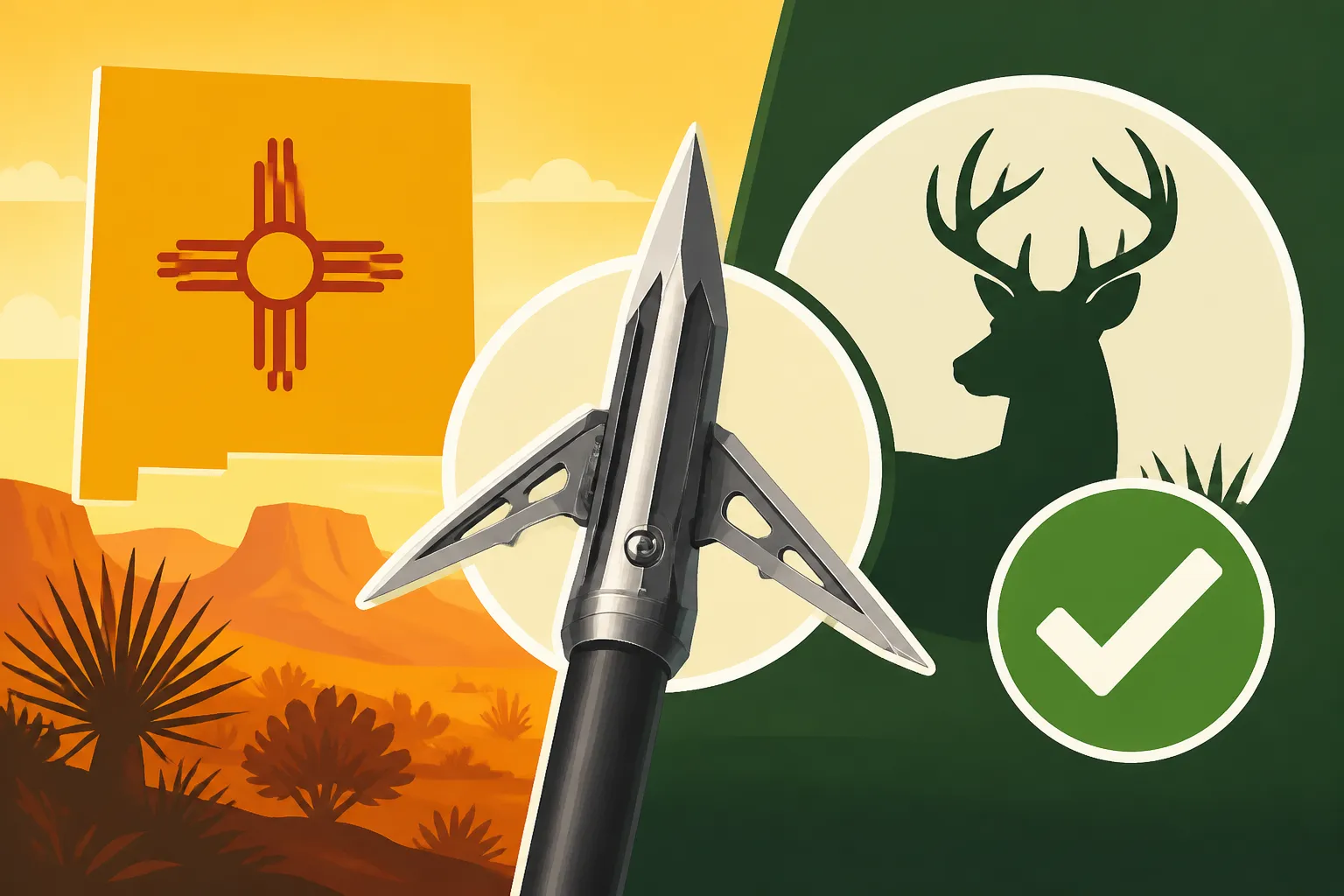
Here's where the nuance comes in for those popular expandable broadheads, often called mechanical broadheads. Yes, generally speaking, expandable broadheads are legal for big game hunting in New Mexico, provided they meet the state's specific criteria. The key stipulation for expandables is that they must achieve the minimum 7/8-inch cutting diameter upon impact and expansion. This means you need to verify that your chosen expandable broadhead actually opens up to that width.
Most reputable manufacturers design their expandable broadheads to meet these kinds of state regulations, offering cutting diameters of 1 to 2 inches or more once deployed. However, it's your responsibility as the hunter to ensure your specific broadhead model complies. Don't just assume. Check the packaging, read reviews, and maybe even test one into a dense foam target to confirm its full expansion and cutting width. Some hunters have concerns about how reliable the expansion is in real-world scenarios, especially on a quartering-away shot where one blade might hit bone before the others fully deploy. These are valid points that contribute to the debate among bowhunters. The question of "Are Expandable Broadheads Legal?" is really about which expandable broadheads are legal.
What Constitutes an Illegal Broadhead
While we're talking about what is allowed, it's just as important to understand what is explicitly forbidden. New Mexico, like most states, prohibits certain types of broadheads because they are deemed unethical or pose unnecessary risks.
First and foremost, barbed broadheads are illegal. A barbed broadhead is one designed with a barb or angle that makes removal from the animal difficult, causing additional suffering. This is a clear ethical standard intended to prevent undue pain and facilitate recovery of game. Secondly, broadheads that are designed to deliver poison, tranquilizers, or any other chemical agent are strictly prohibited. These are not hunting tools and are considered inhumane. Lastly, broadheads that are not "razor sharp" or that are not designed to create a clean, immediate cutting wound channel are generally discouraged or implicitly illegal through the minimum cutting diameter requirement. For instance, blunt or judo-style points are great for small game or practice but are absolutely not legal or ethical for big game.
Always consult the official NMDGF Hunting Rules & Information booklet for the most current and precise wording, as regulations can occasionally be updated. Platforms like GoHunt often include summaries of state regulations, but nothing beats the official source.
Why Broadhead Choice Matters for New Mexico Game
Choosing the right broadhead isn't just about legality; it's about responsibility and effectiveness. New Mexico's diverse landscape, from high mountain timber to vast desert plains, means you could be hunting a range of big game species, each with its own physical characteristics and challenges. Your broadhead choice is a crucial part of your overall hunting strategy, directly impacting your ability to achieve a clean, ethical kill.
Matching Broadheads to Species
Different animals present different challenges to a broadhead. Think about it:
- Elk: These are robust animals with thick hides, strong muscle, and substantial bone structure. A broadhead for elk needs to be durable, penetrate deeply, and create a significant wound channel. Many elk hunters favor strong fixed-blade broadheads for their reliability against bone, but many modern expandables with robust construction and a wide cutting diameter have proven very effective. When you're packing an elk out of the Gila alone, you want to know it went down fast.
- Mule Deer: While still large, mule deer typically have less dense bone and hide compared to an elk. Both fixed and expandable broadheads can be highly effective, as long as they meet the minimum cutting diameter and are delivered accurately. Considerations here might lean more towards flight accuracy for longer shots often encountered in open mule deer country.
- Oryx: This is where things get really interesting in New Mexico. Oryx are incredibly tough animals, built like tanks. Their dense bone structure and exceptionally tough hide demand the utmost in broadhead strength and penetration. For oryx, many seasoned hunters will strongly recommend a stout, cut-on-contact fixed-blade broadhead with proven penetration capabilities. Some expandable broadheads might struggle to penetrate adequately through the shoulder blade or rib cage of an oryx, which can lead to a less-than-ideal outcome. If you're lucky enough to draw a tag for Hunting Oryx on an Active Missile Range, ensuring your broadhead is up to the task is paramount.
The weight of your arrow also plays a role. A heavier arrow often carries more kinetic energy and momentum, which can aid in penetration, especially with fixed blades. It's a system: bow, arrow, and broadhead all working together.
Ethical Harvest and Broadhead Performance
At the heart of all hunting regulations, especially those concerning broadheads, is the principle of ethical harvest. As responsible hunters, our primary goal is to ensure the quickest, most humane kill possible. This minimizes suffering for the animal and ensures that the meat doesn't spoil due to a prolonged tracking job.
A broadhead's performance directly impacts this. A well-placed shot with a sharp, legal broadhead will sever arteries, veins, and damage vital organs, leading to rapid blood loss and incapacitation. If a broadhead fails to penetrate properly, or if its cutting diameter is insufficient, it can result in a superficial wound, a prolonged tracking job, and potentially a lost animal. This is a scenario no hunter ever wants to face.
This is why practicing with your chosen broadheads is absolutely non-negotiable. Don't just practice with field points and assume your broadheads will fly the same. Broadheads, especially expandables, can sometimes have different flight characteristics due to their blade design, even when folded. Spend time shooting your actual hunting setup, confirming your accuracy and confidence before you ever head into the field. This preparation is part of the respect we owe to the animals we pursue.
Pros and Cons of Expandable Broadheads in the Southwest
Like any piece of hunting gear, expandable broadheads have their champions and their detractors. In the unique conditions of New Mexico's diverse terrain and species, understanding these trade-offs can help you decide if they're the right choice for your particular hunt.
Advantages for Accuracy and Practice
One of the biggest draws for expandable broadheads is often their perceived field point accuracy. Because their blades are folded back during flight, they present a smaller profile, which can reduce wind planing and aerodynamic drag. This often means they fly very similarly to your practice field points, which can be a huge confidence booster for many archers. When you're trying to hit a tight window at 30, 40, or even 50 yards on an unsuspecting animal, consistent arrow flight is paramount. The idea that your hunting arrow will impact exactly where your practice arrow does is very appealing.
Another advantage for some hunters is the larger cutting diameter expandables can offer upon expansion. While a fixed blade might be limited by the ferrule width, many expandables open up to a 1.5 to 2-inch cutting diameter. This wider cut creates a larger wound channel, theoretically leading to more blood loss and a quicker recovery, assuming proper penetration. For species like mule deer or antelope on New Mexico's eastern plains, where tracking can be tough in sparse vegetation, a wide blood trail can be a lifesaver. This is especially true when you're looking at The Grid Glassing Method, Step by Step and planning your approach.
They can also be a good option for bowhunters who struggle to get fixed blades to tune perfectly with their setup. Achieving perfect arrow flight (paper tuning, bare shaft tuning, etc.) with fixed blades can be a meticulous process, and for some, expandables offer a shortcut to consistent accuracy.
Potential Drawbacks in Tougher Conditions
However, expandable broadheads aren't without their potential downsides, especially when considering the robust animals and sometimes challenging conditions found in New Mexico.
The primary concern often revolves around penetration and reliability. For an expandable broadhead to work effectively, it must deploy correctly and maintain its structural integrity through impact. If a blade mechanism fails, or if a blade hits heavy bone at a weird angle, it might not fully open or could even deflect, leading to reduced penetration and a superficial wound. This is a critical consideration for tough animals like elk or oryx, where every inch of penetration counts. While modern expandables are incredibly well-engineered, the potential for mechanical failure is always a point of discussion.
Another factor is energy transfer. The act of deploying the blades upon impact requires energy. This means that some kinetic energy from the arrow is used to open the broadhead, rather than solely going into penetration. While for bows with sufficient draw weight and speed, this might be negligible, for lower poundage bows or very heavy bone impacts, this could slightly reduce overall penetration. This is why factors like Minimum Bow Draw Weight for Big Game are important considerations.
Finally, durability can be a concern. While many fixed blades can be sharpened and reused, some expandable broadheads are designed for one-time use, or their blades can be easily bent or broken on tough impacts, requiring replacement. This can add to the cost over time. When you're hunting in remote, rugged areas like the Mogollon Mountains, having gear you can rely on, even if it means resharpening a fixed blade, often provides peace of mind.
Navigating the Regulations and Making Your Choice
Making the final decision on which broadhead to use is a personal one, but it should always be grounded in legality, ethical considerations, and practical performance. For New Mexico hunters, a bit of upfront research and testing can save a lot of heartache in the field.
Double-Checking Current Regulations
The single most important piece of advice I can give any hunter, especially when it comes to regulations, is to always consult the most current New Mexico Department of Game and Fish (NMDGF) Hunting Rules & Information booklet. This isn't just a suggestion; it's a necessity. Regulations can change from year to year, even subtly. What was legal last year might have a slight modification this year. The booklet is available online on the NMDGF website and often at license vendors across the state.
Don't rely solely on word-of-mouth or outdated online forums. Take the time to read the specific section on archery equipment, paying close attention to broadhead requirements for big game. This will explicitly state the minimum cutting diameter and any prohibitions like barbed tips. If you have any doubt whatsoever, call the NMDGF directly or speak with a local conservation officer. They are there to help clarify these rules, and it's far better to ask before you head afield than to face a citation later. Using resources like GoHunt to scope out potential units for mule deer in southern New Mexico is fantastic, but ensure you also cross-reference all your gear choices with the official regulations.
Testing Broadheads Before Your Hunt
Once you've confirmed the legality of your chosen broadhead, the next crucial step is rigorous testing. This applies whether you choose a fixed blade or an expandable.
- Practice with Hunting Arrows: Your practice arrows should be identical in weight, fletching, and broadhead type to your actual hunting arrows. This ensures consistent flight characteristics.
- Tune Your Bow: Ensure your bow is perfectly tuned for your broadheads. For fixed blades, this often means paper tuning and bare shaft tuning until field points and broadheads impact the same spot. For expandables, while they often fly like field points, it's still essential to confirm this at various hunting distances.
- Test for Expansion (Expandables): If you're using expandables, shoot a few into a broadhead target, foam block, or even a piece of dense cardboard to confirm that they are deploying reliably and fully achieving their advertised cutting diameter. Check the blades for any signs of bending or damage after impact, especially if you're using them on tough materials.
- Simulate Hunting Conditions: Practice shooting from different positions (sitting, kneeling, standing), in various weather conditions (if safe), and at angles you might encounter in the field. This helps build muscle memory and confidence.
- Assess Penetration: While difficult to fully replicate, try to get a sense of penetration into a suitable medium. This helps you understand your setup's capabilities, particularly for tougher species.
By putting in the work now, you're not only ensuring you're compliant with New Mexico law but also maximizing your chances of an ethical and successful harvest. Whether you're chasing high-country mule deer or pursuing trophy bulls through New Mexico's mid-September rut, confidence in your equipment is key.
Here’s a quick overview of legal broadhead types in New Mexico:
| Broadhead Type | Description | New Mexico Legality | Common Use Cases | Pros | Cons |
|---|---|---|---|---|---|
| Fixed Blade | Blades are fixed and exposed, cut-on-contact or chisel tip. | Legal (must meet 7/8" minimum cutting width) | All big game, especially tough animals like elk, oryx, bear. | Max penetration, high reliability, strong. | Can be harder to tune for perfect flight, smaller cutting diameter. |
| Expandable/Mechanical | Blades fold back during flight, deploy on impact to create wider cut. | Legal (must meet 7/8" minimum expanded cutting width, no barbs) | Deer, antelope, elk (with robust designs), where field point accuracy is desired. | Field point accuracy, larger cutting diameter. | Potential for mechanical failure, slightly less penetration, can be less durable. |
| Barbed Broadhead | Designed with barbs or reverse angles to hinder removal. | Illegal | N/A | N/A | Unethical, causes undue suffering, illegal. |
| Blunt/Judo Point | Rounded or spring-loaded tip, no cutting edges. | Illegal for big game | Small game hunting, practice. | Prevents deep penetration, good for small game. | Not designed for ethical big game harvest. |
| Poison/Tranquilizer | Designed to deliver chemical agents. | Illegal | N/A | N/A | Highly unethical, illegal, dangerous. |
Ultimately, your choice in broadhead should align with your bow setup, your target species, and your commitment to an ethical hunt. Good luck out there, and may your arrows fly true!
Disclaimer
Please remember that hunting regulations can change. It is always the hunter's responsibility to review and comply with the most current New Mexico Department of Game and Fish regulations before participating in any hunting activity. This article is intended for informational purposes only and should not be considered a substitute for official legal guidance.