New Mexico Drop Camp Against Fully Guided
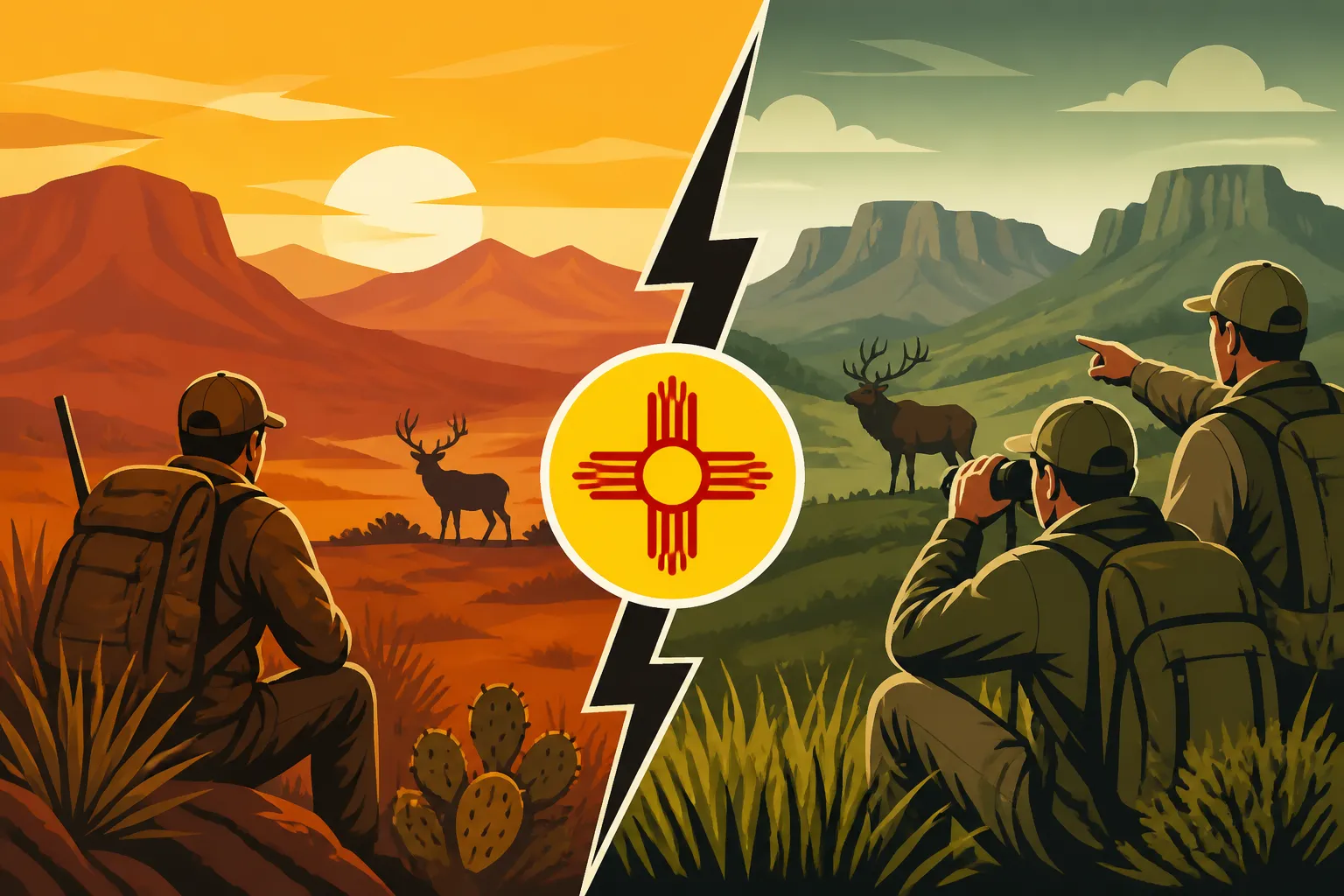
Deciding how to tackle a New Mexico big game hunt often boils down to a fundamental choice: do you want a full-service experience where every detail is handled, or are you seeking a more self-reliant adventure deep in the backcountry? This comparison often pits the highly supportive "fully guided" hunt against the independent spirit of a "drop camp," leaving many hunters wondering which option truly aligns with their skills, budget, and desired level of wilderness immersion. This guide will walk you through the distinct realities of both, helping you understand the pros, cons, and practical considerations for each, so you can make the most informed decision for your next New Mexico adventure.
Understanding the Core Difference: Control vs. Support
At its heart, the choice between a drop camp and a fully guided hunt in New Mexico is about how much control you want over the daily decisions and logistics versus how much support you desire from professionals. Both offer incredible opportunities to hunt the state's diverse landscapes, from the towering timber of the Gila to the rugged canyons of the desert, but they cater to very different hunting philosophies and preparedness levels.
The Spectrum of Outfitter Services
It’s easy to think of "guided" and "drop camp" as two opposite ends of a spectrum, and while they are distinct, many outfitters offer a range of services that can blur these lines slightly. Some outfitters might offer a "semi-guided" option that sits somewhere in the middle, providing some logistical support like camp setup and game retrieval but leaving the daily hunting decisions to you. However, for the sake of clarity, we'll focus on the traditional definitions of fully guided and drop camp to highlight their unique characteristics. Understanding this spectrum is crucial, as what one outfitter calls a "drop camp" might include more support than another, so always get precise details on services provided.
Defining "Fully Guided" and "Drop Camp"
A fully guided hunt is essentially an all-inclusive package. From the moment you arrive at a designated meeting point, usually an airport or a town near the hunting unit, your outfitter and guide handle virtually everything. This includes transportation to and from the hunting area, food, lodging, daily hunting strategies, tracking, field dressing, and often the initial pack-out of your game. You’re paying for expertise, convenience, and a high level of support.
A drop camp, on the other hand, is a service that primarily provides logistics for accessing remote areas. The outfitter transports you and your gear, often via horseback or mules, to a pre-set camp deep in the wilderness. They drop you off with supplies (which you typically provide, though some services might include certain basics), and then leave you to hunt independently. You are responsible for all daily hunting decisions, cooking, navigating, field dressing, and caring for your game. The outfitter returns at a pre-arranged time to pack you and your harvest out. It’s for the self-sufficient hunter who wants wilderness access without the full-service cost or oversight. New Mexico Drop Camp Hunts Explained delve deeper into the specifics of this style of hunt.
The Fully Guided Experience: All-Inclusive Adventure
Opting for a fully guided hunt in New Mexico means stepping into an adventure where the heavy lifting, both literally and figuratively, is managed for you. This choice often appeals to hunters who are new to the state's challenging terrain, those seeking a high probability of success, or anyone who simply wants to maximize their hunting time without the burden of camp logistics.
What a Fully Guided Hunt Typically Includes
When you book a fully guided hunt, you're investing in a comprehensive package designed to make your experience as seamless and successful as possible. Here’s what you can generally expect:
- Expert Guidance: This is the cornerstone. You'll have one or more experienced guides who know the unit, the animal behavior, and the local conditions inside and out. They'll plan your daily strategy, lead you to prime hunting spots, help with tracking, and make critical decisions in the field. This local knowledge is invaluable, especially in complex areas like the Gila.
- Accommodations: Lodging can range from comfortable wall tents with wood stoves and cots in a base camp to cabins or even motels in town, depending on the outfitter and the hunt location. All meals are typically provided and prepared for you, often with hearty, home-cooked fare to fuel your days.
- Equipment and Logistics: Outfitters usually provide essential camp equipment, such as tents, cooking gear, and sometimes even optics or other specialized tools. More importantly, they handle all transportation within the hunting area, whether that's ATV, truck, or horses. When you harvest an animal, they manage the field dressing and the challenging task of packing out the meat and trophy, which can be monumental for an elk deep in the backcountry. What a Fully Guided New Mexico Elk Hunt Includes provides an even more detailed breakdown.
Benefits of a Fully Guided Hunt
The advantages of a guided hunt are numerous, especially for certain types of hunters.
- Increased Success Rates: While no hunt is guaranteed, guides significantly improve your odds. Their familiarity with the area, knowledge of animal patterns, and ability to read sign give you a considerable edge. They've spent countless hours scouting How Outfitters Scout Before Your Arrival and know where the game lives.
- Reduced Stress and Logistical Burden: Forget about packing heavy gear, setting up camp, cooking meals, or figuring out unfamiliar roads. Your primary focus can be solely on the hunt itself. This can be a huge relief, allowing you to conserve energy for the physical demands of hunting in New Mexico's mountains or deserts.
- Safety and Expertise: New Mexico's wilderness can be unforgiving. Guides provide a layer of safety, possessing first aid skills, navigation expertise, and communication devices for emergencies. Their experience is crucial in managing unexpected situations, from adverse weather to injured game. This is particularly important for non-resident hunters unfamiliar with the local environment or for those tackling physically demanding hunts like the Physical Conditioning for a Gila Hunt.
Potential Drawbacks
While attractive, fully guided hunts aren't without their downsides, primarily cost and a trade-off in independence.
- Higher Cost: This is the most significant factor. Fully guided hunts are a premium service, and the price reflects the extensive labor, equipment, and expertise involved. These hunts often represent a substantial investment, requiring careful budgeting. The Average Cost of a Guided New Mexico Elk Hunt is a good resource for understanding the financial commitment.
- Less Independence: For some, the constant presence of a guide can feel restrictive. You're following their plan, their pace, and their decisions. If you cherish the freedom of making all your own calls in the field, a fully guided hunt might feel less like your own adventure.
- Group Dynamics: If you're not booking a private 1:1 guide, you might be part of a small group, which means coordinating with other hunters and guides. Personalities, fitness levels, and hunting styles need to mesh, which can sometimes be a challenge.
Embracing the Drop Camp: Self-Sufficiency in the Backcountry
A drop camp hunt in New Mexico is for the intrepid hunter who craves deep wilderness immersion and the satisfaction of a self-orchestrated hunt. It's a fantastic option for those who possess strong outdoor skills, enjoy the challenge of self-reliance, and want to experience the backcountry without the significant upfront investment of a fully guided trip.
What a Drop Camp Service Provides
The core value of a drop camp service is access. Outfitters specializing in drop camps act as your wilderness taxi service, getting you and your gear into remote areas that would be arduous, if not impossible, to reach on your own.
- Remote Access: The outfitter uses horses or mules to transport you, your food, and your equipment deep into roadless wilderness areas, far from vehicle access and often other hunters. This is particularly common in vast areas like the Gila National Forest. The Logistics of a Horseback Drop Camp details what's involved in this kind of transport.
- Pre-Set Camp: Many drop camp services include a basic camp setup: a wall tent, wood stove, cots, and perhaps a cooking table. However, the level of camp amenities can vary greatly between outfitters, so always clarify what exactly is provided versus what you need to bring.
- Pack-In and Pack-Out Service: The outfitter's primary function is to get you in and out, along with any game you harvest. They'll drop you off, agree on a pick-up date and location, and return to retrieve you and your animal.
The Hunter's Responsibilities in a Drop Camp
With the independence of a drop camp comes significant responsibility. You are the master of your own destiny, and careful preparation is paramount.
- Hunting Strategy and Execution: You and your group are entirely responsible for all daily hunting decisions: where to scout, where to hunt, how to approach animals, and how to navigate. This requires excellent map and compass skills or proficiency with GPS devices and hunting apps like GoHunt, as well as a solid understanding of game behavior.
- Camp Management: All aspects of camp life fall to you. This includes cooking all meals, managing water sources, maintaining the camp, and handling waste. You need to be self-sufficient and comfortable living in a wilderness environment for several days.
- Game Care and Retrieval: Once an animal is down, the responsibility for field dressing, quartering, and preserving the meat is yours. You must have the knowledge and physical capability to get the meat cooled and prepared for the pack-out. This is especially critical in warmer early seasons where meat spoilage is a real concern. Knowing how to bone out an elk and pack it in game bags is non-negotiable.
Benefits of a Drop Camp Hunt
For the right hunter, a drop camp offers unparalleled rewards.
- True Wilderness Immersion: You'll experience the quiet solitude of the backcountry, often with minimal human presence. It’s an opportunity to truly disconnect and test your outdoor skills against raw nature.
- Cost-Effective Access: While not cheap, a drop camp is generally significantly less expensive than a fully guided hunt. You're paying primarily for transportation and camp infrastructure, not daily guiding fees. This allows you to access prime, remote hunting grounds without the premium price tag.
- Ultimate Independence and Satisfaction: Every decision, every stalk, every challenge overcome is entirely yours. There's immense satisfaction in successfully executing a hunt completely on your own terms, from scouting to harvest. It builds confidence and deepens your connection to the landscape.
Potential Drawbacks
This style of hunting is not for everyone and comes with its own set of challenges.
- Requires High Level of Skill and Experience: Navigation, wilderness survival, game care, and physical fitness are critical. If you're new to backcountry hunting or lack experience in challenging terrain, a drop camp can quickly become overwhelming or even dangerous.
- Physical Demands: Packing your own hunting gear, potentially boning out and quartering a large animal, and moving it to a pick-up point often involves significant physical exertion in rugged country. Preparing Physically for a High Elevation Hunt is essential reading if you're considering this.
- No "Guaranteed" Success: Without a guide leading the way, your success relies entirely on your own scouting, hunting acumen, and a bit of luck. There's no one to lean on for daily strategy or to course-correct if you're struggling to find game. This can lead to frustration if expectations aren't managed.
Weighing the Pros and Cons of Each Approach
To help you decide, let's look at a direct comparison of drop camps and fully guided hunts in New Mexico. Each has distinct advantages and disadvantages that will resonate differently with individual hunters.
When a Fully Guided Hunt Shines
A fully guided hunt is often the best choice for:
- First-Time New Mexico Hunters: If you've never hunted the state's diverse and often challenging units, a guide's local knowledge is invaluable. They can help you learn the terrain, understand local game behavior, and navigate regulations, greatly easing your learning curve.
- Hunters Seeking a High-Effort Experience Without the Logistical Headache: You want to work hard and hunt hard, but you don't want to worry about cooking, cleaning, or packing out meat yourself. You prefer to focus your energy solely on hunting.
- Those With Limited Time: If you have a short window for your hunt, a guide can maximize your efficiency by putting you on game faster and eliminating time spent on camp logistics.
- Hunters Prioritizing Success Over Absolute Independence: While ethical hunting means no guarantees, a guided hunt generally offers the highest probability of success due to the guide's expertise and preparation.
- Hunters with Physical Limitations or Accessibility Concerns: While many guided hunts are physically demanding, some outfitters can tailor experiences to accommodate varying physical abilities, something much harder to arrange in a self-supported drop camp.
When a Drop Camp Is Your Best Bet
A drop camp is ideal for:
- Experienced Backcountry Hunters: If you’re comfortable with navigation, wilderness survival, self-sufficient camping, and field game care, a drop camp offers the perfect platform for a truly independent adventure.
- Budget-Conscious Hunters Seeking Remote Access: You want to hunt deep in the wilderness and are willing to put in the effort to save on the full guiding fee.
- Groups of Self-Reliant Friends: A drop camp is perfect for a group that enjoys hunting together, has complementary skills, and wants to share the experience and responsibilities.
- Hunters Who Value Autonomy Above All Else: If making your own decisions, setting your own pace, and feeling entirely responsible for your success (or failure) is paramount, a drop camp delivers that freedom.
- Repeat Visitors to Familiar Units: If you've hunted a particular New Mexico unit before and know its nuances, a drop camp allows you to leverage your own acquired knowledge while getting deep into prime areas.
Comparison Table: Drop Camp vs. Fully Guided Hunt
Here’s a quick overview to help crystallize the differences:
| Feature | Drop Camp Hunt | Fully Guided Hunt |
|---|---|---|
| Cost | Generally lower (paying for transport/camp access) | Significantly higher (all-inclusive service) |
| Independence | High – you make all hunting & camp decisions | Low – guide makes daily hunting decisions |
| Support Level | Low – primarily transport; minimal in-field help | High – expert guidance, full camp services |
| Logistics | Your responsibility (food, cooking, field care) | Handled by outfitter (food, lodging, game pack-out) |
| Skill Required | High (navigation, game care, wilderness survival) | Moderate (focus on hunting, less on logistics) |
| Success Odds | Dependent on hunter skill & preparation | Generally higher due to guide expertise |
| Physical Demand | High (carrying gear, processing game) | High (but support for game retrieval) |
| Ideal For | Self-reliant, experienced, budget-conscious groups | First-timers, convenience, higher success priority |
Costs and Logistics: What to Expect Financially and Practically
Beyond the philosophy of the hunt, the practical realities of cost and logistics play a huge role in choosing between a drop camp and a fully guided trip. New Mexico hunting can be an investment, and understanding where your money goes is critical.
Financial Outlays: Beyond the Outfitter Fee
Regardless of whether you choose a drop camp or a fully guided experience, remember that the outfitter's fee is just one component of your total hunt cost. You'll also need to factor in:
- License and Tag Fees: New Mexico has specific fees for game hunting licenses and individual species tags, which can vary for residents and non-residents. The Nonresident New Mexico License Price and Nonresident Cow Elk Tag Pricing in New Mexico are good places to start understanding these costs.
- Travel Expenses: Airfare, fuel, vehicle rental, and any overnight stays before or after the hunt.
- Gear: Quality gear is essential for any New Mexico hunt, especially in the backcountry. This includes optics, weapons, clothing, boots, and camping equipment for a drop camp.
- Meat Processing and Shipping: If successful, you'll need to pay for meat processing, and potentially shipping if you're traveling from out of state.
- Gratuities: Tipping your guide or camp staff is customary and expected on guided hunts and, if applicable, for drop camp packers. How Much to Tip a Hunting Guide offers guidance on this.
When looking at outfitter prices, always ask what is not included. Many quotes exclude license fees, meat processing, taxidermy, and tips.
Booking and Preparation for Each Hunt Type
The preparation process also differs significantly.
Booking a Fully Guided Hunt
Booking a fully guided hunt typically involves:
- Researching Outfitters: Look for reputable outfitters with good success rates and positive references in the unit you're interested in. Platforms like BookYourHunt can be a starting point, but always verify directly. Vetting a New Mexico Outfitter Before You Send a Deposit is key.
- Contacting and Interviewing Outfitters: Ask detailed questions about what's included, typical daily routine, guide-to-hunter ratio, camp amenities, and physical demands. Get a clear understanding of their New Mexico Outfitter Success Rates for Elk.
- Signing a Contract and Deposit: A signed contract is crucial, outlining all terms, services, dates, and payment schedules. A deposit is almost always required upfront.
- Physical Preparation: Guides will provide a gear list. Focus on physical conditioning appropriate for the hunt, whether it's Altitude Preparation for a Gila Elk Hunt or long days of walking.
Preparing for a Drop Camp
Drop camp preparation is more intensive for the hunter:
- Outfitter Selection: Similar to guided hunts, find a reputable outfitter who offers drop camp services in your desired area. Discuss camp locations and services in detail. Pack String Outfitters Working in New Mexico are often the ones providing these services.
- Gear and Food Planning: This is where you shine. You'll need to meticulously plan and pack all your food, cooking gear, personal hunting gear, first-aid, navigation tools, and any specialized equipment. Weight limits for pack animals are strict, so be strategic.
- Physical and Skill Preparation: Sharpen your navigation skills, practice field dressing and quartering techniques, and ensure you and your group are in excellent physical condition for strenuous days and potentially packing out game on foot.
- Emergency Planning: Since you'll be alone, plan for emergencies. Carry a satellite communication device, leave a detailed itinerary with someone reliable, and know basic wilderness first aid.
Making Your Decision: Which Hunt Style Suits You?
Ultimately, the choice between a fully guided hunt and a drop camp in New Mexico is a deeply personal one, reflecting your hunting philosophy, experience level, budget, and what you hope to gain from the wilderness.
Self-Assessment: Know Thyself as a Hunter
Before committing, take an honest look in the mirror.
- Experience Level: How much experience do you have in backcountry hunting, especially in mountainous or desert terrain? Are you confident in your navigation, survival, and game care skills?
- Physical Fitness: New Mexico hunts are rarely easy. Are you and your hunting partners prepared for strenuous days, high elevation, and potentially packing heavy loads?
- Budget: Be realistic about what you can afford, considering all the hidden costs beyond the outfitter fee.
- Desired Independence: Do you crave the thrill of self-reliance, or do you prefer the comfort and efficiency of professional support?
- Time Constraints: How much time can you dedicate to scouting, planning, and preparing, beyond the actual hunting days? A drop camp demands more pre-trip effort.
Considering Your Hunting Partners
If you’re hunting with a group, ensure everyone is on the same page regarding expectations, skills, and physical condition. A mismatched group in a drop camp can lead to friction and even dangerous situations. Open communication is paramount.
Leveraging Resources for Your Decision
There are many resources available to help you make an informed decision:
- Official Regulations: Always read the current New Mexico hunting regulations thoroughly. Reading a New Mexico Hunt Code Before You Apply is vital.
- Online Forums and Communities: Engage with other hunters in online communities (like those affiliated with GoHunt) to gather insights, ask questions, and learn from their experiences with both guided and drop camp hunts in New Mexico.
- Outfitter Websites and Testimonials: Review outfitter websites, read testimonials, and ask for references. Don't be shy about calling past clients to get their candid feedback.
Whether you choose the comprehensive support of a fully guided hunt or the rugged independence of a drop camp, New Mexico offers unparalleled big game opportunities. The key is to understand what each option entails, honestly assess your own capabilities and desires, and prepare thoroughly. Either path can lead to an unforgettable adventure and the memory of a lifetime in some of the most stunning wild country in the American West.
Disclaimer
This article is for general informational purposes only and does not constitute professional advice. Laws, prices and regulations vary by location and change over time. Consult a qualified professional for guidance on your specific situation.