The Logistics of a Horseback Drop Camp
The idea of hunting deep in the New Mexico wilderness, far from roads and other hunters, is a powerful draw for many of us. But actually getting yourself and all your gear into those remote, pristine locations can feel like an overwhelming logistical nightmare. This guide is going to walk you through the nitty-gritty details of organizing and executing a successful horseback drop camp hunt in New Mexico, cutting through the romanticized notions to show you what it really takes to reach those untouched spots.
Understanding What a Horseback Drop Camp Truly Is
When you hear "guided hunt," your mind probably jumps to an outfitter leading you to an animal, providing meals, and handling all the logistics. A horseback drop camp is a different beast entirely, offering a unique blend of professional support and self-sufficiency. It's a fantastic option for experienced hunters who want to explore beyond the trailhead but prefer to manage their own hunt once they're deep in the backcountry.
The Core Concept: Transportation, Not Guiding
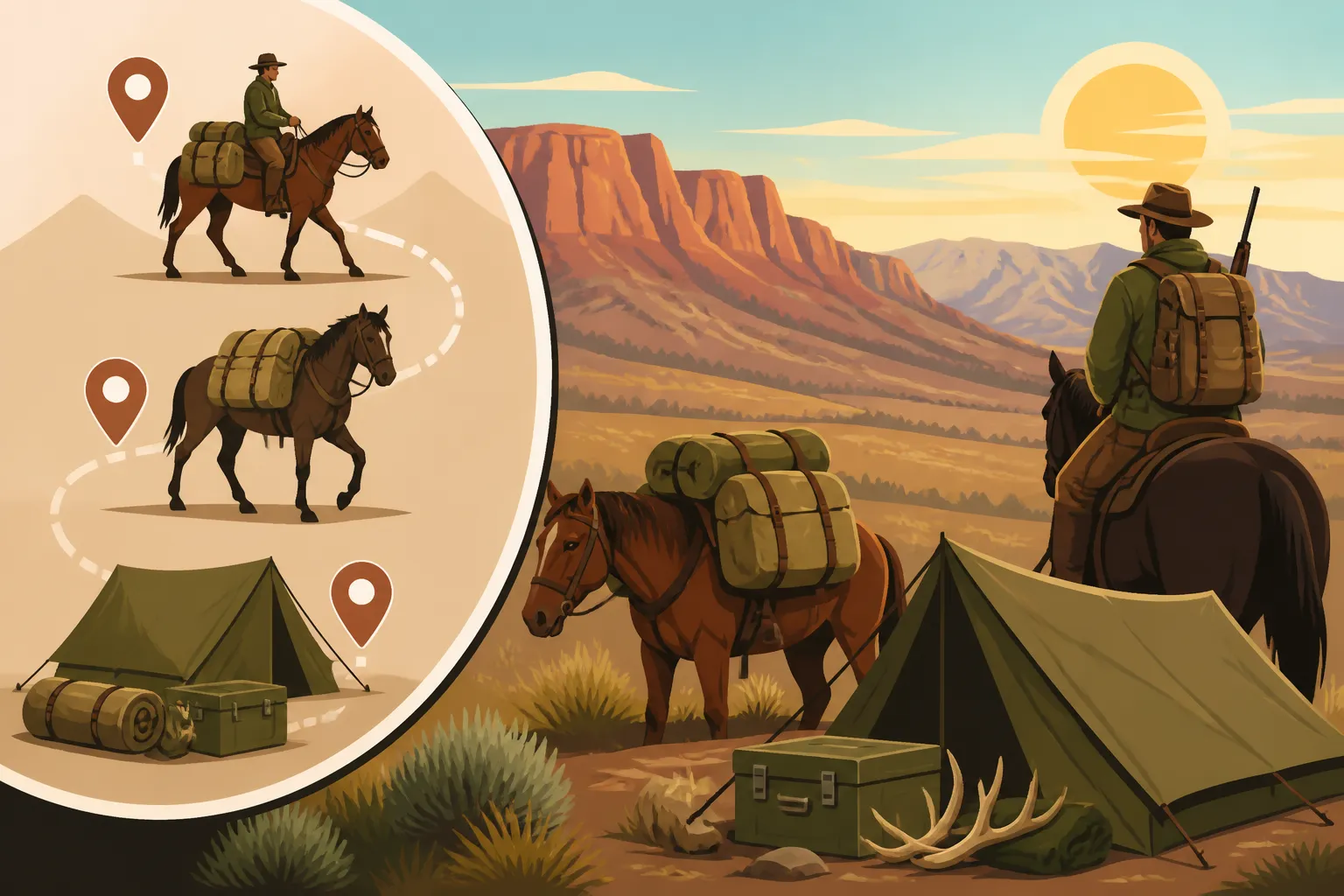
At its heart, a horseback drop camp is essentially a high-class shuttle service for you and your hunting party. You're hiring an outfitter and their string of horses and mules to transport you, your extensive gear, and your provisions to a pre-determined, remote camp spot. Once they drop you off, you're on your own, completely responsible for your hunting, cooking, sleeping, and safety. Think of it as extended backpacking, but without the back-breaking hike in with all your heavy supplies. This distinction is crucial because it means you still need all the skills of a do-it-yourself (DIY) hunter, just with a much deeper starting point. You won't have a guide scouting for you, calling animals, or tracking wounded game unless you specifically arrange for those additional services, which would then move it closer to a semi-guided or fully guided experience.
This model is a significant departure from a traditional fully guided hunt, where an experienced guide is with you every step of the way, offering local knowledge, calling techniques, and game retrieval assistance. With a drop camp, the outfitter's primary role is logistics: getting you and your stuff in, and later, getting you and your harvest out. It puts the onus of hunting success squarely on your shoulders, empowering you with the freedom of a DIY hunt while providing access to areas that would be physically impossible to reach on foot with a week's worth of supplies. It's about opening up a whole new world of remote hunting opportunities without the full expense of a guided trip.
What's Included and What Isn't
The scope of services for a horseback drop camp can vary a bit between outfitters, but there's a general framework you can expect. Typically, a drop camp fee covers the transportation of you and a pre-agreed amount of gear (usually measured by weight or number of panniers) into a remote campsite, and then a return trip to pick you up and pack out any game you harvested. This means the outfitter provides the horses or mules, the packer (the person leading the animals), and the service of hauling your stuff. Sometimes, a basic wall tent and wood stove might be included in the camp setup, but often, you're expected to bring your own shelter.
What's not included is arguably more important to understand. You are responsible for all your food, cooking equipment, sleeping arrangements (unless specified), hunting gear, navigation, first aid, and any specialized tools you might need. The outfitter is not providing a cook, nor are they necessarily scouting for you or offering hunting advice during your stay. Game retrieval is usually part of the package for a reasonable amount of meat and antlers, but anything beyond the agreed-upon weight or number of trips might incur extra fees. Always clarify these details with your chosen outfitter well in advance. Understanding these boundaries ensures there are no surprises once you're miles into the backcountry.
The Ideal Scenario for a Drop Camp
A horseback drop camp truly shines for a specific type of hunter. It's perfectly suited for the experienced DIY hunter who is already comfortable navigating and surviving in true wilderness conditions, but whose physical limitations or desire for deeper access makes packing in all their gear on foot impractical or impossible. If you've done several backpack hunts but longed to push further, or if you have a group of like-minded, self-sufficient hunters, a drop camp can be your golden ticket. It allows you to access areas that see minimal human pressure, increasing your chances of finding older, larger animals.
This option is also fantastic for those looking to cut costs compared to a fully guided hunt. While not cheap, a drop camp is significantly less expensive than having a guide with you for a week. It requires a high degree of self-reliance, strong navigation skills, and a solid understanding of game behavior in the area. You'll need to be proficient with your weapon, capable of field dressing an animal, and prepared for all contingencies that might arise in the backcountry. If you thrive on independence and the challenge of a true wilderness hunt, but appreciate having the heavy lifting handled, a drop camp is likely an excellent fit for your next New Mexico adventure, whether you're chasing elk in the Gila or mule deer in the high country.
Planning Your Deep Wilderness Expedition
Successfully executing a horseback drop camp hunt is all about meticulous planning. Unlike a road-accessible hunt where you can run back to the truck for forgotten items, a deep wilderness drop camp means you're committed to what you bring in. Every decision, from outfitter choice to meal planning, has magnified importance.
Choosing Your Outfitter and Location
The first critical step is finding the right outfitter. Not all outfitters offer drop camps, and those who do may specialize in certain areas or species. Start by researching outfitters with a proven track record in the units you're interested in, particularly if you're targeting specific game like elk in the Gila. Websites like BookYourHunt or GoHunt can be valuable resources for finding reputable outfitters and reading reviews. Look for outfitters who are transparent about their drop camp services and pricing. When you've narrowed it down, have detailed conversations about their experience in the proposed area, their safety protocols, and what exactly is included in their drop camp package. Ask for references from past drop camp clients—their insights can be invaluable. You'll want an outfitter who knows the terrain intimately and can advise on good drop locations based on your target species and hunt timing. For instance, an outfitter familiar with the high country might suggest different zones than one focused on lower elevation desert hunts. New Mexico Gila Elk Outfitters and What They Offer provides some great context on choosing an outfitter for the region.
Once you have an outfitter, discuss specific units and potential drop locations. Some units, like those within the Gila National Forest, are massive and offer vast wilderness areas perfect for a drop camp. Your outfitter will likely have preferred spots or general zones they operate in regularly. Be clear about your hunting goals: are you looking for a specific type of terrain, proximity to water, or known bedding areas? While they won't guide you, their local knowledge can help you pinpoint a suitable drop-off point that maximizes your hunting opportunities. Remember to also consider the general access and boundaries of the unit you're hunting in. Reading a New Mexico Unit Boundary Before You Apply can help you understand these critical details before committing to a specific area.
Gear, Food, and Water Logistics
This is where the rubber meets the road for a self-sufficient hunt. Your gear list for a drop camp will be extensive and needs to be carefully curated. You'll need a robust tent that can withstand New Mexico's unpredictable weather, warm sleeping bags appropriate for potential temperature swings (especially if hunting in the mountains), a reliable cook stove and fuel, and all your personal hunting equipment. Don't forget essentials like a comprehensive first-aid kit, navigation tools (GPS, maps, compass), and sufficient game bags for your anticipated harvest. Weight is a huge factor, as outfitters have strict limits for their pack animals, usually around 80-100 pounds per animal, and that includes your personal weight if you're riding in. Exceeding these limits can lead to extra costs or leaving essential items behind.
Food planning needs to be strategic. You're deep in the backcountry, so fresh food is limited. Focus on lightweight, calorie-dense, non-perishable options. Freeze-dried meals, dehydrated fruits and vegetables, jerky, and high-energy bars are your friends. Consider vacuum-sealing portions to reduce bulk. For water, you'll need a reliable filtration system or purification tablets, as carrying all your water for a multi-day hunt is often impossible due to weight restrictions. Research potential water sources in your drop camp area beforehand using maps and satellite imagery. Even in supposedly wet areas, a dry spell can render creeks useless. Water You Must Carry on a Desert Day Hunt gives you a good idea of what's needed for smaller trips, but for a drop camp, you're looking at a much larger scale, relying on filtration for the bulk of your water needs.
Physical and Mental Preparation
Don't underestimate the physical demands of a drop camp hunt. Even though you're not packing in, you'll be riding for hours, often over rough terrain, and then hunting hard in potentially high-elevation, steep country for days on end. Your body needs to be ready for the strain. Incorporate cardio, strength training, and hiking with a weighted pack into your routine well before the hunt. Focus on leg strength for navigating hills and core strength for maintaining balance on horseback. Physical Conditioning for a Gila Hunt is a great resource to get you started on building the stamina required. Remember, a long ride in can leave you stiff and sore, and you'll need to shake that off to be an effective hunter.
The mental aspect is just as important. You'll be isolated, often with limited communication, and facing the challenges of wilderness on your own terms. This requires a strong mindset, problem-solving skills, and resilience. Be prepared for solitude, unexpected weather changes (like sudden thunderstorms or snow in the high country), and the emotional ups and downs that come with hunting. Having a plan for these contingencies will boost your confidence. Understanding Layering for Gila Temperature Swings is not just about comfort; it's about being mentally prepared for sudden shifts that can turn a pleasant day into a survival situation if you're not equipped. It's about being mentally tough enough to push through fatigue, stay focused, and enjoy the raw wilderness experience, even when things get tough.
On the Trail and In the Field
The journey into your drop camp is an adventure in itself, a transition from the world of roads and noise to the quiet embrace of the wilderness. Once there, setting up efficiently and having solid contingency plans are paramount for a safe and successful hunt.
The Ride In: What to Expect
The morning of your ride in will be a flurry of activity. You'll meet your outfitter and packer at a designated trailhead, often before dawn. Your gear will be meticulously weighed and loaded into panniers, which are saddlebags designed for pack animals. The packer will expertly balance the load across the mules, a crucial step to prevent saddle sores on the animals and ensure stability on the trail. You'll be assigned a horse for the journey. If you're not an experienced rider, let your outfitter know; they'll often provide a gentle, seasoned mount. The pace will generally be slow and steady, covering miles of varied terrain, from winding forest trails to rocky ascents and descents. It can be a long day in the saddle, sometimes 4-8 hours or more, so comfortable riding pants and sturdy boots are essential.
While riding, pay attention to the trail and the surrounding country. It's not just a commute; it's part of the hunting experience. Your packer might point out fresh sign, water sources, or terrain features that could be useful during your hunt. The ride offers an unparalleled opportunity to truly absorb the vastness and beauty of New Mexico's wild places. But beyond the scenery, focus on staying comfortable and hydrated. Long hours in the saddle can be tiring, and you want to arrive at your drop camp refreshed and ready, not saddle-sore and exhausted. Ensure you have easy access to water, snacks, and any personal items you might need during the ride.
Setting Up Your Remote Camp
Once you reach your designated drop-off point, the packer will unload your gear, and then, usually within a few hours, they'll depart, leaving you alone in the vast wilderness. This is where your self-sufficiency truly begins. Your first priority is setting up a functional and secure camp. Choose a spot that offers some natural shelter from wind and weather, is relatively flat for sleeping comfort, and is away from game trails or potential avalanche chutes in mountainous terrain. A site near a reliable water source is a huge bonus, assuming it's been vetted for safety. Clear any deadfall or potential hazards from your tent area.
Efficiently setting up your shelter, kitchen area, and sleeping arrangements is key. Organize your gear so that essentials are easily accessible. Bear awareness is critical in many New Mexico units. Implement proper food storage practices immediately: hang all food and scented items in a bear bag high in a tree, or use bear-resistant containers if available. Never store food inside your tent. Establish a cooking area well away from your sleeping quarters to minimize attracting animals. Remember, you'll be living here for several days, so make it a comfortable, safe, and organized home base. Minimize your impact on the environment by choosing durable surfaces and packing out everything you pack in.
Communication and Contingency Plans
In the remote backcountry of New Mexico, cell service is a distant dream. This makes reliable communication and robust contingency plans absolutely non-negotiable for a drop camp. A satellite messenger or satellite phone is an essential piece of gear, not a luxury. Devices like a Garmin inReach or a Zoleo allow you to send and receive text messages, share your location, and, most importantly, send an SOS in a true emergency. Satellite Communication From a Hunting Camp details why these devices are vital. Before you leave, make sure everyone in your party knows how to use it, and that a trusted contact back home has your itinerary and check-in schedule.
Your outfitter will establish a clear pickup date and time. Stick to this schedule. If conditions change, or you need to leave early, use your satellite communicator to alert them. But what if you get an animal down, especially a large one like an elk, far from your camp? This is a common scenario. Have a plan for quartering the animal, getting it cooled quickly, and making multiple trips back to camp if necessary. Packing an Elk Out of the Gila Alone highlights the incredible effort involved and why a solid strategy is needed. Discuss with your outfitter how they handle additional game retrieval trips if your harvest is too heavy for one pack-out trip, or if it's in a particularly remote spot. Always plan for the unexpected—a twisted ankle, a sudden blizzard, or a lost piece of gear. The more you've thought through these scenarios, the better equipped you'll be to handle them calmly and effectively.
Retrieval and Departure
The end of your drop camp hunt brings its own set of logistical challenges, particularly if you've been successful. Getting your harvest, yourself, and all your gear out of the backcountry requires careful planning and coordination with your outfitter.
Packing Out Your Harvest
Successfully harvesting an animal, especially a large one like a New Mexico elk, is exhilarating, but it's only half the battle. Now comes the hard work of field dressing and packing it out. In a remote drop camp, you'll need to be proficient in field dressing and quartering your animal, often in challenging conditions and potentially alone. Speed is crucial, especially during early season hunts when temperatures can still be high. Get the hide off, gut the animal, and break it down into manageable quarters as quickly as possible to allow for maximum cooling. Have plenty of breathable game bags to protect the meat from flies and dirt. Field Dressing in Desert Heat gives critical advice on this process, which applies just as much in mountainous New Mexico as it does in the desert.
Once quartered, the meat needs to be cooled rapidly. Hanging it in the shade, off the ground, and allowing air circulation is essential. If you have a long wait until your outfitter arrives, you might consider covering the quarters with space blankets during the day and uncovering them at night. Communicate clearly with your outfitter about your harvest. Some drop camp services include packing out one animal. If you get a second or a very large bull that requires multiple trips, there might be additional fees. Ensure the antlers are secured and protected for the journey out. Remember, the goal is to get quality meat back home, so every step of the retrieval process needs to be handled with care. Getting Meat Cooled on an Early Season Hunt is a must-read for anyone heading into the backcountry, regardless of how they got there.
The Pickup and Ride Out
Just as important as the drop-off is the pickup. Your outfitter will have an agreed-upon date and time to return for you. Be ready. Have your camp packed up, your meat (if applicable) organized, and all your gear consolidated by the designated time. This helps the packer work efficiently and respects their schedule. If you've got multiple animals or exceptionally heavy loads, they may need to make more than one trip, or send an additional packer and string. Clear communication on your satellite device a day or two before pickup can help confirm everything.
The ride out will generally follow the same path as the ride in, but with the added weight of your harvest. It's often a quieter ride, perhaps with the satisfaction of a successful hunt. Double-check your campsite before you leave to ensure you've packed out every single item, including all trash, spent casings, and any food scraps. The goal is to leave the wilderness exactly as you found it, or even cleaner. The final leg of the journey will bring you back to the trailhead and, eventually, back to civilization, often with tired muscles but a deep sense of accomplishment.
Cost Considerations Beyond the Drop Fee
While a drop camp is generally more affordable than a fully guided hunt, it's crucial to understand the full financial picture. The drop camp fee itself is just one component. You'll need to factor in your New Mexico hunting license and any specific tag costs (which can vary significantly for residents vs. non-residents), travel expenses to and from the trailhead, and all your food and specialized gear. If you don't already own a robust wall tent, backpacking stoves, sleeping bags rated for cold temperatures, or satellite communication devices, these are substantial upfront investments. What a New Mexico Drop Camp Costs goes into more detail on the initial investment.
Additionally, consider potential extra fees. These might include charges for overweight gear, extra pack-out trips for game, or unforeseen circumstances that require the outfitter to come in early or stay longer. Don't forget to budget for a gratuity for your packer and outfitter if they provided excellent service – it's customary in the guiding industry. When comparing a drop camp to a fully guided or even a pure DIY hunt, remember that while you save on daily guide fees, you're investing heavily in your own equipment and self-reliance. It’s an investment in the experience and the access to truly wild country.
| Hunt Type | Access Method | Guides Included | Food/Gear Provided | Cost (Shape) | Skill Level |
|---|---|---|---|---|---|
| Horseback Drop Camp | Horse/Mule pack-in to remote location | No | No (sometimes tent) | Moderate to High | Experienced DIY Hunter |
| Fully Guided | Outfitter provides transport, often with horses | Yes | Yes | High to Very High | Any, but experience helps |
| Semi-Guided | Outfitter provides camp, general area advice | Limited | Sometimes camp only | Moderate | Intermediate DIY |
| DIY Public Land | Foot, vehicle, ATV to accessible public land | No | No | Low (gear dependent) | Experienced DIY |
Disclaimer
This article is for general informational purposes only and does not constitute professional advice. Laws, prices and regulations vary by location and change over time. Consult a qualified professional for guidance on your specific situation.