How Outfitters Scout Before Your Arrival
It's a familiar feeling: you've finally drawn that coveted New Mexico big game tag, maybe for elk in the Gila or a desert mule deer, and now the anxiety starts to set in. You want to make the most of this opportunity, but how do you possibly learn an entire unit, understand animal patterns, and pinpoint hot spots before you even set foot there? For many hunters, especially non-residents or those with limited time, hiring an outfitter is the answer, and a huge part of their value lies in the extensive, year-round scouting they conduct long before your arrival. This guide will walk you through the meticulous process New Mexico outfitters undertake to ensure your hunt is as successful as possible.
Why Pre-Season Scouting is Absolutely Critical for Outfitters
For a reputable New Mexico outfitter, scouting isn't a luxury; it's the backbone of their business and the foundation of their clients' success. They aren't just looking for animals; they're understanding entire ecosystems, predicting animal movements, and anticipating challenges. This dedication is what separates a truly professional outfitter from someone just showing up on opening day.
Understanding the Client's Investment and Expectations
Hunters invest not just money, but a significant amount of time, dreams, and effort into drawing a New Mexico tag and booking a guided hunt. They've spent countless hours poring over draw odds, applying, and preparing physically. When they arrive, they expect their outfitter to have done everything in their power to put them in a position to succeed. This isn't just about finding an animal, it's about respecting the client's journey and making their limited time in the field count. An outfitter's reputation hinges on consistently delivering these opportunities, and that can only happen with thorough pre-season work. It means knowing where to go when the weather changes, understanding the pressure points, and having backup plans. It's a commitment to maximizing your once-in-a-lifetime opportunity.
Adapting to Ever-Changing Conditions
New Mexico's landscapes are as dynamic as they are vast, and conditions can change dramatically from one season to the next, or even week to week. A severe drought one year can push elk and deer to new water sources, while a heavy monsoon season might create lush feed in areas that were previously barren. Wildfires can reshape entire habitats, opening new glassing opportunities in burn scars but also altering travel corridors. Dedicated outfitters are constantly monitoring these shifts. They know that what worked last year might not work this year, and their scouting efforts allow them to adapt. They're watching weather patterns, checking rainfall amounts, and keeping an eye on public land alerts for fire restrictions or road closures. This real-time understanding of the environment is something most DIY hunters simply don't have the luxury to acquire.
The Year-Round Scouting Cycle of a Dedicated Outfitter
Scouting for a New Mexico outfitter is rarely a last-minute endeavor. It's a continuous, multi-season process that begins almost immediately after the previous hunting season closes. This comprehensive approach allows them to build a deep, intimate knowledge of their permitted units.
Post-Season Recon and Data Collection
As soon as hunting season ends, typically in late fall or early winter, many outfitters are already back in the field. This "post-season" reconnaissance is invaluable. They're looking for wintering grounds, observing how animals settle into lower elevations, and identifying late-season food sources. This is also a prime time for shed hunting, which not only provides clues about antler quality for the following year but also reveals precise locations of winter range and travel routes. By collecting data on animal density, specific bedding areas, and overlooked pockets of cover, they're building a mental map that will be critical when designing next year's hunt plans. This is also when they'll hike into those hard-to-reach areas, noting new trails or changes in timber density.
Spring and Summer Intelligence Gathering
With the arrival of spring, the focus shifts to different indicators. Outfitters are tracking green-up, noting which areas are showing early signs of fresh feed, and identifying critical mineral licks. They're especially attuned to water sources – permanent springs, seeps, and stock tanks – which become magnets for animals as temperatures rise. Trail cameras, strategically placed near these vital resources and travel corridors, start recording activity. During the summer, these cameras become data-gathering machines, providing invaluable insight into herd composition, antler development, and specific animal patterns. This is also when outfitters start listening for early bugles for elk or checking on velvet-antlered deer, getting a sense of where the biggest animals are holding. Bugle Timing Through New Mexico's Rut can vary slightly year to year based on conditions, and summer scouting helps pinpoint these nuances.
Technology and Tools Outfitters Leverage for Pre-Hunt Prep
Gone are the days when scouting was solely about boots on the ground. Modern New Mexico outfitters seamlessly blend traditional field craft with cutting-edge technology to gain a significant advantage. These tools allow for more efficient, precise, and comprehensive scouting efforts.
Mapping Software and Satellite Imagery
Today's outfitters rely heavily on digital mapping platforms like onX Hunt and GoHunt to scout and plan. These tools provide incredible detail, from private land boundaries and public land ownership to topographic lines, aerial imagery, and even historical satellite views. Before ever stepping into a unit, an outfitter can virtually "walk" the terrain, identifying potential bedding areas, judging the steepness of slopes, pinpointing hidden water sources, and mapping out access roads. They can identify pinch points, saddles, and benches that might funnel animals, and use different map layers to understand vegetation types. This e-scouting allows them to narrow down huge tracts of land to specific areas of interest, making their physical scouting trips far more productive. For someone wondering about the lay of the land, E-Scouting a New Mexico Unit Before the Season covers this in detail.
Trail Cameras and Glassing
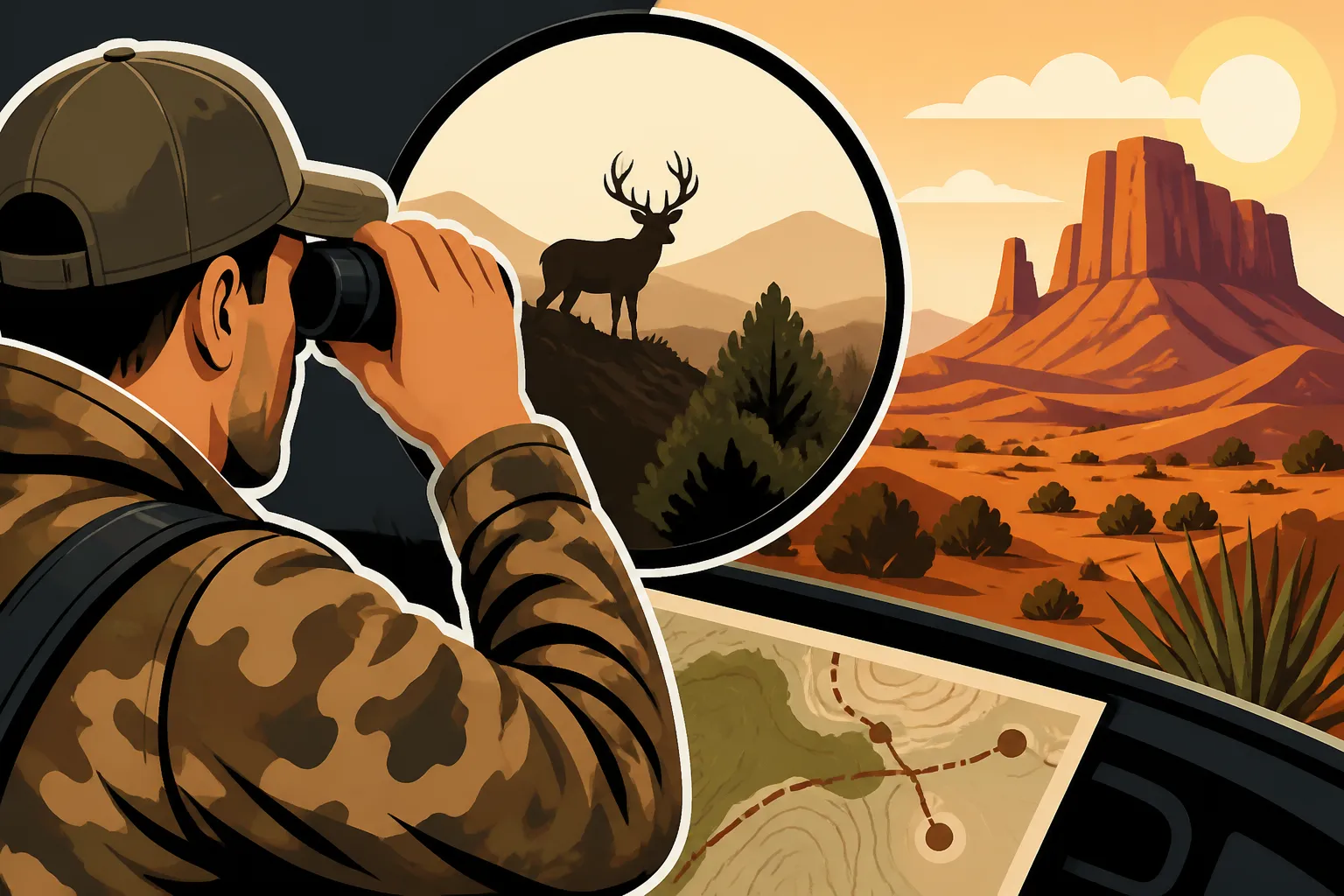
While digital maps provide a bird's-eye view, trail cameras and high-quality optics offer boots-on-the-ground intelligence. Trail cameras are deployed weeks or even months before a hunt, typically near water, feed, or established game trails. They provide a continuous stream of data on animal presence, movement patterns, and antler growth without disturbing the animals. Outfitters can check these cameras periodically, often via cell service where available, to get real-time updates.
Coupled with trail cameras, methodical glassing sessions are paramount. Outfitters spend countless hours perched on high vantage points, meticulously sweeping basins, canyon systems, and timbered hillsides with binoculars and spotting scopes. They're not just looking for animals; they're studying their behavior, their preferred feeding and bedding areas, and their travel routes between them. This is especially true for species like mule deer or pronghorn in open country, but also for elk in the more broken timber. They'll use techniques like The Grid Glassing Method, Step by Step to ensure no potential hiding spot is missed. This combination of static (trail cameras) and active (glassing) observation provides a comprehensive picture of animal activity.
What Outfitters Look For When Scouting a Unit
Scouting isn't just random wandering; it's a highly targeted process driven by specific objectives. New Mexico outfitters are looking for clues and patterns that will ultimately lead them to trophy animals and successful hunts for their clients.
Identifying Key Resources: Food, Water, Cover, and Travel Corridors
Animals need four things to survive: food, water, cover, and security. Outfitters spend countless hours identifying these critical resources within their hunting units. This means knowing where the best forage is, whether it's new growth in a burn area, oak brush in the mountains, or alfalfa fields bordering public land. They track seasonal water availability, from ephemeral rain tanks to perennial springs and streams, understanding that these are often central to animal activity, especially in New Mexico's dry climate. They pinpoint dense bedding cover, escape routes, and areas where animals feel safe from predation and hunting pressure. Finally, they map out the subtle trails, saddles, and draws that act as natural travel corridors between these essential components. Understanding these connections is like unlocking the secret language of the land.
Locating and Patterning Target Animals
Once the resources are identified, the real work of locating and patterning specific animals begins. This is where an outfitter's experience truly shines. For elk, they'll be looking for wallows, rubs, and fresh tracks, trying to determine herd size and bull quality. They'll use locator bugles during the pre-rut to get a sense of where bulls are holding. For mule deer, they'll be keying in on specific canyons, ridges, and basins where mature bucks are known to frequent. They'll study their movement patterns from bedding to feeding areas, especially during the crucial hours of dawn and dusk. For species like oryx, which roam vast tracts, it's about understanding herd dynamics and the best points of access on units like White Sands Missile Range. It's a blend of reading sign, observing directly, and interpreting data from trail cameras to build a comprehensive picture of animal behavior. This deep understanding allows them to predict where an animal is likely to be at a specific time of day during the hunt. This is particularly crucial for hunts with limited time, such as Why a White Sands Oryx Season Lasts Three Days.
Assessing Access and Logistics
Beyond the animals themselves, outfitters are also meticulously scouting the logistical aspects of a hunt. This includes identifying the best access points into the unit, understanding road conditions (especially after heavy rains or snow), and noting any seasonal closures that might impact travel. They're looking for ideal camp locations that offer both convenience and discretion. For backcountry hunts, they're evaluating trail conditions, potential water caches, and emergency egress routes. They consider how far clients will need to hike, what kind of terrain they'll encounter, and what physical demands the hunt will place on them. This logistical planning extends to understanding where cell service is available (or isn't), and how to maintain communication in remote areas. All of this ensures that when the client arrives, the outfitter can seamlessly execute the hunt plan, focusing entirely on putting them on game rather than wrestling with unexpected logistical challenges. For those considering hunting remote areas, having a clear understanding of Getting Into New Mexico's Gila National Forest is crucial.
Here's a quick look at how outfitters shift their scouting focus through the seasons:
| Season | Primary Scouting Focus | Key Information Gathered | Tools Typically Used |
|---|---|---|---|
| Post-Season | Winter range, escape routes, shed antlers, general sign | Animal density, travel patterns, potential trophy quality | Hiking, shed hunting, GPS, maps, binoculars |
| Spring | Green-up, water sources, early game movement, mineral licks | Health of herds, new forage areas, emerging patterns | Driving roads, short hikes, binoculars, trail cameras |
| Summer | Antler growth, waterhole activity, consistent patterns, rut sign | Specific animal locations, bull/buck quality, timing of rut activity | Trail cameras, glassing (spotting scopes, binoculars), GoHunt mapping, GPS |
| Pre-Season | Final animal patterns, access conditions, human pressure, weather | Exact locations of target animals, confirmed travel routes, current conditions | Trail cameras, intensive glassing, hiking, mapping apps, weather reports |
Many outfitters maintain a detailed database of their findings, constantly updating it with new information. This might involve digital maps with pins marking sightings, water sources, or bedding areas, and notes on specific animals observed. They might consult resources on BookYourHunt to understand client expectations for different hunt types and adapt their scouting strategy accordingly. The goal is to leave no stone unturned, ensuring that when you step into the New Mexico wilds with your outfitter, you're stepping into an environment they know like the back of their hand. They've already done the hard work, so you can focus on the hunt itself.
Disclaimer
This article is for general informational purposes only and does not constitute professional advice. Laws, prices and regulations vary by location and change over time. Consult a qualified professional for guidance on your specific situation.