How Much to Tip a Hunting Guide
One of the most common questions and sources of anxiety for hunters booking a guided trip, especially in a new state like New Mexico, is how much to tip their guide. It's a topic that often leaves people scratching their heads, wondering if they're doing enough, too much, or if there's some unspoken rule they're missing. This guide is here to demystify the process, helping you understand the etiquette, factors, and common percentages involved so you can confidently show your appreciation for a guide's hard work.
Understanding the Foundation of Tipping Your Hunting Guide
Tipping in the hunting world, much like in hospitality or other service industries, is less about charity and more about recognizing professional service and dedication. It's a vital part of a guide's livelihood and reflects the immense effort they pour into making your hunt a success and your experience memorable.
Why Tipping Is Standard Practice in the Guiding Industry
Think about all the elements that go into a guided hunt long before you even set foot in camp. Your guide has likely spent countless hours scouting the unit, understanding game movements, finding water sources, and identifying key bedding and feeding areas. They've prepared the camp, checked the gear, maybe even cooked your meals, and ensured everything is in order for your arrival. During the hunt itself, they're the first ones up and the last ones to bed, constantly working to put you in a position to succeed.
Guiding is a demanding profession that requires deep knowledge of the land, the animals, and often, exceptional physical stamina. Guides are responsible for your safety, navigation, and ensuring you have the best possible experience, regardless of whether you punch your tag. Their income often relies significantly on tips, which serve as a direct measure of your satisfaction with their effort, knowledge, and overall service. A good guide's reputation, and subsequently their booking schedule, hinges on happy clients, and a generous tip is a powerful way to express that happiness.
Factors Influencing Your Tipping Decision
While it might seem simple, deciding on the right tip involves more than just a quick calculation. Several key factors should weigh into your decision, reflecting the totality of your experience:
- Effort and Dedication: Did your guide work tirelessly from dawn till dusk, even when conditions were tough or game was elusive? Did they persist, adapt, and always strive to find you opportunities? Did they go above and beyond, perhaps staying out later, rising earlier, or covering extra miles? Even if the hunting was slow, did their relentless effort shine through? This is arguably the most important factor.
- Knowledge and Skill: How proficient was your guide in their craft? Did they demonstrate an intimate understanding of the New Mexico terrain and its wildlife, like how to read the wind in a deep canyon, or where elk might be moving at certain times of day? Were they skilled at calling, tracking, glassing, and making quick, informed decisions in the field? Their expertise is what you're truly paying for, and it often dictates the quality of your opportunities.
- Service and Hospitality: Beyond the hunting itself, how was the overall experience? Was the camp comfortable and well-maintained? Were the meals good and timely? Did your guide maintain a positive, encouraging attitude throughout the trip, even when you might have been frustrated? A good guide often doubles as a storyteller, a motivator, and a great camp companion.
- Safety: Did your guide prioritize your safety at all times, especially in rugged New Mexico backcountry or during potentially risky situations? This includes everything from proper firearm handling to navigating difficult terrain or advising on health concerns like altitude sickness. Safety should always be paramount.
- Harvest Success: While a successful harvest is often the goal, it should not be the sole determinant of your tip. A guide cannot control the animals or the weather. A truly exceptional guide can work their tail off, get you within range multiple times, and still have you miss, or have the animals simply disappear. Conversely, a less-than-stellar guide might get lucky with a cooperative animal. Focus on their effort and the quality of opportunities they presented, rather than just the final outcome.
Common Tipping Percentages and What They Mean
When it comes to the actual numbers, there’s a general range that most hunters adhere to, but it’s crucial to understand what these percentages signify in terms of your satisfaction.
The Standard Range for Hunting Guides
In the guided hunting industry, the typical tipping range falls between 10% and 20% of the total hunt cost. This percentage is usually applied to the entire package price, not just a portion of it. Let's break down what different points within this range generally communicate:
- 10% Tip: Satisfactory, but perhaps not exceptional. This suggests that the guide met the basic expectations of the trip. They were present, did their job, and you had an okay experience, but nothing truly stood out. Maybe the effort was there, but the enthusiasm or skill was a little lacking, or the camp experience was just average. While certainly acceptable, it signals that there wasn't a "wow" factor.
- 15% Tip: Good, solid performance; expectations met. This is often considered the standard tip for a competent guide who provided a good experience. They worked hard, knew their stuff, and you enjoyed your time. They didn't necessarily go above and beyond in every aspect, but they delivered a solid, professional service. For many hunters, this is the default when they're happy with their trip.
- 20% or More Tip: Exceptional service, went above and beyond, truly memorable experience. This is reserved for the guides who truly shine. They didn't just meet expectations; they exceeded them. Perhaps they displayed extraordinary perseverance, incredible animal knowledge, made the camp experience truly special, or genuinely became a friend during your time together. This level of tip communicates profound satisfaction and gratitude for an outstanding trip, whether you harvested an animal or not. For instance, if you were on a tough backcountry elk hunt in the Gila, and your guide somehow packed out your bull and all your gear through a late-season snowstorm, that might warrant a higher percentage.
Remember, these are guidelines. Your personal financial situation and the specific circumstances of the hunt always play a role. However, it's generally understood that guides rely on these tips, so avoiding tipping altogether or offering a very minimal amount without clear justification can be seen as a significant slight.
Adjusting for Non-Harvest Hunts or Exceptional Circumstances
This is where the tipping conversation often gets tricky. What if you didn't harvest an animal? Should you still tip? The resounding answer from the guiding community is yes, absolutely! As mentioned earlier, a guide cannot control the animals. They can control their effort, their knowledge, their attitude, and the quality of the opportunities they present.
- Non-Harvest Hunts: If your guide put in an honest, tireless effort, worked hard to find game, and provided you with multiple opportunities, they earned their tip. A hunt where you didn't punch a tag can still be a fantastic experience because of the guide's dedication. Perhaps you were hunting Mule Deer Across New Mexico's High Country and Desert during a particularly warm spell, and the deer just weren't moving. Your guide couldn't change the weather, but they could still make sure you were comfortable, safe, and had a great time out in nature. Your tip should reflect their hard work, not just the outcome. Consider their effort, skill, and commitment throughout the journey.
- Exceptional Circumstances: Sometimes, things happen that go beyond the typical hunting scenario. Maybe you had an unexpected injury (minor, hopefully!), and your guide skillfully and calmly assisted you. Perhaps a critical piece of gear broke, and they had a clever, functional workaround. Or maybe the weather turned truly awful, and your guide made heroic efforts to keep you safe and comfortable in camp, ensuring you still had a positive experience despite the elements. These are moments where a guide truly goes above and beyond, and your tip should reflect that appreciation for their problem-solving and care.
- Tipping Support Staff: Often, guided hunts involve more than just your primary guide. There might be cooks, wranglers, camp jacks, or even other assistant guides. It's customary to acknowledge their contributions as well. You can either include an additional amount in your primary guide's tip and ask them to distribute it (confirm this is their preferred method beforehand), or offer separate cash tips directly to the support staff. A common practice for support staff is a flat amount per person per day, or a smaller percentage of the total hunt cost.
| Service Level for Main Guide | Recommended Tip Range (of Hunt Cost) | What it Means | Considerations |
|---|---|---|---|
| Satisfactory | 10-14% | Guide met basic expectations, but didn't go above and beyond. Effort was there, but maybe enthusiasm or skill felt average. | Still important to tip; it acknowledges their work, even if the experience wasn't stellar. |
| Good/Met Expectations | 15-18% | Guide was competent, worked hard, and provided a positive, professional experience. This is often the default for a successful and enjoyable trip. | A solid choice for a well-run hunt where you felt taken care of and had good opportunities. |
| Exceptional | 19-25%+ | Guide went above and beyond in effort, skill, hospitality, and problem-solving. This reflects an outstanding, memorable experience regardless of harvest. | Reserved for truly stellar guides who made the hunt unforgettable and provided incredible service. |
| Support Staff (Cooks, etc.) | Flat rate ($50-100/day) or smaller % | These individuals contribute significantly to your comfort and the overall success of the camp operation. | Confirm with your outfitter if tips are pooled or if you should tip individuals directly. |
Practical Advice for Tipping in New Mexico
Now that you understand the "why" and "how much," let's talk about the practicalities of presenting your tip in a way that is respectful and appreciated.
How to Calculate and Present Your Tip
Calculating your tip should typically be based on the total cost of your guided hunt package, not just the "guide fee" if it's broken out separately. This ensures you're accounting for the entire service and infrastructure provided by the outfitter. For example, if your The Average Cost of a Guided New Mexico Elk Hunt was $7,000, a 15% tip would be $1,050.
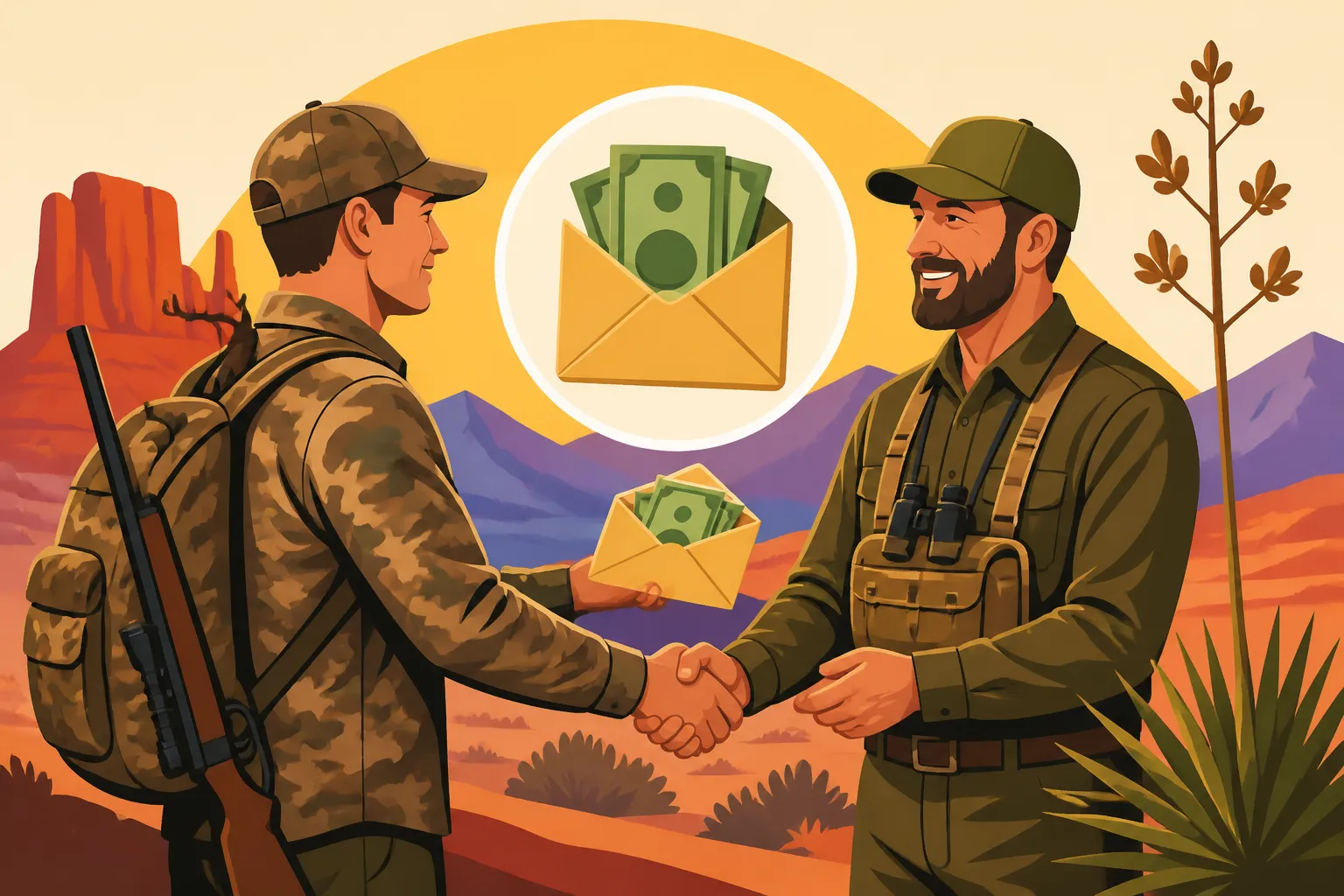
When it comes to presenting your tip, cash is king. Most guides prefer cash tips because it's immediate, private, and they don't have to wait for it to be processed through the outfitter, potentially incurring fees or delays. It also avoids any potential tax implications for the outfitter. Aim to have the cash ready and neatly presented in an envelope or folded discretely.
The best time to present your tip is at the very end of your trip, usually when you're saying your goodbyes. Find a private moment with your guide, away from other clients or staff if possible, to thank them personally and hand them the tip. A heartfelt thank you, specifically mentioning what you appreciated most about their efforts, will go a long way. If you had multiple guides working with you on a rotation, you might give the lump sum to the head guide and ask them to distribute it, or if you had a dedicated guide for your entire trip, offer it directly. It’s always good to clarify this with the outfitter or head guide early on, perhaps even when you're going through your Questions Worth Asking Before You Book.
It’s a good idea to factor in your tipping budget when considering What Outfitter Prices Almost Never Include during your hunt planning. Often, the advertised hunt price doesn't explicitly mention tips, but they are an expected part of the overall cost.
Beyond the Cash: Other Ways to Show Appreciation
While a generous cash tip is the primary way to show your gratitude, there are other meaningful gestures that can significantly benefit your guide and their business, especially in today's digital world.
- Public Reviews: A glowing review on platforms like "BookYourHunt" or "GoHunt" is incredibly valuable. Detail what made your experience great, praise your guide by name, and highlight their specific skills or dedication. These reviews build credibility, attract new clients, and are essentially free marketing for the outfitter and guides. Taking the time to write a thoughtful, positive review demonstrates a deep level of satisfaction.
- Referrals: The highest compliment you can pay a guide is to refer your friends, family, or fellow hunters to them. Word-of-mouth is incredibly powerful in the hunting community. If someone asks you about your New Mexico hunt, don't hesitate to enthusiastically recommend your guide. This direct business can be far more impactful than any single tip.
- Small, Thoughtful Gifts: While never a substitute for a cash tip, a small, personalized gift can be a nice touch. This could be a quality hunting knife, a useful piece of gear like a good headlamp or pair of gloves, a gift certificate to a local outdoor store, or even a local specialty from your home state. These gifts show you put extra thought into your appreciation beyond just the money.
- Photography: If you took great photos of the hunt—of the landscape, the camp, your guide in action, or even the animals you saw (whether harvested or not)—offer to share them. High-quality images can be invaluable for an outfitter's marketing materials and are a great way for guides to remember their clients and experiences.
- A Handwritten Thank You Note: In an increasingly digital world, a handwritten note expressing your gratitude can be a powerful and personal gesture. It shows sincere appreciation and gives the guide something tangible to remember your time together.
Ultimately, your tip is a reflection of the hard work, skill, and dedication your guide put into your New Mexico hunting adventure. By understanding the etiquette and communicating your appreciation thoughtfully, you contribute to a positive relationship with your guide and the broader hunting community. Remember to plan for this expense just as you plan for your travel and license fees when considering Booking Before New Mexico Draw Results Land and when vetting an outfitter, ensure you understand the full financial commitment. Being prepared physically for your hunt, like Preparing Physically for a High Elevation Hunt or understanding Altitude Preparation for a Gila Elk Hunt, is your part of the bargain, and a thoughtful tip is the guide's. And always, make sure you've read up on the rules in the Reading the New Mexico Rules and Info Booklet before your hunt, so you're never caught off guard.
Disclaimer
This article is for general informational purposes only and does not constitute professional advice. Laws, prices and regulations vary by location and change over time. Consult a qualified professional for guidance on your specific situation.