Building a Practice Routine Before Opener
That knot of anxiety in your stomach as opening day approaches, wondering if you’ve truly done enough to prepare, is a feeling every hunter knows. It’s not just about drawing a tag; it’s about honoring the animal and the opportunity with your best effort. This guide is all about helping you build a smart, effective practice routine that goes far beyond just slinging arrows or burning powder, ensuring you're mentally and physically dialed in for your New Mexico hunt.
Why a Consistent Practice Routine Matters More Than You Think
Hitting the range once or twice before the season just isn't going to cut it, especially when you're talking about the challenging terrain and conditions New Mexico can throw at you. A consistent, well-thought-out practice routine builds far more than just muscle memory for your shot. It cultivates the kind of deep-seated confidence that can make or break a hunt.
Beyond the Shot: Mental Toughness and Confidence
Hunting isn't just a physical endeavor; it's a mental game, pure and simple. Imagine you’ve just hiked miles into a remote corner of the Gila National Forest, spotted the bull of a lifetime, and now the moment of truth is upon you. Your heart is pounding, adrenaline is coursing, and your mind is racing. If your only practice has been casual plinking from a bench rest, how do you expect to perform under that kind of pressure?
A consistent practice routine, especially one that simulates hunting stress, helps you build mental resilience. It teaches you to control your breathing, calm your nerves, and execute when it counts. Each successful shot you make in practice, even in a simulated stressful environment, banks a little more confidence in your mental vault. This isn't just about hitting the target; it's about believing you will hit the target when it matters most, regardless of the shaking knees or racing pulse. It’s the difference between second-guessing yourself when that trophy steps out and making a confident, ethical shot.
Physical Preparedness for New Mexico's Demanding Terrain
New Mexico's hunting units are incredibly diverse, from the high, rugged peaks of the Sangre de Cristos to the vast, open plains of the eastern part of the state, and the incredibly broken country of the Gila. Each presents its own unique physical demands. Simply being able to hold your weapon steady is only half the battle. Can you do it after climbing 1,000 feet in elevation, or after crawling through thick pinon-juniper for a stalk?
Your practice routine needs to consider the physical toll the hunt will take. This means incorporating cardiovascular endurance, strength training, and practicing shooting after exerting yourself. If you're planning a high-country elk hunt, for instance, you need to be ready for the thin air and steep climbs. A practice regimen that combines physical conditioning with shooting practice will ensure your body can get you into position, and then your muscles will still be steady enough to make the shot. Don't underestimate how much even a modest incline can affect your ability to hold a rifle steady, let alone a bow.
Crafting Your Pre-Season Archery Practice Regimen
Archery hunting is arguably the most demanding form of hunting, requiring extreme precision and close proximity to the animal. Your practice routine needs to reflect this intimate challenge. It's not just about how much weight you can pull or how tight your groups are; it's about consistently making that perfect shot under various conditions.
Mimicking Hunt Scenarios: Angle, Distance, and Obstacles
Shooting flat ground at a known distance from a comfortable stand is a great start, but it's not hunting. Real New Mexico hunting scenarios involve shooting uphill, downhill, through small shooting lanes, and at animals standing at unpredictable ranges. To truly prepare, you need to replicate these conditions in your practice. Set up targets at varying, unmarked distances – 20 yards, 35 yards, 47 yards. Force yourself to estimate the range before checking with a rangefinder, just like you would in the field.
Practice shooting from elevated positions if you plan to hunt from a treestand, or from your knees, sitting, or even prone if you anticipate spot-and-stalk opportunities. If your hunt involves tight timber, set up some branches to create shooting lanes you have to thread your arrow through. This forces you to pick a gap and commit to it, rather than just pulling back and letting fly. Remember, consistency is key, and every shot should be treated like a real hunting opportunity. Don't just fling arrows; make every shot count towards perfecting your form and mental game. You might also want to consult guidelines on Minimum Bow Draw Weight for Big Game to ensure your setup is legal and effective.
Incorporating Realistic Gear and Clothing
One of the biggest mistakes archers make is practicing in comfortable t-shirts and shorts, then showing up to the hunt in bulky layers of camouflage, a backpack, and a harness. All of this gear can significantly impact your anchor points, string clearance, and overall form. Your practice routine must include shooting with the exact gear and clothing you plan to wear in the field.
Put on your hunting boots, your outer layers, your backpack (even if it's just lightly loaded), and your safety harness if you use one. If you typically carry a rangefinder, practice drawing your bow with it attached to your hip or chest. The goal is to identify and address any points of interference or discomfort long before you're staring down a bull elk. Every piece of equipment, from your release aid to your broadhead setup, should feel like an extension of your body, not an obstacle.
Fine-Tuning Your Broadheads for Flawless Flight
The moment of impact is where all your practice culminates, and your broadheads play a critical role in ethical harvesting. Never assume your broadheads will fly exactly like your field points. Many archers make the mistake of only shooting field points during practice, saving their "expensive" broadheads for the hunt. This is a recipe for disaster.
Dedicate specific practice sessions to shooting your actual broadheads. Start close, say 20 yards, and work your way back to your maximum ethical hunting range. Observe how they fly in comparison to your field points. If there's a significant difference, you'll need to make adjustments to your rest, sights, or even consider a different broadhead design. For New Mexico hunters, understanding Broadhead Requirements for Bowhunting and knowing if Are Expandable Broadheads Legal? are crucial details to check in the current regulations. Ensure your broadheads are sharp, properly installed, and tuned to your bow for flawless, predictable flight. A well-placed arrow is nothing without a broadhead that performs as expected.
Developing a Rifle and Muzzleloader Training Plan
For rifle and muzzleloader hunters, accuracy is paramount, but it extends beyond simply punching holes in paper. New Mexico hunts often demand shots from unconventional positions, at varying distances, and sometimes in challenging environmental conditions. Your practice routine needs to build confidence in these real-world scenarios.
Mastering Positional Shooting Beyond the Bench
The bench rest is fantastic for sighting in your rifle and checking your zero, but a trophy animal rarely stands politely waiting for you to set up in a shooting house. New Mexico's diverse landscape means you might be shooting off a pack, from kneeling behind a juniper, or prone on a rocky outcrop. Your practice should reflect this.
Spend significant time practicing positional shooting. This means using shooting sticks, bipods, or even your backpack as a rest. Practice kneeling, sitting, and prone positions. Try shooting without a rest at closer ranges to build fundamental stability and muscle strength. The goal is to develop proficiency from any position you might realistically encounter in the field. This way, when the moment comes, you’re not fumbling to get comfortable; you’re executing a practiced maneuver. Understanding how to use Shooting Sticks or Bipod on Rocky Ground effectively can make a huge difference in your field accuracy.
Simulating Elevation and Environmental Challenges
New Mexico's altitude and weather can drastically affect bullet trajectory and shooter performance. If you're hunting in the Gila, for instance, you might be at 8,000 feet, which means less oxygen for you and thinner air for your bullet, potentially causing it to fly differently than it would at sea level. Rain, wind, and varying light conditions also play a role.
Incorporate these elements into your practice as much as possible. If you can, shoot at higher elevations. Practice holding for wind, even on calm days, by setting up flags or streamers to simulate wind effect. Practice shooting in low light conditions to get a feel for how your optics perform and how difficult target acquisition can be. Use apps or ballistics calculators from resources like GoHunt to understand bullet drop and wind drift at different elevations and temperatures for your specific load. For specific guidance, research your Rifle Zero Distance for Canyon Country and learn techniques for Holding for Wind Across a Deep Canyon. The more you expose yourself to these variables in a controlled setting, the less of a surprise they'll be in the field.
Recoil Management and Follow-Through for Accuracy
Many hunters focus solely on the moment the trigger breaks, but proper recoil management and follow-through are just as crucial for consistent accuracy, especially with larger calibers often used for elk or Oryx. If you flinch from recoil or immediately look up to see where your bullet hit, you’re compromising your shot.
Practice maintaining a stable sight picture through the recoil. Focus on holding your breath, squeezing the trigger smoothly, and then driving the rifle forward into your shoulder to absorb the recoil, all while keeping your eye on the target through the scope. This allows you to spot your impact, or at least see where your bullet missed, which is vital for follow-up shots or tracking. With muzzleloaders, specifically, understanding your Muzzleloader Caliber Minimums for Elk and how your chosen load performs is essential. Consistent follow-through ensures that your barrel is still pointing at the target as the bullet leaves, maximizing your accuracy.
Integrating Fitness and Field Skills into Your Routine
Shooting accuracy is only one piece of the puzzle. Being able to physically get to your hunting grounds, stalk quietly, and effectively manage your gear are equally important skills that require dedicated practice. New Mexico hunting often involves significant physical exertion, and being prepared means having a body that can keep up.
Upping Your Cardio and Strength for High-Altitude Hunts
Whether you're chasing mule deer in the rugged northern units or elk in the high timber of the Gila, New Mexico hunting is physically demanding. You'll be climbing steep grades, covering significant distances, and doing it all in potentially thin air. This kind of exertion can quickly lead to fatigue, which directly impacts your shooting stability and mental focus.
Your pre-season routine absolutely must include a strong physical conditioning component. Focus on cardio activities like running, hiking, or cycling to build endurance. Incorporate strength training, particularly exercises that target your core, legs, and back, as these muscle groups are critical for carrying heavy loads and maintaining stability. If possible, hike with your fully loaded hunting pack to simulate real-world conditions. For those planning an elk hunt at elevation, dedicated Altitude Preparation for a Gila Elk Hunt can prevent debilitating symptoms like headaches and nausea, ensuring you're at your best when it counts. Being physically fit not only makes the hunt more enjoyable but also allows you to push harder and stay sharper when that opportunity finally presents itself.
Navigating and Stalking Practice in Varying Cover
A perfect shot means nothing if you can't get close enough to take it, or if you spook the animal before you even get in range. Stalking and navigating effectively are field skills that require practice and keen observation. New Mexico offers a huge variety of terrain, from open sagebrush to dense ponderosa pines, and each demands a different approach.
Practice moving silently through different types of terrain. Identify what makes noise and learn to avoid it. Use natural cover to conceal your approach. This might involve low-crawling through tall grass, using undulations in the terrain, or staying behind thick timber. Pay attention to wind direction, thermals, and sun position – all factors that affect how an animal detects you. Tools like GoHunt's mapping features can help you visualize terrain and plan potential stalks during your e-scouting, giving you a mental advantage even before you step foot in the field. During your practice hikes, try to spot "game" (even if it's just a rock or a tree stump) and practice a silent approach. This builds crucial spatial awareness and stealth.
Gear Familiarity and Emergency Preparedness Drills
Beyond your weapon, your entire gear setup needs to be practiced and familiar. Fumbling with a backpack zipper, a rangefinder, or even your water bottle can cost you precious seconds or create unwanted noise. Every item you carry should have a designated place, and you should be able to access it quickly and quietly, even in the dark or under pressure.
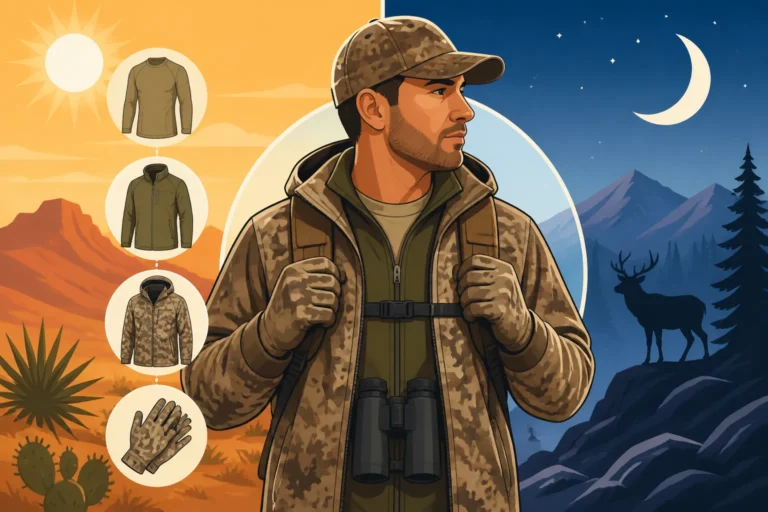
Practice donning and doffing your pack, accessing your calls, binoculars, and other essential items without looking. Conduct drills where you simulate getting lost and using your GPS or compass, or setting up a basic emergency shelter. Practice Layering for Gila Temperature Swings to ensure you can adapt to rapidly changing weather. Knowing your gear inside and out builds efficiency and confidence. For instance, when you're preparing for a hunt, you might spend time Sighting In After a Long Drive to Camp, which tests not only your rifle but also your setup process under travel conditions. This proactive approach extends to your footwear; Choosing Boots for Rocky Desert Ground correctly can prevent blisters and provide the necessary support for long days afield.
Staying Consistent and Adapting Your Practice
Building a solid practice routine isn't a one-and-done deal; it's an ongoing process of refinement and adaptation. Life happens, and it can be tough to stay motivated, but consistency is the bedrock of true proficiency.
Setting Realistic Goals and Tracking Progress
Without clear goals, practice can feel aimless. Before you start, define what you want to achieve. Do you want to shrink your bow groups by an inch at 40 yards? Do you want to consistently hit a steel plate at 300 yards from a kneeling position? Be specific, and make your goals measurable.
Once you have your goals, track your progress. Keep a shooting journal where you record distances, positions, weather conditions, and group sizes. For physical training, log your distances, times, and weights. Seeing tangible improvement is a huge motivator and helps you identify areas that need more attention. If you hit a wall, consult online forums or consider a brief coaching session to get a fresh perspective. Resources like GoHunt often provide forums or articles that can help you refine your goals and methods, especially when you are E-Scouting a New Mexico Unit Before the Season and need to tailor your practice to specific terrain.
Overcoming Practice Plateaus and Burnout
Even the most dedicated hunter can hit a plateau where progress seems to stall, or worse, feel completely burned out from the grind. This is a normal part of any intense training. The key is to recognize it and adapt, rather than giving up.
When you hit a plateau, try switching things up. Introduce new challenges, like timed shooting drills or competitive sessions with a friend. If you're feeling burned out, take a short break from intense practice, or shift your focus to a different aspect of hunting, like gear maintenance or studying maps. Sometimes, just a change of scenery or a lighter session can re-energize your motivation. Remember, practice should ultimately be enjoyable and build excitement for the hunt, not dread.
The Role of E-Scouting in Directing Your Practice
In today's digital age, e-scouting has become an invaluable tool for planning a hunt, and it should absolutely inform your practice routine. Before you even set foot in the unit, you can get an intimate understanding of the terrain, potential shot distances, and access points.
Use satellite imagery and topographic maps to identify specific features: steep canyons, open parks, dense timber, and water sources. If your e-scouting reveals a lot of broken, rocky terrain, your physical practice should emphasize ankle stability and quiet movement over uneven ground. If you anticipate long shots across open sagebrush, your rifle practice should include extended-range shooting and wind doping. Reading Terrain Before You Pick a Camp is a skill you can develop from your computer, and then bring to life in your practice. The more detailed your e-scouting, the more tailored and effective your physical and shooting practice can be, bridging the gap between digital planning and real-world execution.
Here's a quick overview of how to tailor your practice:
| Weapon Type | Primary Focus Areas for Practice | Key Considerations for New Mexico Hunts |
|---|---|---|
| Archery | Range estimation, angled shots, shooting lanes, broadhead tuning, quiet draw, physical conditioning | Varying terrain (up/downhill), dense cover (pinon-juniper), close-range opportunities, high altitude impact on stamina. |
| Rifle | Positional shooting (prone, kneeling, sitting), wind reading, ballistic compensation, quick target acquisition | Long-range potential, wind effects in open country, elevation changes impacting bullet drop, Reading a New Mexico Hunt Code Before You Apply for weapon restrictions. |
| Muzzleloader | Load development, ignition consistency, recoil management, effective range, cleaning in the field | Caliber requirements, limited shots, smoke obscuring view, physical strength for heavier weapon post-exertion. |
| Physical | Cardiovascular endurance, strength (legs, core, back), hiking with pack, stretching, flexibility | High altitude, rocky uneven ground, desert heat/cold, long distances, packing out game. |
| Field Skills | Silent movement, navigation (map/compass/GPS), gear access, animal sign identification, tracking | Following game trails, crossing washes quietly, reading thermals, emergency preparedness for remote areas. |
Disclaimer
Always consult the official New Mexico Department of Game and Fish regulations for the current hunting season before planning your hunt. Rules and requirements can change, and it is your responsibility to be fully informed and compliant.