Rules on Hunting From a Vehicle
It’s a common frustration for hunters in New Mexico to navigate the fine line between efficient travel and legal, ethical hunting practices when it comes to vehicles. You want to get to your hunting grounds, perhaps access a remote area, or retrieve a hard-earned animal, but the rules aren't always crystal clear, and the last thing anyone wants is a run-in with a game warden. This guide will meticulously break down the rules and expectations surrounding vehicle use for hunting, ensuring you stay on the right side of the law and maintain the integrity of the hunt.
The Strict Prohibitions Against Hunting From a Vehicle
When you head out into the vast, beautiful landscapes of New Mexico, it's easy to assume that if you're on public land, certain freedoms apply. However, state law is very specific about how you can and cannot use a motor vehicle during a hunt. These regulations are designed to uphold the principle of fair chase and ensure public safety.
The Core Rule: Shooting From a Road or Vehicle
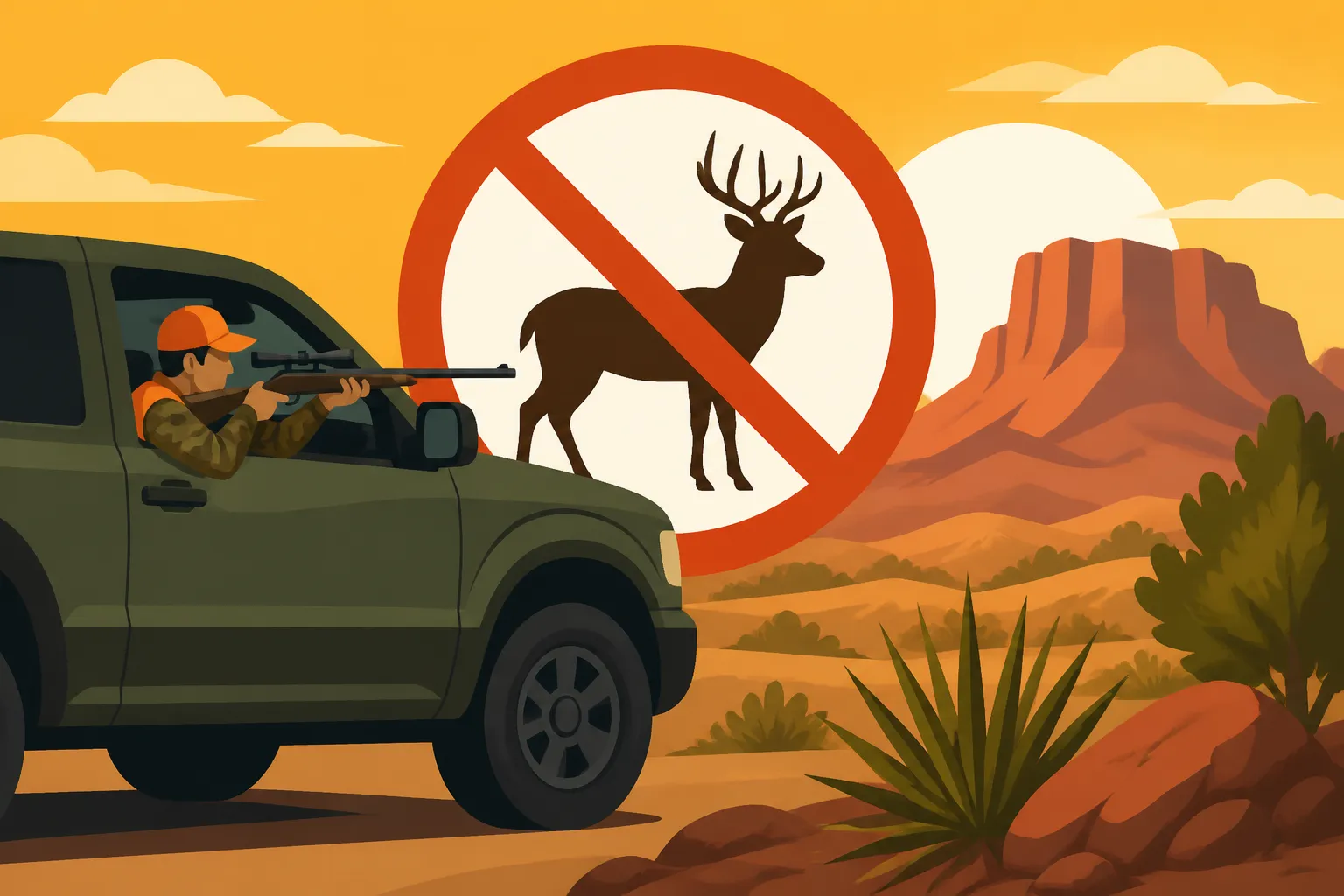
Let’s be absolutely clear from the get-go: in New Mexico, you cannot shoot at, or from, any motor vehicle. This prohibition isn't just about taking a running shot from the window of your truck as you drive by. It extends to shooting from a parked vehicle, or even leaning on your vehicle to steady a shot. The vehicle itself is considered part of the "hunting from a vehicle" prohibition. This fundamental rule is in place to prevent unethical advantages that motorized transport could provide, forcing hunters to engage with the terrain on foot, which is a cornerstone of responsible hunting.
This rule also applies to public roads and highways. You are expressly forbidden from shooting across a public road, or from a public road right-of-way. This is a critical safety measure, intended to protect other road users and prevent stray bullets from endangering the public. Even if you're on private land, if your shot crosses a public thoroughfare, you're in violation. It forces every hunter to have a deep awareness of their surroundings and the trajectory of their shot, which often means getting well off the beaten path and finding a safe backdrop.
And just to be sure, this isn't exclusively a firearm regulation. Archery hunters face the very same restrictions. You cannot shoot an arrow from a vehicle, nor can you use a vehicle to chase or harass game. The spirit of the law aims to separate the act of hunting—which should be an active, immersive experience—from the convenience of motorized travel. Your vehicle serves to transport you to the general area, but the actual hunt, the pursuit of game, generally begins on foot.
Using a Vehicle to Pursue or Harass Game
Beyond the act of shooting, New Mexico law also explicitly prohibits using a motor vehicle to "pursue, concentrate, rally, stir up, or drive" any protected game animal. This means you can't use your truck, ATV, or UTV to push mule deer out of a thick ponderosa thicket towards waiting hunting partners, or to cut off an elk's escape route in a canyon. These actions are universally considered highly unsportsmanlike and illegal, as they strip the animal of its natural advantage and defense mechanisms.
This regulation applies equally to off-road vehicles like ATVs and UTVs. While these machines can be invaluable for accessing remote country, they come with a significant responsibility to use them ethically and legally. For instance, spotting a herd of pronghorn from your UTV and then attempting to drive around them to get into a better position for a stalk on foot is a clear violation. The vehicle cannot be an active component in the pursuit, herding, or manipulation of game animals. The law is designed to ensure that technology doesn't provide an unfair advantage over the animal's natural instincts and movement patterns.
Consider the immense stress that such harassment places on wildlife. Constantly being pushed and harried by vehicles can disrupt their natural feeding patterns, breeding cycles, and crucial migratory movements, potentially impacting their overall health and population stability. The intent of the law is to encourage hunters to rely on their traditional woodsmanship, tracking skills, patience, and physical endurance, rather than horsepower, to locate and approach game.
Motorized Travel Restrictions on Public Lands
New Mexico is blessed with millions of acres of public land, managed by agencies like the Bureau of Land Management (BLM) and the U.S. Forest Service. These lands often have specific, rigorous rules regarding motorized travel that are absolutely crucial for hunters to understand. Many areas, particularly within National Forests and BLM land, operate under a "designated route" system. This means you are only permitted to drive on roads and trails that are specifically marked and open for vehicle use on official maps. Venturing off these routes is illegal, whether you're actively hunting or not. To dive deeper into these specifics, you can always consult Motorized Travel Rules on New Mexico Public Land.
This designation means that while your pickup or ATV can transport you to a trailhead or a pre-approved camping spot, you cannot simply drive cross-country, even for what seems like a short distance, to get closer to where you believe the elk are bedding. Even if a track looks like an old, rarely used two-track, if it's not explicitly marked on an official travel management plan map, it's off-limits. This is where modern tools become indispensable: detailed mapping applications, such as GoHunt, often display these designated routes, wilderness boundaries, and land ownership overlays, helping you stay legal and respectful of the landscape. It’s incredibly easy to inadvertently trespass or violate travel rules, so reliable, up-to-date mapping is a non-negotiable part of your planning.
The rationale behind these strict travel restrictions is comprehensive: they prevent significant soil erosion, protect sensitive wildlife habitats, minimize disturbance to animals, and preserve the wilderness experience for everyone else who uses these public lands. Ignoring these rules can result in substantial fines, vehicle impoundment, and irreversible damage to the environment. Before every hunt, it is imperative to check the specific travel management plan for the unit you intend to hunt. This vital information is readily available on the respective Forest Service or BLM district websites, or directly through robust hunting apps.
Permissible Vehicle Use and Important Exceptions
While the prohibitions are strict, there are specific scenarios and important exceptions where vehicles can legitimately be involved in a hunting trip. Understanding these nuances is key to staying within the bounds of the law.
Retrieving Downed Game: The "Reasonable Effort" Standard
This is perhaps one of the most common areas of confusion and misinterpretation. While the rule against hunting from a vehicle is absolute, New Mexico law does provide provisions for retrieving legally downed game. However, it's not a free pass to drive anywhere you please. The regulation states that a motor vehicle may be used for retrieving a legally killed game animal only after a reasonable effort has been made to retrieve the animal by other means. What constitutes "reasonable effort" is subjective but generally implies attempting to pack the animal out on foot, using a horse, or a game cart if the terrain and distance allow. Only when these non-motorized methods are truly impractical or impossible does vehicle retrieval become a consideration.
Even when vehicle retrieval is deemed necessary, you are still bound by the constraints of established roads and designated routes. You absolutely cannot drive cross-country through fragile habitat or create new trails just because you have a downed animal. This is precisely why your pre-scouting and comprehensive knowledge of the unit's road network become so critical. Often, a "reasonable effort" means quartering the animal and making multiple laborious trips on foot to a point that is legitimately accessible by vehicle. The overarching goal of the law is to prevent unnecessary off-road travel and mitigate environmental damage. For a more in-depth exploration of these specific situations, the article Can You Drive Off Road to Retrieve Game? offers valuable insights.
In situations where driving off a designated route for retrieval appears to be the only option, it is always advisable to contact the local New Mexico Department of Game and Fish (NMDGF) or the relevant Forest Service office before proceeding, if at all possible. They can offer specific guidance or, in exceptionally rare circumstances, potentially grant special permission. Documenting your efforts, the animal's precise location, and the challenging terrain can also serve as helpful evidence if you are ever questioned by a game warden. The core principle is demonstrating that you exhausted all other ethical and legal options first.
Mobility-Impaired Hunter Permits
New Mexico is commendable in its recognition that not all hunters possess the same physical capabilities, and it has established thoughtful provisions to ensure accessibility. Specifically, mobility-impaired individuals can apply for a special permit to assist with their hunts. To qualify, a hunter must formally apply for and successfully receive a Mobility-Impaired Hunter Permit from the NMDGF. This crucial permit allows the authorized hunter, and an accompanying helper if required, to shoot from a stationary vehicle on designated routes where such an action would otherwise be strictly prohibited. This program is a vital step towards ensuring that hunting remains accessible to a broader community.
These permits are not issued lightly; they demand documented proof of a permanent physical disability that significantly impairs mobility, making traditional foot-based hunting exceedingly difficult or impossible. The explicit intent of this program is to provide genuine accommodation, not to create a convenient loophole for able-bodied hunters. Even when operating under the authority of such a permit, the hunter must still rigorously adhere to all other state hunting regulations, including New Mexico Legal Shooting Hours for Big Game, blaze orange requirements, and strict unit boundaries. It is a privilege thoughtfully designed to enable participation, not to confer an unfair hunting advantage.
If you or someone you know might meet the qualifications for a Mobility-Impaired Hunter Permit, it is highly recommended to initiate contact with the NMDGF well in advance of the hunting season. The application and approval process can take time, and it's essential to have all necessary documentation in order before you head afield. This carefully considered program stands as an excellent example of how regulations can be adapted to foster inclusivity within the hunting community while steadfastly upholding the core tenets of ethical and responsible hunting.
Private Land Hunting and Owner Permission
Hunting on private land introduces a different set of considerations regarding vehicle use, though it is never an unregulated free-for-all. On private land, with the explicit and verifiable permission of the landowner, you generally have significantly more leeway in using vehicles compared to public lands. A landowner can grant you permission to drive off-road on their property and, in many cases, even allow hunting from a stationary vehicle, provided these actions align with broader state laws and any local ordinances. However, it's absolutely crucial to remember that the overarching state prohibition against shooting from any motor vehicle and, critically, across a public road, remains in effect regardless of private land ownership.
The most vital element when hunting private land is Getting Written Permission in New Mexico. Always ensure you have clear, comprehensive written permission from the landowner that meticulously outlines the scope of your activities, including any specific allowances for vehicle use. Relying solely on verbal permission can easily lead to severe misunderstandings, potential disputes, and complications, particularly if a game warden becomes involved. While this permission does not override statewide hunting laws, it can allow for practices, like driving off established roads on private property, that would be strictly illegal on public land.
Even with the privileges afforded by private land access, responsible vehicle use remains paramount. Reckless or excessive off-road driving can cause considerable damage to the property, creating deep ruts, eroding soil, and disturbing other wildlife or agricultural operations. A truly ethical hunter respects all land, whether it is publicly or privately owned, and consistently acts as a diligent steward. Always engage in a detailed discussion about vehicle use expectations with the landowner well in advance of your hunt to ensure both parties are in complete agreement and understanding. The article Retrieving Game From Private Land in New Mexico further elaborates on these specific rules.
Here's a quick reference table summarizing key points on vehicle use rules in New Mexico:
| Aspect | General Rule (Public & Private Land) | Public Land Exception(s) (Designated Routes) | Private Land (with Owner Permission) | Typical Penalties for Violations |
|---|---|---|---|---|
| Shooting From Vehicle | Prohibited (stationary or moving, including across roads). | Mobility-Impaired Permit holders may shoot from a stationary vehicle on designated routes. | May be allowed from a stationary vehicle by landowner, but check state law for specific prohibitions (e.g., shooting across roads). | Fines, license suspension/revocation, potential jail. |
| Pursuing/Harassing Game | Prohibited (using vehicle to drive, rally, stir up game). | N/A | N/A | Fines, license suspension/revocation, potential jail. |
| Off-Road Travel | Prohibited off designated routes on public lands. | Permitted only for retrieving legally downed game after reasonable effort, and still limited to designated routes where possible. | Permitted with explicit landowner permission. | Fines, land damage charges, license suspension/revocation. |
| Retrieving Downed Game | Encourage non-motorized methods (packing, cart, horse) first. | Allowed on designated routes after reasonable effort. May require special permission for off-route. | Generally more flexible with landowner permission, but adhere to state laws. | If done improperly, similar to off-road travel. |
| Scouting | Vehicles allowed on designated routes for scouting. | Adhere strictly to travel management plans. Use mapping tools to verify routes. | Permitted with explicit landowner permission for off-road access. | Same as off-road travel. |
The Ethical Compass: Beyond the Letter of the Law
Beyond simply following the letter of the law, ethical hunting demands a deeper consideration for the spirit of the hunt, our environmental impact, and how our actions are perceived by others. These "unwritten rules" are just as vital to the long-term health of hunting as the official regulations.
Fair Chase and the Spirit of the Hunt
While legal compliance establishes the absolute minimum standard, true ethical hunting transcends mere legality and wholeheartedly embraces the principle of fair chase. At its very core, fair chase dictates that the hunted animal must always be afforded a reasonable and genuine opportunity to evade the hunter. Consequently, an excessive reliance on vehicles to unfairly shortcut the strenuous effort, rapidly cover vast distances, or strategically push animals around, directly contradicts this fundamental ethos. The vast majority of hunters deeply believe that the inherent challenge, hard work, and physical exertion involved in a hunt are precisely what imbues the ultimate reward with profound meaning and value. Using a vehicle as anything more than basic transportation to a general area often significantly diminishes this fundamental and cherished aspect of the hunting experience.
Consider for a moment the profound self-satisfaction and deep sense of accomplishment that stems from a truly hard-earned hunt. The arduous task of packing an elk out of the remote Gila Wilderness after a painstaking, multi-day stalk, or hiking countless miles through rugged, broken country in pursuit of a challenging mule deer, undeniably builds character, resilience, and fosters an almost spiritual connection to the untamed landscape. Contrast this powerful experience with the alternative: merely driving up to an animal and taking a shot. While such actions might be legal under very specific exceptions, such as with a mobility-impaired permit, they fundamentally fail to align with the deeply ingrained spirit of fair chase for most able-bodied hunters. This isn't meant as a judgment of others, but rather an invitation to reflect on the core values that truly define and enrich the hunting tradition.
Many esteemed conservation and hunting organizations, such as the Boone and Crockett Club, have rigorously defined fair chase rules that explicitly forbid the use of motorized vehicles to locate, spot, or actively pursue game animals. While these rules do not carry the force of state law, they represent widely held and deeply respected ethical standards within the broader hunting community. Consciously adhering to these unwritten yet powerful rules not only fosters a profound respect for wildlife but also cultivates mutual respect among fellow hunters, strengthening the community as a whole.
Minimizing Environmental Impact and Respect for Public Lands
Our expansive public lands represent an irreplaceable shared treasure, and the manner in which we utilize these lands directly reflects upon the entire hunting community. Recklessly driving off designated routes, creating unauthorized new trails, or heedlessly disturbing fragile ecosystems leaves indelible scars on the landscape that can persist for many decades, if not longer. These adverse impacts encompass severe soil erosion, irreversible damage to delicate vegetation, disruptive fragmentation of critical wildlife corridors, and the unwelcome spread of invasive species. Therefore, responsible and thoughtful vehicle use is an absolutely critical component of effective land stewardship.
It is imperative to consider the long-term, far-reaching consequences of our actions. If hunters consistently disregard established travel management plans and vehicular access regulations, it will inevitably lead to the implementation of even stricter rules, more extensive road closures, or even outright bans on motorized vehicles in certain sensitive areas, thereby significantly limiting access for every hunter. Employing highly detailed and current mapping tools, such as those provided by GoHunt, which meticulously delineate designated routes and clearly mark wilderness boundaries, is an absolutely essential practice for responsible planning. This proactive approach ensures that we minimize our ecological footprint and preserve the pristine nature of these invaluable lands for future generations.
Beyond the quantifiable physical damage, there is also a profound aesthetic impact to consider. No one embarking on a demanding hike into a remote, pristine basin desires to discover fresh, unsightly tire tracks scarring the otherwise untouched landscape. Conscientiously maintaining the wild and rugged character of these areas benefits not only the diverse wildlife populations that call them home but also a multitude of other outdoor enthusiasts—including hikers, campers, and fellow hunters—who deeply value solitude, unspoiled nature, and the raw beauty of the wilderness.
The Perception of Other Hunters and the Public
Our actions as individual hunters are under constant and intense scrutiny, not merely from vigilant game wardens, but equally from the non-hunting public and, indeed, from our fellow hunters. A single perceived unethical act, or even a misunderstanding of a hunter's actions, can swiftly cast a long, negative shadow over the entire hunting community. For instance, a casual observer witnessing a truck driving seemingly recklessly off-road or appearing to chase an animal—even if the hunter is unknowingly within the legal bounds—can quickly form a deeply negative opinion about hunting as a whole. This kind of incident invariably damages the public image of hunters as dedicated conservationists and responsible stewards of the land.
It is entirely understandable to experience frustration when observing others who appear to be bending or outright breaking the rules. However, in such moments, maintaining a focus on personal responsibility and actively striving to set a positive example becomes paramount. Consistently engaging in best practices, even in situations where no one else is watching, serves to powerfully reinforce the integrity and high standards of the sport. We, as hunters, are inherently ambassadors for hunting, and our conduct, especially concerning the use of vehicles, speaks volumes to a broader audience.
Discussions surrounding The New Mexico Hunter Education Requirement frequently incorporate vital segments on ethical behavior, public perception, and responsible conduct in the field. These crucial aspects are imparted not solely for the purpose of legal compliance, but more importantly, for the long-term health, social acceptance, and continued viability of hunting. Every single hunter plays an indispensable role in actively shaping how the timeless activity of hunting is perceived and understood by society at large.
Consequences of Non-Compliance and Enforcement
Disregarding New Mexico's hunting regulations concerning vehicle use is not merely a minor oversight; it carries a range of serious legal and financial penalties that can have significant, long-lasting repercussions.
Fines, License Suspension, and Potential Jail Time
Violating New Mexico's hunting regulations regarding vehicle use carries substantial penalties. Depending on the specific nature and severity of the offense, and whether it's a first-time or repeat infraction, you could be facing hefty fines. These fines can range from several hundred dollars for minor infractions to several thousand for more serious offenses, particularly those involving harassment of game or significant damage to public lands. The article Penalties for Breaking New Mexico Travel Rules can give you a clearer picture of these ramifications.
Beyond the immediate financial burden, a conviction for such violations can lead to the suspension or outright revocation of your hunting license. This isn't just limited to New Mexico; through interstate compacts like the Wildlife Violator Compact, you could lose the privilege to hunt in many other states across the country for a significant period. In the most egregious cases, such as repeated violations or extreme acts of wildlife harassment, you could even face misdemeanor criminal charges, which carry the very real possibility of jail time. It’s a sobering reminder that these are not merely trivial infractions, but serious offenses with profound consequences.
The impact of a conviction can extend far beyond the immediate legal and financial repercussions. Such a mark on your record could potentially affect your ability to possess firearms in certain circumstances or impact various professional licenses. Given the severe nature of these penalties, it's unequivocally not worth the risk to cut corners, ignore designated routes, or otherwise disregard the clear rules on vehicle use. Strict adherence to both the letter and the spirit of the law is absolutely paramount for every hunter.
The Vigilance of Game Wardens
New Mexico Game and Fish law enforcement officers, commonly known as game wardens, are constantly in the field, diligently enforcing these crucial regulations. These dedicated professionals are highly trained, possessing extensive knowledge of the state's hunting laws, diverse terrain, and complex wildlife behavior. They employ a variety of tools, ranging from high-powered binoculars and spotting scopes to sophisticated aerial surveillance and advanced mapping software, to monitor hunting activities across vast and often remote areas. Never assume that because an area feels isolated, your actions will go unnoticed.
Game wardens often conduct patrols in unmarked vehicles and are exceptionally skilled at observing hunters from a discreet distance. They rigorously investigate reports from other ethical hunters and concerned landowners and are particularly vigilant during peak hunting seasons. Should you be contacted by a game warden while afield, it is always imperative to remain courteous, cooperative, and truthful. Remember, their primary role is to protect New Mexico's precious wildlife resources and to ensure that all hunting activities are conducted fairly, safely, and legally for everyone involved.
If you ever find yourself uncertain about a specific rule or a particular situation concerning vehicle use, it is always far better to err on the side of extreme caution or proactively contact the NMDGF directly for official clarification before you proceed with any action. Game wardens universally prefer and appreciate proactive questions from responsible hunters over the unfortunate necessity of reactive enforcement after a violation has already occurred. Furthermore, having a solid grasp of How New Mexico Numbers Its Hunting Units and Reading a Land Ownership Layer Correctly can significantly help you avoid inadvertent issues.
Reporting Violations: A Community Responsibility
The vast majority of ethical hunters in New Mexico share a common, unwavering goal: to protect our invaluable wildlife resources and to steadfastly preserve the integrity and positive image of hunting for future generations. This shared commitment often entails a willingness to responsibly report violations when they are witnessed. New Mexico operates a highly effective "Turn In Poachers" (TIP) program, which provides a confidential mechanism for concerned citizens to anonymously report poaching or any other wildlife-related crimes. This program is an absolutely crucial tool in our collective efforts to protect and conserve our natural resources.
If you unfortunately observe someone violating vehicle use rules, such as driving recklessly off-road in a clearly designated wilderness area, or brazenly shooting from a vehicle, it is important to gather as much pertinent information as possible without ever putting yourself at risk. This critical information should ideally include vehicle descriptions (make, model, color, license plate number), the precise location, the time of the incident, and a detailed description of the observed activity. Once you have this information, promptly report it to the NMDGF or through the anonymous TIP program.
While it can understandably feel uncomfortable to report another individual, especially a fellow hunter, doing so is an absolutely vital component of the essential self-policing within the hunting community. The unethical and illegal actions of a negligent few can severely damage the reputation and significantly jeopardize the future hunting opportunities for all. By holding each other accountable and upholding high standards of conduct, we collectively ensure that New Mexico's rich hunting heritage remains strong, respected, and that its magnificent wildlife populations continue to thrive for generations to come.
Disclaimer
Please remember that hunting regulations can change. While this guide aims to be comprehensive and up-to-date, it is your responsibility to consult the most current New Mexico Department of Game and Fish regulations booklet or website before heading afield. This content is for informational purposes only and not a substitute for official legal advice.