Shooting Sticks or Bipod on Rocky Ground
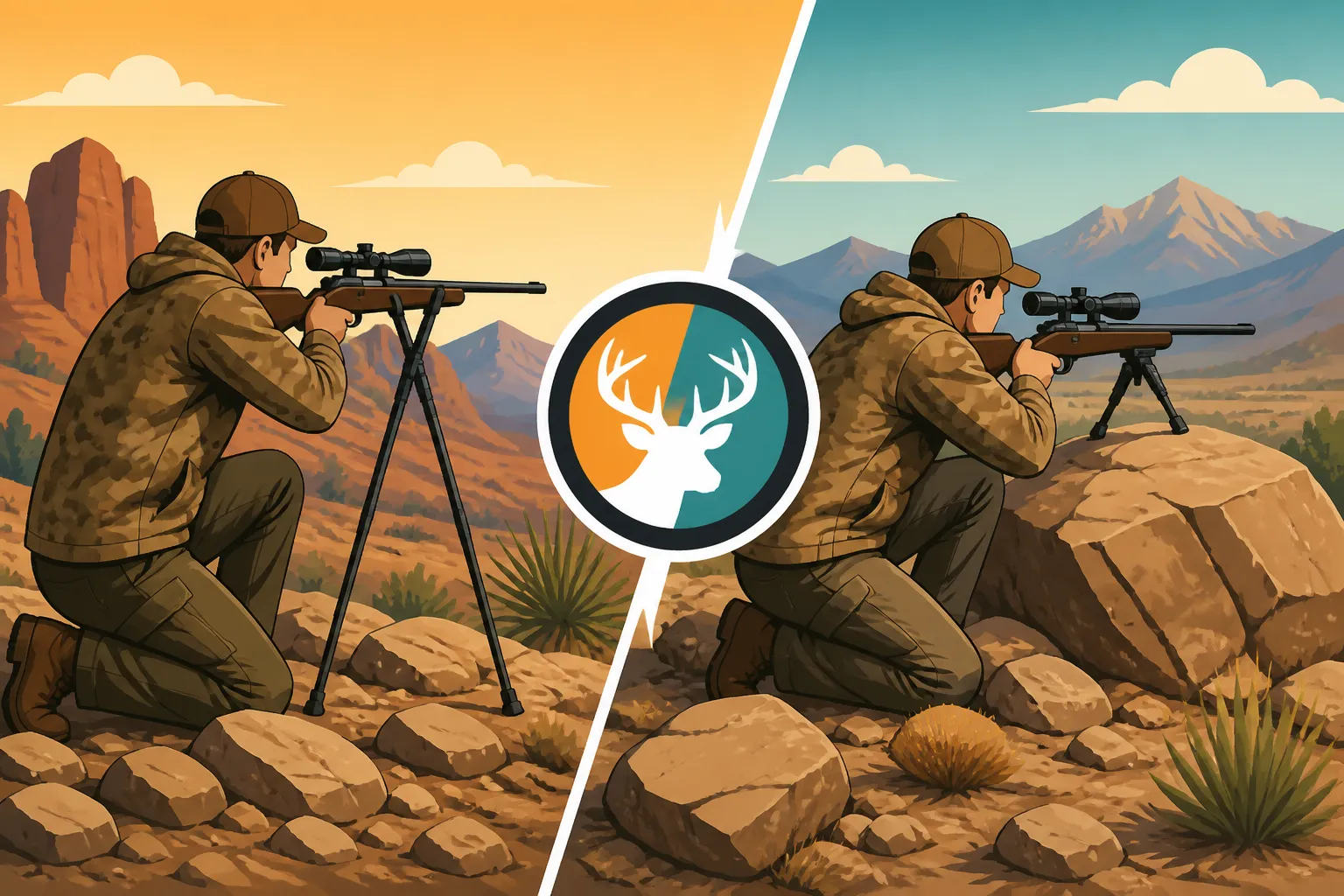
Trying to get a steady shot on big game in New Mexico’s rugged, rocky terrain can feel like you’re trying to balance a stack of dominoes on a constantly shifting surface. The ground here is rarely flat, often covered in loose scree, boulders, or steep, unforgiving inclines. This guide is all about helping you navigate those challenges, comparing the real-world advantages and disadvantages of shooting sticks and bipods so you can make an informed decision and stabilize your shot when it truly counts.
The Unique Challenges of Rocky New Mexico Terrain
New Mexico hunting isn't about perfectly manicured shooting ranges; it's about raw, wild country that throws every kind of obstacle at you. The terrain itself becomes one of the biggest factors in how you can reliably make a shot. If you can't get steady, you can't be ethical. It's as simple as that.
Uneven Footing and Limited Prone Opportunities
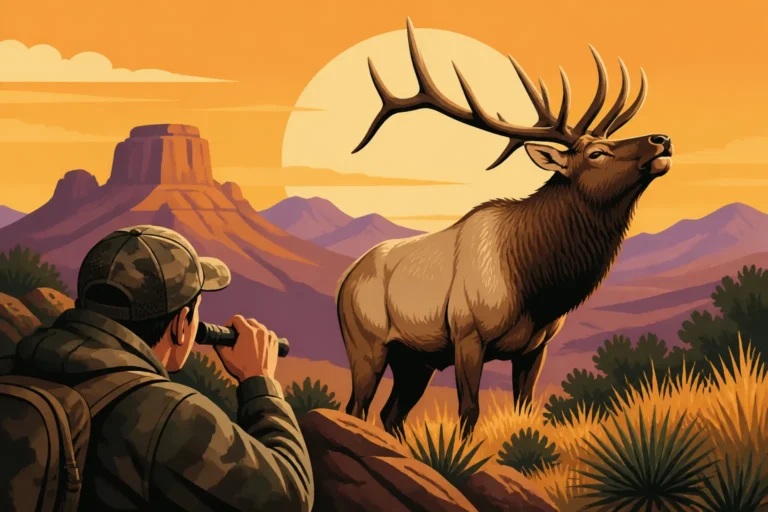
Picture yourself topping out on a ridge in the Gila National Forest, glassing for elk across a canyon. Suddenly, a bull steps out. You need to get set up, fast. But where do you go? The ground underfoot is a chaotic mix of broken rock, sharp boulders, and maybe a few scattered juniper bushes. Trying to drop into a traditional prone position often means your rifle is pointing uphill, or your head is higher than your feet, or you’re trying to balance on three points of contact on an impossibly sharp rock. It’s frustrating, and it compromises your ability to make a clean shot.
Even in more open country, like the rolling hills of a plains unit chasing antelope, what looks flat from a distance can quickly reveal itself to be riddled with washes, badger holes, and low-lying scrub that prevents a clear line of sight from the ground. The idea of a textbook prone shot often goes right out the window in these situations. You might find yourself needing to shoot over a slight rise, through a small gap in the rocks, or from a sitting or kneeling position that’s anything but stable. This is where adaptable stabilization really shines, turning an otherwise impossible shot into a manageable one.
Maintaining Stability on Loose Rock and Steep Slopes
One of the most hair-raising experiences for any hunter is feeling your rifle shift or wobble just as you’re about to squeeze the trigger. On New Mexico’s rocky ground, this isn't just a hypothetical scenario; it's a constant threat. Loose scree can give way under a bipod leg, a smooth boulder can cause a shooting stick to slide, or a steep angle can make it nearly impossible to keep your rifle level without significant effort. This instability can be exacerbated by the weight of your rifle, especially if you’re running heavy optics or a magnum caliber.
The consequence of this instability isn't just a missed shot; it can be an unethical hit or, worse, a wounded animal. The goal is always a clean, humane kill, and that starts with a rock-solid shooting platform. Whether you're trying to Hold for Wind Across a Deep Canyon or just maintain a steady reticle, the ground itself is often working against you. This is why understanding the nuances of different stabilization tools and how they perform on such unforgiving terrain is absolutely critical for success and ethical hunting in the Southwest.
Breaking Down Shooting Sticks for New Mexico's Rocks
Shooting sticks come in various configurations, each offering different trade-offs in terms of stability, portability, and deployment speed. For New Mexico's diverse and often challenging terrain, understanding these differences is key to picking the right tool for the job.
Single-Point Sticks: Pros, Cons, and Best Use Cases
Single-point shooting sticks, often just a monopod, are the minimalist's choice. They’re incredibly lightweight and can be deployed with astonishing speed. Just extend and brace your rifle. This quick setup is a huge advantage when you’re stalking through timber or brush, and a deer suddenly appears at close range, requiring an immediate standing shot. They help steady a significant amount of the rifle's weight, making off-hand shots far more accurate than freehand.
However, their primary strength is also their biggest weakness: they only offer a single point of contact with the ground, and one point of contact with your rifle. This means a lot of stability still falls on your shoulders, literally. You're responsible for controlling the horizontal and vertical movement, and any sway will be greatly amplified. On uneven, rocky ground, getting that single point to sit securely without slipping can be a challenge. They’re not ideal for long-range precision or when you need to really settle in for an extended period. For chasing fast-moving coyotes across open flats or quickly getting on a follow-up shot, they can be surprisingly effective, but don’t expect benchrest accuracy.
Bi-Pod and Tri-Pod Sticks: Enhanced Stability for Varied Positions
When you need more stability than a monopod can offer, multi-legged shooting sticks, whether they're two-legged (bi-pod sticks) or three-legged (tri-pod sticks), step up to the plate. These are significantly more stable, especially the tripods, because they offer multiple points of contact with the ground and often a much more secure rest for your rifle. Many models feature adjustable legs that can be splayed or individually lengthened/shortened, which is a godsend on uneven ground. You can often adjust them to shoot from a standing, kneeling, or sitting position, making them incredibly versatile for varied terrain and shot angles. Brands like BOG-POD or Vortex often integrate features like rotating heads and adjustable height, making them very adaptable.
The trade-off? They are heavier and generally take a little longer to deploy than a single stick. While still more portable than a heavy, fixed bipod on your rifle, they can feel a bit cumbersome to set up quickly in thick brush or when you’re trying to move silently. However, if you're Glassing Benches and Parks for Elk or setting up on a hillside to observe an area for a while, the enhanced stability they provide for longer shots or more precise aiming is invaluable. They truly shine when you have a bit more time to get settled and need to eliminate as much wobble as possible from your shooting platform.
Material and Design Considerations for Durability and Weight
When you’re hauling gear deep into New Mexico’s backcountry, every ounce counts, but durability is equally important. This is where material choice for your shooting sticks becomes a real consideration. Carbon fiber models are exceptionally lightweight, reducing fatigue over long miles, but they can be more expensive and sometimes perceived as less robust against heavy impacts than aluminum. Aluminum sticks, while a bit heavier, are typically more affordable and incredibly tough, shrugging off bumps and scrapes against rocks and trees without issue.
Beyond material, look at the feet and adjustment mechanisms. Rubber feet offer good grip on many surfaces but can slip on wet, smooth rock. Spiked feet, sometimes with removable rubber caps, provide excellent traction on loose dirt and soft ground, but can be noisy on rock. Quick-adjust mechanisms, like lever locks or twist locks, are crucial for fast deployment and silent operation. Nothing gives away your position faster than a creaking, fumbling set of sticks. Also consider the head design – a wide, V-shaped rest is great for quickly dropping a rifle in, while some models offer clamps for a more secure, hands-free hold. Thinking about these details upfront can save you a lot of grief and frustration in the field.
Understanding Bipods for Ground-Level Stability
Rifle-mounted bipods have become almost standard equipment for many hunters, and for good reason. They offer a level of immediate, integrated stability that can be hard to beat, especially when shooting from low positions.
Rifle-Mounted Bipods: Advantages and Limitations on Rock
A rifle-mounted bipod, like the classic Harris Bipod or a more modern Atlas Bipod, offers instant stability as soon as you settle into a prone or sitting position. It's always attached to your rifle, so there’s no fumbling with separate gear. This built-in convenience is a huge advantage when time is of the essence. When you can get low, on relatively flat ground, they provide an incredibly stable platform, allowing for precise shot placement. They excel when you've managed to How Far to Stalk a Bedded Mule Deer and can settle in for a precise shot.
However, the "on relatively flat ground" part is the catch, especially in New Mexico. On truly rocky, uneven terrain, a fixed-height bipod can quickly become a liability. If you can’t get low enough to clear obstacles from a prone position, or if one leg ends up on a rock and the other in a depression, leveling your rifle becomes a frustrating exercise in propping and adjusting. The limited height range also means they are rarely suitable for standing shots, and often even kneeling shots are a stretch. The added weight on the front of your rifle is another factor, though many hunters find the stability worth the extra ounces.
Adaptability and Best Practices for Rocky Terrain
Despite their limitations on uneven ground, rifle-mounted bipods can still be incredibly useful in New Mexico if you know how to adapt. The key is recognizing when they shine and when you need to augment them. If you’re shooting from a ridge line or a relatively flat bench, a bipod can be your best friend. Many modern bipods feature cant and pan capabilities, allowing you to level your rifle on uneven ground (cant) and smoothly track a moving animal (pan). This feature is essential when you're set up on a hillside overlooking a canyon.
When the ground is truly brutal, you can get creative. Small rocks, your backpack, or even a folded jacket can be placed under a shorter bipod leg to help level your rifle. Sometimes, just positioning yourself so both bipod legs are on a single, wider boulder can provide the stability you need. The trick is to understand that a bipod isn't a magic bullet; it's a tool that works best within certain parameters. Practicing with your bipod in varied, realistic terrain before the season begins, perhaps after you've completed your annual Sighting In After a Long Drive to Camp, will reveal its strengths and weaknesses and teach you how to make the most of it when the time comes.
Making the Right Choice: Sticks, Bipod, or Both?
Ultimately, the best stabilization system for hunting in New Mexico isn't a one-size-fits-all answer. It comes down to your personal hunting style, the specific units you plan to hunt, and what you prioritize in the field.
Matching Your Gear to Your Hunting Style and Unit
Consider how you typically hunt. Are you a minimalist who covers a lot of ground quickly, constantly on the move, Spot and Stalk Tactics for Barbary Sheep style? Then a lightweight set of shooting sticks, perhaps even a monopod or compact bi-pod sticks, might be your ideal companion. They offer quick deployment for those unexpected encounters and are less cumbersome to carry for miles. You'll prioritize portability and speed over absolute benchrest stability.
On the other hand, if your strategy involves extended periods of glassing from a strategic vantage point, waiting for an animal to appear, or if you anticipate longer shots from a relatively static position, a more robust set of bi-pod or tri-pod sticks, or even a rifle-mounted bipod paired with careful positioning, might be better. For hunters who prioritize stability above all else, especially in open country, the added weight and slightly slower deployment of a sturdier system are often worth it. Different units in New Mexico present different challenges; the dense timber of the Gila might favor compact sticks, while the open plains for pronghorn often mean longer shots from a prone or kneeling position, where a bipod or sturdy tripod shines. Utilize tools like GoHunt's mapping features to truly understand the terrain of your chosen unit, helping you anticipate your needs.
The Hybrid Approach: Combining the Best of Both Worlds
For many seasoned New Mexico hunters, the "either/or" question isn't enough. They embrace a hybrid approach, taking advantage of the strengths of multiple systems. A common setup is to have a lightweight bipod mounted on the rifle for quick prone or sitting shots when the ground permits, and then also carry a set of compact, adjustable shooting sticks for standing shots or when the terrain simply won't allow a low position. This gives you maximum flexibility to adapt to any situation the mountains or deserts throw at you.
Another popular option, especially for elk hunters, is to use a sturdy photographic tripod that doubles as a shooting rest. Many companies now make adapters that allow you to attach your rifle to a high-quality tripod, offering incredible stability for glassing and then seamlessly transitioning to shooting. This eliminates carrying redundant gear and can be particularly effective when you need to hold your rifle steady for an extended period, perhaps while bugling a bull closer. While it’s an investment, the versatility can be unmatched. This kind of setup can also be invaluable when dealing with the high elevations and steep grades, helping with Altitude Preparation for a Gila Elk Hunt.
Practical Advice for On-the-Fly Adjustments
No matter which system you choose, practice is paramount. Get comfortable deploying your chosen stabilization method quickly and quietly, under simulated hunting pressure. Don't just practice on flat ground; find a local rocky hillside or a wooded area with uneven terrain and work through different shooting positions – standing, kneeling, sitting, and prone. Understanding how your gear performs when you're slightly off-balance or rushed will build confidence and muscle memory.
In the heat of the moment, sometimes your dedicated gear isn't perfectly positioned. That's when field improvisation skills kick in. Your backpack can be an excellent impromptu rest, offering surprising stability. A sturdy branch, a rock outcropping, or even your knee can provide enough support to make a difficult shot more manageable. Always be looking for natural rests as you move through the landscape. The goal is a steady shot, and sometimes the best solution is simply what's available at that exact moment. Remember, the more you practice, the more intuitive these adjustments become, allowing you to focus on the target when it matters most.
| Feature | Single-Point Shooting Stick | Bi/Tri-Pod Shooting Sticks | Rifle-Mounted Bipod |
|---|---|---|---|
| Stability | Moderate (requires shooter input) | High (especially tri-pod) | High (on level ground) |
| Portability | Very High (lightest, most compact) | Moderate (heavier than single) | Moderate (always on rifle) |
| Deployment Speed | Very Fast | Fast to Moderate | Very Fast (integral to rifle) |
| Versatility | Good for quick standing/kneeling shots | Excellent (standing, kneeling, sitting) | Limited (best for prone/sitting) |
| Best Use on Rocky Ground | Quick, close shots over obstacles, when moving | Varied positions, uneven terrain, longer ranges | Prone/sitting from stable ledges or flat spots |
| Key Advantage | Speed & light weight | Adaptability & enhanced stability | Instant deployment & consistent form |
Disclaimer
The information provided in this guide is for general educational and informational purposes only. Hunting regulations and best practices can change, and it is the responsibility of each individual hunter to consult the most current New Mexico Department of Game and Fish regulations, secure appropriate licenses and permits, and adhere to all applicable laws. Always prioritize safety, ethical hunting, and respect for wildlife and the environment.