Reading Terrain Before You Pick a Camp
One of the biggest pitfalls I see hunters fall into, especially when they're excited to hit the high country or the vast New Mexico desert, is underestimating the crucial role their camp location plays. It’s easy to think "any flat spot will do," but a poorly chosen camp can drain your energy, expose you to unnecessary risks, and even sabotage your hunting efforts before you even step foot outside the tent. This guide is all about helping you read the land, both from your living room and on the ground, so you can pick a camp spot that genuinely supports your hunt, keeps you safe, and lets you recharge effectively.
The Hidden Impact of Your Camp's Location on Your Hunt
Your camp is more than just a place to sleep; it's your base of operations, your refuge, and often, your first strategic decision in any hunt. Where you pitch your tent or park your rig directly influences everything from your daily efficiency to your overall safety and comfort. Getting it wrong can lead to constant frustration and an uphill battle against the elements or simply poor hunting logistics.
Energy Drain and Lost Time
Imagine hiking out of camp every morning, only to realize you've chosen a spot that forces you to climb a steep, brushy ridge just to get to decent hunting ground. Or worse, you've set up in a low-lying area that traps cold air or collects morning dew, leaving your gear perpetually damp and your spirits low. These small, daily inconveniences add up, leading to significant energy drain long before you even start looking for game. Every extra step, every wasted minute trying to dry out socks, is time and energy you could be spending glassing, stalking, or simply enjoying the quiet of the wilderness.
Furthermore, a camp that's too far from your target hunting area means longer commutes, both morning and evening. This cuts into your prime hunting hours, especially at dawn and dusk when game activity is highest. Conversely, a camp that’s too close might put unnecessary pressure on the very animals you're trying to hunt, pushing them out of the area before you even set up your spotting scope. It's a delicate balance, and understanding the terrain helps you strike it.
Exposure to Elements and Unseen Hazards
New Mexico's landscapes are incredibly diverse, from the high, often unpredictable weather of the Gila to the scorching, arid plains and deserts further south. A camp nestled in a canyon bottom might seem sheltered from the wind, but it could become a flash flood risk during monsoon season. Setting up on an exposed ridge might offer incredible views, but it also leaves you vulnerable to strong winds, sudden thunderstorms, or even lightning strikes. I've personally seen tents shredded by unexpected gusts because they weren't tucked into a more protected spot.
Beyond immediate weather, consider the subtle hazards. Is your water source potentially contaminated by upstream livestock? Are you in a travel corridor for local predators, leading to sleepless nights or even dangerous encounters? Even seemingly minor annoyances, like persistent insects due to stagnant water nearby, can significantly detract from your experience. Properly reading the terrain allows you to anticipate these challenges and select a site that minimizes risk and maximizes your comfort. Thinking through these challenges ahead of time can make or break a trip. For tips on staying comfortable, check out Layering for Gila Temperature Swings or Heat Management on an Early Season Hunt.
Decoding New Mexico's Diverse Landscapes from Afar
Before you even load your truck, modern technology offers an incredible advantage in scouting potential camp spots. Leveraging satellite imagery and digital mapping tools allows you to gain a comprehensive understanding of the terrain, helping you narrow down optimal locations long before you ever hit the trail. This is your first line of defense against a miserable camp.
Leveraging Satellite Imagery and Topo Maps
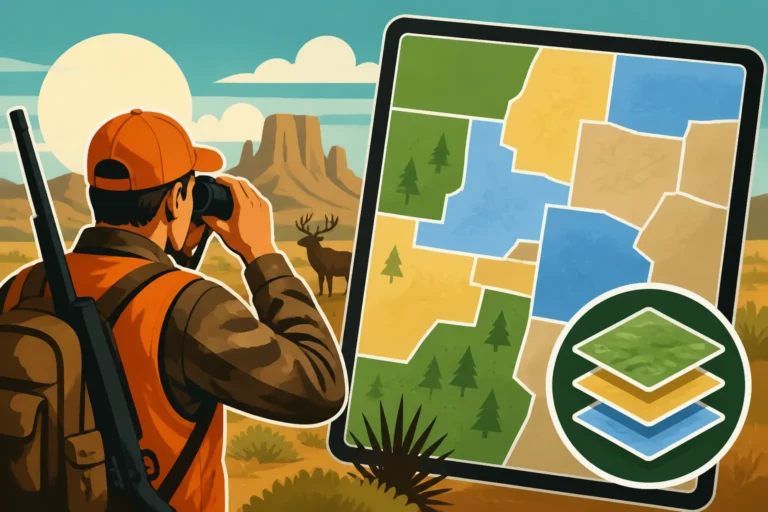
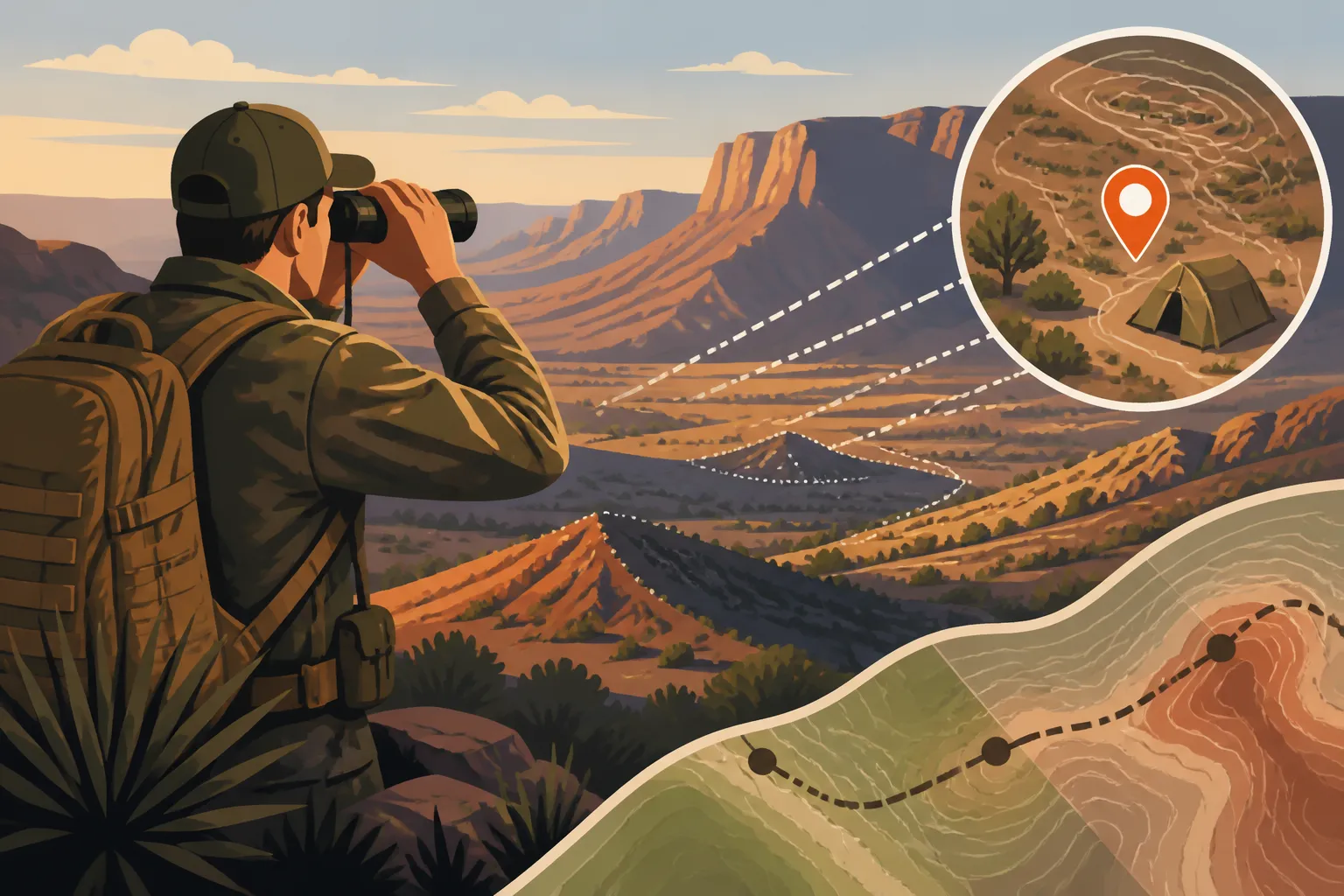
Start with high-resolution satellite imagery, available on platforms like onX Hunt or GoHunt. These tools allow you to zoom in and examine the intricate details of a unit's topography. Look for variations in vegetation: dense timber might offer cover, while sparse piñon-juniper can be indicative of drier, more open country. Identify open parks or benches within timbered areas that could provide natural clearings for tents, often with good drainage. River bottoms and drainages are obvious features, but also look for smaller, less conspicuous washes that could indicate seasonal water flow or game trails.
Topographic maps are your best friend for understanding elevation changes, slope, and potential thermal advantages. Contour lines tell a story: tightly packed lines mean steep ground, while widely spaced lines indicate flatter areas. Look for saddles, ridges, and benches where you might find a flat, protected spot. Understanding the elevation bands is crucial, especially in mountainous regions. A camp at 9,000 feet might be perfect for an early archery elk hunt, but it could be snowed in during a late rifle season. Reference Judging Elevation Bands Before a Backcountry Hunt for more insight. These maps also show you critical access roads and trails, helping you determine how easily you can get to a potential spot.
Identifying Key Features with Digital Tools
Beyond basic topography, digital mapping tools offer layers that reveal a wealth of information critical for camp selection. The land ownership layer, for example, is non-negotiable in New Mexico. You need to know if you're on public land (BLM, National Forest) where dispersed camping is generally allowed, or if you're inadvertently looking at private property. Reading a Land Ownership Layer Correctly is essential to avoid trespassing. Many units in New Mexico are a checkerboard of public and private, and digital maps make it simple to identify these boundaries.
Look for water sources using the water layer. Springs, stock tanks, and perennial creeks are invaluable, especially in arid areas. While a water source is a magnet for game, camping right on top of it might put too much pressure on the animals or expose you to their nocturnal visits. Aim for a balance: close enough for convenient access, but far enough to avoid disturbing game. Water Sources That Concentrate Desert Game delves deeper into this. Additionally, many apps offer a "slope" layer, highlighting areas too steep to effectively camp on. For connectivity, a cell coverage layer can be a lifesaver, helping you find spots where you might be able to get a signal in an emergency. Cell Coverage Across New Mexico Hunt Units is a good resource for understanding this.
Critical Terrain Elements for a Successful Camp
Once you've done your digital homework, it's time to understand the physical features that truly make a camp spot shine or suffer. These elements are the building blocks of a comfortable and effective base camp, tailored to New Mexico's unique challenges.
Water, Cover, and Concealment
Access to water is paramount, especially in New Mexico's dry environment. Even if you plan to pack in all your drinking water, a nearby natural source for washing, cooking, or emergency use is a huge plus. But, as mentioned, don't camp directly on top of it; give game animals their space. Look for locations that are a short, easy walk from a reliable spring or stream. In high desert units, stock tanks can be game-changers, but understand the etiquette and rules around them.
Cover and concealment are equally important. You want your camp to feel secluded, offering a sense of privacy and protection from the elements. This means utilizing natural features like groves of ponderosa pines, stands of juniper, or even rock outcrops. These provide shelter from wind, rain, and direct sunlight. During an early season hunt, shade is not just a luxury; it's a necessity for managing heat and keeping meat cool. Concealment also applies to human and game interaction. A camp that's hidden from major game travel routes is less likely to disturb animals, and less likely to attract unwanted attention from other hunters.
Elevation and Wind Dynamics
Choosing the right elevation can be a game-changer. In the high country, camping a bit lower than your primary hunting ridges can give you a thermal advantage each morning. As the sun rises, warm air pushes up, carrying your scent away from the higher elevations where elk might be feeding. Conversely, in the evenings, cooler air descends, pulling your scent downhill. Understanding these "thermals" is crucial for remaining undetected.
Wind is another major factor. Exposed ridges are often windy, making for noisy, cold, and uncomfortable nights. Seek out natural windbreaks like large rock formations, dense timber, or leeward sides of small hills. However, be wary of deep, narrow canyons that can channel wind or become wind tunnels, creating unpredictable swirling patterns. A good camp spot minimizes direct wind exposure while still allowing for some airflow to keep things fresh. The overall elevation of your camp will also play into this. If you're heading to the high country, preparing for higher altitudes is key. Don't forget Altitude Preparation for a Gila Elk Hunt.
Practical Considerations for Setting Up Camp in the Field
Even with all the digital scouting in the world, the final decision comes down to what you find on the ground. A good camp spot isn't just about what looks good on a map; it's about practical considerations that ensure safety, comfort, and minimal impact once you arrive.
Access, Drainage, and Level Ground
No matter how perfect a spot looks on onX Hunt, if you can't get your vehicle, horse, or feet there easily, it's not a viable camp. Consider road conditions – especially during and after monsoon season, as Monsoon Road Conditions in the Gila can turn dirt tracks into impassable mud pits. If you're packing in, assess the trail. Is it overgrown? Are there difficult creek crossings? Ease of access for resupply or emergency egress is critical.
Once you're at a potential site, look for level ground. Sleeping on a slope, even a slight one, can lead to uncomfortable nights and waking up at the bottom of your tent. More importantly, ensure excellent drainage. Never pitch your tent in a depression or a wash, even if it looks dry. A sudden downpour can quickly turn a harmless dip into a muddy pool or, worse, a flash flood channel. Look for slightly elevated areas, or spots with a gentle slope that will shed water away from your sleeping area. I always dig a small trench around my tent in rainy conditions, a trick learned from years of being caught out.
Minimal Impact and Safety
As hunters, we are stewards of the land, and practicing Leave No Trace principles is fundamental. Your camp should leave minimal impact. This means choosing durable surfaces like rock or established clearings rather than fragile vegetation. Avoid digging unnecessary trenches (beyond what's needed for tent drainage, and even then, make them shallow and temporary) or disturbing natural features. Pack out everything you pack in, and perhaps even a little more.
Safety extends beyond just weather. Are you setting up beneath dead trees or "widowmakers" that could fall in a strong wind? Are you in an area known for active bear or mountain lion activity? If so, implement proper food storage techniques (bear canisters, hanging food). Be aware of fire restrictions, which are common in New Mexico, especially during dry seasons. Fire Restrictions During Hunting Season can help you understand the rules. Always have a clear escape route in mind, whether it's for an emergency exit or just a quick trip to relieve yourself without tripping over guy lines. And remember, New Mexico has specific regulations on where you can legally camp, especially on State Trust Land or near trailheads. Check out Where to Camp Legally Near a Trailhead for more details and always confirm you are within established Camping Limits on State Wildlife Areas.
Camp Checklist for Diverse New Mexico Terrain
To help you remember all these critical points, here’s a quick checklist to run through when you’re evaluating a potential camp spot in New Mexico. This isn't exhaustive, but it hits the high points for different types of terrain.
| Terrain Type | Key Considerations for Camp Placement | Pros for Hunting | Cons for Hunting |
|---|---|---|---|
| High Mountain Timber | Level ground on benches, near water, out of direct wind, away from deadfall | Good concealment, often close to elk/deer, shade for meat | Steep access, unpredictable weather, limited views, bear activity |
| Pinyon-Juniper Foothills | Near small springs/tanks, sheltered by rock outcrops or thickets, good drainage | Accessible, often good mule deer habitat, natural concealment | Prone to strong winds, limited flat spots, rattlesnakes |
| Open Desert/Plains | Near water sources (stock tanks), low rise for views, natural windbreaks | Good visibility for glassing, relatively easy access | Extreme temperatures, very exposed to wind, limited cover |
| Canyon Bottoms/Washes | Avoid flash flood zones, slightly elevated from creek, access points | Easy access to water, some shelter from wind | Flash flood risk, poor thermals, can be noisy for game |
| Ridge Lines/Saddles | Leeward side for wind protection, level spots, durable surfaces | Excellent views, often game travel corridors | Very exposed to wind/weather, limited water, can attract lightning |
This article is for general informational purposes only and does not constitute professional advice. Laws, prices and regulations vary by location and change over time. Consult a qualified professional for guidance on your specific situation.