Black Bear Density Across New Mexico
For many hunters, the thought of pursuing black bear in New Mexico might seem a little off the beaten path. We often focus on the state's famous elk or mule deer, but New Mexico is quietly home to a thriving black bear population, offering fantastic, challenging opportunities if you know where to look. This guide will take a deep dive into where these elusive animals live, what influences their numbers, and how you can use this knowledge to plan a successful hunt.
Understanding Black Bear Habitats in New Mexico
Black bears in New Mexico aren't just confined to one type of environment; they are incredibly adaptable creatures, making their homes in a surprising variety of landscapes. From dense, high-elevation forests to the rugged piñon-juniper foothills, understanding these diverse habitats is key to locating where their populations are most concentrated.
Mountainous Regions and Forests
When most folks think of black bear country in New Mexico, their minds immediately go to the state's majestic mountain ranges and extensive national forests. This isn't wrong; these areas absolutely represent the prime real estate for bears. Forests like the Gila National Forest in the southwest, or the Carson and Santa Fe National Forests in the north, provide the dense cover, varied terrain, and abundant food sources that bears need to thrive.
Think about the elevation swings you encounter when Hunting New Mexico From 4,000 Feet to 10,000; bears utilize these same vertical landscapes. Higher elevations typically mean cooler temperatures and often a greater abundance of critical food sources such as acorns, berries (chokecherry, serviceberry, elderberry), and the highly prized piñon nuts. Stands of ponderosa pine, mixed conifer, and aspen groves offer excellent bedding cover and security. These forested areas are also less impacted by the intense heat that can plague lower elevations, allowing bears more comfortable daytime activity. The ruggedness of these mountains, with their steep canyons and thick timber, also provides bears with sanctuary from human disturbance, contributing to healthy, stable populations.
Riparian Corridors and Foothills
While the dense forests are critical, black bears are also masters at exploiting the transitional zones and water-rich corridors that crisscross New Mexico's more arid landscapes. These riparian areas, essentially strips of green life along rivers, streams, and even intermittent drainages, act as vital highways and oases for bears, especially during dry periods or in units with less expansive timber.
Picture the cottonwood galleries lining a desert wash or the thick pockets of scrub oak and juniper dotting the foothills of a mountain range. These spots, often overlooked by hunters focused solely on high country, can hold surprising numbers of bears. They provide shade, cover, and a reliable source of water, which is paramount for survival in this dry state. Bears will follow these corridors between different feeding grounds or use them to travel between bedding areas and foraging spots. Understanding that bears will often concentrate around Finding Water in New Mexico's Dry Country is a crucial piece of the puzzle, whether you're hunting elk or bear. The foothills, with their mosaic of piñon-juniper woodlands mixed with chaparral, also provide a wealth of berries, prickly pear fruit, and other seasonal foods that draw bears down from higher elevations, especially in late summer and fall.
Regional Black Bear Densities Across the State
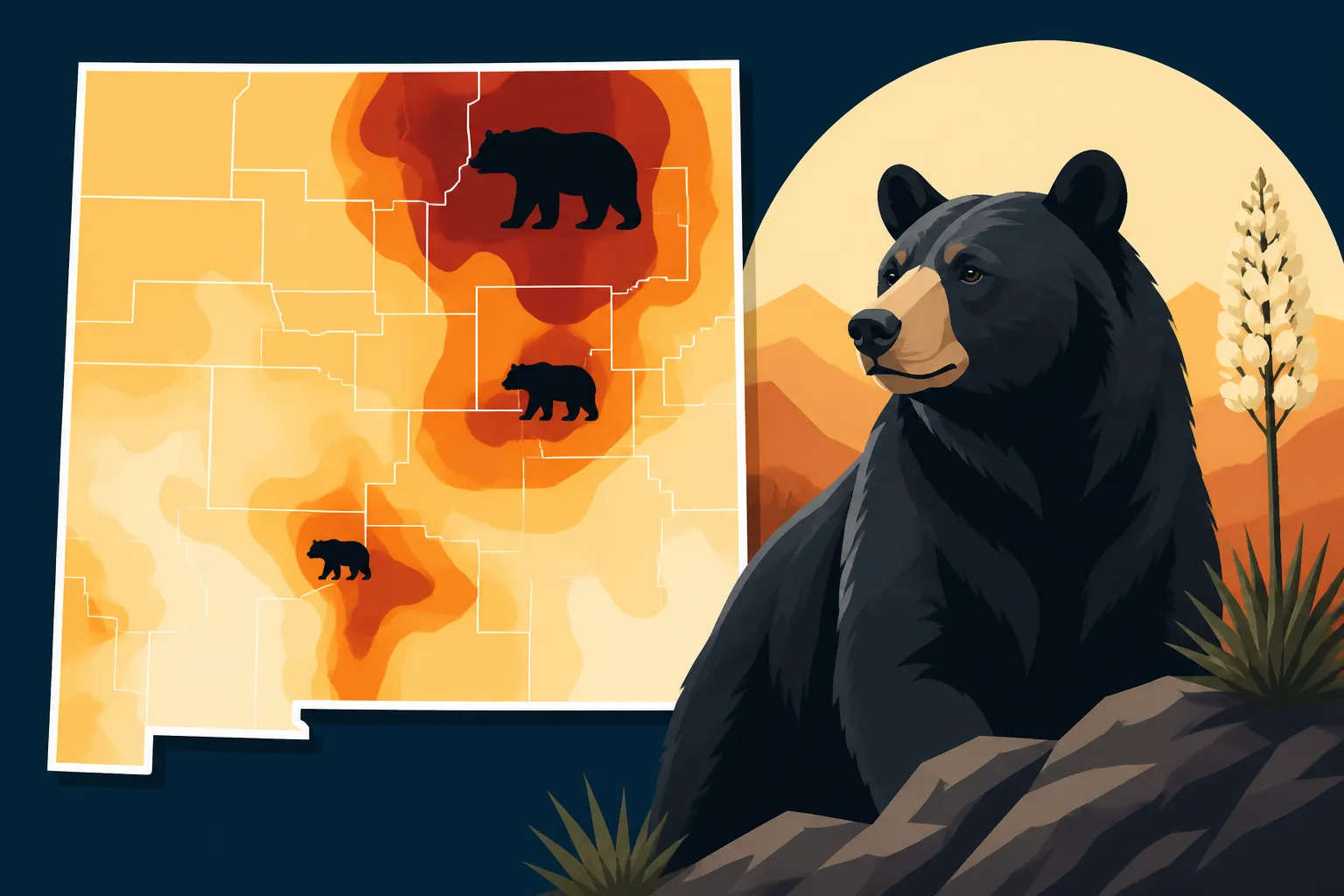
When we talk about "density" for black bears in New Mexico, we're really looking at where the habitat comes together in the most optimal way to support healthy populations. While bears are present in many units, some regions consistently stand out as having the highest concentrations and offering the best hunting prospects.
The Gila and Southwest Hotspots
Without a doubt, the Gila National Forest in southwestern New Mexico is the undisputed heavyweight champion when it comes to black bear density. This vast wilderness, encompassing the Gila Wilderness and Aldo Leopold Wilderness, is famous for its elk, but it's equally prime bear habitat. Units like 15, 16A, 16D, 16E, 17, 21, 22, and 23 consistently hold the highest black bear populations and historically account for a significant portion of the state's bear harvest.
Why the Gila? It's a combination of factors. The sheer size of the wilderness areas provides expansive, undisturbed habitat. The diverse terrain, from deep canyons to high mesas, offers ample cover, plentiful water sources, and a rich variety of food. The Gila is renowned for producing trophy elk, as detailed in discussions like Why New Mexico's Gila Grows Big Bulls and New Mexico Units 16A and 16D Elk Reputation, and much of the same pristine habitat that supports these elk also supports abundant bears. Areas recovering from wildfires, for instance, can see an explosion of new vegetation, providing crucial food sources like berries and forbs that bears eagerly exploit. The climate here allows for a longer active season for bears compared to the colder northern regions, contributing to their overall success and reproductive rates. Hunters consistently find the Gila to be productive for bear, making it a top choice for those serious about a New Mexico black bear tag.
Northern Mountains and High Country
Moving north, the Sangre de Cristo and Jemez mountain ranges, largely encompassed by the Carson National Forest and Santa Fe National Forest, represent another significant hub for black bear populations. While perhaps not quite matching the sheer density of the Gila in all units, these northern mountains offer excellent bear hunting, especially in units like 4, 5, 6A, 6B, and 9.
The habitat here is often characterized by higher elevations, extensive stands of ponderosa pine, spruce, fir, and aspen. These forests are rich in various berry species and, in good mast years, provide abundant acorn crops that bears rely heavily upon. The ruggedness of the terrain in areas like the Pecos Wilderness within the Santa Fe National Forest, or the high country of the Carson National Forest, discussed in topics like Hunting the Carson High Country, offers bears ample solitude and escape cover. The northern regions typically experience colder winters and deeper snow, which can lead to a shorter active season for bears compared to the south. However, during the spring and fall hunts, these areas are incredibly productive. Hunters need to be prepared for more vertical climbs and thicker timber in these units, but the reward can be excellent opportunities for mature bears.
Central and Eastern Plains Fringe
Beyond the major mountain strongholds, black bears maintain populations, albeit at generally lower densities, in the more isolated mountain ranges and forested islands scattered across central and eastern New Mexico. These areas often exist as "sky islands" – mountains rising dramatically from the surrounding grasslands or deserts – and they provide crucial habitat in otherwise arid regions. The Cibola National Forest, with its numerous mountain ranges like the Manzanos, Sandias, Gallinas, and Magdalenas, is a prime example. The Lincoln National Forest, particularly the Sacramento Mountains, also holds a healthy bear population, especially in units 34, 36, 37, and 38.
Hunting in these central and eastern units often requires a different approach. Bear densities might be lower, but individual mountain ranges can still hold pockets of high activity. Bears here are particularly reliant on available food and water sources within these isolated forests. Successful hunting often involves careful e-scouting, identifying these "green islands" in a sea of drier country, and concentrating efforts around known mast crops and reliable water. While hunters might not see as many bears as in the Gila or northern forests, the opportunity for a quality bear, especially during the archery seasons when bears are actively foraging, can be excellent. The challenges include larger distances between suitable habitat patches and, at times, more limited public access compared to the expansive national forests.
Factors Influencing Black Bear Populations
Black bear populations are not static; they ebb and flow based on a complex interplay of environmental factors. Understanding these dynamics is crucial for predicting where bears will be in any given year and for appreciating the challenges that wildlife managers face.
Food Availability and Mast Crops
The single most significant factor influencing black bear populations, their movements, and their overall health is food availability. Black bears are opportunistic omnivores, meaning they'll eat just about anything, but they thrive on nutrient-rich mast crops. In New Mexico, this primarily means acorns (especially from Gambel oak), various types of berries (chokecherry, serviceberry, elderberry, prickly pear fruit), and perhaps most famously, piñon nuts.
The success of these mast crops is highly variable year to year. A bumper crop of acorns in one season can lead to bears putting on significant fat reserves, which in turn leads to higher cub survival rates and more bears surviving the winter. Conversely, a poor mast year, often exacerbated by drought, can force bears to range more widely in search of food, potentially leading to increased human-wildlife conflicts and reduced cub survival. We often see How Monsoon Rain Affects Antler Growth in deer and elk, and similarly, good rain at the right time significantly impacts the fruiting and nut-producing plants that bears rely on. When these critical food sources are scarce, bears might even move into areas they don't typically inhabit, following food where it can be found. Understanding this annual fluctuation is paramount for hunters, as it dictates where bears will concentrate their feeding efforts.
Water Sources and Climatic Conditions
In an arid state like New Mexico, water is a lifeline for all wildlife, and black bears are no exception. Reliable water sources, whether natural springs, ephemeral streams, or man-made stock tanks, become critical focal points, especially during prolonged dry spells or the hot early hunting seasons.
Drought conditions, such as those that contribute to How Drought Affects Desert Deer Numbers, have a direct and profound impact on bear behavior and density. When natural water sources dry up, bears are forced to congregate around the remaining ones. This makes these areas magnets for bears, but also highlights their vulnerability during challenging years. The timing and intensity of New Mexico's summer monsoon season can dramatically influence the landscape for bears. Good monsoon rains can lead to an explosion of vegetation, supporting healthier mast crops and dispersing water across wider areas, allowing bears to spread out. Conversely, a failed monsoon season can lead to bears concentrating in fewer, more predictable areas near water. Hunters who pay close attention to recent weather patterns and know how to identify and locate water sources will often find success by understanding this fundamental dependency. Knowing how much Water You Must Carry on a Desert Day Hunt for yourself also underscores the scarcity of this resource for the wildlife you're pursuing.
Interpreting Harvest Data and Management Zones
Hunting black bears in New Mexico isn't just about finding prime habitat; it's also about understanding the regulatory framework that governs bear harvest. New Mexico Game and Fish uses a unique system of management zones and harvest limits to ensure sustainable populations. Getting familiar with this data is essential for a responsible and successful hunt.
New Mexico Game and Fish Bear Management Units
New Mexico manages its black bear population through a system of specific Bear Management Units (BMUs), often composed of multiple Game Management Units (GMUs). Each BMU has a predetermined harvest quota, which is further broken down into a limit for female bears (sows). This focus on female harvest is critical because sow survival directly impacts the reproductive capacity of the population.
The New Mexico Department of Game and Fish (NMDGF) regulations clearly outline How New Mexico Bear Harvest Limits Work. The most important thing to grasp is that these seasons are not fixed for their entire duration. Once the female harvest limit for a particular BMU is met, that bear management unit will close to further bear hunting, regardless of whether the general season end date has been reached. This means that How a New Mexico Bear Zone Closes can happen suddenly, often with just a 48-hour notice. Hunters must constantly monitor the NMDGF website or call the bear hotlines to stay informed of closures. This system prioritizes the long-term health of the bear population, and while it adds an element of uncertainty for hunters, it's a vital part of sustainable wildlife management.
Using Data for Scouting and Planning
For the diligent hunter, harvest data is a goldmine of information that can significantly enhance scouting and planning efforts. The NMDGF publishes annual harvest reports that detail the number of bears taken in each unit, the sex of the bears, and sometimes even the method of harvest. Resources like GoHunt, for example, do an excellent job of compiling and presenting this type of data, making it easier for hunters to interpret.
When looking at these reports, pay close attention to the historical harvest trends within specific GMUs and BMUs. Units with consistently high total harvest numbers, especially those that come close to or meet their female harvest limits year after year, indicate robust bear populations. While general harvest numbers are useful, understanding the female harvest is even more telling. A unit that consistently has a high female harvest relative to its quota suggests a very healthy breeding population. This data can guide your e-scouting efforts, helping you narrow down potential hunting grounds before you ever set foot in the field, much like you would when E-Scouting a New Mexico Unit Before the Season for other species. Analyzing Where New Mexico Publishes Harvest Data will allow you to see which units are performing well and which might be declining, giving you an edge in selecting a hunt choice with higher success potential. Tools from GoHunt can also help you quickly cross-reference this information with terrain features and habitat maps.
Challenges and Opportunities for Bear Hunters
Hunting black bears in New Mexico is a unique and rewarding experience, but it comes with its own set of challenges. These intelligent and often elusive animals demand respect, patience, and a well-thought-out approach. However, with careful planning and smart tactics, the opportunities for success are very real.
Scouting and Locating Bears
One of the biggest hurdles for any bear hunter is simply finding the bears. Black bears are naturally wary and masters of concealment, making effective scouting absolutely paramount. You can't just drive around and expect to see bears walking in the open; you need to know what to look for and where to look for it.
Preseason scouting, either on the ground or virtually, is where success begins. Look for definitive bear sign: tracks (their hind foot is similar to a human footprint, but their front foot is shorter and wider with prominent claw marks), scat (which varies greatly depending on their diet, from berry-filled to acorn-laden), and rubbed trees. Bears will rub against trees to mark their territory, scratch an itch, or even remove parasites. Fresh rubs, especially on larger trees, are a clear indicator of recent bear activity. Also, keep an eye out for overturned rocks or logs where bears have foraged for insects, or broken branches in berry patches. Understanding the nuances of Reading Fresh Elk Sign in Ponderosa Timber can translate well to finding bear sign; it's all about interpreting subtle clues on the landscape. Identifying key food sources is also vital. In areas known for good acorn crops, focus your efforts there. Similarly, during berry season, target canyons and slopes where those berries are abundant. Glassing techniques, as practiced when Grid Glassing a Basin Without Missing Bucks, are also incredibly effective for bears, especially in open, broken country where bears might be feeding on hillsides in the early morning or late evening.
Best Hunting Methods for New Mexico Bears
Unlike some other states, baiting for bears is illegal in New Mexico, as outlined in Baiting and Trail Camera Rules in New Mexico. This means that hunters must rely on fair chase methods that emphasize woodsmanship and tracking skills. The most effective methods for black bear in New Mexico are spot and stalk and still hunting.
The spot and stalk method is particularly effective in New Mexico's diverse terrain, especially during early archery seasons when bears are actively foraging. This involves locating a bear from a distance, typically with optics, and then carefully planning an approach to get within shooting range. This requires excellent glassing skills, patience, and a keen understanding of wind direction and terrain, much like Spot and Stalk Tactics for Barbary Sheep on open, rugged landscapes. You'll often find bears feeding on berry patches or around piñon groves on open hillsides in the cooler parts of the day. A good spotting scope and binoculars are your best friends here. Once a bear is spotted, the stalk itself needs to be slow, deliberate, and mindful of scent and sound.
Still hunting is another excellent method, especially in denser timber or during rifle seasons. This involves moving slowly and deliberately through prime bear habitat, pausing frequently to scan and listen. It's about blending in with the environment, covering ground quietly, and letting the landscape reveal itself. Focus on areas with fresh sign, dense cover, and proximity to food and water. This method demands extreme patience and the ability to detect subtle movements or sounds that indicate a bear's presence. Bears often surprise still hunters by appearing silently in thick cover, so constant vigilance is key. Ultimately, success hinges on time in the field, careful observation, and a deep understanding of bear behavior within their specific habitat.
| Bear Management Unit (BMU) – Examples | Primary Game Management Units (GMUs) | General Density | Key Habitat Features | Typical Harvest Pattern |
|---|---|---|---|---|
| BMU 1 | 15, 16A, 16D, 16E, 21, 22, 23 | High | Gila National Forest, deep canyons, mixed conifer, oak brush, extensive wilderness | Consistently high, often meets female quota early |
| BMU 2 | 4, 5, 6A, 6B, 9 | High to Medium | Carson & Santa Fe National Forests, high elevation, spruce-fir, aspen, piñon-juniper | Strong harvest, can close mid-season |
| BMU 4 | 34, 36, 37, 38 | Medium | Lincoln National Forest (Sacramento Mts.), Cibola National Forest (Capitan Mts.), ponderosa, oak | Steady harvest, typically runs full season |
| BMU 3 | 13, 17, 18, 19, 20 | Medium | Mogollon, Black Range, Datil Mts., mixed conifer, piñon-juniper, more arid | Moderate harvest, reliant on water/mast |
| BMU 6 | 24, 25, 26 | Low to Medium | Peloncillo, Animas Mts., Chiricahua Outliers, desert mountains, isolated ranges | Lower harvest, highly dependent on specific habitat pockets |
Disclaimer
Please remember that hunting regulations and season dates can change. Always consult the official New Mexico Department of Game and Fish (NMDGF) regulations booklet or website for the most current and accurate information before planning any hunt. This guide is for informational purposes only and does not replace official regulations.