Spot and Stalk Tactics for Barbary Sheep
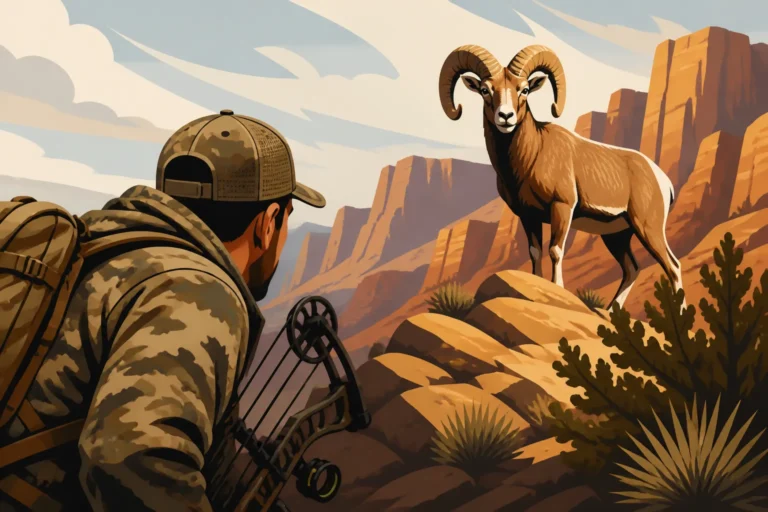
Trying to hunt Barbary sheep in New Mexico can feel like chasing a ghost through a rock quarry. These incredible animals, often called Aoudad, are notoriously wary, possess unbelievable eyesight, and live in some of the most unforgiving, rugged canyon country you’ll ever encounter. This guide is all about giving you the proven spot and stalk tactics you’ll need to overcome these challenges and put a ram on the ground.
Understanding Barbary Sheep Behavior and Habitat
Before you even think about setting foot in their domain, you need a deep understanding of what makes Barbary sheep tick. These aren't your typical mule deer or elk; they are perfectly evolved for survival in harsh, arid, mountainous terrain, and their behavior reflects that.
Preferred New Mexico Barbary Habitat
Barbary sheep aren't native to New Mexico, but they've certainly made themselves at home in specific regions, adapting to the landscape with remarkable success. You'll primarily find them clinging to the steep, rocky slopes, rimrock canyons, and broken mesas of certain units. Think about the Canadian River canyon system in northeastern New Mexico, or the vast, sprawling landscapes of the Guadalupe Mountains in the southeastern part of the state. Other pockets exist, like portions of the Ladron Mountains, but the canyon systems of the northeast are where many hunters focus their efforts. This terrain is typically dry, often sparse, and demands a level of physical fitness and mental toughness from any hunter who dares to pursue these animals. Their survival here is a testament to their incredible resilience and adaptability.
When you're scouting, whether physically or through applications like GoHunt's mapping tools, look for features that provide both security and sustenance. This means deep, shaded canyons where they can escape the midday sun, but also high, open rimrock areas where they can bed down and use their panoramic vision to detect threats from miles away. Water sources, even small seeps, are critical in these arid environments and will often draw animals, especially during dry periods. Understanding these preferences is your first step in predicting where they'll be.
Barbary Sheep Senses and Daily Patterns
Barbary sheep are equipped with an arsenal of senses that make them incredibly difficult to approach. Their eyesight is legendary; they can spot movement from astonishing distances, often on terrain where a human eye struggles to pick out details. Their hearing is also acute, picking up the crunch of a misplaced boot or the scrape of a rifle against rock. And while their sense of smell might not be as dominant as an elk's, it's certainly good enough to bust you if the wind is wrong. These combined senses mean that a successful stalk needs to be executed flawlessly.
Their daily patterns are heavily influenced by weather, forage, and hunting pressure. During cooler months, or in the early mornings and late evenings, they might be found grazing on sparse grasses and forbs on more accessible slopes. However, as the sun climbs and temperatures rise, especially in the warm New Mexico climate, they will often retreat to shaded, north-facing slopes, deep caves, or under significant rock overhangs to bed down. This is often the prime time for glassing, as they're stationary, but it's also when they're most secure and difficult to approach undetected. Learning to read these patterns is crucial for planning an effective stalk. For a deeper dive into their natural habitat, check out "Barbary Sheep in New Mexico Canyon Country."
Essential Gear for New Mexico Barbary Hunts
Hunting Barbary sheep isn't just physically demanding; it's also incredibly tough on your gear. The sharp rocks, thorny brush, and extreme temperatures demand equipment that is rugged, reliable, and perfectly suited for the task. Cutting corners here will almost guarantee a miserable, and likely unsuccessful, hunt.
Optics: Your Eyes in the Canyon
When it comes to Barbary hunting, your optics are, without exaggeration, your most important tool. You will spend vastly more time glassing than walking, so invest wisely. A high-quality spotting scope is non-negotiable. Look for something in the 60-80mm objective range with at least 20-60x magnification. Paired with a sturdy, lightweight tripod, this setup will allow you to pick apart distant hillsides and identify a ram from a ewe, or a shooter from a lesser animal, long before they ever know you're there. Many hunters swear by brands like Kowa, Swarovski, or Vortex for their clarity and durability in the field.
Complementing your spotting scope should be a pair of powerful, handheld binoculars, typically 10×42 or 12×50. These are for initial sweeps and quick checks when you're on the move or making a short stop. Don't underestimate the value of a quality binocular harness to keep them secure and readily accessible. A good rangefinder is also critical, especially in the broken, deceiving terrain where Barbary live. Knowing the exact distance is paramount before you take a shot in such unforgiving country. For more on choosing the right glass, check out "Optics Power for New Mexico's Open Country" and learn about "Tripod Setup for Glassing From a Ridge."
Footwear, Clothing, and Navigation
Your feet are your foundation on a Barbary hunt. You'll be traversing steep, rocky, uneven ground, often with loose scree. This means durable, stiff-soled hiking boots with excellent ankle support are a must. Brands like Kenetrek, Crispi, or Schnee's are popular for a reason – they hold up to the abuse. Ensure they are well broken-in before your hunt to avoid blisters. For a detailed guide on what to wear on your feet, see "Choosing Boots for Rocky Desert Ground."
Layering is essential for clothing, as New Mexico desert temperatures can swing wildly from frigid mornings to scorching midday sun. Start with a moisture-wicking base layer, add a mid-layer for insulation, and an outer shell that is windproof and highly abrasion-resistant. Colors that blend with the rocky, desert environment are best, like tans, grays, and muted greens. Don't forget a wide-brimmed hat for sun protection and durable gloves. For navigation, a reliable GPS unit or a smartphone with a robust hunting app like GoHunt is indispensable for marking locations, tracking your path, and identifying public land boundaries. Always carry a physical map and compass as a backup, and know how to use them.
Mastering the Art of Spotting Barbary Rams
This is where the rubber meets the road. Finding a Barbary ram in their vast, camouflaged world is perhaps the most challenging aspect of the hunt. It requires immense patience, a systematic approach, and the ability to differentiate a rock from a horn from an incredible distance.
Strategic Glassing Techniques
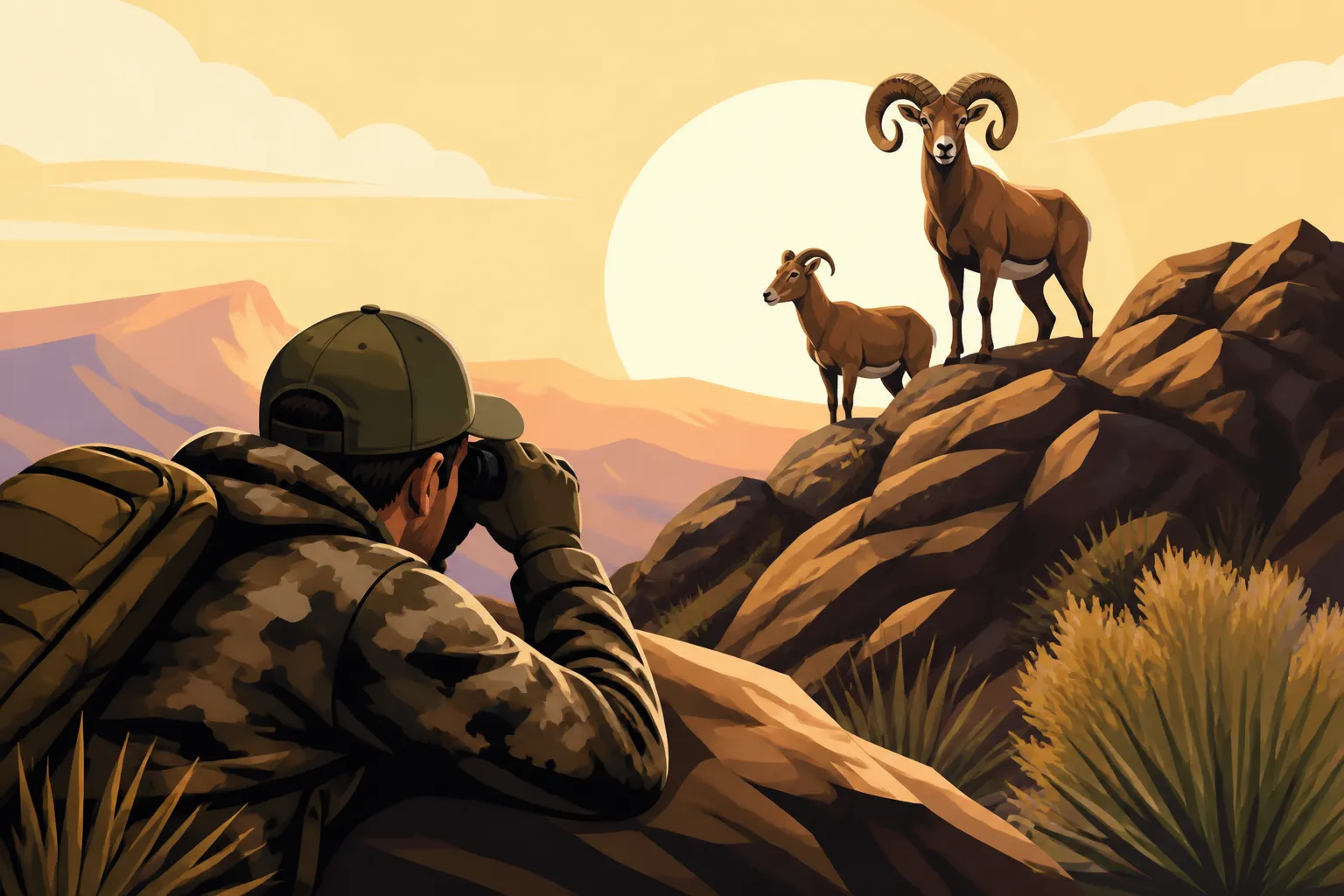
You can't just casually glance over a canyon and expect to find Barbary. Effective glassing is a methodical process. Start by finding a high vantage point that offers expansive views of potential habitat. This often means climbing to a ridge, a knoll, or a prominent rock outcrop. From there, set up your spotting scope on your tripod and begin to systematically dissect the landscape. The "grid glassing method, step by step" is an excellent starting point. Break the distant hillsides into smaller, manageable grids. Start at the top left of a grid, slowly scan horizontally to the right, then drop down a few inches and scan back to the left. Repeat this process, moving your way down the hillside, scrutinizing every rock, shadow, and crevice.
Pay particular attention to areas where rams might feed or bed. Look for subtle color differences, horizontal lines in an otherwise vertical landscape, or the distinct curve of a horn. Remember that Barbary sheep are incredibly well camouflaged; often, it's just a small patch of their hide or the gleam of a horn that gives them away. Don't be afraid to sit in one spot for hours, letting your eyes adjust and re-scanning areas repeatedly. Animals often reveal themselves by shifting position, standing up, or moving into a shaft of light. Patience is your most powerful weapon here.
Using Topographical Maps and E-Scouting
In today's hunting world, e-scouting has become an invaluable tool, especially for species like Barbary sheep that inhabit vast and remote areas. Before you even set foot in the field, use platforms like GoHunt that provide detailed topographical maps, satellite imagery, and public land overlays. These tools allow you to identify potential glassing knobs, water sources, natural travel corridors, and escape routes from the comfort of your home. You can mark waypoints for these areas, estimate distances, and formulate a plan of attack.
When you're actually in the field, those pre-marked waypoints become your guide. Use your GPS or smartphone app to navigate to your chosen glassing positions. Furthermore, pay attention to the contour lines on your map. Barbary sheep prefer steep, broken country, so identifying areas with dramatic elevation changes, intricate canyon systems, and numerous benches will help narrow down your search. Think about where the sun will hit at different times of the day, and how that might influence where the sheep will be feeding or bedding. By combining diligent e-scouting with your physical glassing efforts, you dramatically increase your odds of finding these elusive rams. If you're wondering how to analyze the digital landscape, consider looking into "E-Scouting a New Mexico Unit Before the Season."
Executing the Stalk on Rugged Terrain
Once you’ve spotted your ram, the true challenge begins. Getting within shooting range of a Barbary sheep is an intense, calculated chess match against an animal that has every advantage in its home turf. This isn't a race; it's a slow, deliberate dance with nature.
Wind, Cover, and Slow Movement
The trifecta of a successful stalk hinges on these three elements: wind, cover, and meticulous movement. First and foremost, the wind must be in your favor. Barbary sheep can and will smell you from a significant distance, especially in the thermals that swirl through canyons. Always approach with the wind in your face or quartering to you. Take constant checks with a wind checker to ensure it hasn't shifted, because canyon winds are notoriously fickle. Understanding "Reading Wind in a Deep Gila Canyon" offers principles directly applicable to Barbary country.
Second, maximize your use of cover. This rugged terrain might seem exposed, but it's often riddled with draws, rock formations, and small rises that can hide your approach. Study your ram's position and the intervening terrain carefully through your spotting scope. Plan your route from cover to cover, ensuring that at no point are you exposed where the ram can see you. This might mean adding significant distance to your stalk, but it's always better to go the long way around than to get busted halfway.
Third, your movement must be excruciatingly slow and deliberate. Barbary sheep are accustomed to natural movement in their environment – swaying brush, rolling rocks. What they aren't used to is the unnatural cadence of a human form. Move with purpose, but at a snail's pace. Every step should be checked for loose rocks that might roll or snap a twig. If the ram is looking in your general direction, freeze immediately, even if it means holding an uncomfortable position for several minutes. Don't rush the shot; getting into position is half the battle. This painstaking process is often the key to "Closing on a Barbary Ram in Broken Rimrock."
Mental Toughness and Patience
Beyond the physical demands, a Barbary sheep stalk is a supreme test of mental toughness and patience. You might spend hours on a single stalk, only for the ram to stand up, stretch, and walk over a ridge, disappearing as if it were never there. This is incredibly frustrating, but you absolutely cannot let it get to you. Every stalk is a learning experience, and sometimes, the best outcome is simply not getting busted. Don't push too hard, too fast, or too carelessly, or you'll quickly confirm their suspicions.
Be prepared for uncomfortable positions, unexpected delays, and the need to adjust your plan on the fly. The terrain will rarely cooperate perfectly, and the ram certainly won't. This mental fortitude also extends to your shooting position. Barbary often present challenging angles, and finding a stable rest can be difficult. Practice shooting from various improvised positions – prone, kneeling, using a backpack or shooting sticks – to ensure you're ready when the opportunity finally arises. The hunt is a marathon, not a sprint, and your ability to remain calm, focused, and adaptable will often dictate your success.
| Element of Stalk | Description | Key Considerations |
|---|---|---|
| Wind | Direction and consistency of air currents. | Always keep the wind in your face or quartering. Use a wind checker frequently. Watch for swirling canyon thermals. |
| Cover | Natural terrain features used to obscure your presence. | Utilize draws, boulders, rises, and thick brush. Plan route from cover to cover. Avoid skylining yourself. |
| Movement | Speed and stealth of your approach. | Extremely slow and deliberate steps. Check footing. Freeze if the animal looks in your direction. Mimic natural pauses. |
| Patience | Ability to wait for opportunities and endure challenges. | Be prepared for long waits. Don't rush. Accept that some stalks will fail. Maintain mental composure and adaptability. |
| Shooting Prep | Readying yourself for the shot opportunity. | Practice shooting from various field positions. Have rangefinder ready. Know your rifle and ballistic data precisely. |
Post-Shot and Retrieval Challenges
Congratulations! You've made a perfect shot on a New Mexico Barbary ram. But the hunt isn't over. Recovering your animal and getting it off the mountain can often be as challenging, if not more so, than the hunt itself. This is where meticulous planning and a serious dose of grit come into play.
Tracking and Recovery in Harsh Terrain
A Barbary ram, even with a well-placed shot, can cover an astonishing amount of ground in this steep, unforgiving landscape. Before you move, mentally mark the exact spot where the animal was standing when you shot, and where you last saw it. Use a landmark, not just a mental note. If possible, have your hunting partner glass the area as you approach. Once you get to the last known spot, look for blood, hair, bone, or any other sign of impact. Mark that spot.
Tracking in Barbary country is tough. The ground is often rocky, making blood trails sparse. If the trail is difficult, expand your search in concentric circles or fan out in the direction the animal was heading. Look for overturned rocks, disturbed brush, and any hint of movement. If the light is fading, it's often best to back out and return at first light with fresh eyes. Pushing a wounded animal in the dark in this terrain can lead to a lost animal. Carry flagging tape to mark the trail, but remember to remove it after recovery.
Field Dressing and Packing Out
Once you've recovered your ram, the real work begins. Given the typically warm temperatures in New Mexico's Barbary ranges, swift and efficient field dressing is paramount to preserving the meat. Get the guts out immediately to allow the carcass to cool. For detailed instructions on how to handle your harvest in the heat, refer to "Field Dressing in Desert Heat." If you're alone, you'll need to bone out the animal and make several trips back to your vehicle. A Barbary ram can weigh anywhere from 100 to over 200 pounds, and packing that weight out of a deep canyon, often uphill, is an monumental physical undertaking.
Invest in a quality pack frame and game bags. Synthetic game bags allow for airflow and protect the meat from flies and debris. If you're hunting with a partner, divide the load. Having a detailed plan for meat care, including how you'll keep it cool once it's off the mountain, is critical. This might involve large coolers filled with ice or even a quick trip to a local processor if one is available nearby. The commitment doesn't end until every pound of meat is safely off the mountain and properly cared for, demonstrating the full respect for the animal you've harvested. For further tips, consider "Getting Meat Cooled on an Early Season Hunt."
Disclaimer
Hunting is an inherently dangerous activity. This guide is for informational purposes only and does not replace the need for proper training, safety precautions, or adherence to all local, state, and federal hunting regulations. Always consult the most current New Mexico Department of Game and Fish regulations before planning any hunt.