How Monsoon Rain Affects Antler Growth
As hunters, we spend countless hours dreaming of heavy antlers and healthy animals. There’s a constant anxiety, especially after a long, dry spring, wondering if the bucks and bulls you’ve been watching on your trail cameras are going to have the nutrition they need to grow those impressive racks. The truth is, here in New Mexico, few things impact antler growth as profoundly as the annual monsoon rains, and understanding this connection is key to appreciating the cycles of our big game. This guide will walk you through how those summer downpours directly influence the size and health of antlers across the state.
Understanding New Mexico's Monsoon Season and Its Timing
If you’ve spent any time hunting or recreating in New Mexico, you know our weather patterns can be extreme. We swing from bone-dry conditions in the late spring and early summer to intense, almost daily thunderstorms once the monsoon system kicks in. This shift isn't just a pleasant change in temperature; it's a lifeline for the landscape and, by extension, the animals that call it home, particularly when it comes to growing impressive headgear.
When the Rains Typically Arrive
The New Mexico monsoon season typically settles in from July through September. Now, "typical" is a funny word in weather, isn't it? Some years, it feels like the switch flips right at the beginning of July, bringing welcome relief from the scorching heat. Other years, we might wait until late July or even August for the consistent patterns to establish themselves. This variability in timing can be critical. If the monsoon arrives late, deer and elk have already spent crucial weeks of antler development in a state of nutritional stress, potentially stunting growth that can't entirely be recovered, even if the late rains are abundant. A strong, early monsoon, on the other hand, gives a huge head start to the forage that will fuel that growth.
The Nature of Monsoon Storms
When we talk about monsoon rains, we're not usually talking about gentle, all-day drizzles that slowly soak into the ground. No, these are often intense, localized thunderstorms. You might be camped out under clear skies, only to watch a towering cumulonimbus cloud build up over the next ridge, unleashing a torrent of rain that turns washes into raging rivers for an hour or two. Then, just as quickly, the sun can pop back out.
This characteristic of monsoon storms means that rainfall can be incredibly patchy. One canyon might get a deluge, while the next one over remains parched. This creates a mosaic of growth across the landscape. Animals will naturally gravitate towards these localized green-ups and temporary water sources. For a hunter, this means that even in a generally "good" monsoon year, you might find pockets of exceptional growth and areas that still look a bit dry and stressed, all within the same unit. It's a constant reminder that generalized forecasts only tell part of the story; the on-the-ground reality can be very different.
The Direct Link: Rain, Forage, and Antler Development
Let's get down to the nitty-gritty of why these summer storms are so vital. It’s not just about quenching thirst; it’s about providing the absolute building blocks for those impressive antlers we all admire. Antlers are one of the fastest growing tissues in the animal kingdom, and that kind of rapid growth demands an incredible amount of energy and specific nutrients.
The Nutritional Requirements for Antler Growth
Think about it: a bull elk can grow 30-40 pounds of bone and velvet in just a few months. A mature mule deer buck might put on 10-15 pounds. This isn't just magical; it's a biological marvel that relies almost entirely on the quality and quantity of food available to them, especially during the spring and summer growing season. Bucks and bulls are literally diverting massive amounts of protein, calcium, phosphorus, and other trace minerals from their bodies to fuel this growth. If the diet is deficient in any of these, especially protein, the antlers simply won't reach their full genetic potential. Body condition also plays a huge role; an animal that's stressed or thin from a harsh winter or dry spring will prioritize survival over antler development every single time. Their body simply won't invest resources into growing a big rack if it's struggling to maintain basic functions.
How Monsoon Rain Fuels the Forage Base
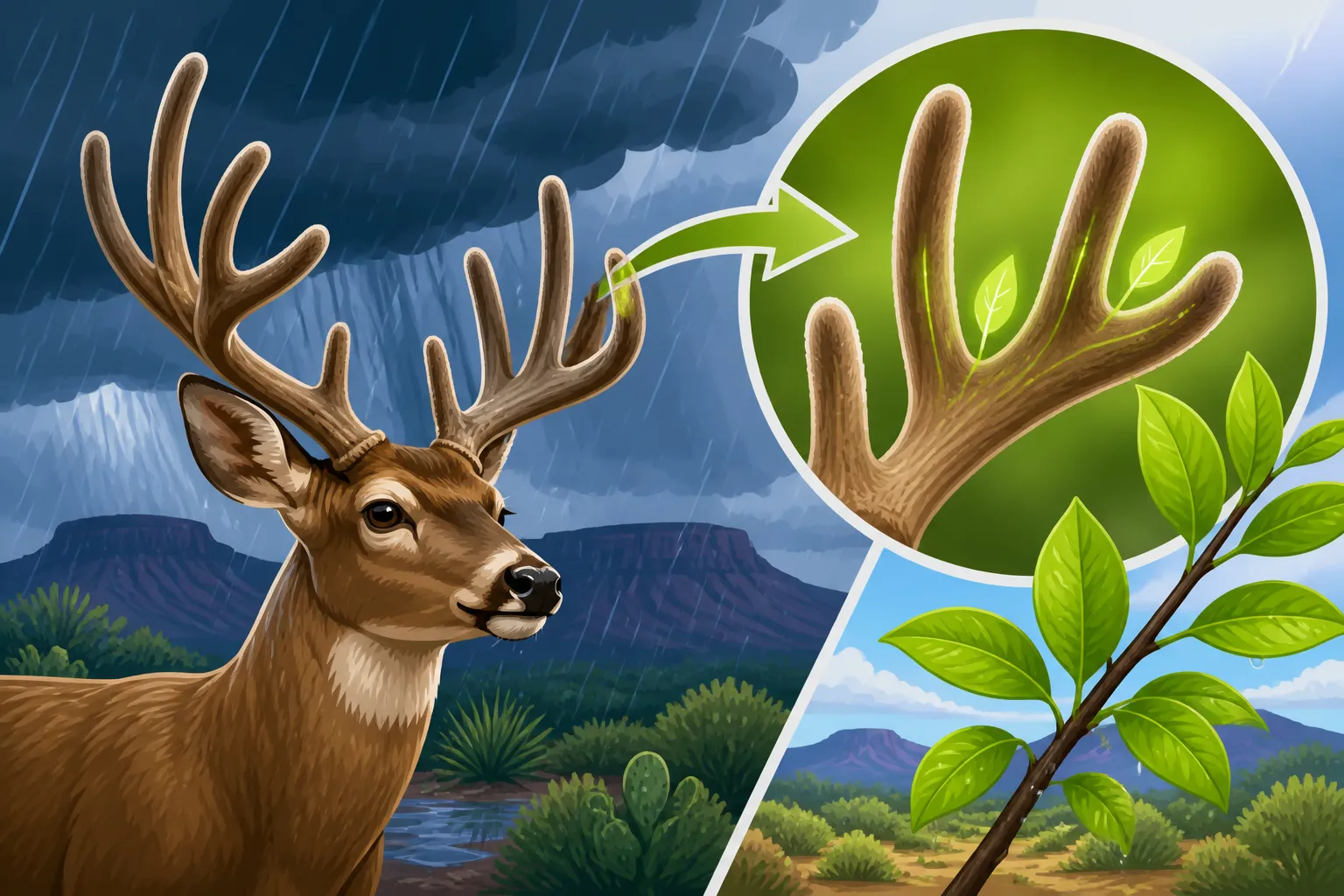
Here’s where the monsoon becomes the absolute hero. When those rains hit, especially after a dry period, the desert and mountain ecosystems of New Mexico explode with life. We see what locals call the "green-up." Dormant seeds germinate, perennial grasses that looked dead sprout new green blades, and forbs (broad-leafed herbaceous plants) shoot up with amazing speed.
These new growths are incredibly palatable and, more importantly, packed with protein, moisture, and minerals that deer and elk desperately need. Imagine a landscape that was dusty and brown suddenly bursting with tender, nutritious vegetation. This flush of high-quality forage allows animals to quickly gain weight, recover from the stresses of winter and spring, and most importantly, allocate crucial nutrients towards antler growth. Good monsoon rains mean more of this prime feed, sustained for a longer period, translating directly into better antler development. If you've ever seen a Gila unit transform from baked earth to a vibrant green paradise after a few weeks of consistent rain, you understand the power of this transformation. This also directly impacts water availability, as animals can get a lot of their moisture directly from lush vegetation, reducing their reliance on open water sources. Finding Water in New Mexico's Dry Country becomes a less pressing issue when the landscape is green.
Impact on Both Deer and Elk
While both deer and elk benefit immensely from robust monsoon seasons, there can be subtle differences. Elk, being larger ruminants, require a greater volume of forage, and the sheer abundance of new grasses and forbs from a good monsoon can significantly boost their antler potential. You'll often hear about "June grass" being critical for elk, but the continued flush through the monsoon ensures that sustained nutrition is available during the peak growth period. For deer, especially mule deer and Coues deer, their diet is typically more browse-heavy, meaning they rely on shrubs and woody plants more than elk. However, even these browse species respond to monsoon moisture with new, tender growth that is more nutritious. The monsoon also directly impacts the abundance of forbs, which are a vital component of a deer's summer diet, providing easily digestible protein and minerals. So, whether you're chasing New Mexico Elk Are Why the Gila Draws Everyone or Mule Deer Across New Mexico's High Country and Desert, those summer rains are making a difference.
Good Monsoon vs. Bad Monsoon: What Hunters See
The difference between a banner antler year and a disappointing one often boils down to the success or failure of the summer monsoon. Hunters who pay attention to these weather patterns throughout the summer can get a pretty good feel for what the upcoming fall hunt might hold.
The Boom Years: Big Racks and Healthy Herds
A truly exceptional monsoon season transforms the landscape and, consequently, the animals. In a boom year, you'll start hearing whispers and seeing photos of bucks and bulls in velvet that are "ahead of schedule" or "looking huge." These aren't just anecdotal observations; they're direct results of abundant, high-quality forage.
When the rains are consistent and widespread, animals maintain excellent body condition throughout the summer. They don't have to travel far to find food and water, which means less energy expended and more allocated to antler growth. You'll see:
- Larger Antlers: Bucks and bulls will put on more mass, longer tines, and overall greater dimensions. Their genetic potential is fully realized because nutritional bottlenecks are minimized.
- Healthier Body Condition: Animals look robust, with full bellies and shiny coats. This isn't just cosmetic; it indicates strong overall health, which translates to better winter survival and reproductive success for the herd.
- Increased Fawn/Calf Survival: Does and cows that are well-nourished are better able to support their fawns and calves, leading to higher recruitment rates. This sets the stage for future strong hunting seasons.
The Bust Years: Subpar Antlers and Herd Stress
Conversely, a poor monsoon season, often marked by late arrival, sparse rain, or intense heat waves, can be brutal. These are the years when hunters start hearing stories of "raghorn" bulls or "fork-horn" bucks that should be much larger.
During bust years:
- Stunted Growth: Antlers will be noticeably smaller, thinner, and might lack the mass and complexity typically seen. A buck that would normally be a solid 4×4 might only be a 3×3, or even smaller. For elk, you might see more spikes or smaller raghorns than mature bulls.
- Delayed Antler Hardening: The process of antlers hardening and shedding velvet can sometimes be delayed if the animals are severely stressed, though this is less common than overall size reduction.
- Herd Stress: Animals spend more energy searching for food and water, leading to poor body condition. This can result in increased mortality rates, especially for fawns and calves, and a reduced capacity for does and cows to breed successfully in the fall. You'll see the direct effects of How Drought Affects Desert Deer Numbers playing out in real time.
- Concentration Around Permanent Water: Game will be far more concentrated around reliable water sources, making them predictable but also potentially more wary due to increased pressure. This can make Sitting Water for Deer and Antelope a high-reward, high-risk strategy.
Regional Variability in Monsoon Impact
It’s important to remember that New Mexico is a vast state with incredible ecological diversity. A fantastic monsoon season in the Gila National Forest might not mean the same thing for the eastern plains or the arid southern desert units. The localized nature of monsoon thunderstorms means that even within a single game unit, one area could be lush while another struggles.
For example, a unit heavily reliant on smaller, scattered stock tanks for water might suffer more if the monsoons are spotty and don't replenish those tanks, even if nearby mountain ranges are getting drenched. Conversely, high-elevation units that receive snowmelt and regular summer rains might show more consistent antler growth year after year, less dependent solely on the monsoon. When you’re doing your pre-season scouting or checking unit draw odds through resources like GoHunt, it’s always wise to consider not just the state-wide picture, but the hyper-local conditions in your specific hunting unit.
| Factor | Good Monsoon Year | Poor Monsoon Year |
|---|---|---|
| Forage Abundance | High: Lush grasses, forbs, new browse growth | Low: Dry, sparse vegetation, limited new growth |
| Forage Quality | High: Protein-rich, high moisture content | Low: Dry, fibrous, lower nutritional value |
| Antler Size | Robust, excellent mass, longer tines | Smaller, thinner, less mass, shorter tines |
| Body Condition | Excellent: Healthy weight, vibrant coats | Poor: Thin, stressed, dull coats |
| Fawn/Calf Survival | High: Does/cows well-nourished to support young | Lower: Increased mortality due to maternal stress |
| Water Availability | Abundant: Replenished tanks, flowing streams | Scarce: Concentrated around few permanent sources |
| Animal Movement | Dispersed: More widespread across the landscape | Concentrated: Clustered around food/water hot spots |
| Hunting Challenge | Animals dispersed, potentially harder to find | Animals concentrated, but wary due to pressure |
Beyond a Single Season: Long-Term Effects and Hunter Strategy
While the immediate impact of a single monsoon season on antler growth is undeniable, the effects ripple far beyond just one year's harvest. Understanding these deeper trends can make you a more informed and successful hunter in the long run.
Cumulative Impact on Herd Health and Genetics
Just like our bodies benefit from consistent good nutrition over time, so do wildlife herds. A string of good monsoon years doesn't just mean a few big antlers; it leads to a healthier, more resilient herd overall. Animals enter winter in better condition, which improves survival rates, especially for younger and older animals. Healthy females are more productive, leading to higher fawn and calf crops. This positive cycle, over several years, can lead to a noticeable increase in the average age class of bucks and bulls, giving them more opportunities to express their full genetic potential in terms of antler size. Conversely, multiple consecutive drought years can severely depress herd numbers and antler quality for years to come. This is why monitoring trends through data, perhaps using resources like GoHunt, or by studying Why Fawn Ratios Predict Next Season, is so valuable.
Scouting Post-Monsoon: What to Look For
As hunters, we can use our understanding of the monsoon's influence to refine our scouting efforts. Once the monsoon season starts to wind down in late summer and early fall, get out there and observe the landscape.
- Follow the Green-Up: Look for areas that received the most consistent rain. Where is the forage lush and vibrant? Animals will be drawn to these locations. Use satellite imagery on your mapping apps to identify these greener pockets.
- Water Sources: Even in a good monsoon year, specific seeps, springs, and stock tanks will still be critical, especially as the ground starts to dry out again. Look for fresh tracks and sign around these spots.
- Body Condition: Pay attention to the animals you see. Do they look healthy and robust, or do they appear thin and stressed? This is an excellent indicator of how well they've fared through the summer. A healthy buck or bull is more likely to be carrying a quality rack.
- Antler Development: Obviously, observe the antlers themselves! Are they looking full and massive, or do they seem smaller than expected for the age class? Patterning a Buck in the Weeks Before Opener is much easier when you know where the best feed is. When hunting elk, look for fresh rubs and wallows in those lusher, rain-fed areas as you’re Reading Fresh Elk Sign in Ponderosa Timber.
Leveraging Information for Application Strategy
Knowing how weather patterns, particularly the monsoon, affect game can even influence your application strategy for future hunts. If a unit has experienced several years of exceptional monsoons, it might be poised for a cycle of strong antler growth, potentially making it a more desirable unit to draw a tag for. Conversely, a unit struggling with prolonged drought might see declining herd health and antler quality, which could impact your choices.
Tools and platforms that compile historical harvest data and weather patterns can be invaluable here. Researching through companies like GoHunt, or by pouring over the state’s official statistics, helps you make informed decisions. Combine your knowledge of monsoon impacts with resources like Reading a New Mexico Hunt Code Before You Apply and Reading New Mexico Hunt Draw Statistics to make the most strategic choices. Also, don't forget to review Where New Mexico Publishes Harvest Data annually, as it can reflect the success or struggles of herds following different monsoon cycles. While we can't control the rain, we can certainly use our understanding of it to become more adaptive, knowledgeable hunters.
Disclaimer
This article is for general informational purposes only and does not constitute professional advice. Laws, prices and regulations vary by location and change over time. Consult a qualified professional for guidance on your specific situation.