Reading Fresh Elk Sign in Ponderosa Timber
There's nothing quite as frustrating as stepping into a prime piece of New Mexico Ponderosa timber, knowing elk are here, but feeling utterly lost on where to even start looking. That vast, quiet forest can feel like a maze, and if you're not seeing elk, you're left wondering if they're even in the area, or if you're just missing all the clues. This guide will walk you through exactly how to read fresh elk sign in Ponderosa country, giving you the confidence to unravel their daily movements and get closer to these magnificent animals.
Understanding the Ponderosa Pine Ecosystem and Elk Behavior
Ponderosa timber, with its distinct vanilla-scented bark and widely spaced trees, is a quintessential elk habitat across much of New Mexico. It’s not just a pretty forest; it’s a living supermarket and sanctuary for elk, offering everything they need to thrive. If you understand why elk are there, you’ll have a much better chance of finding them.
Why Elk Love Ponderosa Stands
Elk are creatures of comfort and necessity, and the Ponderosa pine ecosystem provides both in spades. First off, food is abundant. The open understory of Ponderosa stands often allows sunlight to hit the forest floor, nurturing a rich carpet of grasses and forbs – elk favorites. They’re not primarily browsers like deer; elk are grazers, and Ponderosa parks and meadows offer prime foraging opportunities. Beyond that, Ponderosa offers excellent cover. The tall, straight trunks provide thermal cover from both the scorching New Mexico sun and the chilling winds that can sweep through the mountains. More importantly, it offers security cover. The relatively open nature of mature Ponderosa allows elk to see danger approaching, yet the sheer density of trees, especially where younger growth fills in, provides fantastic hiding spots.
Often, you'll find elk concentrating in areas where Ponderosa transitions into other habitat types, like oak brush or aspens. These "edge" habitats provide even more diversity in food and cover. Think about the Gila National Forest, for example. Vast stretches are Ponderosa, but within those, you'll find draws and pockets that transition, and those are often hotspots. You might see more activity where Ponderosa meets a riparian zone or a small spring, providing both food and crucial water sources, which can be scarce in arid New Mexico. Being familiar with these micro-habitats within the broader Ponderosa forest is a huge leg up.
Seasonal Movements and Ponderosa
Elk don't just hang out in the same spot year-round in Ponderosa. Their movements are highly dictated by season, weather, and hunting pressure. In the early archery seasons, for instance, often stretching into September, you'll find elk higher up in the cooler elevations within the Ponderosa, seeking shade and fresh forage. They might still be in their summer patterns, meaning larger groups of cows and calves, and bachelor groups of bulls. As the rut approaches later in September, their behavior shifts dramatically. Bulls become much more vocal, their bugles echoing through the Ponderosa, and they start to become more aggressive, often moving into areas with more open visibility to challenge other bulls and gather cows. Understanding the Bugle Timing Through New Mexico's Rut is crucial during this period.
Once the rut winds down and rifle seasons kick in, elk can become incredibly wary. They'll often retreat into the thickest, nastiest Ponderosa stands they can find, using the dense timber for security. If early snows hit or temperatures drop, they might start moving to lower elevations, but still seek the Ponderosa for its thermal cover. Monsoon rains, which can hit hard in late summer, can also influence their movements, pushing them towards higher ground or areas with less standing water, or even creating new temporary water sources that attract them. Knowing how these elements affect their patterns within the Ponderosa is key to consistently finding fresh sign. This also connects to larger ecological patterns, as How Elk Herds Recover After a Burn can significantly alter where elk prefer to graze and bed within these timber stands.
Decoding Fresh Tracks and Trails
Once you're actually boots on the ground in a Ponderosa forest, you'll start looking for the tell-tale signs that elk have been there. Tracks and trails are arguably the most obvious indicators, but simply seeing a track isn't enough. You need to know how to read its story: how fresh it is, what direction the animal was going, and what kind of animal it was.
Identifying Fresh Tracks
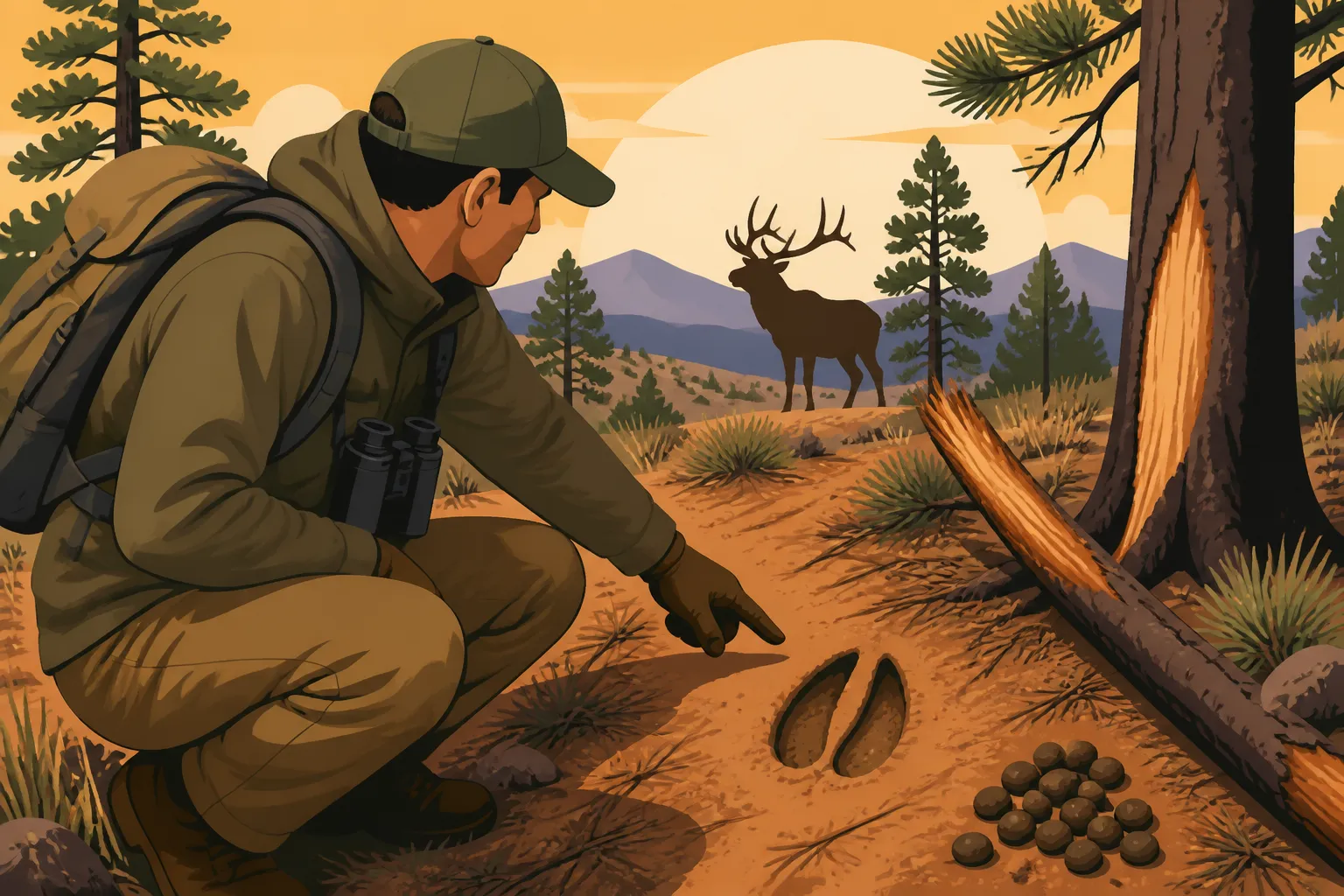
The first step is distinguishing an elk track from a deer or, heaven forbid, a cattle track. Elk tracks are larger, generally more rounded at the front than a deer's, and their split hooves leave a deeper impression. A mature bull elk track can be 4-5 inches long, while a cow's might be 3-4 inches, and a calf's considerably smaller. Deer tracks are typically daintier, more pointed, and smaller overall. Cattle tracks are much rounder, wider, and often leave a much shallower, sloppier impression, especially if the ground is soft.
Determining freshness is where it gets tricky, but it's also the most critical skill. Look at the edges of the track. If they are sharp, crisp, and undisturbed by wind, rain, or falling pine needles, it's likely very fresh – perhaps only a few hours old. If the edges are slightly rounded, dried out, or filled with loose debris, it's older. In moist soil, a fresh track will often have a damp sheen inside the depression, and the displaced soil will still look darker and fresh. If it's a sunny day and the track is completely dry, it's likely more than a few hours old. In dusty conditions, a very fresh track might show small, disturbed particles of dust along its edges that haven't yet settled back down. Even in pine needle duff, a fresh track will show distinct compression of the needles, and the disturbed needles within the track might still be shiny and unbroken. Tools like GoHunt's mapping system can be invaluable for marking these fresh finds and trying to connect them with other sign you discover.
Understanding Elk Trails
Elk are creatures of habit, and while they can be elusive, they often follow established routes. These routes become distinct trails, particularly in well-used areas within the Ponderosa. You’ll find main travel corridors that might connect feeding grounds to bedding areas, or lead directly to a water source. These main trails will often be wider, more heavily worn, and show repeated use by multiple animals over time. You'll see scuffed earth, displaced rocks, and sometimes even broken branches where elk have pushed through.
Beyond main corridors, look for more subtle feeding trails. These will spiderweb out from the main trails into areas where elk have been grazing. They’re less defined, often just a subtle parting of grasses or duff. Escape routes are another type of trail, usually leading towards thicker cover or a steep, difficult-to-navigate slope. These might not be as well-worn, but they'll often point towards areas of dense security. Pay attention to the consistent direction of travel indicated by tracks within these trails. Are they heading uphill towards a bedding area in the morning, or downhill towards a water source or feeding ground in the evening? Often, these trails will lead to critical resources. For instance, connecting these trails to Finding Water in New Mexico's Dry Country can reveal daily patterns, especially in the dry early season. When you’re scouting, whether physically or by E-Scouting a New Mexico Unit Before the Season using detailed satellite imagery, look for these natural funnels and corridors within the Ponderosa that concentrate elk travel.
Rubs, Droppings, Wallies, and Beds: The Storytellers
Elk leave far more than just tracks. They leave a wealth of other "sign" that tells a detailed story about their presence, their health, their sex, and even their current emotional state. Ignoring these other indicators means missing a huge piece of the puzzle.
Interpreting Droppings and Urine
Elk droppings, or scat, are like biological time capsules. Their freshness is easy to gauge once you know what to look for. Fresh droppings will be moist, shiny, and dark in color. If you poke them with a stick (don’t use your finger!), they’ll still feel soft and might even retain some warmth. As they age, they dry out, lose their sheen, become lighter in color, and eventually crumble. Droppings that are completely dry, chalky, or covered in dust or pine needles are old.
The consistency of the droppings can also tell you about an elk’s diet. In lush summer or early fall, when elk are eating a lot of green forage, their droppings might be looser, almost like a cow pie. As vegetation dries out in late fall and winter, their diet shifts to more browse, and the pellets become firmer and more distinct. The sheer volume and location of droppings are also important. A large pile of fresh droppings in a small area indicates a bedding site or a place where an animal spent a significant amount of time. Scattered droppings across a wider area suggest a feeding path. Keep an eye out for urine stains too. A fresh urine spot will be darker, wet, and often have a strong odor. During the rut, a cow in heat might leave a particularly potent scent.
Rubs and Scrapes
Rubs are probably the most exciting sign to find for a bull hunter. These are areas where bulls have scraped their antlers against trees, usually saplings or small Ponderosa pines. They do this to remove velvet, strengthen their necks, and most importantly, to mark their territory and express dominance during the rut. A fresh rub will have exposed, light-colored cambium (the inner bark) that is still moist and perhaps oozing sap, especially on pine trees. The shavings of bark will be scattered at the base of the tree and still appear fresh. Older rubs will have dark, dried cambium, and the bark shavings will be weathered.
The height and size of the rub can give you an idea of the bull’s size. Larger, older bulls tend to rub higher and on thicker trees. If you find multiple fresh rubs in an area, you're likely in a bull's core territory during the rut, or at least a major travel corridor. Beyond rubs, bulls will sometimes paw the ground, creating "scrapes," and urinate into them, further marking their presence with scent. When you find a good rub, spend some time scouting the surrounding area; it's a prime indicator that a bull is or has been active nearby. This sign is particularly valuable in conjunction with understanding Bugle Timing Through New Mexico's Rut, as fresh rubs often coincide with peak rut activity.
Wallies and Beds
Elk love a good wallow, especially during warmer weather or the rut. A wallow is a muddy, often crater-like depression where elk roll in the mud. They do this to cool down, get rid of parasites, and during the rut, bulls will wallow in their own urine and scent-glands to further amplify their presence. A fresh wallow will be muddy, churned up, and likely have fresh tracks around it. You might even find strands of elk hair caught in the mud or on nearby branches. The water in the wallow, if present, will be cloudy and disturbed. Older wallows will be dried out, caked with hardened mud, and the tracks will be weathered. Finding a fresh wallow is like hitting the jackpot – it tells you exactly where elk are spending time and often indicates a key resource or travel point. This is especially true for Hunting a Wallow During Early Archery, as they are often very active early in the season.
Beds are another invaluable piece of the puzzle. An elk bed is simply an impression in the ground or snow where an elk has laid down. Fresh beds will show a clear impression, sometimes with a slight warmth if the animal just left. You might find loose hair, especially from winter coats, and fresh droppings or urine nearby. Look at the surrounding vegetation – is it undisturbed? Or has it been nipped and trampled from the elk feeding before or after bedding? Elk typically bed in areas that offer good vantage points for security, like on a slight ridge or bench, but also provide dense cover from the elements and predators. North-facing slopes in dense Ponderosa are common bedding sites during warm weather, offering shade and cooler temperatures. Analyzing beds in an area, combined with digital mapping tools like GoHunt, can help you identify preferred bedding areas and, consequently, their likely travel routes.
| Sign Type | Freshness Indicators | What it Tells You |
|---|---|---|
| Tracks | Sharp, crisp edges; moist ground; disturbed dust | Recent travel; size/sex of animal |
| Droppings | Moist, shiny, dark; soft texture; warm | Recent presence; diet; likely spent time here |
| Rubs | Exposed, light cambium; oozing sap; fresh shavings | Bull activity; recent presence; rut behavior |
| Wallows | Churned mud; cloudy water; fresh tracks/hair | Recent cooling/rut activity; key resource location |
| Beds | Deep impression; warm; fresh hair/droppings nearby | Recent resting spot; preferred bedding area |
Integrating Sign for a Successful Hunt
Reading individual pieces of sign is one thing, but the real art of elk hunting in Ponderosa timber comes from integrating all these clues to build a comprehensive picture of elk movement and behavior. It’s like being a detective, piecing together fragments of evidence to solve a mystery.
Using E-Scouting and Boots-on-the-Ground
Before you even step foot in the woods, tools like GoHunt's mapping system can be invaluable. You can use satellite imagery and topographic maps to identify potential elk country: areas with good mixtures of Ponderosa timber, open parks, saddles, and drainages that lead to water sources. Look for areas with dense thermal cover near good feeding grounds. This E-Scouting is your starting point. However, no amount of digital scouting replaces boots-on-the-ground. The reality of the New Mexico landscape demands firsthand observation.
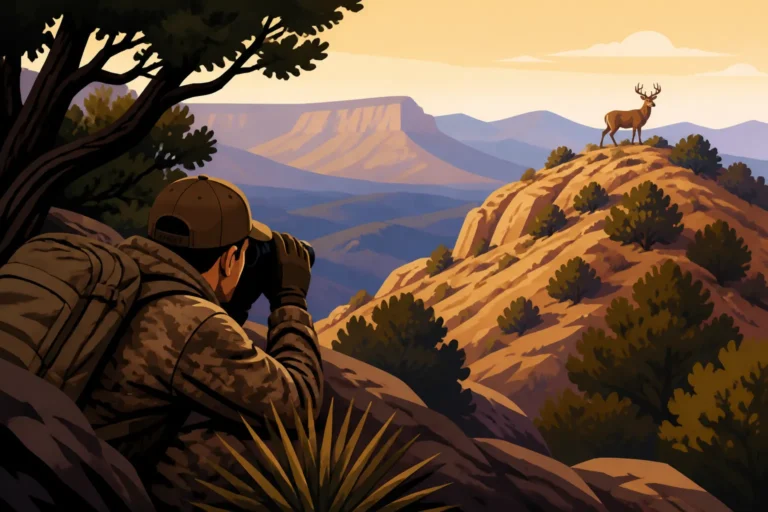
Once in the unit, you're trying to confirm what you saw online and, more importantly, find fresh sign that tells you where the elk are right now. Hike the ridges, walk the drainages, and pay close attention to the transition zones where Ponderosa meets other timber types or open country. These are often the highways for elk moving between feeding and bedding areas. Don’t just look for sign; think about why it’s there. Why did the elk rub that particular tree? Why did they choose to bed on that specific knoll? Understanding these nuances, combined with digital tools like GoHunt's ability to mark waypoints for fresh sign, can help you build an incredibly accurate picture of elk movement. If you're looking for prime glassing locations, remember that Glassing Benches and Parks for Elk can be just as effective in Ponderosa as in wide-open country.
Patience and Persistence
Hunting elk in Ponderosa timber is rarely a quick affair. It demands patience and an incredible amount of persistence. The Ponderosa forest, particularly in places like the Gila, can be vast and seemingly empty. You might walk for miles without seeing a thing, only to stumble upon a concentrated area of fresh sign that changes your entire hunt plan. Don't get discouraged by the lack of immediate visual confirmation. Trust the sign.
Moving slowly and deliberately is key. Elk have incredible senses of smell, hearing, and sight, especially in the more open Ponderosa where sound can carry. Always be mindful of the wind direction; elk will often bed with the wind at their back, allowing them to smell anything approaching from behind and see anything in front. Learning how to read and play the wind, especially Reading Wind in a Deep Gila Canyon, is paramount. A slow, methodical still-hunt, pausing frequently to listen and scan, will pay off far more than busting through the timber. Sometimes, the best strategy is to find a high point, settle in, and just listen for extended periods, especially during the rut when a Locator Bugles for Finding Bulls at Dawn might reveal a bull's location.
Putting It All Together: A Hypothetical Scenario
Imagine you're deep in New Mexico's Unit 15, a vast Ponderosa haven, on an early September archery hunt. You’ve been slowly making your way up a long, gentle slope in the morning, focusing on a bench you saw on your GoHunt map that looks like a good bedding area with dense Ponderosa. As you ascend, you start to notice some old tracks in the dry pine duff – not super fresh, but enough to confirm elk use. You keep pushing, moving cautiously, constantly checking the wind.
Suddenly, you cut a fresh track. The edges are crisp, and the displaced pine needles still have their original sheen. It's a large track, definitely a bull. You follow it carefully, moving at a snail's pace. A hundred yards further, you find a small patch of Ponderosa saplings, and one of them is freshly rubbed. The cambium is still moist, and sap is oozing slightly. This bull is clearly active and perhaps still holding velvet, or just starting to shed. This area is hotter than you thought!
You continue to follow the tracks, now interspersed with fresh droppings – still dark and moist. The tracks lead you towards a small, shaded depression where the Ponderosa gets a bit thicker. There, in the mud, is a fresh wallow, actively churned. You can even see some dark hair clinging to a small branch above it. This is a travel corridor, a resource, and a sign of recent activity. You know the elk are close.
At this point, you're not just looking at individual signs; you're seeing a pattern: a fresh track leading to a fresh rub, then to fresh droppings and a wallow, all moving in a consistent direction towards that initial bedding bench you identified on your map. You now have a solid plan. You might decide to circle downwind of the bedding area and try a very slow stalk, or perhaps find a strategic spot near the wallow to sit and wait. You might even consider calling, knowing that the elk are in the area. This holistic approach to reading sign in the Ponderosa is what turns a hopeful hike into a strategic hunt, leading you closer to New Mexico Elk Are Why the Gila Draws Everyone.
Disclaimer
Hunting is an inherently dangerous activity. Always prioritize safety, understand and follow all New Mexico Game and Fish regulations, and hunt ethically. This guide is for informational purposes only and does not substitute for hands-on experience or professional guidance. Stay safe out there!