Rio Grande Turkey on New Mexico’s Plains
For many hunters, the image of turkey hunting in New Mexico immediately conjures up visions of big Merriam's gobblers strutting through ponderosa pine forests, their iridescent feathers catching the morning sun at high elevations. It's a classic western hunt, no doubt. But what often gets overlooked, and frankly, underestimated, is the equally thrilling and uniquely challenging pursuit of Rio Grande turkeys right here on New Mexico's expansive plains. This guide is dedicated to shedding light on these magnificent birds, their preferred habitats, and the specific strategies that will put you in a prime position for a successful hunt on the more open, eastern side of our beautiful state.
Understanding the Rio Grande Turkey in New Mexico
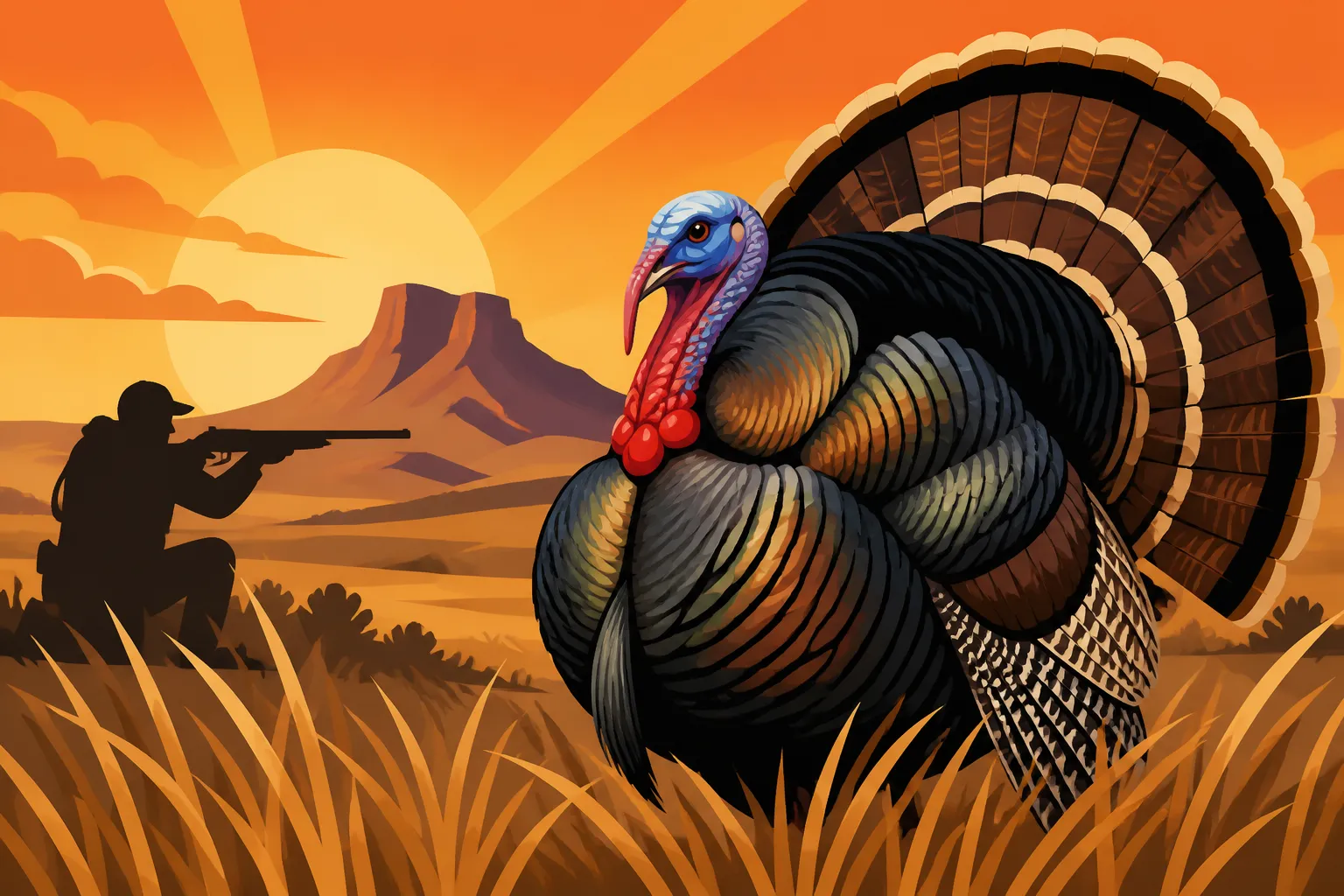
The Rio Grande turkey is a distinct subspecies, often characterized by its lighter-colored tail feather tips, typically a buff or tan, as opposed to the pure white of the Merriam's or the chestnut brown of the Eastern wild turkey. They are truly birds of the open country, adapted to the semi-arid grasslands and riparian corridors that stretch across much of eastern New Mexico. If you've spent any time chasing Merriam's, you'll quickly realize these birds operate on a different rhythm, requiring a shift in your approach and mindset.
Distinguishing Rio Grandes from Other Subspecies
While all wild turkeys share common traits, understanding the nuances of the Rio Grande is key to successful hunting. Visually, as mentioned, the buff-colored tips on their tail feathers and lower back are the most noticeable difference from the Merriam's. Their body feathers are also often described as having a slight greenish-bronze sheen, contrasting with the copper-bronze of an Eastern. More importantly for hunters, their behavior and vocalizations can also differ. Rio Grandes often seem a bit more wary, perhaps a consequence of living in more open terrain where predators are easily spotted. Their gobble might not carry quite the booming resonance you'd hear from a Merriam's echoing through deep timber, but it's just as exciting when it cuts through the still morning air of the plains.
Rio Grande Behavior and Social Structures
Rio Grandes are social creatures, often forming large flocks during the non-breeding season. As spring approaches and the breeding season kicks into gear, these flocks begin to break up, with gobblers forming smaller bachelor groups and hens preparing for nesting. You'll find them gravitating towards water sources and dense cover for roosting. Cottonwood groves along river bottoms or dense mesquite thickets are prime locations. Their daily routine typically involves flying down from roosts at first light, heading to feeding areas, then often loafing in shaded areas during the heat of the day, before returning to roosts in the evening. Understanding this pattern is crucial, as catching them on the roost or intercepting them on their morning fly-down can be highly effective tactics. Their feeding habits often involve agricultural fields, native grasses, and brushy areas where they can find insects, seeds, and berries.
Why the Plains Appeal to Rio Grandes
New Mexico's plains, particularly the eastern half, offer a unique blend of habitat that Rio Grande turkeys thrive in. Unlike the dense forests of the mountains, the plains provide vast expanses of short-grass prairie interspersed with vital riparian zones. These river and creek bottoms, often lined with cottonwoods, willows, and various brush, provide essential roosting sites, thermal cover, and a reliable water source. The adjacent grasslands and agricultural fields then become their primary feeding grounds. The availability of food, water, and secure roosting cover in relatively close proximity makes these plains habitats ideal. While not as rugged as mountain terrain, the open nature of the plains requires different hunting skills, often emphasizing long-range glassing and strategic calling to draw birds into closer range.
Prime Habitats and Regions on the Plains
When you think about hunting Rio Grande turkeys in New Mexico, your focus should immediately shift eastward, away from the high peaks and dense forests. This is where their preferred habitat truly shines, offering unique challenges and rewards for the dedicated turkey hunter. Finding these birds isn't just about looking for any open country; it's about identifying the specific veins of cover, food, and water they rely on.
Riparian Corridors: The Lifeline of Plains Turkeys
The lifeblood of Rio Grande turkeys on the New Mexico plains are the riparian corridors. These aren't always grand rivers, but often smaller creeks, arroyos, and river bottoms like those found along the Pecos River, Canadian River, or even ephemeral drainages that hold water for extended periods after rains. These areas provide the crucial components turkeys need: mature cottonwood trees for roosting, dense underbrush for nesting and escape cover, and a consistent water source.
Imagine scouting an area where a small creek meanders through open prairie. Along that creek, you'll see a line of taller trees – cottonwoods, maybe some Russian olives or willows. This is where you should concentrate your efforts. Birds will use these elevated trees for security at night, flying up at dusk and down at dawn. Finding Water in New Mexico's Dry Country is paramount for all game, and turkeys are no exception, especially in these often-parched environments. Look for their tracks in muddy banks, dusting bowls under shady trees, and droppings beneath potential roost trees. Sometimes, these corridors are surprisingly narrow, just a thin green line snaking through miles of short grass. These are gold.
Agricultural Edges and Ranch Lands
New Mexico's eastern plains are home to significant agricultural operations and vast cattle ranches. Rio Grande turkeys quickly learn to exploit these resources. Crop fields, especially those planted with corn, wheat, or milo, provide abundant food sources. Similarly, cattle operations often have feedlots, scattered hay, and grain, which attract birds. The edges where these agricultural lands meet brushy draws or riparian areas are high-probability spots.
Hunting on these lands often requires securing private land access. Many ranchers are receptive to turkey hunters, especially if you approach them respectfully and well in advance of the season. Always remember that Written Permission Is Required to Cross Private New Mexico Ground, even if you’re just attempting to access public land that might be behind it. These private lands can offer less pressured birds and unique hunting experiences. When scouting, pay attention to the transition zones – where a cultivated field gives way to native prairie or a brushy fenceline. Turkeys will often feed in the open fields during the day and retreat to the safety of nearby cover to loaf or roost.
Key Units and Public Access Opportunities
While much of the eastern plains is private, there are still public land opportunities for hunting Rio Grande turkeys. Parcels of State Trust Land and Bureau of Land Management (BLM) acreage can hold birds, especially if they encompass or are adjacent to the critical riparian corridors mentioned above. Researching specific game management units (GMUs) known for Rio Grande populations, such as those in the eastern tiers of the state, is your first step.
Tools like GoHunt are incredibly valuable for e-scouting these areas. You can use their mapping features to identify public land boundaries, locate those crucial riparian zones, and pinpoint potential roosting and feeding areas long before you ever set foot in the field. Remember that New Mexico Holds Over 30 Million Acres of Public Hunting Land, but not all of it is prime turkey habitat, and access can be fragmented. Focus on areas where public land units connect to water features or provide reasonable access to transition zones between private agricultural areas and public grazing lands. Scouting reports, and talking to local landowners or sporting goods stores, can often point you in the right direction. Always double-check Reading a New Mexico Hunt Code Before You Apply for specific unit regulations and season dates.
| Turkey Subspecies | Primary Habitat | Key Identification | Typical Behavior |
|---|---|---|---|
| Rio Grande | Plains, riparian corridors, agricultural edges | Buff/tan tail feather tips | Often in large flocks, wary, utilize open country for feeding, dense riparian for roosting. |
| Merriam's | Ponderosa pine forests, mountainous terrain | White tail feather tips | More vocal in timber, can be less wary than Rio Grandes, often found at higher elevations. |
| Eastern | Hardwood forests, mixed timber | Chestnut brown tail feather tips | Aggressive callers, often found in dense woodlands, strong tree roosting habits. |
Strategies for Hunting Rio Grandes in New Mexico
Hunting Rio Grande turkeys on New Mexico's plains requires a different playbook than chasing Merriam's in the mountains. The open landscape means birds have an expansive view, making stealth and smart calling even more critical. It's a game of patience, keen observation, and adapting to the birds' movements in a less forgiving environment.
Scouting the Plains for Turkey Sign
Effective scouting is the bedrock of any successful turkey hunt, but for Rio Grandes on the plains, it's absolutely paramount. Forget just walking through the woods; here, you'll be covering more ground, often with optics. Start by looking for those critical riparian corridors and water sources. These are the magnets. Once you've identified potential areas, it's time to put boots on the ground or, more likely, drive slowly and use binoculars and spotting scopes.
You're looking for signs: tracks in dusty roads or muddy creek beds, droppings, feather piles (especially under roost trees), and dusting bowls. Pay close attention to fields adjacent to cover, as turkeys will frequently feed there. Before the season opens, dedicate early mornings to listening for gobblers on the roost. This is perhaps the most crucial scouting step. Drive the perimeter of public land parcels or get permission to access private roads, stop, and listen intently. A locator call – a crow call or owl hooter – can often provoke a shock gobble, giving away a bird's location. Once you locate roosts, watch where the birds fly down and which direction they generally head for feeding or strutting. Tools like GoHunt can help you mark these locations on your map for later use, making E-Scouting a New Mexico Unit Before the Season much more efficient.
Calling Tactics for Plains Birds
Rio Grandes can be a bit more finicky on the call than their mountain cousins. In open country, they have a clear view and can often spot you from a long distance. Therefore, your calling needs to be strategic and often subtle. Early in the morning, a few soft tree yelps or purrs might be all it takes to get them interested when they're still on the roost. Once they're on the ground, don't overcall. A common mistake is to try and "shock gobble" every five minutes. These birds hear it all. Instead, focus on realistic hen sounds – yelps, clucks, and purrs – to pique their curiosity.
A key strategy is calling to make them think you're moving away or are hard to find. This can sometimes make a wary gobbler break and come looking. Decoys can be incredibly effective here, especially a lone hen or a hen and jake setup. Place your decoys where a gobbler can see them from a distance, but far enough from your position that his attention is drawn to the decoys, not to you. If a gobbler is hung up at a distance, sometimes going silent for 15-20 minutes can make him nervous enough to come investigate the last known location of the "hen."
Setting Up and Concealment
Given the open nature of the plains, concealment is absolutely non-negotiable. Pop-up blinds are a turkey hunter's best friend in this environment. Set them up strategically, preferably before first light, near known fly-down areas, feeding zones, or strutting flats. Ensure your blind breaks up your outline against the surrounding vegetation. If a blind isn't feasible, you'll need to use natural cover to your advantage: a large mesquite bush, a dense cluster of yucca, or even a small rise in the terrain.
When setting up, always consider your background. Never silhouette yourself against the skyline. Try to have a dark, solid background that will help you disappear. Because birds can see for a long way, your approach needs to be extremely cautious. Utilize terrain features, creek beds, or brush lines to stay out of sight as you move into position. Playing Thermals on a Canyon Stalk or using draws and benches to close distance are skills that translate well from deer hunting in open country to turkey hunting on the plains. Remember, a gobbler's eyes are his primary defense, so any flicker of movement will likely send him scurrying. Full camouflage, including face mask and gloves, is essential.
Gear and Considerations for Plains Turkey Hunting
Just like the hunting strategy, your gear for Rio Grande turkeys on the plains needs to be tailored to the environment. The wide-open spaces, potential for wind, and varied temperatures demand thoughtful preparation. Having the right tools, from your shotgun to your footwear, can significantly impact your comfort and success.
Shotguns and Ammunition
When it comes to your shotgun, reliability and patterning are key. Most 12-gauge shotguns will do the trick, but ensure you have a good tight-patterning choke, typically a full or extra-full, to give you maximum range on these often-wary birds. Turkey-specific ammunition, which often uses heavier shot (like 4, 5, or 6 shot) and specialized wads, is highly recommended. These shells are designed to deliver a dense, consistent pattern at longer distances, which can be critical when a gobbler hangs up at 40-50 yards.
Before heading into the field, pattern your shotgun with your chosen ammunition and choke. Shoot at various distances – 20, 30, 40, and 50 yards – to understand its effective range. You need a consistent number of pellets in the head and neck region to humanely dispatch a bird. Knowing your gun's limitations will prevent frustrating misses and ensure clean kills.
Decoys and Blinds: Your Best Allies
In the open country of New Mexico's plains, decoys and blinds are often more than just helpful; they're essential. A good pop-up blind provides critical concealment, allowing you to move and adjust without being spotted by sharp-eyed gobblers. Look for blinds that are easy to set up and take down, and that offer good visibility without sacrificing cover. Choose a pattern that blends well with the local vegetation, be it dry grass, mesquite, or a general drab earthy tone.
For decoys, a simple hen-only setup or a hen and jake combination can be highly effective. The jake decoy can sometimes provoke a dominant gobbler to come in, eager to assert his authority. Place your decoys in a visible location, about 15-20 yards from your blind, and facing generally towards your approach. This positioning draws the bird's attention forward, away from your hidden position. Make sure your decoys are lightweight and easy to carry, as you might need to move them if the birds shift their pattern. Some hunters also find motion decoys, like a flapping wing decoy, can add realism, but ensure they are legal in your chosen unit.
Weather, Terrain, and Hydration
New Mexico's plains can be a land of extremes. Early spring mornings can be frosty, while midday temperatures can quickly soar, making Heat Management on an Early Season Hunt a real concern. Layering your clothing is crucial, allowing you to shed or add layers as the day progresses. Wind can also be a significant factor, making it difficult to hear distant gobblers and carrying your scent across vast distances. Adjust your calling volume and consider hunting sheltered areas if the wind is really howling.
The terrain itself, while appearing flat, can have subtle rises, draws, and dry creek beds that can be surprisingly challenging to navigate, especially when carrying gear. Comfortable, durable boots are a must. Lastly, hydration is paramount. Even on cooler days, walking in dry air can lead to dehydration. Always carry more water than you think you'll need, especially if you're planning to be out for several hours or making long walks. A reliable pack that can comfortably carry your water, calls, decoys, and other essentials will be invaluable.
Disclaimer
This article is for general informational purposes only and does not constitute professional advice. Laws, prices and regulations vary by location and change over time. Consult a qualified professional for guidance on your specific situation.