Hunting Gambel’s Quail in New Mexico Desert
The vast, sun-baked landscapes of the New Mexico desert can feel intimidating, a stark contrast to the timbered mountains most big game hunters envision. For many, the idea of chasing small, fast-flying birds like Gambel's quail through cholla and creosote seems utterly baffling, a monumental task in such an immense environment. But don't let the desert deter you! This guide will break down the precise strategies, necessary gear, and critical understanding of Gambel's quail behavior that will turn those sprawling, intimidating vistas into exciting, productive hunting grounds.
Understanding Gambel's Quail Habitat and Behavior in the Desert
Hunting Gambel's quail in the New Mexico desert isn't like walking through a manicured field. These birds are uniquely adapted to their arid environment, and understanding their preferences for cover, food, and water is the cornerstone of any successful hunt. You can’t just wander aimlessly; you need to think like a quail to find them.
Preferred Desert Habitats and Cover Types
Gambel's quail thrive in the hot, dry, brushy country of the Sonoran and Chihuahuan deserts, particularly in southern New Mexico. They absolutely love dense thickets, often comprised of mesquite, catclaw acacia, and the notoriously spiky cholla cactus. These thorny havens provide critical protection from aerial predators like hawks and ground predators like coyotes. When a covey flushes, they often dive straight into the nearest, nastiest patch of thorns, making retrieval a challenge for both hunter and dog. Look for areas where these thorny shrubs are interspersed with washes, rocky outcrops, and patches of taller grasses. These mixed habitats offer the perfect balance of cover, nesting sites, and feeding opportunities.
Another key feature to scout for is proximity to water. While Gambel's quail are incredibly resilient and can go for extended periods without free water, they will concentrate around permanent or semi-permanent sources, especially during dry spells or hotter parts of the season. This could mean natural springs, abandoned stock tanks, or even ephemeral puddles after a rare desert rain. A good mapping application, such as the one offered by GoHunt, can be invaluable for identifying potential water sources and dense cover patches before you even set foot in the field. These birds aren't going to be out in the middle of a barren, flat plain; they're hugging the edges, the drainages, and the dense pockets of vegetation. Water Sources That Concentrate Desert Game is a great resource if you're trying to locate those key areas.
Daily Routines and Feeding Patterns
Gambel's quail are creatures of habit, much like other desert dwellers trying to conserve energy and avoid predators. They typically roost at night in dense brush or low trees to escape nocturnal hunters. As the sun begins to warm the desert floor, they'll descend to feed. Their diet consists primarily of seeds, insects, and succulent plant parts, which provide them with both sustenance and moisture. They're opportunistic eaters, taking advantage of whatever is most readily available. After their morning feed, especially as temperatures climb, coveys will often move to shady, dense cover to loaf during the hottest part of the day. This midday siesta is crucial for managing their body temperature in the intense desert heat.
In the late afternoon, as the sun dips and the desert starts to cool, they'll emerge again for another feeding session before heading back to their roosting sites. This predictable pattern gives hunters prime opportunities during the early morning and late afternoon hours. During these times, coveys are more likely to be out in slightly more open areas, scratching for seeds and insects, making them more accessible to a dog's nose or a hunter's eye. Pay attention to areas with good seed-producing plants, like various grasses and forbs, especially those growing along washes where moisture might linger a bit longer. Don't forget that When New Mexico Quail Season Opens will directly impact how early or late in the year you'll be dealing with these routines.
Essential Gear and Preparations for Desert Quail Hunting
Hunting Gambel's quail in the New Mexico desert isn't just a walk in the park; it's an exercise in preparedness. The environment is harsh, unforgiving, and demands that you come equipped for success and safety. From specialized footwear to water strategies, every piece of gear plays a vital role.
Footwear, Clothing, and Personal Safety
Your feet are your most important asset when chasing quail in the desert. You'll be covering miles over rocky, uneven, often thorny terrain. A good pair of sturdy, comfortable, snake-proof or snake-resistant boots is non-negotiable. Look for boots with aggressive traction and ankle support to navigate loose rock and sandy washes. Brands known for their durability and protection are worth the investment. Don't skimp here; a blister or thorn puncture can end your hunt prematurely. Choosing Boots for Rocky Desert Ground provides even more detailed advice on this critical piece of gear.
For clothing, think layers, even in the desert. While days can be scorching, mornings can start surprisingly cool, especially if you're out before dawn. Lightweight, breathable, long-sleeved shirts and pants are essential for sun protection and to minimize cuts and scrapes from brush. Opt for quick-drying synthetic fabrics. Blaze orange isn't typically required for quail hunting, but it's always a good idea to wear some highly visible color for safety, especially if you're hunting with partners. A wide-brimmed hat is also a must for sun protection.
Personal safety in the desert goes beyond just what you wear. Carry a first-aid kit well-stocked for snakebites, cuts, and blisters. A reliable GPS device or a mapping app like the one available through GoHunt is critical for navigation, as landmarks can be subtle and disorienting. Always let someone know where you're going and when you expect to return. Cell service is often nonexistent in remote desert areas, so consider a satellite messenger for emergencies. Snake Awareness on a September Archery Hunt offers insights into dealing with venomous encounters, which are a real possibility in quail country.
Water, Hydration, and Nutrition
This cannot be stressed enough: water is life in the desert. You will dehydrate faster than you think, especially when actively walking and exerting yourself in the sun. Carry far more water than you believe you'll need. A minimum of 2-3 liters per person for a half-day hunt is a starting point, but adjust upwards based on temperature and exertion. Electrolyte packets or drinks are also excellent for replenishing vital salts lost through sweat. Don't wait until you're thirsty to drink; sip regularly throughout the hunt.
For dogs, the water requirement is even higher. Their internal temperature regulation is less efficient, and they can overheat rapidly. Carry a dedicated water bottle and collapsible bowl for your canine companion, and offer water frequently. Stop in the shade often to allow both you and your dog to cool down. High-energy snacks for yourself will help maintain your stamina throughout the day. Nuts, energy bars, and dried fruit are lightweight and pack a punch. Remember, Heat Management on an Early Season Hunt is crucial for both you and your dogs.
Here's a quick reference for essential desert hunting gear:
| Category | Item | Importance | Notes |
|---|---|---|---|
| Footwear | Snake-proof/resistant boots | Protection from thorns, rocks, and venomous snakes; ankle support | Break them in before the hunt! |
| Clothing | Lightweight, breathable layers | Sun protection, abrasion resistance, temperature regulation | Long sleeves and pants recommended |
| Hydration | Water (3-5 liters/person/day) | Critical for preventing dehydration and heat exhaustion | Carry extra, consider electrolyte additives |
| Navigation | GPS device / Mapping app (GoHunt) | Essential for staying oriented in vast, often featureless terrain | Download offline maps |
| Safety | First-aid kit | Treat snakebites, cuts, blisters; personal medications | Include mole skin for blisters, tourniquet, pain relievers |
| Communication | Satellite messenger (optional) | Emergency communication where cell service is absent | For remote areas, highly recommended |
| Dog Gear | Water, bowl, protective vest | Hydration, paw protection, visibility, thorny bush protection | Training collar, e-collar (if used) |
| Hunting Tools | Shotgun, ammo, bird vest/bag | Necessary for the hunt itself | Consider smaller shot sizes (#7.5, #8) for quail |
Effective Hunting Strategies and Dog Work
Hunting Gambel's quail is a highly active endeavor. These birds are known for running, and they run fast. This means a different approach than sitting in a blind or slow-stalking. It's about covering ground, working with your dog, and being ready for fast-flushing action.
The Role of a Good Bird Dog
A well-trained bird dog is almost indispensable for successful Gambel's quail hunting. These birds love to run, and they hide in the thickest, spikiest cover imaginable. Without a dog to pinpoint their location, hold them, and retrieve downed birds from thorny tangles, your success rate will plummet, and you'll likely lose many birds. Pointers, setters, and versatile breeds like German Shorthaired Pointers or Brittanys excel in this environment. They have the stamina to cover miles, the nose to find scent in dry conditions, and the grit to push through abrasive brush.
Your dog needs to be conditioned for the desert heat and terrain. Start their training and exercise well before the season. Introduce them to thorny cover so they learn to navigate it carefully without getting torn up. Paw protection, such as booties, can be a lifesaver for dogs covering miles of sharp rocks and stickers. Most importantly, ensure your dog is rock-solid on "whoa" or "hup" to hold point, and retrieves to hand reliably. A dog that busts coveys or refuses to retrieve will lead to frustration and lost birds. Regular hydration breaks for your dog are paramount, especially during warmer parts of the day.
Walking and Flushing Tactics
Gambel's quail typically congregate in coveys ranging from a few birds to dozens. When disturbed, their first instinct is to run, often surprising hunters with their speed through the brush. They'll run quite a distance before deciding to flush, or they might simply melt into an impossibly dense patch of cholla. This running behavior is why a wide-ranging bird dog is so valuable. The dog can scent them, get ahead, and pin them down, forcing a flush.
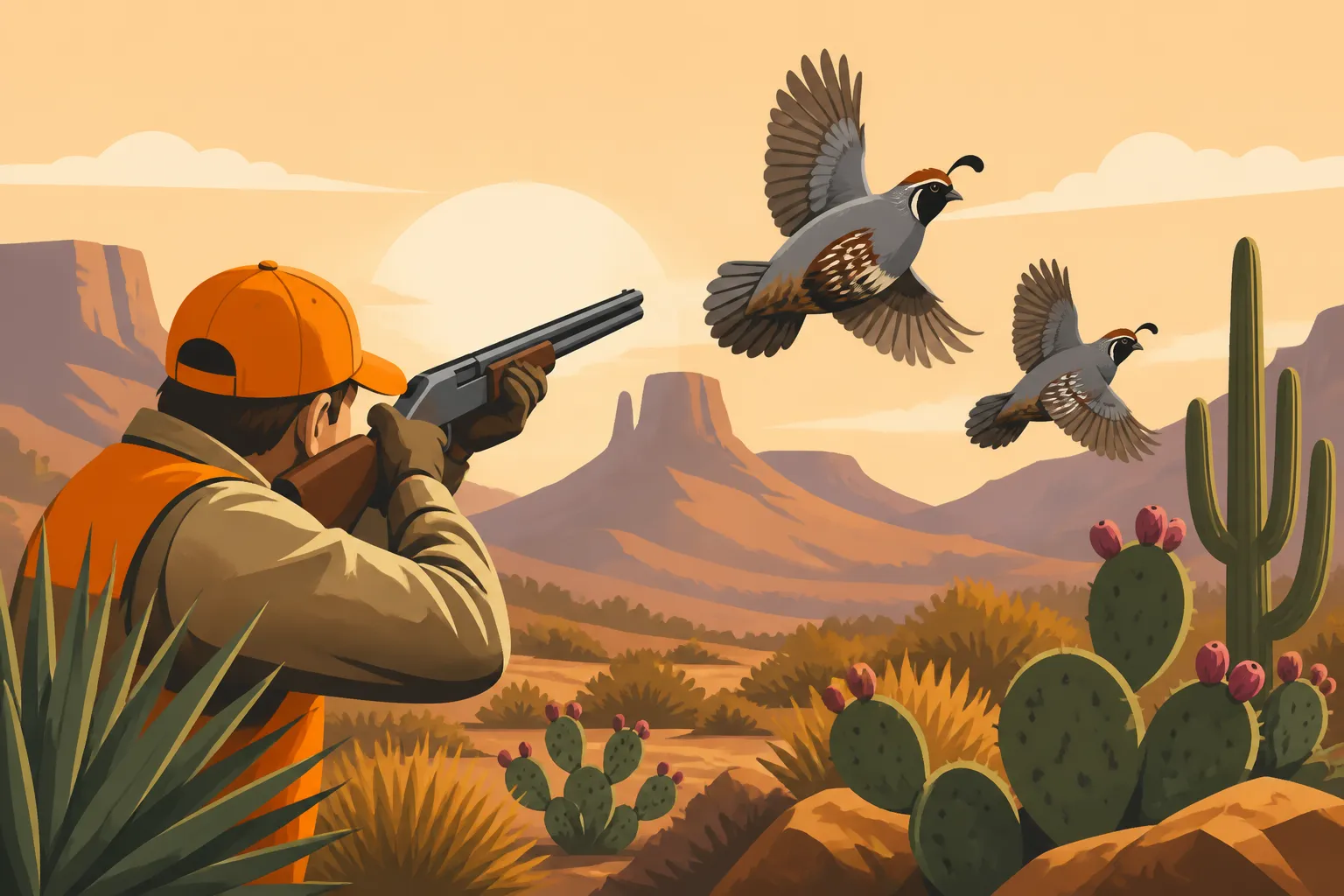
When hunting, focus on working the edges of dense cover, especially along washes, fence lines, and the perimeter of mesquite bosques. Walk slowly and deliberately, allowing your dog to work thoroughly. As you approach likely holding cover, be ready. Quail can flush in an explosive burst, often scattering in multiple directions. Be prepared to pick out a single bird, swing smoothly, and take your shot quickly. If you miss, mark where the covey scattered. Gambel's quail, once broken up, will often hold tighter as singles, offering follow-up opportunities. Hunting the Chihuahuan Desert Units will often put you in prime Gambel's country, so understanding this terrain is crucial.
Shotgun and Ammunition Selection
For Gambel's quail, a fast-handling shotgun is key, as you'll be taking quick shots at fast-moving targets. A 20-gauge or 12-gauge shotgun is typical, often with improved cylinder or modified chokes for a good spread in close quarters. Since these birds are relatively small and delicate, smaller shot sizes are effective. Many hunters opt for 7.5 or 8 shot in lead, or equivalent steel shot if required. The goal is a dense pattern that can reliably connect with a quick-flying bird without excessive pellet energy that would damage the meat. Carry enough shells, but don't overload yourself; you'll be covering a lot of ground. Remember that New Mexico Quail Bag Limits by Species will dictate how many shells you might need, though hitting that limit on these speedy birds is a feat in itself!
Post-Hunt Considerations and Regulations
The hunt doesn't end when the birds are in the bag. Proper handling of your harvest and adherence to regulations are crucial for a successful and ethical experience.
Field Dressing and Meat Care in the Heat
New Mexico's desert climate, particularly during the early quail season, can be exceptionally hot. This means immediate and proper field dressing is essential to preserve the quality of your harvested birds. As soon as you retrieve a bird, dispatch it quickly and humanely if it's not already expired. Then, get to work. Plucking and gutting immediately after harvest, while perhaps messy in the field, will allow the meat to cool down much faster, preventing spoilage. You can carry a small game shears for convenience.
Place the cleaned birds in a breathable game bag, not a plastic bag, which would trap heat and moisture, accelerating spoilage. Keep the game bag out of direct sunlight and allow air circulation to continue the cooling process. Many hunters carry a cooler with ice in their vehicle to immediately transfer the birds to once they return from the field. This quick cooling is especially important if you have a longer drive home or plan to process the birds later. Neglecting meat care in the desert heat is a surefire way to ruin your hard-earned harvest.
Regulations, Licenses, and Bag Limits
Before you even step foot in the desert, you need to be thoroughly familiar with New Mexico's hunting regulations for small game. This includes possessing the appropriate hunting license and any required stamps or validations. Don't assume anything; regulations can change annually. The New Mexico Department of Game and Fish website is your best source for the most current information. The New Mexico game hunting license is the first step for any hunter, resident or nonresident.
Pay close attention to season dates and bag limits. Gambel's quail season typically opens in the fall and runs through late winter, but exact dates can vary by year and region. New Mexico Quail Season Openers will give you the specific dates to plan around. Bag limits specify how many birds you can harvest per day and how many you can possess in total. These limits are in place to ensure sustainable populations. Violating these regulations can result in hefty fines and loss of hunting privileges, so read the rulebook carefully. Always know your target before you shoot, ensuring it's a legal game bird and not a non-game species or another protected bird.
Respecting the Land and Other Users
Hunting in the vast public lands of New Mexico, whether it's Bureau of Land Management (BLM) land or State Trust Land (for which your hunting license often serves as an easement – check specific rules for A New Mexico License Is Your State Trust Land Easement), comes with the responsibility of being a good steward. Pack out everything you pack in, including spent shotgun shells. Leave no trace of your presence. Respect all signs regarding motorized vehicle use and stay on established roads and trails. Off-road travel is strictly prohibited in many areas and can cause significant damage to fragile desert ecosystems.
The desert is shared by many users: hikers, campers, photographers, and other hunters pursuing different species like Cottontail and Jackrabbit Seasons. Be courteous and respectful of everyone you encounter. Give other hunters space, and if you're hunting with dogs, ensure they are under control and not disturbing others. Always ask for permission before crossing private land, and respect posted signs. Being a responsible and ethical hunter helps ensure that these opportunities remain available for generations to come.
Disclaimer
This article is for general informational purposes only and does not constitute professional advice. Laws, prices and regulations vary by location and change over time. Consult a qualified professional for guidance on your specific situation.