Persian Ibex in New Mexico’s Floridas
For many hunters, the idea of chasing exotic species usually conjures up images of far-flung international safaris or high-fence preserves. But right here in New Mexico, we have a unique opportunity to pursue a truly wild, incredibly challenging mountain game animal: the Persian ibex. This guide will walk you through everything you need to know about these elusive creatures and the formidable Florida Mountains they call home.
A Truly Unique Mountain Hunting Challenge
Let's be honest, drawing any big game tag in New Mexico can feel like winning the lottery, but an ibex tag is in a league of its own. When you finally get that notification, the excitement is palpable, quickly followed by a stark realization: you’re about to embark on one of the most physically demanding hunts the state has to offer. This isn't your average whitetail stand hunt; this is an adventure into truly rugged, unforgiving terrain, testing every ounce of your physical and mental fortitude. It’s a hunt that can push even the most seasoned mountain athletes to their limits, but the reward of a wild Persian ibex billy makes every scraped knee and burning lung worth it.
The Ibex Introduction Program
The story of how Persian ibex came to call New Mexico home is fascinating, and it speaks to the state's forward-thinking approach to wildlife management. Back in the late 1960s and early 70s, the New Mexico Department of Game and Fish began an ambitious program to introduce these incredible animals to the state. They weren't just picked at random; the Florida Mountains in the southwest corner of New Mexico were specifically chosen because their rugged, steep, rocky slopes and arid environment closely mimicked the ibex's native habitat in the Middle East. It was a bold move, and against considerable odds, it worked. The first animals were released in 1970, and the population slowly but surely took hold.
This deliberate introduction created a totally unique hunting opportunity for residents and non-residents alike. Unlike many other big game species, the ibex population remains relatively small and confined almost exclusively to the Florida Mountains, which means tags are highly coveted and difficult to draw. This limited access ensures a high-quality hunt for those lucky enough to pull a tag. If you want to dive deeper into the history, you might find more fascinating details on how these animals originally reached our state by exploring "How Ibex Reached New Mexico".
A Unique New Mexico Opportunity
So, what makes a New Mexico ibex hunt so special? For starters, it’s one of the very few places in North America where you can hunt free-range Persian ibex. We're not talking about a fenced operation; these animals are as wild as they come, surviving and thriving in one of New Mexico’s most challenging mountain ranges. The very nature of their habitat means they are incredibly wary and possess an uncanny ability to navigate steep, broken terrain with breathtaking agility. Successfully harvesting an ibex isn't just about good shooting; it's about outsmarting an animal perfectly adapted to its environment, often on their terms.
The opportunity itself is a testament to conservation. The New Mexico Department of Game and Fish actively manages this population, ensuring sustainable hunting opportunities while maintaining a healthy herd. It's a true gem in our state's hunting portfolio, offering an experience unlike almost any other big game pursuit. The allure of the Florida Mountains, combined with the extreme challenge of the hunt, creates a narrative that seasoned hunters chase for years, often dreaming of the day they can trade their elk rifle for an ibex-specific setup.
Understanding the Florida Mountains: Home of the Ibex
The Florida Mountains, often affectionately called "The Floridas" by locals, are not your typical picturesque mountain range with sprawling timber and alpine meadows. No, these mountains are a stark, jagged, and formidable landscape, a true desert island rising abruptly from the Chihuahuan Desert floor. They are steep, rocky, and covered in prickly pear, agave, and various thorny bushes, making every step a deliberate act. This is precisely why the ibex thrive here – it’s a fortress.
Rugged, Remote Terrain
When we talk about rugged, we mean rugged. The Florida Mountains present a constant, steep incline, with minimal flat ground once you start gaining elevation. You'll encounter loose scree, boulders the size of small cars, and sheer rock faces that seem to defy gravity. The trails, where they exist, are often faint and disappear quickly, leading to a lot of scrambling and route-finding through unforgiving landscapes. Navigating this environment requires strong ankles, excellent balance, and a mindset prepared for relentless uphill climbs and tricky descents. It’s not uncommon to gain and lose thousands of feet of elevation multiple times in a single day.
One of the biggest frustrations hunters face in the Floridas is simply covering ground efficiently. Every mile feels like two or three, and a seemingly short distance on a map can take hours to traverse due to the verticality and obstacles. Forget about driving anywhere once you're on the mountain; this is a true wilderness experience on foot, albeit a small, isolated one. Because of this, proper physical conditioning is paramount. If you're looking for more insight on preparing for such a grueling climb, check out "Preparing Physically for a High Elevation Hunt".
Weather and Seasonal Considerations
The Florida Mountains, being in southern New Mexico, experience extreme temperatures. During early season hunts, which often fall in October, it can still be incredibly hot during the day, with temperatures soaring into the 80s or even 90s Fahrenheit. Carrying enough water becomes a critical survival consideration, not just a convenience. These warm temperatures mean you'll sweat buckets, demanding even more from your body as you ascend the steep slopes. Hydration packs with multiple liters are not optional; they are essential.
As the season progresses into November and December, temperatures cool down significantly, bringing comfortable daytime hunting conditions but often frigid nights. Snow isn’t unheard of at higher elevations, adding another layer of challenge. Wind is also a constant factor, especially on exposed ridges, making glassing difficult and chilling you to the bone. Understanding how to layer effectively, even in desert environments, is crucial. The dramatic swings mean you might start hiking in the dark with a puffy jacket and be down to a t-shirt by midday. You’ll also need to consider "Choosing Boots for Rocky Desert Ground", as the terrain will quickly chew up inadequate footwear.
Ibex Biology and Behavior
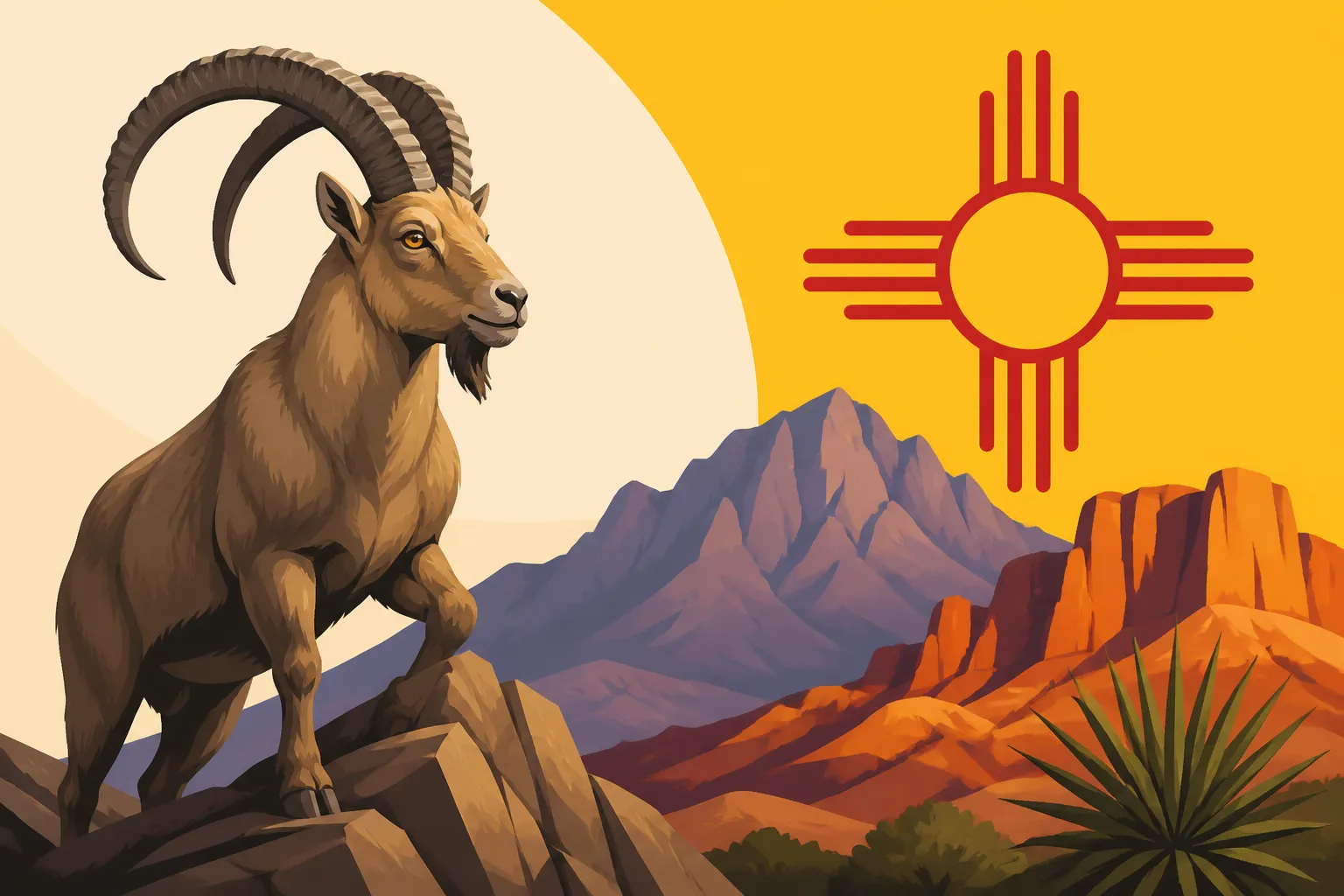
The Persian ibex is a species of wild goat known for its impressive, scimitar-shaped horns that can grow to astonishing lengths, sometimes exceeding 50 inches on mature males. Their adaptations to mountainous terrain are truly remarkable, allowing them to navigate cliffs and ledges that would be impassable for most other animals.
Distinctive Features and Adaptations
Beyond their magnificent horns, Persian ibex have a stocky, muscular build, with a coat that can vary in color from reddish-brown to a lighter tan, often with darker markings on their legs and face. Mature billies develop a distinctive dark beard and a black stripe running down their back. But it’s their feet that are truly amazing. Their hooves are designed for incredible grip on rocky surfaces, with sharp, hard outer edges and soft, rubbery inner pads that provide traction on slick rock. This gives them an almost supernatural ability to climb and descend steep, unstable terrain with confidence.
Their eyesight is also incredibly keen, perfectly suited for spotting predators or hunters from vast distances in their open, rugged habitat. This makes a successful stalk incredibly challenging, as they are often the first to see you, even when you think you’re hidden. They are also notoriously tough animals, capable of absorbing a shot and covering significant ground if not hit precisely. This resilience adds another layer of respect and challenge to the hunt.
Daily and Seasonal Movements
Ibex behavior is heavily influenced by the rugged landscape and the need for food, water, and security. Typically, they are most active during the cooler parts of the day – early morning and late afternoon – retreating to shaded areas on north-facing slopes or caves during the intense midday sun, especially during warmer months. This is when they will often bed down, making them harder to spot.
Water sources are scarce in the Florida Mountains, and ibex, like many desert animals, are incredibly efficient at conserving moisture. However, they do need to drink, and identifying springs, seeps, or man-made water catchments can be key to locating them. During cooler periods, their need for water might be less frequent, but it's still a critical resource.
Mature billies often separate from the nannies and younger animals, forming bachelor groups that tend to inhabit the highest, most inaccessible peaks and ridges. They seek out the steepest, most secure areas, making their pursuit even more arduous. The rut typically occurs in the late fall or early winter, around November to January, which can influence their movements and make them slightly more visible as they become more focused on breeding. Understanding "When the Elk Rut Peaks in New Mexico" might give you a general idea of how other species behave during mating season, though ibex are distinct.
Hunting Strategies and Tactics for New Mexico Ibex
Hunting ibex in the Florida Mountains is a game of patience, glassing, and relentless physical effort. You can't just wander around hoping to stumble upon one; you need a well-thought-out strategy, precise execution, and the physical conditioning to see it through.
The Art of Spot and Stalk
The spot and stalk method is the quintessential approach for ibex hunting. Given the open, rocky terrain, you’ll spend countless hours behind your optics, systematically picking apart the mountainsides. This is where quality optics truly shine. You’ll want powerful binoculars, 10x or 12x at a minimum, and a high-quality spotting scope mounted on a sturdy tripod. Don’t skimp here; your optics are your most important tool. For insights on maximizing your setup, consider reading about "Optics Power for New Mexico's Open Country" and "Tripod Setup for Glassing From a Ridge".
Start glassing at first light from a high vantage point that offers expansive views of potential ibex habitat. Look for movement, subtle color changes, or the distinctive shape of horns against the rocks. Pay close attention to north-facing slopes where they might be bedding during the day. Once you spot an animal, the real work begins. You'll need to carefully plan your approach, using terrain features, shadows, and wind direction to get within shooting range. This often involves long, slow, painstaking stalks over treacherous ground, sometimes taking hours for what looks like a short distance.
It’s often best to grid-glass a basin methodically to ensure you don’t miss anything. If you're unfamiliar with this technique, a useful resource might be "The Grid Glassing Method, Step by Step". The key is extreme patience and being prepared for multiple failed stalks. Ibex are masters of their domain, and they will bust you if you make a mistake.
Essential Gear for Ibex Hunters
Given the extreme nature of an ibex hunt, your gear becomes critically important. Lightweight but durable is the name of the game.
Optics: As mentioned, top-tier binoculars (10x-15x) and a spotting scope (20-60x or 20-80x) with a stable tripod are non-negotiable. Don’t forget lens cloths and a protective cover for your optics.
Footwear: This is perhaps the most critical item. You need sturdy, supportive, high-ankle boots with excellent traction and stiff soles. Break them in well before your hunt! Blisters in the Floridas can end your hunt.
Clothing: Layering is essential due to temperature swings. Think moisture-wicking base layers, insulating mid-layers (fleece or synthetic puffy), and a durable, windproof/water-resistant outer shell. Blaze orange may be required depending on the season and weapon, so check regulations carefully.
Backpack: A comfortable daypack or small overnight pack (30-50 liters) capable of carrying water, food, extra layers, a first-aid kit, and essential recovery tools (knife, game bags). If you intend to pack out meat yourself, consider a larger pack with a sturdy frame.
Weapon: A flat-shooting rifle in a caliber like 6.5 Creedmoor, .270 Win, 7mm Rem Mag, or .300 Win Mag is ideal. Shots can often be long, across canyons, and a stable shooting platform like a bipod or shooting sticks will be invaluable on the rocky terrain. Ensure your rifle is zeroed precisely for the distances you anticipate shooting. For more on rifle selection for mountain game, consider what’s used for elk in similar terrain, like in "Choosing a Rifle for Gila Timber and Canyons".
Navigation: GPS device (Garmin inReach or similar), a reliable mapping app on your phone (like GoHunt or onX Hunt), and a physical map and compass as backup. The Florida Mountains are remote, and getting lost here is a serious situation. Remember to fully download maps for offline use before you leave cell service.
Water: Absolutely critical. Carry a minimum of 3-4 liters for a day hunt, and know where potential refill points (even if they’re stock tanks) are on your map. A water filter or purification tablets are smart additions.
Physical Demands and Preparation
I can't stress this enough: an ibex hunt in the Florida Mountains is an extreme physical challenge. This is not a hunt for the faint of heart or the unprepared. You will be climbing steep, unforgiving terrain, often with a heavy pack, in potentially hot or cold conditions. Stamina, strength, and mental toughness are paramount.
Your training should focus on leg strength, cardiovascular endurance, and balance. Incorporate exercises like hiking with a weighted pack, stair climbing, lunges, and squats into your routine. If possible, train on uneven, rocky terrain to get your ankles and knees accustomed to the stress. Start months in advance, not weeks. The more prepared you are physically, the more you’ll enjoy the hunt and the higher your chances of success. Many hunters find themselves utterly exhausted by midday, making clear decision-making and accurate shooting incredibly difficult. Don't let your physical limitations be the reason you don't seize the opportunity when an ibex finally presents itself.
Drawing an Ibex Tag in New Mexico
Okay, so you're mentally and physically ready to tackle this beast of a hunt. Now comes the biggest hurdle: actually drawing a tag. New Mexico ibex tags are among the most sought-after in the state, making the draw a true test of patience and persistence.
New Mexico Ibex Draw Odds
Let's not sugarcoat it: "New Mexico Ibex Draw Odds" are incredibly tough. The number of tags issued each year is very limited, reflecting the specialized nature of the hunt and the desire to manage a sustainable population. For non-residents, the odds are even slimmer due to the state's allocation system, which reserves a significant percentage of tags for residents. The 6 percent New Mexico nonresident allocation often makes these hunts a once-in-a-lifetime draw for those outside the state.
Many hunters apply for years, even decades, before finally drawing an ibex tag. There are no preference points in New Mexico, meaning every applicant, whether it's their first time applying or their twentieth, has an equal chance each year. This is both a blessing and a curse; it means a brand new applicant could draw, but it also means consistent applicants don't build seniority. Data from past draws, often available through resources like GoHunt, can give you an idea of success rates for residents vs. non-residents, and even for different hunt codes within the ibex season. This kind of information is invaluable when deciding how to structure your application.
| Applicant Type | Hunt Code Example (Fall) | Avg. % Draw Odds (Recent Years) | Number of Tags |
|---|---|---|---|
| Resident | IBX-1-100 | ~1.5 – 3.0% | Very Limited |
| Non-Resident | IBX-1-100 | <0.5% | Extremely Limited |
| Resident | IBX-1-200 (Youth) | ~5 – 10% | Extremely Limited |
Note: These are illustrative average percentages based on typical draw statistics and can vary significantly year to year. Always consult the most current New Mexico Department of Game and Fish draw reports.
Application Process and Considerations
Applying for an ibex tag in New Mexico follows the same general process as applying for other big game species. You'll need to purchase a Game Hunting License first, then submit your application for ibex, typically listing up to three hunt choices. The application period usually runs from mid-January to mid-March, with a hard deadline of March 18th at 5 p.m. Mountain Time. Missing this deadline means waiting another year, which for an ibex tag, can feel like an eternity. For detailed instructions on application deadlines and processes, refer to guides like "All New Mexico Applications Close March 18 at 5 p.m.".
When selecting your hunt choices, it's crucial to research each hunt code thoroughly. Some hunts might be earlier in the season, presenting warmer weather challenges, while others might be later, with cooler temperatures but potentially more difficult access due to snow. Consider your physical capabilities and preferences when making your choices. While some hunters will apply with an outfitter to enter the 10 percent New Mexico outfitter pool, this typically requires a signed contract and doesn't guarantee a tag. You also need to consider the cost of the tag if successful; a nonresident New Mexico Oryx tag runs $1,623, giving you an idea of the expense for other highly desirable exotic hunts.
Don't be discouraged by the long odds. Many hunters apply for an ibex tag year after year, viewing it as a long-term goal. It’s a hunt that can literally take a lifetime to draw, but the reward of experiencing the Florida Mountains and pursuing one of North America's most unique trophies is well worth the wait.
Field Judging an Ibex Billy
Once you’ve drawn that coveted tag and put in the grueling effort to locate an ibex, the moment of truth arrives. Field judging an ibex, especially a mature billy, is crucial for an ethical and successful hunt. You want to make sure you’re taking a mature animal, honoring the opportunity and the species.
Judging a New Mexico Ibex Billy
Judging a Persian ibex in the field can be tricky, particularly if you’re not familiar with the species. The most important characteristic to assess is horn length and mass. Mature billies will have horns that sweep back in a graceful arc, often showing distinct annulations (ridges) along their length. Look for horns that extend well past the ears and start to curl significantly. A truly mature billy will often have horns approaching or exceeding 40 inches, with some reaching over 50 inches. This is often the goal for hunters, and if you’re looking for a trophy, understanding what to look for is key. "Judging an Ibex in the Florida Mountains" provides an even deeper dive into this skill.
Beyond length, pay attention to the horn bases. Mature billies will have thick, heavy bases that carry their mass well through the length of the horn. Also, observe the animal's body size; older billies tend to be larger and more heavily muscled than younger ones or nannies. They'll often have a darker, more grizzled coat, and a pronounced beard. It can be easy to get "horned out" when you see any ibex, but try to remain calm, use your spotting scope, and really analyze the animal before making a decision. Take your time, if the situation allows.
Ethical Hunting and Retrieval
Once you’ve identified your target and positioned yourself for a shot, ethical considerations come to the forefront. Ibex are notoriously tough, and a clean, quick kill is paramount. Aim for the vitals, typically the shoulder/lung area. Given the steep, rocky terrain, a marginal hit can lead to an incredibly difficult, if not impossible, recovery. This is why practicing your shooting from various positions – especially prone and kneeling – and at different angles is vital. Don's just shoot from a bench rest; practice real-world shooting scenarios.
The moment you pull the trigger, observe the animal closely. Mark its location and the direction it goes if it runs. Even if it drops in its tracks, approach with caution, as a wounded animal on steep terrain can be dangerous. Once the animal is down and confirmed expired, the real work of retrieval begins. Getting an ibex out of the Florida Mountains can be a monumental task. The same steep, rugged terrain that makes them so challenging to hunt also makes them incredibly difficult to pack out.
You'll need quality game bags to protect the meat from flies and dirt. Plan on breaking the animal down into manageable pieces. Consider boning out the meat to reduce weight. This is where proper physical conditioning truly pays off. Many hunters hire outfitters or bring experienced hunting partners to help with the pack out. It’s a grueling physical endeavor, but the meat of an ibex is delicious, often described as lean and mild, making the effort worthwhile. Always make sure you understand the "Meat Salvage Requirements for Big Game" in New Mexico to ensure you're compliant with regulations.
Disclaimer
Please remember that hunting regulations, fees, and season dates can change. Always consult the official New Mexico Department of Game and Fish (NMDGF) regulations booklet or website for the most current and accurate information before planning any hunt.