Judging an Ibex in the Florida Mountains
Hunting Persian ibex in New Mexico's rugged Florida Mountains is an experience unlike any other, often leaving hunters scratching their heads when trying to distinguish a true trophy from a respectable animal. These elusive mountain goats, with their impressive scimitar-like horns, present a unique challenge, especially when they’re perched precariously on distant cliffsides, making quick and accurate judgment crucial for success. This guide aims to demystify the art of judging an ibex, giving you the practical knowledge and confidence to make informed decisions when that hard-earned opportunity finally arises.
Understanding New Mexico's Persian Ibex and Their Habitat
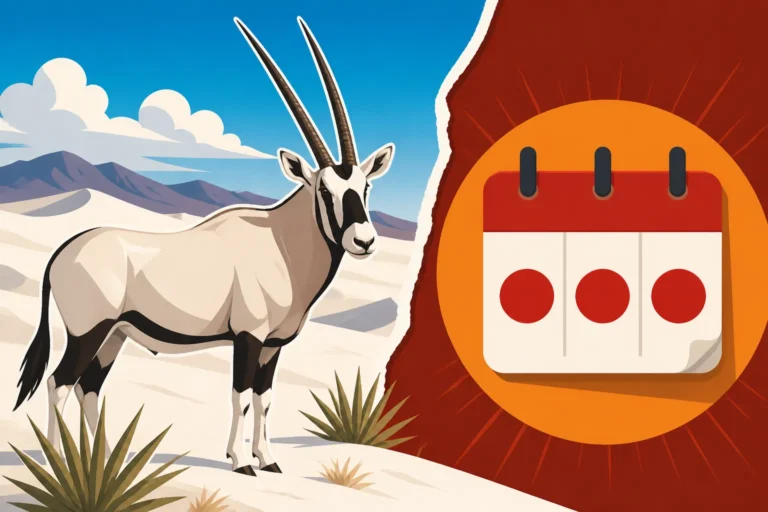
Hunting Persian ibex in New Mexico isn't just a hunt; it's an alpine adventure that pushes physical and mental limits. These magnificent animals aren't native to North America, but rather hail from Iran, having been successfully introduced to the Florida Mountains range in the late 1960s. The New Mexico Department of Game and Fish undertook this ambitious project, establishing a self-sustaining population that now provides a truly unique hunting opportunity in the Lower 48. If you're curious about their origins, How Ibex Were Introduced to New Mexico delves into this fascinating history.
The Florida Mountains, a relatively small but incredibly steep and unforgiving range rising sharply from the Chihuahuan Desert floor near Deming, are the exclusive domain of New Mexico's free-ranging ibex herd. This particular habitat, with its rocky outcrops, sheer cliffs, and sparse vegetation, mimics their native mountain environments, allowing them to thrive. Understanding this terrain is the first step to understanding the ibex itself. These animals are masters of vertical movement, using their specialized hooves to navigate seemingly impossible slopes with astonishing speed and agility. This means you'll rarely find them in flat, easily accessible areas, making glassing and judging them a test of patience and skill.
The very nature of the Florida Mountains dictates how you'll hunt and, by extension, how you'll judge an ibex. Unlike hunting in timber or more rolling hills, you're almost always looking at ibex from a significant distance, often across deep canyons or from opposing ridges. This extreme viewing distance, combined with the often-shadowy, broken terrain, makes judging extremely difficult. Knowing what specific features to key in on, and how to interpret them through a powerful spotting scope, becomes paramount. Success here isn't about covering ground quickly; it's about meticulous glassing, strategic positioning, and the ability to patiently dissect an animal's horn growth with your optics.
Key Characteristics for Field Judging Trophy Ibex
When an ibex finally appears in your binoculars or spotting scope, the clock starts ticking. Knowing what to look for, and what to prioritize, is crucial for making a quick, confident judgment. Unlike deer or elk where antler mass and width are paramount, with ibex, it's all about horn length, the tightness of their curl, their sheer circumference, and specific indicators of age.
Horn Length and Curl
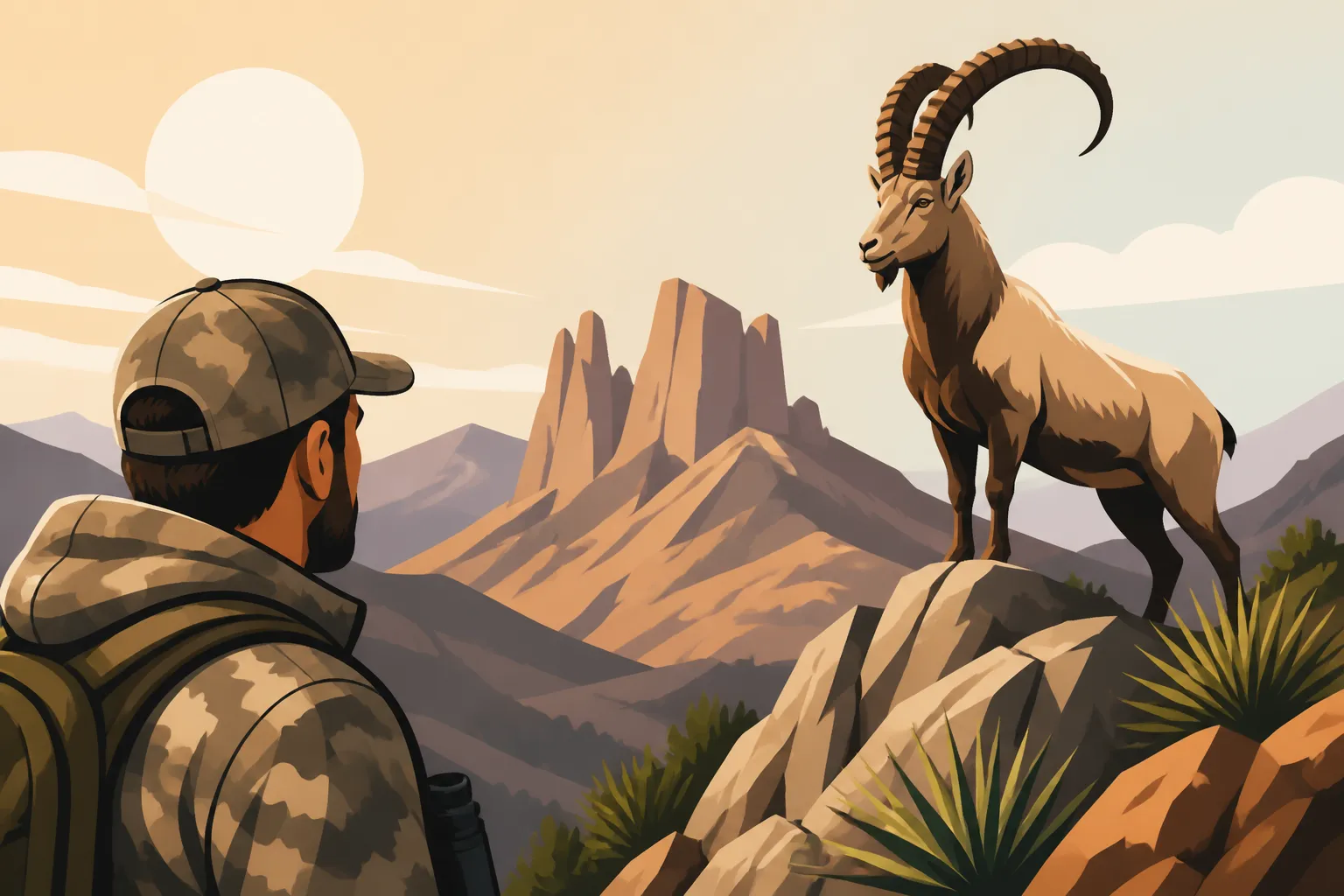
The most striking feature of a mature ibex billy is its horns. They grow in a magnificent scimitar shape, curving backward and outward from the skull, with prominent, deeply ridged segments called annulations. For a truly mature billy, you're generally looking for horns that extend well past their hindquarters when viewed from the side, often reaching 30 inches or more. Exceptional animals can push into the high 30s or even 40-inch range, though these are truly rare gems.
It’s not just the length, though; the curl is equally important. Younger billies might have decent length, but their horns will often appear straighter or have a wider, more open arc. A trophy ibex will have a tight, sweeping curl that almost appears to hug their back. Imagine the horns forming a graceful, almost complete C-shape around their body, with the tips pointing upwards or slightly forward. This pronounced, tight curl signifies age and maturity. Don’t be fooled by optical illusions caused by the animal's angle; always try to get multiple perspectives if possible. Sometimes, a horn that looks long from one angle might appear much shorter when the animal turns its head. Tools like those on GoHunt can help you e-scout positions for optimal viewing angles.
Horn Circumference and Annulations
While length gets the initial "wow" factor, circumference and the distinct annulations are incredibly reliable indicators of age and maturity, especially when comparing similar-length horns. Older billies will have much thicker horn bases that carry their mass further out along the horn. This thickness tapers much more gradually than on a younger animal. A young billy's horns might start thick but quickly narrow, while an old billy's horns maintain impressive girth almost to the tips.
The annulations – those prominent, knob-like ridges along the front surface of the horns – are essentially growth rings. On a young ibex, these annulations might be tightly packed and relatively smooth. As an ibex ages, these ridges become more defined, deeper, and more spaced out, particularly near the base. A truly old billy will have very rough, gnarled, and deeply corrugated annulations that are unmistakable even at a significant distance. Don’t confuse wear and tear on the tips with actual growth; focus on the base and mid-sections for true indicators of mass and age. This level of detail requires high-powered optics, something you'd also need for Glassing Benches and Parks for Elk.
Body Size and Overall Appearance
While horns are the primary focus, don't overlook the animal's overall body size and demeanor. Mature ibex billies are significantly larger and more robust than younger males or females. They'll have a thick, muscular neck, a deep chest, and generally appear more substantial. Their coat can also offer clues: older males often have darker, shaggier coats, especially around their shoulders and neck, and sometimes display a distinct black beard that extends further down their chest.
Younger males (nannies and kids are obviously different, but differentiating between young and mature billies is the real challenge) will appear more slender, with less developed musculature and typically lighter coats. Pay attention to how the ibex carries itself. A dominant, older billy often has a more deliberate, confident stride, whereas younger animals might be more skittish or move with less imposing grace. Sometimes, a truly old billy will appear to have a slightly swayed back, a physical indicator of many years on the mountain.
Here's a quick reference table for field judging:
| Characteristic | Young Billy (1-3 years) | Sub-Adult Billy (4-6 years) | Mature Trophy Billy (7+ years) |
|---|---|---|---|
| Horn Length | Short, may not pass shoulders | Past shoulders, sometimes to flank | Well past hindquarters (30"+), sometimes to hips |
| Horn Curl | Straighter, wide, open arc | Developing curve, still somewhat open | Tight, sweeping arc, tips point up/forward |
| Horn Thickness | Thin base, rapid taper | Moderate thickness, noticeable taper | Very thick base, carries mass well out |
| Annulations | Smooth, tightly packed | Becoming defined, moderately spaced | Deep, gnarled, widely spaced, rough |
| Body Size | Slender, less muscled | Medium build, developing musculature | Large, thick neck, deep chest, robust |
| Beard | Short or absent | Developing, moderate length | Long, dark, prominent, extends down chest |
| Demeanor | Skittish, agile | Confident, still agile | Deliberate, imposing, often solitary |
Techniques for Effective Field Judging in the Florida Mountains
Judging ibex in their natural, steep environment isn't like looking at a deer in a food plot. It demands specialized techniques, top-tier equipment, and a lot of patience. The Florida Mountains are notorious for their broken country, making precise observation incredibly difficult.
Maximize Your Optics Use
This cannot be stressed enough: your optics are your best friend. A high-quality spotting scope with a stable tripod is absolutely non-negotiable for an ibex hunt. Don't skimp here; this is where you gain your advantage. You'll often be looking at animals a mile or more away, tucked into shadows, behind brush, or clinging to a distant rock face. A 60x or 80x magnification, coupled with crystal-clear glass, can make all the difference in discerning those crucial horn details like annulation depth and the subtle taper of the horn. When using your spotter, ensure it's on a solid, heavy-duty tripod, like those discussed in Tripod Setup for Glassing From a Ridge. Even a slight wobble will make judging impossible at extreme magnifications.
Binoculars are also vital for initial spotting and maintaining a wider field of view. Scan the mountainsides with your binos, then, once you spot movement or a potential animal, dial in with your spotter. Spend time watching the animal. How does it move? Does it interact with other ibex? Is there another, larger animal nearby? Sometimes, you might think you have a great billy, only to spot an even bigger one that puts the first in perspective. For insights on choosing the right power for such expansive views, Optics Power for New Mexico's Open Country offers excellent advice.
Understand Angles and Distortions
The broken terrain of the Florida Mountains creates constant optical illusions. An ibex on a steep incline can appear shorter or longer than it actually is, depending on your angle relative to the slope. A horn viewed straight on might look thin, while from a slight angle, its true mass becomes evident. Always try to observe the animal from multiple angles if possible, even if it means moving slightly to gain a better perspective. If the animal is bedded, its horns might be obscured, or the perspective can be completely thrown off. Be patient and wait for the animal to stand, stretch, or turn its head to offer a better view.
Sometimes, you can use known landmarks in the field to help you calibrate. If an ibex is standing near a distinct rock or a small juniper, try to estimate the size of that landmark and use it as a rough reference point for the horns. It's not perfect, but it can provide some scale when you have nothing else. This type of detailed observation and environmental awareness is akin to Reading Wind in a Deep Gila Canyon, where subtle changes in the environment inform crucial decisions.
Patience and Strategic Glassing
Ibex hunting in New Mexico is often described as a grueling test of patience and physical endurance. The animals themselves embody this, frequently moving slowly, bedding down for extended periods, and disappearing into seemingly impossible terrain. Don't rush your judgment. If you have any doubt about the trophy quality, observe longer. It's far better to pass on an animal and regret it later than to harvest a younger billy and realize you made a mistake.
This patience extends to your stalking as well. Getting closer for a better look is often necessary, but in these mountains, every step is a challenge. Plan your approach meticulously, using terrain features to conceal your movement. Remember, these animals have incredible eyesight and are acutely aware of their surroundings. Waiting for the best time of day to glass, such as early morning or late evening, as explored in Best Time of Day to Glass for Elk, can also significantly improve your chances of spotting and judging animals effectively. The golden hours of dawn and dusk often provide the best lighting to make horn details pop.
Common Mistakes and Avoiding Them
Even experienced hunters can make errors when judging ibex. The unique nature of these animals and their habitat contributes to several common pitfalls. Being aware of these can help you avoid disappointment and ensure you make the most of your New Mexico ibex tag.
Underestimating the Scale and Difficulty of the Mountains
The Florida Mountains, while not as vast as some of New Mexico's larger ranges, are incredibly rugged and deceptively large. The elevation changes rapidly, and what looks like a short distance can be a multi-hour hike over treacherous ground, often involving scrambling and technical climbing. This extreme scale can significantly distort your perception of animal size and horn length. A good ibex viewed across a deep canyon might look smaller than it truly is, or closer than it actually is, leading to misjudgments of distance and trophy size. Always try to factor in the true distance and the daunting terrain when making your judgment.
Many hunters, especially those new to New Mexico's desert ranges, are often surprised by the sheer difficulty of simply moving through these units. What appears as a simple rock pile on a topographic map can be a maze of sheer cliffs, deep arroyos, and unstable scree fields. Using e-scouting tools and satellite imagery from platforms like GoHunt to understand the topography, as covered in E-Scouting a New Mexico Unit Before the Season, is absolutely crucial before you even hit the field. This helps you plan your glassing positions, assess accessibility, and estimate true distances more accurately.
Rushing the Shot Decision
Excitement can lead to hasty decisions, and an ibex hunt is often a pressure cooker. When you finally locate an ibex, especially after days of brutal climbing, endless glassing, and the mental grind, the temptation to take the first decent animal can be overwhelming. However, this is precisely when mistakes happen. A sub-adult billy can look very impressive in the moment, particularly to an exhausted hunter, but a truly mature trophy is in a different class entirely. Always revert to your mental checklist: prioritize horn length past the hindquarters, a tight sweeping curl, impressive mass that carries well, and deep, gnarled annulations.
Consider having a personal minimum horn length or age class in mind before you start your hunt. This objective benchmark can help temper the adrenaline and guide your decision-making when the pressure is on. Don't just look for "big horns"; look for trophy horns, understanding the subtle differences that come with age. Remember, New Mexico Ibex Draw Odds are generally low, making every tag a precious commodity. You want to make the most of that once-in-a-lifetime opportunity.
Not Accounting for Light Conditions and Shadows
Light plays a massive role in how an animal appears through optics. Harsh midday sun, common in the New Mexico desert, can wash out details, making horns look thinner or obscuring the subtle definition of annulations. Conversely, the deep shadows often cast by the Florida Mountains' jagged peaks can conceal an animal, making it difficult to judge its size and the true extent of its horns. Early morning and late evening light, often referred to as "golden hour," typically offers the best conditions for glassing and judging. The softer, angled light helps to highlight contours, shadows, and textures, making it easier to discern horn mass, depth of annulations, and even body features like the beard.
However, even in good light, shadows in the broken terrain can be tricky. An ibex standing in the shadow of a cliff might appear darker and more robust than it is, potentially leading to an overestimation of its size. Conversely, an animal standing directly in bright sunlight might look washed out, making its horns appear thinner than they are. Try to observe the ibex from a position where it is well-lit but you are not staring directly into the sun.
Overlooking Other Critical Hunting Considerations
While judging the animal is paramount, don't let it completely overshadow other practical hunting considerations specific to Ibex Hunting in the Florida Mountains. This is rugged, remote country, and an ibex kill can be an extremely challenging pack out. Think about the angle of the shot, where the animal might go after the shot, and the recoverability of the animal. A trophy billy on an impossible cliff face might be beautiful to look at, but is it a feasible recovery? The commitment to Packing an Elk Out of the Gila Alone offers a sense of the physical strain you'll experience, but for ibex, the terrain is often even steeper.
Also, be sure to understand all the specific regulations for the hunt, including any horn length requirements or other conditions that might apply to your particular tag. Ensure you have proper gear for packing out, including sturdy pack frames, robust game bags, and ample water. The physical demands of an ibex hunt are immense; make sure you're prepared for Preparing Physically for a High Elevation Hunt, even though the Florida Mountains aren't "high elevation" compared to northern ranges, their steepness is a challenge of its own. Successfully judging a trophy ibex in the Florida Mountains is a pinnacle achievement for any hunter. It combines the thrill of the chase with a deep appreciation for the animal and its incredible habitat. By focusing on horn length, curl, mass, annulations, and using sound glassing techniques, you'll be well-equipped to make the right call when your moment arrives.
Disclaimer
Hunting is an inherently dangerous activity. Always prioritize safety, adhere to all local, state, and federal regulations, and obtain proper licenses and permits. The information provided in this guide is for informational purposes only and should not replace professional guidance or personal due diligence. Conditions in the field can change rapidly, and hunters should always be prepared for the unexpected.