Best Time of Day to Glass for Elk
There’s nothing quite as soul-crushing as spending hours staring through your binoculars, only to come up empty-handed. We’ve all been there, especially in vast, unforgiving landscapes like New Mexico, where elk can seemingly vanish into thin air. It makes you wonder if you’re even looking in the right places, or more importantly, at the right times. This guide is here to shed light on precisely that: the best times of day to glass for elk, helping you unravel their daily routines and significantly boost your chances of finding that elusive bull or cow.
The Rhythmic Pulse of Elk: Why Timing Your Glassing Matters
Elk aren't just wandering aimlessly through the mountains; they operate on a fairly predictable schedule driven by their biological needs and the environment. Understanding this rhythm is the absolute cornerstone of successful glassing. It’s about being in the right place, yes, but also at the right moment, when they're most visible and active. Ignore their natural cadence, and you might as well be looking for a needle in a haystack – a very large, wild haystack.
Dawn Patrol: The Golden Hour for Elk Activity
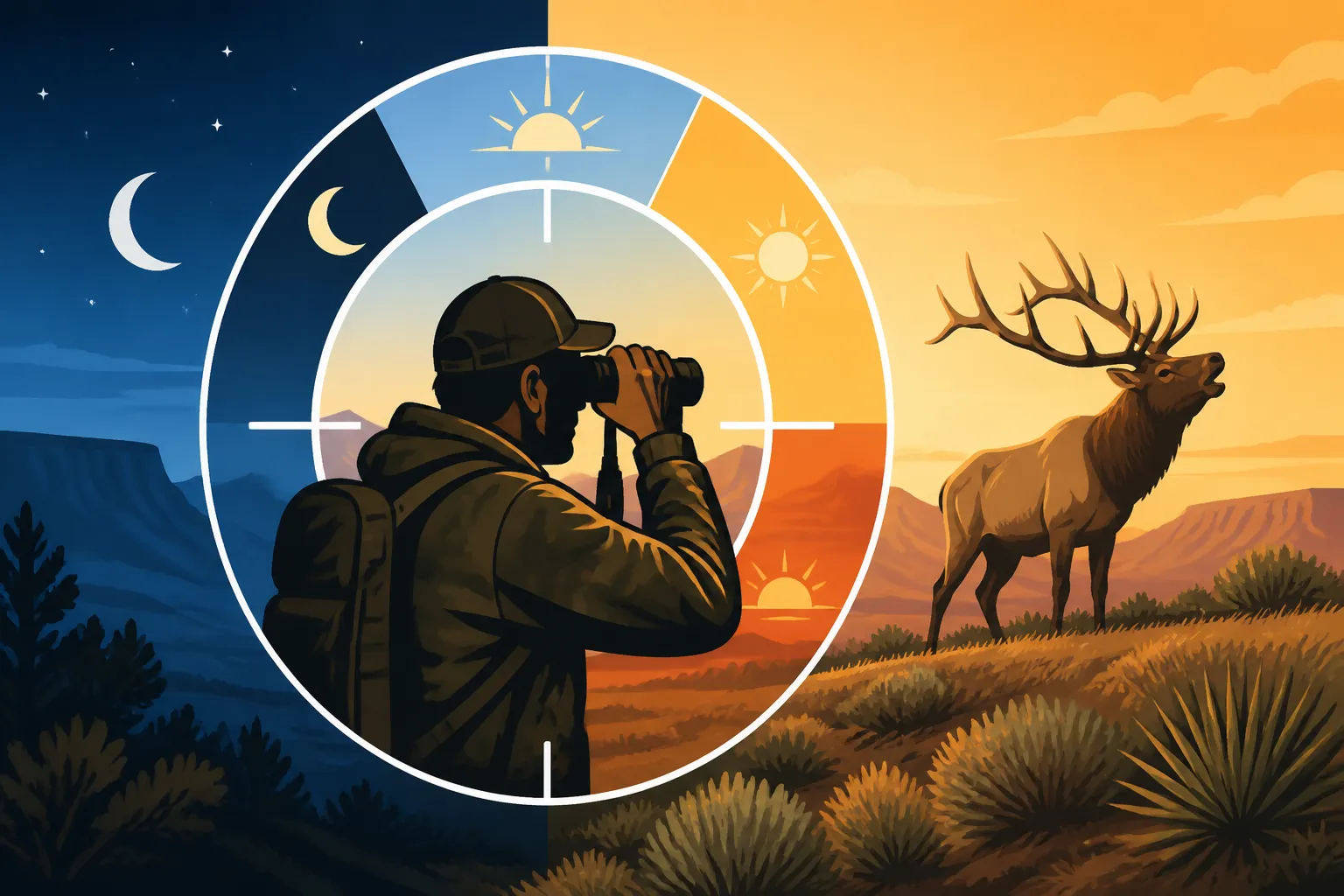
For serious elk hunters, the pre-dawn darkness leading into the first rays of light isn't just picturesque; it's absolutely prime time. This "golden hour" as it's often called, refers to that magical window when the world awakens, and with it, the elk. They've spent the night feeding, moving, and possibly even bugling, and now they're starting to make their way back to their bedding areas for the day.
Think about it: the temperatures are at their coolest, offering a comfortable environment for these large animals to move without overheating. They're often out in more open parks, meadows, or along the edges of timber, grabbing one last bite to eat before the sun climbs too high. This is your absolute best shot to catch them silhouetted against a brightening skyline or moving across a distant hillside.
However, it's not without its challenges. Early morning thermals can play tricks, often rising and carrying your scent uphill into potential bedding areas, so positioning yourself carefully, accounting for wind, is paramount. You'll need sharp eyes, steady optics, and the patience to pick apart every shadow as the light gradually reveals the landscape. This is where Locator Bugles for Finding Bulls at Dawn can sometimes help you pinpoint a general area to focus your glassing before the light truly breaks.
Mid-Day Lulls and Strategic Naps
As the sun climbs higher and the temperatures begin to rise, especially in New Mexico's often arid and warm climate, elk behavior shifts dramatically. This is when they transition from active feeding and moving to seeking solace and security in their bedding areas. They'll gravitate towards dense timber, north-facing slopes with cooler air, thick pockets of brush, or deep canyons where shade is abundant.
Many hunters make the mistake of heading back to camp or taking a long break during these mid-day hours, thinking the elk are completely unfindable. While they're certainly less active, this doesn't mean they're invisible. This is a critical time to glass bedding areas—places you might not expect them to be moving, but rather just being. Focus on the edges of dark timber, under isolated stands of pines, or tucked away in dense oak brush. Sometimes, all you'll see is a flick of an ear, a patch of hide, or a horizontal line that just doesn't quite fit the natural contours of the hillside.
Patience here is a virtue. You might spend hours dissecting a single hillside, slowly scanning for that tell-tale sign of an animal at rest. The key is to know where they're likely to be bedding based on available cover, shade, and proximity to feeding areas they visited that morning or will visit that evening. It’s not about covering vast ground; it’s about meticulously scrutinizing likely hideouts. This meticulous approach is also perfect for Grid Glassing a Basin Without Missing Bucks, a technique equally effective for elk.
Dusk Delight: The Evening Foraging Rush
Just as the morning offers a window of opportunity, the late afternoon and evening provide another prime glassing period as elk prepare for their nightly activities. As the sun dips towards the horizon, temperatures begin to cool again, signaling to the elk that it's time to emerge from their bedding areas.
They’ll start to filter out into feeding grounds—often the same open parks and meadows they visited in the morning, or perhaps new ones. This is their chance to top off before the night's movement and rest. You'll often see them moving from the dark timber out into the more open areas, sometimes lingering for quite a while before full darkness sets in.
The challenges in the evening are different from the morning. While light is fading, making identification harder, the thermals are usually falling, pulling your scent downhill and allowing for potentially more aggressive approaches to vantage points. However, fading light means your optics will be tested, and you'll need to make quick decisions if you spot something promising. Being set up well before this evening rush begins is crucial, giving your eyes time to adjust and your mind to absorb the landscape before the action starts. Just like in the morning, knowing Reading Wind in a Deep Gila Canyon is paramount, especially as evening thermals tend to flow downhill.
Optimizing Your Vantage: Gear and Grid Glassing Strategies
Finding the right time of day is only half the battle. You also need the right tools and the right methods to make those precious moments count. In New Mexico's expansive and often rugged terrain, your gear and technique can make all the difference between a successful spot and a frustrating blank stare.
Picking the Right Perch and Optics
Choosing your glassing perch is less about finding a comfortable spot and more about strategic positioning. You want a vantage point that offers a broad, unobstructed view of likely elk habitat: north-facing slopes, saddles between drainages, open parks, or the edges of dense timber patches. Ridge lines and high points are often ideal, allowing you to survey vast expanses below and across canyons. Always consider how you'll approach and exit this spot undetected, and if it offers cover from the elements.
Your optics are your most important tools. For initial wide-area scanning, a good pair of 10x or 12x binoculars is indispensable. They offer a wide field of view and are quick to deploy. For detailed examination of distant objects, a spotting scope (15-45x or 20-60x) mounted on a sturdy tripod is non-negotiable. It allows you to identify antler points, confirm sex, and assess size from incredible distances, saving you miles of wasted hiking. For more on choosing the right glass, consider reading about Binocular Size That Survives an All-Day Session.
Many seasoned hunters swear by high-quality European brands like Swarovski, Zeiss, or Leica for their exceptional low-light performance, which is critical during those golden hours of dawn and dusk. However, brands like Vortex and Maven offer fantastic performance at a more accessible price point. Regardless of brand, a solid tripod is paramount. Even the steadiest hands can’t hold optics perfectly still for extended periods, and any wobble will severely degrade image quality, especially at high magnification. Learning a proper Tripod Setup for Glassing From a Ridge will dramatically improve your success.
When it comes to planning these vantage points, especially for a new unit, platforms like GoHunt can be invaluable. Their mapping features allow you to e-scout potential glassing locations, identify terrain features, and even mark likely elk corridors or bedding areas long before you ever set foot in the field. This kind of preparation can shave hours off your in-field scouting, getting you to the best glassing spots more efficiently.
Reading Thermals and Wind Patterns
Understanding thermals and wind is critical for both undetected approach and for predicting where elk might be moving. In New Mexico, especially in mountainous regions like the Gila, thermals are a dominant force. In the morning, as the sun heats the ground, air rises, creating an uphill thermal current. This means your scent will be carried up the mountain. As evening approaches and the ground cools, the thermals reverse, carrying scent down the mountain.
Paying close attention to these patterns helps you position yourself correctly. You want your scent to be carried away from where you expect elk to be. In the morning, this might mean glassing from a ridge top, letting your scent blow over the top and away from the basins below. In the evening, you might glass from a mid-slope position, allowing your scent to be carried downhill as the thermals drop.
Prevailing winds also play a significant role. Elk are highly reliant on their sense of smell for survival, and they will almost always travel and bed in a way that allows them to detect danger with their noses. They'll often bed with the wind at their back, allowing them to see downhill in front of them and smell anything approaching from behind. When you're trying to locate them, remember this behavior and try to get into a position where the wind is in your favor, carrying your scent away from them. This strategic wind assessment is a crucial part of Playing Thermals on a Canyon Stalk, even when you're just glassing from afar.
Grid Glassing and Patience
One of the most common mistakes beginners make is random, quick scanning. They’ll sweep their binoculars across a hillside, see nothing, and move on. This is ineffective. The grid glassing method is a systematic approach that forces you to meticulously examine every inch of terrain.
Here's how it works:
- Divide and Conquer: Mentally (or physically, with reticle lines in your optics) divide the landscape in front of you into a grid.
- Start at the Edge: Pick a starting point, usually an edge of your viewing area, and work slowly, horizontally, across that section.
- Overlap: Move your optics slightly, ensuring you overlap your previous field of view by about 20-30%. This prevents missing anything in the gaps.
- Drop Down: Once you've completed a horizontal strip, drop down a small increment and repeat the process, working back in the opposite direction.
- Look for "Non-Nature": Don't just look for an entire elk. Look for anything that looks out of place. A horizontal line in a vertical world, a patch of color that isn't rock or tree, an unnatural shadow, or the flicker of an ear.
This method requires immense patience, often leading to moments where you feel like you're seeing nothing. But it's precisely this disciplined, methodical approach that reveals animals that would otherwise be completely overlooked. It's a testament to the idea that hunting isn't always about speed, but often about deliberate, slow observation. If you want to master this, take a deeper dive into The Grid Glassing Method, Step by Step.
Seasonal Shifts: Adapting Your Glassing for New Mexico's Elk Seasons
New Mexico offers diverse elk hunting opportunities throughout the year, from early archery to late rifle. Each season presents unique challenges and behaviors from the elk, requiring you to adjust your glassing strategy accordingly. What works in a scorching August archery hunt won't be as effective in a snowy December rifle season.
Early Season: Heat and Water
The early archery seasons, typically in late August and early September, can be brutally hot in New Mexico's high country. During these periods, elk behavior is heavily influenced by the need to stay cool and hydrated. They will actively seek out the coolest, densest cover they can find during the heat of the day.
Your glassing strategy should focus intensely on water sources: stock tanks, seeps, springs, and creeks. Elk will be hitting these spots, particularly in the mornings and evenings, and sometimes even in the middle of the day if the heat is extreme. Look for trails leading to water, and then scan the surrounding cover. North-facing slopes with thick timber, especially ponderosa pines or dark canyons, become prime bedding areas. These provide maximum shade and often retain cooler air. Glass the edges of these areas diligently during the low-light hours.
Also, consider Heat Management on an Early Season Hunt for yourself. The last thing you want is to be overheated and uncomfortable, leading to poor decision-making or cutting your glassing session short. Staying hydrated and dressing in light, breathable layers will allow you to stay out longer and more effectively.
Rutting Season: Vocalizations and Movement
Mid-September through early October is the heart of the elk rut in New Mexico. This is arguably the most exciting time to glass for elk, as bulls become incredibly active, vocal, and often less cautious due to their desire to breed.
During the rut, you’ll find elk in or near traditional breeding grounds—areas that offer a mix of open meadows for herding cows and dense timber for security and rubbing. Bulls will be bugling constantly, challenging rivals, and chasing cows. This vocalization is a huge advantage for hunters, as it helps you pinpoint general locations to focus your glassing efforts. However, don't just hunt the sound; glass the surrounding areas for silent bulls or satellite bulls trying to sneak in.
Glassing strategies during the rut should still prioritize dawn and dusk, but mid-day can also be productive. Bulls might still be moving between cows, sparring, or just tending their harems. Look for open parks and benches where cows are feeding, knowing that a bull (or several) won't be far behind. Knowing When the Elk Rut Peaks in New Mexico can help you time your hunts for maximum bugling and activity.
Late Season: Winter Range and Snow
New Mexico's late-season rifle and muzzleloader hunts, often in November and December, present a whole new set of glassing challenges and opportunities. As winter truly sets in, elk begin their migration to lower elevation winter ranges, seeking areas with less snow accumulation and accessible forage.
Snow cover can be a double-edged sword. While it can make travel more difficult for hunters, it also makes elk incredibly visible. A dark elk body stands out starkly against a white snowy backdrop, turning once-invisible animals into easily spottable targets, even at great distances. Focus your glassing on south-facing slopes, which typically melt first and offer greener forage, and on pockets of oak brush or other browse that remains accessible.
Additionally, elk will often congregate in larger herds during the late season, making it easier to find groups once you locate one. However, their movements can be influenced by heavy snowfall or extreme cold, sometimes forcing them into very specific areas of protection. GoHunt's historical weather data and mapping tools can be particularly useful for e-scouting winter ranges and understanding snow depths in specific units, helping you predict where elk will concentrate.
Pinpointing Elk in Diverse New Mexico Terrains
New Mexico’s landscape is incredibly varied, from the towering peaks of the Sangre de Cristos to the vast plains of the east. Each region demands a slightly different approach to glassing, playing to its unique topographical strengths and weaknesses.
Gila Wilderness and High Country Glassing
The Gila National Forest, home to the Gila Wilderness and Aldo Leopold Wilderness, is legendary elk country. But it’s also incredibly vast, rugged, and densely timbered in many areas. Glassing here is a serious test of patience and skill.
In the Gila, you're often looking into deep canyons, across sprawling timbered ridges, and at countless dark, shaded pockets. Wide-open glassing areas are fewer and farther between compared to other regions. This means you need to be strategic about your vantage points, often hiking to high points that allow you to overlook several drainages or large, natural benches and parks. Once you're on a good perch, you’ll need to meticulously pick apart every bit of cover.
Focus on the edges where timber meets open parks, natural clearings, and benches. Elk love these transition areas. Also, pay close attention to water sources, especially during dry spells. In such vast and wild terrain, glassing is your absolute best bet for locating animals without burning yourself out physically. Learning to decipher the subtle signs in this environment is key. For more detailed advice on this, check out Glassing New Mexico's Gila for Trophy Bulls.
Open Country and Eastern Plains Glassing
While much of New Mexico's elk hunting reputation comes from its mountainous regions, there are also units in the more open country and eastern plains that hold elk. Glassing in these areas is a completely different ballgame. Here, you might have panoramic views stretching for miles, but the challenge becomes mirage and sheer distance.
In open country, elk might be visible from very far away, but identifying them and judging their size requires top-tier optics and excellent spotting scope technique. Heat mirage can be a significant issue during warmer parts of the day, making it difficult to get a clear image. Try to glass earlier in the morning and later in the evening when the ground isn't radiating as much heat.
You'll often be looking for smaller details that indicate an elk's presence: a line of dark bodies against a lighter grassland, the movement of a head, or a flash of antler. Because of the vast distances, having a clear plan for your stalk once an animal is spotted is paramount. These areas are less about meticulously picking apart dense cover and more about covering immense distances with your optics, patiently waiting for movement or a clear silhouette to appear. This often involves looking for subtle terrain features like small hills, drainages, or isolated brush lines that elk might use for cover or travel.
Summary of Optimal Glassing Times for New Mexico Elk
| Time of Day | Optimal Conditions/Focus | Elk Behavior | Challenges |
|---|---|---|---|
| Dawn (Pre-sunrise to 2 hours after) | Cool temperatures, rising light, edges of open parks/meadows | Returning to bedding, last feed before day | Rising thermals, quick light changes, heavy dew/fog |
| Mid-Day (2 hours after sunrise to 2 hours before sunset) | Warm/hot temperatures, seeking shade, bedding areas, dense cover | Bedded, minimal movement, resting, ruminating | Mirage, thick cover, spotting only parts of animals |
| Dusk (2 hours before sunset to full dark) | Cooling temperatures, lengthening shadows, edges of open parks/meadows | Emerging from bedding, first feed of the evening | Fading light, descending thermals, animals moving into dark timber |
Ultimately, mastering the art of glassing for elk in New Mexico is a blend of understanding their natural rhythms, utilizing your gear effectively, adapting to seasonal changes, and recognizing the nuances of different terrains. It’s a skill that only improves with practice and patience, but knowing when and where to look is the crucial first step on your path to success.
Disclaimer
Hunting is an inherently dangerous activity. Always prioritize safety, adhere to all New Mexico Department of Game and Fish regulations, and obtain proper licenses and permits. This information is for educational purposes only and should not replace professional guidance or official state resources. Be aware of weather conditions, practice ethical hunting, and respect private property boundaries.