Desert Mule Deer in the Southern Units
Hunting desert mule deer in New Mexico’s southern units presents a unique challenge, often characterized by vast, unforgiving landscapes and an elusive quarry perfectly adapted to its arid home. For many hunters, the image of mule deer is tied to alpine meadows and timbered canyons, but the reality of chasing bucks in the Chihuahuan Desert is a starkly different, yet incredibly rewarding, experience. This comprehensive guide aims to arm you with the knowledge and strategies needed to successfully navigate the southern New Mexico desert and increase your chances of finding that elusive desert monarch.
Understanding the Elusive Desert Mule Deer
Desert mule deer, often referred to as gray ghosts of the desert, are a subspecies perfectly evolved to thrive in some of the harshest environments. They are not the same as their Rocky Mountain cousins, and understanding their unique biology and behavior is the first step toward a successful hunt in the southern New Mexico units.
Distinguishing Features and Adaptations
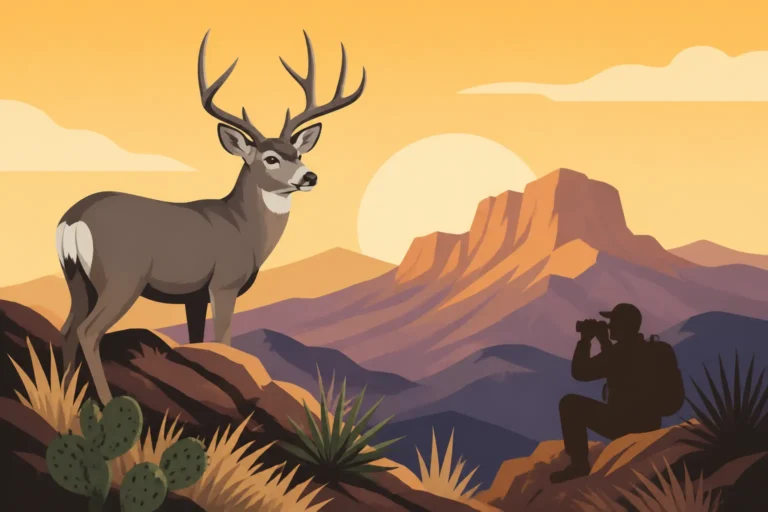
When you first lay eyes on a desert mule deer, you might notice they tend to be smaller in body size than the mule deer you'd find further north or in higher elevations. This isn't always the case, as nutrition can vary, but generally, they carry less mass. Their coat is often lighter in color, a pale grayish-tan that blends seamlessly with the parched earth, sparse scrub, and rocky outcrops of their desert home. This natural camouflage is incredibly effective, allowing them to vanish into seemingly barren landscapes right before your eyes. Their ears, while still large like all mule deer, might appear proportionally larger on their more slender frame, aiding in detecting the slightest sounds in an often-silent environment. They have developed an uncanny ability to conserve water, often going for extended periods without a direct water source, instead relying on the moisture content in the plants they consume. Their metabolic rate and waste elimination are also optimized for water retention, making them true survivors of the arid lands.
Habitat, Forage, and Movement Patterns
Desert mule deer gravitate towards broken country—think rolling hills, arroyos, mesas, and steep, rocky canyons dotted with mesquite, creosote, cholla, and various agaves. These areas provide the necessary cover from predators and the brutal sun, along with a diverse buffet of desert vegetation. They primarily browse on shrubs and forbs, munching on prickly pear pads, yucca, various acacias, and sometimes even cacti for their moisture content. Their diet shifts with the seasons and available rainfall. After a good monsoon season, the desert bursts with green, and deer can be found scattered more widely, taking advantage of the abundant new growth. During dry spells, they concentrate around limited water sources or specific plant communities that retain moisture.
Understanding their movement patterns is crucial. Unlike their northern counterparts that might migrate long distances for winter range, desert mule deer generally have smaller home ranges, though these can expand significantly during drought years or the rut. They are most active during the cooler parts of the day—dawn and dusk—to avoid the scorching midday sun. However, don't be surprised to find a buck bedded in the shade of a mesquite bush or under a rimrock ledge in the middle of the day. They are masters of using topography and shadow to remain undetected. Learning to read the subtle changes in elevation, the direction of shadows, and the thermal currents can give you an edge in predicting where they might be.
Rut Timing in Southern Units
The rut, or breeding season, is often when desert mule deer are most visible and vulnerable. For the southern New Mexico units, the peak of the rut typically falls in late December and into January. This timing is a bit later than in many other mule deer populations and is thought to be tied to the onset of winter moisture, which influences the availability of nutrient-rich forage for does and fawns in the spring. During this period, bucks, often previously nocturnal and solitary, become more active, chasing does and challenging rival males. They are less cautious, more focused on breeding, and will travel greater distances, making them easier to spot. This late-season rut timing is why many hunters specifically target these December and January hunts, hoping to catch a mature buck off guard. Keep in mind that a full moon or significant cold front can often intensify rutting activity, so watching the weather and lunar cycles can give you a better idea of when the action might really heat up. Knowing when the mule deer rut actually starts can drastically impact your hunt strategy.
Prime Southern New Mexico Units for Desert Mule Deer
New Mexico's southern units offer a variety of landscapes and opportunities for hunting desert mule deer. While success is never guaranteed, certain units consistently produce good bucks due to their habitat, management, and hunter access.
Overview of Key Units: 26, 27, 28, 29, 30, 32, 34
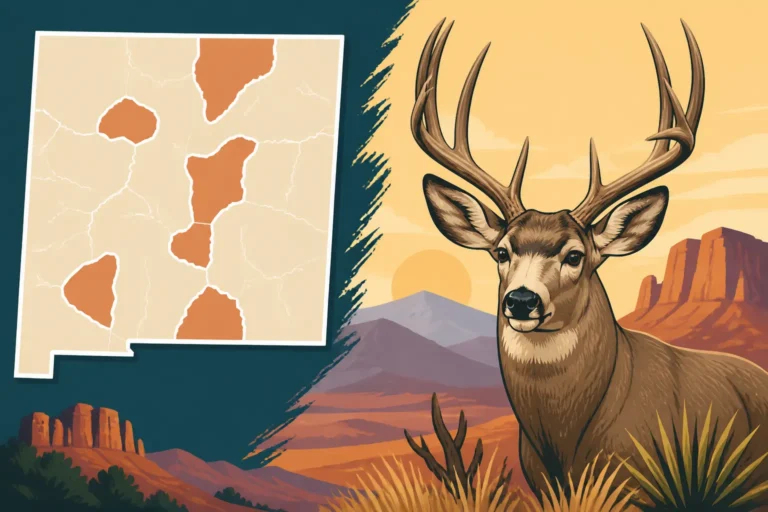
When people talk about hunting desert mule deer in New Mexico, units like 26, 27, 28, 29, 30, 32, and 34 are often mentioned. These units stretch across a vast expanse of southern New Mexico, from the areas around Las Cruces and Deming, eastward towards the White Sands Missile Range, and down into the "bootheel" region near the Arizona border.
- Unit 26: This unit is quite large and diverse, encompassing parts of the Organ Mountains-Desert Peaks National Monument, state trust lands, and Bureau of Land Management (BLM) ground. It's known for its rugged mountains, rolling hills, and vast flats, offering a mix of challenging and accessible terrain. Deer numbers can fluctuate, but the potential for trophy bucks is there for those willing to put in the work.
- Unit 27: Located south of Unit 26, Unit 27 features classic Chihuahuan Desert terrain with significant areas of BLM land and state trust land. It's characterized by smaller mountain ranges, bajadas, and deep arroyos. Access can be good, but deer can be incredibly spread out.
- Unit 28: East of Unit 27, Unit 28 borders the vast White Sands Missile Range. This unit is particularly known for its challenging, sparse habitat. Hunters often focus on the small mountain ranges and foothills that break up the expansive desert.
- Unit 29: Further east, Unit 29 offers a mix of desert and some higher elevation areas in the Sacramento Mountains foothills. It’s a transition zone, and deer here might exhibit behaviors influenced by both desert and mountain environments.
- Unit 30: This unit is primarily south of Ruidoso and Lincoln, offering a blend of desert, pinyon-juniper, and some ponderosa pine at higher elevations. It’s another large unit with varied terrain, and deer concentrations can shift significantly with elevation.
- Unit 32: Located in the southwestern part of the state, Unit 32 is known for its rugged desert mountains and canyons, providing excellent cover for mature bucks. It's a physically demanding unit but can be very rewarding.
- Unit 34: This unit is directly south of Units 29 and 30, sitting in the southeastern corner of New Mexico. It shares characteristics with its neighboring units, featuring a mix of desert and foothill terrain, with a strong focus on water sources and prime bedding areas in the rugged breaks.
Each of these units presents its own unique challenges and opportunities, but all share the common thread of vast, open, and often hot, dry country.
Terrain, Access, and Public Land Distribution
The terrain across these southern units is predominantly Chihuahuan Desert, characterized by creosote bush flats, mesquite bosques, cholla cacti, yucca plants, and a mix of other drought-tolerant shrubs and grasses. The land often rises into small, isolated mountain ranges like the Florida Mountains, Big Hatchet Mountains, or the Organ Mountains, which provide critical refuge and better forage. These mountains are often steep, rocky, and can be brutally unforgiving underfoot.
Access to these units varies. Much of the hunting occurs on Bureau of Land Management (BLM) land and New Mexico State Trust Land. BLM ground generally offers excellent public access, often crisscrossed by dirt roads and two-track trails. However, these roads can quickly become impassable with even a small amount of rain, turning into muddy quagmires or washed-out arroyos. State Trust Land in New Mexico is also accessible to licensed hunters, which is a fantastic advantage. Your hunting license serves as your easement onto these lands. It’s crucial to understand the boundaries, which can often be found on mapping applications like GoHunt. Remember, you may scout New Mexico State Trust Land fourteen days out from your hunt, allowing you some crucial pre-season recon.
Private land is interspersed throughout these units, and it's absolutely critical to respect private property boundaries. Always have a good GPS with updated land ownership maps to avoid accidental trespass. Many landowners in these regions are also quite protective of their water sources, which deer and other wildlife depend on, so knowing the rules about hunting over a stock tank legally is essential. For more detailed information on land distribution and access points, consulting resources like "How Much Public Land New Mexico Holds" can be invaluable.
Draw Odds and Tag Availability
Drawing a coveted desert mule deer tag in New Mexico can be tough, especially for the prime rifle hunts during the rut. New Mexico's draw system is unique in that it doesn't use a preference point system, meaning every applicant has the same odds each year, regardless of how many times they've applied in the past. This means that a first-time applicant has just as much chance as someone who has applied for twenty years, which can be both encouraging and frustrating!
Typically, the hunts that overlap with the peak rut (late December/early January) will have the lowest draw odds, sometimes dropping into the single digits, particularly for non-residents, who are part of the six percent New Mexico nonresident allocation pool. Earlier season hunts, or archery hunts, often have slightly better odds. It’s not uncommon to apply for several years before drawing a quality tag in a top unit. Many hunters use resources like GoHunt's Insider service to research draw odds and analyze past statistics before applying. They provide detailed information and tools that help you make informed decisions about your application choices. Don't be discouraged by low odds; persistence is key, and the reward of hunting a desert monarch is well worth the wait.
Effective Hunting Strategies for Desert Mule Deer
Hunting desert mule deer in the vast, open country of southern New Mexico requires a blend of patience, keen eyesight, and often, a willingness to cover a lot of ground. Unlike denser timber hunts, success here hinges on different tactics.
Spot and Stalk Tactics
Spot and stalk is undeniably the most effective method for hunting desert mule deer. The open, broken terrain, while making deer hard to spot, also allows for extensive glassing. You'll spend the vast majority of your time behind optics, meticulously dissecting every creosote bush, every shadow, and every change in contour.
- High Vantage Points are Key: Start your day, preferably before first light, by hiking to a high point that offers expansive views of drainages, canyons, and rolling hills. The goal is to be in position to glass as the first light hits the landscape.
- Systematic Glassing: Don't just scan; grid glass. Use a quality spotting scope and binoculars (10x-15x are ideal for most situations, but a higher power spotting scope is critical for detail). Systematically break down the terrain into manageable sections, working from near to far, and left to right. Look for parts of a deer—an ear, a patch of hide, the glint of an antler. Deer often bed in the shade, sometimes with just their ears or antlers visible above the brush. Pay close attention to north-facing slopes in the morning and south-facing slopes in the evening, as these often receive the most or least sun depending on the time of day, affecting where deer will bed. A solid tripod setup for glassing from a ridge is non-negotiable for stability and reducing eye strain.
- Identify and Evaluate: Once you spot deer, don't rush. Take your time to evaluate the animal. Is it a buck? Is it a shooter? "Field Judging a Mule Deer Buck Quickly" is a skill that will serve you well here, as opportunities can be fleeting. Observe their behavior; are they feeding, bedded, or moving with purpose?
- Plan Your Approach: This is where the "stalk" comes in. The desert offers limited cover, making your approach critical. Study the terrain for every arroyo, every rise, every cluster of brush that can conceal your movement. Pay attention to wind direction—it's paramount. Always approach into the wind or with a crosswind. The sun's position is also important; try to keep it at your back or side, never directly in the deer's eyes. Sometimes, a successful stalk can take hours, navigating through unforgiving terrain, dodging cacti, and crawling on hands and knees to close the distance. Patience is your best friend.
Waterhole Ambushes and Patience
While spot and stalk is primary, don't overlook the potential of waterhole ambushes, especially during dry periods. Desert mule deer, like all living creatures, need water. In arid environments, natural or man-made water sources—guzzlers, stock tanks, natural springs, or even temporary puddles after a rain—can concentrate deer activity.
- Scout for Water: Before your hunt, use maps and satellite imagery (GoHunt's mapping features can be excellent for this) to identify potential water sources. Look for trails leading to water, or areas with more lush vegetation that indicate moisture. In summer or early fall, deploying trail cameras near these water sources can reveal consistent patterns of deer activity.
- Strategic Placement: If you decide to sit a waterhole, strategic placement of your ground blind or stand is crucial. You'll need to be downwind, concealed, and have a clear shooting lane. Consider the sun's position throughout the day to avoid being silhouetted or having glare interfere with your view.
- Patience and Persistence: Sitting water can be a test of endurance. It's often long hours of waiting in quiet solitude. Early morning and late evening are usually the best times, but deer might visit at any time, especially when desperate for water. Be prepared for silence, heat, and insects. It's not for everyone, but for a patient hunter, it can pay off with a close-range shot. Just ensure you understand the rules on hunting over a stock tank legally.
Reading Fresh Sign and Tracking
Even in the sparse desert, deer leave clues. Being able to read fresh sign can help you narrow down areas, especially if deer aren't immediately visible.
- Tracks: Look for fresh tracks in sandy washes, soft dirt around waterholes, or along game trails. Desert mule deer tracks are typically smaller than elk but larger than a Coues deer. Pay attention to the clarity of the track, the presence of dew (if any), and the amount of dust that has settled in it to gauge its age.
- Scrapes and Rubs: During the rut, bucks will make scrapes (patches of bare earth pawed at by the deer) and rubs (trees or shrubs where they've rubbed their antlers). While less common and dramatic than in dense timber, finding these can indicate a buck's presence and activity. Look for them on mesquite, acacia, or any woody vegetation that can take a rub.
- Droppings and Beds: Fresh droppings indicate recent deer activity. Also, keep an eye out for bedded areas, often found in the shade of a mesquite tree, under a rimrock, or on a slight rise offering a view of approaching threats. A warm, recently used bed is a strong indicator that a deer is very close.
- Game Trails: While not as defined as in other habitats, deer create discernible trails, especially leading to and from water, bedding areas, or preferred feeding grounds. Following these subtly worn paths can often lead you to productive areas.
Combining these strategies, adapting to the conditions, and being relentless in your pursuit will greatly enhance your success in the challenging but rewarding world of desert mule deer hunting.
Challenges and Considerations in Southern New Mexico
Hunting desert mule deer isn't just about finding the deer; it's about surviving and thriving in an environment that often tests your limits. Understanding these challenges before you go is key to a safe and successful hunt.
Managing Heat, Hydration, and Sun Exposure
The southern New Mexico desert can be brutally hot, even into the late fall and early winter. While rut hunts in December and January might see cooler temperatures, early season hunts can still be sweltering. Heat exhaustion and dehydration are serious risks.
- Hydration is Paramount: You absolutely cannot carry too much water. Plan to carry at least a gallon of water per person per day, and even more if you're covering significant distances or temperatures are high. Consider carrying a water filter or purification tablets as a backup, though reliable water sources are few and far between. Knowing how much water you must carry on a desert day hunt is critical for survival. Electrolyte supplements are also a wise addition to your pack.
- Sun Protection: The desert sun is intense. Wear wide-brimmed hats, light-colored, breathable clothing that covers as much skin as possible, and high-SPF sunscreen. Sunglasses are essential to protect your eyes and reduce glare for glassing. Remember that reflective surfaces like light-colored rocks and sand will amplify sun exposure.
- Pace Yourself: Don't try to cover too much ground too quickly, especially during the warmer parts of the day. Plan your toughest hikes for early morning or late evening. Take frequent breaks in the shade, and listen to your body. Headaches, dizziness, or unusual fatigue are all signs of heat stress.
Rugged Terrain, Sparse Cover, and Equipment Needs
The "easy" access points in the desert can quickly give way to incredibly rugged and unforgiving terrain.
- Footwear: Your boots are your most important piece of gear. You need sturdy, supportive boots with excellent ankle support to navigate loose rock, steep arroyos, and uneven ground, all while being able to shed thorns and cacti. Choosing boots for rocky desert ground is a specific consideration that can make or break your hunt.
- Navigation: GPS devices (like those with GoHunt maps loaded) are indispensable. Cell service is often nonexistent in these remote areas, so relying on paper maps and a compass as backups is highly recommended. Mark water sources, vehicle parking, and any potential game sightings.
- Minimal Cover for Stalks: Unlike timbered areas, the desert offers very little continuous cover for stalking. This means your stalks will often be long, slow, and involve crawling or using every small bush or terrain feature to your advantage. Darker, neutral-colored clothing will help you blend into the sparse shadows.
- Cactus and Thorns: The desert is full of sharp things. Be prepared for thorns and cacti. Wear tough pants, gaiters, and potentially even knee pads for crawling. Carry a multi-tool with pliers to remove stubborn thorns. Snake awareness on a September archery hunt (or any desert hunt) is also vital, as rattlesnakes are common residents.
Predator Pressure and Population Dynamics
Desert mule deer populations are influenced by various factors, including predator pressure and environmental conditions.
- Predators: Coyotes are abundant in the New Mexico desert, preying on fawns and sometimes even adult deer. Mountain lions, though less frequently seen, are also present in areas with sufficient cover and prey, particularly in the more mountainous parts of the units. Their presence can influence deer movement and behavior, making deer more wary.
- Drought and Rain: Mule deer populations, especially in the desert, are highly sensitive to rainfall. Prolonged drought can severely impact forage quality and quantity, leading to lower fawn survival rates and reduced antler growth. Conversely, good monsoon seasons can result in a flush of forage, leading to healthier deer and better fawn crops. Understanding how drought affects desert deer numbers gives valuable context to annual population trends.
- Population Density: Desert mule deer often exist at lower densities compared to their high-country counterparts. This means you might need to cover vast amounts of ground to locate deer, and spotting multiple bucks in a single day might be a rare occurrence. This low density further emphasizes the importance of effective glassing techniques. New Mexico often publishes harvest data and population surveys, which can provide insights into mule deer population trends across the Southwest and within specific units.
These challenges are part of the desert hunting experience. Acknowledging them and preparing accordingly will not only make your hunt safer but also more enjoyable and ultimately, more successful.
Scouting and Preparation for Southern Desert Hunts
Success in the desert often boils down to preparation. This isn't a hunt you just "show up" for. It requires meticulous pre-season work and physical conditioning.
E-Scouting Southern New Mexico Units
With the vastness of New Mexico's southern desert, effective e-scouting is no longer a luxury, it's a necessity. You can save countless miles of walking by doing your homework from home.
- Topographic Maps and Satellite Imagery: Start with high-quality topographic maps and satellite imagery. Tools like GoHunt's mapping features are invaluable for this. Look for key terrain features: isolated mountain ranges, large arroyo systems, mesas, and draws that provide cover and travel corridors. Identify potential bedding areas on north-facing slopes (for shade) or areas with dense mesquite. Pay close attention to subtle elevation changes that might not seem significant on a flat map but can provide crucial glassing advantages or travel routes for deer.
- Water Sources: Pinpoint every potential water source—stock tanks, guzzlers, seeps, and springs. These are magnets for all desert wildlife, especially during dry periods. Create waypoints for each and consider how deer might approach and leave them, keeping wind direction in mind.
- Access Roads and Trails: Identify all accessible roads and two-track trails. Be aware that many of these are primitive and may require a high-clearance 4×4 vehicle. Map out parking areas and potential starting points for your hikes. Note any locked gates or private land boundaries. Understanding Reading a Land Ownership Layer Correctly is crucial here.
- Historical Data: Consult past harvest data and draw odds for your chosen unit. While New Mexico doesn't have preference points, understanding draw success tables can give you an idea of hunter pressure and overall deer presence. GoHunt often compiles this kind of information, making it easier to analyze. Look for areas with historical success that might still hold deer.
- Wind and Sun Angles: Use apps that show sun angles and prevailing wind directions for your hunt dates. This helps in pre-planning glassing positions and potential stalk routes. Knowing how to play thermals on a canyon stalk is an advanced skill that begins with understanding these patterns.
- Mark Waypoints: As you identify potential areas of interest (bedding, feeding, water, glassing points, access), mark them as waypoints on your digital map. This creates a virtual game plan for when you hit the ground. For more general insights into pre-season planning, consider reading up on E-Scouting a New Mexico Unit Before the Season.
Physical Conditioning for Desert Hunts
Desert hunting is physically demanding. The combination of heat, rugged terrain, and often long distances can quickly wear you down. Adequate physical preparation is non-negotiable.
- Cardiovascular Fitness: Focus on exercises that build endurance. Hiking with a weighted pack, running, cycling, or stair climbing will prepare your body for long days on your feet, often at varied elevations.
- Strength Training: Core strength, leg strength, and back strength are crucial for navigating uneven terrain and carrying heavy packs (especially if you're lucky enough to pack out a deer). Incorporate squats, lunges, deadlifts, and core exercises into your routine.
- Heat Acclimation: If you're coming from a cooler climate, gradually expose yourself to heat. Spend time outdoors during warmer parts of the day, stay hydrated, and let your body adapt. This can help prevent heat-related illness during your hunt.
- Gear Familiarization: Break in your boots and test all your gear before the hunt. A blister on day one can ruin your entire trip. Hike in your hunting boots, carry your pack, and practice shooting your rifle from hunting positions. Building a practice routine before opener is a valuable step.
Essential Gear for Southern Desert Conditions
The right gear makes all the difference when facing the desert's extremes.
- Optics: High-quality binoculars (10x or 12x), a spotting scope (20-60x or higher), and a sturdy tripod are your most important tools. Opt for durable, lightweight models. Optics power for New Mexico's open country often means you'll be reaching for higher magnification.
- Navigation: GPS device (with pre-loaded maps), paper maps, compass, and a reliable power bank for all electronics.
- Clothing: Layered, breathable, moisture-wicking clothing in natural, earthy tones. Long sleeves and pants are critical for sun and thorn protection. A wide-brimmed hat. A light jacket or vest for cool mornings and evenings, even in the desert.
- Footwear: Broken-in, high-quality hiking boots with good ankle support. Gaiters for thorn protection.
- Water System: Hydration pack, multiple water bottles, and a water filter or purification tablets.
- Survival Gear: First-aid kit (including blister treatment), headlamp, fire starter, knife, signaling mirror, emergency blanket, multi-tool.
- Weapon and Ammunition: A reliable rifle (consider a flat-shooting caliber like .270, .30-06, 7mm Rem Mag, or .300 Win Mag for longer shots across open country) and plenty of practice ammunition. Ensure your rifle zero distance for canyon country is precise.
- Pack: A comfortable day pack for carrying essentials, and a larger pack if you anticipate quartering and packing out an animal.
- Miscellaneous: Shooting sticks or a bipod (essential for stable shots in open country and on rocky ground), binoculars harness, game bags, contractor-grade garbage bags for meat protection, and plenty of zip ties.
Preparing thoroughly for a desert mule deer hunt is a significant undertaking, but it’s an investment that pays dividends in safety, comfort, and ultimately, success in some of New Mexico's most challenging yet beautiful hunting landscapes.
Disclaimer
The information provided in this guide is for informational purposes only and is not a substitute for official regulations. Hunting laws and regulations in New Mexico can change. Always consult the most current New Mexico Department of Game and Fish hunting proclamation and rules before planning or embarking on any hunt. It is your responsibility to know and follow all applicable laws.