Hunting the Chihuahuan Desert Units
For many hunters, the mention of New Mexico conjures images of towering ponderosas and vast elk country, but a significant portion of our state is defined by the rugged, unforgiving, yet incredibly rewarding Chihuahuan Desert. This isn't just barren land; it's a dynamic ecosystem that demands a specific kind of preparation and grit. If you're looking to tackle the unique challenges and incredible opportunities these southern units present, this guide is your starting point for understanding how to hunt successfully in this arid landscape.
Understanding the New Mexico Chihuahuan Desert Landscape
When you picture the Chihuahuan Desert, don't just imagine endless sand. New Mexico's slice of this vast desert biome is a complex tapestry of creosote and mesquite flats, broken by rocky mesas, deep arroyos, and surprisingly abrupt mountain ranges that rise like islands from the basin floor. Think of areas around Las Cruces, Deming, Lordsburg, and the units that stretch down into the "Bootheel." It's a land of extremes: searing summer heat, freezing winter nights, and often, precious little water.
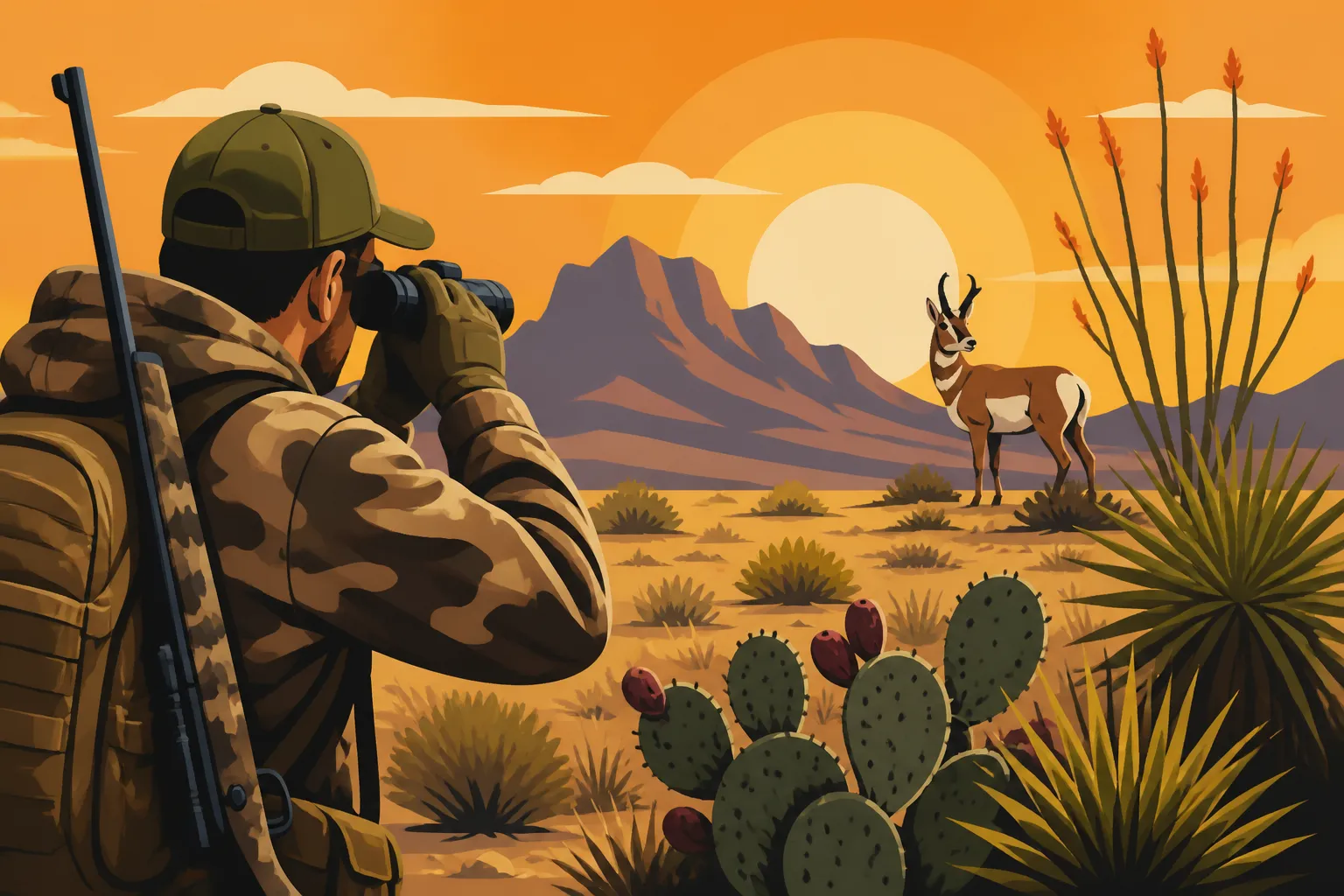
The terrain itself presents its own set of puzzles. Unlike dense timber, cover is sparse. You'll find pockets of ocotillo, cholla, and various cacti, along with hardy grasses and shrubs. This means long-range glassing becomes paramount. Those small, isolated mountain ranges, like the Florida Mountains, the Organ Mountains, or the various "sky islands" in the southwest, offer crucial elevation, different vegetation, and often, critical water sources and cooler temperatures that attract game. Many hunters get frustrated staring out over what seems like empty country, but the animals are there; they're just masters of blending in and utilizing every bit of available cover. You'll often find yourself trying to spot a sliver of horn or an ear tip against a background of rock and thorny brush.
Key Game Species of the Chihuahuan Desert Units
The Chihuahuan Desert units might not host the massive elk herds of the Gila, but they offer some truly unique and challenging hunting experiences for several sought-after species. Each one has adapted to survive and thrive in this harsh environment, and understanding their habits is key to putting a tag on them.
Desert Mule Deer
These aren't your high-country timber mulies. Desert mule deer are incredibly tough, often smaller-bodied, and masters of utilizing the sparse cover provided by arroyos, mesquite thickets, and low-lying brush. You'll find them widely distributed across the desert units. Their patterns are heavily influenced by water and seasonal forage. When the summer monsoons hit, they can spread out, but during dry spells, they'll concentrate near reliable water sources. Hunting them often involves extensive glassing from elevated positions, followed by a strategic spot and stalk through broken country. Patience is a virtue here, as a bedded buck can disappear into seemingly nothing. For deeper insights into their specific range, you might want to read Desert Mule Deer in Southern New Mexico.
Coues Deer
For those seeking a true desert challenge, the Coues deer—often called the "grey ghost"—is the ultimate prize in New Mexico's southernmost desert ranges, particularly in the "Bootheel" units. These tiny deer are incredibly wary, with phenomenal eyesight, and they live in rugged, brushy mountains that seem purpose-built to hide them. They're masters of slipping away unseen. Hunting Coues typically means spending hours behind quality optics, meticulously picking apart distant hillsides and canyon bottoms. Getting close enough for a shot requires stealth, understanding thermals, and often a bit of luck. If you're considering a trip for these elusive creatures, Coues Hunting in the Bootheel Ranges provides excellent context.
Oryx (Gemsbok)
Perhaps the most unique big game animal in New Mexico, the Oryx, or gemsbok, is an African antelope introduced decades ago that has flourished in the Chihuahuan Desert, especially around White Sands Missile Range and surrounding public lands. These majestic animals are built for arid environments, capable of going long periods without water and tolerating extreme temperatures. They're big, tough, and notoriously difficult to bring down, even with a well-placed shot. Hunting oryx is often a spot and stalk affair, but their keen senses and herd mentality make closing the distance a real test. They’re a once-in-a-lifetime hunt for many, and their presence makes New Mexico's desert truly distinct. Discover more about their origins in How Oryx Were Introduced to New Mexico.
Barbary Sheep (Aoudad)
Another introduced species, Barbary sheep, or aoudad, have found a perfect home in the precipitous canyon country and rimrock areas of the Chihuahuan Desert. These animals are incredible climbers, with eyesight that rivals bighorn sheep. They often inhabit some of the most remote and rugged terrain imaginable, making their pursuit a serious physical challenge. Like Coues deer, Barbary sheep hunting relies heavily on glassing vast landscapes from afar, then planning a long, arduous approach to get within shooting range. The reward, however, is a beautiful and unique trophy. Learn more about where to find them in Where Barbary Sheep Live in New Mexico.
Here's a quick overview of what makes hunting these species in the desert unique:
| Species | Primary Habitat | Key Hunting Challenge | Typical Strategy |
|---|---|---|---|
| Desert Mule Deer | Arroyos, mesquite flats, low mountains | Blending in, using sparse cover | Extensive glassing, spot & stalk |
| Coues Deer | Rugged, brushy "sky island" mountains | Exceptional eyesight, evasiveness | Long-range glassing, slow, quiet stalk |
| Oryx | Open flats, rolling hills, White Sands area | Size, toughness, herd awareness | Spot & stalk, often requiring long shots |
| Barbary Sheep | Steep rimrock, canyons, isolated mountains | Incredible eyesight, extreme terrain | Glassing from distance, physically demanding stalk |
Mastering Desert Hunting: Water, Reconnaissance, and Tactics
Hunting the Chihuahuan Desert isn't just about finding the animal; it's about mastering the environment itself. The extreme conditions demand meticulous planning, a strong understanding of wildlife behavior in arid zones, and the right tools.
The Critical Role of Water Sources
In the desert, water is life, and game animals are slaves to it. Finding and understanding water sources is arguably the single most important factor in locating game. These sources can be natural rock tanks (tinajas) that hold rainwater, developed guzzlers installed for wildlife, windmills pumping groundwater, or stock tanks built for cattle. During dry periods, animals will literally live and die by these water points. Your scouting should heavily focus on identifying every potential water source in your unit. However, be aware that hunting over water sources comes with a deep ethical responsibility; ensure you are not pressuring animals excessively or violating any regulations. For more detailed information, Water Sources That Concentrate Desert Game offers excellent insights, as does Hunting Over a Stock Tank Legally for legal considerations.
Strategic Reconnaissance and E-Scouting
Before you ever set foot in the desert, your hunt begins at home with detailed e-scouting. Tools like onX Hunt are invaluable here. You can identify potential water sources, analyze terrain for glassing points and access routes, and locate public land boundaries – a critical factor in the checkerboard ownership patterns common in many desert units. Use satellite imagery to pick apart washes, mesquite patches, and subtle changes in elevation that might hold animals. Identifying potential bedding areas and travel corridors between water and food is much easier from an aerial perspective. When you hit the ground, focus on fresh sign around these identified features. Don't forget that scouting extends to physical preparation; being able to cover miles in the heat is essential. Reviewing Water You Must Carry on a Desert Day Hunt is a good start for physical readiness.
Once you’ve done your digital homework, ground scouting closer to the season can confirm sign and animal movement. Look for tracks in sandy washes, droppings under mesquite trees, and rubbed-up bushes. Understanding the local flora can also help identify bedding and feeding areas.
Essential Gear for the Arid Landscape
Your gear choices can make or break a desert hunt.
- Optics: Given the vast, open nature of the desert, quality optics are non-negotiable. A good pair of 10x binoculars is your constant companion, but a spotting scope (20-60x or higher) on a sturdy tripod is absolutely essential for picking apart distant hillsides and judging animals from afar. You'll spend hours behind glass, so comfort is key. Read Optics Power for New Mexico's Open Country for more.
- Water: This cannot be stressed enough. Carry more water than you think you need. Hydration bladders, multiple bottles, and water filters for emergency refills at stock tanks are prudent.
- Sun Protection: Wide-brimmed hats, lightweight long-sleeved shirts, sunscreen, and sunglasses are vital to combat the relentless desert sun.
- Footwear: Sturdy, broken-in boots with good ankle support are a must for navigating rocky, uneven terrain and thorny vegetation.
- Navigation: GPS devices or a reliable mapping app like onX Hunt are indispensable for staying found, marking waypoints, and ensuring you're on public land. Many desert units have a complex mix of public and private property, and understanding Reading a Land Ownership Layer Correctly is crucial for staying legal.
- Calling and Decoys: For mule deer and Coues, calling is less common but can sometimes work in specific scenarios, especially during the rut. Decoys are rarely practical in the open desert.
- Vehicle: A reliable 4×4 with good clearance is highly recommended for accessing remote areas. Carry spare tires, a jack, and basic recovery gear.
Hunting Tactics for the Desert Hunter
The most common and effective tactic in the Chihuahuan Desert is spot and stalk. This involves:
- Locating a High Point: Get to the highest ground you can access at first light and glass, glass, glass. Systematically pick apart every hillside, arroyo, and brush patch. Grid glassing, as detailed in Grid Glassing a Basin Without Missing Bucks, is a technique that transfers well to this environment.
- Patience: Animals will often be bedded down during the hotter parts of the day. Don't assume an area is empty just because you don't see anything moving. Animals blend in incredibly well.
- The Stalk: Once an animal is spotted, the real work begins. Plan your approach carefully, using terrain features, washes, and vegetation for cover. Always consider the wind. A stalk in the desert often means closing significant distance over challenging ground, so move slowly and deliberately.
- Sitting Water: During hot, dry periods, sitting a known water source can be a very effective ambush strategy, especially for deer and oryx. Set up well before dawn or several hours before dusk, downwind and concealed, and remain absolutely still.
Navigating Draw Odds and Applications
Applying for tags in New Mexico's Chihuahuan Desert units, especially for coveted species like oryx or quality mule deer, can be competitive. Resources like GoHunt provide invaluable data on draw odds, success rates, and unit-specific information, allowing you to make informed choices. Understanding the nuances of the draw and making smart unit choices based on your goals is a critical step in a successful desert hunt. Take time to look through Checking New Mexico Draw Odds Before You Apply to give yourself the best chance.
Hunting the Chihuahuan Desert is not for the faint of heart. It's a test of endurance, patience, and meticulous planning, but the rewards—a unique trophy, breathtaking landscapes, and a profound sense of accomplishment—are immeasurable. Embrace the challenge, respect the environment, and you might just find your new favorite hunting grounds.
Disclaimer
This article is for general informational purposes only and does not constitute professional advice. Laws, prices and regulations vary by location and change over time. Consult a qualified professional for guidance on your specific situation.