BLM Ground Carries Most of New Mexico’s Open Access
For anyone who’s spent time trying to unravel the tangled mess of public and private land ownership in New Mexico, the sheer frustration of finding truly open hunting ground is a familiar ache. It often feels like you need a law degree and a cartographer’s eye just to figure out where you can legally put a boot down without risking a trespass citation. But there’s a silver lining, a vast expanse of opportunity that many hunters rely on: the Bureau of Land Management, or BLM, lands. This guide is all about demystifying BLM ground, helping you understand why it's such a vital resource for hunters in New Mexico, and how to make the most of it.
Understanding New Mexico's Public Land Landscape
New Mexico is a hunter's paradise in many ways, but it’s also a state with a complex quilt of land ownership. Unlike some states where public land might be concentrated in large, continuous blocks, here you'll often find a mosaic of federal, state, and private parcels, sometimes right next to each other. This can make planning a hunt feel like navigating a minefield, especially if you're new to the area or trying to put together a DIY adventure.
The Mix of Federal and State Lands
When we talk about public land in New Mexico, we’re primarily looking at several major categories. You’ve got your National Forests, like the Gila or the Carson, which are often characterized by dense timber, mountainous terrain, and higher elevations. Then there's State Trust Land, which is managed by the State Land Office to generate revenue for public institutions, and typically requires an additional "easement" or "recreational use permit" on top of your hunting license for access. Finally, there's BLM land, which often fills in the gaps, especially in the more arid, lower-elevation regions.
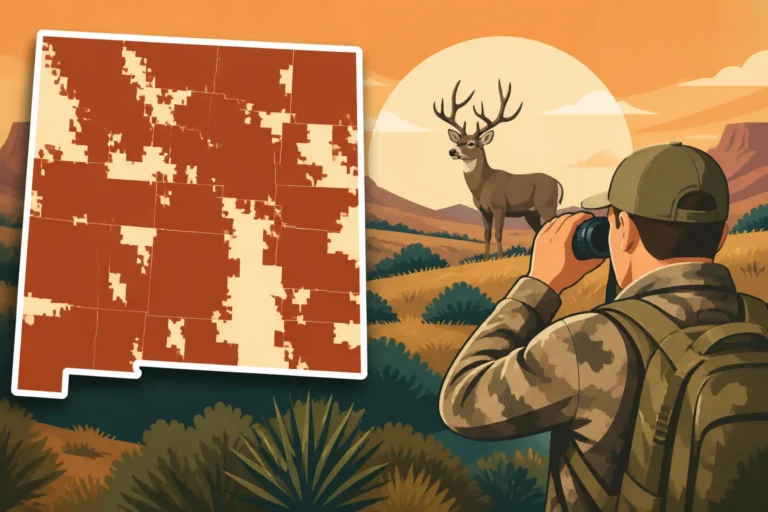
Each of these land types comes with its own set of rules, its own characteristic terrain, and its own unique hunting opportunities. For many hunters, especially those chasing species like mule deer, antelope, or even desert elk, understanding the nuances of BLM land is absolutely crucial. It represents a significant portion of our open access. How Much Public Land New Mexico Holds is a question many folks ask, and a huge chunk of that answer comes back to the BLM.
Why Open Access Matters for Hunters
The sheer amount of public land in New Mexico is a blessing, but accessible public land is the real treasure. Without large swaths of ground where you can freely roam, scout, and hunt, our opportunities would be severely limited. Open access means more than just a place to hunt; it means the freedom to pursue game across diverse habitats, to challenge yourself in true wilderness settings, and to escape the crowds that can sometimes plague more restricted areas.
BLM land, by its very nature, often provides this kind of open access. While you still need to be diligent about checking land boundaries (and we'll dive deep into that), the intent behind BLM management often leans towards multiple uses, including recreation, which benefits hunters tremendously. It allows us to chase game without the prohibitive costs of private land leases or the complexities of navigating certain state-owned parcels. For the average hunter, it's often the most straightforward path to a self-guided hunt in the Land of Enchantment.
What is BLM Land and Why is it So Prevalent in New Mexico?
Many hunters hear "BLM" and picture endless sagebrush flats, but the reality is far more diverse. The Bureau of Land Management is an agency within the United States Department of the Interior that manages over 245 million acres of public land, primarily in the Western states. Its mission is to sustain the health, diversity, and productivity of the public lands for the use and enjoyment of present and future generations. In New Mexico, this translates into a vast and varied landscape of hunting opportunity.
A Brief History of the Bureau of Land Management
The story of the BLM traces back to the 19th century when the federal government began to dispose of public lands to encourage westward expansion, settlement, and resource development. Think homesteading, mining, and timber. However, not all lands were settled or developed, and eventually, the government recognized the need to manage these remaining "unappropriated" lands. In 1946, the General Land Office and the U.S. Grazing Service merged to form the Bureau of Land Management.
The lands managed by the BLM are often those that weren't deemed suitable for National Parks, National Forests, or other specific designations. This means they are generally characterized by a "multiple-use" mandate, allowing for a mix of activities like grazing, mining, energy development, and, crucially for us, recreation and hunting. This historical context helps explain why BLM lands are often interspersed with private holdings—they were the leftover pieces after decades of land grants and sales.
Geographic Distribution and Ecosystems on BLM Ground
In New Mexico, BLM Acreage Across New Mexico is substantial, and it’s truly scattered across the state. You’ll find vast tracts of BLM land throughout the southern, central, and western parts of New Mexico, often forming the backbone of the Chihuahuan Desert ecosystem. These areas are typically lower in elevation than the National Forests, characterized by desert grasslands, juniper and piñon woodlands, and broken, rimrock country.
However, it’s not all desert. You can also find BLM parcels that extend into higher elevations, touching on areas of ponderosa pine and mixed conifer forests, particularly in the western and northern regions. This incredible diversity means that BLM land offers a huge range of habitats, from the rugged slopes of remote mountains to the wide-open plains. The species you'll find will vary just as much, depending on the specific ecosystem you're hunting. It's this widespread, varied distribution that makes BLM ground such a critical component of New Mexico's public hunting access.
The Unique Hunting Opportunities on BLM Ground
The beauty of hunting BLM land in New Mexico lies in its sheer variety and the accessibility it often provides. While some might think of it as "leftover" land, it harbors an incredible diversity of game and offers unique challenges and rewards for the diligent hunter.
Big Game Species Found on BLM
When you picture big game in New Mexico, your mind might first jump to massive Gila elk or trophy mule deer in the high country. And while National Forests certainly hold their share, BLM land is equally productive for a wide array of sought-after species.
- Mule Deer: Many of New Mexico's finest mule deer units include vast stretches of BLM. These desert bucks are masters of camouflage, melting into the juniper thickets and broken rimrock country. Hunting them on BLM often involves extensive glassing, covering vast distances, and being prepared for long shots in open terrain. Units in the southwestern and central parts of the state with significant BLM holdings can produce exceptional mule deer hunting, especially during the later rifle seasons or even archery.
- Pronghorn: If you're chasing antelope, chances are you'll be spending a lot of time on BLM and State Trust Land. The open grasslands and sagebrush flats that characterize much of New Mexico's BLM are prime pronghorn habitat. These hunts are often spot-and-stalk affairs, requiring keen eyes, patience, and the ability to close distances on extremely wary animals in wide-open country. The eastern plains, in particular, have extensive BLM tracts that are crucial for pronghorn hunters.
- Oryx: This non-native species has thrived in the harsh New Mexico desert, and a significant portion of off-range oryx hunts occur on BLM land adjacent to White Sands Missile Range. Hunting oryx on BLM is a truly unique experience, often requiring long drives, careful glassing, and the ability to pursue these large, tough animals across challenging terrain. How an Oryx Hunt Actually Runs is a completely different ballgame, and BLM plays a huge role in that experience.
- Elk: While the largest concentrations of elk are often associated with the National Forests, don't overlook BLM land, especially in units that border forest service ground or contain significant areas of piñon-juniper. These "fringe" elk often use BLM for winter range, dispersal corridors, or even as primary habitat if there's sufficient water and cover. Early archery seasons, in particular, can find elk scattered across these lower-elevation areas.
- Barbary Sheep: Known locally as Aoudad, these rugged exotics also call New Mexico's canyon country home. Many of the remote, difficult-to-access canyons on BLM land provide ideal habitat for Barbary sheep. These hunts are incredibly physically demanding, often requiring significant hiking and climbing in steep, unforgiving terrain.
Small Game and Predator Hunting
Beyond the big game allure, BLM land offers abundant opportunities for small game and predator hunting. For many, these are year-round pursuits that provide endless hours afield.
- Cottontail and Jackrabbit: These critters are ubiquitous across much of New Mexico's BLM. A walk through a brushy draw or a rocky hillside will often yield opportunities for rabbits, providing a fun and challenging hunt, especially for new hunters or those looking to sharpen their skills.
- Quail: New Mexico is home to several species of quail, and vast tracts of BLM provide excellent habitat. Scaled quail, often called "blue quail," are common in the cholla and scrub brush, while Gambel's quail can be found in more riparian areas within the desert. Where to Find Scaled Quail in New Mexico is often synonymous with large expanses of accessible BLM.
- Coyotes: For predator hunters, BLM land is a goldmine. Coyotes are found throughout the state, and the open terrain and diverse cover on BLM make it ideal for calling setups. Hunting Coyotes Year Round in the Desert provides endless opportunities to test your skills and contribute to predator management.
- Bobcat and Fox: While more elusive than coyotes, bobcats and various fox species also inhabit BLM ground. These hunts often require specialized calling techniques and a deep understanding of their behavior and habitat preferences.
Diverse Habitats and Challenges
The habitats on New Mexico's BLM land are incredibly diverse, leading to varied hunting experiences. You might be glassing vast plains for pronghorn one day, and picking your way through rocky canyons for Barbary sheep the next. This diversity is a major draw, but it also presents challenges. The arid environment means water sources are often scarce, making Water Sources That Concentrate Desert Game a critical element of your scouting. The terrain can be rugged, from steep, rocky hillsides to deep arroyos and washes. Hunters need to be prepared for everything from extreme heat in the early seasons to surprisingly cold temperatures in the late fall and winter. The scale of the landscape means you often have to cover a lot of ground, both on foot and in your vehicle, making good physical conditioning and reliable transportation essential.
Navigating Access and Boundaries on BLM Land
One of the biggest headaches for hunters in New Mexico is figuring out exactly where public land begins and private land ends. This is especially true on BLM ground, which often forms a checkerboard pattern with state and private parcels. Misunderstanding these boundaries can lead to accidental trespass, which is a serious offense. Thankfully, modern technology has made this much easier, but vigilance is still key.
Identifying BLM with Mapping Tools
Gone are the days of relying solely on paper maps and hoping for the best. Today, digital mapping applications are indispensable for hunting New Mexico, especially on BLM land. Brands like onX Hunt have revolutionized how hunters visualize and navigate land ownership.
Using an app like onX Hunt, you can overlay property lines directly onto satellite imagery or topographic maps on your phone or GPS device. This clearly shows you where BLM land is, where State Trust Land is, and, most importantly, where private property lies. You can even see landowner names in many cases, which can be invaluable if you need to seek permission for access across a private parcel.
Before heading out, I always recommend downloading offline maps for your chosen unit, as cell service is often nonexistent in vast stretches of New Mexico's BLM country. This ensures you still have your detailed map and GPS functionality even when you’re miles from the nearest tower. Relying on these tools isn't just a convenience; it's a necessity for ethical and legal hunting on BLM ground. Using onX Layers for New Mexico Public Land can literally save your hunt.
Understanding Checkerboard and Landlocked Parcels
New Mexico's land ownership often resembles a quilt made by a very confused seamstress. You'll frequently encounter the "checkerboard" pattern, where sections of public and private land alternate in a grid-like fashion. This is particularly common in areas where historic railroad grants or other land dispositions created a patchy ownership structure.
The challenge with checkerboard land, and what many hunters find frustrating, is the presence of "landlocked" public parcels. These are pieces of BLM or National Forest ground that are completely surrounded by private land, with no legal public access. While some states have specific laws regarding corner crossing (stepping from one public parcel to another at a shared corner), New Mexico generally requires permission to cross any private land, even if it's just a corner. It’s a huge point of contention for hunters, and navigating it requires careful planning and a deep understanding of your maps. Reading a Land Ownership Layer Correctly is vital to avoid issues here.
Before you go, meticulously check your maps. Identify potential access points, whether they are existing roads that cross public land, or areas where BLM abuts a county road. If a parcel appears landlocked, it’s best to assume you cannot access it without explicit written permission from the private landowner, unless you are absolutely certain there is a documented public easement.
Respecting Private Land Boundaries
This might seem obvious, but it bears repeating: respecting private land boundaries is paramount. Accidental trespass is still trespass, and it can lead to hefty fines, confiscation of game, and even loss of hunting privileges. Beyond the legal consequences, it damages the reputation of all hunters and makes it harder to maintain positive relationships with landowners.
Always carry your mapping device and refer to it frequently, especially in areas with ambiguous boundaries or where game might lead you close to private lines. Look for fences, "No Trespassing" signs, or other indicators of private property. When in doubt, err on the side of caution. If you're on a multi-day hunt and discover that a promising area is actually private, adjust your plans. It’s far better to relocate than to risk a confrontation or a citation. A good rule of thumb is that if you wouldn't want someone on your property without permission, don't do it to someone else.
Rules and Regulations Specific to BLM Hunting
While your New Mexico hunting license and specific game tags are the primary legal requirements, hunting on BLM land also comes with its own set of rules and expectations. These are often related to land use, environmental protection, and ensuring a safe and respectful experience for all users of public lands. Ignorance of these rules is no excuse, and can lead to significant penalties.
Vehicle Access and Road Restrictions
BLM land, particularly in New Mexico, often has a vast network of dirt roads, two-tracks, and old ranch trails. It might feel like you can drive anywhere, but that's rarely the case. The BLM manages these roads to prevent erosion, protect wildlife habitat, and ensure sustainable access.
- Designated Routes: Many BLM areas operate under a "designated routes" system, meaning you are only permitted to drive on roads explicitly marked as open for vehicle travel. This often means staying on established two-tracks and avoiding creating new ones. Maps, both paper and digital (like onX Hunt), will often show these designated routes. It's your responsibility to know which roads are open and which are closed.
- Seasonal Closures: Just like in National Forests, some BLM roads may be subject to seasonal closures, especially during wet periods to prevent damage, or during specific times of year to protect wintering wildlife or calving grounds. Always check with the local BLM field office for current conditions and closures in your specific hunt unit.
- Off-Road Travel: Generally, off-road travel (driving cross-country) is prohibited on BLM lands unless specifically designated for such activity (like in certain OHV areas, which are typically separate from hunting zones). This rule is critical for preventing habitat destruction, soil erosion, and disturbance to wildlife. Even to retrieve downed game, you usually cannot drive off an established road. Motorized Travel Rules on New Mexico Public Land can be complex, so always review the most current regulations.
Camping and Dispersed Recreation on BLM
One of the great freedoms of hunting BLM land is the ability to engage in dispersed camping, meaning you can typically set up camp almost anywhere, away from developed campgrounds, without a permit. This allows hunters to truly immerse themselves in the landscape and often set up spike camps closer to their hunting areas.
- Leave No Trace: This is the golden rule for dispersed camping. Pack out everything you pack in, including all trash and food scraps. Bury human waste at least 6-8 inches deep and 200 feet from water sources. Minimize your impact on vegetation and soil.
- Stay Limits: While generally flexible, most BLM areas have a maximum stay limit (often 14 days within a 28-day period) to prevent long-term residency and environmental impact.
- Campfire Restrictions: Always be aware of fire restrictions, especially during dry seasons. New Mexico frequently experiences drought, and wildfires are a serious threat. A small portable stove might be a better option than a campfire. If fires are allowed, use existing fire rings if possible, keep them small, and ensure they are completely extinguished before leaving.
- Water and Waste: Plan for water, as sources are scarce. Bring all the water you'll need for drinking, cooking, and hygiene. Dispose of greywater responsibly, away from natural water bodies.
Fire Restrictions and Environmental Stewardship
Environmental stewardship is a shared responsibility on public lands. Hunters, in particular, spend significant time in remote areas and are often the first to notice potential issues.
- Fire Danger: New Mexico's arid climate means fire danger is often high. Always check current fire restrictions before you go. These can range from a complete ban on open flames to restrictions on charcoal grills. A simple spark from a vehicle exhaust or an untended campfire can devastate vast areas, destroy wildlife habitat, and impact future hunting opportunities.
- Litter and Waste: Beyond just your own camp, take the initiative to pack out any trash you find. Our public lands are not landfills, and leaving trash behind degrades the experience for everyone and can harm wildlife.
- Respecting Wildlife and Habitat: This includes not disturbing sensitive areas, respecting seasonal closures intended to protect wildlife, and being mindful of your impact on trails and vegetation. This commitment to the land ensures that future generations will have the same, if not better, hunting opportunities.
Planning Your Hunt on New Mexico's BLM
Successfully hunting New Mexico's BLM requires more than just a tag; it demands thorough planning, strategic scouting, and a realistic understanding of the challenges involved. The vastness and often remote nature of these lands mean you need to be self-sufficient and prepared for anything.
E-Scouting and Physical Reconnaissance
In today's hunting world, effective scouting starts long before you ever put boots on the ground. This "e-scouting" phase is particularly crucial for BLM land, given its often fragmented nature and varied terrain.
- Digital Mapping Deep Dive: Begin by spending hours on your preferred mapping application (like onX Hunt or GoHunt). Look for areas of BLM ground within your chosen hunt unit. Pay close attention to terrain features that might concentrate game:
- Water Sources: Tanks, seeps, windmills, and riparian areas are magnets in arid environments. Mark them as potential hotspots.
- Cover and Escape Routes: Look for dense juniper or piñon thickets, steep canyons, or rimrock that offer security for animals.
- Elevation Changes: In open country, even subtle changes in elevation can provide crucial vantage points for animals.
- Access Roads: Identify legal access points and plan your routes. Note any gates or potential obstacles.
- GoHunt's Filtering Tools: Tools like those offered by GoHunt can be invaluable during the e-scouting phase, especially for non-residents or those unfamiliar with specific units. They often provide filtering options for public land percentages, species distribution, and harvest data, helping you narrow down your focus to units with high BLM potential. While they don't give real-time info, their historical data and mapping overlays are powerful for strategic planning.
- Physical Scouting: Once you've identified promising areas through e-scouting, nothing beats boots-on-the-ground reconnaissance. Ideally, this should happen well before your hunt, allowing you to walk the terrain, confirm water sources, and look for fresh sign. If pre-season scouting isn't possible, plan to dedicate your first day or two of the hunt purely to scouting. This is particularly important for BLM, where conditions can change rapidly. Remember the 14-Day Scouting Window on Trust Land rule if you plan to extend your recon onto adjacent State Trust Land. For more general e-scouting tips, check out E-Scouting a New Mexico Unit Before the Season.
Water Sources and Game Concentration
In the arid ecosystems that define much of New Mexico's BLM land, water is life. Animals, especially big game, are heavily reliant on consistent water sources, and these spots can become natural congregation points, particularly during dry spells or early seasons.
- Identify and Prioritize: As mentioned, use your maps to identify every potential water source. These could be natural springs, stock tanks, windmills, or even seasonal puddles after rains. Don't assume all marked water sources are reliable; some may be dry, especially in drought years. This is where physical scouting truly pays off.
- Sign Around Water: Once on the ground, carefully examine the areas around water sources for fresh tracks, droppings, and rubs. Game trails leading to and from water can give you an excellent indication of animal movement patterns.
- Ethical Hunting Near Water: While water sources are magnets for game, ethical considerations are important. Avoid "sitting" a waterhole for extended periods if it's the only available water for miles around, as this can deter animals from accessing a vital resource. Be mindful of other hunters and respect their space.
- Consider Time of Day: Game often visits water during low-light hours – early morning, late evening, or even at night. Tailor your ambush or observation points accordingly.
Dealing with Pressure and Finding Solitude
BLM land, by its nature of open access, can sometimes draw significant hunting pressure, especially on opening weekends or in popular units. Finding solitude and unpressured game often requires extra effort.
- Go Deep: The further you get from roads and established trailheads, the less pressure you'll generally encounter. Be willing to hike several miles into remote drainages or over ridges that most hunters won't bother with.
- Hunt Mid-Week: If your schedule allows, hunting during weekdays, especially Tuesday through Thursday, can significantly reduce the number of other hunters you encounter.
- Focus on Overlooked Terrain: Don't just hunt the obvious ridges and clearings. Look for dense, nasty thickets, steep, broken country, or small, isolated pockets of cover that might hold pressured animals seeking refuge. Often, the places that are hardest for you to get into are the places where animals feel safest.
- Use Topography to Your Advantage: Canyons, arroyos, and hills can funnel game and also hide your approach. Learn to read the terrain to avoid skylining yourself and to predict where animals might travel. For example, Playing Thermals on a Canyon Stalk is a critical skill in this type of terrain.
- Check Public Land Percentages: When researching units (perhaps through GoHunt or state game and fish resources), pay attention to the percentage of public land. Units with extremely high percentages of public land can sometimes distribute pressure more effectively across a larger area, or they might simply be harder to access, thus naturally limiting crowds. For insights into this, check out Checking Public Land Percentage by Unit.
Comparing BLM to Other Public Lands for Hunting
New Mexico offers a diverse portfolio of public lands, each with its own character and hunting opportunities. While BLM land provides incredible access, it's helpful to understand how it stacks up against other types of public ground like National Forests and State Trust Lands. This comparison can help you make informed decisions when planning your next hunt.
BLM vs. National Forests: Different Experiences
National Forests (like the Gila, Carson, or Santa Fe National Forests) and BLM lands are both federal public lands, but they are managed by different agencies (Forest Service vs. BLM) and often offer distinct hunting experiences.
- Terrain and Elevation:
- National Forests: Generally characterized by higher elevations, more mountainous and rugged terrain, denser timber (ponderosa pine, spruce, fir), and typically more consistent water sources. These are your prime elk and high-country mule deer habitats. Think big, continuous blocks of timber and steep slopes.
- BLM Land: Tends to be at lower to mid-elevations, often more arid, with ecosystems dominated by desert grasslands, juniper-piñon woodlands, and broken rimrock country. While there are exceptions, BLM is typically less forested and more open. This makes it ideal for pronghorn, desert mule deer, oryx, and Barbary sheep.
- Access:
- National Forests: Often have extensive road networks, but also vast wilderness areas with foot or horseback access only. Trailheads That Open the Gila Wilderness are common entry points.
- BLM Land: Characterized by a sprawling network of dirt roads and two-tracks, but also frequently interspersed with private land, leading to more complex access issues like checkerboard patterns and landlocked parcels. Why BLM Ground Carries the Most Access is often due to its less restrictive multi-use mandate compared to forests.
- Hunting Styles:
- National Forests: Often lend themselves to still-hunting through timber, calling elk, or spot-and-stalk in open parks. Requires physical endurance for steep climbs.
- BLM Land: More often involves extensive glassing from high points, long-range spot-and-stalk approaches in open country, and focusing on water sources in dry areas. Can involve significant driving on rough roads.
- Game Species:
- National Forests: Primary habitat for elk (especially in the Gila and northern forests), Rocky Mountain mule deer, bear, and turkey.
- BLM Land: Primary habitat for pronghorn, desert mule deer, oryx, Barbary sheep, small game, and predators. Elk can be found in transitional zones or during wintering periods.
BLM and State Trust Land: The Access Nuances
New Mexico State Trust Land is another significant component of the state's public land base, but access differs critically from BLM land.
- Purpose:
- BLM Land: Managed for "multiple use," balancing recreation, grazing, energy development, and conservation.
- State Trust Land: Managed by the State Land Office primarily to generate revenue for specific beneficiaries (e.g., schools, hospitals). Recreational access is secondary.
- Permitting:
- BLM Land: Your standard New Mexico hunting license is generally sufficient for recreational access, assuming you adhere to specific vehicle and camping rules.
- State Trust Land: Requires an additional "easement" or "recreational use permit" from the State Land Office, which must be purchased annually. Do You Need a Permit for New Mexico Trust Land? The answer is yes, beyond your hunting license.
- Scouting Windows:
- BLM Land: Generally open for scouting year-round, within reasonable dispersed camping limits.
- State Trust Land: Has specific, limited scouting windows, usually 14 days before an open hunting season. How Long Before a Hunt You May Scout is a critical detail to remember for State Trust Land.
- Rules:
- BLM Land: More flexible regarding dispersed camping.
- State Trust Land: Often has stricter rules regarding vehicle use, camping (sometimes prohibited or restricted to specific areas), and fires.
- Interspersed Ownership: Both BLM and State Trust Land suffer from the "checkerboard" problem, making careful mapping crucial for both. You might find a BLM parcel surrounded by State Trust Land, or vice versa, and knowing the specific rules for each is vital.
Maximizing Your Success on BLM Ground
Hunting New Mexico's BLM land is an incredible experience, but it's often a challenging one. To truly maximize your success, you need to be strategic, adaptable, and thoroughly prepared. It's about more than just finding animals; it's about understanding the environment and being ready for what it throws at you.
Understanding Local Conditions
The vastness of BLM land means that conditions can vary dramatically from one unit to another, and even within the same unit. What holds true for a hunt in the northern piñon-juniper foothills might be completely different for a desert hunt in the south.
- Weather Extremes: Be prepared for anything. Early season hunts can be scorching hot, requiring diligent heat management and carrying extra water. Late season hunts, even in the desert, can bring freezing temperatures, snow, and brutal winds. Check long-range forecasts, but also be ready for sudden changes.
- Drought and Rainfall: Pay close attention to recent precipitation. A wet monsoon season can green up the desert and scatter game, making them harder to find concentrated around limited water. Conversely, a prolonged drought will concentrate animals around the few reliable water sources, making them more predictable but also more vulnerable. Use resources like GoHunt to research historical weather patterns and current conditions for your unit.
- Vegetation Changes: A fire from a few years ago might have created new forage that is now a hotspot for deer, while a recent drought could have killed off browse in other areas. Understanding the vegetation, and how it has changed, can help you predict where game might be feeding or seeking shelter.
- Game Behavior: Animals on BLM land are often highly pressured and wary. They learn quickly where hunters tend to go and will adapt their patterns. This might mean becoming more nocturnal, retreating to the thickest cover, or using overlooked escape routes. You need to be ready to adjust your approach based on how the game is behaving.
Being Self-Sufficient and Prepared
Remote BLM land is not the place to be unprepared. Help can be hours away, and cell service is often nonexistent. Self-sufficiency is paramount.
- Vehicle Reliability: Ensure your vehicle is in top condition, especially tires, suspension, and fluids. Carry extra fuel, a spare tire (or two), and tools for minor repairs. Many BLM roads are rough and remote, and a breakdown can quickly turn into a serious situation.
- Navigation: While digital maps are essential, always carry a backup. A traditional paper map and compass, and knowing how to use them, is a lifeline if your electronics fail. Mark critical waypoints like your vehicle, camp, and important water sources.
- Water: This cannot be stressed enough. Always carry more water than you think you'll need. Calculate your daily water needs for drinking, cooking, and basic hygiene, and then add a significant buffer for emergencies. For desert hunts, this means hauling dozens of gallons.
- First Aid and Safety: A comprehensive first-aid kit is non-negotiable. Know how to use it. Carry emergency signaling devices like a whistle, signal mirror, and a satellite messenger (like a Garmin inReach or Zoleo) for communication outside of cell service. This allows you to call for help in a true emergency. Be aware of venomous snakes and other hazards common to the desert. Snake Awareness on a September Archery Hunt is just one example of the specific dangers you might face.
- Proper Gear: Dress in layers to accommodate wide temperature swings. Sturdy, broken-in boots are essential for covering rugged terrain. Good quality optics (binoculars, spotting scope) are your best friend for glassing vast expanses of BLM. Ensure your rifle or bow is accurately sighted in, because shots can often be long in open country. Sighting In After a Long Drive to Camp should be a mandatory first step before you head out.
In the end, hunting New Mexico's BLM ground is an adventure. It offers immense opportunity, but it demands respect, preparation, and a willingness to work for your success. It's truly where a huge chunk of our open access lies, and with the right approach, it can deliver some of the most rewarding hunts in the West.
Disclaimer
This article is for general informational purposes only and does not constitute professional advice. Laws, prices and regulations vary by location and change over time. Consult a qualified professional for guidance on your specific situation.