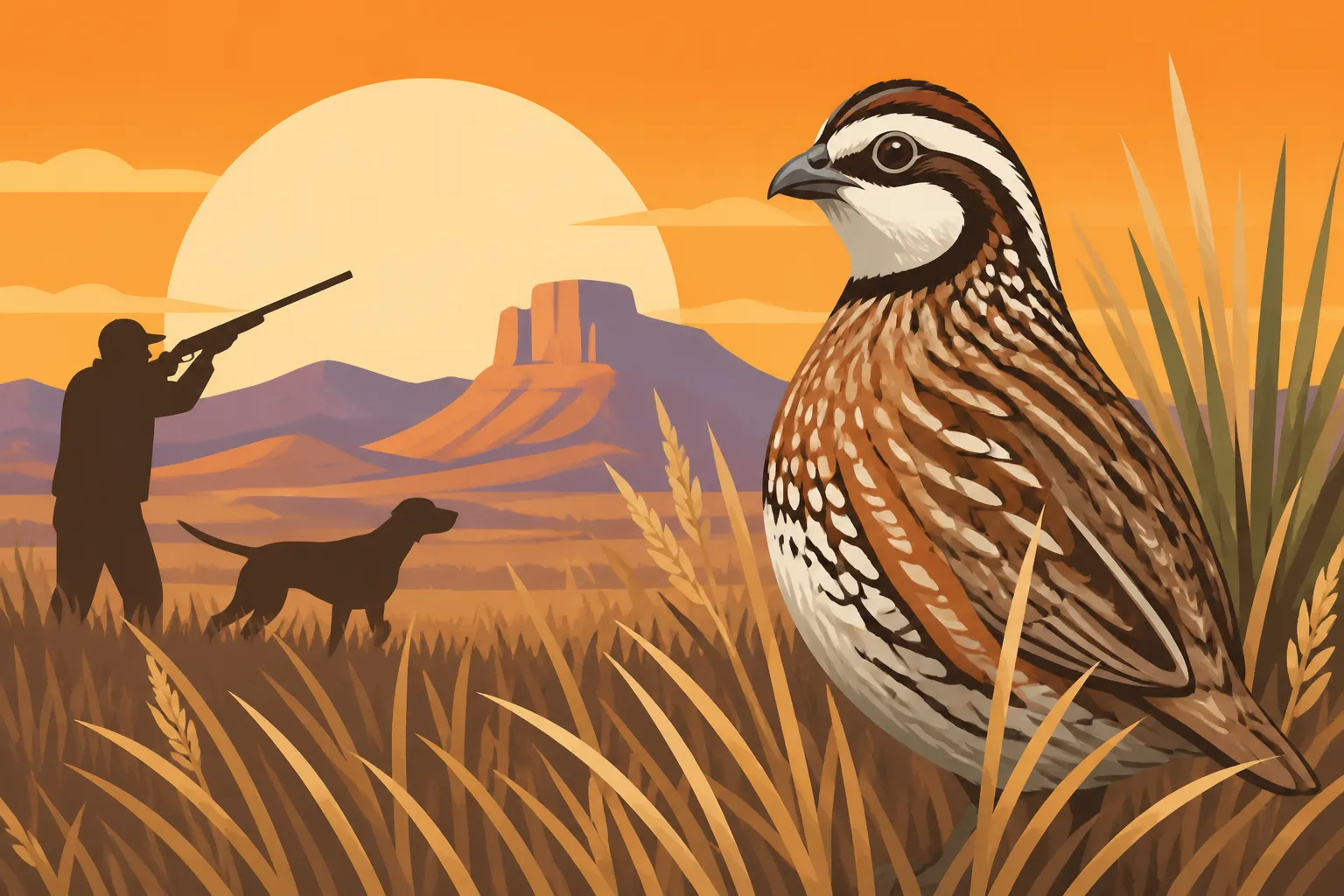
Bobwhite on New Mexico Grassland
You know, when most folks dream of hunting in New Mexico, their minds immediately jump to big bulls bugling in the Gila or a trophy mule deer in the high country. And don't get me wrong, those hunts are legendary for a reason! But tucked away in the eastern reaches of our incredible state lies a different kind of thrill, one that offers fast-paced action and incredible table fare: chasing bobwhite quail. It’s a pursuit often overlooked, but for those who discover its charms, it becomes an annual pilgrimage. This guide will shine a spotlight on these spirited little birds, revealing where to find them, how to hunt them, and why they deserve a spot on your New Mexico hunting calendar.
The Bobwhite's Kingdom: Where to Find Them in New Mexico
When you think of quail in New Mexico, your mind might first go to the larger coveys of scaled quail in the desert or the Gambel's quail in the arroyos. But the Northern Bobwhite, with its distinctive call and penchant for dense cover, truly thrives in specific, often less-traveled parts of our state. These aren't the birds you're typically kicking up in rocky canyons; bobwhites prefer a much different landscape.
Geographical Strongholds: The Eastern Plains
If you're looking to put together a plan for bobwhite quail, your compass should point squarely east. The true heart of bobwhite country in New Mexico lies on the vast eastern plains, particularly in counties that share a border with Texas and Oklahoma. Think of areas around Clovis, Portales, and Tucumcari. These aren't the dramatic mountainscapes of the Gila or the high deserts of the south; this is rolling grassland, interspersed with agricultural fields, small draws, and dense riparian corridors. This landscape provides the perfect blend of cover and sustenance that bobwhites demand.
What makes these regions so ideal? It's the unique combination of native grasses, brushy cover, and the ever-present influence of agriculture. Unlike their desert-dwelling cousins, bobwhites aren't built for wide-open spaces and sparse vegetation. They need dense, protective cover to escape predators and shelter from the elements, as well as easy access to food. The eastern plains, with their mosaic of CRP (Conservation Reserve Program) lands, dryland farming, and brushy fence rows, offer exactly this. You'll often find them along the edges of cultivated fields, where spilled grain provides an easy meal, but always close to a thicket or a plum patch for a quick escape. When you're planning your hunt, consider researching areas where public lands, such as certain BLM parcels or State Trust Lands, abut private agricultural operations. Many of these areas are often visible through mapping tools, and platforms like GoHunt can provide overlays that show public access points and land ownership, helping you pinpoint potential hotspots.
Ideal Habitat: Understanding Cover and Food Sources
Successfully hunting bobwhite quail isn't just about being in the right general area; it's about understanding the micro-habitats they rely on. These birds are masters of concealment, and they won't be far from where they feel safe. A prime bobwhite spot will have several key features working in concert.
First and foremost is dense, low-growing cover. This might be thick stands of native grasses like bluestem or switchgrass, tangled briar patches, plum thickets, or even dense stands of shinnery oak. This cover serves multiple purposes: it protects them from hawks and other avian predators, shields them from the wind and cold, and offers a safe place to roost at night. Without adequate cover, bobwhites simply won't survive, let alone thrive. Think about areas where natural vegetation forms dense, almost impenetrable walls – these are likely sanctuaries for coveys.
Secondly, food sources are paramount. Bobwhites are primarily seed-eaters, and their diet consists of a wide variety of plant seeds, insects, and berries. In the eastern plains, this often means they'll be found near agricultural fields where they can pick up waste grain like sorghum, wheat, or corn. But they also rely heavily on seeds from native grasses, weeds, and forbs. Look for areas with a rich diversity of plant life, especially those with plants that produce small, accessible seeds. Proximity to water is also critical, though they can often get sufficient moisture from dew and their food sources. However, a nearby stock tank or natural seep can be a magnet for birds, especially during dry spells. You might even want to check out Water Sources That Concentrate Desert Game for a broader understanding of how crucial water can be. The perfect spot will be a transition zone: the edge of a crop field, a brushy fence line, or a draw that provides both food and immediate, thick cover. It's a fine balance, and knowing what to look for on a map, especially using detailed satellite imagery that many online tools provide, can give you a significant advantage before you even lace up your boots.
Unraveling the Bobwhite's Secrets: Behavior and Biology
Chasing bobwhite quail is a dance of anticipation and explosive action. To truly connect with these birds, you need to understand their daily rhythms and how they interact with their environment. They're not just random targets; they're creatures of habit, and those habits are your biggest clue.
Daily Routines and Covey Dynamics
Bobwhites are highly social birds, living in groups called coveys, especially outside of the breeding season. These coveys can range from a handful of birds to several dozen, though typical coveys in New Mexico might be somewhere in the 10-25 bird range. Their day generally begins shortly after sunrise, when they leave their roosting spot – often a dense clump of grass or a thicket – to begin feeding. This early morning period, and then again in the late afternoon, is when they are most active, moving through open areas adjacent to cover to forage for seeds and insects. Midday usually finds them loafing or dusting in protected spots, away from the hottest sun or the chill of the wind, often deeper in cover.
Knowing this routine is absolutely crucial for hunters. If you're heading out in the middle of the day, you'll likely be busting birds out of thick cover where shots are tough and finding downed birds is even harder. Focusing your efforts during the first few hours after sunrise and the last few hours before sunset will put you in the best position for finding coveys on the move, making them more accessible to your dog and more vulnerable to your approach. When a covey is flushed, they'll often scatter in all directions, calling to each other to regroup. This scattering is where the real fun begins for many hunters, as single birds hold tighter, offering challenging shots and excellent dog work. It's a classic quail strategy to hunt the initial covey flush, then spend time working through the singles.
The Distinctive Whistle and Other Indicators
The sound of a Northern Bobwhite is one of the most iconic calls of the American grasslands. That clear, two-note "Bob-Whiiite!" whistle is unmistakable and gives the bird its name. Males often make this call repeatedly during the breeding season, but you can hear variations of it, as well as assembly calls, throughout the year. For a hunter, hearing this call is like finding a hidden treasure map. It tells you that birds are in the vicinity, and often, it can help you pinpoint their general location, especially if you're trying to locate a scattered covey.
Beyond the vocalizations, there are other signs that keen hunters learn to read. Tracks in dusty lanes or soft ground, particularly near water sources or food plots, can indicate recent activity. Dusting bowls – small, shallow depressions in soft earth where birds roll to clean their feathers – are another clear sign. You might also find droppings, usually small and dark, often in concentrated areas near roosting or feeding spots. A seasoned hunter, much like a good bird dog, learns to observe these subtle clues. For those who use mapping apps, integrating satellite imagery with information from platforms like GoHunt can help identify promising areas before you even step foot in the field, allowing you to scout for ideal habitat from your couch. E-Scouting a New Mexico Unit Before the Season covers this in more detail. Even if you don't hear a call or see tracks, if you're walking through prime habitat, stay alert. Your dog, if you have one, will certainly let you know when you're getting close.
Crafting Your Bobwhite Strategy: Hunting Techniques
Hunting bobwhite quail is an incredibly rewarding experience, but it’s rarely easy. These birds are small, fast, and masters of their cover. Success often boils down to a combination of preparation, persistence, and the right approach. Whether you're a seasoned bird hunter or new to the pursuit, having a solid strategy will make all the difference.
The Power of a Good Bird Dog
Let's be honest: hunting bobwhite quail without a good bird dog is like trying to find a needle in a haystack. While it's certainly possible to walk up a covey, especially in areas with very high bird densities, a well-trained pointing or flushing dog elevates the experience from a chore to a symphony. A dog's keen sense of smell can locate coveys you'd walk right past, pinpointing their exact location, often allowing you to get into a prime shooting position before the flush.
English Setters, Brittanys, German Shorthaired Pointers, and English Pointers are classic choices, each bringing their own strengths to the field. A pointing dog will lock up on scent, indicating where the birds are, giving you time to walk in and prepare for the flush. A flushing dog, while perhaps not offering the same dramatic "point," will systematically work cover to push birds out. Beyond finding birds, a good retriever is invaluable for finding downed birds, especially in dense cover, preventing lost game and ensuring you recover every bird you shoot. When selecting a dog or planning your hunt, consider the breed's suitability for the eastern New Mexico grasslands, which can be tough on paws and require stamina. Having a canine companion makes the hunt infinitely more enjoyable and significantly more productive.
Walking Up and Covey Management
While a dog is highly recommended, some hunters pursue bobwhites by walking up coveys. This requires a much slower, more methodical approach, often zig-zagging through prime cover in the hopes of stumbling upon birds. It's physically demanding, as you'll be pushing through dense brush, and your success rate on finding birds may be lower. However, it can still yield results, particularly if you focus on areas where birds are known to frequent.
When a covey flushes – whether by dog or by foot – it's typically an explosive, chaotic event. Birds erupt from the cover in a whirring burst of wings, often going in multiple directions. The key here is not to panic. Pick one bird, swing through it, and make your shot. Trying to shoot at the entire covey is a recipe for frustration. Once the initial covey flush is over, mark where the birds scattered. Often, they won't fly far, maybe a few hundred yards, and will drop into the nearest available cover. This is where the hunt often gets more interesting, as singles tend to hold much tighter than the covey, offering a challenging but more predictable flush. Work the scattered singles methodically, remembering that a single bird offers a higher probability of a clean shot and recovery. Ethical hunting also dictates that you adhere to your bag limits; checking New Mexico Quail Bag Limits by Species is a good first step. It's not just about the numbers, but about appreciating the opportunity and ensuring populations remain healthy for future seasons.
Essential Gear and Shotgun Selection
For bobwhite quail, your gear setup needs to be focused on mobility, comfort, and quick handling. You'll be doing a lot of walking, often through abrasive cover, so sturdy, comfortable boots are non-negotiable. Snake gaiters are also a wise choice, especially on early season hunts when rattlesnakes are still active. Layered clothing, suitable for variable New Mexico weather, is also key – mornings can be chilly, but midday on the plains can get surprisingly warm.
When it comes to shotguns, lighter, faster-handling firearms are preferred. A 20-gauge or even a 28-gauge shotgun is perfect for bobwhites, offering sufficient firepower without the heavy recoil or weight of a 12-gauge, which can be cumbersome on a long day of walking. You'll want an open choke, like improved cylinder or skeet, for the close-range shots typical of flushing quail. Shot size 7.5 or 8 is generally ideal, providing a dense pattern without over-penetrating these small birds. Many hunters carry a few extra shells in a vest with ample game pockets to keep birds safe and cool. Consider a quality vest from companies like Browning, Orvis, or even a simple Cabela's model; anything that helps you carry your essentials without hindering movement. It's a very active form of hunting, and your gear should support that.
| Quail Species | Primary Habitat | Typical Covey Size | Distinctive Call |
|---|---|---|---|
| Northern Bobwhite | Grasslands, agricultural edges, dense brush | 10-25 birds | "Bob-Whiiite!" (clear, two-note) |
| Scaled Quail | Chihuahuan Desert, arid grasslands, sparse brush | 15-50+ birds | "Chuk-chuk-kurr" (chicken-like) |
| Gambel's Quail | Sonoran Desert, thorny washes, riparian areas | 10-30 birds | "Chi-ca-go!" (rising, accelerating) |
Navigating Regulations and Ensuring Sustainable Hunts
Just like any other hunting pursuit in New Mexico, chasing bobwhite quail comes with its own set of rules and ethical considerations. Understanding these isn't just about avoiding trouble; it's about being a responsible hunter and contributing to the health of our wildlife populations. This is especially true for small game, which can be highly sensitive to habitat and weather fluctuations.
New Mexico's Quail Season and Bag Limits
While specific dates and numbers can shift from year to year, New Mexico generally offers a generous quail season, often opening in the fall and extending through the winter months. This allows hunters to take advantage of different weather patterns and bird behaviors. It's crucial to consult the most current New Mexico Hunting Rules & Info booklet each year for the precise dates. You can also get a good overview by checking When New Mexico Quail Season Opens or New Mexico's Small Game Seasons at a Glance.
Bag limits are also set to ensure sustainable harvest. Often, there's a daily bag limit (the number of birds you can shoot in a single day) and a possession limit (the total number of birds you can have on hand, usually two or three times the daily limit). New Mexico commonly employs a "combined quail bag limit," meaning that for certain units or seasons, the limit applies to all species of quail (bobwhite, scaled, and Gambel's) taken together. This prevents overharvest of any single species while offering flexibility to hunters who might encounter mixed coveys. Always be aware of which quail species you are targeting and what the rules are for that specific area. Remember, ethical hunting means sticking to those limits, even when the birds are flying hot.
Conservation and Ethical Considerations
Every hunter has a responsibility to not just harvest game, but to ensure the future of the species and the sport. For bobwhite quail, this means several things. Habitat is king, and advocating for and supporting habitat conservation efforts, especially in grassland and agricultural interface zones, is paramount. Bobwhite populations are often cyclical, heavily influenced by rainfall and habitat quality. Dry years can hit them hard, and wet years can see their numbers rebound dramatically. Understanding Why Rainfall Drives Quail Numbers can provide context to these fluctuations.
Beyond habitat, ethical hunting practices are key. This includes respecting private property boundaries – especially critical on the eastern plains where private land is abundant. Always obtain written permission if you plan to hunt on private ground. Familiarize yourself with Reading a Land Ownership Layer Correctly using mapping apps. If you're on public land, know the specific regulations for that area, whether it's BLM ground, which often offers extensive BLM Ground Carries Most of New Mexico's Open Access, or State Trust Land. Always retrieve every bird you shoot; a good dog is invaluable for this, but even without one, meticulous searching is part of the deal. Keep shot sizes appropriate to avoid excessive meat damage and ensure clean kills.
Finally, consider the long-term impact of your hunting. If you find a particularly dense covey, it might be tempting to shoot until you reach your limit, but sometimes leaving a few birds to rebuild the covey can be a sound conservation practice. These small game animals offer an exhilarating hunting experience, delicious table fare, and a chance to connect with a unique side of New Mexico's wild places. By being informed and responsible, we can ensure the bobwhite's whistle continues to echo across the eastern grasslands for generations to come.
Disclaimer
This article is for general informational purposes only and does not constitute professional advice. Laws, prices and regulations vary by location and change over time. Consult a qualified professional for guidance on your specific situation.