Why Rainfall Drives Quail Numbers
For anyone who’s spent time chasing scaled, Gambel's, or even bobwhite quail across New Mexico's diverse landscapes, you know that some years are absolute banner years, and others… well, let's just say they make you question why you even bought a box of shells. That wild fluctuation in bird numbers isn't just random luck; it's a direct reflection of something far more fundamental: rainfall. Understanding how precipitation dictates the success of a quail season is key to knowing when and where to invest your time and effort, making your hunts more productive and less frustrating.
The Quail Life Cycle: Driven by Desert Deluges
Quail in New Mexico, much like most desert-dwelling species, are incredibly responsive to moisture. Their entire reproductive strategy is a finely tuned dance with the rain. It’s not just about a single downpour; it’s about the timing and consistency of precipitation that sets the stage for a boom or bust year. A healthy quail population relies heavily on successful breeding, nesting, and, most critically, chick survival.
Spring Rains Spark the Breeding Cycle
The most critical period for quail reproduction often kicks off with late winter and early spring rains. Think about those soft, consistent drizzles that green up the desert floor rather than the violent summer monsoons. These early rains are like a clarion call for quail. They stimulate vegetative growth, providing crucial protein-rich forage for adult birds coming out of the leaner winter months. This improved nutritional plane is essential for hens to get into breeding condition, lay healthy clutches of eggs, and sustain themselves through the demanding nesting period. Without this initial green-up, hens might delay nesting, lay fewer eggs, or even forego nesting altogether, directly impacting the number of young birds entering the population.
Imagine a scenario where the spring is bone dry. The sparse vegetation offers little sustenance, and the ground remains barren. Hens are stressed, their bodies aren't ready for the rigors of egg-laying, and the drive to reproduce is dampened. Conversely, a mild, wet spring can lead to multiple nesting attempts, known as "re-nesting," if the first clutch fails due to predation or disturbance. This biological flexibility is a testament to their adaptation to arid environments, but it entirely hinges on adequate moisture.
Summer Monsoons and Chick Survival
While spring rains are vital for initiating the breeding cycle, the legendary New Mexico summer monsoons often hold the key to chick survival. These intense, but often localized, downpours from July through September are incredibly important. Why? Because newborn quail chicks, like many young game birds, require a diet rich in insects for rapid growth and development. These insects, in turn, flourish with moisture.
A good monsoon season means a veritable explosion of grasshoppers, beetles, and other invertebrates. These tiny protein packets are exactly what rapidly growing quail chicks need to fledge and survive their vulnerable early weeks. Moreover, consistent summer rains keep the ground soft enough for adult quail to easily dust bathe, an essential activity for feather maintenance and parasite control. When the rains fail, insect populations dwindle, and chicks literally starve or are too weak to escape predators. The landscape also stays hard and dusty, making foraging more difficult and less efficient for the entire covey. It's a cruel cycle of cause and effect in the desert.
Direct Impacts of Rainfall on Habitat and Food Sources
Rainfall doesn't just trigger biological responses in quail; it directly shapes their physical world by influencing the quality and abundance of their habitat and food sources. New Mexico's diverse terrain, from the high desert to the grassy plains, means this impact manifests in slightly different ways depending on the specific quail species and region.
The Green-Up: Cover and Forage
The most visible impact of rain is the "green-up" it brings. This new growth isn't just pretty; it's vital for quail survival. Lush grasses and forbs provide essential nesting cover, shielding eggs and brooding hens from the scorching sun and opportunistic predators. Dense patches of weeds and shrubs offer escape cover for young broods, allowing them to hide from hawks, coyotes, and other threats. Without sufficient cover, quail are exposed and vulnerable, leading to higher rates of predation.
Beyond physical cover, this new vegetation forms the backbone of their diet. Many desert plants produce seeds, berries, and tender shoots that quail depend on. Good rains lead to abundant seed crops from grasses, crotons, ragweed, and various legumes – all staple foods for quail. Where to Find Scaled Quail in New Mexico often points to areas with specific vegetation types, and the health of that vegetation is directly tied to rainfall. When rains are scarce, these plants wither, producing minimal seeds, if any. The quail are then forced to range further, expend more energy, and compete more intensely for what little food exists, weakening them and making them more susceptible to disease and predation.
Insect Booms and Water Availability
As mentioned, insects are non-negotiable for quail chicks. A good rain season means more standing water, more lush vegetation, and subsequently, a higher density of insects. This phenomenon is critical, as chicks grow incredibly fast and need constant protein intake. If insect numbers are low, chick mortality skyrockets.
Beyond the insect buffet, consistent rainfall also recharges ephemeral water sources. Stock tanks, puddles, and seasonal seeps become more reliable. While adult quail can derive some moisture from their food, readily available surface water reduces their physiological stress, particularly during the hot summer and early fall. This allows them to stay in areas with good cover and food rather than being forced to travel long distances to find a drink, which exposes them to predators and expends precious energy. Hunters often key in on Water Sources That Concentrate Desert Game because they know that even desert quail need to drink, especially if food sources are dry.
Consider two contrasting scenarios:
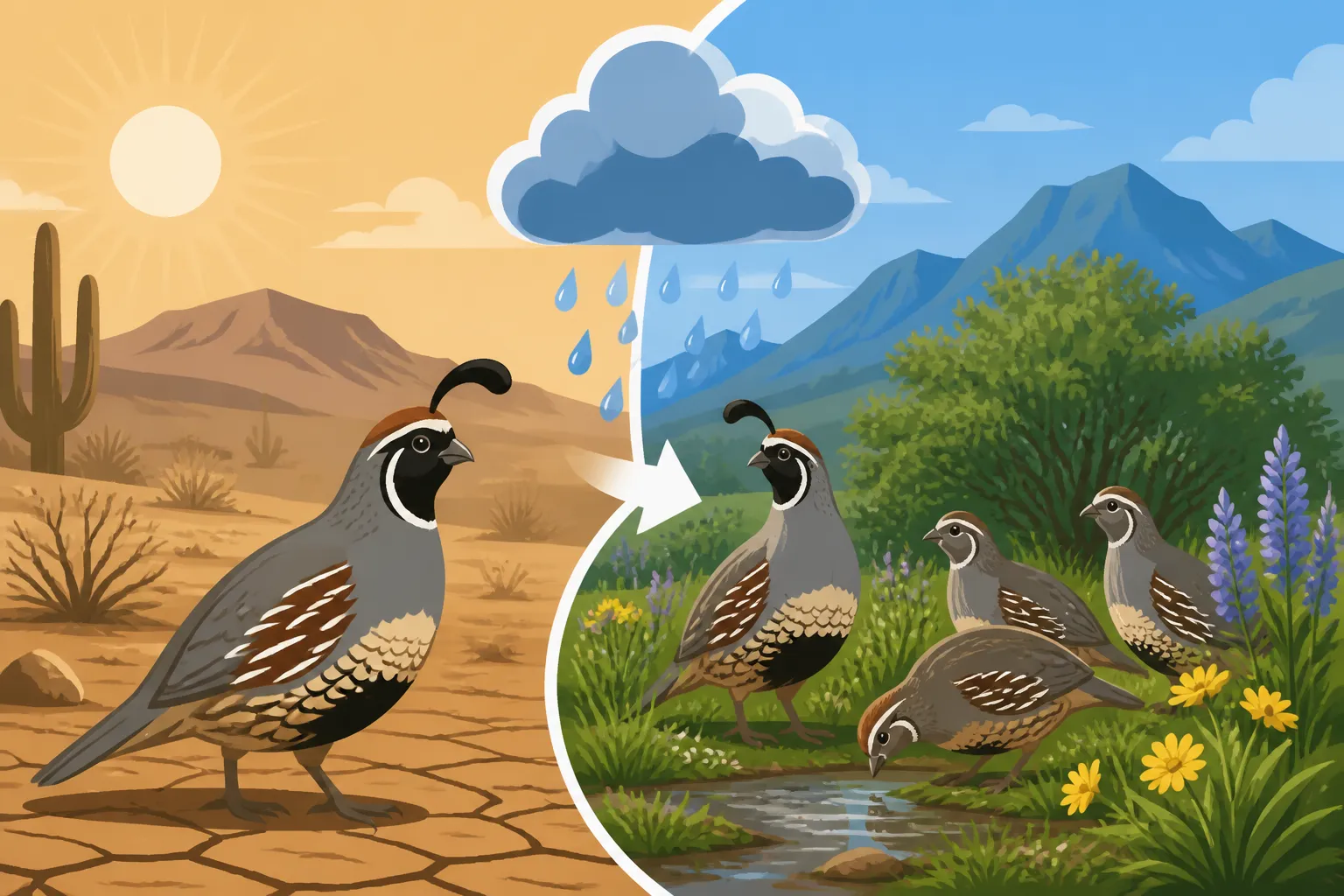
- Scenario A: Abundant Rain: Spring rains lead to strong nesting cover and good initial insect hatches. Summer monsoons kick in, causing a massive surge in insects and producing a bumper crop of seeds. Quail hens re-nest, chick survival is high, and coveys are large and widely distributed, finding plenty of food and cover close to water.
- Scenario B: Drought Conditions: Spring is dry, leading to poor nesting attempts and low insect numbers. Summer monsoons largely fail. Chicks struggle to find food and succumb to dehydration or predation. Food sources are scarce, pushing remaining birds to concentrate around the few remaining water sources, making them easy targets for predators.
| Rainfall Pattern | Quail Impact (General) | Habitat Impact | Food Source Impact |
|---|---|---|---|
| Low/Irregular Rain | Delayed breeding, smaller clutches, high chick mortality | Sparse, dry cover; reduced nesting and escape areas | Low insect numbers; poor seed production; limited water |
| Moderate/Consistent | Strong breeding, multiple clutches, good chick survival | Lush, dense cover; ample nesting and escape areas | Abundant insects; strong seed crops; reliable water |
| Excessive Rain | Potential for nest flooding, localized mortality | Waterlogged areas; some cover flattened or washed out | Insect populations can boom, but may also be impacted |
The Ripple Effect: Predator Dynamics and Hunter Success
The direct effects of rainfall on quail biology and habitat naturally create a ripple effect throughout the ecosystem, influencing predator populations and, ultimately, hunter success. It's a complex web where a good rain year benefits more than just the birds you're chasing.
Predator-Prey Balance
When quail numbers are robust due to favorable rainfall, the impact on predator dynamics is generally positive for the birds. A large, widespread quail population can absorb some predation pressure without suffering catastrophic declines. Predators like coyotes, bobcats, and various raptors will still hunt quail, but with more birds available, individual coveys might face less intense localized pressure. Essentially, there's more prey to go around.
Conversely, in drought years with low quail numbers, predators often key in on the few remaining birds. If quail are concentrated around dwindling water sources, they become easy targets. This heightened predation pressure can exacerbate population declines, creating a downward spiral that takes multiple good years to reverse. Understanding Predator Management and Deer Recovery gives you a broader perspective on how these delicate balances work across different species and how environmental factors like rain are often the primary drivers.
Hunter Experience and Success Rates
For the hunter, understanding the link between rainfall and quail numbers is paramount. A year of abundant moisture usually translates to higher quail densities and larger coveys. This makes hunting more productive; you're simply more likely to find birds. However, it can also spread birds out across a wider range as every corner of the desert becomes viable habitat. This means you might not find huge concentrations in predictable spots, but you'll encounter coveys more consistently across broader areas. Your chances of hitting your New Mexico Quail Bag Limits by Species are significantly higher in these years.
In dry years, hunting can be incredibly challenging. Birds will be scarce, coveys will be smaller, and they'll likely be concentrated in areas with the most reliable water and cover, which might also be where predators are focusing their efforts. This often leads to increased hunting pressure on those limited "hot spots," further dispersing the birds or making them incredibly wary. Without sufficient ground cover, birds also become jumpier and harder to approach, often flushing wild long before you're in range. You'll need to work harder, cover more ground, and be more selective about your approach. This is where tools like GoHunt can be invaluable for e-scouting those elusive high-moisture pockets.
Reading the Signs: Predicting Quail Seasons from Rain Patterns
So, how can you, as a hunter, use this knowledge to your advantage and predict whether it's going to be a good quail year in New Mexico? It comes down to paying attention to the weather, both historically and in the immediate lead-up to the season.
Monitoring Historical Precipitation Data
The first step is to look at rainfall patterns from the previous fall, winter, and spring. Think of it like this:
- Late Fall/Winter Rains: These are important for recharging soil moisture, allowing deeper-rooted plants to thrive and setting the stage for spring growth. Good winter moisture also provides crucial carryover for adult birds through the colder, leaner months.
- Spring Rains (March-May): As discussed, these are absolutely critical for initiating the breeding cycle, spurring green-up, and providing early insect hatches for newly hatched chicks. Consistent, gentle rains are better than sporadic downpours.
- Summer Monsoons (July-September): These dictate chick survival. Pay close attention to how vigorous and widespread the monsoon season is in the areas you plan to hunt. Are there consistent afternoon storms, or is it another year of dry lightning?
Resources like NOAA (National Oceanic and Atmospheric Administration) or even local agricultural extension offices often publish historical precipitation data that you can review. Websites like GoHunt might also incorporate weather trends into their e-scouting tools or habitat reports, allowing you to visually analyze which areas have received sufficient moisture. This kind of research is part of E-Scouting a New Mexico Unit Before the Season, letting you focus on units or areas within units that show better potential.
Scout for the "Green-Up"
There's no substitute for getting boots on the ground, but even if you can't scout extensively, you can often "read" the landscape. Look for areas that show signs of recent moisture:
- Lush, varied vegetation: Are there healthy stands of grasses, forbs, and shrubs? This indicates good cover and potential food.
- Standing water or damp ground: Ephemeral puddles, full stock tanks, or even just soft, muddy patches around seeps are all good signs. Remember, Water You Must Carry on a Desert Day Hunt is still crucial for you, but seeing natural water is a great sign for the birds.
- Insect activity: While harder to spot from a distance, if you're out and about, listen for the buzzing and chirping of a healthy insect population.
Satellite imagery, often integrated into hunting apps like those GoHunt provides, can offer a surprisingly accurate picture of "green-up" from afar. By comparing current satellite images to historical ones, you can identify areas that have received more rain and are thus more likely to hold quail. This is particularly useful when considering New Mexico Quail Season Openers and trying to pinpoint productive areas.
Ultimately, hunting quail in New Mexico is a dynamic experience. While you can't control the weather, you can absolutely leverage your understanding of its impact to become a more informed and successful hunter. Instead of just hoping for the best, you can strategically plan your hunts based on the vital role that rainfall plays in shaping the desert ecosystem and its resilient quail populations.
Disclaimer
This article is for general informational purposes only and does not constitute professional advice. Laws, prices and regulations vary by location and change over time. Consult a qualified professional for guidance on your specific situation.