Coues Deer in New Mexico’s Southern Ranges
For many hunters, the image of New Mexico big game is synonymous with towering elk in the high country or massive mule deer bucks in expansive desert basins. But tucked away in the rugged, often overlooked southern ranges, a much smaller, incredibly challenging quarry awaits: the Coues deer. These "grey ghosts" can be notoriously frustrating to hunt, testing your patience and glassing skills like no other animal, but the reward of outsmarting one is immense. This guide will walk you through everything you need to know to pursue these elusive deer, from understanding their habitat to mastering the art of the spot-and-stalk.
Understanding the Elusive Coues Deer
The Coues deer, often pronounced "cows," is a subspecies of white-tailed deer, but don't let that fool you into thinking they behave like their eastern cousins. These are animals perfectly adapted to arid, rugged mountain terrain, and their small stature and incredible camouflage make them masters of disappearing acts. Pursuing a Coues deer is a completely different ballgame, requiring a shift in strategy and a deep appreciation for the subtleties of their environment.
What Makes Them So Unique
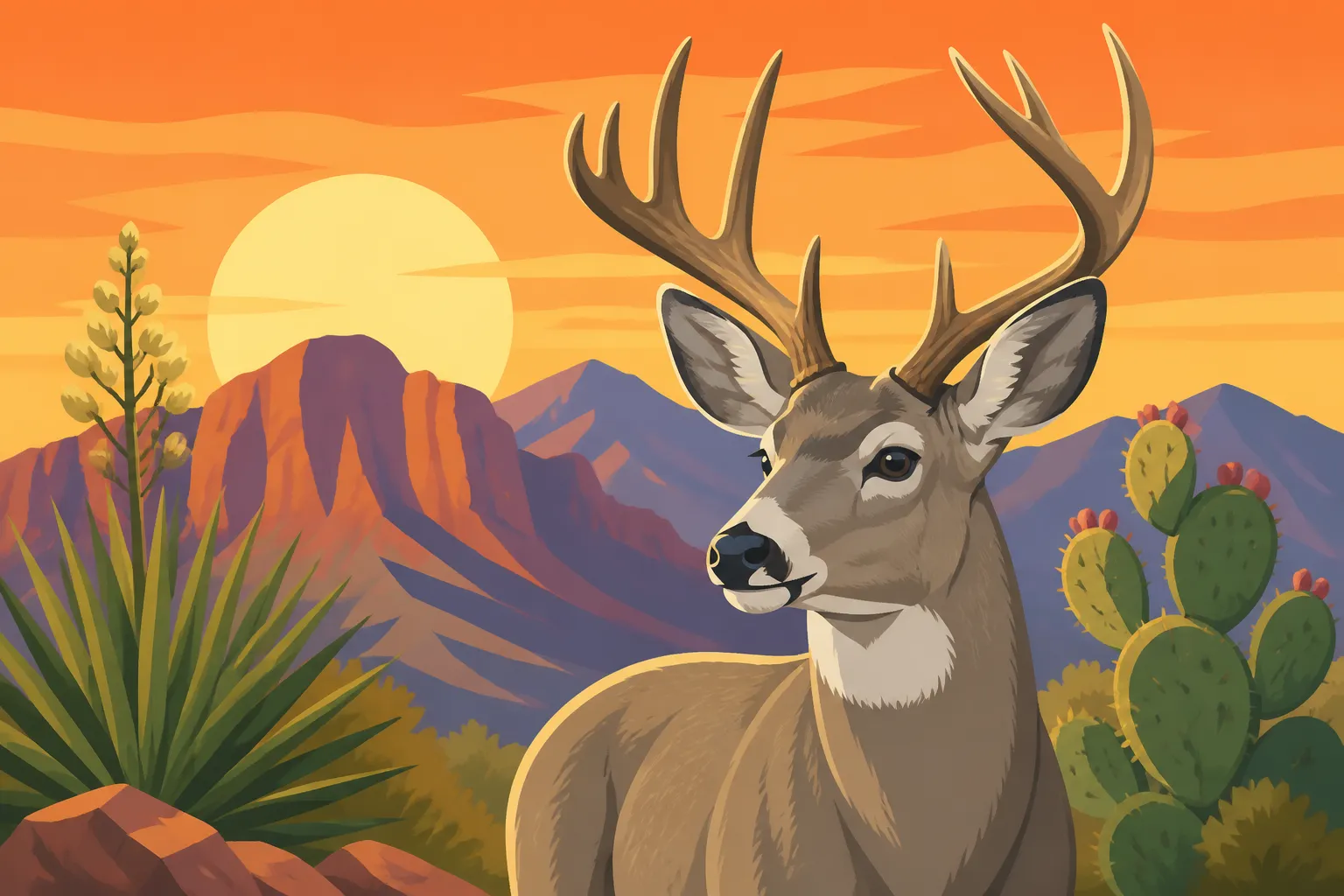
Coues deer are distinctively smaller than other white-tailed deer subspecies, usually weighing between 80-120 pounds for a mature buck, with does being even smaller. Their coats are a pale grayish-brown, perfectly blending with the desert scrub, rocky outcrops, and juniper-studded hillsides they call home. When you’re glassing, they truly look like a phantom, often disappearing right before your eyes, even when you know exactly where they were standing just moments before. This uncanny ability to melt into the landscape is precisely what makes them so challenging and utterly captivating to hunt.
Their antlers, while still exhibiting the forward-curving main beam and tines characteristic of white-tails, are also scaled down. A truly impressive Coues buck might sport antlers with an inside spread of 14-18 inches and score over 100 inches Boone and Crockett, which is considered a trophy for the species. Don't go into a Coues hunt expecting a 180-inch whitetail; their allure lies in the difficulty of the hunt and the unique environment they inhabit, not just raw antler size. It's a game of patience and precision, where every inch of horn feels hard-earned.
Behavior and Habitat Adaptations
Coues deer are creatures of the dense brush and broken topography that characterize the "sky island" mountain ranges of southern New Mexico. They thrive in country that offers both cover from predators and relief from the intense desert sun. You’ll often find them utilizing steep, rocky slopes, thick oak brush, juniper, and pinyon pine stands. Unlike mule deer, who prefer more open country and often bed in exposed areas to catch thermals, Coues deer are typically found deep within the cover, even when bedded.
Their daily patterns are also dictated by their environment. In cooler months, they might be active for longer periods during the day, but once temperatures rise, they often become primarily crepuscular, moving most actively during dawn and dusk. Understanding these patterns is crucial. You won't typically find them grazing in wide-open meadows in the middle of the day. Instead, they'll be moving from bedding areas within dense cover to feeding areas, which are often just pockets of more palatable browse within the same rugged terrain. Their keen senses of smell and hearing, combined with their incredible eyesight, mean you need to be constantly aware of the wind and your approach.
Where Coues Deer Roam in New Mexico
New Mexico offers some fantastic opportunities for Coues deer, though their range is primarily concentrated in the southwestern and south-central portions of the state. These aren't deer you'll find in every unit; they stick to very specific habitats within those southern ranges. Knowing these key areas is the first step to planning a successful hunt.
Prime Coues Country in the Bootheel
When you talk about Coues deer in New Mexico, the "Bootheel" region immediately comes to mind. This remote, rugged corner of the state, bordering Arizona and Mexico, is quintessential Coues habitat. Units like 26, 27, and 23 are often cited as prime locations. This country is characterized by steep, isolated mountain ranges—often referred to as "sky islands"—surrounded by vast stretches of Chihuahuan Desert grasslands. The deer utilize the canyons, rimrock, and dense brush of these mountains for cover and forage.
Hunting in these units, as detailed in our guide on Coues Deer in New Mexico's Bootheel, often means long days of glassing from high vantage points, systematically breaking down vast amounts of terrain. Access can be challenging, with many roads requiring high-clearance 4×4 vehicles, and cell service being practically nonexistent. This remoteness, while a logistical hurdle, also contributes to the quality of hunting, as it naturally limits pressure from casual hunters. The land ownership here is a mix of BLM, State Trust Land, and private ranches, so understanding land boundaries is crucial. Apps like GoHunt are invaluable for overlaying land ownership maps, ensuring you stay on public ground or have permission for private parcels.
Other Notable Southern Ranges
While the Bootheel gets most of the attention, other units in southern New Mexico also hold viable Coues deer populations. Units like 24 and 25, though perhaps not as renowned as the Bootheel units, still offer opportunities for dedicated hunters. These areas feature similar habitat characteristics: isolated mountain ranges, heavy brush, and rocky terrain. The Sacramentos, Organ Mountains, and other smaller ranges can hold pockets of Coues, often surprising hunters who might be focused on other species.
However, the population density in these other units can be spottier, and some areas might have more limited public access. Hunters need to do their homework, scouting intensely beforehand to locate core areas where Coues deer consistently reside. This often means driving remote two-tracks, hiking into overlooked canyons, and meticulously studying satellite imagery. Don't be afraid to put in the legwork; the rewards in terms of finding undisturbed pockets of deer can be significant. Even areas with less publicity can produce quality bucks for those willing to explore.
The Unique Challenges of Hunting Coues Deer
Hunting Coues deer isn't just about finding them; it's about embracing a style of hunting that demands immense patience, keen observation, and often, significant physical exertion. These aren't the kind of deer you stumble upon while walking through the woods; they are actively sought out, often over vast distances, and their small size and uncanny ability to disappear require a specific approach.
The "Grey Ghost" Phenomenon
The moniker "grey ghost" isn't just a catchy nickname; it's a testament to the Coues deer's incredible camouflage and elusive nature. These deer are masters of using even the slightest contour or patch of brush to their advantage. You might be staring at a hillside that looks completely barren, only for a Coues deer to suddenly materialize, seemingly out of nowhere. This happens because their coloring perfectly matches the sun-baked rocks, dry grass, and dusty vegetation of their habitat.
The challenge this presents to hunters is immense. It means you can't just casually scan a hillside and expect to spot a deer. You have to learn to pick apart the terrain, looking for subtle cues: an ear flick, the line of a back, the glint of an antler, or a patch of hide that just doesn't quite blend. It's a skill that takes practice, and it will push your optics to their limits. Many frustrated hunters have spent entire days glassing only to return to camp empty-handed, convinced there were no deer, only to realize later they simply weren't seeing them. Patience is not just a virtue here; it's a non-negotiable requirement.
Rugged Terrain and Physical Demands
The habitat Coues deer prefer is anything but flat or forgiving. We're talking about steep, rocky, often thorny country. Access roads can be washed out, trails non-existent, and every step requires attention. This isn't a hunt where you can expect to drive right up to your glassing knob or make an easy retrieve. Expect to climb, descend, and traverse uneven ground, often under the hot New Mexico sun.
Physical conditioning is paramount. You'll be carrying your optics, rifle, water, and gear over miles of challenging terrain. The "spot and stalk" method for Coues often involves spotting a deer on one ridge, planning a route, then making a long, arduous hike to get within shooting range, all while trying to keep the deer in sight and play the wind. This combination of mental and physical challenge is a major part of the Coues hunting experience, separating it from many other deer hunts. You’ll earn every step, and every shot opportunity will feel like a hard-won victory.
Gear Up for Success: Optics and Equipment
When hunting Coues deer, your equipment choices can make or break your hunt. Unlike some other forms of hunting where a basic rifle and binoculars might suffice, Coues hunting places an extreme emphasis on high-quality optics and a rifle setup that can handle precise shots at varying distances. Investing in the right tools is crucial for success against these small, elusive targets in vast, open country.
The Power of Premium Glass
There's an old saying in Coues hunting: "You can't shoot 'em if you can't see 'em." This couldn't be truer. Your binoculars and spotting scope are your most important tools, even more so than your rifle. You'll spend 90% of your time behind glass, systematically picking apart every inch of the landscape. High-quality binoculars, typically 10x or 12x magnification, are essential for initial scanning and locating deer. Look for binoculars with excellent light gathering capabilities and sharp edge-to-edge clarity. You’ll be staring through them for hours on end, and poor optics will lead to eye strain and missed deer.
Once you spot something with your binoculars, a powerful spotting scope comes into play. A 60-80mm objective lens with variable magnification up to 60x or even 80x is ideal. This allows you to confirm if that tiny grey spec is indeed a deer, and then to truly Judging a Coues Buck in Southern New Mexico from a distance. A rock-solid tripod is non-negotiable for both your binoculars (especially 12x) and your spotting scope. Freehanding at high magnification is a recipe for headaches and frustration. Steady glass is the key to seeing what others miss. Our guide on Optics Power for New Mexico's Open Country dives deeper into selecting the right glass for vast western landscapes, and Spotting Scope Power for Open Country offers specific advice on scopes.
| Optic Type | Recommended Magnification | Key Features for Coues Hunting |
|---|---|---|
| Binoculars | 10x-12x | Wide field of view, excellent light gathering, ergonomic |
| Spotting Scope | 20-60x or 20-80x | Large objective lens (60-80mm), crisp resolution, tripod adaptable |
| Rangefinder | 1,000+ yards | Angle compensation, quick readings |
Rifle and Ammunition Considerations
Given that shots on Coues deer can often be at extended ranges across canyons or open slopes, a flat-shooting, accurate rifle chambered in a cartridge known for precision is highly recommended. Popular calibers include the .243 Winchester, 6.5 Creedmoor, .270 Winchester, 7mm-08 Remington, and .308 Winchester. The key isn't necessarily massive power, but rather accuracy and minimal recoil for precise shot placement. You're aiming for a relatively small target, so a clean shot is paramount.
Pair your rifle with a good quality scope that has clear glass and reliable turrets for dialing in long-range shots. Many Coues hunters prefer scopes with BDC (Bullet Drop Compensating) reticles or exposed turrets, allowing them to adjust for bullet drop at various distances. Practice shooting from field positions—prone with a bipod, off a backpack, or using shooting sticks—is crucial, as you rarely get a bench rest opportunity in the field. Don't forget a reliable rangefinder that can read distances out to 1,000 yards or more, often with angle compensation, as you’ll frequently be shooting across inclines and declines. Being able to confidently make an ethical shot at 300-400 yards will significantly increase your success rate.
Effective Strategies for Spot and Stalk Hunting
Spot and stalk is the name of the game when it comes to Coues deer. This method involves patiently locating deer with your optics and then carefully planning and executing an approach to get within shooting range. It's a dance between keen observation and stealthy movement, where every decision, from your initial glassing setup to your final approach, matters.
Mastering the Glassing Game
The most critical skill for Coues deer hunting is effective glassing. This isn't just about casually looking; it's a methodical process that demands patience and discipline. Find a high vantage point that offers expansive views of several drainages, hillsides, and transition areas. Set up your tripod-mounted binoculars and spotting scope, get comfortable, and begin to systematically pick apart the terrain, often using The Grid Glassing Method, Step by Step. Start at the closest terrain and slowly work your way out, focusing on small sections at a time. Pay close attention to areas with dense cover, shaded slopes, and any breaks in the uniform landscape.
Don't just look for an entire deer; look for parts of a deer. An ear, a patch of hide, a horizontal line in a vertical world, a flicker of movement. Coues deer often hold tight and blend in so well that only a small portion of their body is visible. Scan, pause, and let your eyes relax. Then scan again. Animals often reveal themselves with subtle movements, so patience is key. Spend 30 minutes to an hour or more on a single hillside before moving your glass to the next section. Many hunters fail because they move their glass too quickly, missing the subtle clues that indicate a deer's presence. GoHunt's mapping tools can also help identify prime glassing points and potential bedding areas before you even hit the field.
Executing the Stalk: Wind, Terrain, and Patience
Once you've spotted a Coues deer, the real work begins: the stalk. This is where you use the terrain to your advantage, keeping out of sight and playing the wind. The first step is to assess the wind direction and velocity. Coues deer have an incredible sense of smell, and a shifting wind can bust your stalk instantly. Always approach from downwind, or at least crosswind, ensuring your scent doesn't carry to the deer. Playing Thermals on a Canyon Stalk is crucial in this rugged country, as air currents can change dramatically with the sun's position and terrain features.
Next, study the terrain between you and the deer. Look for draws, ridges, rocks, and thick brush that can provide cover for your approach. Plan your route meticulously, identifying potential stopping points where you can re-verify the deer's location with your spotting scope. Move slowly and deliberately, taking care to avoid making noise. Loose rocks, crunchy leaves, or snapping twigs can easily give you away. The smaller the deer, the more wary it often is. This means you must be extra cautious with every step. There will be times when you get close, and the deer moves, requiring you to reassess and often start a new, modified stalk. Don't get discouraged; persistence is what eventually pays off in Coues hunting.
Key Seasons and Draw Odds for New Mexico Coues
Understanding the hunting seasons and draw process for Coues deer in New Mexico is crucial for planning your hunt. While New Mexico offers over-the-counter opportunities for some species, Coues deer tags are typically allocated through a draw, and knowing the best times to hunt can greatly impact your success.
When the Coues Rut Peaks
The Coues deer rut, like that of other white-tailed deer, is a period of increased activity as bucks pursue does for breeding. This heightened movement can offer excellent hunting opportunities, as bucks become less cautious and more visible. In New Mexico's southern ranges, the Coues deer rut typically peaks in late December and January. Our specific guide on When the Coues Rut Peaks provides more detailed timing and insights. This late-season timing means hunters should be prepared for colder weather, though deep snow is less common in the southern desert ranges than in the state's high country.
Hunting during the rut often involves glassing open areas adjacent to dense cover, as bucks will be moving more freely in search of does. Grunt calls or rattling can sometimes be effective, though less so than for larger whitetail subspecies, due to the dense cover and the deer's inherent wariness. The challenge of a late-season hunt is often compounded by shorter daylight hours and potentially harsher conditions, but the reward of catching a rutting buck off guard can be well worth the effort. It's a time when you might finally get a glimpse of those normally nocturnal or hyper-secretive bucks.
Application Process and Draw Odds
Coues deer tags in New Mexico are primarily issued through the annual draw, with applications typically due in March. It's essential to stay on top of the deadlines, as missing them means missing out on the opportunity for a tag that year. The New Mexico Game and Fish website is the official source for application information, but platforms like GoHunt provide valuable data and filtering tools that can help you analyze draw odds for specific units and hunt codes. They often break down New Mexico Application Fees Per Species and offer insights into how the draw statistics play out.
New Mexico does not have a preference point system, meaning every applicant, whether it's your first time applying or your tenth, has an equal chance in the draw. This means Why New Mexico Draw Odds Do Not Improve With Time, which is both a blessing and a curse. While it offers a fair playing field, it also means that drawing a tag for a high-demand unit can be tough, requiring persistence over multiple years. Many successful Coues hunters apply annually, knowing that eventually, their number will come up. Researching past draw odds for units like 26, 27, and 23 is a smart move to set realistic expectations for your application strategy.
Conservation and Ethical Considerations
Hunting Coues deer, like any big game species, comes with a responsibility to uphold ethical hunting practices and contribute to conservation efforts. These "grey ghosts" are a valuable part of New Mexico's diverse wildlife, and ensuring their populations thrive for future generations is paramount. Our actions in the field reflect on all hunters, so let's make sure they are exemplary.
Respecting the Habitat and Fair Chase
Coues deer thrive in fragile desert ecosystems, where water is often scarce and vegetation is slow-growing. As hunters, it's our duty to minimize our impact on these sensitive environments. This means practicing Leave No Trace principles: packing out all trash, staying on designated roads to prevent habitat damage, and being mindful of water sources. Water Sources and Ethics in Desert Hunting is a critical topic in New Mexico, as tanks and guzzlers are often lifelines for wildlife. Disturbing these areas unnecessarily, especially during dry periods, can stress animals.
The principle of fair chase is also incredibly important. This means hunting in a way that gives the animal a reasonable chance of escape, relying on your skills as a hunter rather than unfair advantages. For Coues deer, this usually translates to avoiding tactics that pressure animals from vehicles, understanding the specific rules about Rules on Hunting From a Vehicle, and ensuring you have a clear, ethical shot opportunity before pulling the trigger. It’s about the challenge and the experience, not just punching a tag.
Contributing to Wildlife Management
When you purchase a hunting license and apply for tags in New Mexico, a portion of those fees directly supports the state's wildlife management and conservation programs. This funding is vital for habitat improvement, scientific research, and population monitoring of species like the Coues deer. Beyond financial contributions, hunters can play an active role by reporting their harvests accurately and providing feedback to the New Mexico Department of Game and Fish (NMDGF). Accurate data helps biologists make informed decisions about population quotas and season structures.
Additionally, consider participating in local conservation initiatives or volunteer efforts. Many organizations work to improve wildlife habitat, clean up public lands, or educate the public about responsible outdoor recreation. Supporting these groups, whether through membership or direct involvement, is another way to give back to the resources that provide us with such incredible hunting opportunities. Our shared passion for hunting depends on healthy ecosystems and robust wildlife populations, which we all have a hand in sustaining.
Field Judging and Trophy Potential
One of the most challenging, yet rewarding, aspects of Coues deer hunting is learning to field judge their antlers. Their smaller size compared to other deer species means that what constitutes a "trophy" is relative, and accurately assessing antler size from afar requires a well-trained eye and a deep understanding of their unique proportions.
The Art of Judging a Coues Buck
When you finally spot a Coues buck, often at a significant distance, you have only a short window to make a decision. The first challenge is simply discerning whether it's a mature buck versus a younger buck or even a large doe. Look for body characteristics: a thicker neck, a deeper chest, and a more developed muscular structure compared to the smaller, more slender does and younger bucks. Once you've confirmed it's a buck, the focus shifts to the antlers.
Our guide on Judging a Coues Buck in the Field explains this in detail, but here are some quick tips. Coues deer antlers tend to be very deceiving due to their small skull size. An average mature buck might have 3-4 points per side with an inside spread of 10-12 inches. A trophy Coues buck is often considered to be anything over 100 inches Boone and Crockett. When judging, pay attention to mass (antler circumference), length of main beams, and the length and number of tines. Compare the spread to the ear tips; a buck with an inside spread significantly outside its ear tips (which are usually around 12-14 inches wide on a Coues) is often a good indicator of a wider rack. Don't let "ground shrinkage" surprise you – what looks impressive through a spotting scope can often look much smaller when you walk up to it.
What Makes a Coues a "Trophy"
A "trophy" Coues deer isn't just about inches; it's about the entire experience. Given the difficulty of the hunt, the challenging terrain, and the elusive nature of the animal, any legal buck taken through ethical spot-and-stalk methods is a true trophy. However, if you're chasing specific antler criteria, most hunters consider a mature 3×3 or 4×4 (plus eyeguards) with good mass and an inside spread of 14 inches or more to be an excellent Coues buck.
The age of the buck also plays a significant role. An older, mature buck that has survived multiple hunting seasons in that tough country is a testament to its cunning and resilience. Sometimes, a unique antler configuration, even if it doesn't score exceptionally high, makes a buck memorable. The true trophy comes from the hard work, the long hours behind the glass, the careful planning of the stalk, and the ultimate satisfaction of successfully harvesting one of New Mexico's most challenging and beautiful big game animals. It's about the story, the landscape, and the personal accomplishment of outsmarting the grey ghost.
Disclaimer
Hunting is an inherently dangerous activity. This guide provides general information and recommendations. Always consult the most current New Mexico Department of Game and Fish regulations and local land management rules before hunting. Your safety is your responsibility.