When the Coues Rut Peaks
Trying to time the Coues deer rut in New Mexico can feel like chasing a ghost in the desert. You hear whispers of a "peak" but when you're actually out there, it's hard to know if you're early, late, or right in the thick of it. This guide will cut through the noise, helping you understand the Coues rut's subtle rhythm, identify its peak windows in New Mexico, and equip you with strategies to be in the right place at the right time.
The Enigmatic Coues Deer Rut: More Than Just Calendar Dates
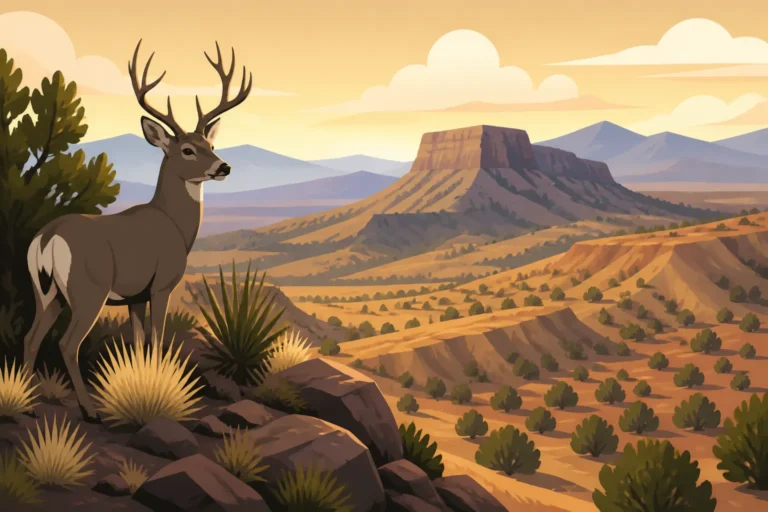
Unlike the more predictable, often aggressive rut of their larger mule deer cousins, the Coues deer rut often feels far more subtle, a quiet dance in the thorny brush and rugged hills. These "grey ghosts" of the desert highlands are famous for their elusiveness, and their breeding season is no different. It’s not always about wide-open chases or constant bugling; for Coues, it's often a more reserved, yet intensely focused, period of activity. Understanding the nuances of this cycle is key to unlocking hunting success.
The Phases of the Coues Breeding Cycle
Just like any deer species, the Coues rut isn't a single event but a progression of phases, each with distinct buck behavior. Ignoring these phases means you're potentially missing out on critical opportunities.
The first hint of the rut typically starts with the pre-rut. This is when bucks, previously content to live in bachelor groups, begin to break up and disperse. Their testosterone levels are rising, and they start rubbing antlers on trees and scraping the ground, leaving behind scent markers. They're still focused on feeding heavily, but their interest in does is undeniably growing. You might see bucks shadowing groups of does from a distance, testing the waters. This phase is less about direct chasing and more about establishing dominance hierarchies and getting into prime breeding shape. They are working scrapes and polishing their antlers.
Following the pre-rut, we move into the seeking phase. This is where things really start to get interesting. Bucks are actively searching for does that are nearing estrus. They cover more ground, often traveling through areas they wouldn't normally frequent. This is a great time to find bucks cruising through draws and along ridge lines, scent-checking for receptive females. While they aren't breeding yet, their guard is often lowered as their drive to find does becomes paramount. This is also when you start to see more sparring matches as bucks solidify dominance before the true breeding begins.
The chasing phase is the high-energy part of the rut, though often brief and intense for Coues. Does are coming into estrus, and bucks are hot on their heels, running them through the thick brush. This can be chaotic, with multiple bucks pursuing a single doe. It's often fast-paced and can be hard to witness clearly, but the increased activity is undeniable. Bucks become less cautious, their singular focus on breeding making them vulnerable. If you're Hunting the Bootheel Country, this is when you might catch a glimpse of the action.
Finally, we arrive at the breeding or tending phase. A buck successfully "locks down" a hot doe, isolating her and breeding her. During this time, the buck may become temporarily stationary, staying with that single doe for a day or two. Other bucks might try to cut in, leading to brief, intense stand-offs. This phase can be frustrating for hunters who see a buck "tied up" with a doe, but it's also a chance to pattern that buck's localized movements before he moves on to seek another. After breeding, the buck often drops off, seeking food and rest before continuing his search.
Why Coues Rut Timing Can Feel So Elusive
Many hunters find the Coues rut timing particularly tricky, and there are good reasons for this. First, Coues deer are inherently shy and live in dense, rugged terrain. They don't typically exhibit the same overt, wide-open rutting behavior you might see in larger elk or even some mule deer herds. Their activity often occurs in short bursts, usually at dawn and dusk, making it easy to miss if you're not in their core areas.
Secondly, local environmental factors play a huge role. Things like rainfall, forage availability, and even specific canyon microclimates can cause subtle shifts in when does come into estrus. This means what's happening in one mountain range might be slightly different just a few miles away. There's no single, universal "on" switch for the Coues rut across all of New Mexico. This variability means that relying solely on past calendar dates without considering current conditions can be a recipe for frustration. It's why detailed, up-to-date information, often found on platforms like GoHunt, becomes invaluable for discerning these localized patterns.
Pinpointing the Peak Coues Rut in New Mexico's Southern Ranges
While the Coues rut is certainly elusive, there are reliable windows to target when hunting in New Mexico. Their physiological drive to reproduce is strong, and despite the subtle nature of their rut, it does follow a generally predictable pattern influenced by photoperiod (daylight length).
General Timelines for New Mexico Coues
For most of New Mexico's southern Coues deer habitat, the peak rut typically falls in the late December through mid-January timeframe. This is when the majority of does come into estrus, and bucks are at their most active, aggressive, and vulnerable.
Here's a general breakdown:
- Late November – Early December: Pre-rut. Bucks are starting to disperse, rub, and scrape. They're still somewhat cautious but increasing their movements. They are beginning to seriously size each other up.
- Mid-December – End of December: Seeking and early chasing. Buck activity significantly picks up. They are actively covering ground, scent-checking, and engaging in more frequent sparring. The first does are coming into heat.
- Late December – Mid-January: Peak rut. This is the sweet spot. Bucks are heavily involved in chasing and breeding. Their focus is almost entirely on does, and they may be seen moving at all hours of the day, though dawn and dusk remain prime. You'll observe more direct interactions, including tending bonds and aggressive behavior between bucks. If you're focused on Judging a Coues Buck in Southern New Mexico, this is when they're most visible.
- Late January – February: Post-rut. Breeding activity tapers off, but some does may still come into estrus, leading to a "trickle rut." Bucks are exhausted and focused on recovery, seeking out good forage and bedding areas. They're less active and more cautious.
It's important to remember that these are general guidelines. A good hunter will be in the field observing for signs to confirm these timelines in their specific unit.
Regional Nuances and Micro-Ruts
While late December to mid-January is the overarching peak, New Mexico is a diverse state, and even within the southern Coues range, there can be subtle regional differences. Areas with particularly robust herds and good nutrition might see the rut kick off a little earlier and be more intense. Conversely, areas with lower deer densities or poorer habitat might have a more drawn-out, less concentrated rut.
For instance, the extreme southwestern "Bootheel" region, known for its prime Coues Deer in New Mexico's Southern Ranges, might consistently exhibit a strong, condensed rut around the first week of January, whereas a more isolated mountain range to the east could see activity spread out over several weeks. These micro-ruts are influenced by localized weather patterns, herd dynamics, and even subtle changes in forage availability. A tool like GoHunt can provide unit-specific data and insights from other hunters, helping you narrow down these subtle differences. Always double-check current conditions and consult local resources before your hunt.
Here's a simplified look at the general timing:
| Rut Phase | General Timeline (New Mexico Coues) | Buck Behavior | Hunting Strategy |
|---|---|---|---|
| Pre-Rut | Late Nov – Early Dec | Breaking bachelor groups, rubbing, scraping, increased feeding. | Focus on feeding areas, historical scrapes; glass early/late. |
| Seeking/Chasing | Mid-Dec – End Dec | Actively covering ground, sparring, pursuing does. | Glass large areas, look for cruising bucks, cover ground. |
| Peak Rut | Late Dec – Mid-Jan | Intense chasing, breeding, tending does; less cautious. | Sit and glass known doe bedding/feeding; use calls; stalk. |
| Post-Rut | Late Jan – Feb | Exhausted, recovering, some late breeding; very cautious. | Focus on security cover, food sources; patient glassing. |
Strategies for Hunting New Mexico's Coues Deer During the Rut
Knowing when the rut peaks is only half the battle; knowing how to hunt during that peak is where the real work begins. The Coues rut offers unique opportunities, but it also demands specific tactics to capitalize on bucks whose focus has shifted dramatically.
Locating Bucks During Different Rut Phases
During the pre-rut, bucks are often still predictable to a degree. They're focused on fattening up and establishing their dominance. This means glassing prime feeding areas at dawn and dusk can be effective. Look for areas with good cover nearby, allowing them to feel secure while they forage. They'll also be visiting rubs and scrapes, so scouting for these signs can tell you where bucks are active.
As the rut progresses into the seeking and chasing phases, bucks become far less tied to a specific area. They're now covering significant ground, often traveling surprising distances in search of receptive does. This is where extensive glassing becomes your best friend. Find a good vantage point, set up your Tripod Setup for Glassing From a Ridge, and meticulously pick apart the hillsides, draws, and brush lines. Bucks will be on the move, so patience is paramount. They might pop out in an unexpected place. Focus on areas where does congregate, as bucks will inevitably be drawn there.
During the peak rut and tending phase, bucks are either actively chasing or locked down with a doe. When chasing, they're often moving fast, so quick decision-making is essential. If a buck is tending a doe, they might be relatively stationary, often in dense cover. This is a prime opportunity for a patient still-hunt or a slow, deliberate stalk. You might catch them at close quarters, focused more on the doe than their surroundings. Don't be afraid to put on your quietest boots and try Still Hunting Oak Brush for Coues, slowly picking your way through prime breeding habitat. Remember that bucks will be checking out areas where does frequent, so finding the does is often the key to finding the bucks.
Calling and Decoy Tactics for Rutting Coues Bucks
Calling during the Coues rut can be incredibly effective, but it requires finesse. Unlike elk, where loud bugles can draw them from miles, Coues calling is generally softer and more subtle.
- Doe bleats and fawn calls: These are excellent choices, especially during the seeking and chasing phases. A soft doe bleat can pique a cruising buck's interest, making him think a receptive female is nearby. A fawn distress call can sometimes draw a curious doe, and where does go, bucks often follow.
- Rattling: Light rattling can simulate two bucks sparring and can be very effective during the pre-rut and early peak rut. It signals a challenge or competition for does. Keep it brief and realistic; over-rattling can spook these wary deer. Pair it with some grunts or snorts.
- Grinding and snort-wheezes: These are more aggressive calls, best used when you know a buck is in the vicinity and you want to challenge him. A short, sharp grunt can often stop a moving buck, giving you a shot opportunity. The snort-wheeze is a definitive challenge, usually reserved for an aggressive buck you've already spotted.
As for decoys, they can work but need careful deployment. A bedded doe decoy can sometimes draw a curious buck, especially if he thinks she's alone and receptive. However, in the thick cover Coues often inhabit, visibility is limited, and a decoy might not be seen until it's too late. When using a decoy, ensure you have a clear shooting lane and position it to draw the buck's attention away from you. This is often a tactic best used in slightly more open country or near a well-used trail.
Leveraging Technology and Scouting for Rut Success
In today's hunting world, technology can give you a significant edge, especially with a secretive animal like the Coues deer. Pre-season scouting, both boots-on-the-ground and digital, is critical. Use satellite imagery on mapping apps, like those available through GoHunt, to identify potential pinch points, water sources, and bedding areas. Mark these waypoints and use them to plan your glassing points and approach routes. Understanding Water Sources and Ethics in Desert Hunting is especially crucial in arid Coues country.
During the season, portable spotting scopes and high-powered binoculars are indispensable. You'll spend hours behind glass, so investing in quality Binocular Size That Survives an All-Day Session is paramount. These tools help you spot those subtle movements in the brush or a distant buck cruising a ridge. Trail cameras, strategically placed in areas showing pre-rut activity like scrapes and rubs, can give you invaluable real-time intel on buck presence and activity patterns just before and during the rut. Just be sure to check New Mexico's regulations regarding trail camera use on public land.
Finally, don't underestimate the power of simply observing. Spend as much time as possible in the field before your hunt, noting where does are frequenting, where bucks are making rubs, and what routes they use. This information, combined with a general understanding of the peak rut, will significantly increase your odds of success. When trying to determine Judging a Coues Buck in the Field, seeing them in their natural rutting behavior is invaluable.
External Factors Influencing the Coues Rut's Intensity
While photoperiod largely dictates the timing of the rut, external environmental and biological factors can significantly influence its intensity and how observable buck activity becomes. Understanding these can help you adjust your expectations and strategies.
Weather and Environmental Impacts
Weather is a major player in any deer rut, and Coues deer are no exception.
- Temperature: Extremely warm weather can suppress daylight activity, pushing buck movement into the cooler hours of darkness or deep into shaded cover. If temperatures are mild to cold, expect more prolonged daylight activity, especially during the peak rut. A sudden cold snap can often kickstart more intense movement.
- Precipitation: Light rain or snow can sometimes enhance rutting activity, masking sounds and making deer feel more secure. However, heavy downpours or blizzards will usually send deer seeking shelter, reducing visible activity. Pay attention to forecasts and adjust your hunting times accordingly.
- Moon Phase: While hotly debated, some hunters believe moon phase can influence daily rutting patterns. A full moon can lead to more nocturnal activity, while a new moon might concentrate movement during daylight hours. This is less scientifically proven than temperature or photoperiod but is worth considering in your daily strategy.
Ultimately, consistent, mild to cool weather during the peak rut tends to result in the most visible and intense buck activity, as deer don't have to contend with extreme conditions while pursuing does.
Herd Health and Population Dynamics
The overall health of the Coues deer herd in a specific unit also plays a vital role in rut intensity.
- Herd Density: In areas with healthy, high deer populations, competition among bucks is generally higher. This can lead to a more aggressive and visually intense rut, with more chasing, fighting, and overall buck movement as they compete for a limited number of receptive does.
- Buck-to-Doe Ratio: A balanced buck-to-doe ratio (more bucks relative to does) tends to result in a more condensed and competitive rut. If there's an abundance of does for every buck, the rut might be more spread out, with less intense competition. Analyzing harvest data and herd reports, sometimes available through state game and fish departments or platforms like GoHunt, can offer insights into these ratios.
- Nutrition and Forage: Years with good rainfall and abundant forage lead to healthier deer. Healthier does come into estrus more synchronously, and healthier bucks have more energy and better antler growth, leading to a more vigorous rut. Drought years can lead to a more drawn-out, less intense rut as deer are physically stressed.
All these factors combine to create the unique tapestry of the Coues rut in any given year and location. Being adaptable and observing conditions on the ground are always your best tools for success.
Disclaimer
This article is for general informational purposes only and does not constitute professional advice. Laws, prices and regulations vary by location and change over time. Consult a qualified professional for guidance on your specific situation.