Ibex Hunting in the Florida Mountains
Hunting ibex in New Mexico's Florida Mountains isn't just a hunt; it's an extreme mountain endeavor that pushes even the most seasoned hunters to their absolute limits. The terrain is brutal, the animals are elusive, and the physical demands are immense. If you’re looking to challenge yourself against one of North America's most unique and difficult big game species, this guide will walk you through everything you need to know to prepare for and execute an ibex hunt in this rugged, unforgiving landscape.
The Singular Challenge of New Mexico Ibex
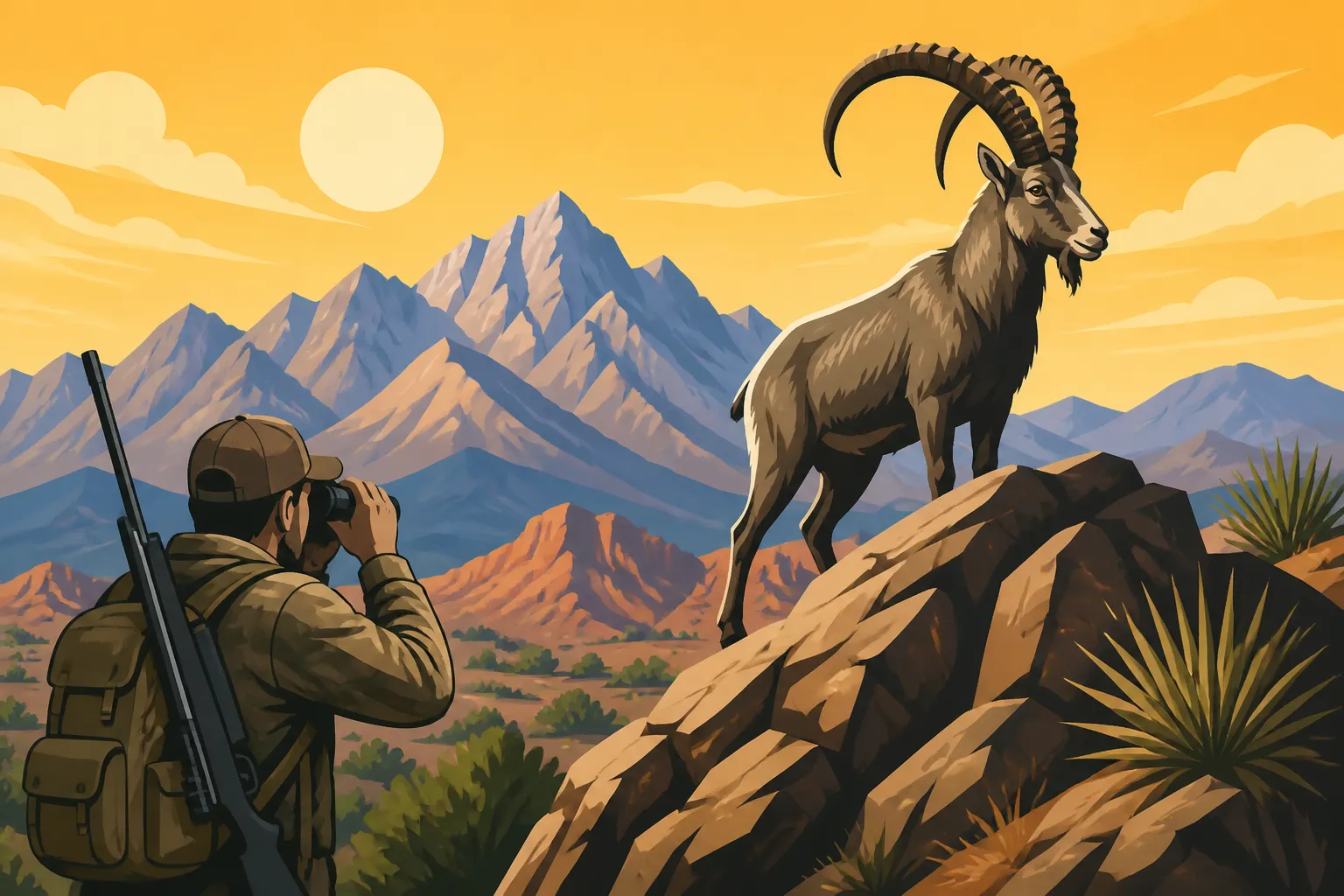
For many hunters, the idea of chasing an exotic species like Persian ibex conjures images of far-flung expeditions to Asian mountains. Yet, here in New Mexico, we have a thriving population of these magnificent animals right in our backyard, specifically in the formidable Florida Mountains. It’s a hunt unlike any other in the state, requiring a blend of physical prowess, mental fortitude, and specialized hunting tactics.
The Origin Story of New Mexico's Ibex Herd
It's a pretty wild tale, really. Back in the late 1960s, the New Mexico Department of Game and Fish introduced 45 Persian ibex from their native Iran into the Florida Mountains. The idea was to create a unique hunting opportunity and utilize a habitat that wasn't ideal for native species. These initial transplants, a mix of rams and ewes, quickly adapted to the rugged, arid slopes, canyons, and peaks of the Floridas. They found the steep, rocky terrain, scattered vegetation, and dry conditions surprisingly similar to their ancestral homes, and the population has flourished ever since. It’s a testament to the resilience of these animals and a truly unique success story in wildlife management. Knowing a bit about How Ibex Were Introduced to New Mexico helps appreciate just how special this hunt is.
The Unforgiving Arena: Florida Mountains Habitat
The Florida Mountains, often simply called "The Floridas," rise dramatically from the Chihuahuan Desert floor, just south of Deming, New Mexico. They are not incredibly high in elevation compared to the northern Rockies, with their highest point, Florida Peak, topping out at around 7,400 feet. But don't let that fool you. These mountains are steep. We're talking about extremely rugged, broken country characterized by sharp ridgelines, deep canyons, sheer rock faces, and loose scree slopes that make every step a monumental effort.
The vegetation is classic Chihuahuan Desert, featuring sparse juniper, oak brush, agave, and various cacti. Water is scarce, often limited to small seeps or guzzlers, which can be critical for locating game. The combination of intense heat during warmer seasons, sharp rocks, prickly plants, and unrelenting vertical terrain creates a true test of endurance. It's not a place for the faint of heart or the unprepared. Access often involves long, steep hikes from the desert floor, with few established trails once you get into the real ibex country.
Physical and Mental Fortitude: Preparing for the Climb
Let's not sugarcoat it: ibex hunting in the Florida Mountains is a brutal physical challenge. It’s not just about being in shape; it’s about being in a specific kind of shape that can handle sustained vertical exertion, navigating treacherous footing, and enduring long days in harsh conditions. If you think you can just show up and wing it, you're in for a rude awakening.
Training Your Body for the Vertical Grind
Forget your flat-ground jogging routine. For the Floridas, you need to train for climbing and descending steep, uneven terrain with a heavy pack. Think stair climbers, incline treadmills, and lots of hiking with weight. Start months, even a year, in advance. Focus on building leg strength, core stability, and cardiovascular endurance. High-intensity interval training can mimic the bursts of effort required for steep ascents, while long, slow hikes with a pack will build the stamina for all-day treks.
Many hunters swear by hiking local hills or mountains with a loaded pack, gradually increasing the weight until you're carrying what you'd expect to take on the hunt – often 30-50 pounds. Don't neglect your knees and ankles; strengthening exercises for these joints are crucial to prevent injuries on the loose rock. Think about preparing for an elk hunt in higher elevations, and then amplify the steepness and unevenness. Learning about Altitude Preparation for a Gila Elk Hunt might give you some ideas for a structured approach to physical conditioning, even if the absolute altitude difference isn't as pronounced in the Floridas.
The Mental Game: Pushing Past the Pain
Beyond the physical, ibex hunting is a serious mental challenge. The terrain is relentlessly difficult, setbacks are common, and fatigue can quickly erode your resolve. You might spend days hiking and glassing without seeing an ibex, or worse, put in an incredible stalk only for the animal to vanish into thin air. You’ll experience moments of doubt, frustration, and sheer exhaustion.
This is where mental toughness comes in. You need to develop the ability to push through discomfort, maintain focus, and stay positive even when things aren't going your way. Visualization, setting small goals, and reminding yourself of why you're there can help. Understanding that success on an ibex hunt isn't guaranteed, and that the experience itself is the reward, can also help manage expectations. It's a journey of grit and determination, where every small victory, from successfully navigating a tricky ridge to spotting a distant billy, fuels the next effort.
Essential Gear for the Ibex Hunter
Given the extreme nature of this hunt, your gear choices become paramount. Every item needs to be reliable, lightweight, and specifically suited for the harsh conditions of the Florida Mountains. Skimping on quality here can literally put you in a dangerous situation.
Optics: Your Lifeline in the Labyrinth
Good optics are non-negotiable for ibex hunting. These animals are masters of camouflage and live in country that demands long-range glassing. You'll spend an immense amount of time behind glass, picking apart distant hillsides and canyon walls.
- Binoculars: A high-quality pair of 10×42 or 12×50 binoculars will be your primary tool. Look for excellent low-light performance and rugged construction. Brands like Swarovski, Zeiss, or Vortex are popular choices.
- Spotting Scope: A spotting scope, preferably in the 20-60x range with a large objective lens (65-85mm), mounted on a sturdy tripod, is absolutely essential. This is how you'll identify animals from miles away, judge their size, and determine a potential stalk route. Without a spotting scope, you're severely handicapping your chances. You can learn more about Optics Power for New Mexico's Open Country to fine-tune your selection.
- Tripod: A lightweight, yet stable, carbon fiber tripod is critical for both your spotting scope and for steadying your binoculars during prolonged glassing sessions. Quick-release plates are a huge convenience.
Footwear and Clothing: The Foundation of Your Hunt
Your feet are your most important asset in the Floridas. Invest in high-quality, sturdy mountain hunting boots with excellent ankle support and a stiff sole to handle sharp rocks and uneven ground. Break them in thoroughly long before your hunt. Waterproofing is a plus, though prolonged rain is less common.
Layering is key for clothing. Days can be warm, even hot, while mornings and evenings can be cool. Focus on moisture-wicking base layers, durable pants that can withstand thorns and rocks, and a good insulating mid-layer and outer shell for protection against wind and unexpected weather. Lightweight gaiters can also be a godsend to keep scree and stickers out of your boots.
Weapon of Choice: Precision in the Mountains
Ibex hunting typically involves long shots, often in windy conditions, across steep canyons.
- Rifle: A flat-shooting, accurate rifle chambered in a caliber like .270 Win, 6.5 PRC, 7mm Rem Mag, or .300 Win Mag is ideal. Given the potential for longer shots, a scope with dialing capabilities or an advanced reticle is highly recommended. Practice shooting from various field positions, including prone and using shooting sticks, at extended ranges. Understand your Rifle Zero Distance for Canyon Country to ensure accuracy.
- Archery: While possible, archery ibex hunting is exponentially more challenging due to the difficulty of closing distance in such open, steep terrain. It demands incredible patience, stealth, and a deep understanding of animal behavior.
Strategies for Locating and Stalking Ibex
Finding an ibex in the vastness of the Florida Mountains is like finding a needle in a haystack, and getting within range is an entirely different beast. Success hinges on intelligent glassing and meticulous stalking.
The Art of Glassing: Locating Those Elusive Horns
You won't be still-hunting much in the Floridas. Most of your time will be spent stationary, perched on a vantage point, systematically glassing the surrounding mountainsides. Ibex are often found on steep, north-facing slopes, in rocky outcroppings, or tucked into the shade of small caves and junipers. They blend in incredibly well.
- Grid Glassing: This method is your best friend. Pick a section of hillside and methodically sweep it with your binoculars or spotting scope, moving slowly side to side, then down a small increment, and sweeping back the other way. Repeat until you've covered the entire area. The Grid Glassing Method, Step by Step can greatly improve your efficiency.
- Sunrise and Sunset: Ibex are often most active during the cooler parts of the day, moving to feeding areas or shifting bedding locations. Focus your glassing efforts intensely during the first and last hours of light.
- Focus on Features: Look for anything that seems "out of place." A horizontal line in a vertical world, a patch of different color, or a sudden movement. Don't just look for an entire animal; look for bits and pieces—a horn, an ear, a patch of white.
- Water Sources: While sparse, any reliable water source can be a magnet, especially in drier periods. Keep an eye on trails leading to seeps or guzzlers.
The Stalk: A Test of Patience and Stealth
Once you've spotted an ibex, the real work begins. Stalking in the Floridas is excruciatingly difficult. The terrain is loud, exposed, and offers few hiding places. Ibex have incredible eyesight and are acutely aware of their surroundings.
- Wind and Thermals: Always pay attention to the wind. In steep country, thermals can be tricky, often rising in the morning and falling in the evening. You'll need to use these to your advantage to keep your scent from blowing towards the animals. Understanding Reading Wind in a Deep Gila Canyon can provide valuable insights, as the principles apply similarly in the Floridas.
- Utilize Terrain: Use every rock, ridge, and canyon wall to conceal your approach. Avoid skylining yourself on ridgelines. Move slowly, deliberately, and be prepared to crawl.
- Patience is Key: A stalk for ibex can take hours, even all day. Be prepared to wait out animals if they are in an unfavorable position. Rushing will almost guarantee failure. One wrong step, one exposed silhouette, and they'll be gone, melting into the rocks.
- Escape Routes: Ibex are built for this country. Always consider their escape routes. They will almost always head for higher, steeper ground when spooked. Try to anticipate this and cut them off if possible, but often, they will simply outclimb you.
Navigating the New Mexico Ibex Draw and Regulations
Hunting ibex in New Mexico is a special draw hunt, meaning you'll need to apply for a coveted tag. Understanding the process and regulations is crucial before you even start training.
Applying for a New Mexico Ibex Tag
Ibex tags are incredibly difficult to draw for residents and even more so for non-residents. New Mexico does not use a preference point system, which means every applicant has the same chance each year, regardless of how many times they've applied previously. This is both a blessing and a curse; it means a first-time applicant can draw, but it also means there's no guarantee of eventually drawing a tag.
- Application Deadline: The application deadline for New Mexico big game draws, including ibex, is typically in mid-March. Make sure you apply well in advance.
- Hunt Codes: Familiarize yourself with the various ibex hunt codes, which differentiate between seasons (usually late winter/early spring or fall) and weapon types (any legal weapon or archery). Some hunts are on the main Florida Mountains range, while "off-range" hunts for small satellite populations are also offered, often with better draw odds but potentially less concentrated animals.
- Costs: A non-resident New Mexico ibex tag runs $1,623, plus a game hunting license and application fees. Residents pay significantly less. The significant financial commitment reinforces the need for thorough preparation. You can find detailed information on New Mexico Ibex Draw Odds to get a realistic picture of your chances. Websites like GoHunt provide excellent tools for analyzing draw odds and unit data, helping you make informed choices on your application.
Key Regulations to Remember
New Mexico has specific rules you'll need to follow. Always consult the most current New Mexico Department of Game and Fish (NMDGF) hunting regulations booklet.
- Tagging: Once an ibex is harvested, you must immediately attach your tag to the animal.
- Evidence of Sex: Specific regulations regarding evidence of sex must be maintained on the carcass until it reaches your home or a processor. For ibex, this usually means leaving the head or specific parts attached.
- Blaze Orange: Blaze orange requirements vary by hunt type. For any legal weapon hunts, a minimum amount of blaze orange is often required, usually 244 square inches of solid fluorescent orange. Archery hunts typically do not require blaze orange, but always check the current regulations.
- Legal Shooting Hours: Hunting is permitted from one-half hour before sunrise to one-half hour after sunset. These hours are strictly enforced.
Field Care and Extraction: The Final Test
You've done it! You've located, stalked, and harvested an ibex. Now comes the often-underestimated challenge: getting your animal off the mountain. This is where many hunters face their ultimate test, especially alone.
Field Dressing in Extreme Terrain
Ibex meat is lean and delicious, so proper field dressing and cooling are essential, especially if hunting in warmer conditions. The steep, rocky terrain makes this physically taxing. Be prepared to work quickly and efficiently.
- Quartering: Quartering the animal will be necessary. You won't be dragging a whole ibex off these mountains. Bring a sharp knife, a game saw, and plenty of game bags.
- Meat Care: Get the meat out of the sun and into game bags as quickly as possible. If hunting solo, consider boning out the meat to reduce weight. Even in cooler weather, you'll want to get the meat cooled down to preserve its quality.
- Head and Hide: If you plan to do a full-body mount, caping the animal in the field is possible but adds significant time and complexity. For a shoulder mount, a standard cape cut will suffice. Remember to keep the horns intact and attached to the skull plate for legal transport and taxidermy purposes. Judging a New Mexico Ibex Billy for trophy potential is often done at a distance, but confirming the size up close is always rewarding.
The Long Descent: Packing Out Your Harvest
This is arguably the most dangerous and physically demanding part of the entire hunt. Packing an ibex out of the Florida Mountains can take multiple trips, even with a partner.
- Pack Frame: A sturdy external frame pack is invaluable for carrying heavy, awkward loads over rough terrain. Practice hiking with heavy loads in your pack before the hunt.
- Multiple Trips: Unless you're extremely strong and lucky with a smaller animal, expect to make multiple trips. Cache meat in game bags in a cool, shady spot if you have to leave it overnight, though this always carries risk from predators.
- Safety First: The descent is often more dangerous than the ascent, especially with a heavy pack. Take your time, watch every step, and use trekking poles for stability. Loose scree can be treacherous, leading to falls and potential injuries. Consider bringing a satellite communication device like a Garmin inReach or Zoleo, especially if hunting alone, for emergencies. In such remote and unforgiving terrain, having a way to call for help is not a luxury, but a necessity.
Disclaimer
Please remember that hunting regulations and conditions can change. Always consult the official New Mexico Department of Game and Fish regulations booklet for the current year before planning any hunt. This guide is for informational purposes only and does not replace official legal documentation.