Judging a New Mexico Ibex Billy
Hunting Persian Ibex in New Mexico's rugged Florida Mountains is an experience unlike any other, but drawing one of those coveted tags is only half the battle. Once you're out there, the real challenge begins: finding a billy, and more importantly, judging him accurately in some of the most unforgiving terrain the state has to offer. This guide is dedicated to helping you understand the nuances of field judging a New Mexico ibex billy, ensuring you know what to look for when that once-in-a-lifetime opportunity presents itself, so you can make the most of your incredible opportunity.
The Unique Challenge of Hunting New Mexico Ibex
If you've spent your hunting career chasing mule deer, elk, or even antelope, you're in for a completely different game when it comes to New Mexico ibex. These animals aren't just another big game species; they demand a unique approach, a specific skillset, and a profound respect for their extreme habitat. Many hunters underestimate the difficulty, only to find themselves utterly defeated by the mountains and the goats themselves.
Why Ibex Are Different From Other Big Game
First off, it's important to remember that Persian Ibex are not native to New Mexico. They were introduced, specifically the population in the Florida Mountains, which adds a layer of uniqueness to their presence. You can learn more about How Ibex Were Introduced to New Mexico if you're curious about their history here. Unlike an elk that might move through timber or a deer that seeks cover in brush, ibex are creatures of the vertical world. They thrive on precipitous cliffs, rocky ledges, and open, exposed slopes where few other animals, let alone hunters, dare to tread. This means your traditional hunting tactics, developed in forests or on plains, often won't translate.
Their senses are incredibly keen, especially their eyesight. They can spot movement from an astonishing distance, and their ability to blend into the rock faces is legendary. Compounding this, their agility is unparalleled. They navigate treacherous terrain with a speed and grace that seems impossible, making closing the distance for a shot incredibly challenging. They're not just wary; they're masters of evasion in a habitat designed for their survival. You'll find that pursuing an ibex is as much a test of your physical endurance and mental fortitude as it is your hunting skill.
The physical demands are just brutal. A standard elk hunt might involve steep climbs, but ibex country takes it to another level. You'll be climbing, scrambling, and glassing continuously, often at significant elevation, all while carrying your gear. It’s a hunt where you literally put your body on the line, and if you're not prepared, the mountains will quickly remind you who's in charge.
Understanding the Florida Mountains Terrain
The "Floridas," as they're affectionately called, are not typical New Mexico mountains. Situated in the southwestern part of the state, they rise sharply from the desert floor, creating an abrupt, formidable skyline of jagged peaks and deep, unforgiving canyons. The terrain is characterized by massive rock slides, sheer cliffs, and a scarcity of anything resembling flat ground or shade. There's little in the way of continuous timber or thick brush; it's mostly rock, sparse desert vegetation, and open sky. This lack of cover means that any approach you make will likely be exposed, demanding extreme caution and planning.
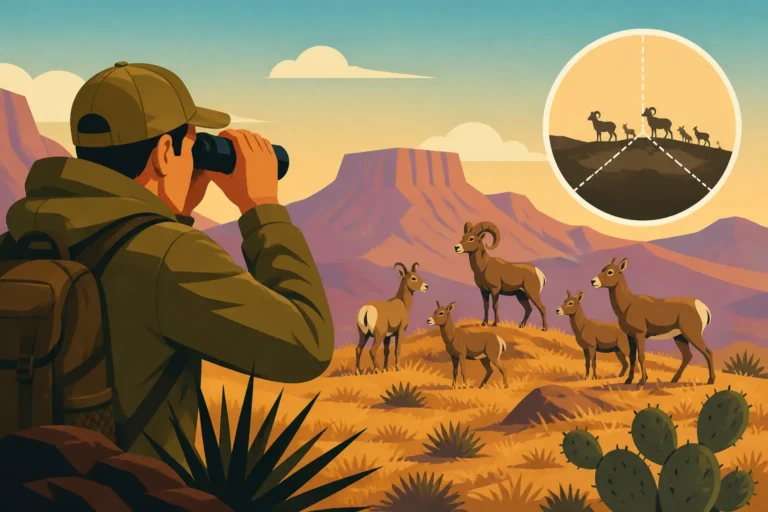
This extreme environment dictates that successful ibex hunting is almost entirely a spot-and-stalk game. You will spend hours, if not days, meticulously glassing every rock face, every shadow, and every patch of scrub for the tell-tale shape of an ibex. Long-range glassing is not just an advantage; it’s an absolute necessity. Having top-tier optics, including a high-power spotting scope on a solid tripod, is non-negotiable. If you're wondering about glassing strategy, think about a good Tripod Setup for Glassing From a Ridge – it's crucial for stability over long periods. You'll need to locate the animals, assess them, and then plan an approach that leverages every slight depression, every small rock outcrop for cover.
The sheer physicality of this terrain cannot be overstated. We've talked about this before when discussing Physical Conditioning for a High Elevation Hunt, and it applies tenfold here, even though the Floridas aren't as high elevation as some of the northern elk units. The constant up-and-down, the loose scree, and the often-technical climbing will wear you down quickly. Preparation in the form of rigorous cardio and strength training months before your hunt is absolutely essential. Don't overlook the specific challenges of the weather either. The sun can be relentless, baking the rocks and creating shimmering heat waves that make judging incredibly difficult, while sudden winds can turn a comfortable glassing perch into a dangerous one.
The Rarity of an Ibex Tag and What It Means
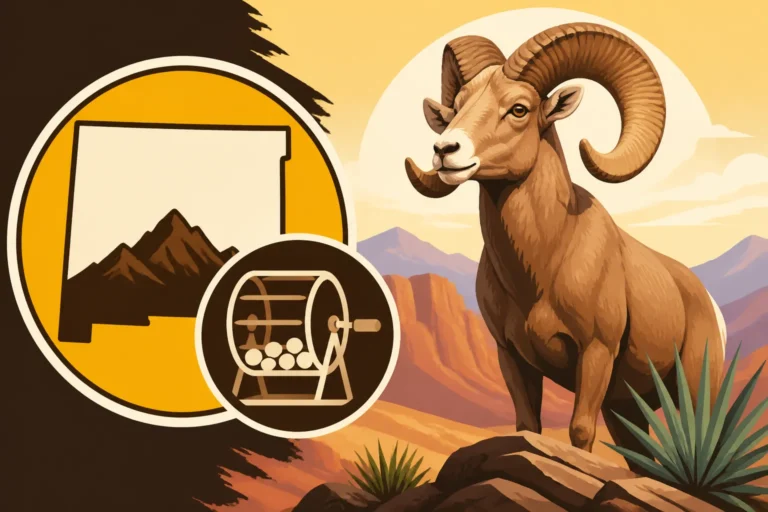
Drawing a New Mexico ibex tag is akin to winning a small lottery. The draw odds are notoriously tough, making it one of the most sought-after tags in the state. Many hunters apply for years, even decades, before their number finally comes up. This rarity imbues the hunt with a tremendous amount of pressure; for most, it truly is a once-in-a-lifetime opportunity. You can check resources like GoHunt to understand the historical New Mexico Ibex Draw Odds and get a sense of just how challenging it is to secure one of these tags. When that application deadline comes, usually in March, you better have your choices locked in. Don't forget to pay attention to the New Mexico Application Deadline Date so you don't miss out.
Because the tags are so limited and often considered a "once-in-a-lifetime" draw, the pressure to make the right decision on the animal you harvest is immense. You don't want to get all the way into the Florida Mountains, put in the grueling work, and then tag a lesser billy only to see a true giant moments later. This is precisely why developing solid field judging skills before you ever set foot on the mountain is paramount. It’s not just about getting an ibex; it’s about getting the ibex you’ve dreamed of.
This pressure also means that meticulous preparation, far beyond physical training, is critical. This includes extensive e-scouting, understanding the unit's topography, and being intimately familiar with what a mature billy truly looks like. Websites like GoHunt provide valuable mapping tools and historical harvest data that can give you an edge in your planning. Every bit of research you do to solidify your understanding of these magnificent animals and their habitat contributes to a more confident and successful hunt when your chance finally arrives.
Key Characteristics of a Mature Ibex Billy
When an ibex finally appears in your glass, the clock starts ticking. You need to quickly and accurately assess if it’s the animal you’re looking for. This requires a deep understanding of what defines a mature billy, far beyond a simple glance. There are specific physical indicators that distinguish a truly trophy-class animal from a younger, less developed one.
Horn Length and Curvature
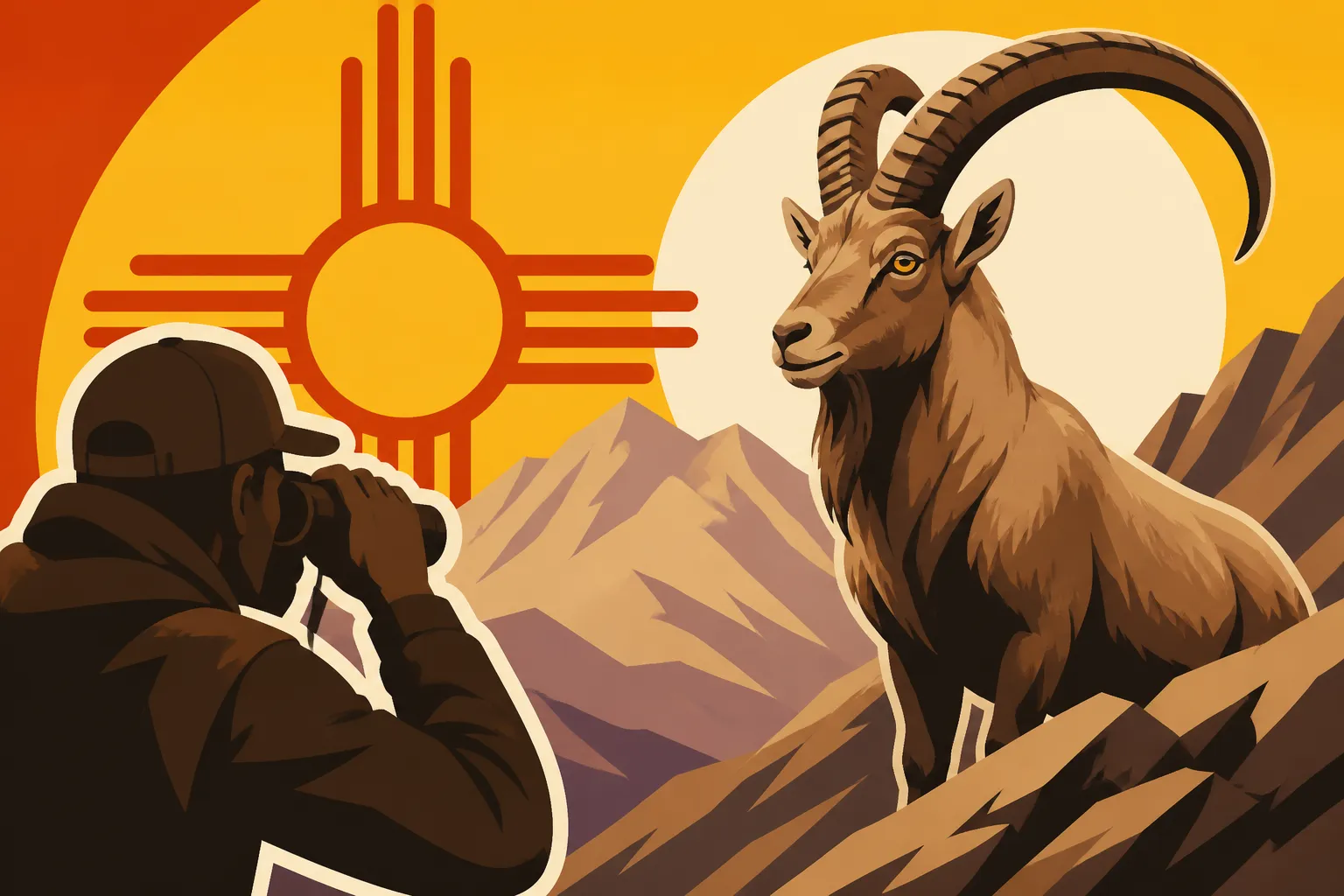
The horns are, without a doubt, the defining feature of a trophy ibex billy. They are dramatically different from any other big game animal in North America, sweeping backward in a majestic arc. As an ibex ages, these horns grow longer and thicker, developing prominent ridges and deep annulations (growth rings) along their front surface. When you're glassing, look for horns that extend well past the animal's back, often reaching or even exceeding the length of its entire body from shoulder to tail. A good indicator of a truly mature animal is horns that seem almost disproportionately long compared to its body.
Estimating horn length in the field is a practiced skill. You can use the ibex's own body as a reference point. Does the horn reach past its rump? How many times the length of its head or ears does the horn appear to be? The more horn you see curving gracefully backward, the older and more mature the billy likely is. Be cautious of broken tips, which can visually shorten an otherwise excellent set of horns. The overall sweep and symmetry are also important; a wide, dramatic arc adds to the aesthetic appeal and often indicates good overall horn development.
Typical length ranges for a mature billy will generally be in the high 30s to 40-inch range, with exceptional animals pushing even further. What you're looking for is not just raw length, but how that length is carried. Do the horns maintain their mass throughout their sweep, or do they taper quickly? Thicker, more substantial horns throughout their length are characteristic of older animals.
The curvature itself is also a strong indicator. Younger billys will have straighter, less pronounced curves. As they mature, the horns develop a more elegant, backward-curling sweep that often approaches a semi-circle. This deep, consistent curve, combined with significant length, is what gives a mature ibex billy its breathtaking appearance and contributes heavily to its trophy status.
Basal Circumference and Annulations
While length gets a lot of attention, the basal circumference—the thickness of the horns right at the base where they meet the skull—is perhaps an even more reliable indicator of age and maturity. A truly old billy will have horns that are incredibly thick and heavy at the base, carrying that mass well up the horn before tapering. Compare this to a younger animal whose horns will appear much thinner and begin to taper almost immediately. You're looking for that "stovepipe" appearance at the base, substantial and robust.
The annulations, or growth rings, on the front surface of the horns are like nature's own age-chart. Each prominent ridge represents a year of growth. While not always perfectly distinct, counting these rings can give you a very good estimate of the animal's age. A young billy might have only a few, less defined rings, while a middle-aged billy will show more distinct annulations. A truly mature billy, usually 7 years or older, will display numerous, deeply ridged annulations, often 7 or more, packed closely together at the base and spreading further apart as they grow. This visible "stacking" of growth rings is a fantastic visual cue.
Visually distinguishing thick bases from thin, tapering horns can be tricky at long distances, especially in tricky light. Try to find a reference point on the animal itself. Does the horn base appear as wide as the animal's ear, or even wider? A younger ibex might have horns that seem to barely exceed the width of its eye. Older billys will have bases that make the eyes and ears look small by comparison. This substantial mass at the base often gives the animal a heavier, more formidable appearance overall.
The importance of mass throughout the horn cannot be overstated. It’s not just about a thick base, but how that thickness is maintained. A trophy billy will carry significant mass well past its ears, sometimes even halfway up the length of the horn, before it begins its graceful taper. This overall bulk, combined with impressive length and distinct annulations, is the hallmark of an exceptional New Mexico ibex billy.
Body Size and General Appearance
Beyond the horns, the overall body size and general appearance of an ibex billy are crucial indicators of age. A truly mature billy will have a large, blocky body, reflecting years of growth and muscle development. They'll look significantly more robust and powerful than younger animals. Think of the difference between a yearling bull elk and a mature 6×6; the body language and sheer mass are unmistakable. Younger ibex tend to be more slender, more agile-looking, and appear smaller in proportion to their environment. When you spot an ibex, pay attention to how much of the rock face it seems to fill.
Coat color and beard length also offer valuable clues. While there can be individual variations, older billys often have a darker, more grizzled coat, sometimes appearing quite greyish-brown, especially on their backs and flanks, in contrast to the lighter brown of younger animals. Their facial markings might also be more pronounced. Most strikingly, mature billys grow long, flowing beards that can extend down to or even past their brisket, giving them a very distinctive, regal appearance. Younger billys will have shorter, sparser beards, or perhaps just a scruffy patch of hair.
Comparing a potential shooter to other animals in the herd, if available, can be incredibly helpful. Is it the dominant animal? Does it stand out in terms of bulk and beard length? Often, the largest-bodied animal with the longest beard will also have the longest and thickest horns. Look for those tell-tale signs of a seasoned survivor, a billy that has earned its impressive rack through years of navigating the harsh Florida Mountains.
Ultimately, a truly mature billy possesses a certain "presence" that is hard to describe but easy to recognize. They move with an air of confidence, a quiet authority, and seem to command their environment. Their overall appearance, from the impressive sweep of their horns to the grizzled coat and flowing beard, combines to create an image of a formidable, wise old monarch of the mountain. Trust your gut feeling on the overall impression, but always back it up with a systematic evaluation of horn length, mass, and annulations.
Field Judging Techniques and Common Pitfalls
Field judging ibex is an art form, honed through practice and patience. The conditions in the Florida Mountains are rarely ideal, and mistakes can happen if you rush or rely solely on instinct. Having a systematic approach and understanding common pitfalls will significantly increase your chances of making an accurate assessment when that trophy billy finally stands before you.
Using Optics for Accurate Assessment
High-quality optics are your most essential tools for judging an ibex. Forget about using binos to make your final call; you'll need a top-tier spotting scope with a good range of magnification, mounted on an utterly stable tripod. Trying to glass an ibex freehand, especially at the extreme distances common in the Florida Mountains, will lead to eye strain, fatigue, and inaccurate judgments. A stable Tripod Setup for Glassing From a Ridge is absolutely crucial for holding that scope steady, allowing you to pick apart every detail of the animal's horns and body.
First, use your binoculars (10x or 12x are ideal) to locate animals and generally assess groups. Once you've spotted a potential shooter, immediately set up your spotting scope. Take your time. Don't rush. Zoom in and out, focus precisely, and let your eyes adjust. Often, details that were invisible through binos will pop into focus with a good spotter. You're looking for the subtle ridges on the horns, the precise length of the beard, and the specific curvature and thickness of the horns.
Light conditions play a massive role. Early morning and late evening light, with the sun at your back, are often the best for revealing horn texture and length without harsh shadows or blinding glare. Mid-day heat shimmer can be your worst enemy, creating wavy distortions that make accurate judging nearly impossible. If conditions are poor, wait them out if you can. Patience is a virtue in ibex country.
Don't settle for a single glance. Observe the billy for an extended period, if possible. Watch it move, turn its head, and even bed down. Different angles will reveal different aspects of its horns and body. Take mental notes, or even verbal notes if hunting with a partner, to confirm what you're seeing. This repeated viewing, even if it means sacrificing some stalk time, is invaluable for confirming your initial assessment and avoiding "ground shrinkage" surprises.
Estimating Distance and Scale
Distance is a master of deception in wide-open country. What looks like a giant at 500 yards might shrink significantly when you finally get a range on it. Your brain naturally tries to normalize what it sees, which can lead to overestimating the size of animals, especially against vast backdrops. This is a common phenomenon in Optics Power for New Mexico's Open Country, where the sheer scale of the landscape can distort perceptions. Always, always, range the animal if you can.
To help with scale, try to use known landmarks or features near the ibex. Is there a specific rock formation, a yucca plant, or a small tree of an estimated size nearby? Use these as a reference point. Does the ibex's horn length compare to the height of that particular shrub? This practice of mentally calibrating against known sizes can help train your eye to be more accurate.
A technique many seasoned hunters use is to compare specific parts of the ibex to its known average measurements. For example, an ibex's ear is roughly 6-8 inches long. Does the horn length appear to be five or six times the length of its ear? How does the horn's basal circumference compare to the width of its eye or muzzle? These internal comparisons, though estimates, can provide a more grounded perspective than simply looking at the animal in isolation.
Practice, practice, practice. Even if you're not on an ibex hunt, practice judging deer, elk, or even inanimate objects at various ranges through your optics. Estimate their dimensions, then range them or walk to them to confirm your accuracy. The more you consciously work on estimating distance and scale, the better prepared you'll be when the real opportunity arises in the Floridas.
Common Mistakes and How to Avoid Them
The most classic mistake in field judging is what hunters affectionately call "ground shrinkage." This is when an animal looks much larger in the field, especially through optics, than it does once you walk up to it. This often happens because of adrenaline, distance distortion, poor light, or simply a lack of experience judging. To avoid this, always add a little "ground shrinkage factor" to your mental estimate. If you think it's a 40-inch billy, mentally knock a few inches off and decide if you'd still be happy with it.
Another major pitfall is rushing the shot. The excitement of finally seeing an ibex, especially a decent one, can trigger "buck fever" and lead you to make a hasty decision. Resist the urge to pull the trigger as soon as you have a clear shot. Take those extra minutes, even seconds, to re-evaluate. Cycle through your judging criteria: length, mass, annulations, body size, beard. If you have any doubt, spend more time observing. A missed opportunity is better than a regretted one when it comes to a once-in-a-lifetime tag.
Many hunters go into an ibex hunt without a clear, specific idea of what a "shooter" looks like to them. What constitutes a trophy for one person might be different for another. Before you leave home, spend time studying photos and videos of harvested ibex. Define your minimum standards for horn length, mass, and age. Look at success photos on hunting forums and on GoHunt, analyzing what makes a particular billy truly impressive. Having a solid mental image of your ideal animal will help you make a more confident decision in the field.
Finally, the emotional aspect of the hunt is a real factor. The combination of intense physical exertion, the rarity of the tag, and the sheer challenge of the hunt can heighten emotions and cloud judgment. Stay calm, breathe, and stick to your systematic judging process. If you’re hunting with a partner, get a second opinion. Sometimes, just articulating what you see out loud can help confirm or contradict your initial impression. Remember, this is a hunt of a lifetime, and thoughtful execution is key.
Preparing for Your New Mexico Ibex Hunt
Drawing a New Mexico ibex tag is an incredible achievement, but it's only the first step. The true success of your hunt hinges on meticulous preparation, both before you even apply and in the weeks leading up to your departure. Don't let the difficulty of the draw overshadow the importance of getting ready for the actual hunt.
Researching Units and Hunt Codes
Before you even think about applying, you absolutely must do your homework on the specific unit where ibex tags are issued – the Florida Mountains. Understanding the Reading a New Mexico Hunt Code Before You Apply is fundamental, but for ibex, you're looking at a very specific set of codes tied directly to this unique area. There’s not a lot of ambiguity there, but knowing the dates, weapon types, and any special regulations is vital. You can glean a lot of information by looking up Where Persian Ibex Live in New Mexico to confirm the primary area of hunt activity.
Dive deep into historical harvest data. Resources like GoHunt are invaluable for analyzing past success rates, harvest locations, and general trends within the unit. While draw odds for ibex don't necessarily improve with time as they might with a preference point system, understanding past success can help manage your expectations and refine your strategy. You'll want to study topographical maps and satellite imagery to identify potential glassing perches, natural travel corridors for the ibex, and water sources (though water is usually less of a factor for ibex than for desert deer).
The application process itself demands attention. Make sure you understand the specific license requirements, application fees, and group application rules if you plan to apply with a partner. You'll need a current Game Hunting License for non-residents and the correct application type for ibex. Many hunters find it useful to consult the official New Mexico Department of Game and Fish (NMDGF) regulations booklet; it's always a good idea to be familiar with Reading the New Mexico Rules and Info Booklet. Get everything submitted well before the New Mexico Application Deadline Date, because missing it means waiting another year.
Physical and Mental Conditioning
Let's be blunt: the Florida Mountains are a physical beast. If you haven't put in the work, they will chew you up and spit you out. Forget flat ground; every step is either uphill or downhill, often on loose scree, jagged rocks, or through thorny brush. Your physical conditioning needs to be top-notch, far exceeding what you might prepare for a typical whitetail or even mule deer hunt. Consider hiking with a weighted pack for miles, focusing on steep inclines and declines. Stair climbing, step-ups, and exercises that build leg and core strength are invaluable. This is the kind of hunt where Physical Conditioning for a High Elevation Hunt strategies, focused on endurance and functional strength, will serve you well, even if the elevation isn't extreme.
Beyond the physical, the mental toughness required is significant. Ibex hunting is often a grind. You will glass for hours with no animals. You will make difficult climbs only to find an area empty. You will probably experience frustration and fatigue. Developing resilience, the ability to push through discomfort, and maintaining a positive attitude even when things get tough are critical. Visualize challenging scenarios and how you'll overcome them. Mental preparation can be just as important as physical.
Proper hydration and nutrition in the field are paramount for maintaining both physical and mental performance. You'll be burning a tremendous amount of calories, and dehydration can set in quickly in the arid environment. Plan your food and water intake carefully, and always carry more water than you think you'll need, especially on long stalks or glassing sessions. Good rest when you can get it is also key; don't try to go too hard for too many consecutive days without adequate recovery time.
Essential Gear for Ibex Country
Your gear choices for an ibex hunt are crucial, reflecting the demanding nature of the terrain and the animals. First and foremost, high-quality optics are non-negotiable. This means premium binoculars (10x or 12x), a powerful spotting scope (20-60x or higher), and a sturdy, lightweight tripod for both. You'll be spending untold hours behind glass, so investing here will pay dividends. The insights from posts like Optics Power for New Mexico's Open Country are very relevant here.
Footwear is another critical category. You need sturdy, broken-in hiking boots with excellent ankle support and a stiff sole to navigate the rocky, uneven ground. Consider bringing two pairs, just in case one gets wet or fails. Good quality hiking socks are also essential to prevent blisters. Proper layering is also important for the temperature swings you might experience in the desert mountains.
Navigation tools are vital. A reliable GPS unit with pre-loaded maps, along with a compass and physical map as a backup, is a must. Cell service is often nonexistent in remote areas of the Floridas, so a satellite communication device (like an inReach or Zoleo) is highly recommended for emergencies and to stay in touch. A quality headlamp, a well-stocked first-aid kit, and a multi-tool are also foundational items.
Finally, adequate water carrying capacity is essential. Depending on your plan, this could mean a hydration bladder in your pack, multiple water bottles, or even a water filter if you know of reliable sources (which are rare in the Floridas). Plan for at least a gallon of water per person per day for active hunting in this environment. Don’t skimp on emergency supplies; a survival blanket, fire starter, and extra food could literally be lifesavers.
Ibex Billy Judging Criteria Table
To help you quickly assess an ibex in the field, here's a breakdown of key indicators to look for, distinguishing between younger, middle-aged, and truly mature billies.
| Feature | Young Billy (1-3 years) | Middle-Aged Billy (4-6 years) | Mature Billy (7+ years) |
|---|---|---|---|
| Horn Length | Short, thin, rarely beyond ears | Good length, past ears, moderate sweep | Long, pronounced sweep, often past back |
| Horn Basal Mass | Thin, tapers quickly | Noticeable mass, still some taper | Very thick, heavy at base, carries mass well |
| Annulations (Rings) | Few, indistinct, smooth | More distinct, 3-6 prominent rings | Many distinct, deeply ridged annulations (7+) |
| Body Size | Slender, agile, appears smaller | Solid, strong build, fills out | Large, blocky body, powerful appearance |
| Beard Length | Short, scraggly, sparse | Moderate length, becoming fuller | Long, thick, flowing, often touching brisket |
| Coat Color | Lighter brown, sometimes reddish cast | Darker brown, beginning to grizzle | Deep brown/grey, often with dark "saddle" |
| Overall Impression | Nimble, less wary, somewhat gangly | Strong, alert, active | Dominant, wise, very wary, commanding presence |
Disclaimer
This article is for general informational purposes only and does not constitute professional advice. Laws, prices and regulations vary by location and change over time. Consult a qualified professional for guidance on your specific situation.