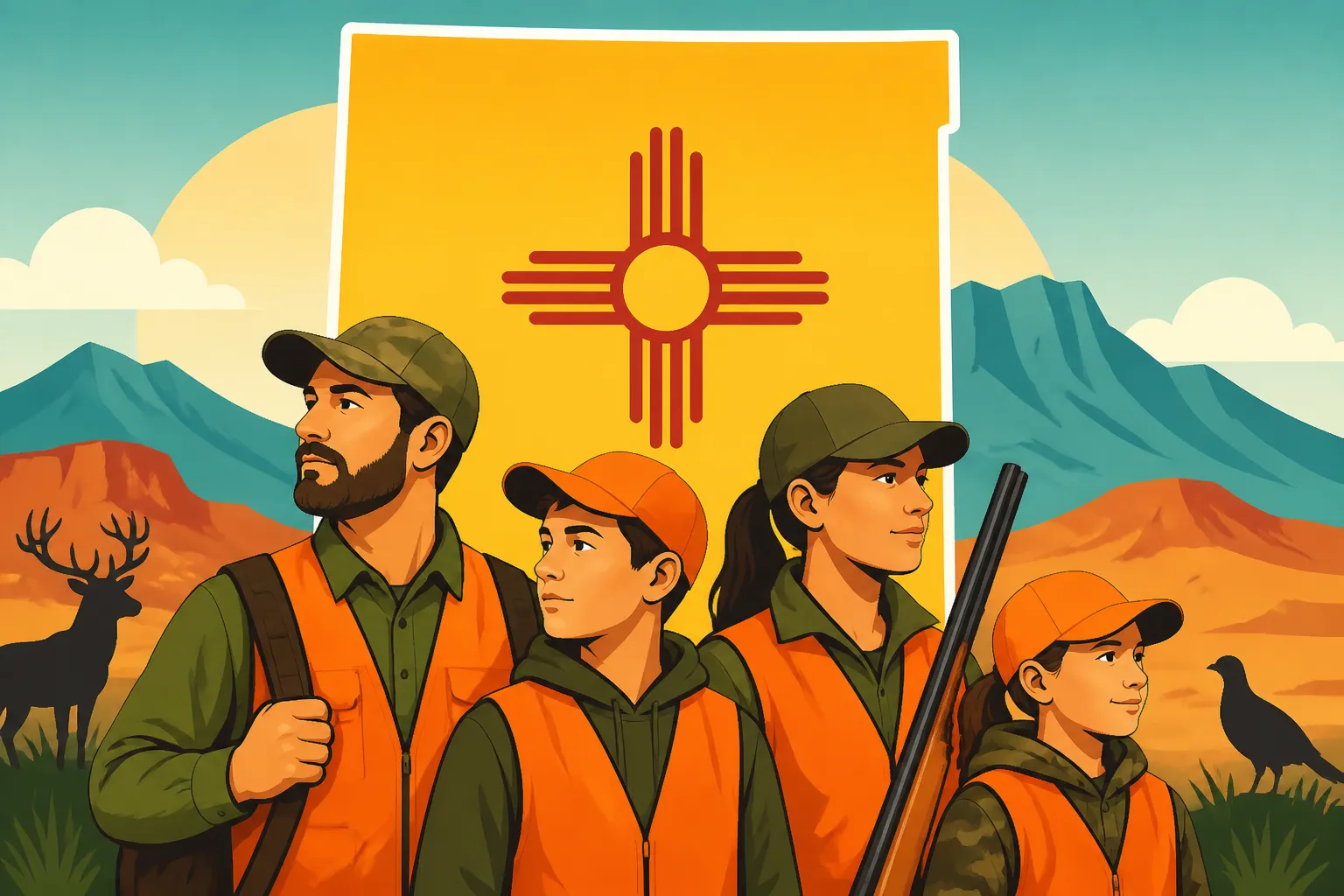
Who New Mexico’s Hunter Education Rule Covers
The world of hunting regulations can feel like a labyrinth, especially when you're trying to figure out if you, or your eager young hunter, meet all the requirements. The frustration of trying to decipher dense rulebooks or getting conflicting information online about something as fundamental as hunter education is a real pain point for many. This guide is here to untangle the complexities of New Mexico's hunter education rule, clarifying exactly who needs to take the course and who might be exempt, so you can focus on the hunt itself.
Understanding New Mexico's Hunter Education Mandate
New Mexico is committed to ensuring its hunters are safe, responsible, and knowledgeable about wildlife and conservation. This commitment is primarily upheld through its mandatory hunter education program. It's not just about learning how to shoot; it's about understanding ethics, regulations, wildlife identification, and survival skills that are crucial for any hunter venturing into the vast landscapes of the state.
The Core Requirement for All Hunters
At its heart, the New Mexico Department of Game and Fish (NMDGF) generally mandates that anyone born on or after January 1, 1957, must complete a state-approved hunter education course before they can purchase a hunting license. This requirement applies to both residents and nonresidents, ensuring a baseline of knowledge for a significant portion of the hunting population. It’s a foundational step, much like getting your driver's license before you hit the road. You need to understand the rules of the road before you're in charge of a vehicle, and the same goes for ethical hunting practices. Failing to meet this can put a real damper on your hunt, leading to penalties or, worse, being unable to purchase your tag.
Many hunters find resources like GoHunt invaluable for cross-referencing these regulations and ensuring they haven't missed any critical details before heading afield. They often aggregate state-specific information in an accessible format. The official NMDGF website is always the primary source, of course, but tools that help you quickly confirm details are incredibly useful.
Age Considerations for Certification
While the "born after January 1, 1957" rule sets the broad strokes, age plays a crucial role in when and how someone can fulfill the hunter education requirement. For instance, children as young as 10 years old can enroll in the hunter education course in New Mexico. This early entry allows them to get certified well before they might actually be old enough to hunt independently. However, merely taking the course doesn't automatically mean they can hunt alone. Until they reach a certain age or meet specific criteria, they'll likely fall under the wing of the Mentored Youth Program, which we'll delve into shortly. The goal is to provide a comprehensive learning experience that instills safety and ethical practices from a young age, preparing them for a lifetime of responsible hunting.
When the Rule Doesn't Apply at All
It's important to understand that while the "born after 1957" rule covers most hunters, there are specific scenarios where the hunter education requirement simply doesn't apply. If you were born before January 1, 1957, congratulations! You are considered "grandfathered" in, and you are generally exempt from the formal hunter education certification. This means you don't need to dig through your old papers for a long-lost card or enroll in a new course. You're presumed to have come of age in an era where hunter education wasn't universally mandated, and your practical experience is recognized. This also applies to individuals participating in the New Mexico Mentored Youth Program, as their learning process is structured differently under direct supervision. Understanding who is exempt from hunter education can save a lot of headaches and unnecessary paperwork.
Specific Exemptions to the Hunter Education Rule
Beyond the age-based grandfathering, New Mexico recognizes several other situations where individuals are not required to complete the standard hunter education course. These exemptions acknowledge that some individuals already possess a high level of training or have fulfilled equivalent requirements through other means.
Military and Law Enforcement Personnel
For those who have served or are currently serving our country and communities, New Mexico provides a thoughtful exemption. Active duty military personnel, veterans who possess valid documentation of their service, and active or retired law enforcement officers are generally exempt from the hunter education requirement. The rationale here is sound: these individuals typically undergo rigorous training in firearms safety, responsible weapon handling, and often, wilderness survival as part of their professional duties. Their training often far exceeds the basic hunter education curriculum, making a separate course redundant. To qualify for this exemption, they must be able to present valid identification or discharge papers to demonstrate their status if requested by a game warden. This recognition of their specialized training streamlines the process for a group of highly trained individuals who have already proven their responsibility.
Prior Hunter Education from Other States
Hunting often involves travel, and New Mexico understands that many hunters may have already completed hunter education in another state or Canadian province. The good news is that New Mexico generally accepts hunter education certifications from other states and provinces, provided that the course was approved by the International Hunter Education Association (IHEA-USA). This reciprocity is incredibly helpful for nonresidents planning a hunt in New Mexico, as it prevents the need to retake a course they've already passed. It's always a good idea to keep your certification card handy, or have easily accessible digital proof, as you might need to present it when purchasing your license or if asked by a game and fish officer. If you're wondering, Do Nonresidents Need New Mexico Hunter Education? the answer is typically yes, but an equivalent out-of-state certification usually suffices.
Age-Based Waivers and Grandfathering
As mentioned earlier, the most common "waiver" of the hunter education requirement comes down to birth year. If you were born before January 1, 1957, you are automatically exempt from needing to show proof of hunter education. This isn't a waiver in the sense of applying for special permission; it's an outright exemption built into the regulations. It acknowledges that when these individuals began hunting, hunter education wasn't a universal standard. Therefore, their lifelong experience is deemed sufficient. Beyond this, there aren't general "age-based waivers" for younger individuals; instead, they either need to take the course or participate in the Mentored Youth Program, which is designed as a supervised learning pathway, not an exemption from education entirely.
The New Mexico Mentored Youth Program
New Mexico has a fantastic program designed to introduce young, aspiring hunters to the traditions and ethics of the sport without requiring them to complete the formal hunter education course right away. This is the New Mexico Mentored Youth Program Explained, a crucial pathway for getting kids involved safely and responsibly.
Allowing First-Time Youth Hunters to Participate
The Mentored Youth Program is a brilliant bridge for young people who are eager to experience hunting but haven't yet taken or completed a hunter education course. It allows youth hunters under specific age limits to hunt small game and some big game species while under the direct, continuous supervision of a licensed adult mentor. This isn't a free pass to hunt; it's an opportunity for hands-on learning in a controlled environment. The mentor, who must be at least 18 years old and possess a valid hunter education certification (or be exempt themselves), takes full responsibility for the youth hunter's actions and ensures they comply with all hunting laws and safety protocols. This immediate, practical experience is invaluable for building confidence and understanding the nuances of the hunt. You can read more about What Mentored Youth Under Ten May Hunt for specifics on species.
Age Limits and Mentor Responsibilities
The Age Range for New Mexico Mentored Youth is generally for individuals under the age of 18. However, specific rules apply to different age brackets within this range. For instance, youth hunters under the age of 10 must be accompanied by a mentor, and the mentor must possess the youth's license and tag. For youth aged 10 and above but under 18, they can carry their own license and tag but must still be accompanied by a mentor. The mentor's role is paramount: they must stay within "arm's length" of the youth hunter, providing direct supervision and immediate guidance. This isn't just about safety; it's about active teaching in the field, explaining game identification, shot placement, ethical considerations, and how to read the terrain. The mentor number requirement for New Mexico ensures accountability and tracks participation in this important program.
| Age of Youth Hunter | Hunter Education Required | Mentor Required | Mentor's Role | Can Carry Own License/Tag |
|---|---|---|---|---|
| Under 10 | No | Yes | Direct supervision, mentor carries youth's tag | No (Mentor carries) |
| 10 – 17 | No (if Mentored) | Yes | Direct supervision, guidance | Yes (Youth carries) |
| 18+ | Yes (if born after 1957) | No | N/A | Yes |
| Any Age (born pre-1957) | No | No | N/A | Yes |
Transitioning from Mentored Youth to Certified Hunter
The Mentored Youth Program is an excellent starting point, but it's not a permanent solution for those who wish to hunt independently. Youth hunters participating in the program typically have a window of two years to hunt as a mentored youth before they are required to complete the formal hunter education course themselves. This period gives them valuable field experience and helps them decide if hunting is a passion they want to pursue long-term. If they choose to continue, they must then successfully complete a New Mexico-approved hunter education course, such as the one described in The New Mexico Hunter Education Requirement. This transition ensures that by the time they are hunting without direct, constant supervision, they have fully absorbed the knowledge and skills necessary for safe and ethical hunting practices. It’s a progression from guided experience to independent, responsible participation.
Nonresident Hunter Education Requirements
New Mexico is a prime destination for hunters from across the country, drawing them in with its diverse landscapes and game species. However, just like residents, nonresidents must adhere to the state's hunter education regulations. It can be confusing for out-of-state hunters to navigate, especially if their home state has different rules.
Accepting Out-of-State Certifications
As we touched on earlier, New Mexico is generally accepting of hunter education certifications obtained in other states or Canadian provinces. This is a huge relief for many nonresident hunters, as it means they don't have to jump through extra hoops or retake a course. The key is that the certification must be from a program that meets the standards of the International Hunter Education Association (IHEA-USA). Most state-run hunter education programs do, so chances are your existing card will be perfectly valid.
However, it's not a bad idea to do a quick check on the NMDGF website or call their offices if you have any doubts about your specific certification's acceptance. Preparing for a New Mexico hunt involves many details, from checking draw odds (which you can often find compiled on platforms like GoHunt) to understanding unit boundaries, so making sure your hunter education is in order should be high on your checklist. Don't risk having your license denied at the last minute because of an oversight here. Always bring your physical hunter education card or clear digital proof with you when purchasing your license or checking in for your hunt.
What If a Nonresident Has Never Taken a Course
If a nonresident hunter was born after January 1, 1957, and has never completed a hunter education course—either in their home state or elsewhere—then they must complete a New Mexico-approved course to hunt in the state. There's no getting around this requirement. This means they would need to either:
- Complete an online New Mexico hunter education course, often followed by a required field day, if applicable.
- Attend an in-person hunter education course in New Mexico.
- Find an IHEA-USA approved course in their home state and complete it before their New Mexico hunt.
This isn't just a bureaucratic hurdle; it's about ensuring everyone hunting in New Mexico understands the specific laws, ethics, and safety protocols that are paramount for a good experience. The state treats all hunters, resident or nonresident, equally when it comes to the core principles of safe and ethical hunting. Some online resources, including those from NMDGF or even third-party education providers like Hunter-ed.com, can guide you through the process of How Long the Online Hunter Education Course Takes.
Planning Ahead for Your New Mexico Hunt
The takeaway here for nonresidents is clear: plan ahead! Don't wait until you've drawn that coveted elk tag or are driving into the state to check your hunter education status. Verify your certification well in advance. If you need to take a course, factor in the time required for both the online portion and any potential field day requirements. Remember, some states require an in-person component, which might be tricky to coordinate last minute.
Many hunters rely on detailed planning tools, and some utilize platforms like GoHunt for their comprehensive information, including state-by-state regulations and application deadlines, which can help ensure all prerequisites, like hunter education, are met. By taking care of this early, you eliminate a significant source of stress and ensure you're fully prepared to enjoy your hunting adventure in New Mexico, without any unwelcome surprises.
What to Do if You've Lost Your Certification
It happens to the best of us: you've taken the course, you've got your certification, and then…poof! The physical card vanishes into the abyss of old wallets, junk drawers, or moving boxes. Don't panic! Losing your hunter education card doesn't mean you have to retake the entire course.
Replacing a Lost Hunter Education Card
If you find yourself in the frustrating position of needing to replace a lost hunter education card, New Mexico has a straightforward process. Your first step should be to contact the New Mexico Department of Game and Fish (NMDGF) Hunter Education Section. They maintain records of all certified hunters. You can typically request a duplicate card through their website or by calling their offices. There might be a small fee associated with printing and mailing a replacement card, but it's a minimal cost compared to the hassle of being unable to purchase a license.
It's wise to request a replacement well before your planned hunt, as mail delivery can take time. Having your certification number or the approximate date and location where you took the course can expedite the process. The NMDGF staff are generally very helpful in assisting hunters with these common issues, understanding that sometimes life just happens. This is much simpler than figuring out How New Mexico Handles a Failed Payment for a tag, for example, which can have more immediate consequences.
Digital Proof and Record Keeping
In our increasingly digital world, many states, including New Mexico, are becoming more accepting of digital proof of hunter education. While a physical card is always ideal to have, a clear photograph or a digital scan of your certification card stored on your phone or in a cloud service can often suffice. It's an excellent backup plan. However, always confirm with the NMDGF or specific license vendors if digital proof will be accepted in all circumstances.
It's also a good practice to keep a record of your hunter education certificate in a safe, accessible place, perhaps with other important hunting documents like your hunting license history or your NMDGF customer ID number. Some hunters even create a digital folder on their computer or a cloud drive dedicated to all their hunting credentials, making it easy to retrieve any document you need, whether it's for New Mexico or another state you plan to hunt. Websites like GoHunt might also offer tools to help you keep track of your certifications and licenses across different states within your profile.
Common Pitfalls and How to Avoid Them
The biggest pitfall is simply not checking your hunter education status until the last minute. Imagine driving hours to a remote camp, only to realize at the local license vendor that your certification isn't valid or can't be found. Avoid this by verifying your status months, or at least weeks, before your season opens.
Another common issue is confusing the Mentored Youth Program with an outright exemption. Remember, the mentored program is a temporary learning phase. A youth still needs to get formally certified after their two-year window if they wish to continue hunting independently. Ensure you understand How Long Mentored Youth Status Lasts to plan for this transition.
Finally, don't assume that just because you're a seasoned hunter, the rules haven't changed. Regulations evolve, and staying current is part of being a responsible sportsman. Always consult the most recent New Mexico Hunting Rules and Information booklet, which the NMDGF publishes annually. It's your definitive guide for all regulations, including hunter education.
Disclaimer
Please remember that hunting regulations, including hunter education requirements, can change. While every effort has been made to provide accurate and up-to-date information in this guide, it is your responsibility to verify all current rules and regulations with the official New Mexico Department of Game and Fish (NMDGF) directly before participating in any hunting activity. This content is for informational purposes only and should not be considered legal advice.