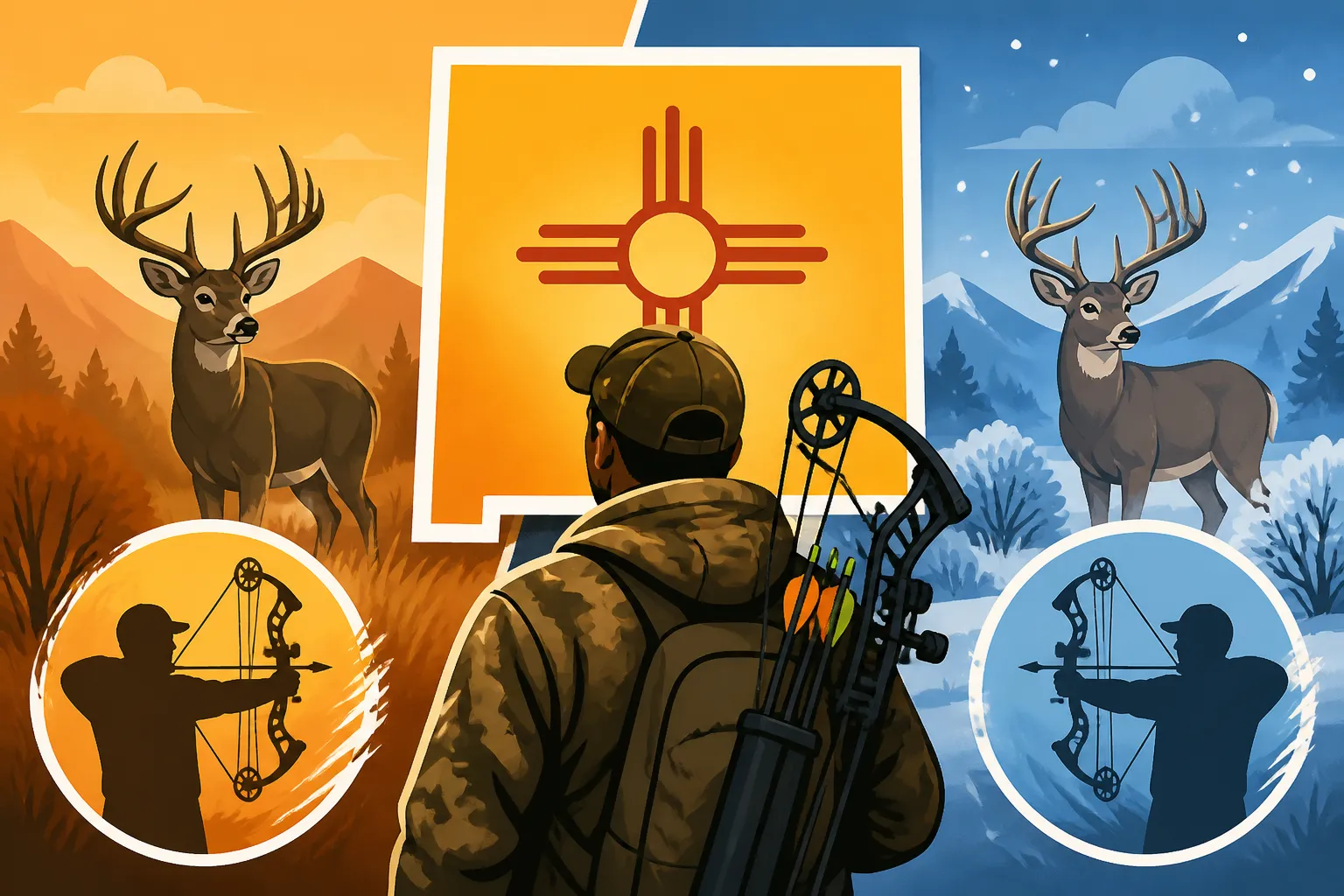
Can You Hunt Both Archery Deer Seasons?
It's a common question, and honestly, a bit of a dream for many bowhunters: can you double down and hunt both of New Mexico's archery deer seasons? The idea of extending your time in the field, especially during peak rut activity, is incredibly appealing. However, New Mexico's regulations surrounding deer tags and application limits can be a real head-scratcher, often leaving hunters wondering if such a feat is even possible. This guide will clarify the rules, explain the practical realities, and help you understand your options when it comes to pursuing mule deer with a bow in the Land of Enchantment.
Understanding New Mexico's Archery Deer Season Structure
New Mexico's approach to archery deer season is unique, splitting the September rut into two distinct timeframes. This isn't just a random scheduling quirk; it's a deliberate management strategy designed to distribute hunting pressure and provide different experiences for hunters. If you're new to the state or just haven't delved into the specifics, it can certainly feel a bit confusing when you're flipping through the hunt codes.
The First Archery Season Window
Generally, the first archery deer season in New Mexico kicks off in early September, usually around the 1st or 2nd, and runs for about two weeks. This early window often coincides with the tail end of the summer patterns for deer, where bucks might still be grouped up, bachelor-style, and relatively predictable around water sources or specific feeding areas before the full chaos of the rut begins. The weather during this period can still be quite warm, especially in the southern and central units, which means Heat Management on an Early Season Hunt is a critical consideration. Hunters often find success by focusing on traditional bedding and feeding patterns, and being very mindful of thermals in the mornings and evenings. While there might be some pre-rut activity, such as sparring, the full-blown chasing and breeding are still a little ways off.
The Second Archery Season Window
Following a short break, the second archery deer season typically picks up in the latter half of September, often starting around the 16th and also lasting for about two weeks. This is the period many hunters eagerly anticipate because it generally falls smack-dab in the middle of the mule deer rut across much of the state. During this time, bucks are far more active, cruising for does, scent-checking, and engaging in more aggressive behavior. Calling tactics, though perhaps not as effective as during the full elk rut, can sometimes work, especially if you're targeting curious bucks. You'll likely encounter more receptive deer, but also potentially more hunting pressure as many folks opt for this prime window. Understanding Bugle Timing Through New Mexico's Rut for elk might give you a sense of how intense animal activity can be in September, even if deer are less vocal.
The Rationale Behind the Split
The New Mexico Department of Game and Fish (NMDGF) splits the archery deer season for several well-thought-out reasons. Primarily, it's about resource management and providing diverse hunting opportunities. By breaking up the season, they can manage hunter density and pressure, preventing too many hunters from converging on the same areas during a single peak window. This can help distribute the impact on the deer population and enhance the quality of the hunting experience for those participating. It also allows the department to offer more tags overall by compartmentalizing the hunts. Furthermore, different units across the state might experience the rut at slightly different times due to elevation, climate, and deer genetics. The split provides a chance to hit the rut in various areas, even if just by a few days. You can learn more about this by checking out Why New Mexico Splits September Into Two Archery Hunts.
License and Tag Requirements for Archery Deer
Navigating the New Mexico hunting license and tag system is crucial, especially when you're hoping to maximize your time in the field. It's not as simple as just buying a general license and heading out; there are specific hoops to jump through for big game, and deer are no exception. The NMDGF uses a draw system for most big game species, which directly impacts how many opportunities you get.
The General Game Hunting License
Before you can even apply for a specific deer tag, you absolutely need to purchase a New Mexico Game Hunting License. This is your foundational pass to hunt game animals in the state, including small game, and it’s a prerequisite for applying in the big game draw. For nonresidents, this license can be a significant upfront cost, but it's non-negotiable if you plan to hunt deer. On top of that, you'll also need a Habitat Management & Access Validation (HMAV) and potentially a Habitat Stamp if you're hunting federal lands like those managed by the US Forest Service or Bureau of Land Management. These fees contribute to conservation efforts and public land access, which is always a good thing, even if it adds to the total cost. Details on these requirements can be found by researching The New Mexico HMAV Validation Explained.
Drawing a Specific Deer Tag
New Mexico operates on a lottery draw system for deer tags, meaning you apply for specific hunt codes in specific units during specific seasons (like "Archery Deer – Unit XX – First Season" or "Archery Deer – Unit XX – Second Season"). You submit your application choices, and then the NMDGF conducts a random draw. There are no preference points in New Mexico, so every applicant has the same odds each year, regardless of how many times they've applied in the past. This system can be both exciting and frustrating, as luck plays a huge role. For a deep dive into how the draw works, you might want to read How New Mexico Draw Odds Work Without Points. When considering which units and seasons to apply for, a resource like GoHunt's Insider service can be invaluable for looking at draw odds and historical data to make informed decisions.
Can You Hold Multiple Deer Tags?
This is where the rubber meets the road for our core question. In New Mexico, you can only draw and hold one deer tag per license year. This is a critical regulation that directly impacts the dream of hunting both archery seasons. If you draw a tag for the first archery deer season in Unit 15, for example, you cannot also draw a tag for the second archery deer season in Unit 15, or any other unit, within the same license year. This rule applies across all weapon types for deer. So, while New Mexico offers two distinct archery deer seasons, you can only pick one via the draw for your annual opportunity. This single-tag limitation simplifies herd management and ensures that hunting opportunities are spread among a larger pool of applicants. Therefore, the short answer to "Can you hunt both archery deer seasons?" is no, not with separate tags in the same year.
The Reality of Hunting Both Seasons
Given the single-tag limitation, the dream of actively hunting both New Mexico archery deer seasons with individual tags in the same year isn't feasible through the standard draw. However, understanding the nuances of the system can reveal other strategic approaches and clarifies why this regulation is in place. It’s all about managing pressure and opportunity.
Tag Limitations and Draw Mechanics
The NMDGF's strict "one deer tag per hunter per year" policy is fundamental to its draw mechanics. When you apply, you list up to four hunt choices. If you are successful in drawing your first choice for, say, the early archery deer season, your application process ends there, and you receive that tag. Even if you had a second choice listed for the late archery season in a different unit, you would not be considered for it. This system prevents any single hunter from monopolizing multiple deer opportunities through the draw. It also means that if you fail to draw any of your choices, you're out of luck for a draw tag that year, unless leftover tags become available. GoHunt is excellent for checking unit-specific draw odds, helping you strategize which of the two archery seasons might offer a better chance in your preferred units.
| Season Type | Typical Start Date | Typical End Date | Rut Activity Level | Weather Considerations | Key Hunting Strategy |
|---|---|---|---|---|---|
| First Archery Deer | Early September | Mid-September | Pre-rut to early rut | Warm, potential for heat | Food/Water Sources, Bedding |
| Second Archery Deer | Mid-September | Late September | Peak rut (chasing) | Cooler, variable | Cruising lanes, calling, rubs |
Practicalities of Hunting Back-to-Back
Even if regulations allowed for two tags, the practicalities of hunting both seasons back-to-back would be incredibly demanding. Imagine the logistics:
- Time Off: You'd need nearly a month off work, factoring in travel, scouting, and hunting for both two-week periods, plus transition time. Most hunters struggle to get a single week off, let alone four.
- Physical Endurance: Hunting in New Mexico, especially in mountainous or arid terrain, is physically taxing. Recovering from one intense two-week hunt only to immediately start another would test even the most dedicated athlete. Considerations like Preparing Physically for a High Elevation Hunt or carrying sufficient Water You Must Carry on a Desert Day Hunt are amplified when thinking about prolonged efforts.
- Financial Cost: Two separate trips, or one extended stay, would double or triple your expenses for fuel, food, lodging, and potentially additional gear wear and tear.
For these reasons, even if it were legally possible, very few hunters would realistically pursue both seasons due to the sheer commitment of time, money, and physical effort required.
Strategic Considerations for Applying
Since you can only draw one deer tag, your application strategy becomes paramount. You need to decide which archery season aligns best with your hunting style, schedule, and expectations.
- Early Season Advantages: If you prefer patterned animals, milder competition, and are excellent at spotting and stalking, the first season might be for you. Deer might be more predictable around food and water sources, and less wary of hunter presence.
- Late Season Advantages: If you're hoping to experience the peak of the rut, with more active and potentially vulnerable bucks, the second season is the clear choice. This is often when you'll see more aggressive buck behavior and perhaps more opportunities for calling.
- Unit Specifics: Research how deer behave in your chosen unit during both periods. Some units might have a more pronounced late-September rut, while others might offer better early-season patterning. Use resources like GoHunt or the NMDGF website to look at New Mexico Archery Deer Season Structure by specific unit.
Ultimately, you have to weigh these factors and commit to one season for your draw application.
Maximizing Your Archery Deer Opportunities
While you can't hold two archery deer tags in the same year, that doesn't mean your opportunities are limited to a single two-week window. New Mexico offers a few other avenues and strategies that can help you extend your time afield or increase your chances of drawing a desirable tag. It's all about playing the long game and exploring all the possibilities the state has to offer.
Applying for Different Units or Hunt Codes
Even though you can only get one deer tag, you can use your four choices on your application strategically. For example, you could put your first choice on a prime unit's second archery season, and then your second, third, and fourth choices on other units or even the first archery season in less competitive units. The goal here isn't to get multiple tags, but to maximize your chances of drawing a tag. For instance, you could apply for When New Mexico's First Archery Deer Season Runs in Unit X as a backup if your primary choice for When the Second Archery Deer Season Runs in Unit Y doesn't pan out. Remember, once you draw any choice, your application is fulfilled for that species for the year. Studying Reading a New Mexico Hunt Code Before You Apply will be crucial to correctly listing your choices and understanding the different options available.
Exploring Off-Range or EPLUS Options
Beyond the standard draw, New Mexico has other avenues that might offer additional or alternative deer hunting opportunities.
- Off-Range Oryx: While not deer, if you're looking for another big game archery hunt, New Mexico's off-range oryx hunts are unique. These are also draw hunts, but they are a completely separate species, meaning a deer tag doesn't preclude you from applying for or drawing an oryx tag in the same year. An oryx hunt is a completely different experience from deer hunting, and is often a once-in-a-lifetime opportunity for many. Details on these unique hunts can be found in resources such as Hunting Oryx on an Active Missile Range or How an Oryx Hunt Actually Runs.
- EPLUS Authorizations: EPLUS (Elk Private Land Use System) tags are primarily for elk, but they represent a private landowner allocation system that bypasses the general public draw. While primarily an elk program, it highlights how the NMDGF uses different tag allocation methods. If you ever consider pursuing other species, understanding How EPLUS Puts New Mexico Elk Tags in Landowner Hands could be useful for future reference. For deer, however, there isn't a widely available private land tag system that functions similarly to EPLUS to give you an "extra" tag. Any private land deer hunting would typically still fall under the one-tag-per-year rule, with the landowner often receiving specific tags to give or sell.
Scouting and Preparation for Success
Regardless of which archery season you ultimately draw, meticulous scouting and physical preparation are paramount for success.
- Pre-Season Scouting: Utilize digital tools like onX Hunt or GoHunt maps to e-scout your unit thoroughly. Identify potential water sources, bedding areas, travel corridors, and feeding grounds. If possible, a boots-on-the-ground scouting trip 2-3 weeks before your season is invaluable. Remember, Scouting New Mexico State Trust Land Fourteen Days Out has specific rules you need to adhere to. Look for fresh sign, rubs, scrapes, and observe deer patterns.
- Physical Conditioning: New Mexico terrain can be brutal. Whether it's the steep canyons of the Gila or the rolling hills of the high desert, you need to be in shape. Long hikes, uphill climbs, and carrying a heavy pack are often part of the experience. Don't underestimate the physical demands.
- Gear Check: Ensure your bow is perfectly tuned, your broadheads are sharp, and your optics are clean. Practice shooting from various positions and distances, especially in conditions that mimic the field. A solid practice routine is detailed in Building a Practice Routine Before Opener.
- Weather Awareness: Early September hunts can still be blazing hot in many parts of the state, requiring strategies for Getting Meat Cooled on an Early Season Hunt if you harvest an animal. Late September can bring anything from crisp mornings to unexpected rain or even early snow in higher elevations, so layering your clothing is crucial.
By focusing your energy on one well-chosen archery season and preparing diligently, you significantly increase your odds of success and still enjoy an incredible hunting experience in New Mexico.
Disclaimer
Please remember that hunting regulations, fees, and season dates can change. Always consult the most current New Mexico Department of Game and Fish Rules and Information Booklet or their official website before planning any hunt. This guide is for informational purposes only and does not constitute legal advice.