Where New Mexico Oryx Live Outside White Sands
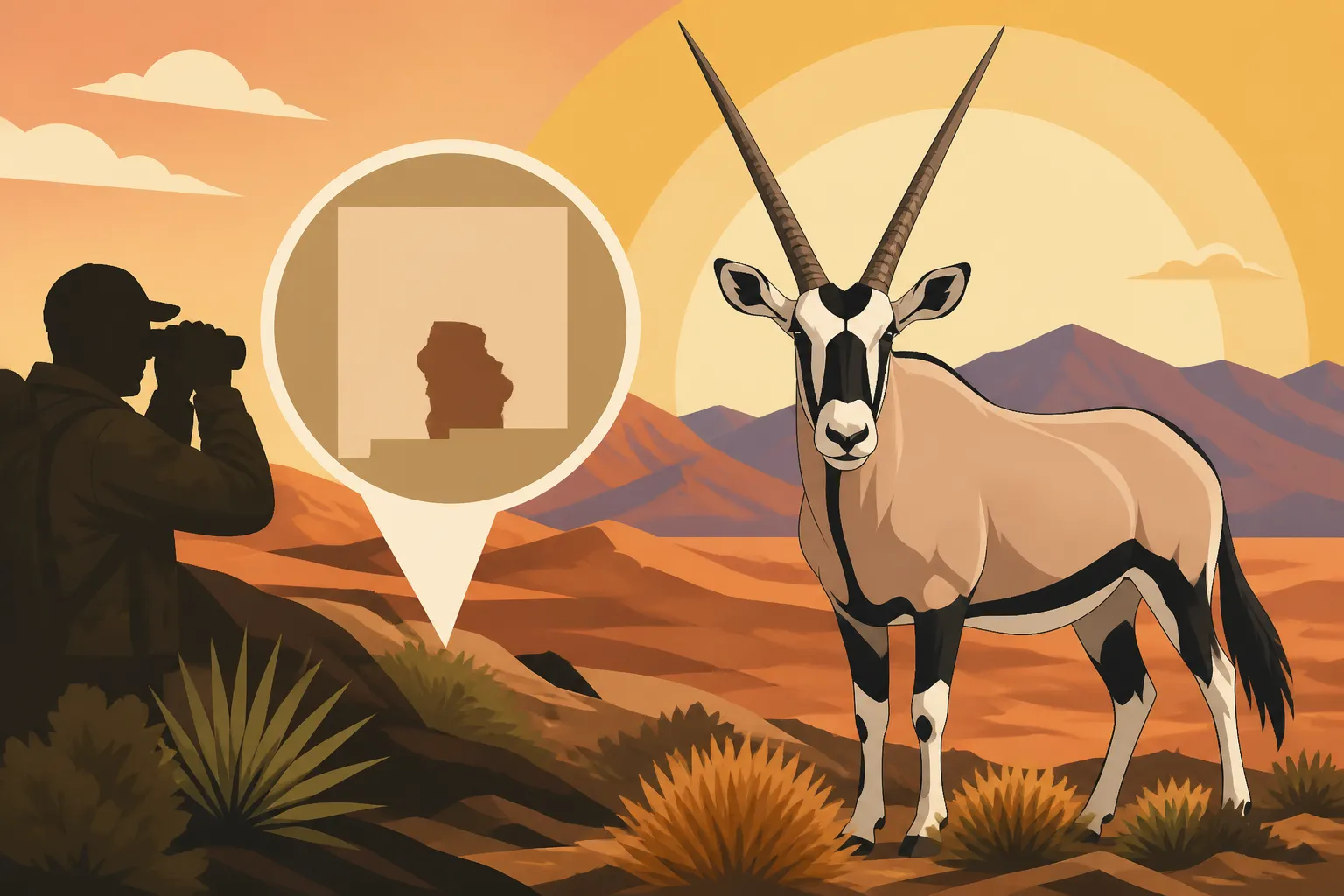
For many hunters, the mention of Oryx in New Mexico immediately conjures images of the vast, restricted lands of the White Sands Missile Range. It's a natural association, given the species' storied history there. But what many don't realize is that these magnificent animals have expanded their territory significantly, establishing thriving populations in various "off-range" units. This guide is for those who dream of pursuing Oryx beyond the military's fences, offering insight into where you can find them, what those areas are like, and how to approach hunting them in these less-talked-about landscapes.
Beyond the Fences: Understanding Off-Range Oryx in New Mexico
The idea that Oryx are strictly confined to the White Sands Missile Range is a common misconception, and frankly, it sells the species short. While the missile range was indeed their initial home in New Mexico, these hardy animals are far too adaptable and persistent to stay put. Their natural tendency to expand and explore, coupled with favorable habitat conditions, has led to their establishment in many surrounding areas.
A Brief History of Oryx in New Mexico
The story of Oryx in New Mexico is a fascinating one, rooted in a conservation effort that aimed to introduce a large, non-native game animal that could thrive in arid conditions. Originally from the Kalahari Desert in Africa, the South African oryx (gemsbok) was first introduced to the White Sands Missile Range in the late 1960s. The idea was to create a new hunting opportunity and utilize a habitat niche that wasn't being filled by native species. If you're curious about the full timeline and reasoning behind this bold move, our article on How Oryx Were Introduced to New Mexico offers a deeper dive into their origins. The initial population flourished on the missile range, growing exponentially thanks to abundant forage and minimal predation.
As the herd grew, so did the pressure on the available resources within the missile range's boundaries. It was only a matter of time before these animals, driven by instinct and necessity, began to push beyond the perimeter. The fences and natural barriers that once seemed impregnable eventually became permeable as small groups, and sometimes even lone individuals, ventured into the surrounding public and private lands. This natural dispersion is how the "off-range" populations we hunt today began to take root and expand.
The Concept of "Off-Range" Oryx
So, what exactly do we mean by "off-range" Oryx? Simply put, these are Oryx that live outside the highly controlled environment of the White Sands Missile Range. While they might occasionally wander back onto the range, their primary home ranges, breeding grounds, and forage areas are found in the adjacent or even distant Game Management Units (GMUs). This distinction is crucial for hunters because the hunting experience, access, and regulations for these animals are markedly different from those for hunts held directly on the missile range.
Hunting off-range Oryx often means navigating a mosaic of land ownership—federal lands managed by the Bureau of Land Management (BLM), state trust lands, and private ranches—rather than the singular authority of the military base. This opens up different challenges and opportunities. While a White Sands hunt might involve strict entry procedures and escort requirements, an off-range hunt often demands more traditional scouting, navigation, and independent hunting skills, akin to pursuing other big game species in New Mexico's diverse landscapes. It’s a hunt where you truly earn your animal, often covering vast tracts of ground under your own power.
Why They Migrated Beyond White Sands
The reasons for the Oryx's successful expansion beyond White Sands are multi-faceted, illustrating their remarkable adaptability. Primarily, it's a testament to their robust population growth. As the herd numbers swelled on the missile range, competition for food and water intensified, pushing younger animals and smaller groups to seek new territories. This natural dispersal mechanism is common among thriving wildlife populations.
Secondly, the surrounding terrain offered suitable, albeit sometimes more challenging, habitat. New Mexico’s Chihuahuan Desert, with its mix of arid grasslands, rolling hills, and occasional mountain ranges, provided sufficient forage and intermittent water sources. While White Sands boasts some prime Oryx habitat, the adjacent public lands, though perhaps less lush in places, still offered enough to sustain new groups. Factors like periodic drought on the range, or even just the inherent wandering nature of large ungulates, also played a role. Over decades, these smaller migrations added up, establishing the significant off-range populations we see today, providing a unique and challenging hunt for those lucky enough to draw a tag.
Key Geographic Areas for Off-Range Oryx
When it comes to hunting Oryx off-range, understanding the lay of the land is paramount. These aren't just random wanderers; they've established territories and preferred habitats outside the missile range, and knowing these areas can drastically improve your chances of success. It's a whole different ballgame compared to the often-flat, open expanses of White Sands.
The Core Off-Range Units
While Oryx can pop up in unexpected places, there are several core Game Management Units where off-range populations are consistently found and tags are issued. These units generally encircle the White Sands Missile Range, radiating out from the main introduction site. Units like 19, 20, 28, 29, 30, 32, and 34 are frequently mentioned when discussing off-range Oryx. These units share characteristics of the Chihuahuan Desert, featuring a mix of vast, open flats, rolling hills, sparse desert vegetation, and rugged arroyos.
Each of these units presents its own unique challenges and opportunities. Some might have more public land access, while others are dominated by private ranchland where obtaining permission is key. Successful hunters in these areas often spend considerable time e-scouting with mapping tools like GoHunt, identifying potential travel corridors, water sources, and bedding areas. The terrain can be deceptively rough, with sharp rocks, thorny bushes, and dramatic elevation changes in unexpected places, demanding stout footwear and physical conditioning.
North and East of White Sands
To the north and east of White Sands, the landscape begins to transition from the pure desert environment to more varied topography. Here, Oryx can be found utilizing the foothills and lower slopes of mountain ranges like the San Andres and Oscura Mountains. While the Oryx populations here might not be as dense as those immediately adjacent to the missile range, these areas offer unique hunting experiences. You might encounter more broken country, rocky outcroppings, and juniper-dotted hillsides, providing more cover for both the hunter and the hunted.
Hunting in these northern and eastern areas often requires different tactics. Instead of simply spotting distant herds across flat plains, you might be glassing canyons and draws, looking for animals moving through thicker brush or bedded on a hillside. The challenges here include navigating steeper terrain and potentially dealing with more limited road access, requiring longer walks or even horseback travel. However, the reward can be a truly wild hunting experience, tracking these majestic animals through a landscape few would associate with Oryx.
South and West of White Sands
Venturing south and west of White Sands, the terrain typically remains classic Chihuahuan Desert: expansive flats, creosote bushes, and scattered mesquite, interspersed with low-lying mountain ranges. Units in this direction might include areas closer to Las Cruces or stretching towards the Arizona border. Here, the Oryx populations are often intermingled with desert mule deer and pronghorn, utilizing similar habitats. The challenges in these areas are often related to sheer vastness and the lack of prominent landmarks.
Spotting an Oryx in this seemingly endless landscape requires patience and good optics. Hunters often rely on extensive glassing from elevated positions, or systematically covering ground with a vehicle on designated roads before switching to foot. Access can be a mix of BLM land, state trust land (which your hunting license often serves as an easement for, though it's always wise to confirm regulations), and private property. Understanding the specific regulations for New Mexico Holds Over 30 Million Acres of Public Hunting Land is crucial here, as is securing written permission for any private land you might need to cross or hunt. The heat can be intense, and water sources are few and far between, making hydration and self-sufficiency critical.
Habitat and Behavior of Off-Range Oryx
The success of the Oryx in New Mexico's diverse landscapes is a testament to their incredible adaptability. These animals aren't just surviving; they're thriving in environments that vary significantly from their original White Sands home. Understanding their habitat preferences and behaviors outside the missile range is key to a successful hunt.
Adapting to Diverse Landscapes
One of the most impressive aspects of New Mexico's Oryx is their ability to adapt to such a wide range of desert and semi-arid environments. While they are originally from open, arid grasslands, off-range Oryx can be found in everything from flat, sandy plains to rugged, rocky foothills and even steeper mountain slopes dotted with juniper and pinyon. This adaptability means they aren't confined to a single type of terrain, which can make scouting both challenging and exciting.
In the flatter, more open units, they behave much like they do on White Sands, relying on their keen eyesight and speed to evade predators. They'll often be found grazing in open areas, especially during cooler parts of the day. As you move into more broken country, however, their behavior shifts. They might utilize arroyos and washes for cover and travel, or bed down on rocky ledges and shaded slopes, making them much harder to spot. This requires hunters to adjust their tactics, often transitioning from long-range glassing to more strategic spot-and-stalk approaches in rugged terrain.
Forage and Water Sources
Like all wildlife, Oryx need food and water to survive, and their ability to find both in New Mexico's often harsh environment is remarkable. They are highly efficient foragers, capable of subsisting on a variety of grasses, forbs, and even browsing on shrubs. This varied diet allows them to thrive in areas where more specialized grazers might struggle. During dry periods, they can extract moisture from plants, reducing their need for free water, a crucial adaptation for desert life.
However, even with their adaptations, water sources remain critical, especially during the hotter months. Off-range Oryx will often be found near natural springs, guzzlers, or stock tanks. These water points become natural magnets for game, particularly in units with limited rainfall. Hunters often prioritize scouting these areas, using mapping applications to identify potential water sources. It's a critical ethical consideration to remember that these are often vital lifelines for all desert wildlife, so approaching them with respect and minimal disturbance is paramount. For more on this topic, our guide on Water Sources and Ethics in Desert Hunting offers valuable insights.
Social Structure and Movement Patterns
Off-range Oryx typically exhibit social structures similar to their on-range counterparts, forming herds that can range from a few individuals to dozens. However, in areas with lower densities, you might encounter smaller groups or even lone bulls more frequently. These herds are often led by a dominant female, and their movements are primarily dictated by the availability of food, water, and security.
Their movement patterns can be quite extensive, especially if resources are scarce. They might travel several miles between feeding grounds and water sources, or shift their range entirely in response to changes in forage quality or hunting pressure. During the breeding season, known as the rut, bulls become more territorial and active, often challenging each other for breeding rights. Understanding these seasonal movements and daily routines is crucial for hunters. Observing their habits—where they feed at dawn, where they bed down during the midday heat, and their preferred travel routes—can be the difference between a successful hunt and a frustrating one. They are constantly on the move, and a fresh track in the morning can lead you on a long, winding journey through their expansive domain.
Hunting Opportunities and Challenges for Off-Range Oryx
Drawing an Oryx tag, whether on-range or off-range, is a coveted opportunity for many hunters. The allure of pursuing such a unique and magnificent animal in New Mexico's rugged landscapes is undeniable. However, the experience of an off-range hunt comes with its own distinct set of considerations, from the draw process to the actual field tactics.
Drawing an Off-Range Tag
The New Mexico Oryx draw is highly competitive, and the off-range tags are no exception. While White Sands hunts often have higher success rates due to denser populations and a more controlled environment, off-range tags offer a different kind of adventure. The draw statistics for off-range hunts are posted annually, and while they can be tough, persistent applicants do eventually draw. For a detailed look at the numbers, checking New Mexico Oryx Draw Odds is an essential first step for any hopeful applicant. It's important to remember that New Mexico does not use a preference point system, meaning every applicant, resident or nonresident, has an equal chance each year, regardless of how many times they've applied in the past.
When applying, you'll choose your preferred hunt codes, which designate specific units and seasons. It's crucial to research these units thoroughly beforehand, using tools like GoHunt or the NMDGF website, to understand the terrain, access points, and historical success rates for that particular hunt code. Some off-range hunts might be earlier in the year, dealing with extreme heat, while others are later, offering cooler temperatures but potentially more evasive animals. Choosing your hunt codes wisely, based on your physical capabilities and preferred hunting style, is a key component of the application process.
Tactics for Off-Range Hunting
Hunting off-range Oryx typically involves a combination of long-range glassing and strategic spot-and-stalk tactics. Unlike some White Sands hunts where vehicle access is controlled and designated, off-range hunts on public land generally adhere to standard motorized travel rules. This means you might use a truck or ATV to cover ground on established roads, but eventually, you’ll be on foot. The sheer scale of many off-range units means you’ll be covering a lot of territory, whether visually or physically.
Many successful hunters start their day on a high point, systematically glassing basins, draws, and open flats for any sign of Oryx. Their distinctive white bodies and dark markings can stand out against the desert backdrop, but they also blend in surprisingly well among the light-colored rocks and brush. Once an animal or herd is spotted, the real work begins: planning an approach that uses terrain features, wind direction, and cover to close the distance. This often involves long, arduous stalks over rough, unforgiving ground. Oryx have excellent eyesight and hearing, making a stealthy approach vital. Shot distances can vary greatly, so being proficient with your chosen weapon out to extended ranges is highly advisable.
The Importance of Scouting and Resources
For an off-range Oryx hunt, thorough scouting is not just recommended; it's practically mandatory. Since you won't have the benefit of guides or military escorts, you are responsible for knowing your unit inside and out. This includes understanding property boundaries, access roads, potential water sources, and the general layout of the terrain. Platforms like GoHunt become invaluable here, offering detailed satellite imagery, private/public land overlays, and topographic maps that allow you to e-scout extensively from home. Our article on E-Scouting a New Mexico Unit Before the Season can give you some great tips on how to get started.
Beyond digital tools, nothing beats boots-on-the-ground scouting if you can manage it. Visiting your unit weeks or months before the season can help you identify game trails, learn the travel patterns of the animals, and get a feel for the terrain and vegetation. If physical scouting isn't feasible, reach out to local NMDGF biologists or land managers for insights. Their knowledge of the local populations and habitat conditions can be a goldmine of information. Joining online forums or connecting with other hunters who have experience in your unit can also provide valuable tips and real-world perspectives on the challenges and opportunities you might face.
Planning Your Off-Range Oryx Adventure
Embarking on an off-range Oryx hunt in New Mexico is a significant undertaking, one that rewards meticulous planning and preparation. This isn't a casual weekend trip; it's an immersive experience in some of the state's wildest country, and being ready for anything is half the battle.
Understanding Public and Private Land
One of the biggest differences between hunting on White Sands and hunting off-range is the complex mosaic of land ownership. While White Sands is largely federal military land, the surrounding off-range units are often a mix of Bureau of Land Management (BLM) land, New Mexico State Trust Land, and privately owned ranches. Navigating these boundaries correctly is absolutely critical. Your New Mexico hunting license usually provides an easement for accessing State Trust Land for hunting purposes, but always double-check the latest regulations to ensure compliance. Our guide, A New Mexico License Is Your State Trust Land Easement, explains this in more detail.
It's your responsibility as a hunter to know exactly where you are at all times. Mapping applications with public/private land overlays are indispensable. Trespassing onto private land, even accidentally, can lead to serious consequences, including fines and loss of hunting privileges. If a significant portion of your chosen unit is private, you might consider trying to gain permission from landowners well in advance of your hunt. This can be a challenge, but a polite, respectful approach, sometimes offering to share photos or even meat, can sometimes open doors. Never assume public access if a boundary is unclear; always err on the side of caution.
Essential Gear for Off-Range Oryx
The gear you bring on an off-range Oryx hunt will be crucial for your comfort, safety, and success. Given the diverse terrain and often extreme weather conditions of New Mexico's deserts, you'll need equipment that can stand up to the challenge. High-quality optics are non-negotiable. A good pair of 10x binoculars, like those robust models that survive an all-day glassing session, is essential for spotting these elusive animals from a distance. A spotting scope on a sturdy tripod is also highly recommended for identifying Oryx and evaluating their horns before committing to a stalk. Our article on Binocular Size That Survives an All-Day Session offers great advice on choosing durable options.
Beyond optics, sturdy, broken-in hiking boots are paramount for navigating rocky, uneven terrain. Hydration is another critical factor, especially during early season hunts when temperatures can soar. Carrying a large water bladder or multiple bottles is a must, and knowing Water You Must Carry on a Desert Day Hunt could literally be life-saving. Other essentials include a reliable backpack, navigation tools (GPS device and physical map/compass as backup), appropriate layering for significant temperature swings, first-aid kit, and a good rangefinder. A solid rifle and ammunition you are confident in shooting accurately at various distances will also be critical, as shots can sometimes be long.
Ethical Considerations and Conservation
As with all hunting, ethical considerations and a commitment to conservation are paramount when pursuing off-range Oryx. These magnificent animals represent a unique success story in New Mexico, and their continued presence relies on responsible hunting practices. This includes knowing and adhering to all game laws and regulations, ensuring you have the correct tags and licenses, and respecting fair chase principles.
It also means making every effort to recover any animal you shoot. Oryx are incredibly tough, and they can cover significant distances even after a fatal shot. Tracking skills are invaluable, and you should be prepared to follow a blood trail for hours, or even overnight if necessary. The Meat Salvage Requirements for Big Game in New Mexico are strict, and for good reason: wasting game meat is not only illegal but deeply unethical. Plan for meat care in the field, especially if hunting in warm weather. This might involve carrying game bags, having a plan for rapid cooling, and knowing the location of the nearest meat processor. Your actions as a hunter directly impact the public perception of hunting and the future of these incredible animals in New Mexico.
Comparison: On-Range vs. Off-Range Oryx Hunting
| Feature | On-Range (White Sands Missile Range) | Off-Range (General New Mexico Units) |
|---|---|---|
| Location | Within the secure boundaries of White Sands Missile Range. | Public (BLM, State Trust) & Private lands surrounding the missile range. |
| Access Control | Highly regulated, military escort, specific entry points, security checks. | Generally open, but requires careful navigation of public/private land. |
| Terrain | Often expansive, flat, sandy plains with scattered dunes and brush. | Varied: open flats, rolling hills, rocky foothills, arroyos, junipers. |
| Population Density | Historically high density, often resulting in higher success rates. | Lower density, requiring more extensive scouting and hunting effort. |
| Hunter Pressure | Managed via limited tags, specific hunt dates, and escort rules. | Varies by unit; can experience more general public land hunter traffic. |
| Scouting | Limited pre-hunt scouting, rely on outfitter/military knowledge. | Extensive e-scouting and boots-on-the-ground scouting recommended. |
| Logistics | Often requires specific meet-up times, limited vehicle access routes. | More independent, requiring self-reliance for navigation and camping. |
| Tag Cost | A significant investment, often a four-figure sum for non-residents. | Similar tag cost as on-range, but trip expenses may vary. |
| Hunt Duration | Typically structured as a short, intense hunt (e.g., 3 days). | Season length varies; generally allows for longer hunt periods. |
| Trophy Potential | Excellent. | Excellent, but often requires more work to find mature animals. |
Disclaimer
This article is for general informational purposes only and does not constitute professional advice. Laws, prices and regulations vary by location and change over time. Consult a qualified professional for guidance on your specific situation.