Rocky Mountain Bighorn in the North
For many hunters, the thought of pursuing a Rocky Mountain Bighorn Sheep in New Mexico's rugged northern mountains feels like a distant dream, an almost mythical endeavor reserved for the exceptionally lucky or those with unlimited resources. The terrain is unforgiving, the draw odds are notoriously long, and the commitment required is immense. But don't let that deter you. This comprehensive guide will demystify what it takes to understand, apply for, and potentially hunt these magnificent animals in the high country of the Land of Enchantment, offering a realistic look at the challenges and incredible rewards.
Understanding Rocky Mountain Bighorn in New Mexico
Rocky Mountain Bighorn Sheep are truly iconic symbols of the American West, embodying resilience and grace in some of the continent's most challenging landscapes. In New Mexico, these animals represent not just a premier hunting opportunity, but a testament to dedicated conservation efforts that have brought them back from the brink in many areas.
Distinguishing Rocky Mountain from Desert Bighorn
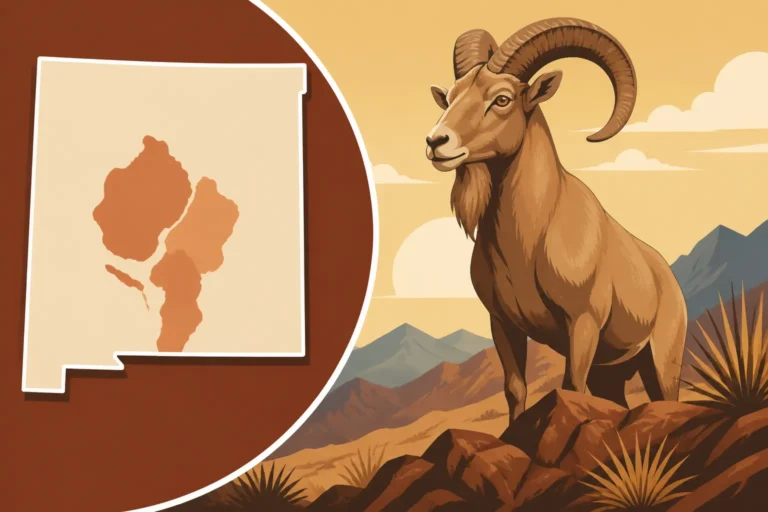
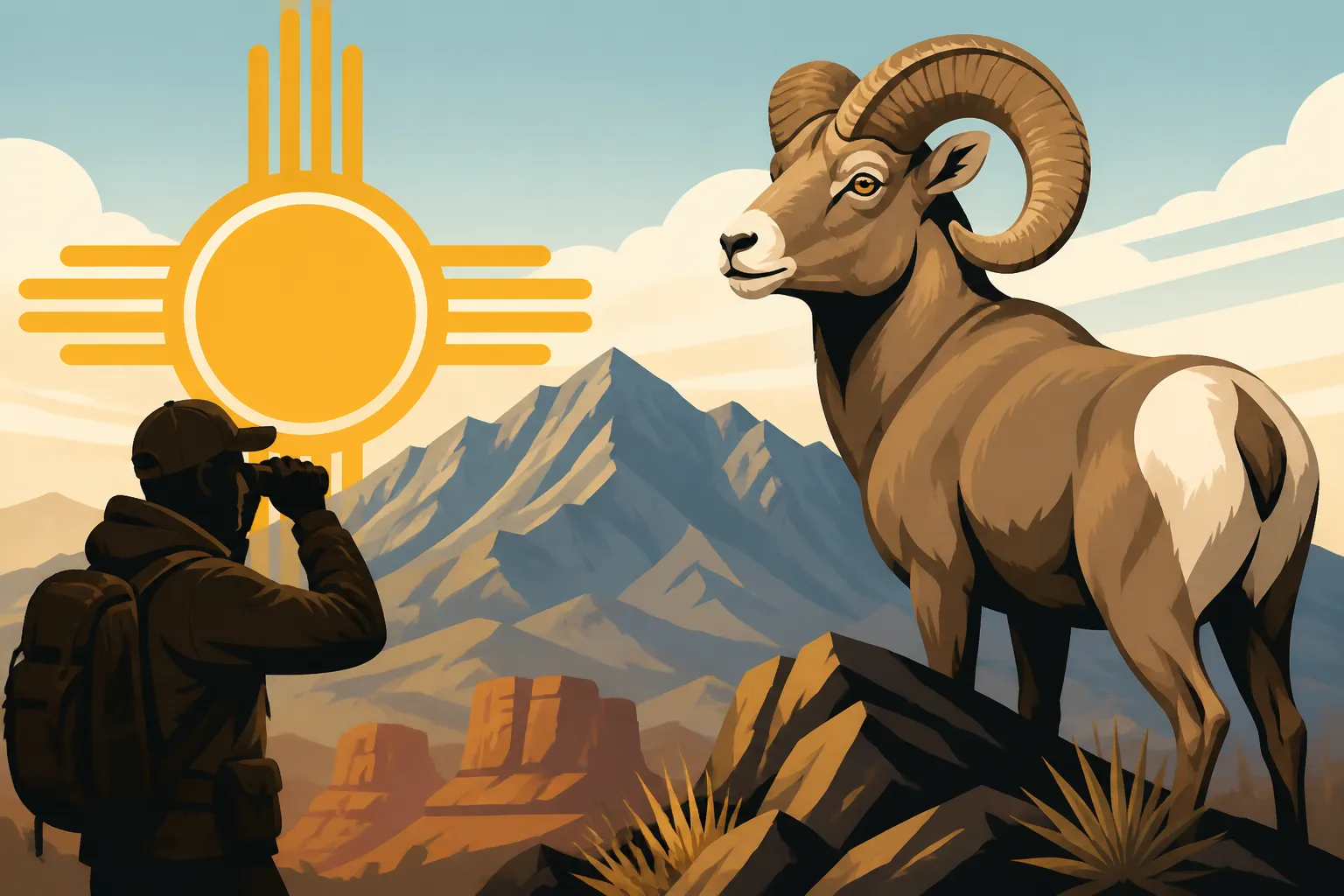
New Mexico is unique in that it’s home to both subspecies of bighorn sheep: Rocky Mountain Bighorn and Desert Bighorn. While both are majestic, they have distinct characteristics and prefer different habitats. Rocky Mountain Bighorn (Ovis canadensis canadensis) are typically larger-bodied with denser coats, often appearing a dark brown to grayish-brown, perfectly suited for the colder, higher elevations. Their horns are massive, tightly curled, and impressive, often forming a full curl or more in mature rams.
Desert Bighorn (Ovis canadensis mexicana), on the other hand, are generally smaller, paler in color to blend with arid landscapes, and have less dense coats adapted for warmer climates. Their horns tend to be more flared and less tightly curled than their northern cousins. While both face incredible challenges, their habitat choices are the most defining difference. You’ll find Desert Bighorn in the rugged, dry mountains of southern New Mexico, while the Rocky Mountain variety sticks to the state's colder, high-elevation northern ranges.
Historical Context and Reintroduction Efforts
The presence of Rocky Mountain Bighorn in New Mexico today is largely thanks to extensive reintroduction and recovery programs. Historically, bighorn populations across the West suffered dramatically due to unregulated hunting, habitat loss, and, most devastatingly, diseases contracted from domestic sheep. By the early 20th century, bighorn were virtually extirpated from much of their historical range in New Mexico.
The journey to bring them back has been a long and arduous one, starting with trap-and-transfer operations in the mid-20th century. These efforts involved carefully capturing bighorn from healthy populations in states like Colorado and releasing them into suitable, unoccupied habitats in New Mexico. The New Mexico Department of Game and Fish, along with various conservation groups, has been instrumental in this ongoing work. These programs are why we even have the opportunity to pursue these animals today, demonstrating a commitment to wildlife that benefits all. You can read more about the broader efforts in our article on New Mexico Bighorn Recovery.
Their Unique High-Altitude Habitat
Rocky Mountain Bighorn Sheep thrive in extremely rugged, high-elevation terrain, typically above 8,000 feet and often much higher. Their habitat in northern New Mexico is characterized by steep, rocky cliffs, alpine meadows, and broken timberline areas. These environments provide crucial elements: excellent visibility to spot predators, escape terrain where their agility gives them an advantage, and diverse forage including grasses, forbs, and shrubs.
Think of the Sangre de Cristo Mountains, with their jagged peaks and vast, open bowls interspersed with dense stands of spruce and fir. This is prime bighorn country. They are truly masters of vertical movement, navigating seemingly impossible ledges with ease. For a hunter, this translates to incredibly demanding physical exertion. The air is thin, the climbs are brutal, and the footing is treacherous. Understanding this unique habitat is the first step in appreciating the monumental challenge and privilege of a bighorn hunt. It's a world away from hunting deer in the low country, and requires specialized skills and preparation, similar to what you might encounter when Hunting New Mexico From 4,000 Feet to 10,000.
Key Northern New Mexico Units for Bighorn
When you look at the map of New Mexico's bighorn units, the northern regions stand out as the primary domain for Rocky Mountain Bighorn. These units are often remote, vast, and demand serious commitment to scout and hunt.
Sangre de Cristo Range Opportunities
The Sangre de Cristo Mountains, part of the southern Rocky Mountains, are the backbone of Rocky Mountain Bighorn habitat in New Mexico. Units like 45, 46, and 48 are the most prominent, encompassing some of the state's highest peaks, including Wheeler Peak (13,161 ft) and Truchas Peak (13,102 ft). This is classic bighorn country: sweeping alpine tundras, steep rockslides, and deep, timbered canyons.
Access can be challenging, often requiring long hikes from trailheads or even multi-day pack trips into the wilderness areas. The sheer verticality and unpredictable weather, even in early fall, mean that preparedness is paramount. These units hold scattered but resilient herds that have slowly but surely expanded their range. The opportunity to hunt here is truly a once-in-a-lifetime experience, offering breathtaking scenery and a hunt that will test your limits.
Pecos Wilderness and Adjacent Areas
Within the Sangre de Cristo Mountains lies the Pecos Wilderness, a vast expanse of protected federal land that provides critical habitat for Rocky Mountain Bighorn. This wilderness area, stretching across units like 45 and 48, is characterized by its dramatic peaks, alpine lakes, and dense forests. Bighorn often utilize the high, exposed ridges and bowls within and adjacent to the wilderness boundary.
Hunting here means embracing a true backcountry experience. Motorized vehicles are prohibited, so access is strictly on foot or horseback. This self-imposed restriction means lower hunting pressure in the deepest reaches, but it also necessitates an even higher level of physical fitness and self-sufficiency. Hunters need to be proficient in navigation, able to Reading Terrain That Hides an Approach at 10,000 Feet, and prepared for anything the mountain throws at them. The rewards, however, are unparalleled—the chance to pursue bighorn in a pristine, untouched environment.
Other Potential Northern Bighorn Habitat
While the Sangre de Cristos and the Pecos Wilderness are the strongholds, other northern ranges occasionally host bighorn populations or are being considered for future reintroductions. For example, parts of the Latir Wilderness and even some remote sections of the Carson National Forest in units like 52 and 53 might offer extremely limited or future opportunities, depending on herd expansion and management goals.
It's crucial for any aspiring bighorn hunter to stay completely up-to-date with the New Mexico Department of Game and Fish (NMDGF) regulations and herd management plans. These populations are dynamic, and areas might open or close to hunting based on biological data. Relying on current data is paramount, and resources like GoHunt often compile the latest information to help hunters make informed decisions about potential hunt units. The goal of NMDGF is long-term sustainability, and every hunting opportunity is carefully balanced with the health of these precious herds.
The Draw: Applying for a New Mexico Bighorn Tag
Let's not sugarcoat it: drawing a New Mexico bighorn tag is incredibly difficult. It's often referred to as the "lottery tag" for a reason. But for those who commit to applying year after year, the dream is alive.
Understanding the Extremely Low Odds
New Mexico does not operate on a preference point or bonus point system for its draws. Instead, every applicant has an equal chance each year, regardless of how many times they've applied in the past. While this means a first-time applicant has the same mathematical chance as someone who's been applying for thirty years, it also means the odds remain astronomically low for species like bighorn. We're talking about single-digit percentages, often less than 1% for resident tags, and even lower for non-residents, who compete for a tiny allocation. You can check the New Mexico Bighorn Sheep Draw Odds on the NMDGF website or through services like GoHunt for historical data.
This reality can be frustrating. You might pour over maps, scout online, and dream for years, only to receive a rejection email. But that's the nature of the beast. The reward of drawing such a coveted tag is precisely because it's so rare. It ensures that pressure on these fragile herds remains minimal, supporting their long-term health. Patience, perseverance, and a healthy dose of optimism are absolutely essential for any bighorn applicant.
Application Process and Requirements
Applying for a bighorn tag in New Mexico follows the general big game draw process. The application period typically opens in mid-January and closes in mid-March. You'll need to purchase a New Mexico Game Hunting License (unless you're applying for a private-land only hunt, which isn't typically the case for bighorn) and then submit your application through the NMDGF online portal.
Key things to remember:
- Hunt Codes: Each bighorn hunt will have a specific hunt code, denoting the unit, season dates, and weapon type. It's critical to understand Reading a New Mexico Hunt Code Before You Apply to ensure you're applying for the correct hunt.
- Residency: New Mexico allocates 84% of its tags to residents, 10% to guided non-residents (those applying with a registered New Mexico outfitter), and 6% to unguided non-residents. This significantly impacts your odds if you're not a resident.
- Fees: There's an application fee per species, and if successful, the full tag fee will be charged to your card. Make sure your payment information is up-to-date.
- One Hunt Per Species: You can only apply for one bighorn sheep hunt per year.
The entire process is online, and it's imperative to double-check all your entries before the deadline. Missing a small detail could cost you an opportunity.
Strategy for Maximizing Your Chances
Given the abysmal odds, "strategy" might sound like a strong word, but there are indeed ways to approach the bighorn draw to give yourself the best possible shot.
First, apply every single year. This is non-negotiable. You can't draw if you don't apply. While New Mexico doesn't have preference points, the sheer act of continually throwing your hat in the ring is the only way to get lucky. Set a reminder for The New Mexico Application Deadline Date and stick to it.
Second, consider group applications, but be aware of how they work. In New Mexico, if you apply as a group for certain species, the group's application is treated as a single entity, and if drawn, all members receive tags. For bighorn, however, group applications are generally not allowed, as tags are so limited and often restricted to one per applicant for population management reasons. Always verify this in the current year's rules and information booklet.
Third, research the units thoroughly. While draw odds are low across the board, sometimes a less popular unit or a less desirable season (e.g., an earlier, colder hunt) might have slightly better odds. Websites like GoHunt provide detailed draw statistics by unit and hunt choice, which can be invaluable when you are Checking New Mexico Draw Odds Before You Apply. Look at not just the success rate of hunters who drew, but the applicant-to-tag ratio for each specific hunt code. Understanding these numbers, even if they're all very low, helps you make the most informed choice. Sometimes, the "best" strategy is simply picking the unit you genuinely want to hunt, knowing that luck is the primary factor.
Hunting Strategies for Northern Bighorn
Congratulations, you drew a tag! Now the real work begins. Hunting Rocky Mountain Bighorn in northern New Mexico is an endeavor that demands peak physical condition, precise hunting skills, and an intimate understanding of the high-country environment.
Glassing and Spot-and-Stalk Tactics
Bighorn sheep spend their lives on high, open slopes, which makes glassing your primary and most effective hunting strategy. You simply cannot effectively still-hunt or track these animals in their rugged, expansive habitat. Find a high vantage point with a wide view of potential bighorn terrain – think steep, south-facing slopes, saddles, and benches just below the highest peaks.
You’ll need top-tier optics. A good pair of 10x or 12x binoculars on a tripod is essential for scanning the vast landscapes, allowing you to pick apart every rock, snowfield, and clump of timber. A high-quality spotting scope, 60x or even 80x, will be your best friend for evaluating rams from a distance. The tripod is not optional; even the slightest hand shake will prevent you from seeing detail at extreme ranges. Our guide on Tripod Setup for Glassing From a Ridge can offer some excellent tips. Spend hours, literally hours, behind your glass, meticulously searching every nook and cranny. When you spot a ram, the next challenge is the spot-and-stalk. This involves a careful, calculated approach, often covering significant distances over extremely difficult terrain, trying to use the topography to your advantage to stay out of sight, similar to how one might approach How Far to Stalk a Bedded Mule Deer but on a much grander, steeper scale.
Physical Demands of High-Country Hunting
There is no sugarcoating it: hunting bighorn sheep is perhaps the most physically demanding big game hunt in North America. You will be hiking at altitudes ranging from 9,000 to over 12,000 feet, often climbing thousands of vertical feet in a single day, carrying a heavy pack. The air is thin, and every step is a challenge. If you are not in excellent cardiovascular condition, you will struggle.
Mental toughness is equally important. You will encounter brutal weather, from freezing winds and snow to intense sun and sudden thunderstorms. You might hike all day and only see ewes and lambs, or nothing at all. Expect to be exhausted, sore, and tested in ways you haven't been before. Start your physical preparation months in advance, focusing on strength training, endurance, and especially hiking with weight on steep inclines. Our article on Preparing Physically for a High Elevation Hunt offers a solid framework to get you ready for this kind of rigorous experience. Don't underestimate the mountains; they don't forgive lack of preparation.
Essential Gear for a Bighorn Hunt
Given the extreme environment, your gear choices are critical. Every item in your pack needs to be lightweight, durable, and reliable.
- Optics: As mentioned, high-power binoculars (10x-12x) and a spotting scope (60x-80x) with a sturdy tripod are non-negotiable. Quality here is an investment that pays dividends.
- Clothing: Layering is key for the dramatic temperature swings you'll experience from dawn to dusk and with changes in elevation. Think merino wool base layers, a good mid-layer, a waterproof/windproof shell, and an insulated puffy jacket. Be sure to check out our advice on Layering for Gila Temperature Swings, which applies equally to the northern mountains.
- Footwear: Stiff, ankle-supporting mountaineering boots are a must. You need protection from sharp rocks and superior traction on steep, loose scree. Break them in well before your hunt!
- Pack: A comfortable, adjustable pack capable of carrying at least 4,000-5,000 cubic inches is needed for day hunting, and significantly larger if you plan on multi-day spike camps or packing out meat.
- Navigation: GPS device or a robust hunting app like OnX Hunt, paired with paper maps and a compass, are vital. Cell service will be nonexistent in many areas.
- Weapon: A flat-shooting, accurate rifle chambered in a cartridge capable of ethical kills at longer ranges (e.g., .270 Win, .30-06, 7mm Rem Mag, .300 Win Mag) is common. Practice shooting from various field positions, as you won't always have a bench rest.
- Survival Gear: A first-aid kit, emergency shelter, fire starter, water filter, and sufficient food are non-negotiable. You’ll be in remote, unforgiving country where self-reliance is critical.
A bighorn hunt is not the place to skimp on gear. Your life, and the success of your hunt, could depend on the quality and functionality of what you carry.
Conservation Efforts and Herd Management
Hunting bighorn sheep in New Mexico is intrinsically linked to robust conservation efforts. These animals wouldn't be here without proactive management, and hunters play a vital role in funding and supporting these initiatives.
Disease Management and Predator Control
One of the greatest threats to bighorn populations, especially Rocky Mountain Bighorn, is disease, particularly pneumonia complex often carried by domestic sheep. Even brief contact can decimate a bighorn herd. The NMDGF actively monitors bighorn health and works with landowners to manage and separate domestic livestock from bighorn ranges. This often involves testing, vaccination programs, and, in severe cases, depopulation of affected bighorn herds to prevent wider spread.
Predation, primarily from mountain lions, also impacts bighorn populations. While a natural part of the ecosystem, concentrated predation can hinder herd growth, particularly in smaller, recovering herds. NMDGF may implement targeted mountain lion harvest strategies in specific bighorn units to help bolster sheep numbers, always based on scientific data and population models. These are often controversial but necessary tools in the complex balance of wildlife management.
Habitat Improvement and Water Projects
While the ruggedness of bighorn habitat provides natural protection, habitat quality can still be improved and enhanced. This often involves partnerships between NMDGF, the Forest Service, Bureau of Land Management, and conservation organizations like the Wild Sheep Foundation. Projects might include prescribed burns to improve forage quality, removal of encroaching conifers that reduce open habitat, or development of guzzlers and other water sources in arid areas that might otherwise limit bighorn expansion.
These habitat projects are crucial for supporting larger, healthier herds, giving them more reliable food and water sources, and potentially expanding their range into new suitable areas. Hunters often directly contribute to these efforts through license fees and excise taxes on hunting equipment, demonstrating how hunting directly funds conservation in the field. Our efforts in creating and maintaining Water Development Projects Built for Wildlife are critical for many species, including bighorn.
The Role of Hunters in Conservation Funding
It's impossible to talk about bighorn conservation without acknowledging the immense financial contributions of hunters. Through the "American System of Conservation Funding," license sales, tag fees, and excise taxes on firearms, ammunition, and archery equipment (Pittman-Robertson Act) directly fund state wildlife agencies. For a bighorn sheep tag, which can cost non-residents over $3,000 and residents a substantial amount, a significant portion of that money goes directly back into bighorn research, management, reintroductions, and habitat work.
This financial commitment from hunters is the backbone of wildlife conservation, especially for species like bighorn that require intensive, long-term management. Every applicant, successful or not, contributes to the health and future of these incredible animals. It's a powerful and often overlooked aspect of why hunting remains so vital to wildlife populations across the country, ensuring that future generations will also have the opportunity to marvel at Rocky Mountain Bighorn in their natural, wild element.
Disclaimer
Please note that hunting regulations, season dates, and fees are subject to change. Always consult the official New Mexico Department of Game and Fish website and the current year's hunting proclamation before planning any hunt. This guide is for informational purposes only and does not supersede state regulations.