The Nonresident Share of New Mexico Tags
For many nonresident hunters, the dream of chasing big game in New Mexico’s rugged mountains and vast deserts is a powerful draw. Yet, the reality of securing a coveted tag can feel like an uphill battle, often leaving hopeful applicants scratching their heads about their slim chances. This guide aims to demystify the New Mexico tag allocation system, specifically shedding light on the nonresident share and outlining actionable strategies to improve your odds of drawing a tag in the Land of Enchantment.
Understanding New Mexico's Tag Allocation System
New Mexico has a unique and, for many, somewhat confusing system for allocating its highly sought-after big game tags. Unlike some other Western states that might offer preference or bonus points, New Mexico operates on a pure lottery system, meaning every applicant, regardless of how many years they’ve applied, has the same mathematical chance in the draw each year. This system is governed by a specific legislative mandate that divides the tags into three distinct pools, a structure that significantly impacts nonresident hunters.
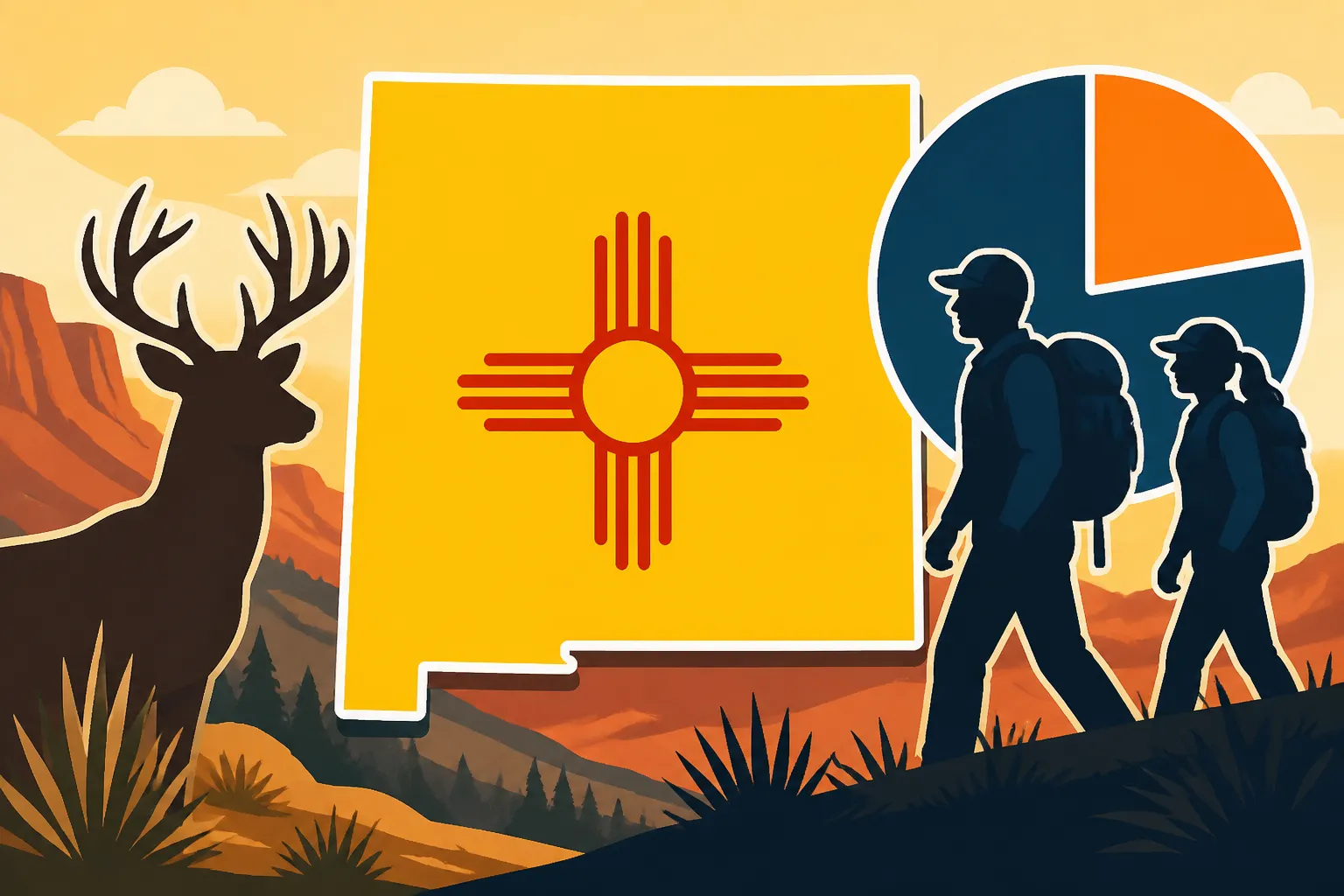
The core of this system is often referred to as the 84/10/6 split, and it's absolutely crucial for any nonresident to grasp this from the outset. Out of every single big game tag allocated in the state draw, whether it's for elk, mule deer, pronghorn, or oryx, these percentages dictate where those tags land:
- 84% goes to New Mexico Residents: This is the largest pool, naturally favoring the state's own hunters.
- 10% goes to Outfitter Clients: This pool is reserved for applicants who contract with a New Mexico-registered outfitter for their hunt.
- 6% goes to Nonresident Hunters (who do not use an outfitter): This is the pool we'll be focusing on, and it's undoubtedly the most challenging to draw from.
For a nonresident, this means that if you choose to apply without hiring a guide or outfitter, you are automatically relegated to a very small slice of the pie. The frustration is palpable for many who apply year after year, pouring over statistics on sites like GoHunt and seeing the incredibly low single-digit draw odds for popular units and species. It can feel like throwing money into a black hole, but understanding why the odds are what they are is the first step in building a smarter application strategy. We’ve covered this in more detail in our article on New Mexico Splits Every Hunt 84, 10 and 6 Percent, which offers a broader overview.
Diving Deeper into the 6% Nonresident Pool
The 6% allocation for unguided nonresidents isn't just a number; it's a profound factor that shapes the entire nonresident hunting experience in New Mexico. When you consider that a state might issue, say, 1,000 elk tags for a specific unit and season, only 60 of those tags will be available to the entire pool of nonresident applicants who aren't using an outfitter. For extremely popular units or species, this can mean hundreds, if not thousands, of applicants vying for just a handful of tags.
This small percentage makes drawing a tag in New Mexico one of the toughest challenges for many nonresidents across the West. States like Arizona, Colorado, or Wyoming might have a larger percentage of tags set aside for nonresidents, or they might offer preference points that, over time, at least guarantee a tag eventually. New Mexico's pure lottery, combined with the tiny 6% pool, means that a first-time applicant has the same chance as someone who's been applying for two decades. This can be both disheartening and, for some, oddly liberating – you're never "behind" the curve. However, the reality of draw odds means that many years can pass without success.
The impact is most acutely felt for high-demand species like elk, especially for archery or early rifle hunts in trophy units like the Gila or Vermejo Park (though Vermejo is mostly private, EPLUS-driven). For these hunts, it's not uncommon to see draw odds for the 6% pool drop to less than 1%. Mule deer tags, particularly for mature bucks in specific units, also follow a similar pattern. More niche hunts like ibex or desert bighorn sheep are even more exclusive, with a mere fraction of tags available.
While the 6% allocation is static, the number of applicants changes each year, further fluctuating the odds. It’s critical to scrutinize past draw statistics, which are often provided by the New Mexico Department of Game and Fish (NMDGF) and interpreted by resources like GoHunt. This level of detail helps you grasp the true competitiveness of each hunt code. You can learn more about how the odds work in general through our guide How New Mexico Draw Odds Work Without Points.
Strategies for Nonresidents to Improve Their Chances
Navigating the challenging waters of the 6% nonresident pool requires a thoughtful and strategic approach. You can't just throw your name in the hat for the most popular hunt codes and expect to draw quickly. It's about playing the percentages wisely and understanding the nuances of the New Mexico draw.
Smart Unit and Hunt Code Selection
The most direct way to increase your statistical chances is to apply for hunt codes that historically have slightly better odds, even if those odds are still low. This often means looking beyond the "trophy unit" hype and considering hunts in units that might be physically more demanding, have lower elk densities, or are less accessible.
- Research Less Popular Units: Dive deep into the NMDGF draw reports. Look for units or hunt dates that are less applied-for by nonresidents. These might be later season hunts, cow elk hunts, or hunts in units with a mix of public and private land where public access is challenging. Sites like GoHunt provide excellent tools for analyzing these trends and filtering by success rates and tag numbers.
- Consider "Opportunity" Hunts: Sometimes, simply getting a New Mexico big game tag is the goal, regardless of the species' trophy potential. For example, some units might offer decent draw odds for mule deer or pronghorn compared to premier elk tags. Cow elk tags also present a significantly better chance than bull tags, especially if you're focused on filling the freezer and experiencing a New Mexico hunt.
- Analyze Draw Statistics: Don't just glance at the success rates. Look at the number of applicants versus the number of tags issued within the 6% nonresident pool for your chosen hunt codes. A 3% draw chance for 10 tags is still 10 tags, but a 0.5% chance for 1 tag is exponentially harder. Understanding Where to Check New Mexico Draw Odds is paramount for this research.
Leveraging the Outfitter Pool
One of the most significant strategies for nonresidents to drastically improve their draw odds is to apply through the 10% outfitter pool. This is a dedicated allocation that requires you to contract with a New Mexico-registered outfitter for your hunt. While it comes with the added cost of a guide, it provides a considerably larger pool of tags to draw from, often leading to significantly better odds than the 6% pool.
- The 10% Advantage: For many species and units, the odds in the outfitter pool are several times higher than in the unguided nonresident pool. For instance, if the unguided odds for a bull elk tag are 1%, they might be 5-7% in the outfitter pool. This difference can be a game-changer for those serious about drawing a New Mexico tag within a reasonable timeframe.
- Contractual Obligations: Applying through an outfitter means signing a contract and having the outfitter accompany you in the field for at least two days of your hunt. It's a commitment, but for many, it's a worthwhile investment to access better opportunities. Our article on The New Mexico Outfitter Draw and Its Two-Day Rule elaborates on these requirements.
- Choosing an Outfitter: Do your homework. Research reputable outfitters who operate in the units you're interested in. Ask for references, check their success rates, and ensure their philosophy aligns with your hunting style. Many outfitters specialize in certain species or types of terrain, so find one that fits your goals.
Application Tactics
Even within the draw, there are tactical considerations for your application.
- Multiple Choices: New Mexico allows you to list up to five choices on your application. Use all of them strategically. Your first choice should be your dream hunt, even if the odds are low. Your subsequent choices should progressively offer better, though still challenging, odds. This layered approach maximizes your chances of drawing something. For more on this, see Choice Order Strategy in the New Mexico Draw.
- Group Applications: While not directly affecting the 6% allocation, if you're hunting with a group, applying together can be a consideration. If one person draws, everyone draws. However, if any member of the group would not have drawn individually, the entire group application is rejected. This can be a double-edged sword.
- Application Timing: All New Mexico applications close on March 18th at 5 p.m. MT. Don't wait until the last minute! Technical glitches can happen, and you don't want to miss your chance.
Here's a comparison of the three tag allocation pools for big game in New Mexico:
| Tag Pool | Percentage Allocation | Draw Odds (Relative) | Cost Implications | Requirements |
|---|---|---|---|---|
| New Mexico Resident | 84% | Highest | Standard license & tag fees | Must be a valid New Mexico resident |
| Outfitter Client | 10% | Moderate to High | Standard license & tag fees + Outfitter fees (often substantial) | Must contract with a New Mexico-registered outfitter; outfitter must accompany for at least 2 days |
| Nonresident (Unguided) | 6% | Lowest | Standard license & tag fees | No outfitter required, but restricted to this small pool |
Beyond the Draw: Alternative Tag Acquisition for Nonresidents
Even with strategic application, drawing a tag in New Mexico's 6% pool can be a long shot. Thankfully, there are other avenues for nonresidents to hunt big game in the state, offering different opportunities and often bypassing the general draw entirely.
EPLUS Tags
New Mexico's EPLUS system is a significant pathway for nonresidents to acquire elk tags, particularly for premium units. EPLUS stands for "Elk Private Land Use System." This program allocates a certain number of elk authorizations directly to private landowners based on the elk habitat and population on their property. Landowners can then sell these authorizations to hunters, including nonresidents.
- How it Works: Landowners receive EPLUS authorizations from the NMDGF. They can then sell these to hunters who wish to hunt elk on their property or often, in surrounding public land within the same Game Management Unit (GMU). The price of an EPLUS authorization varies widely depending on the unit, the landowner, the hunt dates, and whether it's for a bull or cow. Expect to pay significantly more than a standard draw tag, but it's often your most reliable way to hunt a specific unit without waiting years for the draw. More information can be found in How EPLUS Puts New Mexico Elk Tags in Landowner Hands.
- Benefits: Bypasses the general draw, offers guaranteed access to a tag, and often comes with access to private land or knowledge of local elk movements.
- Considerations: Cost is the primary factor. These tags can range from a few thousand dollars for a cow tag to well over $10,000 for a trophy bull tag in a desirable unit. You'll also need to verify the exact hunting access — is it private-land-only, or does it grant access to adjacent public lands?
Leftover Licenses
After the main draw is complete and all successful applicants have paid for their tags, there are sometimes a limited number of "leftover" licenses available. These typically occur for hunts that were undersubscribed, meaning fewer people applied than there were tags available.
- Availability: Leftover tags are usually for less popular hunts, often cow tags, late-season hunts, or hunts in units that are less productive or more challenging to access. However, occasionally, a desirable tag might slip through due to a payment failure or an applicant dropping out.
- Acquisition: Leftover licenses are sold on a first-come, first-served basis online through the NMDGF website, usually in late June or early July. You have to be quick, as the popular ones go extremely fast. Keep an eye on the NMDGF website and follow hunting news outlets that track these sales. Knowing When Undersubscribed New Mexico Hunts Go on Sale can give you an edge.
- Nonresident Opportunity: While the overall number of leftover tags for nonresidents is typically very small, it does represent another opportunity if you're flexible with your species, unit, and hunt dates.
Tribal Land Hunts
New Mexico is home to several Native American pueblos and tribes, many of whom manage their own wildlife and offer hunting opportunities on their lands. These hunts are entirely separate from the state's draw system and often represent some of the highest quality hunts in the state for trophy animals.
- Tribal Regulations: Each tribe sets its own seasons, regulations, and tag fees. You must purchase a tribal license and comply with tribal hunting laws, which may differ from state regulations.
- Premium Quality: Tribal lands, such as the Mescalero Apache or Jicarilla Apache reservations, are renowned for their incredible trophy elk and mule deer populations. These hunts are often fully guided and come with a premium price tag, reflecting the quality of the experience and the animals.
- Booking: You typically book these hunts directly with the tribal game and fish department or through authorized outfitters. This is not a draw system, but rather a direct purchase. If you're looking for a truly high-end, guaranteed hunt for a trophy animal, tribal lands are a strong consideration. Learn more about how these operate in Hunting New Mexico Tribal Land Through an Operator.
Essential Nonresident Considerations for New Mexico Hunting
Successfully drawing a tag or acquiring one through alternative means is just the beginning. Nonresidents planning a New Mexico hunt need to be aware of several other critical factors to ensure a legal, safe, and enjoyable experience.
Licensing and Fees
Beyond the actual hunt tag, there are several licenses and stamps that nonresidents must purchase to legally hunt big game in New Mexico. Don't overlook these; a missing required license can turn a dream hunt into a costly legal nightmare.
- Game Hunting License: This is your base license, required before you can apply for or purchase any big game tags. The Nonresident New Mexico License Pricing for this license is significantly higher than for residents, so factor this into your overall budget.
- Application Fees: Each species you apply for in the draw incurs a non-refundable application fee. While not astronomical, these can add up if you apply for multiple species.
- Habitat Management & Access Validation (HMAV): This validation is required for anyone hunting, fishing, or trapping on most public lands in New Mexico. It’s an essential purchase for virtually any public land hunt. More details are in The New Mexico HMAV Validation Explained.
- Habitat Stamp: If you plan to hunt on federal lands (National Forests, BLM lands), you will also need to purchase a New Mexico Habitat Stamp. This is separate from the HMAV and is another non-negotiable item for most nonresident public land hunters.
Hunter Education Requirements
New Mexico has specific hunter education requirements that apply to nonresidents as well as residents. It’s crucial to understand these rules well in advance of your hunt.
- Who Needs It: Generally, anyone born after January 1, 1970, must complete a state-approved hunter education course to hunt big game in New Mexico. If you've completed a hunter education course in another state, New Mexico typically recognizes it through reciprocity.
- Proof of Completion: You must carry proof of your hunter education certification with you while hunting. This could be your hunter education card or a valid hunting license from a state that requires hunter education for licensure.
- Mentored Youth Program: New Mexico offers a Mentored Youth Hunter program that allows young hunters (under specific age limits) to hunt under the direct supervision of a licensed adult mentor without first completing hunter education. This can be a fantastic way to introduce youth to hunting. For those who aren't familiar, refer to The New Mexico Hunter Education Requirement for complete details.
Physical Preparation and Logistics
New Mexico's diverse terrain, from high-altitude mountains to vast desert landscapes, demands a significant level of physical preparedness, especially for an unguided hunt.
- Altitude: If you're heading to the high country of the Gila, Carson, or Santa Fe National Forests, you could be hunting at elevations ranging from 8,000 to over 10,000 feet. This can be a shock to flatland dwellers. Acclimatization, hydration, and cardiovascular fitness are paramount. Read our guidance on Altitude Preparation for a Gila Elk Hunt.
- Terrain: Expect steep climbs, rocky footing, dense timber, and vast, open areas. Good quality, broken-in hiking boots are non-negotiable. Plan for long days of walking, often with a heavy pack.
- Water: Especially in the desert units, water sources can be few and far between. Always carry more water than you think you'll need, and have a reliable water filtration or purification system.
- Weather: New Mexico weather can be unpredictable, with drastic temperature swings from day to night, especially in the mountains. Layered clothing is essential to adapt to changing conditions.
Planning a nonresident hunt in New Mexico is a significant undertaking, but with thorough research, strategic application, and proper preparation, the dream of hunting in this beautiful state can absolutely become a reality.
Disclaimer
Please note: Hunting regulations and fees in New Mexico are subject to change. It is the hunter's responsibility to consult the official New Mexico Department of Game and Fish (NMDGF) regulations booklet and website for the most current and accurate information before planning any hunt or submitting an application.