New Mexico Splits Every Hunt 84, 10 and 6 Percent
Figuring out New Mexico’s hunting draw system can feel like trying to solve a Rubik's Cube blindfolded, especially when you start hearing about different allocation percentages. It’s not just a matter of picking a unit and applying; there’s a distinct structure to how tags are divvied up, and understanding it is absolutely critical if you want to increase your chances of drawing a coveted tag. This guide is going to peel back the layers of New Mexico’s tag allocation, explaining exactly how the 84, 10, and 6 percent splits work and what it means for every hunter, whether you're a lifelong resident, thinking about a guided hunt, or dreaming of a nonresident adventure.
Deciphering New Mexico's Unique Allocation System
New Mexico has a draw system that, at first glance, can seem a bit convoluted, especially if you're coming from a state with a simpler, or even a preference point-based, system. Unlike many western states that prioritize loyal applicants with years of points, New Mexico operates on a pure lottery system. Every applicant, regardless of how many times they've applied, theoretically has the same chance to draw within their respective pool each year. This means a first-time applicant could draw a premium tag, while someone who's applied for a decade might still be waiting. It's a refreshing change for some, and a frustrating gamble for others.
The Core Philosophy Behind the Splits
The allocation percentages — 84% for residents, 10% for guided hunters (via outfitters), and 6% for nonresidents — weren't just pulled out of a hat. This system is rooted in a philosophy that seeks to balance resident opportunity with the economic benefits of out-of-state hunters and the guided hunting industry. For many years, there was a push to ensure that New Mexico residents, who contribute to the state's conservation efforts and economy year-round, had a clear advantage in securing tags for their public lands. It's about providing robust opportunities for those who call New Mexico home, while still welcoming visitors and supporting the local businesses that rely on hunting tourism.
This tiered approach also reflects the diverse interests and investments within the hunting community. Residents often value the independence of a DIY hunt on public land, while nonresidents might be looking for a more curated experience, potentially through an outfitter, to maximize their limited time in an unfamiliar state. The system tries to accommodate these different needs, though not without its controversies and debates among various hunter groups. Ultimately, it’s an attempt to manage wildlife populations responsibly while also considering the social and economic impacts of hunting within the state.
A Quick Overview of the Three Pools
Let's break down these numbers simply. Imagine there are 100 elk tags available for a particular unit and season.
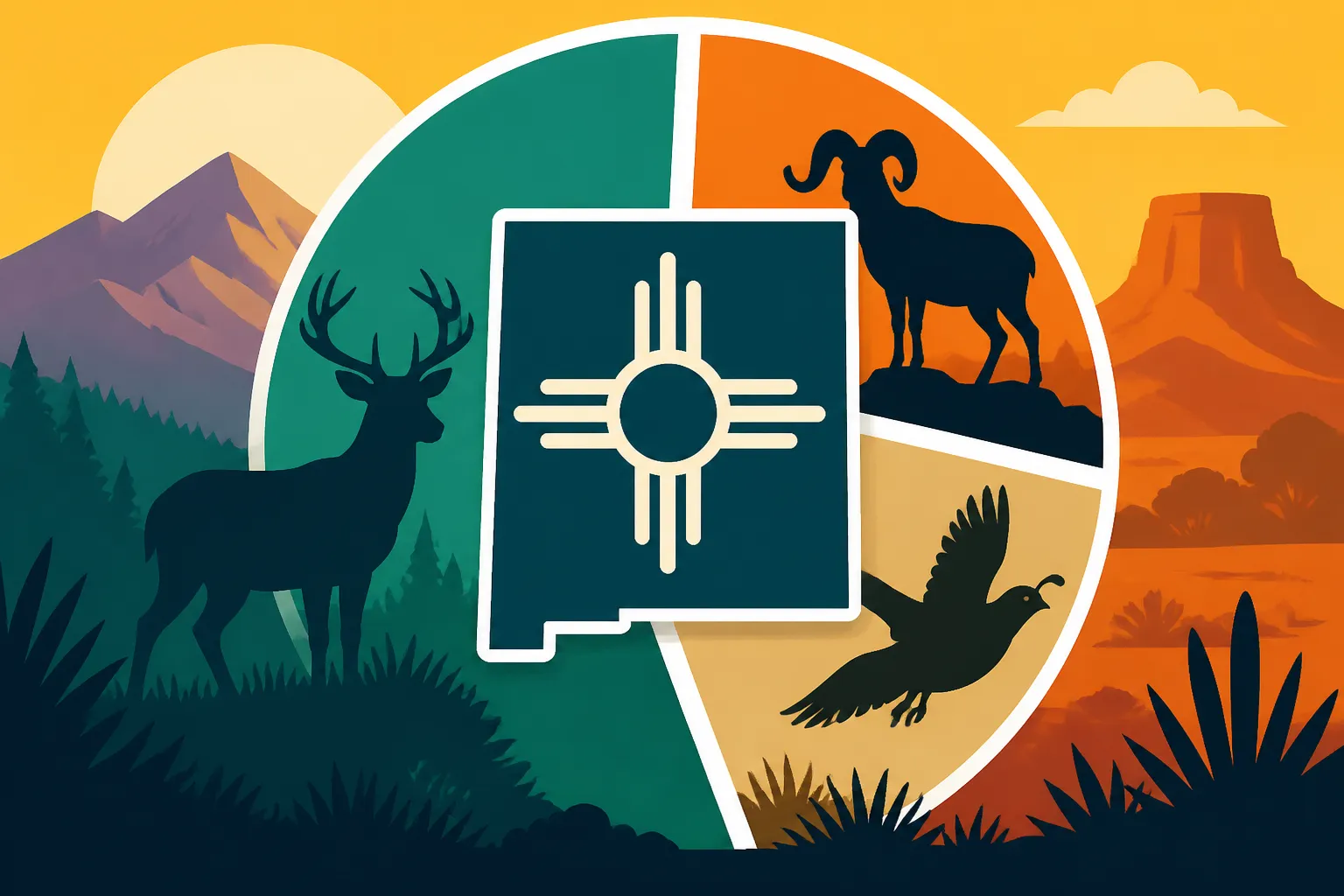
- 84 tags (84%) are set aside exclusively for New Mexico residents who apply directly through the general draw. This is the largest pool, designed to give residents the best chance.
- 10 tags (10%) are allocated to applicants who apply through a New Mexico-registered outfitter. This pool is open to both residents and nonresidents, but you must have a signed contract with an eligible outfitter to apply in it.
- 6 tags (6%) are reserved for nonresidents who apply directly, without an outfitter. This is the smallest and most competitive pool, making those coveted tags incredibly tough to draw.
This structure creates distinct pathways to a tag, each with its own set of rules, costs, and, importantly, draw odds. Understanding which pool you fall into, or which one you could fall into, is the very first step in crafting your application strategy for any species in New Mexico, from elk and mule deer to oryx and pronghorn. Ignoring these allocations is like trying to navigate the Gila Wilderness without a map – you're likely to get lost and miss your target.
The Lion's Share: New Mexico's Resident Pool (84%)
For those of us lucky enough to call New Mexico home, the 84% resident allocation is our biggest advantage in the draw. It’s specifically designed to ensure that the vast majority of tags go to the people who live, work, and recreate here all year long. This doesn't mean it's a guaranteed tag by any stretch, especially for high-demand species like elk in prime units, but it certainly offers a significantly better shot compared to the other pools.
Who Qualifies as a Resident Hunter
Qualifying as a New Mexico resident for hunting purposes isn't just about having a local address. The New Mexico Department of Game and Fish (NMDGF) has specific criteria to prevent people from trying to "game" the system. Generally, you need to have resided continuously in the state for at least six consecutive months immediately prior to purchasing a license or applying for a draw. This means if you move here in January, you might not be eligible to apply as a resident for the draw that closes in March.
The NMDGF looks for proof of residency, which can include things like a valid New Mexico driver's license, voter registration, vehicle registration, and state income tax filings. Simply owning property here or having a P.O. box isn't enough. They want to see a clear intent to reside permanently in the state. If you’re a student attending a New Mexico university or active military stationed here, there are often specific provisions that allow you to qualify as a resident, even if your permanent home state is elsewhere. It's always best to check the current NMDGF regulations booklet, as these rules can have subtle nuances or be updated.
Maximizing Resident Draw Odds
Even with the generous 84% allocation, drawing a top-tier resident tag can be challenging. The key to maximizing your odds often lies in how you structure your application, particularly your hunt choices. New Mexico allows you to list up to five choices on your application for a specific species. This is where strategic thinking comes into play. Most hunters dream of those famous units, like the Gila's Unit 16A or 16D for elk, but their popularity means astronomical draw odds, even for residents.
A smart approach involves a mix of aspirational choices and realistic, high-percentage options. Your first choice might be that dream unit, but subsequent choices should include units with historically higher success rates or those that are less publicized but still offer good hunting. Researching historical draw odds is paramount here. Tools like those provided by GoHunt offer fantastic insights into past draw statistics, helping you understand which units might offer better chances for a second or third choice draw. Additionally, consider applying as a group, as this allows you and your hunting partners to link your applications, though it doesn't necessarily improve individual odds, it ensures you either all draw or all don't. For more details on this, check out the information on Group Application Rules in New Mexico.
Opportunities and Challenges for Residents
The primary opportunity for New Mexico residents is the sheer volume of tags available. With 84% of the total tags, residents have a much broader array of hunts to choose from, often with more manageable draw odds for a wider range of units and seasons. This allows for greater flexibility in pursuing different species or exploring new areas of the state without facing the extreme competition nonresidents do. You might have a great chance at a solid deer tag or a cow elk tag in many units, even if a trophy bull tag remains elusive.
However, challenges still exist. Even within the resident pool, competition for premium bull elk or trophy mule deer tags can be fierce. Units known for producing big animals or offering easier access will always be highly sought after, driving resident draw odds down to single-digit percentages. Another challenge is the lack of a preference point system. While it means everyone starts fresh, it also means there's no accumulating advantage for loyal applicants. This can be frustrating if you've been applying for years and keep coming up empty for your top choices. For a deep dive into how to apply, reading the New Mexico Rules and Info Booklet is a must.
Navigating the New Mexico Outfitter Pool (10%)
The 10% outfitter pool is a unique aspect of New Mexico's draw system, specifically designed to support the state's licensed outfitters and guides. This pool provides a pathway for hunters, both residents and nonresidents, to potentially improve their draw odds for highly desired tags, but it comes with specific requirements and, of course, the added expense of a guided hunt.
The Purpose of the Outfitter Allocation
The rationale behind setting aside 10% of the tags for hunters using licensed outfitters is multi-faceted. Primarily, it's intended to boost New Mexico's tourism economy by supporting the professional guiding industry. Outfitters provide jobs, bring revenue into rural communities, and often act as stewards of the land, helping clients understand ethical hunting practices and the unique challenges of hunting in New Mexico's diverse terrain. This allocation incentivizes hunters, especially nonresidents who might struggle with the general nonresident draw, to utilize these services.
From a practical standpoint, outfitters often have extensive knowledge of the units they operate in, knowing game movements, water sources, and productive areas. They provide critical logistical support, from horses and pack strings to camp setup and game retrieval, which can be invaluable in rugged backcountry areas like the Gila. The outfitter pool, therefore, acts as a mechanism to channel some tags towards a segment of the hunting population that contributes significantly to the state's hunting infrastructure and economy.
Requirements for the Outfitter Draw
To apply in the outfitter pool, you cannot simply check a box on your application. The NMDGF has strict requirements to ensure the integrity of the system. The most crucial is that you must have a signed contract with a currently licensed New Mexico outfitter before you submit your draw application. This contract is not a casual agreement; it’s a legally binding document outlining the terms of your guided hunt. You'll need to enter your outfitter's license number on your application, and the NMDGF verifies this information.
Furthermore, New Mexico has a "two-day accompaniment rule" that is often misunderstood. For your application to be valid in the outfitter pool, the outfitter you contract with (or one of their licensed guides) must accompany you in the field for a minimum of two days of your hunt. This isn't just a brief meet-and-greet; it's about providing genuine guided services. If for some reason your outfitter cannot fulfill this requirement, your tag could be invalidated. It's critical to understand these rules when considering this option, and you can find more details in the article, The New Mexico Outfitter Draw and Its Two-Day Rule. Also, for deeper insight into the legal agreements, read up on The New Mexico Guide-Client Contract Requirement.
Does the Outfitter Pool Improve Your Odds?
This is the million-dollar question for many hunters. The short answer is: yes, typically, applying through the outfitter pool can improve your draw odds, especially for nonresidents seeking highly competitive tags. Why? Because the 10% outfitter pool often has fewer applicants per tag compared to the 6% nonresident pool, and sometimes even fewer than the 84% resident pool for specific premium hunts. For a nonresident, it's a way to bypass the extremely low odds of the 6% general nonresident draw.
However, this advantage comes with a significant financial commitment. Fully guided hunts in New Mexico, especially for species like elk, can range from $5,000 to $15,000 or more, depending on the outfitter, species, and duration of the hunt. This cost is in addition to your license and tag fees. You need to weigh the improved odds against the substantial financial investment. For some, the increased probability of drawing a tag, combined with the convenience, expertise, and logistical support of a guided hunt, makes it a worthwhile investment. For others, the cost might be prohibitive. It's not a silver bullet, but it's a viable strategy for those who prioritize securing a tag and appreciate a guided experience.
| Applicant Type | Allocation % | Average Draw Odds (e.g., Prime Elk Bull) | Requirements | Typical Cost (beyond tag) |
|---|---|---|---|---|
| Resident | 84% | Moderate to Difficult (e.g., 5-20%) | NMDGF Residency Proof | DIY (Gear, Travel, Food) |
| Outfitter (All) | 10% | Better (e.g., 10-30%) | Signed Outfitter Contract, Outfitter #, 2-day Guide | $5,000 – $15,000+ (Guide) |
| Nonresident (Self) | 6% | Very Difficult (e.g., <1-5%) | Nonresident Status | DIY (Gear, Travel, Food) |
Note: Draw odds are illustrative and vary widely by unit, species, and hunt choice.
The Nonresident Hunter's Path (6%)
For nonresident hunters, the reality of New Mexico's draw system is often a tough pill to swallow. The 6% allocation means that for every 100 tags issued for a specific hunt, only six of them are available to hunters from outside the state who apply directly. This creates some of the most challenging draw odds in the West for prime hunting opportunities.
Understanding the Limited Nonresident Tags
The reason for such a small allocation to nonresidents applying directly is straightforward: New Mexico prioritizes its residents, and secondly, aims to support its in-state guiding industry through the outfitter pool. This leaves a very narrow window for those who wish to hunt independently as nonresidents. What this translates to on the ground is intense competition for very few tags. If you're dreaming of a trophy bull elk tag in a blue-chip unit like 16A or 17, your odds as a nonresident in the 6% pool can be exceptionally low, often less than 1%. This isn't meant to discourage, but to ground expectations in reality.
The limited number of tags also means that the overall cost of a nonresident hunt can feel higher, even if you’re doing it yourself. The cost of a nonresident game hunting license alone is a significant investment, often hundreds of dollars, just for the privilege to apply. Then, if you are lucky enough to draw, the tag fees are considerably higher than for residents. For example, a nonresident New Mexico Oryx tag can run over $1,600, as detailed in A Nonresident New Mexico Oryx Tag Runs $1,623. Similarly, general elk tags are also substantially more expensive. Always be aware of The Nonresident New Mexico License Price before committing.
Strategies for Nonresident Applicants
Given the daunting odds, nonresidents need a highly strategic approach to their New Mexico applications. Simply applying for the most popular units is usually a recipe for disappointment. Here are a few strategies that can improve your chances, or at least your peace of mind:
- Research, Research, Research: This cannot be emphasized enough. Utilize data from platforms like GoHunt that meticulously track draw odds for every unit, species, and hunt code. Look for units or hunt dates that historically have slightly higher nonresident draw odds, even if it means hunting a less-known unit or a less-desirable season (like early archery in warmer weather or late-season rifle). GoHunt's Insider service, for instance, provides detailed breakdowns that are invaluable for this kind of tactical planning.
- Consider "Lower Demand" Species: While everyone wants an elk tag, species like Barbary sheep, javelina, or even specific deer hunts might have slightly more favorable nonresident odds in certain units. These can offer a fantastic New Mexico hunting experience, even if they aren't the primary target.
- Group Applications (with Caution): While group applications don't inherently increase individual odds, they ensure that if one member draws, all members draw. This is crucial for planning a hunt with friends or family. Just be aware that if one person in the group applies for a very difficult tag, it could pull down the group's overall success.
- Embrace the Outfitter Pool: As discussed, this is the most direct way for many nonresidents to significantly boost their draw odds. If a guided hunt is within your budget, it's often the most reliable path to securing a New Mexico tag.
The Realities of Drawing as a Nonresident
The reality is that drawing a premier New Mexico tag as a nonresident in the 6% pool is incredibly difficult. For highly sought-after bull elk units, you're often looking at single-digit, or even fractional, percentage chances. This means you might apply for many years before hitting the jackpot. It requires patience, persistence, and a healthy dose of luck.
However, it's not impossible, especially if you temper your expectations and broaden your unit choices. Some units, particularly those with vast wilderness areas or challenging terrain, might have slightly less pressure. Cow elk tags or hunts for less popular species can also present more realistic opportunities. It's a system that truly tests a nonresident's dedication and willingness to adapt their dream hunt to the probabilities. For example, if you're set on a particular season, you'll need to know When New Mexico Archery Elk Season Runs for specific units and plan your application around that.
How the Three Pools Interact and Affect Your Application
Understanding the individual allocations is one thing, but truly grasping how these three pools interact during the draw process is where you gain a strategic edge. It’s not simply three separate drawings happening in isolation; the NMDGF draw system takes all applications into account to fill the available tags, following a specific methodology that honors these percentages.
The Interplay Between Allocations
Here’s how the pools typically interact: Let's say a total of 100 tags are available for Unit X, Bull Elk, Archery Season.
- Initial Allocation: The NMDGF first sets aside 84 tags for residents, 10 for outfitter-contracted hunters (resident or nonresident), and 6 for nonresidents applying directly.
- The Draw Order (Simplified): While the exact programming is complex, the draw generally proceeds by evaluating applications. When a tag is available, the system checks applications from each pool.
- Unfilled Tags: This is where it gets interesting. If, for example, there aren't enough qualified applicants in the 10% outfitter pool to fill all 10 tags, those unfilled tags from the outfitter pool roll over into the 84% resident pool. Similarly, if the 6% nonresident pool isn't fully subscribed, those tags also roll into the resident pool. This means that, in some rare instances, the resident pool could end up with more than 84% of the tags. However, the reverse doesn't happen; tags from the resident pool do not roll into the nonresident or outfitter pools. This is a critical point that further emphasizes resident opportunity.
This rollover mechanism underscores why the resident pool is ultimately the most advantageous for New Mexico residents. It acts as a safety net, collecting any tags not claimed by the other, smaller pools.
Choice Order and Unit Selection Strategy
Your choice order on your application is arguably the most important strategic decision you'll make in New Mexico's draw. Unlike some states where your second choice is only considered if your first choice isn't drawn, New Mexico's system evaluates all your choices. However, it prioritizes your first choice, then your second, and so on. If your first choice is drawn, your application stops there. If it's not, your second choice is considered, and so on.
For all applicants, whether resident, nonresident, or outfitter-client, this means:
- Aspirational First Choice: It's okay to put a highly sought-after unit as your first choice. You never know!
- Realistic Subsequent Choices: Your second, third, fourth, and fifth choices should be progressively more "realistic." This means selecting units or seasons with historically higher draw odds. Don't waste a choice on a unit that is just as difficult as your first choice.
- Understanding Hunt Codes: Every hunt in New Mexico has a unique hunt code that designates the species, unit, season dates, and weapon type. Learning New Mexico Hunt Codes and How to Read Them is non-negotiable. Missing a digit or misinterpreting a code can invalidate your application or put you in a hunt you didn't intend. For a detailed breakdown, definitely check out Reading a New Mexico Hunt Code Before You Apply. This nuanced approach to selection can make the difference between drawing a tag and spending another year on the sidelines. GoHunt's comprehensive database is particularly useful for this research, allowing you to filter by unit, species, and historical success rates.
Group Applications Across Pools
New Mexico does allow for group applications, which means you and your hunting partners can apply together for the same hunt code. The major benefit is that if one person in the group draws, everyone in that group draws. Conversely, if no one in the group draws, then no one does. This takes away the headache of one person drawing and others not, which can derail hunting plans.
However, there are limitations and considerations.
- Maximum Group Size: The NMDGF sets a maximum group size (typically four hunters for big game), which can be found in the current regulations.
- Matching Choices: Every member of the group must apply for the exact same hunt codes in the exact same order. Any discrepancy will void the group application.
- Impact on Odds: A group application's draw odds are based on the individual with the lowest drawing chance in the group. For instance, if a nonresident and a resident apply together in the outfitter pool, their odds are still influenced by the overall competition within that pool, not necessarily improved by the mix of resident/nonresident status. If a resident and a nonresident apply outside the outfitter pool, they would need to apply in the nonresident pool, as the system defaults to the lowest allocation. So, group applications are about planning certainty, not necessarily boosting individual odds, especially across different pools. For all the specifics, refer to Group Application Rules in New Mexico.
Beyond the Draw: Other Avenues for Tags
While the primary draw is how most hunters acquire tags in New Mexico, it's not the only way. For those who strike out in the lottery, or who prefer alternative methods, there are other avenues that can lead to a New Mexico hunting experience. These options often come with their own set of rules, costs, and opportunities, and it's worth exploring them.
Leftover Licenses and Undersubscribed Hunts
Sometimes, even after the main draw, certain tags go unclaimed. This can happen for various reasons: perhaps a unit was less popular than anticipated, or maybe enough applicants failed to finalize their payments. When this occurs, the NMDGF typically holds a "leftover license" sale. These leftover tags are sold on a first-come, first-served basis, often online.
The hunts available as leftovers are usually for less popular units, archery-only seasons, or cow elk tags, but sometimes a desirable buck or bull tag pops up. The key is to be ready and quick, as these tags can sell out in minutes once the sale opens. You'll need to keep a close eye on the NMDGF website for announcements regarding these sales. It’s a bit of a scramble, but for those who are flexible and persistent, it can be a great way to secure a tag without going through the main draw. You can read more about this process in New Mexico Leftover License Sales. These hunts often represent fantastic opportunities for a secondary hunt or a more spontaneous adventure.
EPLUS Authorizations and Landowner Tags
New Mexico has a unique program called EPLUS (Elk Private Land Use System) that allocates elk authorizations to landowners who have significant elk habitat on their private property. These authorizations essentially become transferable "landowner tags" that can be bought by hunters. The EPLUS system was designed to provide landowners with an incentive to manage elk habitat and allow public access on their property while giving hunters another pathway to secure an elk tag.
These EPLUS authorizations can be purchased directly from landowners or through outfitters who have agreements with landowners. The price of an EPLUS tag varies widely depending on the unit, the quality of the hunting, and market demand, ranging from a few thousand dollars to tens of thousands for prime bull tags. While they bypass the draw, you still need to purchase the appropriate New Mexico hunting license. It's a significant financial investment, but for hunters who want guaranteed access and a higher probability of success, especially for elk, EPLUS is a powerful tool. Learn all about How EPLUS Puts New Mexico Elk Tags in Landowner Hands to understand this system better. It’s often the most reliable way to hunt elk in New Mexico without relying on the pure lottery of the draw.
Tribal Land Opportunities
New Mexico is home to several Native American pueblos and tribal nations, many of whom manage their own wildlife and hunting programs on their sovereign lands. These tribal lands often hold significant populations of big game, including trophy elk, mule deer, and even unique species like oryx or bighorn sheep, depending on the tribe and location. Hunting on tribal lands operates entirely separately from the NMDGF state draw system.
To hunt on tribal lands, you typically need to purchase a permit directly from the specific tribe. These permits can be expensive, often costing more than state tags, but they come with exclusive access, often to incredibly high-quality hunting grounds, and usually include guided services provided by tribal members. Tribes like the Jicarilla Apache and Mescalero Apache are particularly renowned for their trophy elk hunts. These opportunities bypass the state draw completely and are a fantastic option for hunters looking for a unique, high-quality experience without the uncertainty of the state draw. Dive deeper into this option with Hunting New Mexico Tribal Land Through an Operator. Remember, state licenses and stamps are generally not required for tribal land hunts, but it's crucial to confirm this with the specific tribe before booking.
Essential Tools and Resources for Navigating the Draw
The New Mexico draw system, with its three distinct allocation pools, demands careful research and planning. Luckily, there are several indispensable tools and resources available that can help you navigate the complexities and make informed decisions, significantly improving your chances of securing a tag.
The New Mexico Department of Game and Fish Website
Your absolute first and most authoritative source for all things New Mexico hunting is the official New Mexico Department of Game and Fish (NMDGF) website. This is where you'll find the annual hunting regulations and information booklet, which is your bible for dates, rules, unit boundaries, legal weapons, and more. It's also where you'll create your account, submit your applications, and check draw results.
While the website can sometimes be a bit clunky to navigate, it contains all the official, up-to-date information directly from the source. Make it a habit to download and thoroughly read the current year's "Rules and Information Booklet" as soon as it's released, usually in late January or early February. Regulations can change from year to year, and what was true last season might not be true this one. Pay close attention to application deadlines, residency requirements, and specific rules for each species and weapon type. It's also the place where you'll find official public land maps, harvest statistics, and announcements about leftover tag sales.
Utilizing Draw Odds Data and Research Platforms
For serious applicants, especially those looking to optimize their hunt choices across the 84/10/6 split, relying solely on gut feeling isn't enough. This is where specialized draw odds data and research platforms become invaluable. While the NMDGF publishes raw draw statistics, interpreting that data and applying it strategically can be a challenge.
Platforms like GoHunt specialize in compiling and analyzing this data, presenting it in user-friendly formats that allow you to compare units, hunt codes, and historical success rates for each of the allocation pools. For example, GoHunt's Insider membership provides tools that let you filter by species, unit, weapon, and even break down draw odds by resident, nonresident, and outfitter categories. This kind of granular data is crucial for identifying those "sleeper" units or hunt choices that might have slightly better odds but are often overlooked. Using these platforms allows you to create a data-driven application strategy, rather than simply guessing. Before you spend money on an application, it’s always wise to be Checking New Mexico Draw Odds Before You Apply.
Reading the Rules and Information Booklet
I know I already touched on it, but let me stress this one more time: the "Rules and Information Booklet" published annually by the NMDGF is not just a suggestion; it is a critical resource that can make or break your hunting season. Far too many hunters skim this document or rely on outdated information from forums or friends, only to find themselves in violation of regulations or having missed a crucial detail for their application.
This booklet details everything from minimum caliber requirements for elk to legal shooting hours, blaze orange requirements, and carcass transport rules. It clearly outlines the application process, fee structures, and the nuances of the 84, 10, and 6 percent allocations. For instance, if you're planning on a muzzleloader hunt, knowing Muzzleloader Caliber Minimums for Elk is essential. If you want to know if you can take a crossbow, you need to understand Are Crossbows Legal for Big Game?. Even subtle changes in unit boundaries or season dates can have a huge impact. Consider it mandatory reading, cover to cover, every single year you plan to hunt New Mexico. It's the only way to ensure you're compliant, maximize your chances, and fully understand the system you're participating in.
Disclaimer
Please note: Hunting regulations and fees in New Mexico are subject to change. Always consult the official New Mexico Department of Game and Fish (NMDGF) website and the current year's "Rules and Information Booklet" for the most accurate and up-to-date information before planning any hunt or submitting an application.